



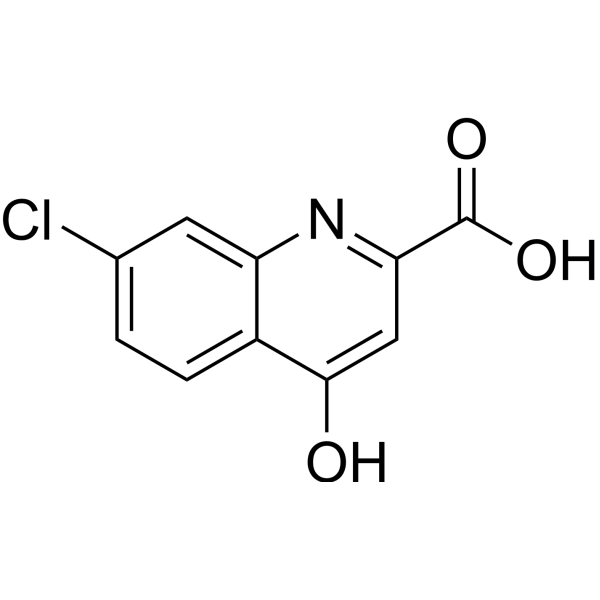
7-Chlorokynurenic acid
Based on 4 publication(s) in Google Scholar
7-Chlorokynurenic acid (7-CKA) is a potent and selective antagonist of the glycine B coagonist site of the N-methyl-D-aspartate (NMDA) receptor (IC50=0.56 μM). 7-Chlorokynurenic acid is also a potent inhibitor of the reuptake of glutamate into synaptic vesicles with a Ki of 0.59 μM. 7-Chlorokynurenic acid has potent antinociceptive actions after neuraxial delivery.
For research use only. We do not sell to patients.
- Purity : 99.86%
- CAS No.: 18000-24-3
- Formula: C10H6ClNO3
- Molecular Weight:223.61
-
Storage:Powder -20°C, 3 years , 4°C, 2 years ; In solvent -80°C, 6 months , -20°C, 1 month

To place orders, for customer services and technical support, please contact: MedChemExpress USA
Tel: 609-228-6898 E-mail: [email protected] [email protected]


-
 Biological Activity
-
Chemical Information
-
Solvent & Solubility
- Protocols
- Purity & Documentation
- References
-
 Help & FAQs


-
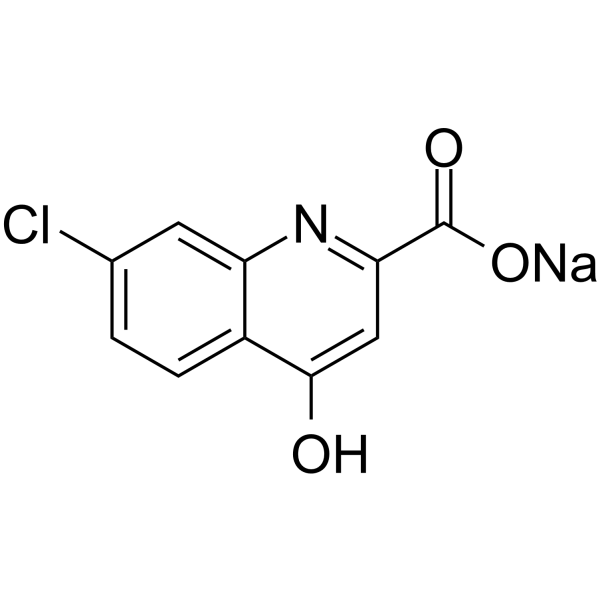
HY-100811A
7-Chlorokynurenic acid sodium saltNMDA Receptor Antagonist -

HY-100811R
7-Chlorokynurenic acid (Standard)NMDA Receptor Antagonist -
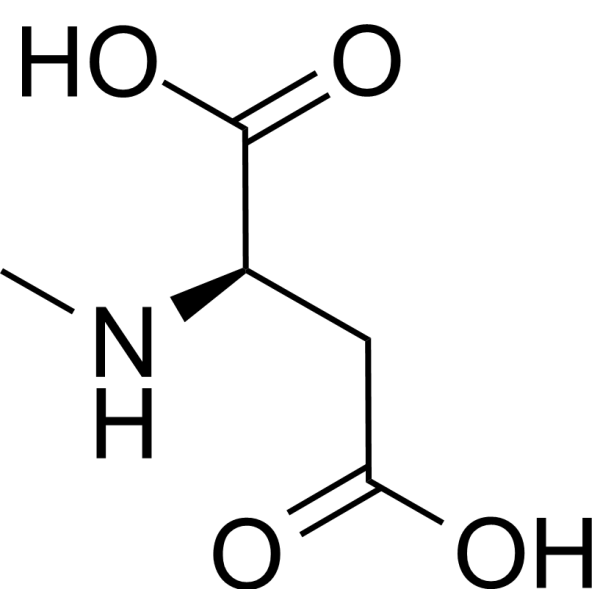
HY-17551
NMDAEndogenous Metabolite -
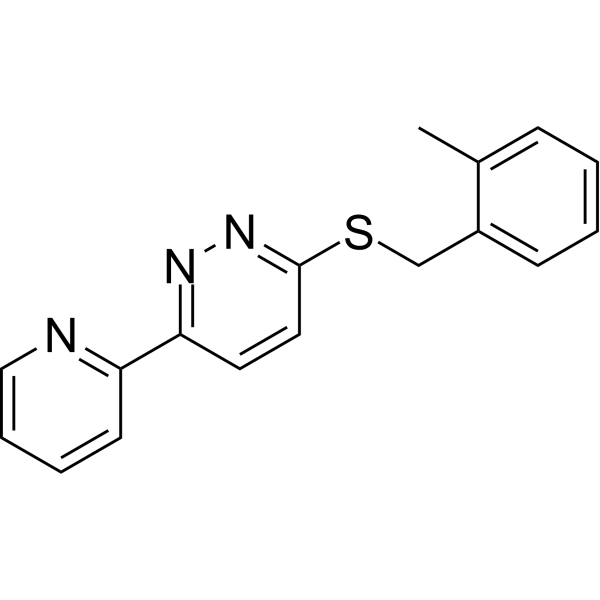
HY-12741
LDN-212320GLT-1/EAAT2 Activator -
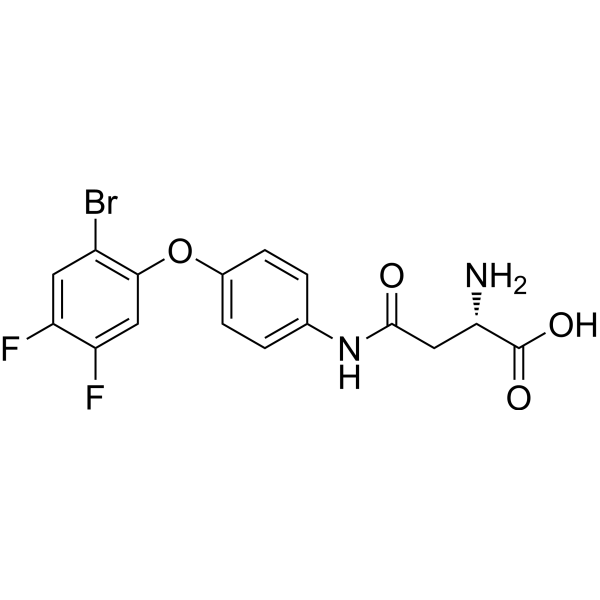
HY-107523
WAY-213613Human EAAT2 Inhibitor -
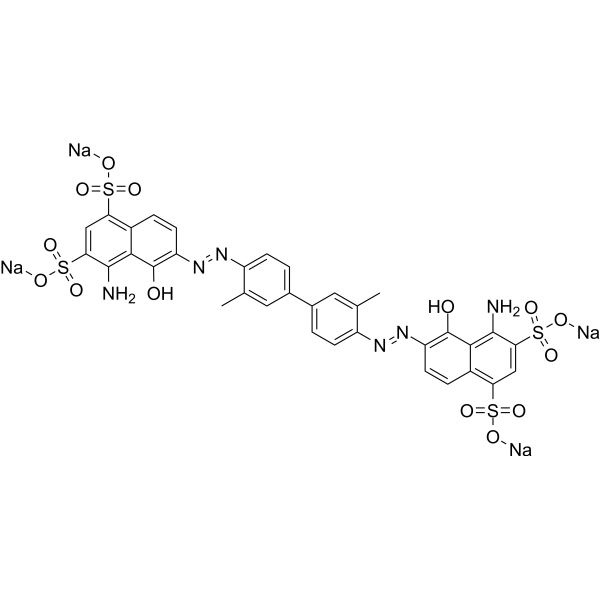
HY-B1102
Evans BlueL-glutamate Uptake Inhibitor -
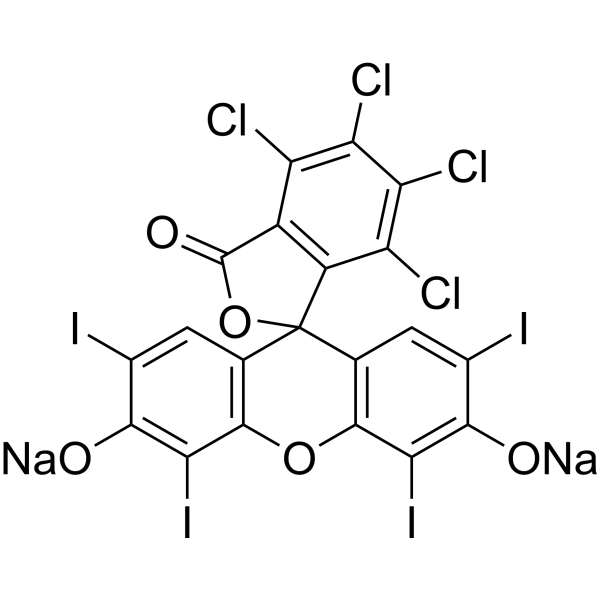
HY-D0214
Acid Red 94 sodiumPhotosensitizer -
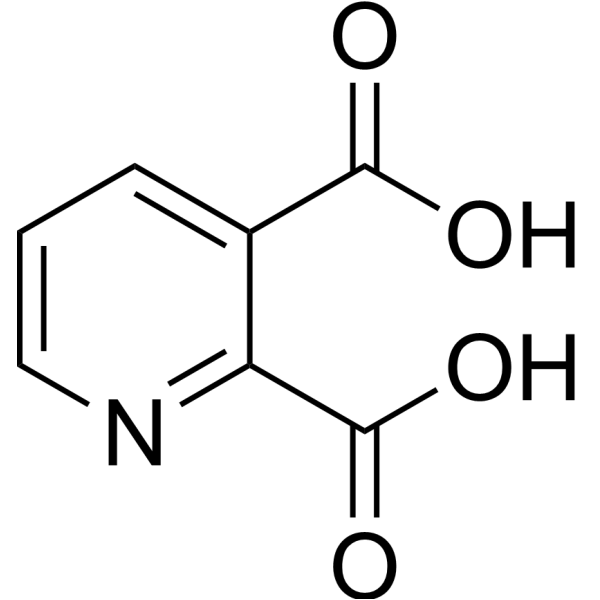
HY-100807
Quinolinic acidNMDA Receptor Agonist -
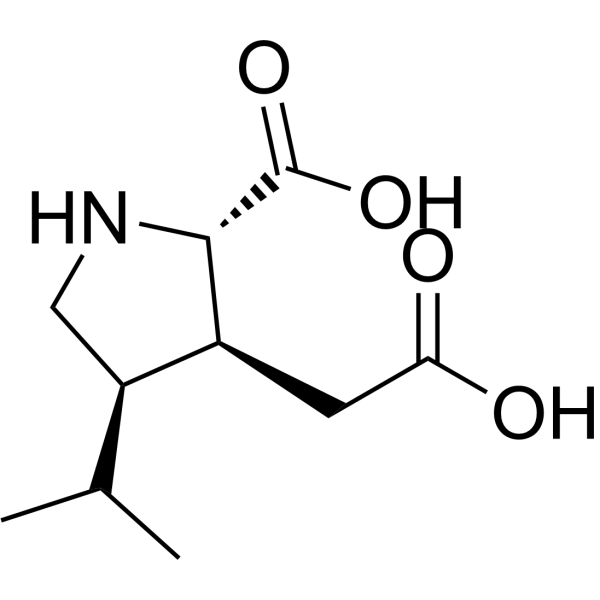
HY-100784
Dihydrokainic acidGLT1 Inhibitor -
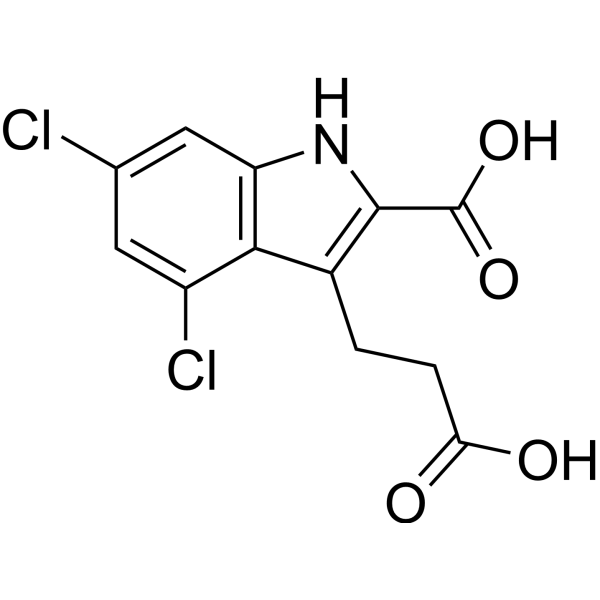
HY-16312
MDL-29951nMDA Receptor Antagonist -
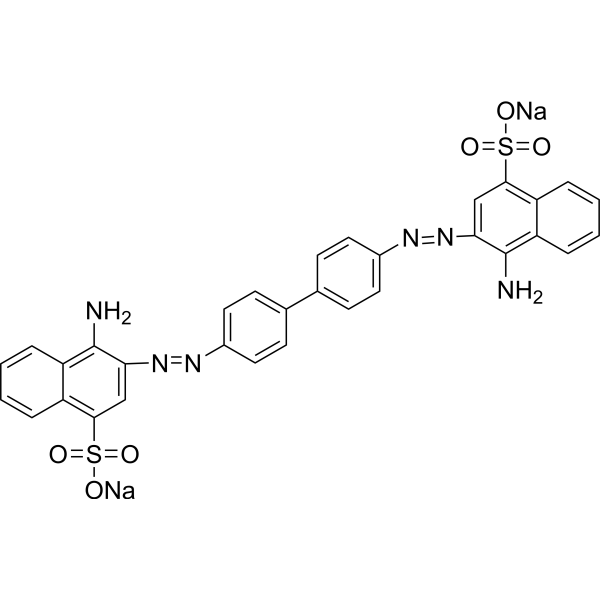
HY-D0236
Congo RedAzo Dye -
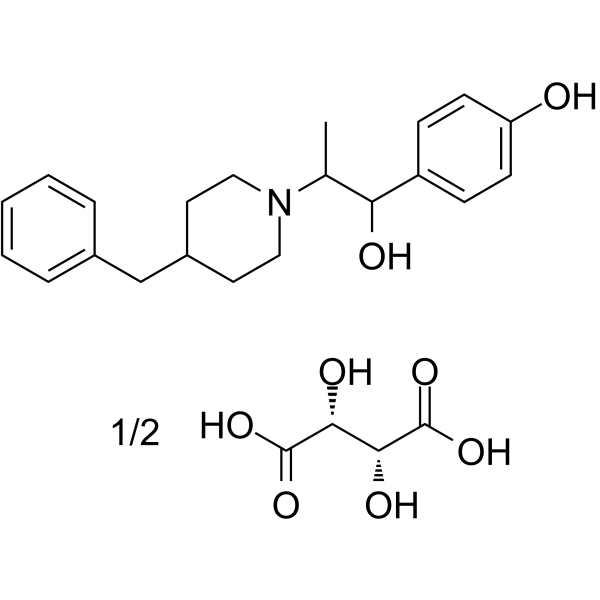
HY-12882A
Ifenprodil tartrateNMDA Receptor Antagonist
Publications Citing Use of MedChemExpress (MCE) 7-Chlorokynurenic acid
MoreAll iGluR Isoforms
More

Biological Activity
Description
IC50 & Target
|
NMDA Receptor |
In Vivo
MedChemExpress (MCE) has not independently confirmed the accuracy of these methods. They are for reference only.


Chemical Information
-
CAS No. 18000-24-3
-
Appearance Solid
-
Molecular Weight 223.61
-
Formula C10H6ClNO3
-
Color White to off-white
-
SMILES
O=C(C1=NC2=CC(Cl)=CC=C2C(O)=C1)O
-
Synonyms
7-CKA
-
Shipping
Room temperature in continental US; may vary elsewhere.
-
Storage
Powder -20°C 3 years 4°C 2 years In solvent -80°C 6 months -20°C 1 month


Publications (4)
-
Journal Impact Factor
-
Most Recent
-
-
Neuron
Astrocyte-mediated regulation of BLAWFS1 neurons alleviates risk-assessment deficits in DISC1-N mice. [Abstract]2024 Jul 3;112(13):2197-2217.e7. PMID: 38642554 -
Nat Chem Biol
2025 Jun 2. PMID: 40456963 -
Anal Chem
Exposome-Scale Investigation of Cl-/Br-Containing Chemicals Using High-Resolution Mass Spectrometry, Multistage Machine Learning, and Cloud Computing. [Abstract]2025 Jun 3;97(21):11099-11109. PMID: 40401576


Solvent & Solubility
In Vitro:
DMSO : 14.29 mg/mL (63.91 mM; Need ultrasonic; Hygroscopic DMSO has a significant impact on the solubility of product, please use newly opened DMSO)
H2O : < 0.1 mg/mL (insoluble)
Please refer to the solubility information to select the appropriate solvent. Once prepared, please aliquot and store the solution to prevent product inactivation from repeated freeze-thaw cycles.
Storage method and period of stock solution: -80°C, 6 months; -20°C, 1 month. When stored at -80°C, please use it within 6 months. When stored at -20°C, please use it within 1 month.
Please refer to the solubility information to select the appropriate solvent. Once prepared, please aliquot and store the solution to prevent product inactivation from repeated freeze-thaw cycles.
Storage method and period of stock solution: -80°C, 6 months; -20°C, 1 month. When stored at -80°C, please use it within 6 months. When stored at -20°C, please use it within 1 month.
Concentration (start) × Volume (start) = Concentration (final) × Volume (final)
In Vivo:
Select the appropriate dissolution method based on your experimental animal and administration route.
- For the following dissolution methods, please ensure to first prepare a clear stock solution using an In Vitro approach and then sequentially add co-solvents:
- To ensure reliable experimental results, the clarified stock solution can be appropriately stored based on storage conditions. As for the working solution for In Vivo experiments, it is recommended to prepare freshly and use it on the same day.
- The percentages shown for the solvents indicate their volumetric ratio in the final prepared solution. If precipitation or phase separation occurs during preparation, heat and/or sonication can be used to aid dissolution.
Add each solvent one by one: 10% DMSO 40% PEG300 5% Tween-80 45% Saline
Solubility: ≥ 1.43 mg/mL (6.40 mM); Clear solution
This protocol yields a clear solution of ≥ 1.43 mg/mL (saturation unknown).
Taking 1 mL working solution as an example, add 100 μL DMSO stock solution (14.3 mg/mL) to 400 μL PEG300, and mix evenly; then add 50 μL Tween-80 and mix evenly; then add 450 μL Saline to adjust the volume to 1 mL.
Preparation of Saline: Dissolve 0.9 g sodium chloride in ddH₂O and dilute to 100 mL to obtain a clear Saline solution.
In Vivo Dissolution Calculator
Please enter the basic information of animal experiments:
-
-
-
-
Recommended: Prepare an additional quantity of animals to account for potential losses during experiments.
Please enter your animal formula composition:
-
%DMSO +
Recommended: Keep the proportion of DMSO in working solution below 2% if your animal is weak.
-
%+
-
+%Tween-80 + +
-
%Saline +
The co-solvents required include: DMSO, . All of co-solvents are available by MedChemExpress (MCE). , Tween 80. All of co-solvents are available by MedChemExpress (MCE).
Working solution concentration: 0.22 mg/mL
Method for preparing stock solution: mg drug dissolved in μL DMSO. Stock solution concentration: mg/mL.
1. Take μL DMSO stock solution;
2. Add μL .
μL , mix evenly;
3. Then add μL Tween 80, mix evenly;
4. Then add μL
Please ensure that the stock solution in the first step is dissolved to a clear state, and add co-solvents in sequence. You can use ultrasonic heating (ultrasonic cleaner, recommended frequency 20-40 kHz), vortexing, etc. to assist dissolution.

Protocols
-
Cell Cytotoxicity Assay
Cytotoxicity assays are usually based on the assessment of cell membrane damage, which can also be indirectly detected by measuring cell viability. Detection methods include MTT assay, CKK-8 assay, LDH assay and ATP assay, etc.


Purity & Documentation
-
Data Sheet (274 KB)
-
SDS (396 KB)
- English - EN (396 KB)
- Français - FR (396 KB)
- Deutsch - DE (396 KB)
- Norwegian - NO (396 KB)
- Español - ES (396 KB)
- Swedish - SV (396 KB)
- Italian - IT (396 KB)
- Korean - KR (396 KB)
- Portuguese - PT (396 KB)
-
Handling Instructions (2659 KB)
References
[1]. Kemp JA, et al. 7-Chlorokynurenic acid is a selective antagonist at the glycine modulatory site of the N-methyl-D-aspartate receptor complex. Proc Natl Acad Sci U S A. 1988 Sep;85(17):6547-50. [Content Brief]
[2]. Yaksh TL, et al. Characterization of the Effects of L-4-Chlorokynurenine on Nociception in Rodents. J Pain. 2017 Oct;18(10):1184-1196. [Content Brief]
[3]. Croucher MJ, et al. 7-Chlorokynurenic acid, a strychnine-insensitive glycine receptor antagonist, inhibits limbic seizurekindling. Neurosci Lett. 1990 Oct 2;118(1):29-32. [Content Brief]


Complete Stock Solution Preparation Table
Please refer to the solubility information to select the appropriate solvent. Once prepared, please aliquot and store the solution to prevent product inactivation from repeated freeze-thaw cycles.
Storage method and period of stock solution: -80°C, 6 months; -20°C, 1 month. When stored at -80°C, please use it within 6 months. When stored at -20°C, please use it within 1 month.
| Optional Solvent | Concentration Solvent Mass | 1 mg | 5 mg | 10 mg | 25 mg |
|---|---|---|---|---|---|
| DMSO | 1 mM | 4.4721 mL | 22.3604 mL | 44.7207 mL | 111.8018 mL |
| 5 mM | 0.8944 mL | 4.4721 mL | 8.9441 mL | 22.3604 mL | |
| 10 mM | 0.4472 mL | 2.2360 mL | 4.4721 mL | 11.1802 mL | |
| 15 mM | 0.2981 mL | 1.4907 mL | 2.9814 mL | 7.4535 mL | |
| 20 mM | 0.2236 mL | 1.1180 mL | 2.2360 mL | 5.5901 mL | |
| 25 mM | 0.1789 mL | 0.8944 mL | 1.7888 mL | 4.4721 mL | |
| 30 mM | 0.1491 mL | 0.7453 mL | 1.4907 mL | 3.7267 mL | |
| 40 mM | 0.1118 mL | 0.5590 mL | 1.1180 mL | 2.7950 mL | |
| 50 mM | 0.0894 mL | 0.4472 mL | 0.8944 mL | 2.2360 mL | |
| 60 mM | 0.0745 mL | 0.3727 mL | 0.7453 mL | 1.8634 mL |


7-Chlorokynurenic acid Related Classifications
HY-100811 Related Classifications
 Powered by Bioz