1. Search Result
Search Result
Results for "

heme biosynthesis

" in MedChemExpress (MCE) Product Catalog:

18

Inhibitors & Agonists

6

Natural
Products

5

Isotope-Labeled Compounds

Targets Recommended:
Cat. No. Product Name Target Research Areas Chemical Structure
  • HY-137808
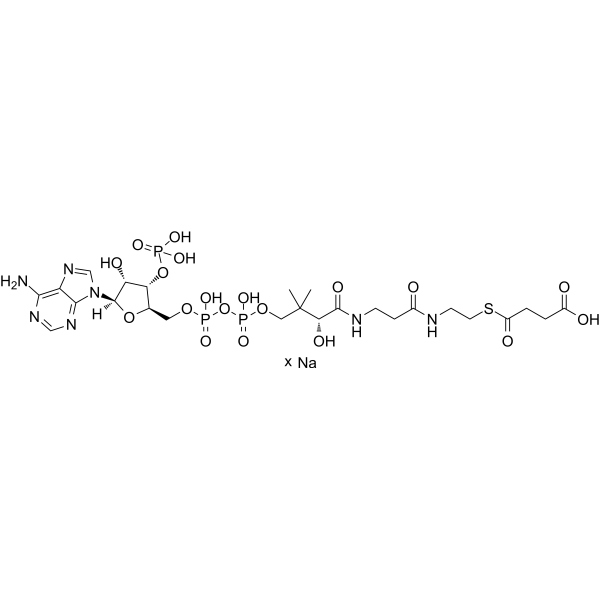
    Succinyl-Coenzyme A sodium
    3 Publications Verification

    Succinyl-CoA sodium

    Endogenous Metabolite Neurological Disease Metabolic Disease
    Succinyl CoA (Succinyl-coenzyme A) sodium is a pivotal intermediate metabolite in the tricarboxylic acid cycle and a key coenzyme A metabolite. Succinyl CoA sodium is biosynthesized from α-ketoglutarate or propionyl-CoA. Succinyl CoA sodium acts as a critical precursor and substrate for heme biosynthesis and gluconeogenesis. Succinyl CoA sodium insufficiency caused by cobalamin deficiency is directly linked to growth retardation, impaired heme synthesis, tissue glycine accumulation and neurological abnormalities. Succinyl CoA sodium can be used in research on metabolic, neurological, and hematological abnormalities (such as porphyria) caused by nutritional vitamin B12 deficiency (leading to a lack of Succinyl-Coenzyme A synthesis) .
    Succinyl-Coenzyme A sodium
  • HY-W010184
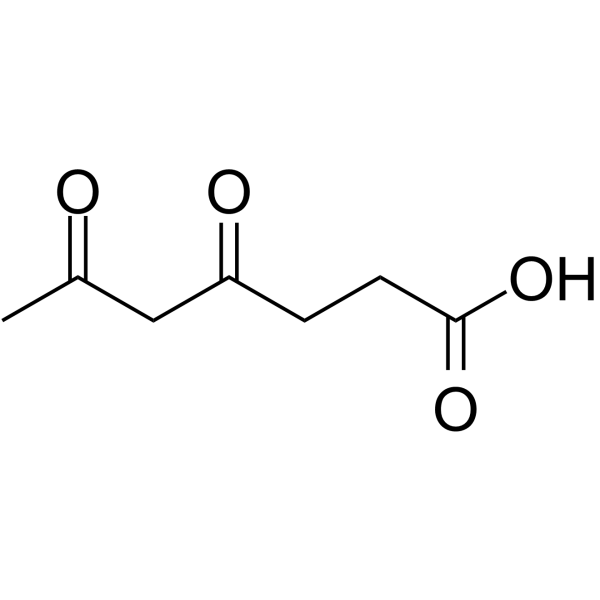
    4,6-Dioxoheptanoic acid
    5+ Cited Publications

    Succinylacetone

    MOFs Endogenous Metabolite Cardiovascular Disease
    4,6-Dioxoheptanoic acid is a potent inhibitor of heme biosynthesis.
    4,6-Dioxoheptanoic acid
  • HY-139838

    Herbicide Others Cancer
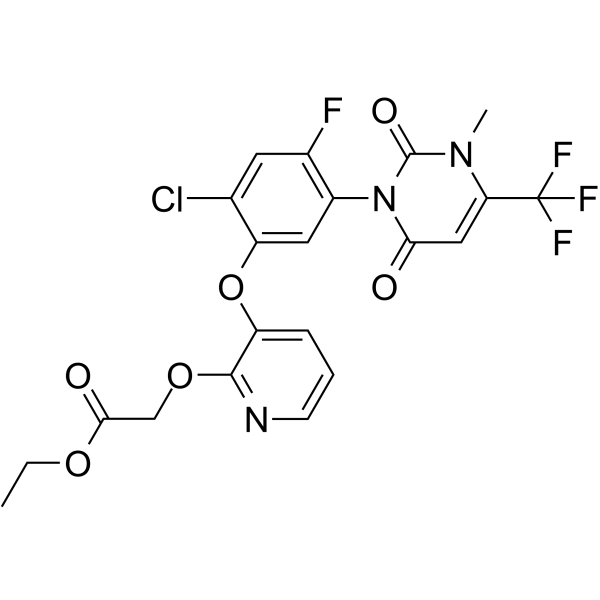
    Epyrifenacil is a protoporphyrinogen oxidase (PPO) inhibiting herbicide, potently targeting the PPO2 isoform from weeds such as Amaranthus palmeri with an IC50 of 0.637 nM. Epyrifenacil also inhibits liver mitochondrial PPO across species, with IC50 values of 2.2 nM (mouse), 2.6 nM (rat), 12.1 nM (rabbit), 7.6 nM (dog), and 10.2 nM (human). Epyrifenacil induces liver tumor development in mice. Epyrifenacil can be used for weed control, and also used as a tool compound in toxicological research to study the mechanism of PPO inhibition, chemical-induced hepatotoxicity, and the mode of action of non-genotoxic carcinogens in rodents [3].
    Epyrifenacil
  • HY-114758
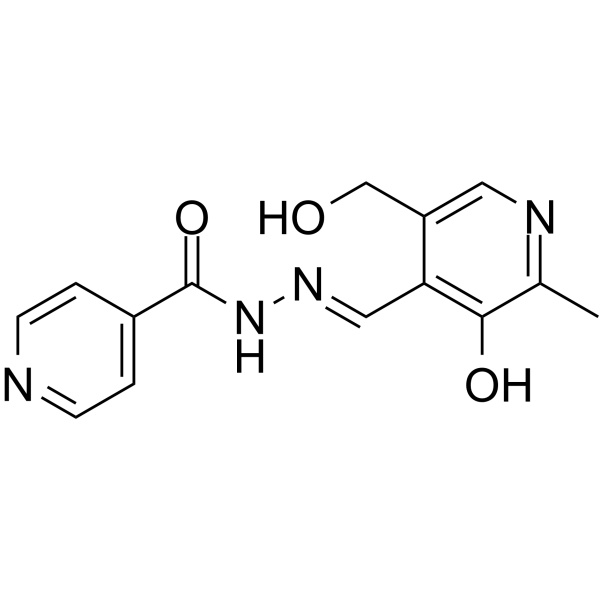
    Pyridoxal isonicotinoyl hydrazone
    4 Publications Verification

    Biochemical Assay Reagents Ferrochelatase Cardiovascular Disease
    Pyridoxal isonicotinoyl hydrazone is an orally active and lipophilic iron-specific chelator that acts as a non-competitive inhibitor of ferrochelatase (FECH) by binding iron ions. Pyridoxal isonicotinoyl hydrazone disrupts heme biosynthesis, leading to reduced FECH stability and increased protoporphyrin IX (PPIX) accumulation. Pyridoxal isonicotinoyl hydrazone is promising for research of iron-overload diseases (e.g., β-thalassemia) .
    Pyridoxal isonicotinoyl hydrazone
  • HY-148285

    Succinyl-coenzyme A; S-(Hydrogen succinyl)coenzyme A

    Endogenous Metabolite Metabolic Disease
    Succinyl CoA (Succinyl-coenzyme A) is a pivotal intermediate metabolite in the tricarboxylic acid cycle and a key coenzyme A metabolite. Succinyl CoA is biosynthesized from α-ketoglutarate or propionyl-CoA. Succinyl CoA acts as a critical precursor and substrate for heme biosynthesis and gluconeogenesis. Succinyl CoA insufficiency caused by cobalamin deficiency is directly linked to growth retardation, impaired heme synthesis, tissue glycine accumulation and neurological abnormalities. Succinyl CoA can be used in research on metabolic, neurological, and hematological abnormalities (such as porphyria) caused by nutritional vitamin B12 deficiency (leading to a lack of Succinyl-Coenzyme A synthesis) .
    Succinyl CoA
  • HY-115658

    Bacterial Infection Metabolic Disease
    VU0420373 is a potent heme sensor system (HssRS) activator with an EC50 of 10.7 μM and a pEC50 of 4.97. VU0420373 induces heme biosynthesis, and is toxic to fermenting S. aureus .
    VU0420373
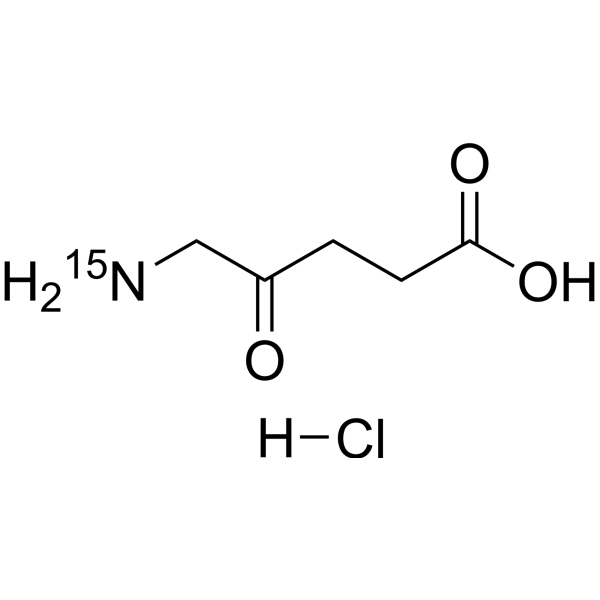
  • HY-N0305S

    5-ALA-15N hydrochloride; δ-Aminolevulinic acid-15N hydrochloride; 5-Amino-4-oxopentanoic acid-15N hydrochloride

    Isotope-Labeled Compounds Autophagy Mitophagy Endogenous Metabolite Apoptosis Metabolic Disease Cancer
    5-Aminolevulinic acid- 15N (hydrochloride) is the 15N-labeled 5-Aminolevulinic acid (hydrochloride). 5-Aminolevulinic acid hydrochloride (5-ALA hydrochloride) is an intermediate in heme biosynthesis in the body and the universal precursor of tetrapyrroles.
    5-Aminolevulinic acid-15N hydrochloride
  • HY-W854721

    Manganese(III) Protoporphyrin IX Chloride

    Heme Oxygenase (HO) Metabolic Disease
    Mn(III) protoporphyrin IX chloride is a metalloporphyrin. It induces mRNA expression of the genes encoding δ-aminolevulinate synthase and heme oxygenase (HO), enzymes that catalyze the rate-limiting steps of heme biosynthesis and degradation, respectively, in chick embryo liver cells when used at a concentration of 10 μM. Mn(III) protoporphyrin IX chloride-containing nanobialys have been used in magnetic resonance imaging (MRI) of fibrin clots in vitro. It has also been used in the synthesis of Mn(III) protoporphyrin IX-6(7)-glycyl-glycyl-L-histidine methyl ester (MnGGH), a metalloporphyrin conjugate with microperoxidase activity.
    Mn(III) Protoporphyrin IX chloride
  • HY-W010184R

    Succinylacetone (Standard)

    Reference Standards Endogenous Metabolite Cardiovascular Disease
    4,6-Dioxoheptanoic acid is a potent inhibitor of heme biosynthesis.
    4,6-Dioxoheptanoic acid (Standard)
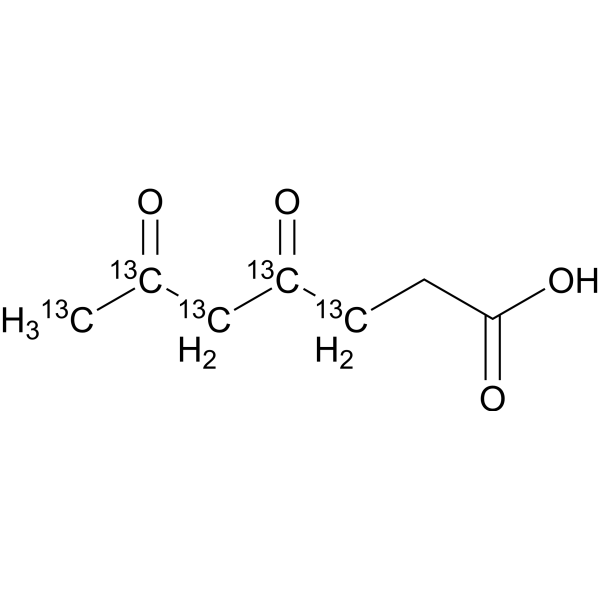
  • HY-W010184S

    Succinylacetone-13C5

    Endogenous Metabolite Cardiovascular Disease
    4,6-Dioxoheptanoic acid- 13C5 is the 13C labeled 4,6-Dioxoheptanoic acid . 4,6-Dioxoheptanoic acid is a potent inhibitor of heme biosynthesis .
    4,6-Dioxoheptanoic acid-13C5
  • HY-124261

    Apoptosis Cancer
    Sampangine is an alkaloid that induces apoptosis by inducing cell cycle arrest in the G0/G1 phase. Sampangine can inhibit the biosynthesis of heme .
    Sampangine
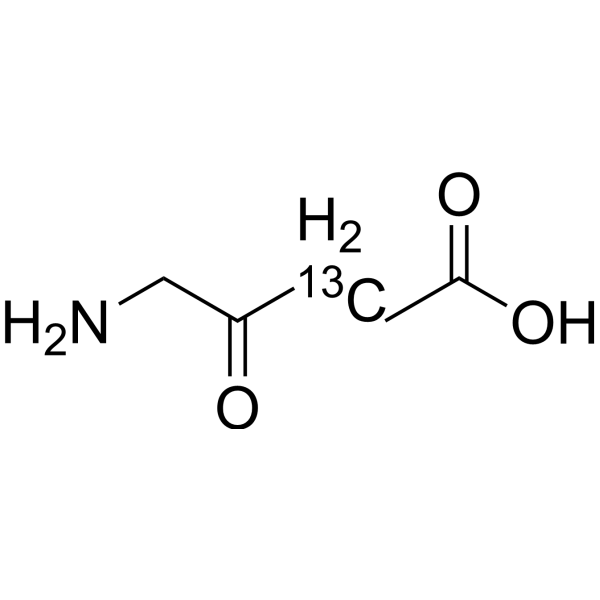
  • HY-W000450S

    5-ALA-13C; δ-Aminolevulinic acid-13C; 5-Amino-4-oxopentanoic acid-13C

    Isotope-Labeled Compounds Endogenous Metabolite Cardiovascular Disease
    5-Aminolevulinic acid- 13C is the 13C-labeled 5-Aminolevulinic acid. 5-Aminolevulinic acid (5-ALA) is a non-protein amino acid that plays a rate-limiting role in heme biosynthesis.
    5-Aminolevulinic acid-13C
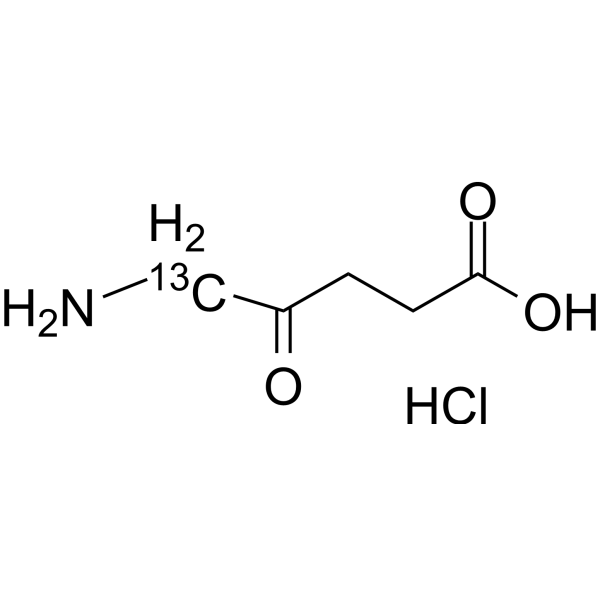
  • HY-N0305S3

    5-ALA-13C-1 hydrochloride; δ-Aminolevulinic acid-13C-1 hydrochloride; 5-Amino-4-oxopentanoic acid-13C-1 hydrochloride

    Apoptosis Autophagy Mitophagy Endogenous Metabolite Metabolic Disease
    5-Aminolevulinic acid- 13C-1 (5-ALA- 13C-1) hydrochloride is the 13C labeled 5-Aminolevulinic acid hydrochloride . 5-Aminolevulinic acid hydrochloride (5-ALA hydrochloride) is an intermediate in heme biosynthesis in the body and the universal precursor of tetrapyrroles .
    5-Aminolevulinic acid-13C-1 hydrochloride
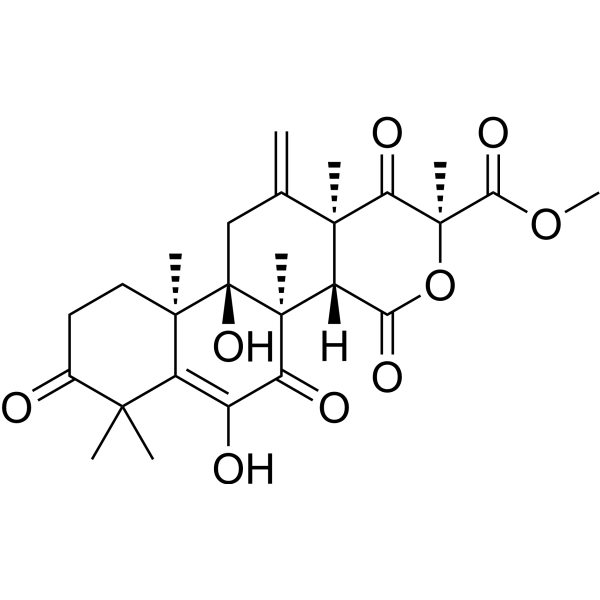
  • HY-N12196

    Cytochrome P450 Infection
    Terretonin is a fungal terpenoid isolated from Aspergillus terreus. The complete biosynthetic pathway of terretonin includes: cytochrome P450 Trt6 catalyzes the oxidation of terrenoid to obtain an unstable intermediate; then it is catalyzed by isomerase Trt14 and processed by non-heme iron-dependent dioxygenase Trt7 to complete the biosynthesis of terretonin .
    Terretonin
  • HY-N0305S2

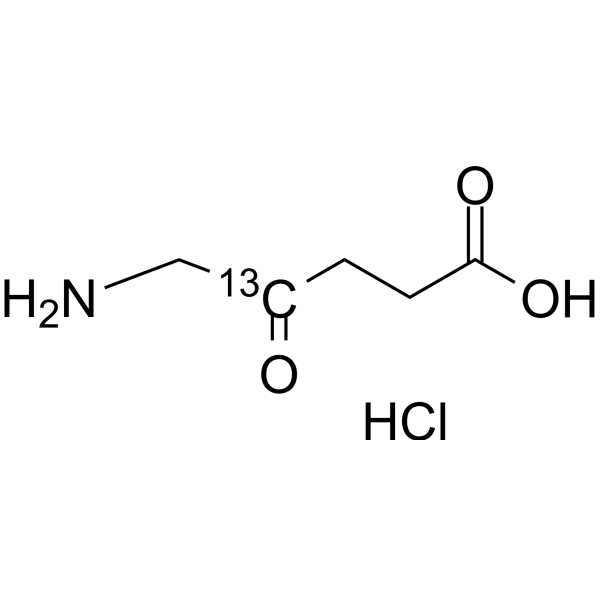
    5-ALA-13C hydrochloride; δ-Aminolevulinic acid-13C hydrochloride; 5-Amino-4-oxopentanoic acid-13C hydrochloride

    Apoptosis Autophagy Mitophagy Endogenous Metabolite Metabolic Disease
    5-Aminolevulinic acid- 13C (hydrochloride) is the 13C labeled 5-Aminolevulinic acid hydrochloride . 5-Aminolevulinic acid hydrochloride (5-ALA hydrochloride) is an intermediate in heme biosynthesis in the body and the universal precursor of tetrapyrroles .
    5-Aminolevulinic acid-13C hydrochloride
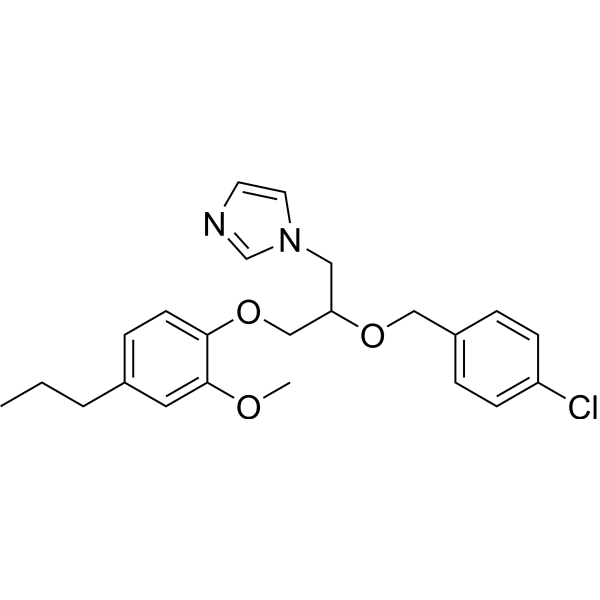
  • HY-155710

    Fungal Infection
    Antifungal agent 68 (compound 10) is an antifungal agent against Candida and Cryptococcus gattii. Antifungal agent 68 inhibits fungal ergosterol biosynthesis, possibly by targeting lanosterol 14α-demethylase (CYP51). There is an interaction between the imidazole ring of antifungal agent 68 and the heme group of CYP51 .
    Antifungal agent 68
  • HY-148285A

    Succinyl-coenzyme A disodium; S-(Hydrogen succinyl)coenzyme A disodium

    Endogenous Metabolite Metabolic Disease
    Succinyl CoA (Succinyl-coenzyme A) disodium is a pivotal intermediate metabolite in the tricarboxylic acid cycle and a key coenzyme A metabolite. Succinyl CoA disodium is biosynthesized from α-ketoglutarate or propionyl-CoA. Succinyl CoA disodium acts as a critical precursor and substrate for heme biosynthesis and gluconeogenesis. Succinyl CoA disodium insufficiency caused by cobalamin deficiency is directly linked to growth retardation, impaired heme synthesis, tissue glycine accumulation and neurological abnormalities. Succinyl-Coenzyme A sodium can be used in research on metabolic, neurological, and hematological abnormalities (such as porphyria) caused by nutritional vitamin B12 deficiency (leading to a lack of Succinyl-Coenzyme A synthesis) .
    Succinyl CoA disodium
  • HY-E71348

    Biochemical Assay Reagents Others
    ζ-Carotene isomerase (EC 5.2.1.12) catalyses the cis-trans isomerization of the 15-15' carbon-carbon double bond in 9,15,9'-tricis-ζ-Carotene, which is required for biosynthesis of all plant carotenoids. Requires heme b.
    ζ-Carotene isomerase

Inquiry Online

Your information is safe with us. * Required Fields.

Salutation


Country or Region *

Applicant Name *


Organization Name *

Department *


Email Address *


Product Name *

Cat. No.


Requested quantity *

Phone Number *


Remarks

Inquiry Online

Inquiry Information

Product Name:
Cat. No.:
Quantity:
MCE Japan Authorized Agent:

