









1. Search Result
Search Result
Results for "

human calcitonin

" in MedChemExpress (MCE) Product Catalog:

32

Inhibitors & Agonists

18

Peptides

2

Inhibitory Antibodies

9

Recombinant Proteins

2

Isotope-Labeled Compounds

Targets Recommended:
Cat. No. Product Name Target Research Areas Chemical Structure
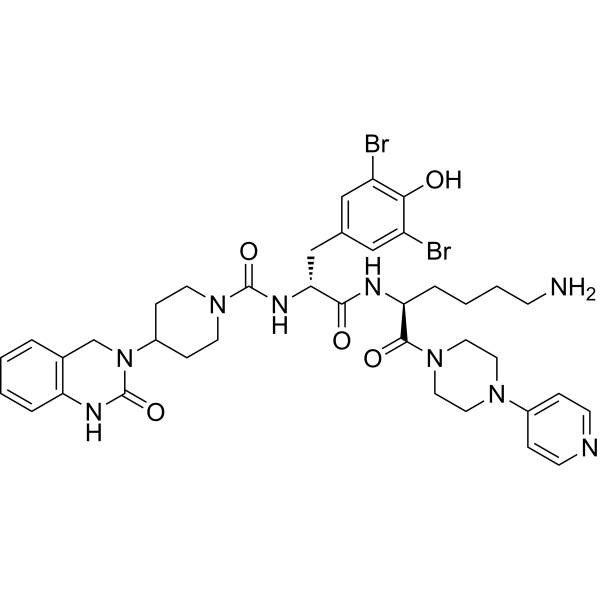
  • HY-10095
    Olcegepant
    Maximum Cited Publications
    42 Publications Verification

    BIBN-4096; BIBN 4096BS

    CGRP Receptor Neurological Disease
    Olcegepant (BIBN-4096) is a potent and selective non-peptide antagonist of the calcitonin gene-related peptide 1 (CGRP1) receptor with IC50 of 0.03 nM and Ki of 14.4 pM for human CGRP .
    Olcegepant
  • HY-P1071
    α-CGRP (human)
    4 Publications Verification

    calcitonin gene-related peptide

    CGRP Receptor Cardiovascular Disease
    α-CGRP (human) (Calcitonin gene-related peptide) is a regulatory neuropeptide of 37 amino acids. α-CGRP (human) is widely distributed in the central and peripheral nervous system. α-CGRP (human) is a potent vasodilator and has inotropic and chronotropic effects .
    α-CGRP (human)
  • HY-P2273

    CGRP Receptor Metabolic Disease
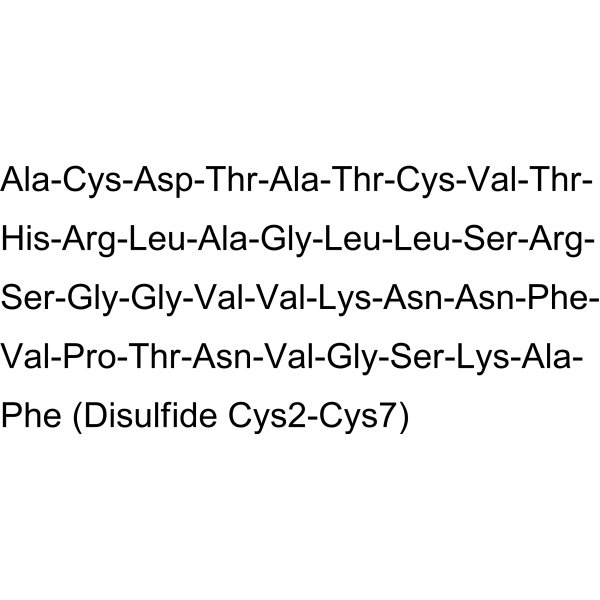
    Calcitonin (human) is a hypocalcemic hormone. Calcitonin can lower blood calcium levels and inhibit bone resorption. Calcitonin can be used in hypercalcemia or osteoporosis research .
    Calcitonin (human)
  • HY-12366

    MK-1602

    CGRP Receptor Cardiovascular Disease Neurological Disease
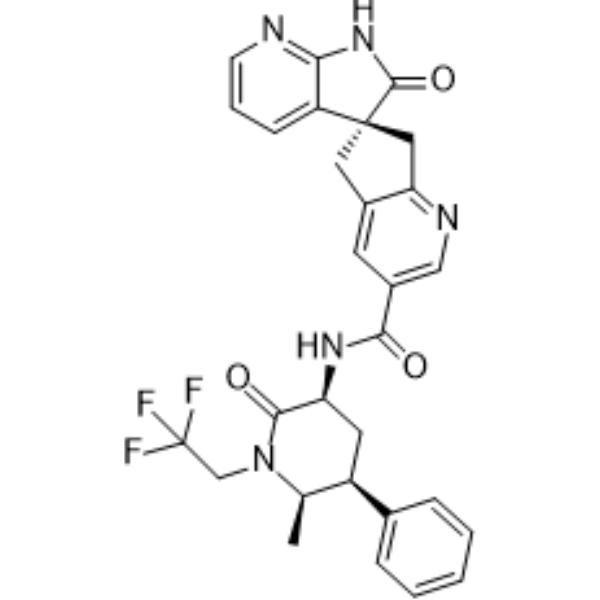
    Ubrogepant (MK-1602) is an orally active and selective antagonist of calcitonin gene-related peptide receptor (CGRP). Ubrogepant has high affinity for CGRP receptors in human and rhesus monkeys, and can effectively block the cAMP response stimulated by α-CGRP. Ubrogepant can be used in the study of acute migraine .
    Ubrogepant
  • HY-P1548
    β-CGRP, human
    1 Publications Verification

    human β-CGRP; CGRP-II (human)

    CGRP Receptor Cardiovascular Disease Inflammation/Immunology
    β-CGRP, human (Human β-CGRP) is one of calcitonin peptides, acts via the complex of calcitonin-receptor-like receptor (CRLR) and receptor-activity-modifying protein (RAMP), with IC50s of 1 nM and 300 nM for CRLR/RAMP1 and CRLR/RAMP2 in cells .
    β-CGRP, human
  • HY-P1471
    Adrenomedullin (AM) (22-52), human
    4 Publications Verification

    22-52-Adrenomedullin (human)

    CGRP Receptor Cardiovascular Disease
    Adrenomedullin (AM) (22-52), human, an NH2 terminal truncated adrenomedullin analogue, is an adrenomedullin receptor antagonist, and also antagonizes the calcitonin generelated peptide (CGRP) receptor in the hindlimb vascular bed of the cat .
    Adrenomedullin (AM) (22-52), human
  • HY-P11274A

    Amycretin sodium; NN 9487 sodium

    Amylin Receptor Insulin Receptor GCGR Metabolic Disease
    Zenagamtide (Amycretin; NN 9487) sodium is an orally active, blood-brain barrier permeable triple agonist that targets GLP-1, amylin (Amylin Receptor) and calcitonin receptor (Calcitonin Receptor). Zenagamtide sodium is a single peptide consisting of 68 amino acids that can target brain regions regulating food intake, significantly suppress appetite and reduce energy intake. Therefore, Zenagamtide sodium improves body weight, waist circumference, glycated hemoglobin and lipid profile, and also alleviates the histological features of metabolic dysfunction-associated steatotic liver disease (MASLD) and enhances insulin sensitivity. Zenagamtide sodium may cause transient increases in heart rate and fluctuations in serum calcium levels, but it is an important compound for the study of overweight, obesity, insulin resistance and related metabolic diseases .
    Zenagamtide sodium
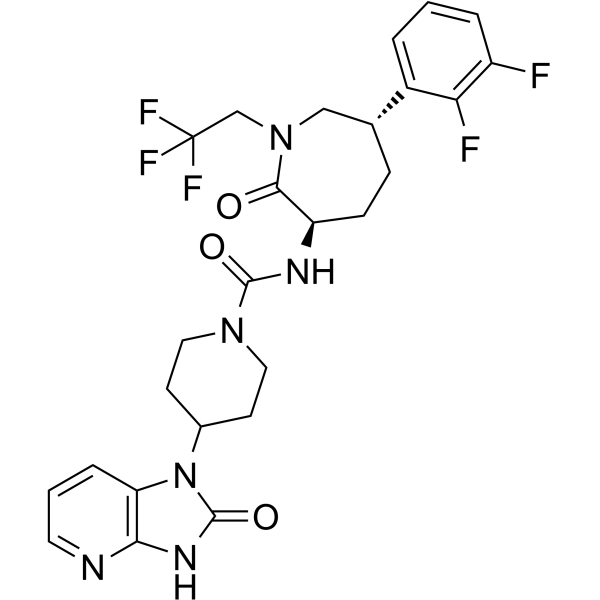
  • HY-32709
    Telcagepant
    2 Publications Verification

    MK-0974

    CGRP Receptor Neurological Disease
    Telcagepant (MK-0974) is an orally active calcitonin gene-related peptide (CGRP) receptor antagonist with Kis of 0.77 nM and 1.2 nM for human and rhesus CGRP receptors, respectively.
    Telcagepant
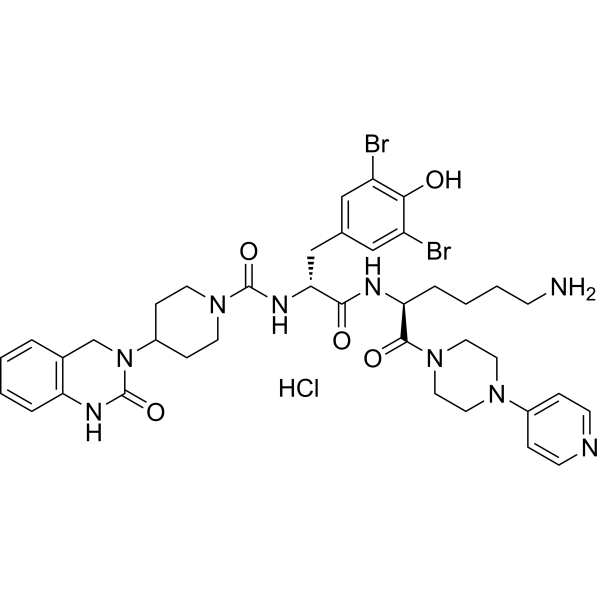
  • HY-10095A
    Olcegepant hydrochloride
    Maximum Cited Publications
    42 Publications Verification

    BIBN-4096 hydrochloride; BIBN4096BS hydrochloride

    CGRP Receptor Neurological Disease
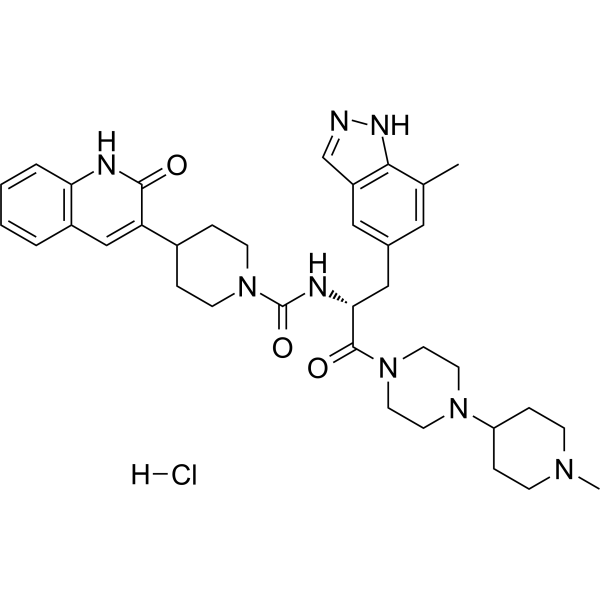
    Olcegepant hydrochloride (BIBN-4096 hydrochloride) is a potent and selective non-peptide antagonist of the calcitonin gene-related peptide 1 (CGRP1) receptor with IC50 of 0.03 nM and with a Ki of 14.4 pM for human CGRP .
    Olcegepant hydrochloride
  • HY-P9938
    Erenumab
    1 Publications Verification

    AMG-334

    CGRP Receptor Neurological Disease
    Erenumab (AMG-334) is a fully human monoclonal antibody. Erenumab inhibits the calcitonin gene-related peptide (CGRP) receptor. Erenumab prevents the increase in dermal blood flow in cynomolgus monkeys. Erenumab can be used in the research of episodic migraine .
    Erenumab
  • HY-P99017

    ALD-403

    CGRP Receptor Neurological Disease
    Eptinezumab (ALD-403) is a human monoclonal antibody targeting the α and β subtypes of human calcitonin gene-related peptide (CGRP). Eptinezumab binds to the CGRP ligand and blocks its binding to endogenous CGRP receptors, thereby inhibiting receptor activation. Eptinezumab can be used in research related to migraine .
    Eptinezumab
  • HY-P4093

    Biochemical Assay Reagents Others
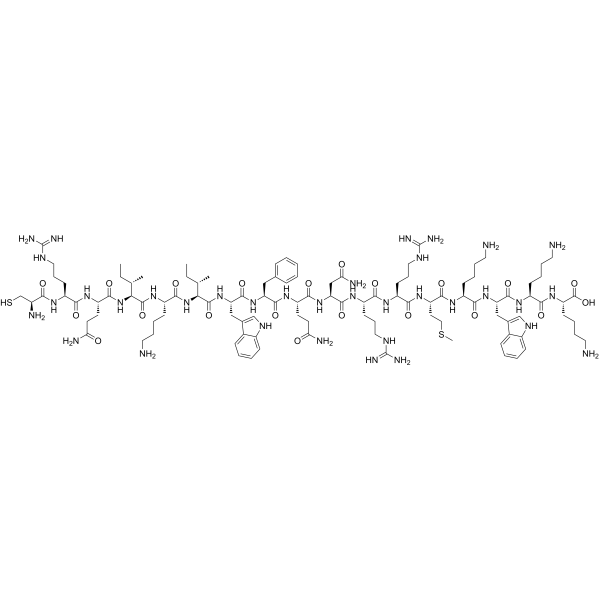
    Cys-Penetratin is a cysteine-containing cell-penetrating peptide with sequence CRQIKIWFQNRRMKWKK. Cys-Penetratin can Cys-Penetratin can be used for the research for the research of drug delivery .
    Cys-Penetratin
  • HY-P1014
    HCGRP-(8-37)
    2 Publications Verification

    human α-CGRP (8-37)

    CGRP Receptor Cardiovascular Disease
    HCGRP-(8-37) (Human α-CGRP (8-37)) is a fragment of human calcitonin gene-related peptide (hCGRP) and an antagonist of the CGRP receptor, with an IC50 of 32.1 pM against the CGRP receptor. HCGRP-(8-37) blocks adenylate cyclase activation induced by CGRP receptor ligands and attenuates vascular responses triggered by CGRP. HCGRP-(8-37) reduces capsaicin-induced vasodilation in porcine nasal mucosa and superficial skin. HCGRP-(8-37) serves as a research tool to distinguish effects mediated by CGRP or calcitonin receptors, and to investigate CGRP-induced vascular effects .
    HCGRP-(8-37)
  • HY-P4058

    CGRP free acid

    CGRP Receptor Neurological Disease
    Calcitonin gene-related peptide (CGRP) free acid is a 37-amino acid neuropeptide, which represents the deamidated form of α-CGRP (human) (HY-P1071). Calcitonin gene-related peptide free acid is produced in the central and peripheral nervous systems of rats, and localizes to specific sensory, integrative and motor neuron systems, including those involved in nociception/thermoreception, feeding behavior, olfaction and visceral motor functions .
    Calcitonin gene-related peptide free acid
  • HY-P1071A
    α-CGRP (human) TFA
    4 Publications Verification

    calcitonin gene-related peptide TFA

    CGRP Receptor Cardiovascular Disease
    α-CGRP (human) (TFA) is a regulatory neuropeptide of 37 amino acids. α-CGRP (human) (TFA) is widely distributed in the central and peripheral nervous system. α-CGRP (human) (TFA) is a potent vasodilator and has inotropic and chronotropic effects .
    α-CGRP (human) TFA
  • HY-P1548A
    β-CGRP, human TFA
    1 Publications Verification

    human β-CGRP TFA; CGRP-II (human) TFA

    CGRP Receptor Cardiovascular Disease Inflammation/Immunology
    β-CGRP, human TFA (Human β-CGRP TFA) is one of calcitonin peptides, acts via the complex of calcitonin-receptor-like receptor (CRLR) and receptor-activity-modifying protein (RAMP), with IC50s of 1 nM and 300 nM for CRLR/RAMP1 and CRLR/RAMP2 in cells .
    β-CGRP, human TFA
  • HY-P1072

    CGRP Receptor Cardiovascular Disease Metabolic Disease
    PHM-27 (human) is a human prepro-vasoactive intestinal polypeptide (27 amino acid). PHM-27 (human) is a potent the human calcitonin receptor agonist with an EC50 of 11 nM. PHM-27 (human) efficiently enhances glucose-induced insulin secretion from beta cells by an autocrine mechanism .
    PHM-27 (human)
  • HY-P4079

    Drug Derivative Metabolic Disease
    hCT(18-32) is a hCT (human calcitonin)-derived peptide .
    hCT(18-32)
  • HY-117694

    CGRP Receptor Neurological Disease Inflammation/Immunology
    MK-8825 is an orally active, selective CGRP receptor antagonist with a Ki value of 47 pM for human CGRP receptors and 17 nM for rat CGRP receptors. MK-8825 blocks CGRP-stimulated cAMP responses and exhibits competitive-like antagonism. MK-8825 can be used in the research of migraine and temporomandibular joint disorders .
    MK-8825
  • HY-103304

    Others Neurological Disease
    CGRP antagonist 4 is an antagonist of calcitonin gene-related peptide (CGRP) receptor. CGRP antagonist 4 shows the highest affinity for CGRP receptors in the human brain. CGRP antagonist 4 can be used to study the binding properties of non-peptide calcitonin gene-related peptide (CGRP) receptor antagonist (gepants) in rat, pig and human menes .
    SB 268262
  • HY-P11289

    Apoptosis Cardiovascular Disease
    Intermedin1-53 (Human) is a 53-aa human calcitonin family peptide that reduces the vulnerability of atherosclerotic plaques by inhibiting CHOP-mediated macrophage apoptosis and inflammasome .
    Intermedin1-53 (Human)
  • HY-12366R

    MK-1602 (Standard)

    CGRP Receptor Reference Standards Cardiovascular Disease Neurological Disease
    Ubrogepant (Standard) is the analytical standard of Ubrogepant. This product is intended for research and analytical applications. Ubrogepant (MK-1602) is an orally active and selective antagonist of calcitonin gene-related peptide receptor (CGRP). Ubrogepant has high affinity for CGRP receptors in human and rhesus monkeys, and can effectively block the cAMP response stimulated by α-CGRP. Ubrogepant can be used in the study of acute migraine .
    Ubrogepant (Standard)
  • HY-P4863

    CGRP Receptor Neurological Disease Metabolic Disease
    Biotinyl-Amylin (human) is a biotin-labeled derivative of Amylin, amide, human (HY-P1070). Biotinyl-Amylin (human) acts as a competitive agonist for the Calcitonin Receptor (CTR) and for the Amylin receptors (AMY1, AMY2, and AMY3) formed by the association of CTR with RAMP1/2/3. By mimicking endogenous human amylin, Biotinyl-Amylin (human) binds to and activates CTR and AMY receptors, thereby initiating downstream signaling pathways involving cAMP, CREB, and ERK1/2, while retaining high-affinity receptor binding and activation capabilities. Biotinyl-Amylin (human) is primarily utilized in studies investigating the metabolic regulatory mechanisms underlying obesity and diabetes; it is also applicable to pharmacological research, receptor localization studies, and ligand-binding assays related to Amylin receptors in the context of Alzheimer's disease .
    Biotinyl-Amylin (human)
  • HY-P1548B

    human β-CGRP acetate; CGRP-II (human) acetate

    CGRP Receptor Cardiovascular Disease Inflammation/Immunology
    β-CGRP, human acetate (Human β-CGRP acetate) is one of calcitonin peptides, acts via the complex of calcitonin-receptor-like receptor (CRLR) and receptor-activity-modifying protein (RAMP), with IC50s of 1 nM and 300 nM for CRLR/RAMP1 and CRLR/RAMP2 in cells .
    β-CGRP, human acetate
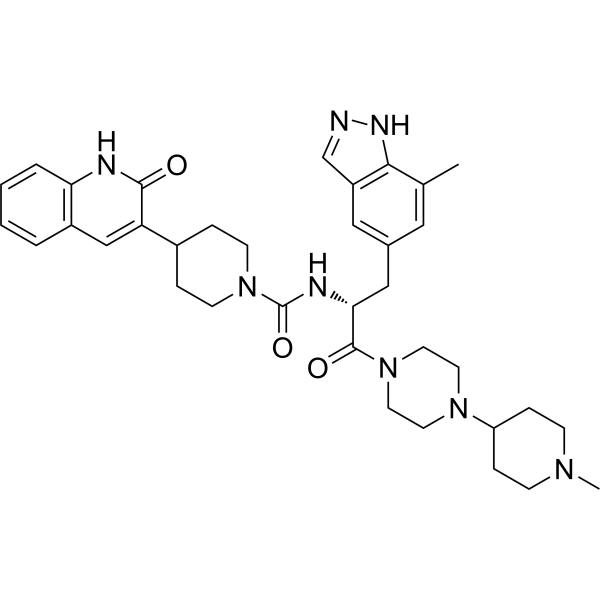
  • HY-114574

    CGRP Receptor Neurological Disease
    BMS-694153 is a potent antagonist of the human calcitonin gene-related peptide receptor (CGRP Receptor). BMS-694153 can be used for migraine with rapid and efficient intranasal exposure .
    BMS-694153
  • HY-P1471A

    22-52-Adrenomedullin (human) TFA

    CGRP Receptor Cardiovascular Disease
    Adrenomedullin (AM) (22-52), human (22-52-Adrenomedullin human) TFA, an NH2 terminal truncated adrenomedullin analogue, is an adrenomedullin receptor antagonist. Adrenomedullin (AM) (22-52), human also antagonizes the calcitonin generelated peptide (CGRP) receptor in the hindlimb vascular bed of the cat .
    Adrenomedullin (AM) (22-52), human TFA
  • HY-32709S

    MK-0974-d8

    Isotope-Labeled Compounds CGRP Receptor Neurological Disease
    Telcagepant-d8 (MK-0974-d8) is deuterium labeled Telcagepant. Telcagepant (MK-0974) is an orally active calcitonin gene-related peptide (CGRP) receptor antagonist with Kis of 0.77 nM and 1.2 nM for human and rhesus CGRP receptors, respectively.
    Telcagepant-d8
  • HY-12366S

    MK-1602-d5

    Isotope-Labeled Compounds CGRP Receptor Cardiovascular Disease Neurological Disease
    Ubrogepant-d5 (MK-1602-d5) is deuterium labeled Ubrogepant. Ubrogepant (MK-1602) is an orally active and selective antagonist of calcitonin gene-related peptide receptor (CGRP). Ubrogepant has high affinity for CGRP receptors in human and rhesus monkeys, and can effectively block the cAMP response stimulated by α-CGRP. Ubrogepant can be used in the study of acute migraine .
    Ubrogepant-d5
  • HY-10095R

    BIBN-4096 (Standard); BIBN 4096BS (Standard)

    CGRP Receptor Reference Standards Neurological Disease
    Olcegepant (Standard) is the analytical standard of Olcegepant (HY-10095). This product is intended for research and analytical applications. Olcegepant (BIBN-4096) is a potent and selective non-peptide antagonist of the calcitonin gene-related peptide 1 (CGRP1) receptor with IC50 of 0.03 nM and Ki of 14.4 pM for human CGRP .
    Olcegepant (Standard)
  • HY-156957

    Biochemical Assay Reagents Others
    5-CNAC disodium is an orally active enhancer of absorption, with no pharmacological activity on its own. 5-CNAC disodium can significantly enhance the absorption efficiency of the drug (such as Salmon calcitonin (HY-P0090)) when administered together with it in the gastrointestinal tract. 5-CNAC disodium binds reversibly and non-covalently to peptide drugs, protecting them from degradation by gastrointestinal enzymes, increasing their lipid solubility, promoting passive transcellular absorption, and not damaging the integrity of the intestinal epithelium. 5-CNAC disodium can be used in the research of adjuvants for orally administered peptide agents .
    5-CNAC disodium
  • HY-P11830

    Amylin Receptor Metabolic Disease
    UDA-6 is a potent calcitonin and amylin receptor agonist (DACRA). UDA-6 induces weight loss, improves metabolic and hepatic parameters, and stabilizes active receptor states in obesity rats. UDA-6 can be used for the research of obesity .
    UDA-6
  • HY-182539

    CGRP Receptor Others Neurological Disease
    DD04107 is a neuronal exocytosis inhibitor with a rat Syt1-C2B domain binding Ka of 2.4 μM. DD04107 interferes with synaptobrevin-syntaxin-SNAP-25 complex formation and Syt1-SNARE complex interaction to block α-calcitonin gene-related peptide (α-CGRP) exocytotic release from primary sensory neurons. DD04107 blocks inflammatory ion channel recruitment to nociceptor plasma membranes. DD04107 can be used for the research of chronic inflammatory pain, neuropathic pain, osteosarcoma pain, chemotherapy-induced peripheral neuropathy, diabetic neuropathy, inflammatory pain .
    DD04107

Inquiry Online

Your information is safe with us. * Required Fields.

Salutation


Country or Region *

Applicant Name *


Organization Name *

Department *


Email Address *


Product Name *

Cat. No.


Requested quantity *

Phone Number *


Remarks

Inquiry Online

Inquiry Information

Product Name:
Cat. No.:
Quantity:
MCE Japan Authorized Agent:

