



Telcagepant
Based on 2 publication(s) in Google Scholar
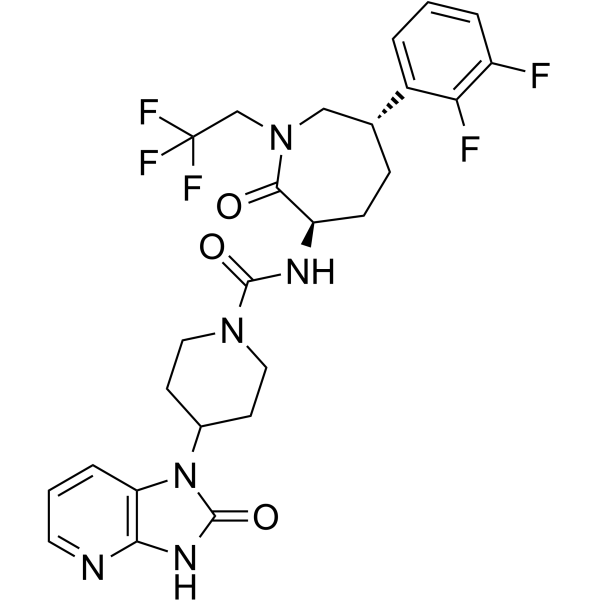
Telcagepant (MK-0974) is an orally active calcitonin gene-related peptide (CGRP) receptor antagonist with Kis of 0.77 nM and 1.2 nM for human and rhesus CGRP receptors, respectively.
For research use only. We do not sell to patients.
- Purity : 98.63%
- CAS No.: 781649-09-0
- Formula: C26H27F5N6O3
- Molecular Weight:566.52
-
Storage:Powder -20°C, 3 years , 4°C, 2 years ; In solvent -80°C, 2 years , -20°C, 1 year

To place orders, for customer services and technical support, please contact: MedChemExpress USA
Tel: 609-228-6898 E-mail: [email protected] [email protected]


-
 Biological Activity
-
Chemical Information
-
Solvent & Solubility
- Purity & Documentation
- References
-
 Help & FAQs


-
HY-10095
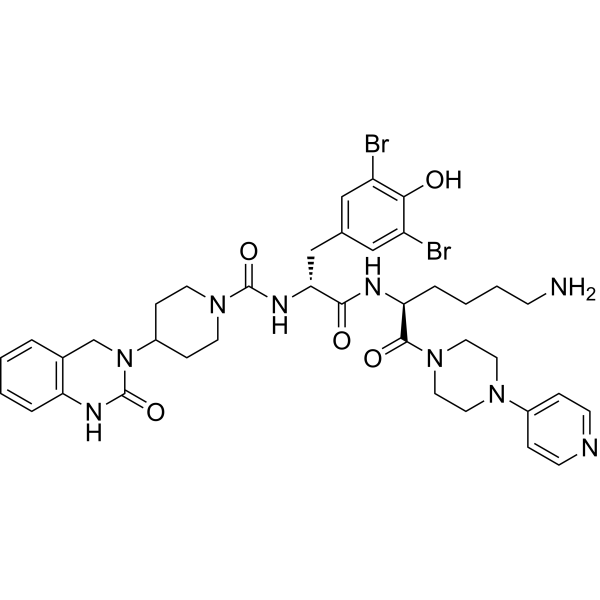
OlcegepantCGRP Antagonist -
HY-10301
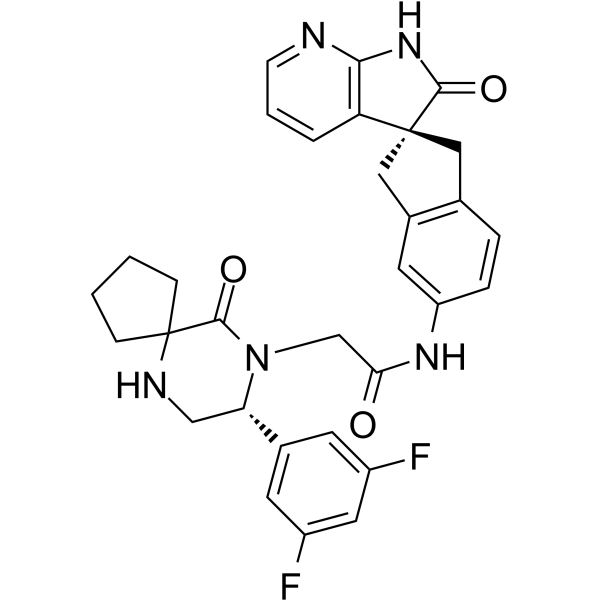
MK-3207CGRP Receptor Antagonist -
HY-15498
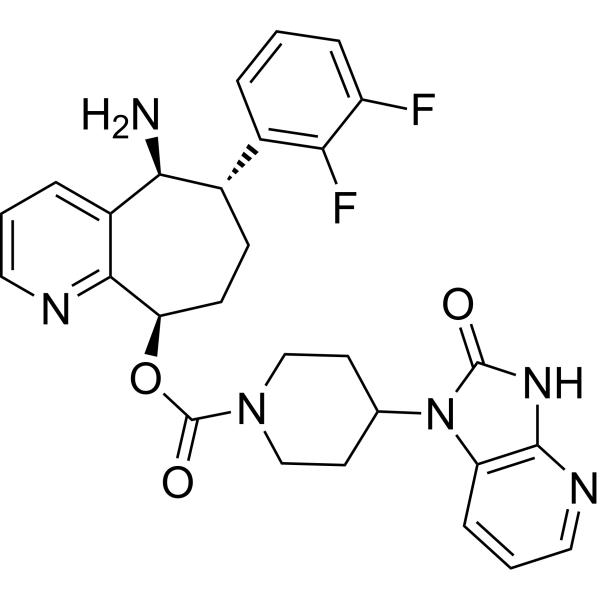
RimegepantCGRP/AMY1 Receptor Antagonist -
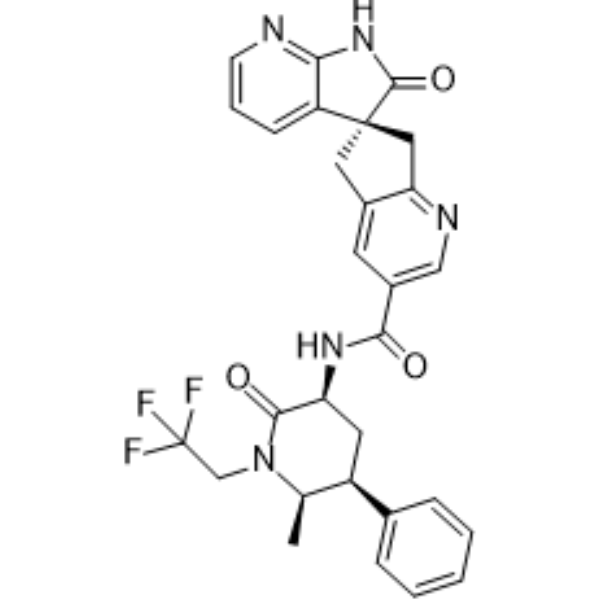
HY-12366
UbrogepantCGRP Antagonist -
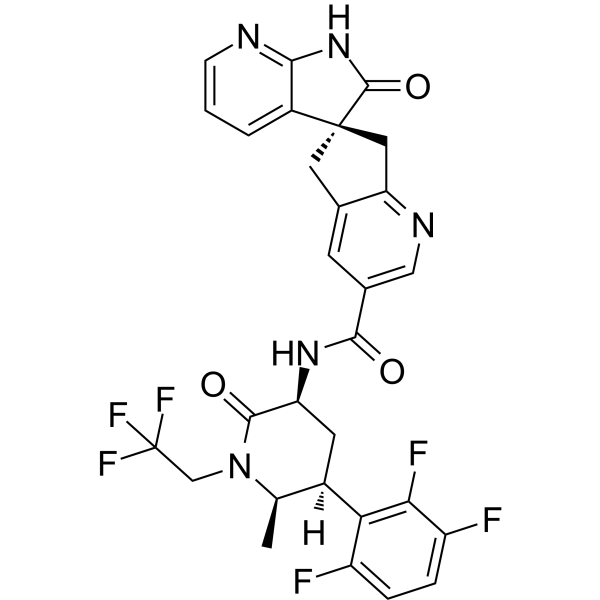
HY-109022
AtogepantCGRP Antagonist -
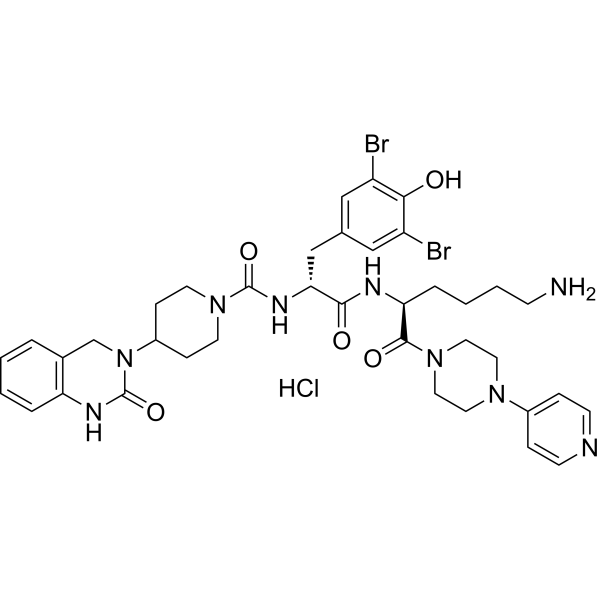
HY-10095A
Olcegepant hydrochlorideCGRP Antagonist -
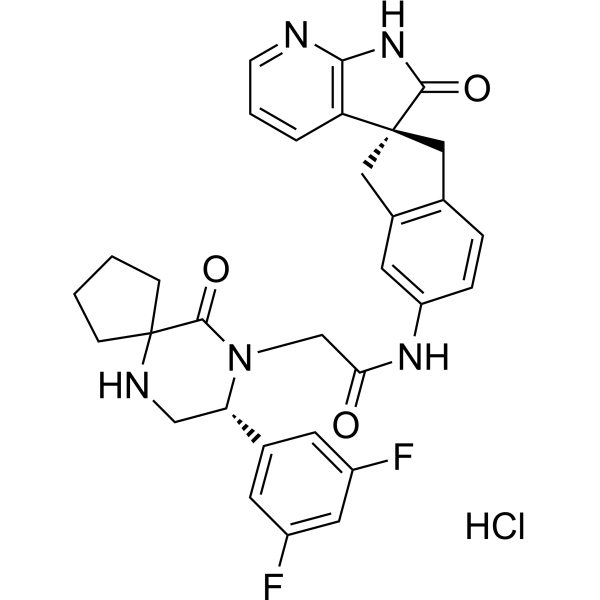
HY-10302
MK-3207 HydrochlorideCGRP Receptor Antagonist -
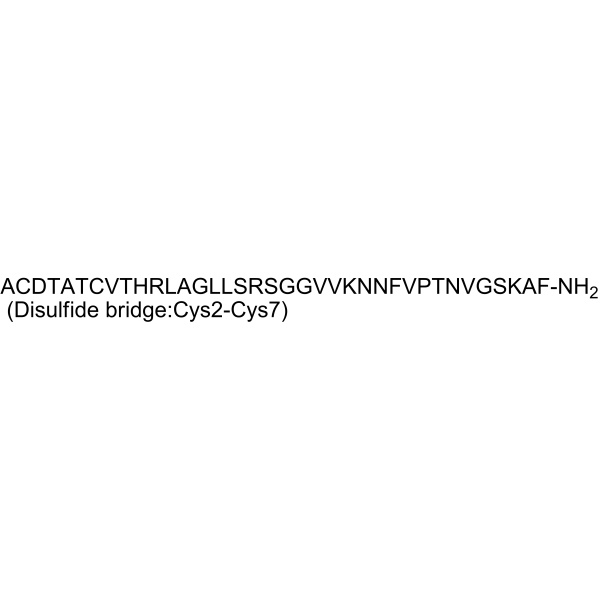
HY-P1071
α-CGRP (human)Vasodilator -
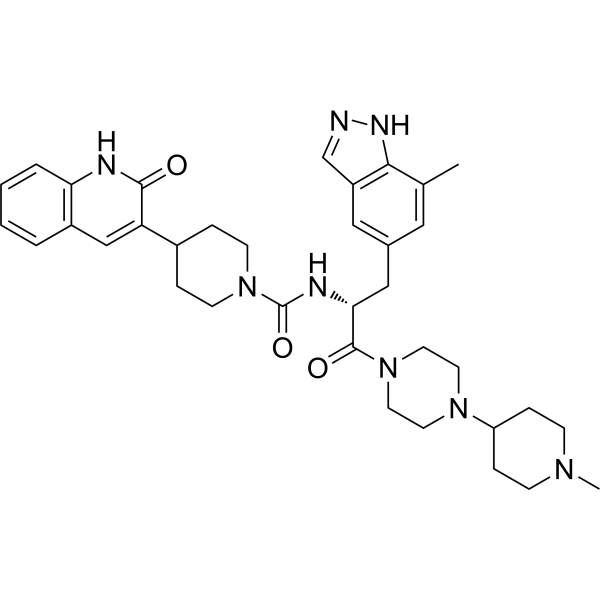
HY-134992
VazegepantCGRP Receptor Antagonist -
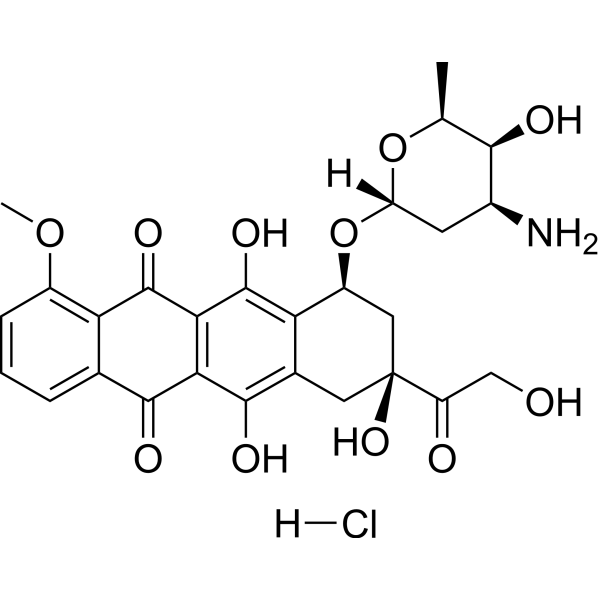
HY-15142
Doxorubicin hydrochlorideTopoisomerase Inhibitor -
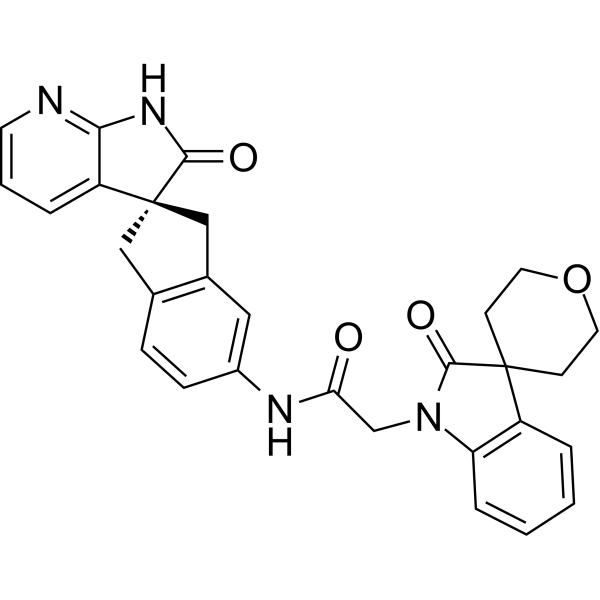
HY-112262
CGRP antagonist 1CGRP Receptor Antagonist -

HY-10302R
MK-3207 hydrochloride (Standard)Reference Standard
Publications Citing Use of MedChemExpress (MCE) Telcagepant
More

Biological Activity
Description
IC50 & Target
Ki: 0.77 nM (human CGRP), 1.2 nM (rhesus CGRP)
Cellular Effect
|
Cell Line

|
Type | Value | Description | References |
|---|---|---|---|---|
| HEK293 | IC50 |
11 nM
Compound: MK-0974
|
Antagonist activity at human CLR expressed in HEK293 cells coexpressing human RAMP1 assessed as inhibition of human CGRPalpha-induced cAMP production after 5 mins in presence of 50% human serum by scintillation proximity assay
Antagonist activity at human CLR expressed in HEK293 cells coexpressing human RAMP1 assessed as inhibition of human CGRPalpha-induced cAMP production after 5 mins in presence of 50% human serum by scintillation proximity assay
|
[PMID: 19818613] |
| HEK293 | IC50 |
11 nM
Compound: Telcagepant
|
Antagonist activity at human CLR expressed in HEK293 cells coexpressing human RAMP1 assessed as inhibition of human CGRPalpha-induced cAMP production after 30 mins by scintillation proximity assay in presence of 50% human serum
Antagonist activity at human CLR expressed in HEK293 cells coexpressing human RAMP1 assessed as inhibition of human CGRPalpha-induced cAMP production after 30 mins by scintillation proximity assay in presence of 50% human serum
|
[PMID: 19577468] |
| HEK293 | IC50 |
2 nM
Compound: MK-0974
|
Antagonist activity at human CLR expressed in HEK293 cells coexpressing human RAMP1 assessed as inhibition of human CGRPalpha-induced cAMP production after 5 mins by scintillation proximity assay
Antagonist activity at human CLR expressed in HEK293 cells coexpressing human RAMP1 assessed as inhibition of human CGRPalpha-induced cAMP production after 5 mins by scintillation proximity assay
|
[PMID: 19818613] |
| HEK293 | IC50 |
2.2 nM
Compound: 2, MK-0974
|
Inhibition of human CGRP receptor expressed in huamn HEK293 cells coexpressing CLR/RAMP1 assessed as inhibition of CGRP-stimulated cAMP production after 1 hr
Inhibition of human CGRP receptor expressed in huamn HEK293 cells coexpressing CLR/RAMP1 assessed as inhibition of CGRP-stimulated cAMP production after 1 hr
|
[PMID: 21982500] |
| HEK293 | IC50 |
2.4 nM
Compound: Telcagepant
|
Antagonist activity at human CLR expressed in HEK293 cells coexpressing human RAMP1 assessed as inhibition of human CGRPalpha-induced cAMP production after 30 mins by scintillation proximity assay
Antagonist activity at human CLR expressed in HEK293 cells coexpressing human RAMP1 assessed as inhibition of human CGRPalpha-induced cAMP production after 30 mins by scintillation proximity assay
|
[PMID: 19577468] |
In Vitro
Telcagepant (MK-0974) displays affinity (Ki) for the canine and rat receptors, with values of 1204 nM and 1192 nM (n=10), respectively. Telcagepant (MK-0974) potently blocks human α-CGRP-stimulated cAMP responses in human CGRP receptor expressing HEK293 cells with an IC50 of 2.2 nM[1]. Telcagepant (MK-0974) displays saturable binding to SK-N-MC membranes with a KD of 1.9 nM and Bmax of 479 fmol/mg protein. Telcagepant (MK-0974) also displays saturable binding to rhesus cerebellum homogenate with a KD of 1.3 nM and Bmax of 20 fmol/mg[2].
MedChemExpress (MCE) has not independently confirmed the accuracy of these methods. They are for reference only.
In Vivo
MedChemExpress (MCE) has not independently confirmed the accuracy of these methods. They are for reference only.
Clinical Trial
| NCT Number | Sponsor | Condition | Start Date |
Phase
|
|---|---|---|---|---|
| NCT01329991 | 2011-05 | PHASE1 |


Chemical Information
-
CAS No. 781649-09-0
-
Appearance Solid
-
Molecular Weight 566.52
-
Formula C26H27F5N6O3
-
Color Light yellow to yellow
-
SMILES
O=C1NC2=C(N1C3CCN(C(N[C@@H]4CC[C@@H](C5=CC=CC(F)=C5F)CN(CC(F)(F)F)C4=O)=O)CC3)C=CC=N2
-
Synonyms
MK-0974
-
Shipping
Room temperature in continental US; may vary elsewhere.
-
Storage
Powder -20°C 3 years 4°C 2 years In solvent -80°C 2 years -20°C 1 year


Publications (2)
-
Journal Impact Factor
-
Most Recent
-
Cephalalgia
2021 Apr;41(5):499-514. PMID: 33626922 -
Vascul Pharmacol
Binding and functional pharmacological characteristics of gepant-type antagonists in rat brain and mesenteric arteries. [Abstract]2017 Mar:90:36-43. PMID: 28192258


Solvent & Solubility
In Vitro:
DMSO : ≥ 50 mg/mL (88.26 mM; Hygroscopic DMSO has a significant impact on the solubility of product, please use newly opened DMSO)
* "≥" means soluble, but saturation unknown.
Please refer to the solubility information to select the appropriate solvent. Once prepared, please aliquot and store the solution to prevent product inactivation from repeated freeze-thaw cycles.
Storage method and period of stock solution: -80°C, 2 years; -20°C, 1 year. When stored at -80°C, please use it within 2 years. When stored at -20°C, please use it within 1 year.
Please refer to the solubility information to select the appropriate solvent. Once prepared, please aliquot and store the solution to prevent product inactivation from repeated freeze-thaw cycles.
Storage method and period of stock solution: -80°C, 2 years; -20°C, 1 year. When stored at -80°C, please use it within 2 years. When stored at -20°C, please use it within 1 year.
Concentration (start) × Volume (start) = Concentration (final) × Volume (final)
In Vivo:
Select the appropriate dissolution method based on your experimental animal and administration route.
- For the following dissolution methods, please ensure to first prepare a clear stock solution using an In Vitro approach and then sequentially add co-solvents:
- To ensure reliable experimental results, the clarified stock solution can be appropriately stored based on storage conditions. As for the working solution for In Vivo experiments, it is recommended to prepare freshly and use it on the same day.
- The percentages shown for the solvents indicate their volumetric ratio in the final prepared solution. If precipitation or phase separation occurs during preparation, heat and/or sonication can be used to aid dissolution.
Add each solvent one by one: 10% DMSO 40% PEG300 5% Tween-80 45% Saline
Solubility: ≥ 3 mg/mL (5.30 mM); Clear solution
This protocol yields a clear solution of ≥ 3 mg/mL (saturation unknown).
Taking 1 mL working solution as an example, add 100 μL DMSO stock solution (30.0 mg/mL) to 400 μL PEG300, and mix evenly; then add 50 μL Tween-80 and mix evenly; then add 450 μL Saline to adjust the volume to 1 mL.
Preparation of Saline: Dissolve 0.9 g sodium chloride in ddH₂O and dilute to 100 mL to obtain a clear Saline solution.
Add each solvent one by one: 10% DMSO 90% (20% SBE-β-CD in Saline)
Solubility: ≥ 3 mg/mL (5.30 mM); Clear solution
This protocol yields a clear solution of ≥ 3 mg/mL (saturation unknown).
Taking 1 mL working solution as an example, add 100 μL DMSO stock solution (30.0 mg/mL) to 900 μL 20% SBE-β-CD in Saline, and mix evenly.
Preparation of 20% SBE-β-CD in Saline (4°C, storage for one week): 2 g SBE-β-CD powder is dissolved in 10 mL Saline, completely dissolve until clear.
In Vivo Dissolution Calculator
Please enter the basic information of animal experiments:
-
-
-
-
Recommended: Prepare an additional quantity of animals to account for potential losses during experiments.
Please enter your animal formula composition:
-
%DMSO +
Recommended: Keep the proportion of DMSO in working solution below 2% if your animal is weak.
-
%+
-
+%Tween-80 + +
-
%Saline +
The co-solvents required include: DMSO, . All of co-solvents are available by MedChemExpress (MCE). , Tween 80. All of co-solvents are available by MedChemExpress (MCE).
Working solution concentration: 0.22 mg/mL
Method for preparing stock solution: mg drug dissolved in μL DMSO. Stock solution concentration: mg/mL.
1. Take μL DMSO stock solution;
2. Add μL .
μL , mix evenly;
3. Then add μL Tween 80, mix evenly;
4. Then add μL
Please ensure that the stock solution in the first step is dissolved to a clear state, and add co-solvents in sequence. You can use ultrasonic heating (ultrasonic cleaner, recommended frequency 20-40 kHz), vortexing, etc. to assist dissolution.


Purity & Documentation
-
Data Sheet (282 KB)
-
SDS (252 KB)
- English - EN (252 KB)
- Français - FR (252 KB)
- Deutsch - DE (252 KB)
- Norwegian - NO (252 KB)
- Español - ES (252 KB)
- Swedish - SV (252 KB)
- Italian - IT (252 KB)
- Korean - KR (252 KB)
- Portuguese - PT (252 KB)
-
Handling Instructions (2659 KB)
References
[1]. Salvatore CA, et al. Pharmacological characterization of MK-0974 [N-[(3R,6S)-6-(2,3-difluorophenyl)-2-oxo-1-(2,2,2-trifluoroethyl)azepan-3-yl]-4-(2-oxo-2,3-dihydro-1H-imidazo[4,5-b]pyridin-1-yl)piperidine-1-carboxamide], a potent and orally active calcitonin gene-related peptide receptor antagonist for the treatment of migraine. J Pharmacol Exp Ther. 2008 Feb;324(2):416-21. Epub 2007 Nov 26. [Content Brief]
[2]. Moore EL, et al. Examining the binding properties of MK-0974: a CGRP receptor antagonist for the acute treatment of migraine. Eur J Pharmacol. 2009 Jan 14;602(2-3):250-4. [Content Brief]
[3]. Roller S, et al. Preclinical pharmacokinetics of MK-0974, an orally active calcitonin-gene related peptide (CGRP)-receptor antagonist, mechanism of dose dependency and species differences. Xenobiotica. 2009 Jan;39(1):33-45. [Content Brief]


Complete Stock Solution Preparation Table
Please refer to the solubility information to select the appropriate solvent. Once prepared, please aliquot and store the solution to prevent product inactivation from repeated freeze-thaw cycles.
Storage method and period of stock solution: -80°C, 2 years; -20°C, 1 year. When stored at -80°C, please use it within 2 years. When stored at -20°C, please use it within 1 year.
| Optional Solvent | Concentration Solvent Mass | 1 mg | 5 mg | 10 mg | 25 mg |
|---|---|---|---|---|---|
| DMSO | 1 mM | 1.7652 mL | 8.8258 mL | 17.6516 mL | 44.1291 mL |
| 5 mM | 0.3530 mL | 1.7652 mL | 3.5303 mL | 8.8258 mL | |
| 10 mM | 0.1765 mL | 0.8826 mL | 1.7652 mL | 4.4129 mL | |
| 15 mM | 0.1177 mL | 0.5884 mL | 1.1768 mL | 2.9419 mL | |
| 20 mM | 0.0883 mL | 0.4413 mL | 0.8826 mL | 2.2065 mL | |
| 25 mM | 0.0706 mL | 0.3530 mL | 0.7061 mL | 1.7652 mL | |
| 30 mM | 0.0588 mL | 0.2942 mL | 0.5884 mL | 1.4710 mL | |
| 40 mM | 0.0441 mL | 0.2206 mL | 0.4413 mL | 1.1032 mL | |
| 50 mM | 0.0353 mL | 0.1765 mL | 0.3530 mL | 0.8826 mL | |
| 60 mM | 0.0294 mL | 0.1471 mL | 0.2942 mL | 0.7355 mL | |
| 80 mM | 0.0221 mL | 0.1103 mL | 0.2206 mL | 0.5516 mL |


Telcagepant Related Classifications
HY-32709 Related Classifications
 Powered by Bioz