

Search Result
Results for "
integrin α4β1
" in MedChemExpress (MCE) Product Catalog:
| Cat. No. |
Product Name |
Target |
Research Areas |
Chemical Structure |
-
- HY-134130
-
|
|
Integrin
|
Inflammation/Immunology
|
|
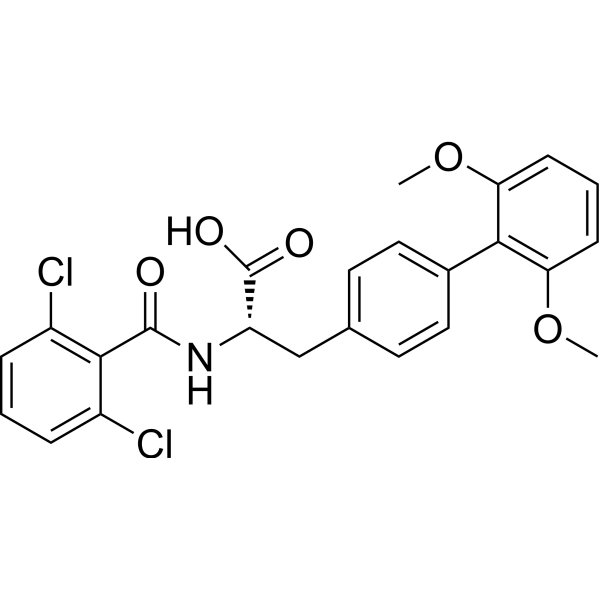
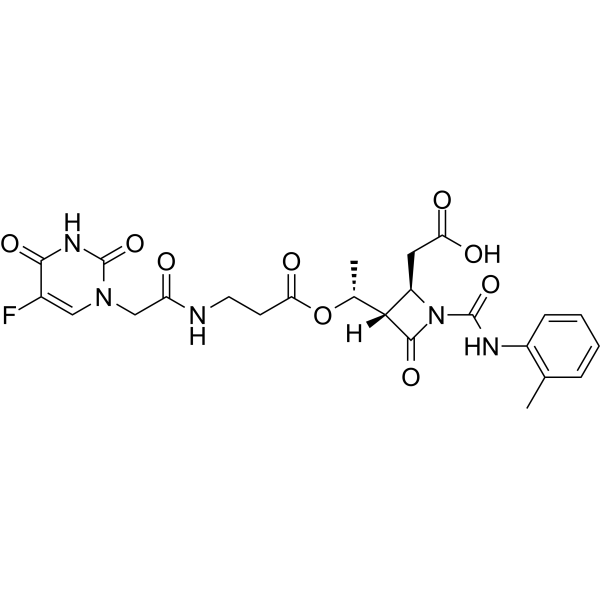
Integrin modulator 1 is a potent and selective α4β1 integrin agonist, with an IC50 of 9.8 nM for RGD-binding α4β1. Integrin modulator 1 increases cell adhesion mediated by α4β1 integrin, with an EC50 of 12.9 nM .
|
-
-
- HY-107589
-
BIO5192
2 Publications Verification
|
Integrin
|
Inflammation/Immunology
|
|
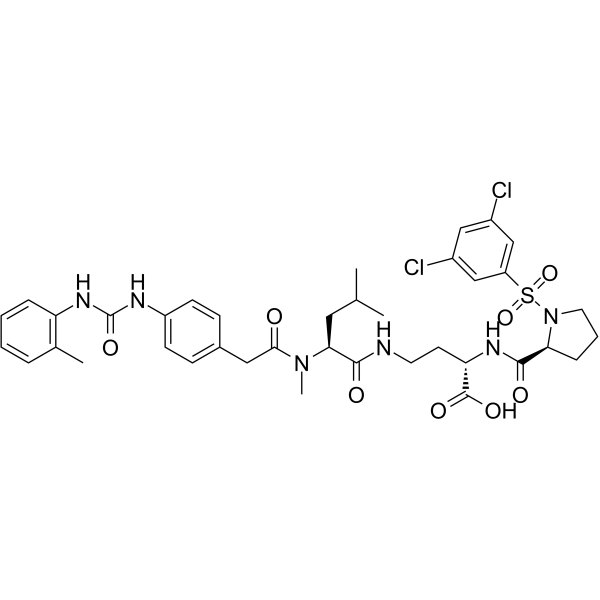
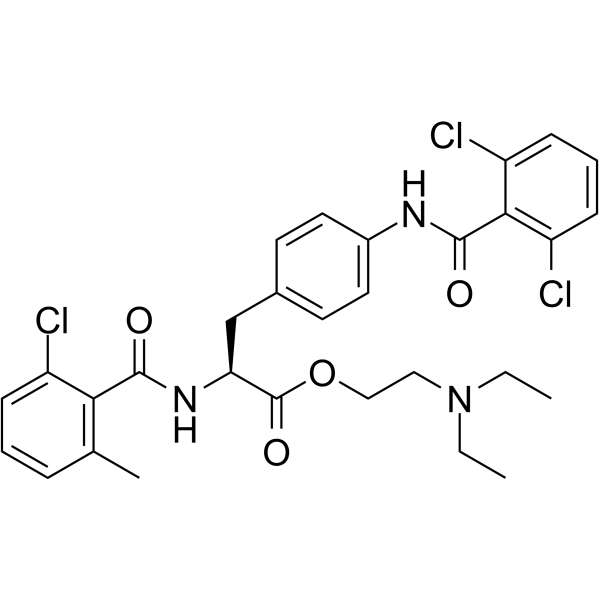
BIO5192 is a selective and potent integrin α4β1 (VLA-4) inhibitor (Kd<10 pM). BIO5192 selectively binds to α4β1 (IC50=1.8 nM) over a range of other integrins. BIO5192 results in a 30-fold increase in mobilization of murine hematopoietic stem and progenitors (HSPCs) over basal levels .
|
-
-
- HY-108831A
-
|
AN100226; BG00002
|
Integrin
|
Inflammation/Immunology
Cancer
|
|
Natalizumab (Anti-CD49d) (AN100226; BG00002) Solution is a humanized monoclonal IgG4 antibody inhibitor that selectively targets α4 integrin (CD49d), blocking the interaction of integrins such as α4β1 (VLA-4) with vascular cell adhesion molecule VCAM-1, intercellular adhesion molecule ICAM-1, and fibronectin by competitively binding to the α4 subunit. Natalizumab solution inhibits the adhesion, retention, and transendothelial migration of immune cells (such as CD4 + T cells), reducing the infiltration of inflammatory cells into the central nervous system or lesion sites, thereby exerting anti-inflammatory and immunomodulatory activity. Natalizumab (Anti-CD49d) solution is used in the study of relapsing-remitting multiple sclerosis (RRMS) and is also applied in the research of autoimmune or inflammation-related diseases such as Crohn's disease, B-cell lymphoma, and non-infectious uveitis. Natalizumab (Anti-CD49d) can also prevent lymphocytes from entering the central nervous system, thus preventing acute demyelinating relapses .
|
-
-
- HY-15770
-
TR-14035
Maximum Cited Publications
6 Publications Verification
|
Integrin
|
Inflammation/Immunology
|
|
TR-14035 is a orally active dual α4β7/α4β1 integrin antagonist, with IC50 s of 7 nM and 87 nM for α4β7 and α4β1, respectively. TR-14035 can be used for the research of inflammation and autoimmune diseases .
|
-
-
- HY-14951
-
Firategrast
Maximum Cited Publications
6 Publications Verification
SB 683699
|
Integrin
|
Neurological Disease
|
|
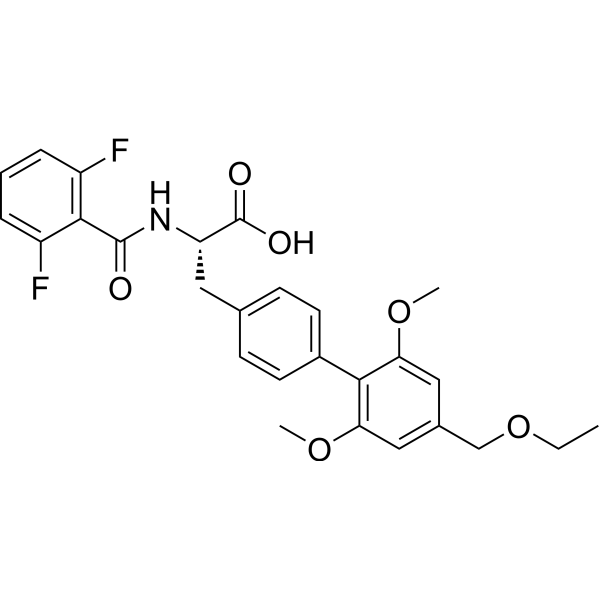
Firategrast (SB 683699) is an orally active and specific α4β1/α4β7 integrin antagonist. Firategrast reduces trafficking of lymphocytes into the central nervous system (CNS) and decreases multiple sclerosis (MS) activity .
|
-
-
- HY-P3522
-
|
|
Integrin
|
Cardiovascular Disease
|
|
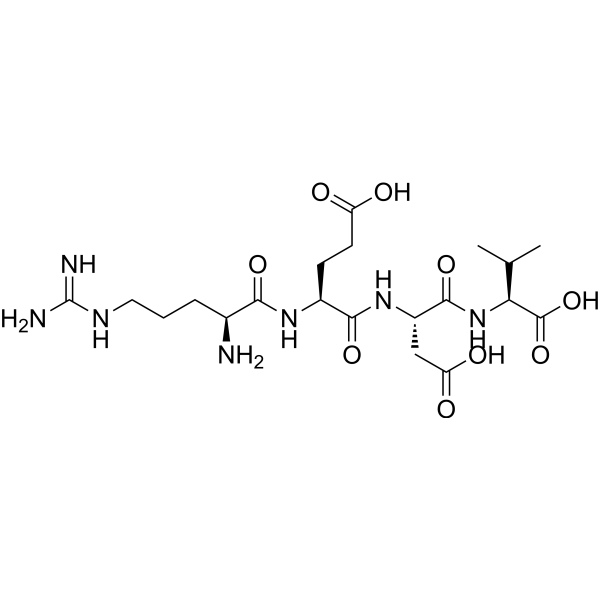
REDV is the minimal active sequence within the CS5 site of the alternatively spliced type III connecting segment (IIICS) region of fibronectin. REDV can mediate adhesion to the IIICS region of plasma fibronectin by binding the integrin alpha 4 beta 1(α4β1). REDV can be used for the research of cell adhesion. REDV is used to study the effects of gene vectors containing REDV on cells .
|
-
-
- HY-124290
-
|
AJM300
|
Integrin
|
Inflammation/Immunology
|
Carotegrast methyl (AJM300) is an orally active and selective α4 integrin antagonist. HCA2969, an active metabolite of Carotegrast methyl, is a specific and dual α4β1/α4β7 integrin antagonist. Carotegrast methyl prevents the development of colitis in mice .
|
-
-
- HY-N2587
-
|
|
Integrin
Apoptosis
|
Cancer
|
|
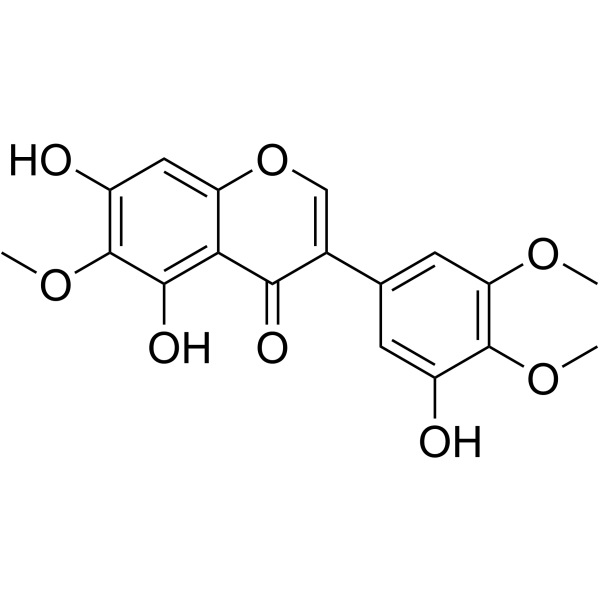
Irigenin is a is a lead compound, and mediates its anti-metastatic effect by specifically and selectively blocking α9β1 and α4β1 integrins binding sites on C-C loop of Extra Domain A (EDA). Irigenin shows anti-cancer properties. It sensitizes TRAIL-induced apoptosis via enhancing pro-apoptotic molecules in gastric cancer cells .
|
-
-
- HY-P2267
-
LDV
1 Publications Verification
|
Integrin
|
Others
|
|
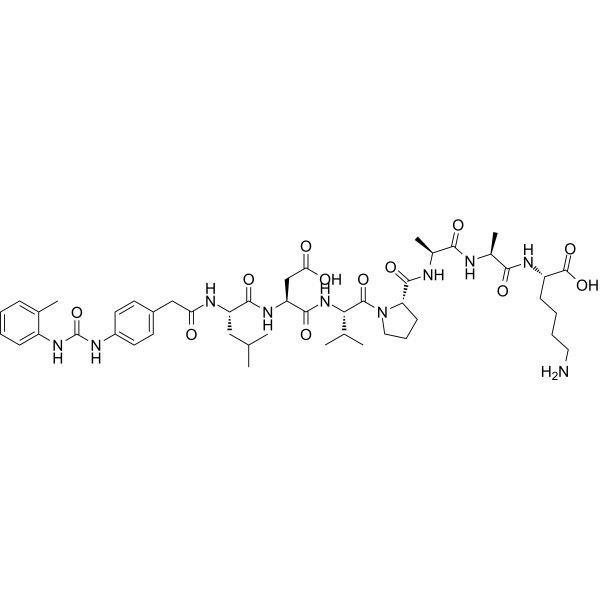
LDV is a non-fluorescent analog of LDV-FITC. LDV is a α4β1 integrin (VLA-4) ligand, and binds α4β1 integrin in leukemia cells .
|
-
-
- HY-75385
-
|
CDP323; UCB1184197
|
Integrin
|
Inflammation/Immunology
|
|
Zaurategrast ethyl ester (CDP323), the ethyl ester proagent of CT7758 , is a α4β1/α4β7 integrin antagonist used for the treatment of inflammatory and autoimmune disorders .
|
-
-
- HY-108831
-
|
|
Integrin
|
Inflammation/Immunology
Cancer
|
|
Natalizumab (AN100226; BG00002) is a humanized monoclonal IgG4 antibody inhibitor that selectively targets α4 integrin (CD49d). It blocks the interaction of integrins such as α4β1 (VLA-4) with vascular cell adhesion molecule VCAM-1, intercellular adhesion molecule ICAM-1, and fibronectin by competitively binding to the α4 subunit. Natalizumab inhibits the adhesion, retention, and transendothelial migration of immune cells (such as CD4 + T cells), reducing the infiltration of inflammatory cells into the central nervous system or lesion sites, thus exerting anti-inflammatory and immunomodulatory activity. Natalizumab is used in the study of relapsing-remitting multiple sclerosis (RRMS) and also has applications in the study of autoimmune or inflammation-related diseases such as Crohn's disease, B-cell lymphoma, and non-infectious uveitis. Natalizumab can also prevent lymphocytes from entering the central nervous system, thereby preventing acute demyelinating relapses .
|
-
-
- HY-175287
-
|
|
Integrin
|
Cancer
|
|
α5β1 integrin agonist-2 (Compound 2) is a selective α5β1 integrin agonist (EC50 = 45.98 nM). α5β1 integrin agonist-2 induces integrin activation. α5β1 integrin agonist-2 is applicable to the research of leukemia .
|
-
-
- HY-129453
-
|
|
Integrin
|
Inflammation/Immunology
|
|
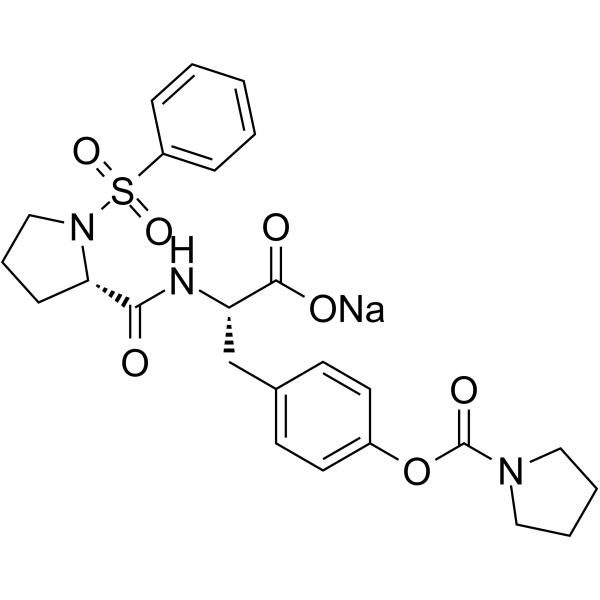
BOP sodium is a potent and selective dual α9β1/α4β1 integrin inhibitor with Kd values in the picomolar range. BOP sodium shows the rapid and preferential mobilization of hematopoietic stem cell (HSC) and progenitors. BOP sodium has little inhibitory activity on α4β7, α1β1, α2β1, and α5β1, αIIBβ3 integrins .
|
-
-
- HY-107589A
-
|
|
Integrin
|
Inflammation/Immunology
|
|
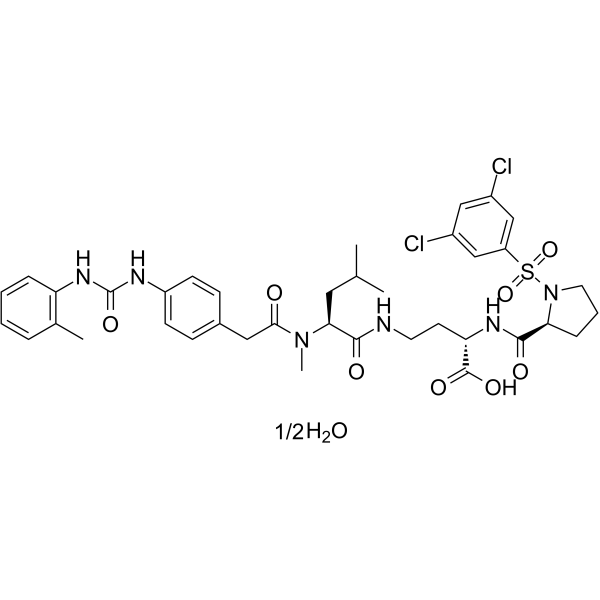
BIO5192 hydrate is a selective and potent integrin α4β1 (VLA-4) inhibitor (Kd<10 pM). BIO5192 hydrate selectively binds to α4β1 (IC50=1.8 nM) over a range of other integrins. BIO5192 hydrate results in a 30-fold increase in mobilization of murine hematopoietic stem and progenitors (HSPCs) over basal levels .
|
-
-
- HY-138542
-
|
|
Integrin
|
Inflammation/Immunology
|
|
RO0270608, the active metabolite of R411, is a dual alpha4beta1-alpha4beta7 (α4β1/α4β7) integrin antagonist. Antiinflammatory activity .
|
-
-
- HY-14190
-
|
R-411 free base
|
Integrin
|
Inflammation/Immunology
|
|
Valategrast (R-411 free base) is a potent and orally active integrin α4β1 (VLA-4) and α4β7 dual antagonist. Valategrast has the potential for Chronic obstructive pulmonary disease (COPD) and asthma treatment .
|
-
-
- HY-139702
-
|
|
Integrin
Apoptosis
Caspase
|
Cancer
|
|
α5β1 integrin agonist-1 is an α5β1 integrin agonist, with an EC50 of 1.5 nM. α5β1 integrin agonist-1 inhabits α4β1 integrin (IC50 = 2.99 μM) in Jurkat/VCAM-1 adhesion assayα5β1 integrin agonist-1 induces concentration-dependent apoptosis and activates the caspase 3/7 pathway in α5β1 integrin-expressing K562 cancer cells. α5β1 integrin agonist-1 can be used for the study of cancer .
|
-
-
- HY-P1188
-
|
|
Integrin
|
Cancer
|
|
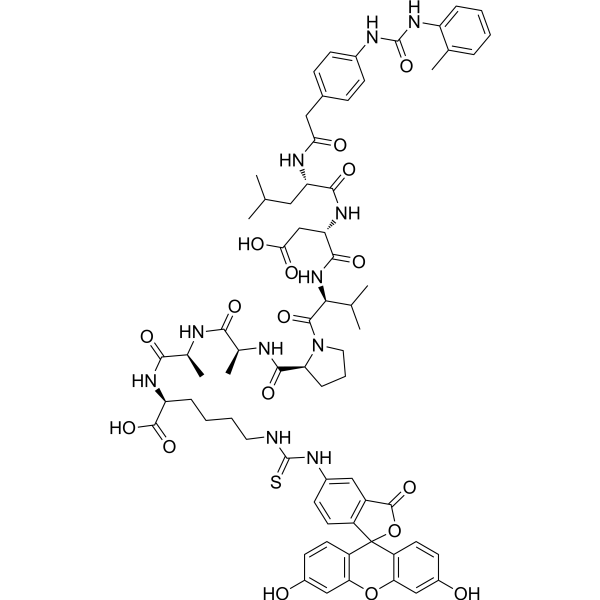
LDV-FITC, a fluorescent peptide, is a FITC-conjugated LDV peptide (HY-P2267). LDV-FITC binds to the α4β1 integrin with high affinity (Kd: 0.3 nM and 12 nM for binding to U937 cells in the presence and absence of Mn 2+ respectively). LDV-FITC can be used to detect α4β1 integrin affinity .
|
-
-
- HY-P11445
-
|
|
Integrin
|
Cancer
|
|
GREDVGC is a peptide. GREDVGC can mimic VCAM-1 for binding to integrin α4β1. GREDVGC can be used for the research of cancer .
|
-
-
- HY-175286
-
|
|
Integrin
ERK
|
Inflammation/Immunology
Cancer
|
|
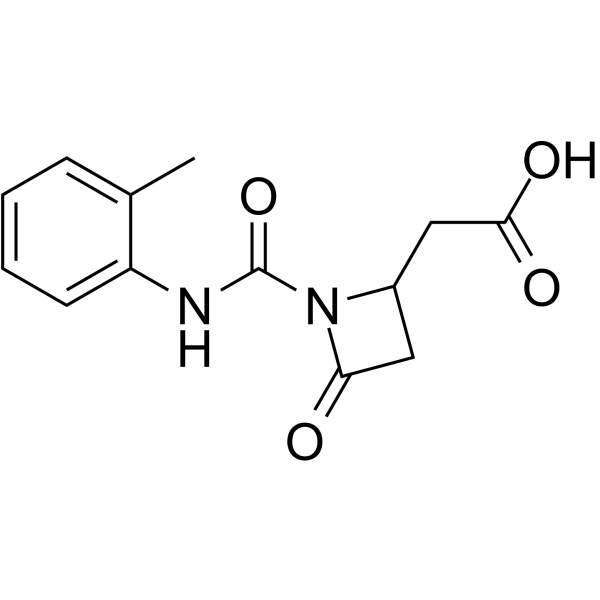
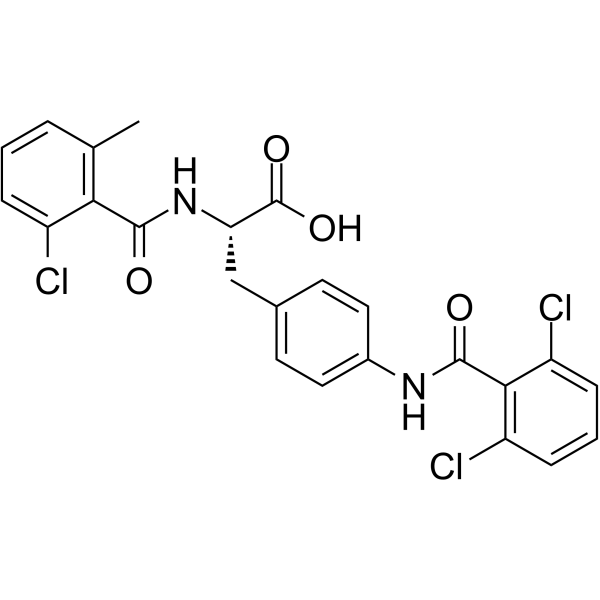
α4β1 antagonist-1 (Compound 4) is a highly selective α4β1 integrin antagonist (IC50=15 nM). α4β1 antagonist-1 inhibits integrin-mediated cell adhesion and ERK1/2 signaling activation. α4β1 antagonist-1 also exhibits partial agonism toward αMβ2 integrin (EC50=23 nM). α4β1 antagonist-1 is promising for research of chronic inflammatory diseases (e.g., rheumatoid arthritis, multiple sclerosis) and cancers .
|
-
-
- HY-75385A
-
|
CDP323 sulfate; UCB1184197 sulfate
|
Integrin
|
Inflammation/Immunology
|
|
Zaurategrast ethyl ester sulfate (CDP323 sulfate), the ethyl ester proagent of CT7758 , is a α4β1/α4β7 integrin antagonist used for the treatment of inflammatory and autoimmune disorders .
|
-
-
- HY-123164
-
|
XRP 1745A
|
Integrin
|
Inflammation/Immunology
|
|
IVL 745 (XRP 1745A) is a very late antigen 4 (VLA-4, integrin α4β1) antagonist. IVL 745 reduces the airway inflammatory response of sensitized rats and sheep. IVL 745 can be used for airway inflammation and asthma research .
|
-
-
- HY-159179
-
|
|
Integrin
|
Inflammation/Immunology
|
|
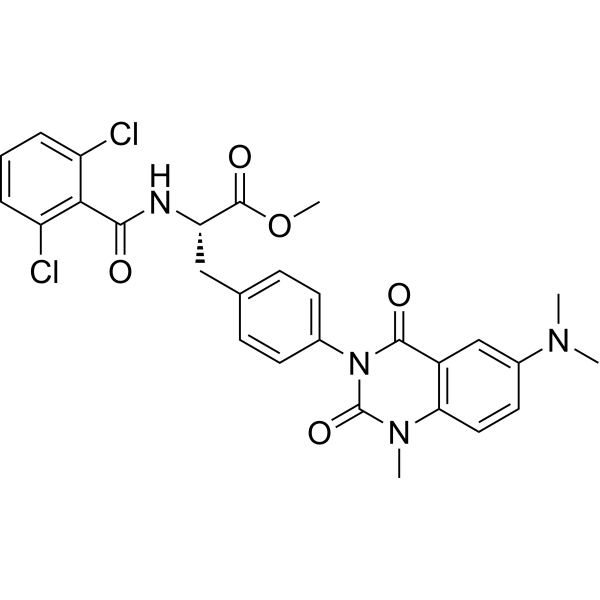
α4 integrin receptor antagonist 3 (Compound 11) is an orally active α4integrin receptor antagonist. α4 integrin receptor antagonist 3 can inhibit the adhesion of K562 cells mediated by the interaction between α4β1/VCAM-1 and α4β7/MAdCAM-1, with IC50 values of 130 nM and 2 nM, respectively. α4 integrin receptor antagonist 3 has the potential to be used in the study of dextran sulfate sodium (DSS) colitis mouse model .
|
-
-
- HY-119142
-
|
|
Integrin
|
Inflammation/Immunology
|
|
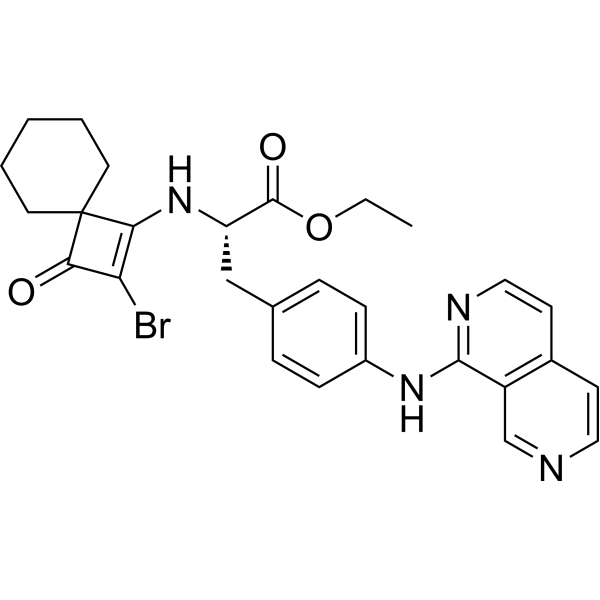
CP-664511 is an orally active and potent α4β1 integrin antagonist with anti-inflammatory effects (IC50=0.52 nM). CP-664511 inhibits the interaction between α4β1 and vascular cell adhesion molecule-1 (VCAM-1), significantly reducing eosinophil infiltration into lung tissue. CP-664511 is promising for research of asthma and allergic airway diseases .
|
-
-
- HY-123802
-
|
|
Integrin
|
Cancer
|
|
BIO7662 is a specific α4β1 antagonist. BIO7662 can be used to study α4β1 integrin-ligand interactions .
|
-
-
- HY-P3522A
-
|
|
Integrin
|
Cancer
|
|
REDV TFA is the minimal active sequence within the CS5 site of the alternatively spliced type III connecting segment (IIICS) region of fibronectin. REDV TFA can mediate adhesion to the IIICS region of plasma fibronectin by binding the integrin alpha 4 beta 1(α4β1). REDV TFA can be used for the research of cell adhesion .
|
-
-
- HY-P1188A
-
|
|
Integrin
|
Cancer
|
|
LDV-FITC TFA, a fluorescent peptide, is a FITC-conjugated LDV peptide (HY-P2267). LDV-FITC TFA binds to the α4β1 integrin with high affinity (Kd: 0.3 nM and 12 nM for binding to U937 cells in the presence and absence of Mn 2+ respectively). LDV-FITC TFA can be used to detect α4β1 integrin affinity .
|
-
-
- HY-124290A
-
|
AJM300 hydrochloride
|
Integrin
|
Inflammation/Immunology
|
Carotegrast methyl (AJM300) hydrochloride is an orally active and selective α4 integrin antagonist. HCA2969, an active metabolite of Carotegrast methyl hydrochloride, is a specific and dual α4β1/α4β7 integrin antagonist. Carotegrast methyl hydrochloride prevents the development of colitis in mice .
|
-
-
- HY-136214
-
|
|
Integrin
|
Inflammation/Immunology
Cancer
|
|
R-BC154 acetate is a selective fluorescent α9β1 integrin antagonist. R-BC154 acetate acts as a useful high affinity, activation dependent integrin probe, which can be used to investigate α9β1 and α4β1 integrin binding activity .
|
-
-
- HY-14189
-
|
R-411
|
Integrin
|
Inflammation/Immunology
|
|
Valategrast hydrochloride (R-411) is a potent integrin α4β1 (VLA-4) and α4β7 dual antagonist. Valategrast hydrochloride has the potential for Chronic obstructive pulmonary disease (COPD) and asthma treatment .
|
-
-
- HY-N2587R
-
|
|
Reference Standards
Integrin
Apoptosis
|
Cancer
|
|
Irigenin (Standard) is the analytical standard of Irigenin. This product is intended for research and analytical applications. Irigenin is a is a lead compound, and mediates its anti-metastatic effect by specifically and selectively blocking α9β1 and α4β1 integrins binding sites on C-C loop of Extra Domain A (EDA). Irigenin shows anti-cancer properties. It sensitizes TRAIL-induced apoptosis via enhancing pro-apoptotic molecules in gastric cancer cells .
|
-
-
- HY-122585
-
|
|
MMP
Src
FAK
|
Cancer
|
|
proMMP-9 inhibitor-3c (compound 3c) is a potent proMMP-9 inhibitor. proMMP-9 inhibitor-3c is specific for binding to the proMMP-9 hemopexin-like domain (Kd=320 nM). proMMP-9 inhibitor-3c disruption of MMP-9 homodimerization prevents association of proMMP-9 with both α4β1 integrin and CD44 and results in the dissociation of EGFR. This disruption results in decreased phosphorylation of Src and its downstream target proteins focal adhesion kinase (FAK) and paxillin (PAX) .
|
-
-
- HY-122023
-
|
|
Integrin
|
Inflammation/Immunology
Cancer
|
|
TBC3486 is a highly selective integrin α4β1 inhibitor. TBC3486 acts as a chemosensitizer to enhance the sensitivity of leukemia cells to chemotherapy. TBC3486 exhibits efficacy in preclinical models of integrin α4-dependent inflammatory and autoimmune diseases, including a mouse model of autoimmune encephalomyelitis. TBC3486 can be used for the research of precursor B-cell acute lymphoblastic leukemia .
|
-
-
- HY-114225
-
-
-
- HY-107589R
-
|
|
Reference Standards
Integrin
|
Inflammation/Immunology
|
|
BIO5192 (Standard) is the analytical standard of BIO5192 (HY-107589). This product is intended for research and analytical applications. BIO5192 is a selective and potent integrin α4β1 (VLA-4) inhibitor (Kd<10 pM). BIO5192 selectively binds to α4β1 (IC50=1.8 nM) over a range of other integrins. BIO5192 results in a 30-fold increase in mobilization of murine hematopoietic stem and progenitors (HSPCs) over basal levels .
|
-
-
- HY-14190A
-
|
(rac)-R-411 free base
|
Drug Isomer
|
Others
|
|
(rac)-Valategrast ((rac)-R-411 free base) is a racemic compound of Valategrast (HY-14190). Valategrast is a potent, orally active dual antagonist of integrin α4β1 (VLA-4) and α4β7. Valategrast may be used in research on chronic obstructive pulmonary disease (COPD) and asthma.
|
-
-
- HY-171216
-
|
|
Integrin
|
Neurological Disease
|
|
GW559090 is a selective, competitive, and high-affinity α4 integrin antagonist with a Kd of 0.19 nM for α4β1. GW559090 can effectively block the binding of α4β1 to vascular cell adhesion molecule 1 (VCAM-1) and fibronectin with IC50 values of 7.72 and 8.04 nM. GW559090 also inhibits the interaction between α4β7 and mucosal addressin cell adhesion molecule 1 (MAdCAM-1) (IC50 = 23 nM). GW559090 can inhibit inflammatory infiltration in the eyes, repair the corneal barrier and restore the function of goblet cells. GW559090 can be used for research of Sjögren's syndrome associated dry eye .
|
-
-
- HY-136692
-
|
|
Integrin
|
Inflammation/Immunology
|
|
HMR 1031 is a very late antigen-4 (VLA4, i.e., integrin α4β1) inhibitor, with IC50 values of 0.7 nM and 0.3 nM against VLA-4/VCAM-1 and VLA-4/fibronectin, respectively. HMR 1031 blocks allergen-induced airway responses and airway inflammation in mouse and sheep models. HMR 1031 can be used in asthma-related research .
|
-
-
- HY-P3335
-
|
DOTA-RGDfK dimer
|
Integrin
Radionuclide-Drug Conjugates (RDCs)
|
Cardiovascular Disease
Cancer
|
|
SU015 (DOTA-RGDfK dimer) is a Integrin αvβ5 and αvβ3 antagonist. SU015 exhibits comparable affinity for αvβ5 and αvβ3, with relatively higher potency and specificity compared to other integrins. SU015 inhibits αvβ3-mediated cell adhesion to fibrinogen, αvβ3-mediated adhesion of activated platelets to osteopontin, and αvβ5-mediated cell adhesion to vitronectin. SU015 shows potent inhibitory effects on FGF2-induced angiogenesis in the CAM model. SU015 carries a linker arm available for radioisotope conjugation, and acts as a target-specific radioreagent when labeled with 90Y (i.e., RP697) or 177Lu (i.e., RP688). SU015 can be used in studies related to tumor metastasis and tumors .
|
-
| Cat. No. |
Product Name |
Target |
Research Area |
-
- HY-P3522
-
|
|
Integrin
|
Cardiovascular Disease
|
|
REDV is the minimal active sequence within the CS5 site of the alternatively spliced type III connecting segment (IIICS) region of fibronectin. REDV can mediate adhesion to the IIICS region of plasma fibronectin by binding the integrin alpha 4 beta 1(α4β1). REDV can be used for the research of cell adhesion. REDV is used to study the effects of gene vectors containing REDV on cells .
|
-
- HY-P2267
-
LDV
1 Publications Verification
|
Integrin
|
Others
|
|
LDV is a non-fluorescent analog of LDV-FITC. LDV is a α4β1 integrin (VLA-4) ligand, and binds α4β1 integrin in leukemia cells .
|
-
- HY-P1188
-
|
|
Integrin
|
Cancer
|
|
LDV-FITC, a fluorescent peptide, is a FITC-conjugated LDV peptide (HY-P2267). LDV-FITC binds to the α4β1 integrin with high affinity (Kd: 0.3 nM and 12 nM for binding to U937 cells in the presence and absence of Mn 2+ respectively). LDV-FITC can be used to detect α4β1 integrin affinity .
|
-
- HY-P11445
-
|
|
Integrin
|
Cancer
|
|
GREDVGC is a peptide. GREDVGC can mimic VCAM-1 for binding to integrin α4β1. GREDVGC can be used for the research of cancer .
|
-
- HY-P3522A
-
|
|
Integrin
|
Cancer
|
|
REDV TFA is the minimal active sequence within the CS5 site of the alternatively spliced type III connecting segment (IIICS) region of fibronectin. REDV TFA can mediate adhesion to the IIICS region of plasma fibronectin by binding the integrin alpha 4 beta 1(α4β1). REDV TFA can be used for the research of cell adhesion .
|
-
- HY-P1188A
-
|
|
Integrin
|
Cancer
|
|
LDV-FITC TFA, a fluorescent peptide, is a FITC-conjugated LDV peptide (HY-P2267). LDV-FITC TFA binds to the α4β1 integrin with high affinity (Kd: 0.3 nM and 12 nM for binding to U937 cells in the presence and absence of Mn 2+ respectively). LDV-FITC TFA can be used to detect α4β1 integrin affinity .
|
-
- HY-P3335
-
|
DOTA-RGDfK dimer
|
Integrin
Radionuclide-Drug Conjugates (RDCs)
|
Cardiovascular Disease
Cancer
|
|
SU015 (DOTA-RGDfK dimer) is a Integrin αvβ5 and αvβ3 antagonist. SU015 exhibits comparable affinity for αvβ5 and αvβ3, with relatively higher potency and specificity compared to other integrins. SU015 inhibits αvβ3-mediated cell adhesion to fibrinogen, αvβ3-mediated adhesion of activated platelets to osteopontin, and αvβ5-mediated cell adhesion to vitronectin. SU015 shows potent inhibitory effects on FGF2-induced angiogenesis in the CAM model. SU015 carries a linker arm available for radioisotope conjugation, and acts as a target-specific radioreagent when labeled with 90Y (i.e., RP697) or 177Lu (i.e., RP688). SU015 can be used in studies related to tumor metastasis and tumors .
|
| Cat. No. |
Product Name |
Target |
Research Area |
Image |
-
- HY-108831A
-
|
AN100226; BG00002
|
Integrin
|
Inflammation/Immunology
Cancer
|
|
Natalizumab (Anti-CD49d) (AN100226; BG00002) Solution is a humanized monoclonal IgG4 antibody inhibitor that selectively targets α4 integrin (CD49d), blocking the interaction of integrins such as α4β1 (VLA-4) with vascular cell adhesion molecule VCAM-1, intercellular adhesion molecule ICAM-1, and fibronectin by competitively binding to the α4 subunit. Natalizumab solution inhibits the adhesion, retention, and transendothelial migration of immune cells (such as CD4 + T cells), reducing the infiltration of inflammatory cells into the central nervous system or lesion sites, thereby exerting anti-inflammatory and immunomodulatory activity. Natalizumab (Anti-CD49d) solution is used in the study of relapsing-remitting multiple sclerosis (RRMS) and is also applied in the research of autoimmune or inflammation-related diseases such as Crohn's disease, B-cell lymphoma, and non-infectious uveitis. Natalizumab (Anti-CD49d) can also prevent lymphocytes from entering the central nervous system, thus preventing acute demyelinating relapses .
|
-
(5)
-
- HY-108831
-
|
|
Integrin
|
Inflammation/Immunology
Cancer
|
|
Natalizumab (AN100226; BG00002) is a humanized monoclonal IgG4 antibody inhibitor that selectively targets α4 integrin (CD49d). It blocks the interaction of integrins such as α4β1 (VLA-4) with vascular cell adhesion molecule VCAM-1, intercellular adhesion molecule ICAM-1, and fibronectin by competitively binding to the α4 subunit. Natalizumab inhibits the adhesion, retention, and transendothelial migration of immune cells (such as CD4 + T cells), reducing the infiltration of inflammatory cells into the central nervous system or lesion sites, thus exerting anti-inflammatory and immunomodulatory activity. Natalizumab is used in the study of relapsing-remitting multiple sclerosis (RRMS) and also has applications in the study of autoimmune or inflammation-related diseases such as Crohn's disease, B-cell lymphoma, and non-infectious uveitis. Natalizumab can also prevent lymphocytes from entering the central nervous system, thereby preventing acute demyelinating relapses .
|
-
(5)
| Cat. No. |
Product Name |
Category |
Target |
Chemical Structure |
| Cat. No. |
Compare |
Product Name |
Species |
Source |
Image |
Compare Products
|
| Products |
|
| Cat. No. |
|
| Species |
|
| Source |
|
| Tag |
|
| Accession |
|
| Gene ID |
|
| Molecular Weight |
|
| Purity |
|
| Endotoxin Level |
|
| Biological Activity |
|
| Appearance |
|
| Formulation |
|
| Storage & Stability |
|
| Shipping |
|
| Free Sample |
Yes
No
|
| Size |
* This product has been "discontinued".
Optimized version of product available:
|
Your information is safe with us. * Required Fields.
Inquiry Information
- Product Name:
- Cat. No.:
- Quantity:
- MCE Japan Authorized Agent:

