1. Search Result
Search Result
Results for "

long-term toxicity

" in MedChemExpress (MCE) Product Catalog:

21

Inhibitors & Agonists

2

Biochemical Assay Reagents

1

Peptides

2

MCE Kits

4

Natural
Products

Cat. No. Product Name Target Research Areas Chemical Structure
  • HY-116673

    Histone Acetyltransferase Neurological Disease
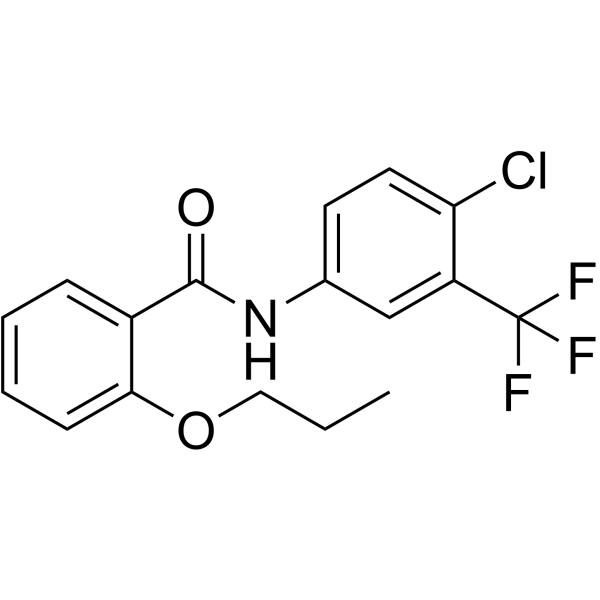
    TTK21 is an activator of the histone acetyltransferases CBP/p300. TTK21 passes the blood–brain barrier, induces no toxicity, and reaches different parts of the brain when conjugated to glucose-based carbon nanosphere (CSP). TTK21 has beneficial implications for the brain functions of neurogenesis and long-term memory .CSP-TTK21 can ameliorate Aβ-impaired long-term potentiation (LTP). CSP-TTK21 may enhance the transcription of genes that promote synaptic health and cognitive function . CSP-TTK21 is orally effective and leads to improvements in motor functions, histone acetylation dynamics in a spinal injury rat model .
    TTK21
  • HY-N7055

    Trierucoylglycerol

    Drug Derivative Metabolic Disease
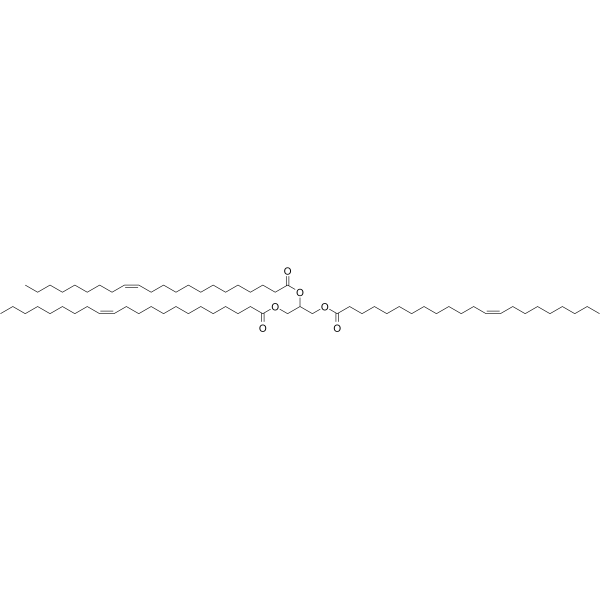
    Trierucin (Trierucoylglycerol) is a triester formed by glycerol and erucic acid, which serves as an occlusive skin conditioning agent and non-aqueous thickener in cosmetics. Long-term feeding of Trierucin to rats induces chronic toxicities such as cardiac lipid deposition and fibrosis .
    Trierucin
  • HY-164288

    TDI-006570

    Cyclic GMP-AMP Synthase STING Neurological Disease Inflammation/Immunology
    TDI-6570 (TDI-006570) is a blood-brain barrier-permeable, orally active cGAS inhibitor with an IC50 of 1.64 μM. TDI-6570 exhibits high gastrointestinal absorption and a long brain half-life in mice, and shows no toxicity to primary neurons. By inhibiting the cGAS-STING-IFN signaling pathway, TDI-6570 reduces STING levels and the activation of TBK1, blocks double-stranded DNA-induced cGAS activation and downstream interferon-stimulated gene expression, thereby reducing tau protein spread and improving synaptic loss. TDI-6570 reverses memory deficits, increases the amplitude of long-term potentiation, enhances the MEF2C transcriptional network, restores PSD-95 and vGAT punctate structures, and significantly improves cognitive resilience. TDI-6570 can be applied to the research of Alzheimer's disease, Parkinson's disease, systemic lupus erythematosus, as well as various central nervous system and autoimmune diseases .
    TDI-6570
  • HY-P10235

    Amylin Receptor Neurological Disease
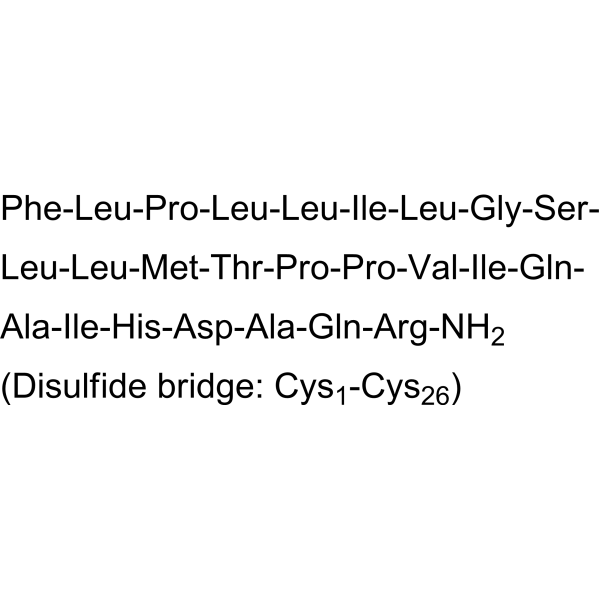
    Cyclic AC253 is an antagonist for amylin receptor, with IC50 of 0.3 μM. Cyclic AC253 exhibits neuroprotective efficacy against Aβ toxicity and abrogates Aβ-induced impairment of hippocampal long-term potentiation. Cyclic AC253 penetrate blood-brain barrier (BBB) .
    Cyclic AC253
  • HY-W004705

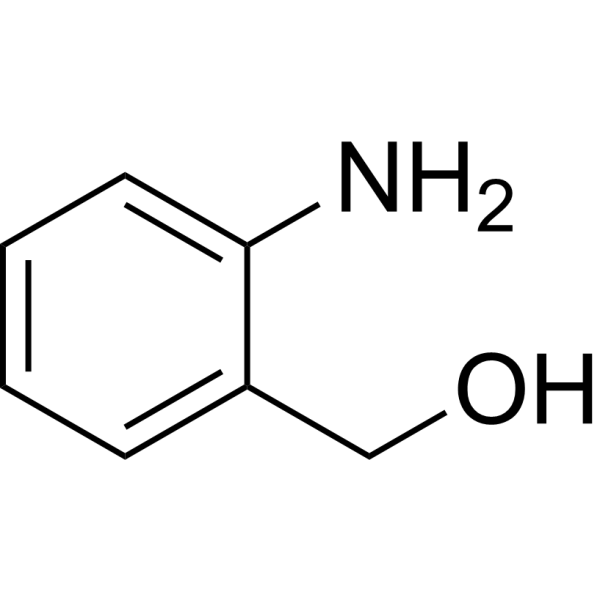
    2-Hydroxymethylaniline

    Chloride Channel Neurological Disease
    (2-Aminophenyl)methanol (2-Hydroxymethylaniline) is a molecular chaperone to rescue P123S mutant pendrin. (2-Aminophenyl)methanol has the advantages of low dose, long-term effect and low toxicity. (2-Aminophenyl)methanol can be used for the study of Pendred syndrome (a syndromic deafness) .
    (2-Aminophenyl)methanol
  • HY-124136
    WYC-209
    1 Publications Verification

    RAR/RXR Apoptosis Autophagy Cancer
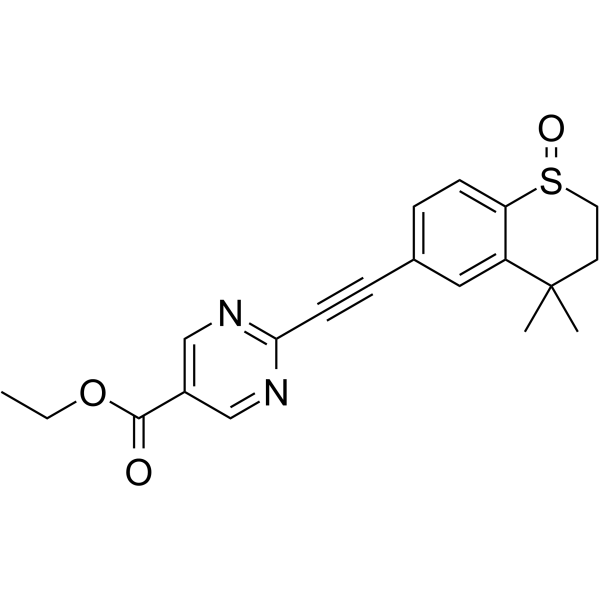
    WYC-209, a synthetic retinoid, is a retinoic acid receptor (RAR) agonist. WYC-209 induces apoptosis primarily via the caspase 3 pathway (IC50=0.19 μM for inmalignant murine melanoma TRCs), and has long-term effects with little toxicity .
    WYC-209
  • HY-W014226

    Drug Intermediate Ser/Thr Protease Others
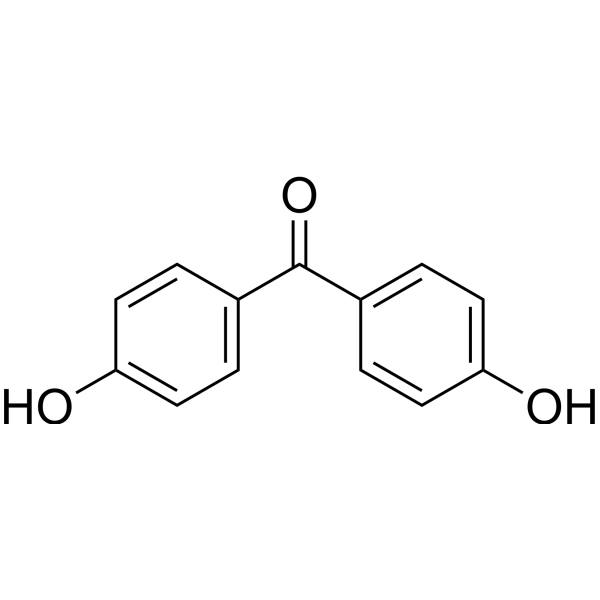
    4,4'-Dihydroxybenzophenone is a type of phenolic ultraviolet absorber and a drug intermediate for synthesis of various anticancer active compounds (such as Sivifene (HY-14801)). 4,4'-Dihydroxybenzophenone binds to the active site of trypsin with binding constants (KA = 7.59 x 10 5 L/moL) and leads to abnormal structure of trypsin, suggesting that long-term intake may affect the digestive function of the human body. 4,4’-dihydroxybenzophenone has a relatively low toxicity to Chlorella vulgaris and a moderate toxicity to Daphnia magna .
    4,4'-Dihydroxybenzophenone
  • HY-135525

    Dopamine Receptor Adrenergic Receptor Neurological Disease Inflammation/Immunology
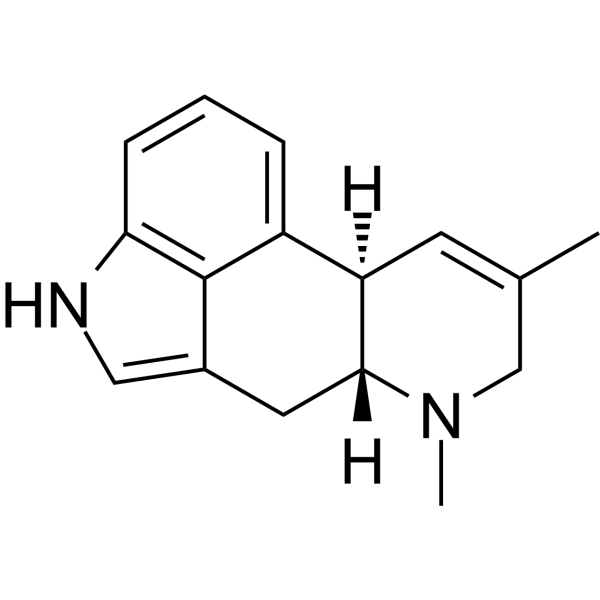
    Agroclavine acts as an agonist of the D1-dopamine receptor and α1-adrenergic receptor. Agroclavine enhances the sensitivity of the brain to magnetic fields; it impairs spatial memory without affecting hippocampal long-term potentiation (LTP). Agroclavine exerts bidirectional regulatory effects on immune activity: it enhances NK cell activity with low toxicity under normal conditions, while it inhibits NK cell activity and exhibits significant cardiac and hepatic toxicity under stress conditions. Agroclavine can be used for research on neuroelectrophysiology, learning and memory, and immunoregulation .
    Agroclavine
  • HY-B1970

    2,4'-DDT

    Insecticide Estrogen Receptor/ERR Endocrinology
    o,p'-DDT (2,4'-DDT) is a chlorinated organic pesticide with estrogenic activity. o,p'-DDT is persistent in the environment, can accumulate in organisms and disrupt the endocrine system. o,p'-DDT is used in agriculture as a pesticide, especially for controlling insect pests. The use of o,p'-DDT has led to toxic effects in organisms, raising widespread concern about its environmental and health effects. o,p'-DDT has also led to research into its long-term effects in ecosystems .
    o,p'-DDT
  • HY-120253

    BY-108330

    Environmental Pollutants Insecticide SOD Glutathione Peroxidase Carboxylesterase (CES) Infection Metabolic Disease
    Spirotetramat (BY-108330) is an orally active Insecticide and lipid biosynthesis inhibitor. Spirotetramat regulates the activities of superoxide dismutase (SOD) and glutathione peroxidase (GSH-Px), with short-term exposure increasing their activities and long-term exposure altering their activities. Spirotetramat induces the activity and mRNA expression of carboxylesterase (CarE). Spirotetramat induces oxidative stress and lipid peroxidation in tadpoles. Spirotetramat is toxic to amphibian tadpoles and exhibits sublethal/non-lethal toxicity to amphibians. Spirotetramat causes death in immature psyllids, aphids, scale insects, mealybugs, whiteflies and thrips, and shows a high lethal rate against Cacopsylla pyri nymphs. Spirotetramat reduces the fecundity of Aphis gossypii. Spirotetramat induces tolerance in the offspring of exposed Aphis gossypii, and acts on Myzus persicae, Bemisia tabaci and Tetranychus urticae .
    Spirotetramat
  • HY-W101609

    Cholinesterase (ChE) Others
    Phenylethyl isovalerate is a synthetic flavoring substance with very low acute oral toxicity. Phenylethyl isovalerate after long-term low-dose intake increases the activity of alanine aminotransferase (ALT) and the level of sulfhydryl groups in the serum, but decreases the activity of cholinesterase (ChE) .
    Phenylethyl isovalerate
  • HY-13325

    Drug Derivative Amyloid-β Neurological Disease
    Aβ aggregation modulator-1 is a stimulator of amyloid-β () fibrillogenesis. Aβ aggregation modulator-1 binds hydrophobic residues in peptides and stabilizes β-sheet-rich protofibrils and fibrils. Aβ aggregation modulator-1 accelerates polymerization and reduces concentrations of small, toxic oligomers in heterogeneous aggregation reactions. Aβ aggregation modulator-1 suppresses long-term potentiation (LTP) inhibition by oligomers in hippocampal brain slices. Aβ aggregation modulator-1 can be used for the study of Alzheimer's disease (AD) .
    Aβ aggregation modulator-1
  • HY-170561

    Cholinesterase (ChE) Neurological Disease
    AChE/BuChE-IN-6 (Compound 11f) is an inhibitor of AChE and BuChE, with IC50 values of 1.24 and 1.85 μg/mL, respectively. AChE/BuChE-IN-6 also exhibits strong DPPH free radical scavenging activity (IC50 = 3.15 μg/mL). In vivo toxicity studies indicate that AChE/BuChE-IN-6 is safe, showing no significant differences in blood and biochemical markers compared to the control group after long-term administration, and no abnormalities were observed in liver and kidney tissues. AChE/BuChE-IN-6 holds promise for research into Alzheimer's disease .
    AChE/BuChE-IN-6
  • HY-W014610

    Ethyl methylphenylglycidate

    Biochemical Assay Reagents Inflammation/Immunology
    Strawberry aldehyde is an orally active synthetic flavor compound widely used in the food and cosmetics industries. Its presence in small cigar smoke shows a significant positive correlation with free radical levels, thereby increasing the toxicity of the smoke. Strawberry aldehyde has demonstrated long-term safety in rats .
    Strawberry aldehyde
  • HY-W714200

    Herbicide Aryl Hydrocarbon Receptor Notch Apoptosis Others
    Neburon is a phenylurea herbicide whose main mechanism of action is to inhibit photosynthetic electron transport, thereby disrupting algal growth. Neburon activates the Ahr and Notch1 signaling pathways, and induces oxidative stress and apoptosis. Long-term exposure causes significant male reproductive toxicity and cardiotoxicity in zebrafish .
    Neburon
  • HY-156939

    Biochemical Assay Reagents Cancer
    ZnDTPA is an orally effective chelating agent, which belongs to the class of amino carboxylic acid chelating agents and is mainly used to form stable complexes with metal ions. DTPA (diethylenetriaminepentaacetic acid) itself is a polydentate ligand that can form stable cyclic or chain-like complexes with a variety of metal ions. ZnDTPA can be used to reduce the long-term toxicity of 239Pu to rats and reduce the incidence of osteosarcoma, breast cancer, etc. in rats .
    ZnDTPA
  • HY-115464

    Endogenous Metabolite Inflammation/Immunology
    NC1153 is a Mannich base with the activity to block IL-2-induced JAK3 activation and its downstream substrate STAT5a/b. NC1153 effectively prolongs the survival of kidney transplants in MHC/non-MHC mismatched rats. NC1153 promotes long-term graft survival and includes multiple toxicity protection for recipients. NC1153 combined with cyclosporine A (CsA) can synergistically prolong graft survival without producing nephrotoxicity, myelotoxicity or lipotoxicity .
    NC1153
  • HY-182365

    Histone Demethylase Neurological Disease Inflammation/Immunology
    EED-IN-4 is an orally active, EZH2-selective immunomodulator and EED-H3K27me3 inhibitor (EED, IC50=28.21 nM) with anti-inflammatory activity. In mouse models, EED-IN-4 preferentially and persistently accumulates in lymph nodes after oral administration. By reducing the H3K27me3 level of dendritic cells and inhibiting their migration, EED-IN-4 reduces the infiltration of immune cells into the central nervous system and effectively alleviates spinal cord inflammation. EED-IN-4 shows weak inhibitory activity against hERG channels and is non-mutagenic, with no obvious toxicity observed upon long-term oral administration. EED-IN-4 can be used for the research of multiple sclerosis .
    EED-IN-4
  • HY-182366

    Histone Methyltransferase Neurological Disease Inflammation/Immunology
    EED-IN-5 is an orally active, EZH2-selective trisubstituted pyridine-based EED-H3K27me3 inhibitor and immunomodulator with anti-inflammatory activity. The IC50 value of EED-IN-5 against EED is 28.21 nM. In mouse models, EED-IN-5 preferentially and persistently accumulates in lymph nodes after oral administration. By reducing the H3K27me3 level of dendritic cells and inhibiting their migration, EED-IN-5 decreases the infiltration of specific dendritic cells, macrophages and T cells into the spinal cord and brain. EED-IN-5 exhibits hERG inhibitory activity, shows negative results in the Mini-Ames test, and causes no obvious toxicity upon long-term high-dose administration. EED-IN-5 can be used for the research of multiple sclerosis .
    EED-IN-5
  • HY-W783351

    Coppersensor 790 acetoxymethyl ester

    Fluorescent Dye Metabolic Disease
    CS790AM (Coppersensor 790 acetoxymethyl ester) is a cell-permeable, Cu +-targeted near-infrared fluorescent probe (λabs=760 nm, λem=790 nm) applicable to live cells. CS790AM can cross lipophilic cell membranes, and is converted into negatively charged CS790 under the action of intracellular esterases to be retained, thus enabling highly sensitive, reversible "turn-on" detection of labile Cu + pools in live cells and mice. CS790AM possesses excellent biocompatibility and selectivity, avoids interference from other metal ions, shows no obvious toxicity, and can be rapidly cleared. CS790AM allows long-term longitudinal monitoring of individual mice, visualizes copper levels in internal organs and isolated livers, and effectively evaluates abnormal copper accumulation in Wilson's disease models (Atp7b -/-) as well as dynamic changes after chelator treatment. CS790AM can be used for research on Wilson's disease and related copper metabolic disorders .
    CS790AM
  • HY-184108

    iGluR GABA Receptor NO Synthase Neurological Disease
    ZL006-05 is an orally active, brain-penetrant nNOS–PSD-95 and α2-containing GABAA dual-target inhibitor. ZL006-05 blocks the nNOS–PSD-95 protein-protein interaction and selectively potentiatesα2-containing GABAA receptors. ZL006-05 attenuates central sensitization and strengthens inhibitory GABAergic synaptic transmission. ZL006-05 can be used for the study of neuropathic pain, cancer pain, chemotherapy-induced peripheral neuropathic pain, ischemic stroke, poststroke depression and anxiety .
    ZL006-05

Inquiry Online

Your information is safe with us. * Required Fields.

Salutation


Country or Region *

Applicant Name *


Organization Name *

Department *


Email Address *


Product Name *

Cat. No.


Requested quantity *

Phone Number *


Remarks

Inquiry Online

Inquiry Information

Product Name:
Cat. No.:
Quantity:
MCE Japan Authorized Agent:

