Search Result
Results for "
prostate cancer xenograft mouse model
" in MedChemExpress (MCE) Product Catalog:
1
Biochemical Assay Reagents
| Cat. No. |
Product Name |
Target |
Research Areas |
Chemical Structure |
-
- HY-16706A
-
|
|
Histone Acetyltransferase
|
Cancer
|
|
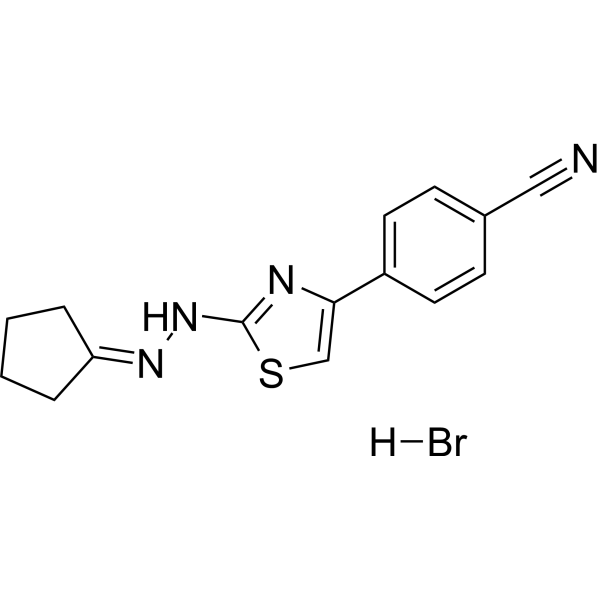
Remodelin hydrobromide is an orally active and selective inhibitor of acetyltransferase NAT10. Remodelin hydrobromide inhibits NAT10 activitity and slows DNA replication and suppresses growth of prostate cancer cells. Remodelin hydrobromide inhibits the growth of prostate cancer and hepatocellular carcinoma in xenograft model. Remodelin hydrobromide enhances the healthspan in hutchinson-gilford progeria syndrome (HGPS) mouse model .
|
-
-
- HY-16706
-
Remodelin
Maximum Cited Publications
17 Publications Verification
|
Histone Acetyltransferase
|
Cancer
|
|
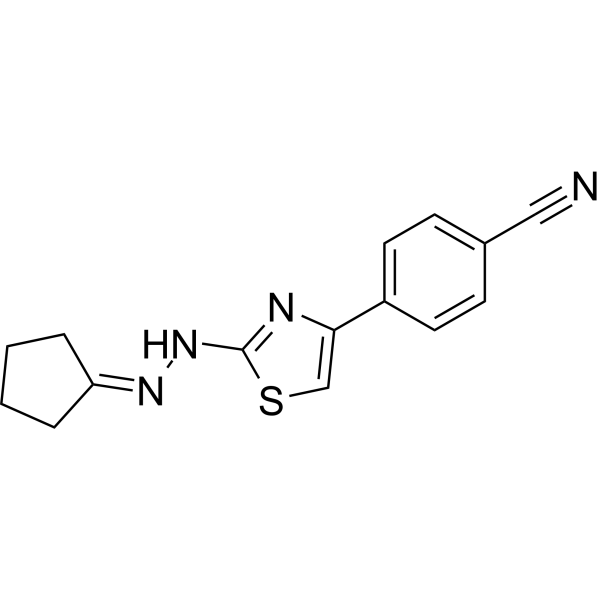
Remodelin is an orally active and selective inhibitor of acetyltransferase NAT10. Remodelin inhibits NAT10 activitity and slows DNA replication and suppresses growth of prostate cancer cells. Remodelin inhibits the growth of prostate cancer and hepatocellular carcinoma in xenograft model. Remodelin enhances the healthspan in hutchinson-gilford progeria syndrome (HGPS) mouse model .
|
-
-
- HY-P3371
-
|
DS-7300a; MABX-9001a; I-DXd
|
Antibody-Drug Conjugates (ADCs)
Topoisomerase
Apoptosis
|
Cancer
|
|
Ifinatamab deruxtecan (DS-7300a) is a B7-H3-targeting Antibody-drug conjugate (ADC), which is composed of a humanized anti-B7-H3 monoclonal antibody, an enzymatically cleavable peptide-based linker, and Exatecan derivative (DXd) (HY-13631D). Ifinatamab deruxtecan is a DNA Topoisomerase I inhibitor. Ifinatamab deruxtecan induces Apoptosis. DS-7300a exerts potent antitumor activities against B7-H3-expressing tumors. against rhabdomyosarcoma, endometrial adenocarcinoma and lung adenocarcinoma. Ifinatamab deruxtecan does not exert direct immunomodulatory effects
|
-

-
- HY-70006
-
|
TOK-001; VN-124-1
|
Molecular Glues
Androgen Receptor
MNK
Cytochrome P450
Apoptosis
|
Cancer
|
|
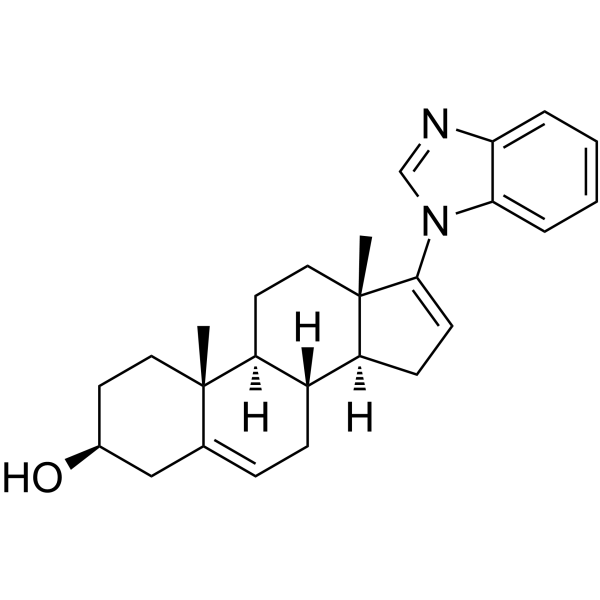
Galeterone (TOK-001) is a potent, orally active molecular glue degrader, which degrades androgen receptor (AR) and its splice variants (AR-Vs) and MAP kinase-interacting serine/threonine protein kinase Mnk1/2. Galeterone also functions as a CYP17 inhibitor (IC50 = 47 nM). Galeterone induces cell apoptosis. Galeterone inhibits tumor growth in human prostate cancer xenograft mouse models. Galeterone can be used for castration resistant prostate cancer (CRPC) and pancreatic ductal adenocarcinoma (PDAC) research [1][2].
|
-
-
- HY-124628
-
|
|
Fatty Acid Synthase (FASN)
|
Cancer
|
|
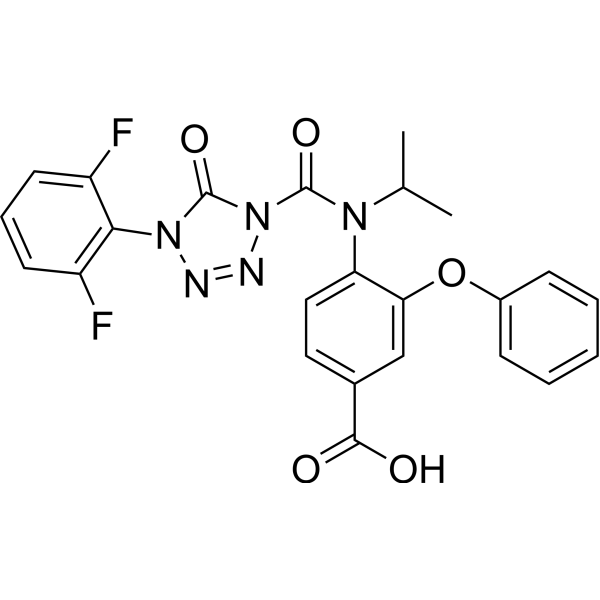
IPI-9119 is an orally active, selective and irreversible FASN inhibitor with an IC50 of 0.3 nM in vitro biochemical assay. IPI-9119 inhibits tumor growth of castration-resistant prostate cancer (CRPC) xenografts mouse models .
|
-
-
- HY-149433
-
|
|
PROTACs
Androgen Receptor
Apoptosis
|
Cancer
|
|
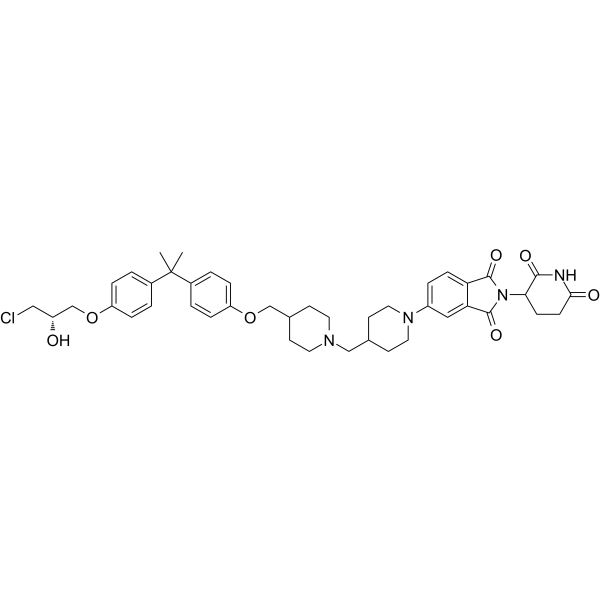
BWA-522 is an orally active PROTAC degrader targeting full-length androgen receptor (AR-FL) and androgen receptor splice variant 7 (AR-V7). BWA-522 antagonizes the N-terminal domain (AR-NTD) of the androgen receptor, suppresses AR downstream signaling proteins and induces cancer cells apoptosis. BWA-522 inhibits tumor growth in LNCaP xenograft mouse model. BWA-522 can be used for the research of prostate cancer .
|
-
-
- HY-160777
-
|
Galeterone 3β-imidazole
|
Molecular Glues
Androgen Receptor
MNK
Apoptosis
|
Cancer
|
|
VNPP433-3β (Galeterone 3β-imidazole) is an orally active molecular glue degrader, which degrades androgen receptor (AR) and its splice variants (AR-Vs) and MAP kinase-interacting serine/threonine protein kinase Mnk1/2. VNPP433-3β induces cell apoptosis. VNPP433-3β inhibits tumor growth in the CWR22Rv1 xenograft mouse model. VNPP433-3β can be used for the study of castration resistant prostate cancer (CRPC) and pancreatic ductal adenocarcinoma (PDAC) .
|
-

-
- HY-175652
-
|
|
PROTACs
Adenosine Receptor
|
Cancer
|
|
AZD9750 is an orally active, Cereblon (CRBN)-recruiting, androgen receptor (AR)-targeted PROTAC degrader. AZD9750 induces the proteasome-dependent degradation of both wild-type AR and the drug-resistant mutant AR L702H, thereby inhibiting the AR signaling pathway. AZD9750 suppresses tumor growth in mouse prostate cancer xenograft models and has been utilized in prostate cancer research .
|
-

-
- HY-155887
-
|
DSPE-PEG-NH2, MW 3400 ammonium
|
Liposome
|
Cancer
|
|
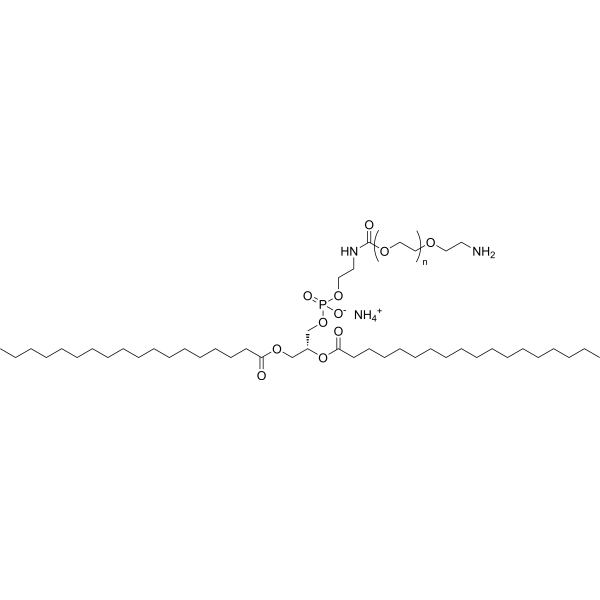
DSPE-PEG-Amine (DSPE-PEG-NH2), MW 3400 ammonium is an amino-functionalized PEGylated phospholipid. It serves not only as a key component for preparing σ receptor-targeted liposomes (such as anisamide-modified lipids) but also as a starting material for synthesizing click chemistry- and tumor-targeted lipids including DSPE-PEG-DBCO (HY-155788) and DSPE-PEG2000-TCO (HY-170704). DSPE-PEG-Amine, MW 3400 ammonium effectively modulates the ζ potential of nanoparticles, enables complexation with nucleic acids or proteins to protect DNA from nuclease degradation, and supports ligand conjugation on the nanoparticle surface. It is used in studies related to DU-145 tumors, breast cancer, and other relevant research .
|
-
-
- HY-170933
-
|
|
SGK
|
Cancer
|
|
SGK1-IN-6 is a selective SGK1 inhibitor with an IC50 of 0.39 μM, showing selectivity over SGK2/3. SGK1-IN-6 inhibits cancer cell migration and invasion, improves SGK1 protein thermal stability. SGK1-IN-6 decreases SGK1 protein levels in tumor tissues, suppresses tumor growth in mouse xenograft models. SGK1-IN-6 can be used for the research of prostate cancer .
|
-

-
- HY-70006A
-
|
TOK-001 hydrochloride; VN-124-1 hydrochloride
|
Molecular Glues
Androgen Receptor
MNK
Cytochrome P450
Apoptosis
|
Cancer
|
|
Galeterone (TOK-001) hydrochloride is a potent, orally active molecular glue degrader, which degrades androgen receptor (AR) and its splice variants (AR-Vs) and MAP kinase-interacting serine/threonine protein kinase Mnk1/2. Galeterone hydrochloride also functions as a CYP17 inhibitor (IC50 = 47 nM). Galeterone hydrochloride induces cell apoptosis. Galeterone hydrochloride inhibits tumor growth in human prostate cancer xenograft mouse models. Galeterone hydrochloride can be used for castration resistant prostate cancer (CRPC) and pancreatic ductal adenocarcinoma (PDAC) research [1][2].
|
-

-
- HY-P4144
-
|
Phor18-LHRH (338613); EP-100
|
GnRH Receptor
|
Endocrinology
Cancer
|
|
Onvitrelin ucalontide ([Phor18-LHRH (338613)]) is an analogue of luteinizing hormone releasing hormone (LHRH) with antineoplastic activity. Onvitrelin ucalontide is a peptide with sequences of KFAKFAKKFAKFAKKFAKQHWSYGLRPG. Onvitrelin ucalontide effectively inhibits breast cancer, ovarian cancer and prostate cancer xenografts in mouse model .
|
-

-
- HY-125065
-
|
|
Androgen Receptor
5 alpha Reductase
|
Endocrinology
Cancer
|
|
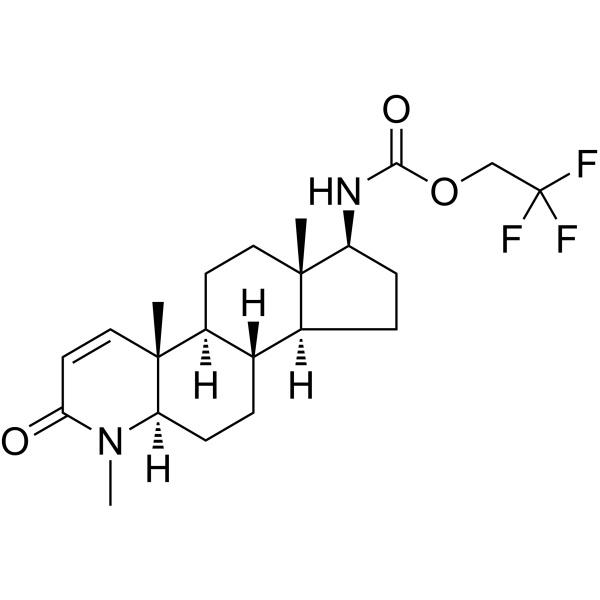
MK-4541 is an orally active and selective androgen receptor (AR) modulator. MK-4541 acts as an antagonist to inhibit 5α-reductase. MK-4541 inhibits proliferation and induces apoptosis in AR positive prostate cancer cells. MK-4541 significantly inhibited the growth of R3327-G prostate tumors in xenograft mouse model .
|
-
-
- HY-111170
-
|
|
Microtubule/Tubulin
|
Cancer
|
|
STA-9584 is a potent vascular disrupting agent (VDA) that targets tubulin. STA-9584 exhibits potent antitumor activity in mouse xenograft model by selectively targeting microvasculature at both the center and periphery of tumors. STA-9584 can be used for research in prostate and breast cancer .
|
-

-
- HY-175454
-
|
|
DNA/RNA Synthesis
PDGFR
Oxidative Phosphorylation
Mitochondrial Metabolism
|
Cancer
|
|
YH-0623 is an orally active mitochondrial RNA polymerase (POLRMT) inhibitor (IC50 = 50.48 nM, Nanoluciferase Bioluminescence Resonance Energy Transfer (NanoBRET) assay). YH-0623 exhibits antiproliferative effects on 22Rv1 cells by reducing the expression of mitochondrial-related genes. YH-0623 inhibits 22Rv1 cell growth, colony formation, and the expression of OXPHOS-related proteins. YH-0623 significantly inhibits tumor growth in a prostate cancer xenograft mouse model. YH-0623 is indicated for prostate cancer research .
|
-

-
- HY-177345
-
|
|
Sigma Receptor
Apoptosis
Caspase
|
Cancer
|
|
SV119 is a selective sigma-2 (σ₂) receptor ligand (Ki ≈ 5-10 nM). SV119 induces apoptosis in various human cancer cell lines by activating caspase-3 and promoting mitochondrial depolarization. SV119 can enhance the effects of chemotherapeutic agents such as Paclitaxel (HY-B0015), increasing their cytotoxicity against tumor cells. SV119 significantly inhibits tumor growth in mouse xenograft models, both alone and in combination. SV119 is useful in the research of cancers such as breast, prostate, and pancreatic cancer .
|
-

-
- HY-W877997
-
|
|
E3 Ligase Ligand-Linker Conjugates
Drug Derivative
|
Cancer
|
|
Pomalidomide 5'-pip-acid is an E3 ligase ligand-linker conjugate derived from the molecular glue Pomalidomide (HY-10984), which can be used to synthesize the dual-target PROTAC degrader PROTAC CBP/p300/BRD4 Degrader-1 (HY-181758) targeting CBP/p300 and BRD4. Pomalidomide 5'-pip-acid shows anti-proliferative activity against cancer cells with an IC50 of 2.73 nM. Pomalidomide 5'-pip-acid induces anti-proliferative effects in cancer cells. Pomalidomide 5'-pip-acid is applicable to research related to prostate cancer and colorectal cancer .
|
-

-
- HY-178343
-
|
|
Aurora Kinase
Apoptosis
|
Cancer
|
|
Aurora A-IN-5 is a potent and highly selective Aurora A inhibitor (IC50 = 0.02 μM), showing 362-fold selectivity for over Aurora B. Aurora A-IN-5 shows its selectivity through unique C−H/π interactions, enhanced hydrophobic contacts, an open binding pocket, and tighter protein packing. Aurora A-IN-5 suppresses Aurora A autophosphorylation, thereby inhibiting cancer cell proliferation by inducing G2/M phase arrest, triggering apoptosis, and suppressing colony formation. Aurora A-IN-5 inhibits tumor growth in MDA-MB-231 xenograft mouse models. Aurora A-IN-5 can be used for breast, cervical, prostate, and lymphoma cancer research .
|
-

-
- HY-160777A
-
|
Galeterone 3β-imidazole dihydrochloride
|
Molecular Glues
Androgen Receptor
MNK
Apoptosis
|
Cancer
|
|
VNPP433-3β (Galeterone 3β-imidazole) dihydrochloride is an orally active molecular glue degrader, which degrades androgen receptor (AR) and its splice variants (AR-Vs) and MAP kinase-interacting serine/threonine protein kinase Mnk1/2. VNPP433-3β dihydrochloride induces cell apoptosis. VNPP433-3β dihydrochloride inhibits tumor growth in the CWR22Rv1 xenograft mouse model. VNPP433-3β dihydrochloride can be used for the study of castration resistant prostate cancer (CRPC) and pancreatic ductal adenocarcinoma (PDAC) .
|
-

-
- HY-160777B
-
|
Galeterone 3β-imidazole hydrochloride
|
Molecular Glues
Androgen Receptor
MNK
Apoptosis
|
Cancer
|
|
VNPP433-3β (Galeterone 3β-imidazole) hydrochloride is an orally active molecular glue degrader, which degrades androgen receptor (AR) and its splice variants (AR-Vs) and MAP kinase-interacting serine/threonine protein kinase Mnk1/2. VNPP433-3β hydrochloride induces cell apoptosis. VNPP433-3β hydrochloride inhibits tumor growth in the CWR22Rv1 xenograft mouse model. VNPP433-3β hydrochloride can be used for the study of castration resistant prostate cancer (CRPC) and pancreatic ductal adenocarcinoma (PDAC) .
|
-

-
- HY-169078
-
|
|
Histone Methyltransferase
|
Cancer
|
|
ML234 is a dual inhibitor against EZH2/LSD1 with IC50 values of 0.09 and 0.12 μM, respectively. ML234 displays an excellent antiproliferative capacity against prostate cancer cell lines LNCAP, PC3 and 22RV1. ML234 suppresses the tumor growth in the 22RV1 xenograft mouse model. ML234 is promising for research of anticancer agents in prostate cancer .
|
-

-
- HY-168300
-
|
|
Reactive Oxygen Species (ROS)
Apoptosis
|
Inflammation/Immunology
Cancer
|
|
Antiangiogenic agent 7 (Compound 1) can induce cell apoptosis, increase Reactive Oxygen Species, and inhibit the intracellular enzyme thioredoxin reductase. Antiangiogenic agent 7 has anti-cancer activity, with an IC50 of 0.08-3.5 μM against cervical cancer cells HeLa, prostate cancer cells PC-3, and non-small cell lung cancer A549. Antiangiogenic agent 7 inhibits tumor growth in mouse xenograft models .
|
-

-
- HY-P10744
-
|
|
Radionuclide-Drug Conjugates (RDCs)
PSMA
|
Cancer
|
|
BQ7859 is a probe targeting PSMA that contains a NOTA chelator and demonstrates excellent imaging performance. BQ7859 can be labeled with various radionuclides, such as 68Ga, 18F, 55Co, and 111In. In a mouse prostate cancer xenograft model, BQ7859 (labeled with 111In) efficiently accumulates in tumor regions in a PSMA-dependent manner and provides high-contrast tumor imaging. BQ7859 shows potential for research in prostate cancer imaging, particularly in positron emission tomography (PET) and single-photon emission computed tomography (SPECT) . BQ7859 can be used for the synthesis/research of Radionuclide-Drug Conjugates (RDCs).
|
-

-
- HY-169349
-
|
|
Androgen Receptor
|
Cancer
|
|
Androgen receptor antagonist 12 (Compound EF2) is an orally active Androgen receptor (AR) antagonist (IC50: 0.30 μM). Androgen receptor antagonist 12 inhibits transcriptional activity of variant AR mutants and and the proliferation of AR-positive PCa cell lines. Androgen receptor antagonist 12 blocks AR nuclear translocation. Androgen receptor antagonist 12 inhibits tumor growth in a C4-2B xenograft mouse model. Androgen receptor antagonist 12 can be used for prostate cancer (PCa) research .
|
-

-
- HY-182288
-
|
|
STAT
Apoptosis
|
Cancer
|
|
YN11 is a STAT3 inhibitor (Kd=11.9 μM). YN11 directly binds to the SH2 domain of STAT3, inhibits the phosphorylation of STAT3, and reduces the expression of downstream target proteins. YN11 induces cell cycle arrest, promotes apoptosis, and inhibits cell invasion and migration in prostate cancer cells. YN11 suppresses tumor growth in a prostate cancer xenograft mouse model. YN11 does not cause significant body weight loss or obvious histopathological changes in major organs in xenograft mice. YN11 is applicable to relevant research on prostate cancer .
|
-

-
- HY-159922
-
|
|
Androgen Receptor
|
Cancer
|
|
AR antagonist 9 is an orally bioavailable selective androgen receptor (AR) antagonist that exerts anticancer effects by disrupting the dimerization of AR ligand-binding domains, showing potential for overcoming drug resistance in prostate cancer (PCa). Its AR antagonistic activity has an IC50 value of 0.051 μM, comparable to Enzalutamide (HY-70002) (IC50 = 0.060 μM). AR antagonist 9 demonstrated superior efficacy against ARF876L/T877A and ARW741C mutants compared to Enzalutamide (HY-70002). Furthermore, AR antagonist 9 exhibited favorable pharmacokinetic properties, with an oral bioavailability of F = 66.24% in rats. In the LNCaP xenograft mouse model, oral administration of AR antagonist 9 significantly inhibited tumor growth. AR antagonist 9 holds promise for research into overcoming PCa drug resistance .
|
-

-
- HY-P992209
-
|
|
Transmembrane Glycoprotein
|
Cancer
|
|
Anti-CD318/CDCP1 Antibody (25A11) is an anti-CDCP1 antibody. Anti-CD318/CDCP1 Antibody (25A11) drives the internalization of antibody-CDCP1 complexes, inhibits cancer cell migration and invasion, and blocks downstream migration/invasion signaling pathways. When conjugated with saponin, Anti-CD318/CDCP1 Antibody (25A11) mediates the killing of prostate cancer cells. When conjugated with saponin, this antibody acts as an immunotoxin to inhibit the growth and metastasis of primary prostate tumors in mouse xenograft models. Anti-CD318/CDCP1 Antibody (25A11) is applicable to prostate cancer-related research .
|
-

-
- HY-180804
-
|
|
Epigenetic Reader Domain
|
Cancer
|
|
CZL-077 is a potent, selective, and orally active p300/CBP bromodomain (BRD) inhibitor (p300 IC50 = 0.034 μM, CBP IC50 = 0.052 μM) exhibiting high selectivity over the BRDs of BET proteins (BRD2/3/4). CZL-077 inhibits cell growth with IC50 values of 0.024 μM and 5.6 μM in OPM-2 and 22RV1 cells, respectively. CZL-077 shows antitumor efficacy in OPM-2 and 22RV1 xenograft mouse models. CZL-077 can be used for multiple myeloma and prostate cancer research .
|
-

-
- HY-159739
-
|
|
Androgen Receptor
|
Cancer
|
|
M17-B15 is an androgen receptor dimerization inhibitor with an IC50 of 30 nM. M17-B15 effectively disrupts AR self-association, thereby suppressing AR signaling. M17-B15 exhibits extraordinary anti- prostate cancer (PCa) efficacy in vitro and in mouse xenograft tumor models.M17-B15 can be used for the study of prostate cancer .
|
-

-
- HY-184178A
-
|
|
Apoptosis
|
Cancer
|
|
HF-125 is an orally active, highly selective small-molecule inhibitor of Tribbles 2 (TRIB2). HF-125 promotes the destabilization and degradation of TRIB2 protein via the proteasome pathway. HF-125 downregulates neuroendocrine markers, induces cell cycle arrest and apoptosis, inhibits tumor cell colony formation and invasion, and reverses tumor cell resistance to Enzalutamide (HY-70002). HF-125 significantly inhibits tumor growth in SCID mouse xenograft models, and exerts synergistic inhibitory effects when combined with Enzalutamide. HF-125 can be used in research related to prostate cancer .
|
-

-
- HY-181687
-
|
|
HSP
CDK
|
Cancer
|
|
Hsp90-IN-46 is a Hsp90 inhibitor. Hsp90-IN-46 exhibits broad-spectrum antiproliferative activity against tumor cell lines. Hsp90-IN-46 inhibits breast cancer cell proliferation by reducing colony formation and downregulating the proliferation marker Ki-67. Hsp90-IN-46 inhibits Hsp90 and its ATPase activity, downregulates the downstream substrate oncoproteins HER2 and CDK4, and moderately induces the heat shock response. Hsp90-IN-46 shows significant antitumor activity in a mouse model of triple-negative breast cancer tumor xenografts. Hsp90-IN-46 can be used for research on various cancers including triple-negative breast cancer, leukemia, non-small cell lung cancer, colon cancer, ovarian cancer, renal cancer, prostate cancer .
|
-

-
- HY-P992094
-
|
|
PSMA
|
Cancer
|
|
Capromab is an anti-human PSMA-targeting monoclonal antibody. Capromab binds specifically to the intracellular domain of PSMA, does not undergo internalization after binding, and targets necrotic cells with disrupted membranes. Capromab can be used for the research of prostate cancer .
|
-

-
- HY-182567
-
|
|
NAMPT
|
Cancer
|
|
Nampt-IN-19 is an orally active and non-substrate nicotinamide phosphoribosyltransferase (NAMPT) inhibitor with a human Ki of 5.6 nM. Nampt-IN-19 blocks NAD + biosynthesis from Nicotinamide (HY-B0150). Nampt-IN-19 acts as an antiproliferative agent in cancer cells. Nampt-IN-19 has preclinical pharmacokinetic properties supporting oral antitumor activity in mouse xenograft models. Nampt-IN-19 can be used for the research of colorectal cancer .
|
-

-
- HY-183273
-
|
|
Epigenetic Reader Domain
Akt
CDK
Autophagy
Apoptosis
|
Cancer
|
|
BRD4/AKT-IN-1 is a BRD4/AKT inhibitor with BRD4 IC50 66.12 nM and AKT1 IC50 143.81 nM. BRD4/AKT-IN-1 blocks BRD4-mediated c-Myc transcriptional regulation, modulates AKT1 signaling, decouples AKT phosphorylation from pro-survival effectors. BRD4/AKT-IN-1 induces G0/G1 cell cycle arrest via downregulated phosphorylated RB, cyclin E1, CDK2. BRD4/AKT-IN-1 elevates LC3B levels to promote autophagy. BRD4/AKT-IN-1 promotes apoptosis in cancer cells. BRD4/AKT-IN-1 can be used for the research of metastatic castration-resistant prostate cancer .
|
-

-
- HY-181669
-
|
|
Histone Acetyltransferase
c-Myc
|
Cancer
|
|
P300-IN-6 is an orally active histone acetyltransferase p300 HAT domain inhibitor with human IC50 values of 7 nM. P300-IN-6 suppresses c-Myc expression, decreases H3K18ac and H3K27ac levels, and inhibits cancer cell proliferation.P300-IN-6 suppresses tumor growth in xenograft mouse models.P300-IN-6 can be used for the research of multiple myeloma .
|
-

| Cat. No. |
Product Name |
Type |
-
- HY-P3371
-
|
DS-7300a; MABX-9001a; I-DXd
|
Fluorescent Dyes
|
|
Ifinatamab deruxtecan (DS-7300a) is a B7-H3-targeting Antibody-drug conjugate (ADC), which is composed of a humanized anti-B7-H3 monoclonal antibody, an enzymatically cleavable peptide-based linker, and Exatecan derivative (DXd) (HY-13631D). Ifinatamab deruxtecan is a DNA Topoisomerase I inhibitor. Ifinatamab deruxtecan induces Apoptosis. DS-7300a exerts potent antitumor activities against B7-H3-expressing tumors. against rhabdomyosarcoma, endometrial adenocarcinoma and lung adenocarcinoma. Ifinatamab deruxtecan does not exert direct immunomodulatory effects
|
| Cat. No. |
Product Name |
Type |
-
- HY-155887
-
|
DSPE-PEG-NH2, MW 3400 ammonium
|
Biochemical Assay Reagents
|
|
DSPE-PEG-Amine (DSPE-PEG-NH2), MW 3400 ammonium is an amino-functionalized PEGylated phospholipid. It serves not only as a key component for preparing σ receptor-targeted liposomes (such as anisamide-modified lipids) but also as a starting material for synthesizing click chemistry- and tumor-targeted lipids including DSPE-PEG-DBCO (HY-155788) and DSPE-PEG2000-TCO (HY-170704). DSPE-PEG-Amine, MW 3400 ammonium effectively modulates the ζ potential of nanoparticles, enables complexation with nucleic acids or proteins to protect DNA from nuclease degradation, and supports ligand conjugation on the nanoparticle surface. It is used in studies related to DU-145 tumors, breast cancer, and other relevant research .
|
| Cat. No. |
Product Name |
Target |
Research Area |
-
- HY-P4144
-
|
Phor18-LHRH (338613); EP-100
|
GnRH Receptor
|
Endocrinology
Cancer
|
|
Onvitrelin ucalontide ([Phor18-LHRH (338613)]) is an analogue of luteinizing hormone releasing hormone (LHRH) with antineoplastic activity. Onvitrelin ucalontide is a peptide with sequences of KFAKFAKKFAKFAKKFAKQHWSYGLRPG. Onvitrelin ucalontide effectively inhibits breast cancer, ovarian cancer and prostate cancer xenografts in mouse model .
|
-
- HY-P10744
-
|
|
Radionuclide-Drug Conjugates (RDCs)
PSMA
|
Cancer
|
|
BQ7859 is a probe targeting PSMA that contains a NOTA chelator and demonstrates excellent imaging performance. BQ7859 can be labeled with various radionuclides, such as 68Ga, 18F, 55Co, and 111In. In a mouse prostate cancer xenograft model, BQ7859 (labeled with 111In) efficiently accumulates in tumor regions in a PSMA-dependent manner and provides high-contrast tumor imaging. BQ7859 shows potential for research in prostate cancer imaging, particularly in positron emission tomography (PET) and single-photon emission computed tomography (SPECT) . BQ7859 can be used for the synthesis/research of Radionuclide-Drug Conjugates (RDCs).
|
| Cat. No. |
Product Name |
Target |
Research Area |
Image |
-
- HY-P3371
-
|
DS-7300a; MABX-9001a; I-DXd
|
Antibody-Drug Conjugates (ADCs)
Topoisomerase
Apoptosis
|
Cancer
|
|
Ifinatamab deruxtecan (DS-7300a) is a B7-H3-targeting Antibody-drug conjugate (ADC), which is composed of a humanized anti-B7-H3 monoclonal antibody, an enzymatically cleavable peptide-based linker, and Exatecan derivative (DXd) (HY-13631D). Ifinatamab deruxtecan is a DNA Topoisomerase I inhibitor. Ifinatamab deruxtecan induces Apoptosis. DS-7300a exerts potent antitumor activities against B7-H3-expressing tumors. against rhabdomyosarcoma, endometrial adenocarcinoma and lung adenocarcinoma. Ifinatamab deruxtecan does not exert direct immunomodulatory effects
|
-

(5)
-
- HY-P992209
-
|
|
Transmembrane Glycoprotein
|
Cancer
|
|
Anti-CD318/CDCP1 Antibody (25A11) is an anti-CDCP1 antibody. Anti-CD318/CDCP1 Antibody (25A11) drives the internalization of antibody-CDCP1 complexes, inhibits cancer cell migration and invasion, and blocks downstream migration/invasion signaling pathways. When conjugated with saponin, Anti-CD318/CDCP1 Antibody (25A11) mediates the killing of prostate cancer cells. When conjugated with saponin, this antibody acts as an immunotoxin to inhibit the growth and metastasis of primary prostate tumors in mouse xenograft models. Anti-CD318/CDCP1 Antibody (25A11) is applicable to prostate cancer-related research .
|
-
(5)
-
- HY-P992094
-
|
|
PSMA
|
Cancer
|
|
Capromab is an anti-human PSMA-targeting monoclonal antibody. Capromab binds specifically to the intracellular domain of PSMA, does not undergo internalization after binding, and targets necrotic cells with disrupted membranes. Capromab can be used for the research of prostate cancer .
|
-
(5)
| Cat. No. |
Product Name |
|
Classification |
-
- HY-155887
-
|
DSPE-PEG-NH2, MW 3400 ammonium
|
|
Pegylated Lipids
|
|
DSPE-PEG-Amine (DSPE-PEG-NH2), MW 3400 ammonium is an amino-functionalized PEGylated phospholipid. It serves not only as a key component for preparing σ receptor-targeted liposomes (such as anisamide-modified lipids) but also as a starting material for synthesizing click chemistry- and tumor-targeted lipids including DSPE-PEG-DBCO (HY-155788) and DSPE-PEG2000-TCO (HY-170704). DSPE-PEG-Amine, MW 3400 ammonium effectively modulates the ζ potential of nanoparticles, enables complexation with nucleic acids or proteins to protect DNA from nuclease degradation, and supports ligand conjugation on the nanoparticle surface. It is used in studies related to DU-145 tumors, breast cancer, and other relevant research .
|
Your information is safe with us. * Required Fields.
Inquiry Information
- Product Name:
- Cat. No.:
- Quantity:
- MCE Japan Authorized Agent:








