Search Result
Results for "
rhesus+monkey
" in MedChemExpress (MCE) Product Catalog:
1
Biochemical Assay Reagents
2
Isotope-Labeled Compounds
| Cat. No. |
Product Name |
Target |
Research Areas |
Chemical Structure |
-
- HY-12366
-
|
MK-1602
|
CGRP Receptor
|
Cardiovascular Disease
Neurological Disease
|
|
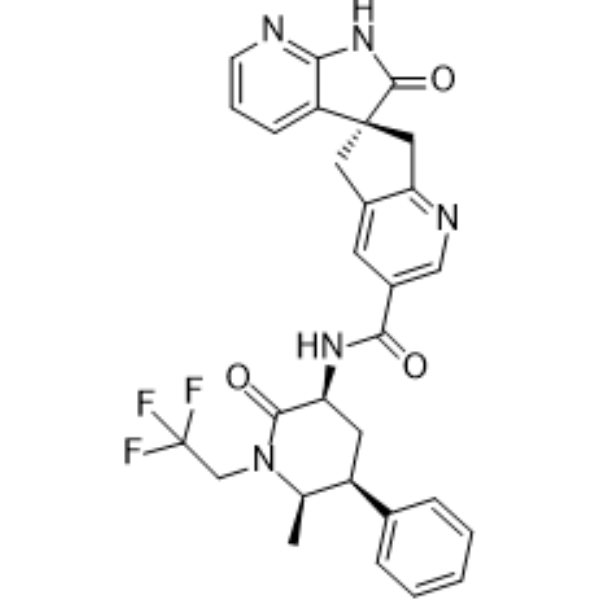
Ubrogepant (MK-1602) is an orally active and selective antagonist of calcitonin gene-related peptide receptor (CGRP). Ubrogepant has high affinity for CGRP receptors in human and rhesus monkeys, and can effectively block the cAMP response stimulated by α-CGRP. Ubrogepant can be used in the study of acute migraine .
|
-
-
- HY-B0742
-
|
17α-Hydroxyprogesterone hexanoate; 17α-Hydroxyprogesterone caproate
|
Progesterone Receptor
|
Endocrinology
|
|
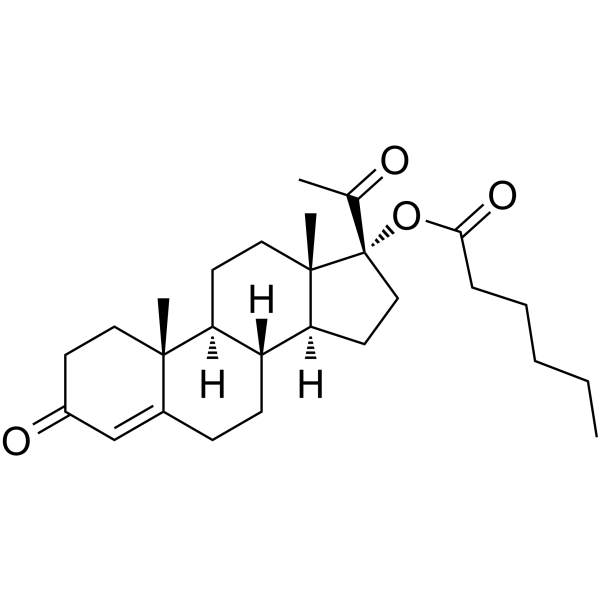
Hydroxyprogesterone caproate (17α-Hydroxyprogesterone hexanoate; 17α-Hydroxyprogesterone caproate) is a progesterone receptor (progesterone receptor) ligand and steroid hormone transcription inhibitor. Hydroxyprogesterone caproate downregulates estrogen receptors in target tissues and activates their metabolic pathways, and exhibits equivalent affinity for progesterone receptor A and progesterone receptor B. Hydroxyprogesterone caproate shows no consistent teratogenicity or developmental toxicity in rat, mouse and monkey models, but induces resorption or abortion in rhesus monkeys at human-equivalent doses. Hydroxyprogesterone caproate promotes the production of TNF-α in lipopolysaccharide-stimulated whole blood from non-pregnant women. Hydroxyprogesterone caproate can be used in scientific research related to preterm birth .
|
-
-
- HY-B1752
-
|
LY 171555; (-)-LY 141865
|
Dopamine Receptor
Calcium Channel
Bcl-2 Family
iGluR
Apoptosis
|
Neurological Disease
|
|
Quinpirole (LY 171555; (-)-LY 141865) is a D2/D3 dopamine receptor agonist and a CaV1.3 calcium channel modulator. Quinpirole normalizes dendritic spine density in dopamine-depleted striatum, upregulates the protein expression of BCL2 and GluR2, downregulates the protein expression of BAX, and delays the onset of seizures. Quinpirole enhances learning and memory, inhibits neuronal apoptosis (apoptosis), and induces anxiety-like, stereotyped, and compulsive behaviors. Quinpirole disrupts prepulse inhibition in rhesus monkeys, enhances the activity of paraventricular thalamic neurons to promote recovery from Isoflurane anesthesia, and alters the composition of the gut microbiota in rats. Quinpirole can be used in research related to dyskinesia, pain, epilepsy, and neurological disorders including anxiety disorder, obsessive-compulsive disorder, and schizophrenia .
|
-

-
- HY-W391596
-
|
|
Parasite
|
Infection
Neurological Disease
|
|
Pamaquine is an 8-aminoquinoline antimalarial agent. Pamaquine has neurotoxicity and can damage specific neuro-anatomical structures, leading to deficits of neurologic function in Rhesus monkeys models .
|
-

-
- HY-101663
-
|
MK-8408
|
HCV
|
Infection
|
|
Ruzasvir (MK-8408) is an orally active inhibitor for genotypic HCV nonstructural protein 5A (NS5A), which inhibits the replication of NS5A mutants GT1a, GT1a L31V, GT1a Y93H, GT2b, GT3a and GT4a with EC90 ranging from 0.003 to 0.067 nM. Ruzasvir exhibits good pharmacokinetic characters in rhesus monkey model .
|
-

-
- HY-B0742R
-
|
17α-Hydroxyprogesterone hexanoate(Standard); 17α-Hydroxyprogesterone caproate (Standard)
|
Reference Standards
Progesterone Receptor
|
Others
|
|
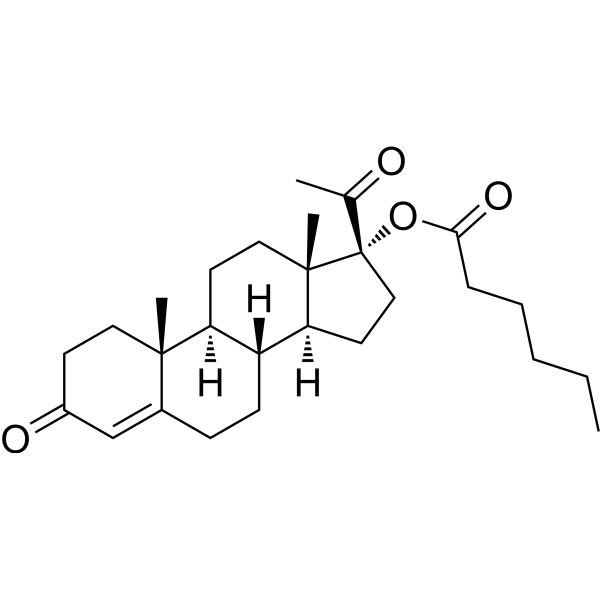
Hydroxyprogesterone caproate (Standard) is the analytical standard of Hydroxyprogesterone caproate. This product is intended for research and analytical applications. Hydroxyprogesterone caproate (17α-Hydroxyprogesterone hexanoate; 17α-Hydroxyprogesterone caproate) is a progesterone receptor (progesterone receptor) ligand and steroid hormone transcription inhibitor. Hydroxyprogesterone caproate downregulates estrogen receptors in target tissues and activates their metabolic pathways, and exhibits equivalent affinity for progesterone receptor A and progesterone receptor B. Hydroxyprogesterone caproate shows no consistent teratogenicity or developmental toxicity in rat, mouse and monkey models, but induces resorption or abortion in rhesus monkeys at human-equivalent doses. Hydroxyprogesterone caproate promotes the production of TNF-α in lipopolysaccharide-stimulated whole blood from non-pregnant women. Hydroxyprogesterone caproate can be used in scientific research related to preterm birth .
|
-
-
- HY-178235
-
|
|
Opioid Receptor
|
Neurological Disease
|
|
MDAN-21 is a bivalent opioid ligand that contains both μ-opioid receptor agonists and δ-opioid receptor antagonists. MDAN-21 has a strong analgesic effect and does not produce tolerance in mouse studies. MDAN-21 can effectively inhibit the withdrawal of morphine dependent monkeys and alleviate abnormal pain in the study of rhesus monkeys. MDAN-21 can be used for the study of allodynia .
|
-

-
- HY-W127357
-
|
|
Biochemical Assay Reagents
|
Others
|
|
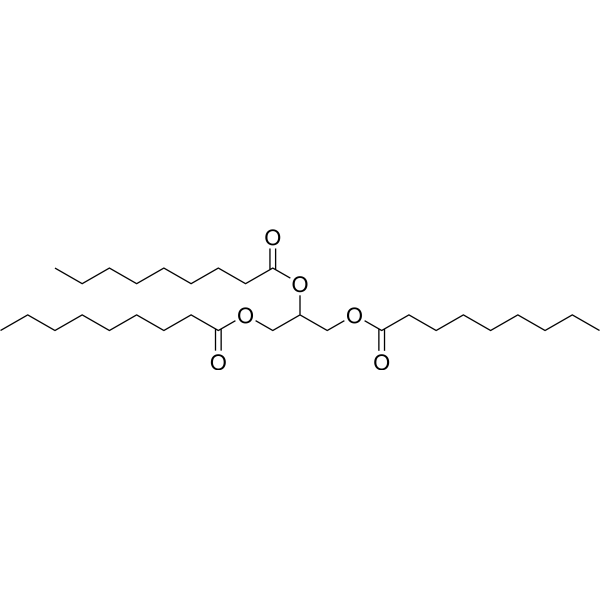
Glyceryl trinonanoate is a triacylglycerol containing nonanoic acid at the sn-1, sn-2 and sn-3 positions. It has been found in Schizochytrium biomass. 1 1,2,3-Trinonanoyl-rac-glycerol increases blood levels of the ketone body D-(-)-3-hydroxybutyrate in neonatal rhesus monkeys. 2|1. Mioso, R., Toledo Marante, FJ, González, JE, et al. Schizochytrium sp. metabolite analysis. Oleaginous microbial sources of biodiesel by GC-MS. braz. J. Microbiology. 45(2), 403-409 (2014).|2. Tetrick, MA, Greer, FR and Benevenga, NJ Blood D- ( )-3-Hydroxybutyric acid concentration. Compare. medicine. 60(6), 486-490 (2010).
|
-
-
- HY-107176A
-
|
HS-25
|
Others
|
Metabolic Disease
|
|
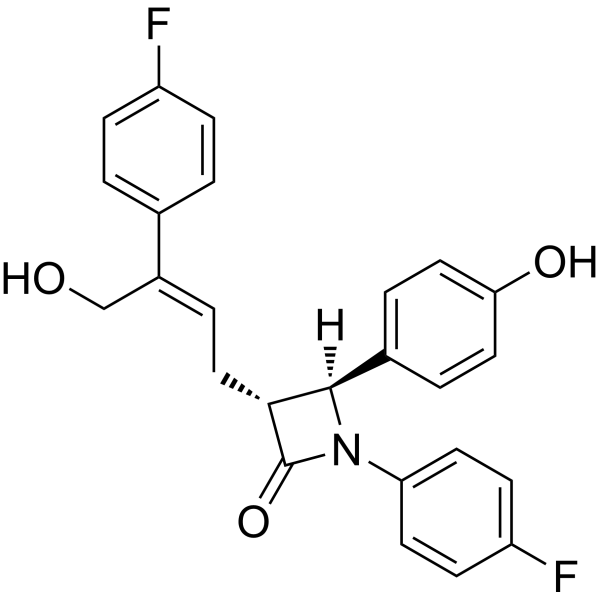
Hyzetimibe is a cholesterol absorption inhibitor. Hyzetimibe blocks the intestinal absorption of cholesterol and phytol. Hyzetimibe is well tolerated in animal models, with an LDmax 2000 mg/kg in rats and an LDmax 500 mg/kg in rhesus monkeys .
|
-
-
- HY-12366R
-
|
MK-1602 (Standard)
|
CGRP Receptor
Reference Standards
|
Cardiovascular Disease
Neurological Disease
|
|
Ubrogepant (Standard) is the analytical standard of Ubrogepant. This product is intended for research and analytical applications. Ubrogepant (MK-1602) is an orally active and selective antagonist of calcitonin gene-related peptide receptor (CGRP). Ubrogepant has high affinity for CGRP receptors in human and rhesus monkeys, and can effectively block the cAMP response stimulated by α-CGRP. Ubrogepant can be used in the study of acute migraine .
|
-

-
- HY-14360
-
|
|
Cathepsin
|
Metabolic Disease
|
|
MK 1256 is a highly selective and orally active inhibitor of tissue protease K (Cat K) with an IC50 of 0.62 nM. MK 1256 shows extremely high selectivity towards other tissue proteases (all > 1100 times), with only a slightly lower selectivity for tissue protease F (Cat F) (110 times). MK 1256 exhibits strong anti-bone resorption activity in the osteoporosis model of rhesus monkeys with ovariectomy. MK 1256 can be used for research on osteoporosis .
|
-

-
- HY-14568
-
|
|
GlyT
|
Neurological Disease
|
|
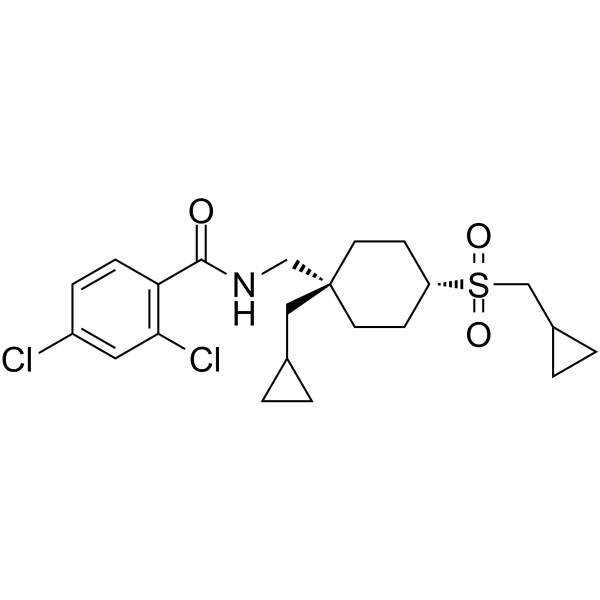
DCCCyB is an orally bioavailable, potent, and selective inhibitor of GlyT1. DCCCyB demonstrates excellent in vivo occupancy of GlyT1 transporters in rhesus monkey .
|
-
-
- HY-122517
-
|
U-24729 A
|
Parasite
|
Others
|
|
Mirincamycin (hydrochloride) (U-24729 A), a compound used to inhibit malaria, has a protective effect against the early liver stages of Plasmodium but fails to kill dormant liver stages of Plasmodium in a rhesus monkey model.
|
-

-
- HY-171457
-
|
RC-12
|
Parasite
Drug Derivative
|
Infection
|
|
WR-27653 (RC-12) is a derivative of Catechol with good activity against hypnozoites in the gold-standard Plasmodium cynomolgi-rhesus monkey (Macaca mulatta) model. WR-27653 has antimalarial activity .
|
-

-
- HY-P991270
-
|
|
Interleukin Related
|
Inflammation/Immunology
|
|
MT204 is a humanized IgG1 antibody inhibitor targeting IL-2 of human and rhesus monkey origin. MT204 prevents soluble IL-2 from binding to intermediate-affinity IL-2 receptors and blocks CD25-bound IL-2 on high-affinity IL-2 receptors. MT204 has potently anti-proliferative activity with NKL cells and primary NK cells. MT204 has good tolerability and potent immunosuppressive activity in allogeneic skin graft model of rhesus monkey, promising for immunosuppressive and anti-proliferative therapy .
|
-

-
- HY-12159A
-
|
|
Integrin
|
Inflammation/Immunology
|
|
MK-0668 mesylate is an amino acid-based, potent antagonist of unactivated VLA-4, with an IC50) of 0.13 nM in human whole blood. And MK-0668 mesylate exhibits IC50s of 0.19 nM in dogs, 0.21 nM in rhesus monkeys, and 0.4 nM in rats .
|
-

-
- HY-12159
-
|
|
Integrin
|
Inflammation/Immunology
|
|
MK-0668 is an amino acid-based, potent antagonist of unactivated VLA-4, with an IC50) of 0.13 nM in human whole blood. And MK-0668 exhibits IC50s of 0.19 nM in dogs, 0.21 nM in rhesus monkeys, and 0.4 nM in rats .
|
-

-
- HY-123100R
-
|
|
Reference Standards
Others
|
Others
|
|
Isoxepac (Standard) is the analytical standard of Isoxepac. This product is intended for research and analytical applications. Isoxepac (HP 549) is a nonsteroidal anti-inflammatory agent (NSAID) with anti-inflammatory, analgesic and antipyretic activity. Isoxepac has been studied in rat, rabbit, dog, rhesus monkey, etc .
|
-

-
- HY-121700
-
|
|
5 alpha Reductase
|
Others
|
|
L-751788 is a selective inhibitor of type I of 5α-reductase. L-751788 does not have a significant impact on the differentiation of the external genitalia in animals. When administered orally to pregnant rhesus monkeys, L-751788 (2, 10 mg/kg) did not cause abnormalities in fetal external genitalia .
|
-

-
- HY-137412
-
|
Prostaglandin F2α 1,15-lactone
|
Drug Derivative
|
Endocrinology
|
|
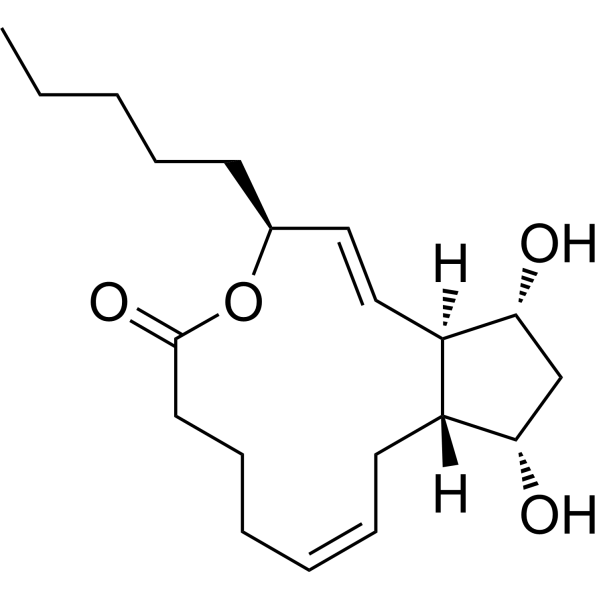
PGF2α 1,15-lactone (Prostaglandin F2α 1,15-lactone) is a lipid-soluble internal ester of PGF2α. PGF2α 1,15-lactone decreases menstrual cycle lengths in non-pregnant rhesus monkeys. PGF2α 1,15-lactone terminates early pregnancy in the monkey .
|
-
-
- HY-145644
-
|
C-135-LS; BMS-986414
|
SARS-CoV
|
Infection
Cancer
|
|
Ogalvibart (C-135-LS) is a human anti-SARS-CoV-2 monoclonal antibody (IgG1 type). Ogalvibart binds to the spike (S) glycoprotein receptor-binding domain (RBD) of SARS-CoV-2. Ogalvibart in combination with C144LS (1:1 ratio) shows good preventive activity and can effectively block the development of COVID19 in a rhesus monkey disease model .
|
-

-
- HY-12366S
-
|
MK-1602-d5
|
Isotope-Labeled Compounds
CGRP Receptor
|
Cardiovascular Disease
Neurological Disease
|
|
Ubrogepant-d5 (MK-1602-d5) is deuterium labeled Ubrogepant. Ubrogepant (MK-1602) is an orally active and selective antagonist of calcitonin gene-related peptide receptor (CGRP). Ubrogepant has high affinity for CGRP receptors in human and rhesus monkeys, and can effectively block the cAMP response stimulated by α-CGRP. Ubrogepant can be used in the study of acute migraine .
|
-

-
- HY-P11109
-
|
|
Antibiotic
Bacterial
|
Infection
|
|
RL-37 is an alpha-helical antimicrobial peptide. RL-37 can be isolated for rhesus monkey bone marrow. RL-37 rapidly permeabilizes the membranes of Escherichia coli ML-35p and lysed liposomes. RL-37 has effective antibacterial activity against staphylococci, such as wild-type and Methicillin (HY-121544)-resistant S. aureus strains and S. epidermidis ATCC 49741. RL-37 can be used for human skin infections research .
|
-

-
- HY-15042
-
|
|
Bradykinin Receptor
|
Metabolic Disease
|
|
MK 0686, a potent bradykinin B1 receptor antagonist, demonstrates autoinduction of metabolism in rhesus monkeys after oral administration. It undergoes significant biotransformation primarily via oxidation pathways, leading to the formation of metabolites like M11 and M13 in rhesus liver microsomes. This metabolic induction is mediated by CYP2C75, as evidenced by increased mRNA expression, protein levels, and catalytic activity of this enzyme in hepatocytes and liver microsomes from MK 0686-treated animals. The autoinduction phenomenon suggests that MK 0686 enhances its own metabolism by upregulating CYP2C75, potentially influencing its systemic exposure and pharmacokinetics over time .
|
-

-
- HY-171472
-
|
|
Dopamine Receptor
|
Neurological Disease
|
|
A-86929 is a highly potent and selective dopamine D1 receptor agonist with a pKi value of 7.3. In the 6-OHDA (HY-B1081)-induced unilateral nigrostriatal lesion rat model, A-86929 significantly induces rotational behavior. It also improves motor function in the MPTP (HY-15608)-induced Parkinson's disease marmoset model. Additionally, A-86929 demonstrates potential therapeutic value in reducing cocaine-seeking behavior in rats and reversing Haloperidol (HY-14538)-induced cognitive deficits in rhesus monkeys. A-86929 can be used for research in neurological disorders .
|
-

-
- HY-139124
-
|
15(R)-Carboprost; 15(R)-15-methyl PGF2α
|
Prostaglandin Receptor
|
Metabolic Disease
|
|
15(R)-15-Methyl Prostaglandin F2α (15(R)-Carboprost; 15(R)-15-methyl PGF2α) is a metabolically stable analog of PGF2α. 15(R)-15-Methyl Prostaglandin F2α is an inactive, prodrug PGF agonist designed for activation by gastric acid after oral administration. Acid-catalyzed epimerization of 15(R)-15-Methyl Prostaglandin F2α converts it into the active 15(S)-isomer. The 15(S)-isomer induces luteolysis when injected in rhesus monkeys at a dose of about 12 mg/animal, while the 15(R)-isomer does not.
|
-

-
- HY-120247
-
|
|
Vasopressin Receptor
P-glycoprotein
|
Others
|
|
TASP0434299 (Compound 10) is a radiolabeled ligand for the vasopressin V1b receptor. TASP0434299 exhibits high binding affinity for human and murine V1B receptors, with IC50 values of 0.526 nM and 0.641 nM, respectively, and shows potent antagonistic activity against the human V1B receptor with an IC50 of 0.639 nM. TASP0434299 is a substrate for human and rhesus monkey P-glycoprotein, resulting in low brain uptake in rhesus monkeys. TASP0434299 binds to V1B receptors in rat and monkey pituitary tissues in a saturable and specific manner both in vitro and in vivo. When radiolabeled with tritium or 11C, TASP0434299 serves as a prototype V1B receptor radiotracer to visualize V1B receptor in the pituitary gland of anesthetized monkeys via positron emission tomography .
|
-

-
- HY-183566
-
|
|
Sodium Channel
|
Neurological Disease
|
|
MK-5661 is an orally potent NaV1.8 voltage-gated sodium channel inhibitor with an EC50 of 4.3 nM. MK-5661 selectively inhibits peripheral nociceptive signaling mediators. MK-5661 reduces capsaicin-induced spontaneous nociceptive behaviors in humanized rats and attenuates capsaicin-induced skin flushing responses in rhesus monkeys. MK-5661 is applicable for pain-related research .
|
-

-
- HY-180832
-
|
|
COX
|
Neurological Disease
|
|
COX-1 ligand 1 (Compound 44) is a selective COX-1 ligand (Kds or Kis: 22 nM for rhesus monkey COX-1; 43 nM for hCOX-1). COX-1 ligand 1 inhibits [ 3H]PS13 binding to human COX-1. COX-1 ligand 1, when radiolabeled with 11C or 18F, can be used in studies of COX-1 imaging and psychiatric disorders .
|
-

-
- HY-201403
-
|
|
Phosphodiesterase (PDE)
TNF Receptor
|
Inflammation/Immunology
|
|
LY2775240 is an orally active phosphodiesterase 4 (PDE4) inhibitor with potent inhibitory activity against PDE4A (IC50 = 0.09 nM), PDE4B (IC50 = 0.09 nM) and PDE4D (IC50 = 0.14 nM), and exhibits an IC50 of 2.4 nM against PDE4C. LY2775240 is a highly selective agent that reduces TNFα production upon immune activation. LY2775240 decreases TNFα production in rodent and rhesus monkey models. LY2775240 can be used in the research of psoriasis .
|
-

-
- HY-P992045
-
|
|
Interleukin Related
CXCR
|
Inflammation/Immunology
|
|
HZD37-5 is a humanized monoclonal antibody specifically recognizing N78 loci of IL-17A. HZD37-5 binds to human and rhesus monkeys, blocks IL-17 induced signal transduction and the release of IL-6, IL-8, CXCL-1 and GM-GSF. HZD37-5 significantly inhibited human IL-17A induced-keratinocyte chemoattractant secretion. HZD37-5 can be used for the research of autoimmune diseases including psoriasis and psoriatic arthritis .
|
-

-
- HY-137357
-
|
NSC 305986; γ-MBMTX
|
Dihydrofolate reductase (DHFR)
|
Cancer
|
|
5-Monobutyl methotrexate (NSC 305986; γ-MBMTX) is a dihydrofolate reductase (DHFR) inhibitor and esterase substrate. 5-Monobutyl methotrexate is hydrolyzed by esterases to produce methotrexate. In rhesus monkeys, 5-Monobutyl methotrexate clears more slowly from cerebrospinal fluid than from serum, and its serum protein binding rate exceeds 99%. At the same dose rate, 5-Monobutyl methotrexate achieves cerebrospinal fluid concentrations comparable to those of Methotrexate (HY-14519), and exhibits activity against Methotrexate-resistant cells (with transport defects) that is comparable to that against sensitive parental cells. 5-Monobutyl methotrexate can be used in studies related to Methotrexate-resistant tumors .
|
-

-
- HY-B0742S1
-
|
17α-Hydroxyprogesterone hexanoate-d8; 17α-Hydroxyprogesterone caproate-d8
|
Isotope-Labeled Compounds
Progesterone Receptor
|
Others
|
|
Hydroxyprogesterone caproate-d8 (17α-Hydroxyprogesterone hexanoate-d8) is the deuterium labeled Hydroxyprogesterone caproate (HY-B0742). Hydroxyprogesterone caproate (17α-Hydroxyprogesterone hexanoate; 17α-Hydroxyprogesterone caproate) is a progesterone receptor (progesterone receptor) ligand and steroid hormone transcription inhibitor. Hydroxyprogesterone caproate downregulates estrogen receptors in target tissues and activates their metabolic pathways, and exhibits equivalent affinity for progesterone receptor A and progesterone receptor B. Hydroxyprogesterone caproate shows no consistent teratogenicity or developmental toxicity in rat, mouse and monkey models, but induces resorption or abortion in rhesus monkeys at human-equivalent doses. Hydroxyprogesterone caproate promotes the production of TNF-α in lipopolysaccharide-stimulated whole blood from non-pregnant women. Hydroxyprogesterone caproate can be used in scientific research related to preterm birth .
|
-

| Cat. No. |
Product Name |
Type |
-
- HY-W127357
-
|
|
Biochemical Assay Reagents
|
|
Glyceryl trinonanoate is a triacylglycerol containing nonanoic acid at the sn-1, sn-2 and sn-3 positions. It has been found in Schizochytrium biomass. 1 1,2,3-Trinonanoyl-rac-glycerol increases blood levels of the ketone body D-(-)-3-hydroxybutyrate in neonatal rhesus monkeys. 2|1. Mioso, R., Toledo Marante, FJ, González, JE, et al. Schizochytrium sp. metabolite analysis. Oleaginous microbial sources of biodiesel by GC-MS. braz. J. Microbiology. 45(2), 403-409 (2014).|2. Tetrick, MA, Greer, FR and Benevenga, NJ Blood D- ( )-3-Hydroxybutyric acid concentration. Compare. medicine. 60(6), 486-490 (2010).
|
| Cat. No. |
Product Name |
Target |
Research Area |
-
- HY-P5448
-
|
|
Peptides
|
Others
|
|
MOG (92–106), mouse, rat is a biological active peptide. (This is amino acids 92 to 106 fragment of the myelin oligodendrocyte glycoprotein (MOG) from mouse/rat. Mice with MOG (92–106)-induced experimental autoimmune encephalomyelitis develop extensive B cell reactivity against secondary myelin antigens. Despite the fact that this MOG peptide induces only weak T cell responses, MOG-induced autoimmunity is very severe. This peptide is encephalitogenic in SJL mice, DA rats, and rhesus monkeys.)
|
-
- HY-P11109
-
|
|
Antibiotic
Bacterial
|
Infection
|
|
RL-37 is an alpha-helical antimicrobial peptide. RL-37 can be isolated for rhesus monkey bone marrow. RL-37 rapidly permeabilizes the membranes of Escherichia coli ML-35p and lysed liposomes. RL-37 has effective antibacterial activity against staphylococci, such as wild-type and Methicillin (HY-121544)-resistant S. aureus strains and S. epidermidis ATCC 49741. RL-37 can be used for human skin infections research .
|
| Cat. No. |
Product Name |
Target |
Research Area |
Image |
-
- HY-P991270
-
|
|
Interleukin Related
|
Inflammation/Immunology
|
|
MT204 is a humanized IgG1 antibody inhibitor targeting IL-2 of human and rhesus monkey origin. MT204 prevents soluble IL-2 from binding to intermediate-affinity IL-2 receptors and blocks CD25-bound IL-2 on high-affinity IL-2 receptors. MT204 has potently anti-proliferative activity with NKL cells and primary NK cells. MT204 has good tolerability and potent immunosuppressive activity in allogeneic skin graft model of rhesus monkey, promising for immunosuppressive and anti-proliferative therapy .
|
-

(5)
-
- HY-145644
-
|
C-135-LS; BMS-986414
|
SARS-CoV
|
Infection
Cancer
|
|
Ogalvibart (C-135-LS) is a human anti-SARS-CoV-2 monoclonal antibody (IgG1 type). Ogalvibart binds to the spike (S) glycoprotein receptor-binding domain (RBD) of SARS-CoV-2. Ogalvibart in combination with C144LS (1:1 ratio) shows good preventive activity and can effectively block the development of COVID19 in a rhesus monkey disease model .
|
-
(5)
-
- HY-P992045
-
|
|
Interleukin Related
CXCR
|
Inflammation/Immunology
|
|
HZD37-5 is a humanized monoclonal antibody specifically recognizing N78 loci of IL-17A. HZD37-5 binds to human and rhesus monkeys, blocks IL-17 induced signal transduction and the release of IL-6, IL-8, CXCL-1 and GM-GSF. HZD37-5 significantly inhibited human IL-17A induced-keratinocyte chemoattractant secretion. HZD37-5 can be used for the research of autoimmune diseases including psoriasis and psoriatic arthritis .
|
-
(5)
| Cat. No. |
Product Name |
Category |
Target |
Chemical Structure |
| Cat. No. |
Product Name |
Chemical Structure |
-
- HY-12366S
-
|
|
|
Ubrogepant-d5 (MK-1602-d5) is deuterium labeled Ubrogepant. Ubrogepant (MK-1602) is an orally active and selective antagonist of calcitonin gene-related peptide receptor (CGRP). Ubrogepant has high affinity for CGRP receptors in human and rhesus monkeys, and can effectively block the cAMP response stimulated by α-CGRP. Ubrogepant can be used in the study of acute migraine .
|
-
-
- HY-B0742S1
-
|
|
|
Hydroxyprogesterone caproate-d8 (17α-Hydroxyprogesterone hexanoate-d8) is the deuterium labeled Hydroxyprogesterone caproate (HY-B0742). Hydroxyprogesterone caproate (17α-Hydroxyprogesterone hexanoate; 17α-Hydroxyprogesterone caproate) is a progesterone receptor (progesterone receptor) ligand and steroid hormone transcription inhibitor. Hydroxyprogesterone caproate downregulates estrogen receptors in target tissues and activates their metabolic pathways, and exhibits equivalent affinity for progesterone receptor A and progesterone receptor B. Hydroxyprogesterone caproate shows no consistent teratogenicity or developmental toxicity in rat, mouse and monkey models, but induces resorption or abortion in rhesus monkeys at human-equivalent doses. Hydroxyprogesterone caproate promotes the production of TNF-α in lipopolysaccharide-stimulated whole blood from non-pregnant women. Hydroxyprogesterone caproate can be used in scientific research related to preterm birth .
|
-
Your information is safe with us. * Required Fields.
Inquiry Information
- Product Name:
- Cat. No.:
- Quantity:
- MCE Japan Authorized Agent:








