



Quinpirole
Based on 5 publication(s) in Google Scholar
Quinpirole (LY 171555; (-)-LY 141865) is a D2/D3 dopamine receptor agonist and a CaV1.3 calcium channel modulator. Quinpirole normalizes dendritic spine density in dopamine-depleted striatum, upregulates the protein expression of BCL2 and GluR2, downregulates the protein expression of BAX, and delays the onset of seizures. Quinpirole enhances learning and memory, inhibits neuronal apoptosis (apoptosis), and induces anxiety-like, stereotyped, and compulsive behaviors. Quinpirole disrupts prepulse inhibition in rhesus monkeys, enhances the activity of paraventricular thalamic neurons to promote recovery from Isoflurane anesthesia, and alters the composition of the gut microbiota in rats. Quinpirole can be used in research related to dyskinesia, pain, epilepsy, and neurological disorders including anxiety disorder, obsessive-compulsive disorder, and schizophrenia.
For research use only. We do not sell to patients.
- Purity : 98.95%
- CAS No.: 80373-22-4
- Formula: C13H21N3
- Molecular Weight:219.33
-
Storage:Powder -20°C, 3 years , 4°C, 2 years ; In solvent -80°C, 6 months , -20°C, 1 month


To place orders, for customer services and technical support, please contact: MedChemExpress USA
Tel: 609-228-6898 E-mail: [email protected] [email protected]


-
 Biological Activity
-
Chemical Information
-
Solvent & Solubility
- Protocols
- Purity & Documentation
- References
-
 Help & FAQs


Publications Citing Use of MedChemExpress (MCE) Quinpirole
More Customer Validation & Images

-
RT-PCR
-
ELISA
-
RT-PCR
-
Cell Proliferation/Viability Assay
-
Bio/Physico-chemical Assay
All Dopamine Receptor Isoforms
MoreAll Calcium Channel Isoforms
MoreAll iGluR Isoforms
More

Biological Activity
Description
Cellular Effect
|
Cell Line

|
Type | Value | Description | References |
|---|---|---|---|---|
| CHO | EC50 |
1.4 nM
Compound: Quinpirole
|
Effective concentration in [3H]thymidine uptake assay by CHO dhfr- mutant cells expressing human D3 receptor
Effective concentration in [3H]thymidine uptake assay by CHO dhfr- mutant cells expressing human D3 receptor
|
[PMID: 15916420] |
| CHO | EC50 |
1.4 nM
Compound: quinpirole
|
Activity at human D4.2 receptor assessed as [3H]thymidine incorporation in CHO 10001 cells by mitogenesis assay
Activity at human D4.2 receptor assessed as [3H]thymidine incorporation in CHO 10001 cells by mitogenesis assay
|
[PMID: 16789750] |
| CHO | EC50 |
1.4 nM
Compound: Quinpirole
|
Agonist activity at human dopamine D3 receptor expressed in dhfr-deficient CHO cells assessed as [3H]thymidine incorporation
Agonist activity at human dopamine D3 receptor expressed in dhfr-deficient CHO cells assessed as [3H]thymidine incorporation
|
[PMID: 21273071] |
| CHO | EC50 |
10 nM
Compound: quinpirole
|
Intrinsic activity against dopamine D2(short) receptor assessed as [3H]thymidine uptake in CHO cells by mitogenesis assay
Intrinsic activity against dopamine D2(short) receptor assessed as [3H]thymidine uptake in CHO cells by mitogenesis assay
|
[PMID: 16563764] |
| CHO | EC50 |
10 nM
Compound: quinpirole
|
Agonist activity at human dopamine D4.2 receptor expressed in CHO dhfr mutant cells assessed as stimulation of mitogenesis after 2 hrs
Agonist activity at human dopamine D4.2 receptor expressed in CHO dhfr mutant cells assessed as stimulation of mitogenesis after 2 hrs
|
[PMID: 17827018] |
| CHO | EC50 |
11 nM
Compound: quinpirole
|
Intrinsic activity against dopamine D4 receptor assessed as [3H]thymidine uptake in CHO cells by mitogenesis assay
Intrinsic activity against dopamine D4 receptor assessed as [3H]thymidine uptake in CHO cells by mitogenesis assay
|
[PMID: 16563764] |
| CHO | EC50 |
140 nM
Compound: Quinpirole
|
Agonist activity at DRD2 Long receptor expressed in CHO cells assessed as inhibition of forskolin-stimulated cAMP accumulation by bioluminescence assay
Agonist activity at DRD2 Long receptor expressed in CHO cells assessed as inhibition of forskolin-stimulated cAMP accumulation by bioluminescence assay
|
[PMID: 21999579] |
| CHO | EC50 |
2 nM
Compound: Quinpirole
|
Tested for the effective concentration against CHO 10001 cells in human D4.2 receptor established in mitogenesis assay
Tested for the effective concentration against CHO 10001 cells in human D4.2 receptor established in mitogenesis assay
|
[PMID: 11844688] |
| CHO | EC50 |
2.1 nM
Compound: quinpirole
|
Intrinsic activity at human D3 receptor expressed in CHO dhfr- cells by [3H]thymidine incorporation assay
Intrinsic activity at human D3 receptor expressed in CHO dhfr- cells by [3H]thymidine incorporation assay
|
[PMID: 18834111] |
| CHO | EC50 |
2.6 nM
Compound: quinpirole
|
Intrinsic activity at human D3 receptor expressed in CHO dhfr- cells assessed as rate of [3H]thymidine incorporation by mitogenesis assay
Intrinsic activity at human D3 receptor expressed in CHO dhfr- cells assessed as rate of [3H]thymidine incorporation by mitogenesis assay
|
[PMID: 16759104] |
| CHO | EC50 |
2.9 nM
Compound: quinpirole
|
Intrinsic activity at human D3 receptor expressed in CHO dhfr- cells assessed as inhibition of forskolin-induced cAMP release
Intrinsic activity at human D3 receptor expressed in CHO dhfr- cells assessed as inhibition of forskolin-induced cAMP release
|
[PMID: 18834111] |
| CHO | EC50 |
23 nM
Compound: quinpirole
|
Intrinsic activity against dopamine D4 receptor expressed in CHO cells by GTPgammaS assay
Intrinsic activity against dopamine D4 receptor expressed in CHO cells by GTPgammaS assay
|
[PMID: 16563764] |
| CHO | EC50 |
230 nM
Compound: quinpirole
|
Intrinsic activity against dopamine D2(short) receptor expressed in CHO cells by GTPgammaS assay
Intrinsic activity against dopamine D2(short) receptor expressed in CHO cells by GTPgammaS assay
|
[PMID: 16563764] |
| CHO | EC50 |
3.1 nM
Compound: Quinpirole
|
Intrinsic activity in mitogenesis assay using Dopamine receptor D3 expressing CHO cells
Intrinsic activity in mitogenesis assay using Dopamine receptor D3 expressing CHO cells
|
[PMID: 12361386] |
| CHO | EC50 |
3.4 nM
Compound: quinpirole
|
Intrinsic activity against dopamine D3 receptor assessed as [3H]thymidine uptake in CHO cells by mitogenesis assay
Intrinsic activity against dopamine D3 receptor assessed as [3H]thymidine uptake in CHO cells by mitogenesis assay
|
[PMID: 16563764] |
| CHO | EC50 |
330 nM
Compound: quinpirole
|
Intrinsic activity against dopamine D2(long) receptor expressed in CHO cells by GTPgammaS assay
Intrinsic activity against dopamine D2(long) receptor expressed in CHO cells by GTPgammaS assay
|
[PMID: 16563764] |
| CHO | EC50 |
5.2 nM
Compound: quinpirole
|
Agonist activity at human dopamine D3 receptor expressed in CHO dhfr mutant cells assessed as stimulation of mitogenesis after 4 hrs
Agonist activity at human dopamine D3 receptor expressed in CHO dhfr mutant cells assessed as stimulation of mitogenesis after 4 hrs
|
[PMID: 17827018] |
| CHO | EC50 |
7.4 nM
Compound: quinpirole
|
Intrinsic activity against dopamine D2(long) receptor assessed as [3H]thymidine uptake in CHO cells by mitogenesis assay
Intrinsic activity against dopamine D2(long) receptor assessed as [3H]thymidine uptake in CHO cells by mitogenesis assay
|
[PMID: 16563764] |
| CHO | EC50 |
9.9 nM
Compound: Quinpirole
|
Effective concentration for [3H]thymidine uptake in growing CHO cells stably expressing the dopamine D4.2 receptor
Effective concentration for [3H]thymidine uptake in growing CHO cells stably expressing the dopamine D4.2 receptor
|
[PMID: 12617906] |
| CHO-K1 | EC50 |
49 nM
Compound: Quinpirole
|
Effective concentration for [35S]GTP-gamma-S, binding in CHO-K1 cells expressing human dopamine D4 receptor
Effective concentration for [35S]GTP-gamma-S, binding in CHO-K1 cells expressing human dopamine D4 receptor
|
[PMID: 15916420] |
| CHO-K1 | EC50 |
49 nM
Compound: quinpirole
|
Activity at human D4.4 receptor expressed in CHOK1 cells assessed as stimulation of [35S]GTP-gammaS binding
Activity at human D4.4 receptor expressed in CHOK1 cells assessed as stimulation of [35S]GTP-gammaS binding
|
[PMID: 16789750] |
| COS-7 | IC50 |
1362 nM
Compound: Quinpirole
|
Displacement of [3H]nemonapride from Rattus norvegicus (rat) chimeric dopamine D3 trunk/D2 tail receptor transfected in african green monkey COS7 cells after 1 hr by beta scintillation counting
Displacement of [3H]nemonapride from Rattus norvegicus (rat) chimeric dopamine D3 trunk/D2 tail receptor transfected in african green monkey COS7 cells after 1 hr by beta scintillation counting
|
10.1007/s00044-004-0006-x |
| COS-7 | IC50 |
25 nM
Compound: Quinpirole
|
Displacement of [3H]nemonapride from Rattus norvegicus (rat) wild type dopamine D3 receptor transfected in african green monkey COS7 cells after 1 hr by beta scintillation counting
Displacement of [3H]nemonapride from Rattus norvegicus (rat) wild type dopamine D3 receptor transfected in african green monkey COS7 cells after 1 hr by beta scintillation counting
|
10.1007/s00044-004-0006-x |
| COS-7 | IC50 |
29 nM
Compound: Quinpirole
|
Displacement of [3H]nemonapride from Rattus norvegicus (rat) chimeric dopamine D3 trunk/D3 tail receptor transfected in african green monkey COS7 cells after 1 hr by beta scintillation counting
Displacement of [3H]nemonapride from Rattus norvegicus (rat) chimeric dopamine D3 trunk/D3 tail receptor transfected in african green monkey COS7 cells after 1 hr by beta scintillation counting
|
10.1007/s00044-004-0006-x |
| COS-7 | IC50 |
4321 nM
Compound: Quinpirole
|
Displacement of [3H]nemonapride from Rattus norvegicus (rat) chimeric dopamine D2 trunk/D2 tail receptor transfected in african green monkey COS7 cells after 1 hr by beta scintillation counting
Displacement of [3H]nemonapride from Rattus norvegicus (rat) chimeric dopamine D2 trunk/D2 tail receptor transfected in african green monkey COS7 cells after 1 hr by beta scintillation counting
|
10.1007/s00044-004-0006-x |
| COS-7 | IC50 |
454 nM
Compound: Quinpirole
|
Displacement of [3H]nemonapride from Rattus norvegicus (rat) chimeric dopamine D2 trunk/D3 tail receptor transfected in african green monkey COS7 cells after 1 hr by beta scintillation counting
Displacement of [3H]nemonapride from Rattus norvegicus (rat) chimeric dopamine D2 trunk/D3 tail receptor transfected in african green monkey COS7 cells after 1 hr by beta scintillation counting
|
10.1007/s00044-004-0006-x |
| COS-7 | IC50 |
4784 nM
Compound: Quinpirole
|
Displacement of [3H]nemonapride from Rattus norvegicus (rat) wild type dopamine D2 receptor transfected in african green monkey COS7 cells after 1 hr by beta scintillation counting
Displacement of [3H]nemonapride from Rattus norvegicus (rat) wild type dopamine D2 receptor transfected in african green monkey COS7 cells after 1 hr by beta scintillation counting
|
10.1007/s00044-004-0006-x |
| GH4-C1 | EC50 |
7.6 nM
Compound: quinpirole
|
In vitro inhibition of forskolin-stimulated cAMP accumulation in GH4C1 cells transfected with the human Dopamine D2 receptor
In vitro inhibition of forskolin-stimulated cAMP accumulation in GH4C1 cells transfected with the human Dopamine D2 receptor
|
[PMID: 7990124] |
| HEK293 | EC50 |
1.3 nM
Compound: Quinpirole
|
Agonist activity at D2R (unknown origin) expressed in HEK293 cells assessed as effect on cAMP accumulation incubated for 10 mins by Gi-cAMP Glosensor assay
Agonist activity at D2R (unknown origin) expressed in HEK293 cells assessed as effect on cAMP accumulation incubated for 10 mins by Gi-cAMP Glosensor assay
|
[PMID: 31098001] |
| HEK293 | EC50 |
1.6 nM
Compound: Quinpirole
|
Agonist activity at human D2S receptor expressed in HEK293 cells cotransfected with Gqi5 protein assessed as [3H]IP3 accumulation after 120 mins by scintillation counting assay in presence of myo-[3H]-inositol
Agonist activity at human D2S receptor expressed in HEK293 cells cotransfected with Gqi5 protein assessed as [3H]IP3 accumulation after 120 mins by scintillation counting assay in presence of myo-[3H]-inositol
|
[PMID: 27132867] |
| HEK293 | EC50 |
10 nM
Compound: quinpirole
|
Activation of human dopamine D3 receptor L89K mutant expressed in HEK293 cells co-expressing GaqG66Di5- incubated for 120 mins by scintillation counting based myo-[3H]inositol phosphate accumulation assay
Activation of human dopamine D3 receptor L89K mutant expressed in HEK293 cells co-expressing GaqG66Di5- incubated for 120 mins by scintillation counting based myo-[3H]inositol phosphate accumulation assay
|
[PMID: 25564378] |
| HEK293 | EC50 |
10.9 nM
Compound: (-)-Quinpirole
|
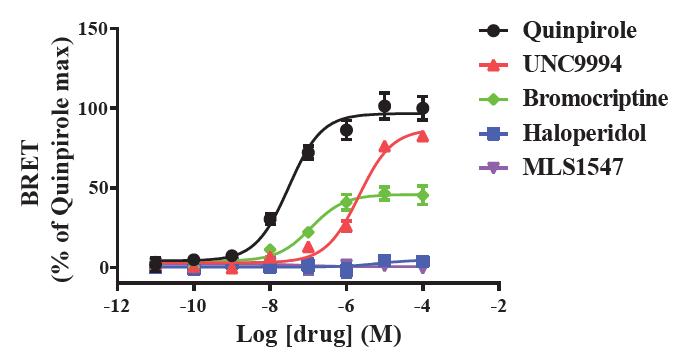
Agonist activity at human dopamine D2 receptor expressed in HEK293 cells assessed as cAMP inhibition by BRET assay
Agonist activity at human dopamine D2 receptor expressed in HEK293 cells assessed as cAMP inhibition by BRET assay
|
[PMID: 28300398] |
| HEK293 | EC50 |
147.6 nM
Compound: (-)-Quinpirole
|
Agonist activity at renilla luciferase-tagged human dopamine D2 receptor expressed in HEK293 cells coexpressing mVenus-fused beta-arrestin 2 assessed as induction of beta-arrestin 2 recruitment by BRET assay
Agonist activity at renilla luciferase-tagged human dopamine D2 receptor expressed in HEK293 cells coexpressing mVenus-fused beta-arrestin 2 assessed as induction of beta-arrestin 2 recruitment by BRET assay
|
[PMID: 28300398] |
| HEK293 | EC50 |
1600 nM
Compound: Quinpirole
|
Agonist activity at human dopamine D2 short receptor transiently expressed in HEK293 cells co-expressing Galphai2 after 30 mins by [35S]GTPgammaS binding assay
Agonist activity at human dopamine D2 short receptor transiently expressed in HEK293 cells co-expressing Galphai2 after 30 mins by [35S]GTPgammaS binding assay
|
[PMID: 24831693] |
| HEK293 | EC50 |
1600 nM
Compound: quinpirole
|
Intrinsic activity at human dopamine D2S receptor expressed in HEK293 cells co-transfected with Galpha0i assessed as [35S]GTPgammaS binding after 30 mins by [35S]GTPgammaS incorporation assay
Intrinsic activity at human dopamine D2S receptor expressed in HEK293 cells co-transfected with Galpha0i assessed as [35S]GTPgammaS binding after 30 mins by [35S]GTPgammaS incorporation assay
|
[PMID: 25734236] |
| HEK293 | EC50 |
2.4 nM
Compound: quinpirole
|
Activation of wild type human dopamine D3 receptor expressed in HEK293 cells co-expressing GaqG66Di5- incubated for 120 mins by scintillation counting based myo-[3H]inositol phosphate accumulation assay
Activation of wild type human dopamine D3 receptor expressed in HEK293 cells co-expressing GaqG66Di5- incubated for 120 mins by scintillation counting based myo-[3H]inositol phosphate accumulation assay
|
[PMID: 25564378] |
| HEK293 | EC50 |
2.7 nM
Compound: Quinpirole
|
Agonist activity at D4R (unknown origin) expressed in HEK293 cells assessed as effect on cAMP accumulation incubated for 10 mins by Gi-cAMP Glosensor assay
Agonist activity at D4R (unknown origin) expressed in HEK293 cells assessed as effect on cAMP accumulation incubated for 10 mins by Gi-cAMP Glosensor assay
|
[PMID: 31098001] |
| HEK293 | EC50 |
2300 nM
Compound: quinpirole
|
Intrinsic activity at human dopamine D2S receptor expressed in HEK293 cells co-transfected with Galphai2 assessed as [35S]GTPgammaS binding after 30 mins by [35S]GTPgammaS incorporation assay
Intrinsic activity at human dopamine D2S receptor expressed in HEK293 cells co-transfected with Galphai2 assessed as [35S]GTPgammaS binding after 30 mins by [35S]GTPgammaS incorporation assay
|
[PMID: 25734236] |
| HEK293 | EC50 |
240 nM
Compound: Quinpirole
|
Agonist activity at dopamine D2 receptor expressed in HEK293 cells by by [35S]GTPgammaS binding assay
Agonist activity at dopamine D2 receptor expressed in HEK293 cells by by [35S]GTPgammaS binding assay
|
[PMID: 19559623] |
| HEK293 | EC50 |
2700 nM
Compound: quinpirole
|
Intrinsic activity at human dopamine D2L receptor expressed in HEK293 cells co-transfected with Galpha0i assessed as [35S]GTPgammaS binding after 30 mins by [35S]GTPgammaS incorporation assay
Intrinsic activity at human dopamine D2L receptor expressed in HEK293 cells co-transfected with Galpha0i assessed as [35S]GTPgammaS binding after 30 mins by [35S]GTPgammaS incorporation assay
|
[PMID: 25734236] |
| HEK293 | EC50 |
2800 nM
Compound: quinpirole
|
Intrinsic activity at human dopamine D2L receptor expressed in HEK293 cells co-transfected with Galphai2 assessed as [35S]GTPgammaS binding after 30 mins by [35S]GTPgammaS incorporation assay
Intrinsic activity at human dopamine D2L receptor expressed in HEK293 cells co-transfected with Galphai2 assessed as [35S]GTPgammaS binding after 30 mins by [35S]GTPgammaS incorporation assay
|
[PMID: 25734236] |
| HEK293 | EC50 |
353.2 nM
Compound: (-)-Quinpirole
|
Agonist activity at human dopamine D2 receptor expressed in HEK293 cells coexpressing renilla luciferase-fused Galphai1/GFP10-fused Ggamma2 by BRET assay
Agonist activity at human dopamine D2 receptor expressed in HEK293 cells coexpressing renilla luciferase-fused Galphai1/GFP10-fused Ggamma2 by BRET assay
|
[PMID: 28300398] |
| HEK293 | EC50 |
360 nM
Compound: Quinpirole
|
Agonist activity at human D2SR expressed in HEK293 cell membranes co-expressing PTX insensitive variant of Galphao1 incubated for 30 mins by [35S]GTP-gammaS binding assay
Agonist activity at human D2SR expressed in HEK293 cell membranes co-expressing PTX insensitive variant of Galphao1 incubated for 30 mins by [35S]GTP-gammaS binding assay
|
[PMID: 28870802] |
| HEK293 | EC50 |
38.7 nM
Compound: (-)-Quinpirole
|
Agonist activity at human dopamine D2 receptor expressed in HEK293 cells coexpressing renilla luciferase-fused GalphaoA/GFP10-fused Ggamma2 by BRET assay
Agonist activity at human dopamine D2 receptor expressed in HEK293 cells coexpressing renilla luciferase-fused GalphaoA/GFP10-fused Ggamma2 by BRET assay
|
[PMID: 28300398] |
| HEK293 | EC50 |
5 nM
Compound: quinpirole
|
Activity at human dopamine D4.4 receptor expressed in HEK293 cells assessed as inhibition of forskolin-stimulated cAMP production
Activity at human dopamine D4.4 receptor expressed in HEK293 cells assessed as inhibition of forskolin-stimulated cAMP production
|
[PMID: 17154515] |
| HEK293 | EC50 |
51 nM
Compound: quinpirole
|
Activity at pro-link-tagged D2S-ARMS2PK2 (unknown origin) expressed in HEK293 cells by beta-arrestin-2 recruitment assay
Activity at pro-link-tagged D2S-ARMS2PK2 (unknown origin) expressed in HEK293 cells by beta-arrestin-2 recruitment assay
|
[PMID: 26299826] |
| HEK293 | EC50 |
73 nM
Compound: Quinpirole
|
Agonist activity at human D2SR expressed in HEK293 cells incubated for 5 hrs by beta-Arrestin 2 recruitment assay
Agonist activity at human D2SR expressed in HEK293 cells incubated for 5 hrs by beta-Arrestin 2 recruitment assay
|
[PMID: 28870802] |
| HEK293 | EC50 |
83 nM
Compound: quinpirole
|
Agonist activity at ARMS2-PK2-tagged human dopamine D2S receptor expressed in HEK293 cells co-expressing (EA)-tagged beta arrestin fusion protein assessed as recruitment of beta-arrestin-2 after 5 hrs by chemiluminescence assay
Agonist activity at ARMS2-PK2-tagged human dopamine D2S receptor expressed in HEK293 cells co-expressing (EA)-tagged beta arrestin fusion protein assessed as recruitment of beta-arrestin-2 after 5 hrs by chemiluminescence assay
|
[PMID: 25734236] |
| HEK293 | EC50 |
83 nM
Compound: Quinpirole
|
Agonist activity at PKA-tagged D4 receptor (unknown origin) expressed in HEK293 cells co-expressing beta-arrestin2 assessed as induction of beta-arrestin2 recruitment incubated for 6 hrs by Path-Hunter assay
Agonist activity at PKA-tagged D4 receptor (unknown origin) expressed in HEK293 cells co-expressing beta-arrestin2 assessed as induction of beta-arrestin2 recruitment incubated for 6 hrs by Path-Hunter assay
|
[PMID: 31613617] |
| HEK293 | EC50 |
86 nM
Compound: Quinpirole
|
Agonist activity at ARMS2-PK-tagged D2S receptor (unknown origin) transfected in HEK293 cells after 5 hrs by beta-arrestin assay
Agonist activity at ARMS2-PK-tagged D2S receptor (unknown origin) transfected in HEK293 cells after 5 hrs by beta-arrestin assay
|
[PMID: 27132867] |
| HEK293 | EC50 |
9 nM
Compound: quinpirole
|
Activity at rat dopamine D2L receptor expressed in HEK293 cells assessed as inhibition of forskolin-stimulated cAMP production
Activity at rat dopamine D2L receptor expressed in HEK293 cells assessed as inhibition of forskolin-stimulated cAMP production
|
[PMID: 17154515] |
| HEK293 | EC50 |
9.7 nM
Compound: Quinpirole
|
Agonist activity at human dopamine D3 receptor transiently expressed in HEK293 cells co-expressing Galphao1 after 30 mins by [35S]GTPgammaS binding assay
Agonist activity at human dopamine D3 receptor transiently expressed in HEK293 cells co-expressing Galphao1 after 30 mins by [35S]GTPgammaS binding assay
|
[PMID: 24831693] |
| HEK-293T | EC50 |
16 nM
Compound: Quinpirole
|
Partial agonist activity at human D2SR expressed in HEK293T cells co-expressing (EA)beta-arrestin2 and GRK2 assessed as induction of beta-arrestin2 recruitment after 5 hrs by chemiluminescence assay
Partial agonist activity at human D2SR expressed in HEK293T cells co-expressing (EA)beta-arrestin2 and GRK2 assessed as induction of beta-arrestin2 recruitment after 5 hrs by chemiluminescence assay
|
[PMID: 28489379] |
| HEK-293T | EC50 |
270 nM
Compound: Quinpirole
|
Agonist activity at human D2S receptor expressed in HEK293T cell membranes coexpressing Galphao1 assessed as induction of nucleotide exchange preincubated for 30 mins followed by addition of [35S]GTPgammaS measured after 30 mins by [35S]GTPgammaS binding
Agonist activity at human D2S receptor expressed in HEK293T cell membranes coexpressing Galphao1 assessed as induction of nucleotide exchange preincubated for 30 mins followed by addition of [35S]GTPgammaS measured after 30 mins by [35S]GTPgammaS binding
|
[PMID: 28489379] |
| HEK-293T | EC50 |
52 nM
Compound: Quinpirole
|
Partial agonist activity at human D2SR expressed in HEK293T cells co-expressing (EA)beta-arrestin2 assessed as induction of beta-arrestin2 recruitment after 5 hrs by chemiluminescence assay
Partial agonist activity at human D2SR expressed in HEK293T cells co-expressing (EA)beta-arrestin2 assessed as induction of beta-arrestin2 recruitment after 5 hrs by chemiluminescence assay
|
[PMID: 28489379] |
In Vitro
Quinpirole selectively inhibits high-voltage activated calcium channels in dopamine-depleted rat striatal medium spiny neurons, an effect dependent on L-type calcium channel activity[1].
MedChemExpress (MCE) has not independently confirmed the accuracy of these methods. They are for reference only.
In Vivo
Quinpirole (0.1-3 mg/kg; subcutaneous injection) exerts significant analgesic effects in mechanical nociception tests conducted on untreated male Wistar rats, complete Freund's adjuvant (CFA)-induced inflammatory pain models, and chronic constriction injury (CCI)-induced neuropathic pain models, and also produces significant nociceptive enhancement effects[2].
Quinpirole (intracerebroventricular injection; single dose; 60 minutes prior to Pilocarpine injection) exerts neuroprotective effects on Wistar rats with epilepsy induced by Lithium chloride (HY-Y0649D)-Pilocarpine (HY-B0726A), delays the onset of seizures, improves cognitive function, and regulates the protein expression of GluR2, BAX and BCL2 in hippocampal tissue[3].
Quinpirole (0.01-3 mg/kg, i.p., 1-4 h prior to sacrifice) dose-dependently decreases the concentrations of epinephrine in the hypothalamus and dopamine metabolites in the cerebral hemispheres of rats; at high doses, it also alters the concentrations of dopamine and norepinephrine in the hypothalamus as well as MHPG sulfate in the brain stem[4].
Quinpirole (5.5-50 μM; immersion; single 24-hour exposure; at 5 dpf) induces persistent anxiety-like behaviors, stereotypic swimming, and aversive memory impairment in adult zebrafish, with no effect on their social or aggressive behaviors[5].
Quinpirole (7-70 nM; bilateral intracranial infusion into the nucleus accumbens core; 0.2 μl/min) impairs prepulse inhibition of the acoustic startle reflex[6].
Quinpirole (0.5 mg/kg, subcutaneous injection, twice weekly for 5 weeks) induces obsessive-compulsive-like behaviors, neuroinflammatory changes, intestinal histological alterations, reduced fecal short-chain fatty acid levels, and intestinal dysbiosis in adult male Wistar rats[7].
Quinpirole (4 mM via microinjection into the paraventricular nucleus of the thalamus, with a total volume of 0.5 μl and a delivery duration of 2 minutes) significantly shortens the recovery time from Isoflurane (HY-A0134) anesthesia, reduces the cortical burst suppression ratio, and enhances the neuronal activity of the paraventricular nucleus of the thalamus in male C57BL/6J mice[8].
MedChemExpress (MCE) has not independently confirmed the accuracy of these methods. They are for reference only.
-
Animal Model:Sprague-Dawley (adult male, 250g, unilateral stereotaxic injection of 6-hydroxydopamine hydrobromide to induce Parkinson's disease)[1]
-
Dosage:0.1 mg/kg (first 12 days); 0.05 mg/kg (remainder of experiment)
-
Administration:s.c.; twice daily; 4 weeks
-
Result:Suppressed total levodopa-induced dyskinesia (LID) severity significantly compared to vehicle controls on day 5 and day 10 of levodopa treatment.
Reduced peak LID severity significantly compared to vehicle controls on day 10.
Dampened LID severity significantly compared to vehicle controls at the 70-minute post-levodopa peak of LID expression on day 10.
Showed no significant difference in total spine density and thin spine density between dopamine-depleted and intact striatum, unlike vehicle-treated rats.
Prevented the significant increase in mushroom spine density in the dopamine-depleted striatum observed in vehicle-treated dyskinetic rats.
-
Animal Model:Wistar (male, 220-350 g)[2]
-
Dosage:0.1 mg/kg; 0.3 mg/kg; 1 mg/kg; 3 mg/kg
-
Administration:s.c.
-
Result:Showed no significant changes in thermonociceptive withdrawal latencies or AUC compared to saline.
Significantly increased mechanonociceptive withdrawal latencies at 30 min and 1 h at 1 mg/kg dose.
Significantly increased mechanonociceptive withdrawal latencies at 30 min and 1 h at 3 mg/kg dose.
Produced significant AUC increases in mechanonociceptive tests at 1 mg/kg and 3 mg/kg doses.
Had its antinociceptive effect at 1 mg/kg completely prevented by co-administration with 0.3 mg/kg raclopride.
-
Animal Model:Wistar (Hsd: [WI]BR) (male, 150-200 g)[4]
-
Dosage:0.01 mg/kg; 0.03 mg/kg; 0.1 mg/kg; 0.3 mg/kg; 1 mg/kg; 2 mg/kg; 3 mg/kg
-
Administration:i.p.; 1 hour prior to sacrifice (1 mg/kg); 2 hours prior to sacrifice (2, 3 mg/kg); 4 hours prior to sacrifice (0.01, 0.03, 0.1, 0.3, 1, 3 mg/kg)
-
Result:Reduced cerebral hemisphere homovanillic acid (HVA) concentration by 13% at 0.03 mg/kg.
Reduced cerebral hemisphere 3,4-dihydroxyphenylacetic acid (DOPAC) concentration by 22% and HVA by 29% at 0.1 mg/kg.
Reduced hypothalamic epinephrine concentration by 41%, cerebral hemisphere DOPAC by 32%, and HVA by 43% at 0.3 mg/kg; left hypothalamic dopamine and norepinephrine concentrations unchanged.
Reduced hypothalamic epinephrine concentration by 53%, cerebral hemisphere DOPAC by 41%, and HVA by 52% at 1 mg/kg; left hypothalamic dopamine and norepinephrine concentrations unchanged.
In a separate experiment, reduced hypothalamic epinephrine by 23%, cerebral hemisphere DOPAC by 36%, and HVA by 48% at 1 mg/kg; these effects were blocked by spiperone pretreatment.
Reduced hypothalamic epinephrine concentration by 35%, hypothalamic norepinephrine by 12%, and increased hypothalamic MHPG sulfate by 85% at 2 mg/kg.
Reduced hypothalamic epinephrine concentration by 41%, cerebral hemisphere DOPAC by 26%, and HVA by 45% at 3 mg/kg; these effects were blocked by spiperone pretreatment.
In another experiment, increased hypothalamic dopamine concentration by 21%, reduced hypothalamic norepinephrine by 16%, and increased brain stem MHPG sulfate by 26% at 3 mg/kg; all these effects were blocked by spiperone pretreatment.
In a third experiment, reduced hypothalamic epinephrine by 40%, increased hypothalamic dopamine by 17%, reduced hypothalamic norepinephrine by 8%, and increased brain stem MHPG sulfate by 65% at 3 mg/kg.
-
Animal Model:wild-type AB strain (both genders)[5]
-
Dosage:5.5 μM; 16.7 μM; 50 μM
-
Administration:immersion; single 24-hour exposure; at 5 dpf
-
Result:Increased time spent at the tank bottom in open tank test for 50 μM dose, indicating anxiety-like behavior.
Increased absolute turn angle in open tank test for 16.7 μM dose, indicating elevated erratic movements.
Increased duration and frequency of stereotypic swimming in open tank test across all doses.
Decreased test session latency compared to controls in inhibitory avoidance task.
Caused no significant changes in distance traveled, time mobile, or acceleration across all doses.
Caused no significant differences in social interaction task metrics compared to controls.
Caused no significant differences in aggression test metrics compared to controls.
-
Animal Model:Macaca mulatta (male, 4-7 years old, 6-12 kg)[6]
-
Dosage:7 nmol; 35 nmol; 70 nmol
-
Administration:bilateral intracerebral infusion into nucleus accumbens core; 0.2 μl/min
-
Result:Reduced baseline startle amplitude on pulse-alone trial.
Disrupted PPI significantly when collapsed across all doses compared to vehicle/sham.
Disrupted PPI significantly when collapsed across 35 nM and 70 nM doses compared to vehicle/sham, with significant deficits at 8 dB and 12 dB prepulse intensities.
Reduced PPI significantly at 12 dB prepulse intensity alone at 70 nM dose compared to vehicle/sham.
-
Animal Model:Wistar rats (adult male, 240 g; obsessive-compulsive disorder model via subcutaneous quinpirole injections twice weekly for 5 weeks)[7]
-
Dosage:0.5 mg/kg
-
Administration:s.c.; twice weekly; 5 weeks
-
Result:Increased marble burying.
Increased self-grooming activity.
Decreased time spent in open arms and decreased open arm entries in the elevated plus maze.
Showed non-significant decrease in head dipping activity in the hole board test.
Increased mRNA expression of interleukin-6 and C-reactive protein in the amygdala, with statistically insignificant increase in tumor-necrosis factor-α.
Increased neuronal nitric oxide synthase levels in the frontal cortex.
Showed non-significant changes in frontal cortex dopamine, noradrenaline, and 5-hydroxytryptamine levels.
Reduced goblet cell count and villus height/crypt depth ratio in the colon.
Decreased fecal levels of acetate, propionate, and butyrate.
Altered gut microbiota composition including increased relative abundance of Allobaculum, Bifidobacterium (specifically Bifidobacterium animalis), and decreased relative abundance of Lactobacillus (including Lactobacillus reuteri and Lactobacillus vaginalis) at the genus and species levels.
-
Animal Model:C57BL/6J (male, 25-30 g)[8]
-
Dosage:2 mM; 4 mM
-
Administration:intra-PVT microinjection; 0.5 μl total volume over 2 minutes
-
Result:Shortened emergence time to 182.1 s (4 mM dose) compared to saline control.
Showed no significant effect on emergence time at 2 mM dose (261.3 s) relative to saline.
Did not alter isoflurane induction time at either 2 mM or 4 mM dose relative to saline.
Decreased burst suppression ratio from 42.78% pre-injection to 35.15% post-injection.
Increased mean number of c-Fos-positive nuclei in the PVT to 371.2 per mm2 (4 mM dose) compared to saline control.
- RNA extraction experimental
- Western Blot
- Protocol for Shuttle Box Test (TDPA)
- Detection of Apoptosis
- TUNEL staining for apoptotic DNA fragmentation
- Annexin V plus membrane-impermeant dye apoptosis staining
- Protocol for Water Maze
- Apoptosis Solutions
- Research Protocol for Microbiome Analysis
- Protocol For Protein Expression And Purification


Chemical Information
-
CAS No. 80373-22-4
-
Appearance Solid
-
Molecular Weight 219.33
-
Formula C13H21N3
-
Color White to off-white
-
SMILES
CCCN1[C@@]2([H])[C@@](CCC1)([H])CC3=C(C=NN3)C2
-
Synonyms
LY 171555; (-)-LY 141865
-
Shipping
Room temperature in continental US; may vary elsewhere.
-
Storage
Powder -20°C 3 years 4°C 2 years In solvent -80°C 6 months -20°C 1 month


Publications (5)
-
Journal Impact Factor
-
Most Recent
-
-
Environ Sci Technol
2-Ethylhexyl Diphenyl Phosphate Causes Obesity in Zebrafish by Stimulating Overeating via Inhibition of Dopamine Receptor D2. [Abstract]2023 Sep 26;57(38):14162-14172. PMID: 37704188
Quinpirole purchased from MedChemExpress. Usage Cited in: Environ Sci Technol. 2023 Sep 26;57(38):14162-14172. [Abstract]
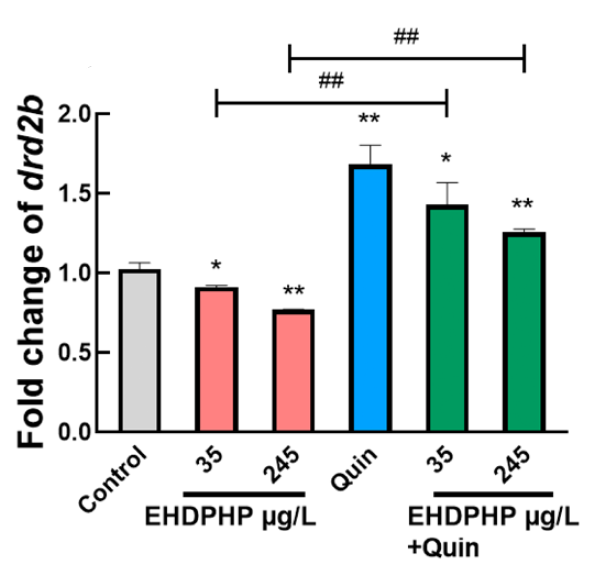
DRD2 agonist Quinpirole hydrochloride (Quin) (4 μM; 7 d) significantly relieved the downregulation of drd2b in zebrafish caused by EHDPHP exposure.
Quinpirole purchased from MedChemExpress. Usage Cited in: Environ Sci Technol. 2023 Sep 26;57(38):14162-14172. [Abstract]
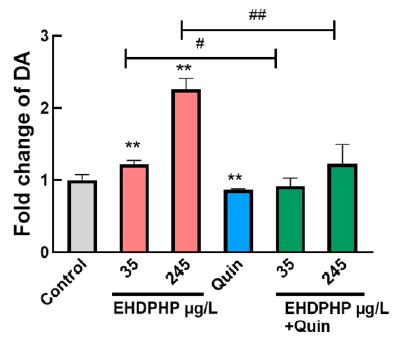
DRD2 agonist Quinpirole hydrochloride (Quin) (4 μM; 7 d) recovered the brain DA content of zibrafish in the 35 and 245 μg/L groups to normal levels.
Quinpirole purchased from MedChemExpress. Usage Cited in: Environ Sci Technol. 2023 Sep 26;57(38):14162-14172. [Abstract]
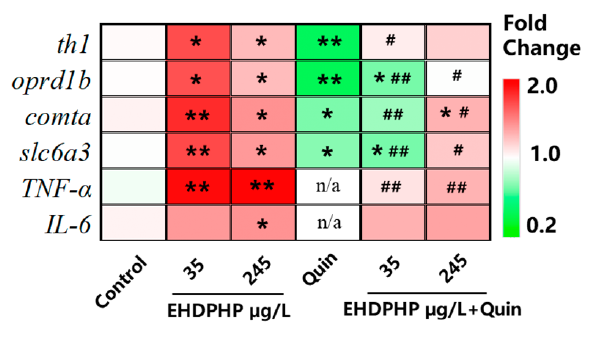
Quinpirole hydrochloride (Quin) (4 μM; 7 d) significantly downregulated the DA synthesis-related genes (th1 and oprd1b) and proinflammatory cytokines in zebrafish.
-
Cell Rep
Dorsal BNST DRD2+ neurons mediate sex-specific anxiety-like behavior induced by chronic social isolation. [Abstract]2023 Jul 14;42(7):112799. PMID: 37453056 -
Br J Pharmacol
Exploiting D2 receptor β-arrestin2-biased signalling to suppress tumour growth of pituitary adenomas. [Abstract]2021 Sep;178(17):3570-3586. PMID: 33904172
Quinpirole purchased from MedChemExpress. Usage Cited in: Br J Pharmacol. 2021 Sep;178(17):3570-3586. [Abstract]
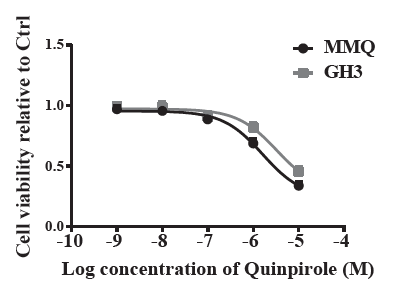
Cell viability of MMQ and GH3 cells treated with Quinpirole hydrochloride (1 nM-10 μM; 48 h) at different concentrations was assessed and normalized to DMSO (0.1%) controls.
Quinpirole purchased from MedChemExpress. Usage Cited in: Br J Pharmacol. 2021 Sep;178(17):3570-3586. [Abstract]
Quinpirole hydrochloride (0.01 nM-100 μM), a selective D2 agonist, stimulated recruitment of β-arrestin2 to the D2 receptor.
-
J Affect Disord
Uncoupling serotonin (2C) and dopamine (D2) receptor heterodimers ameliorate PTSD-like behaviors. [Abstract]2025 Mar 21:S0165-0327(25)00475-6. PMID: 40122260


Solvent & Solubility
In Vitro:
DMSO : 100 mg/mL (455.93 mM; Need ultrasonic; Hygroscopic DMSO has a significant impact on the solubility of product, please use newly opened DMSO)
Please refer to the solubility information to select the appropriate solvent. Once prepared, please aliquot and store the solution to prevent product inactivation from repeated freeze-thaw cycles.
Storage method and period of stock solution: -80°C, 6 months; -20°C, 1 month. When stored at -80°C, please use it within 6 months. When stored at -20°C, please use it within 1 month.
Please refer to the solubility information to select the appropriate solvent. Once prepared, please aliquot and store the solution to prevent product inactivation from repeated freeze-thaw cycles.
Storage method and period of stock solution: -80°C, 6 months; -20°C, 1 month. When stored at -80°C, please use it within 6 months. When stored at -20°C, please use it within 1 month.
Concentration (start) × Volume (start) = Concentration (final) × Volume (final)
In Vivo:
Select the appropriate dissolution method based on your experimental animal and administration route.
- For the following dissolution methods, please ensure to first prepare a clear stock solution using an In Vitro approach and then sequentially add co-solvents:
- To ensure reliable experimental results, the clarified stock solution can be appropriately stored based on storage conditions. As for the working solution for In Vivo experiments, it is recommended to prepare freshly and use it on the same day.
- The percentages shown for the solvents indicate their volumetric ratio in the final prepared solution. If precipitation or phase separation occurs during preparation, heat and/or sonication can be used to aid dissolution.
Add each solvent one by one: 10% DMSO 40% PEG300 5% Tween-80 45% Saline
Solubility: ≥ 2.5 mg/mL (11.40 mM); Clear solution
This protocol yields a clear solution of ≥ 2.5 mg/mL (saturation unknown).
Taking 1 mL working solution as an example, add 100 μL DMSO stock solution (25.0 mg/mL) to 400 μL PEG300, and mix evenly; then add 50 μL Tween-80 and mix evenly; then add 450 μL Saline to adjust the volume to 1 mL.
Preparation of Saline: Dissolve 0.9 g sodium chloride in ddH₂O and dilute to 100 mL to obtain a clear Saline solution.
Add each solvent one by one: 10% DMSO 90% (20% SBE-β-CD in Saline)
Solubility: ≥ 2.5 mg/mL (11.40 mM); Clear solution
This protocol yields a clear solution of ≥ 2.5 mg/mL (saturation unknown).
Taking 1 mL working solution as an example, add 100 μL DMSO stock solution (25.0 mg/mL) to 900 μL 20% SBE-β-CD in Saline, and mix evenly.
Preparation of 20% SBE-β-CD in Saline (4°C, storage for one week): 2 g SBE-β-CD powder is dissolved in 10 mL Saline, completely dissolve until clear.
In Vivo Dissolution Calculator
Please enter the basic information of animal experiments:
-
-
-
-
Recommended: Prepare an additional quantity of animals to account for potential losses during experiments.
Please enter your animal formula composition:
-
%DMSO +
Recommended: Keep the proportion of DMSO in working solution below 2% if your animal is weak.
-
%+
-
+%Tween-80 + +
-
%Saline +
The co-solvents required include: DMSO, . All of co-solvents are available by MedChemExpress (MCE). , Tween 80. All of co-solvents are available by MedChemExpress (MCE).
Working solution concentration: 0.22 mg/mL
Method for preparing stock solution: mg drug dissolved in μL DMSO. Stock solution concentration: mg/mL.
1. Take μL DMSO stock solution;
2. Add μL .
μL , mix evenly;
3. Then add μL Tween 80, mix evenly;
4. Then add μL
Please ensure that the stock solution in the first step is dissolved to a clear state, and add co-solvents in sequence. You can use ultrasonic heating (ultrasonic cleaner, recommended frequency 20-40 kHz), vortexing, etc. to assist dissolution.


Purity & Documentation
-
Data Sheet (293 KB)
-
SDS (252 KB)
- English - EN (252 KB)
- Français - FR (252 KB)
- Deutsch - DE (252 KB)
- Norwegian - NO (252 KB)
- Español - ES (252 KB)
- Swedish - SV (252 KB)
- Italian - IT (252 KB)
- Korean - KR (252 KB)
- Portuguese - PT (252 KB)
-
Handling Instructions (2659 KB)
References
[1]. Collier TJ, et al. Quinpirole inhibits levodopa-induced dyskinesias at structural and behavioral levels: Efficacy negated by co-administration of isradipine. Exp Neurol. 2023;369:114522. [Content Brief]
[2]. Mercado F, et al. Systemic quinpirole enhances tramadol analgesia in inflammatory pain, but not in neuropathic pain in male rats. Eur J Neurosci. 2024;60(12):7195-7210. [Content Brief]
[3]. Wang H, et al. Neuroprotective effects of quinpirole on lithium chloride pilocarpine-induced epilepsy in rats and its underlying mechanisms. Eur J Med Res. 2024;29(1):121. Published 2024 Feb 14. [Content Brief]
[4]. Fuller RW, et al. Decrease in hypothalamic epinephrine concentration and other neurochemical changes produced by quinpirole, a dopamine agonist, in rats. J Neural Transm. 1985;61(3-4):161-173. [Content Brief]
[5]. Nabinger DD, et al. Long-lasting behavioral effects of quinpirole exposure on zebrafish. Neurotoxicol Teratol. 2021;88:107034. [Content Brief]
[6]. Waguespack HF, et al. Quinpirole, but not muscimol, infused into the nucleus accumbens disrupts prepulse inhibition of the acoustic startle in rhesus macaques. Neuropharmacology. 2023;235:109563. [Content Brief]
[7]. Ghuge S, et al. Multistrain probiotic rescinds quinpirole-induced obsessive-compulsive disorder phenotypes by reshaping of microbiota gut-brain axis in rats. Pharmacol Biochem Behav. 2023;232:173652. [Content Brief]
[8]. Ao Y, et al. Application of quinpirole in the paraventricular thalamus facilitates emergence from isoflurane anesthesia in mice. Brain Behav. 2021;11(1):e01903. [Content Brief]


Complete Stock Solution Preparation Table
Please refer to the solubility information to select the appropriate solvent. Once prepared, please aliquot and store the solution to prevent product inactivation from repeated freeze-thaw cycles.
Storage method and period of stock solution: -80°C, 6 months; -20°C, 1 month. When stored at -80°C, please use it within 6 months. When stored at -20°C, please use it within 1 month.
| Optional Solvent | Concentration Solvent Mass | 1 mg | 5 mg | 10 mg | 25 mg |
|---|---|---|---|---|---|
| DMSO | 1 mM | 4.5593 mL | 22.7967 mL | 45.5934 mL | 113.9835 mL |
| 5 mM | 0.9119 mL | 4.5593 mL | 9.1187 mL | 22.7967 mL | |
| 10 mM | 0.4559 mL | 2.2797 mL | 4.5593 mL | 11.3983 mL | |
| 15 mM | 0.3040 mL | 1.5198 mL | 3.0396 mL | 7.5989 mL | |
| 20 mM | 0.2280 mL | 1.1398 mL | 2.2797 mL | 5.6992 mL | |
| 25 mM | 0.1824 mL | 0.9119 mL | 1.8237 mL | 4.5593 mL | |
| 30 mM | 0.1520 mL | 0.7599 mL | 1.5198 mL | 3.7994 mL | |
| 40 mM | 0.1140 mL | 0.5699 mL | 1.1398 mL | 2.8496 mL | |
| 50 mM | 0.0912 mL | 0.4559 mL | 0.9119 mL | 2.2797 mL | |
| 60 mM | 0.0760 mL | 0.3799 mL | 0.7599 mL | 1.8997 mL | |
| 80 mM | 0.0570 mL | 0.2850 mL | 0.5699 mL | 1.4248 mL | |
| 100 mM | 0.0456 mL | 0.2280 mL | 0.4559 mL | 1.1398 mL |


Quinpirole Related Classifications
HY-B1752 Related Classifications
 Powered by Bioz