Search Result
Results for "
skeletal muscle injury
" in MedChemExpress (MCE) Product Catalog:
2
Isotope-Labeled Compounds
| Cat. No. |
Product Name |
Target |
Research Areas |
Chemical Structure |
-
- HY-148799
-
|
EDG-5506
|
Myosin
|
Others
|
|
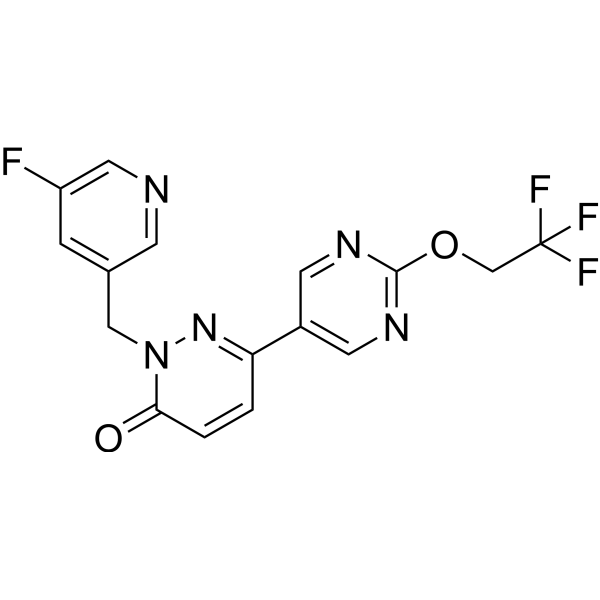
Sevasemten is an orally active, selective allosteric inhibitor of skeletal muscle myosin that protects skeletal muscle from contraction-induced injury. Sevasemten decreases muscle damage biomarkers and fibrosis while increasing muscle strength and activity in in Duchenne muscular dystrophy disease models .
|
-
-
- HY-B0194A
-
|
|
Adrenergic Receptor
Apoptosis
Akt
Wnt
β-catenin
|
Neurological Disease
Endocrinology
Cancer
|
|
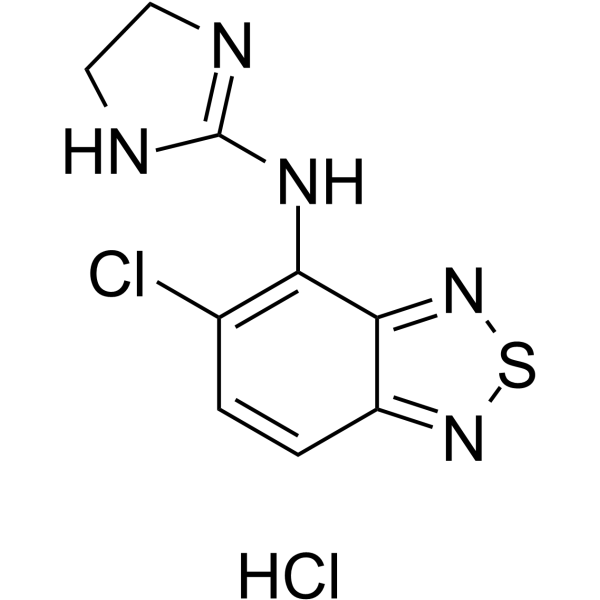
Tizanidine hydrochloride, a skeletal muscle relaxant, is an orally effective central α2-adrenoceptor agonist (IC50 = 6.9 nmol). Tizanidine hydrochloride primarily exerts muscle relaxation effects by inhibiting the release of excitatory amino acids (glutamate and aspartate) from the presynaptic terminals of spinal cord interneurons. Tizanidine hydrochloride has anti-injury activity and can inhibit gastrointestinal (GI) transport. Tizanidine hydrochloride can inhibit the proliferation, migration, and invasion of lung cancer cells and induce cell apoptosis by upregulating Nischarin and inhibiting the AKT and Wnt3a/β-catenin signaling pathways. Tizanidine hydrochloride can be used to treat spasticity caused by diseases such as multiple sclerosis (MS), stroke, and spinal cord injury (SCI) .
|
-
-
- HY-B0194
-
|
|
Adrenergic Receptor
Apoptosis
Akt
Wnt
β-catenin
|
Neurological Disease
Endocrinology
Cancer
|
|
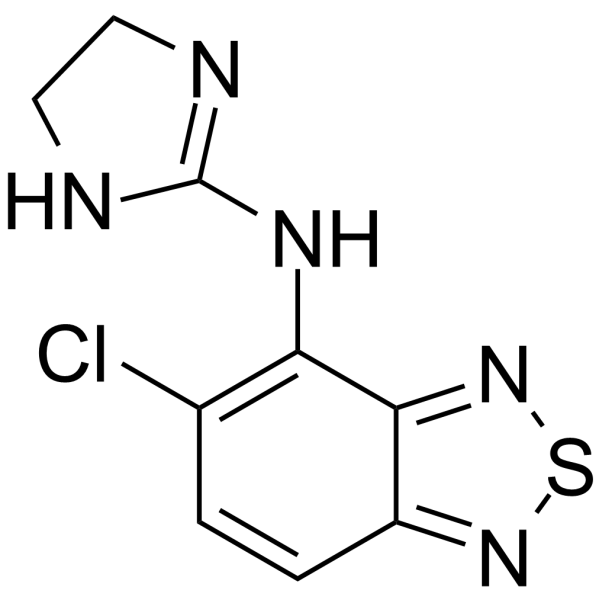
Tizanidine, a skeletal muscle relaxant, is an orally effective central α2-adrenoceptor agonist (IC50 = 6.9 nmol). Tizanidine primarily exerts muscle relaxation effects by inhibiting the release of excitatory amino acids (glutamate and aspartate) from the presynaptic terminals of spinal cord interneurons. Tizanidine has anti-injury activity and can inhibit gastrointestinal (GI) transport. Tizanidine can inhibit the proliferation, migration, and invasion of lung cancer cells and induce cell apoptosis by upregulating Nischarin and inhibiting the AKT and Wnt3a/β-catenin signaling pathways. Tizanidine can be used to treat spasticity caused by diseases such as multiple sclerosis (MS), stroke, and spinal cord injury (SCI) .
|
-
-
- HY-P3016A
-
|
EC 2.6.1.1, porcine heart; GOT, porcine heart; AST, porcine heart
|
Aminotransferases (Transaminases)
|
Cardiovascular Disease
|
|
Aspartate aminotransferase (EC 2.6.1.1), porcine heart is a metabolic regulator with the highest activity in the heart, liver and skeletal muscle. Aspartate aminotransferase, porcine heart comprises two isozymes: the cytoplasmic form (AST1) and the mitochondrial form (AST2). By catalyzing reversible transamination reactions between oxaloacetate, L-glutamate and other substances, it is deeply involved in key physiological processes such as amino acid metabolism, the tricarboxylic acid cycle and neurotransmitter synthesis. Aspartate aminotransferase, porcine heart also provides substrate support for the synthesis of urea and purines/pyrimidines. Aspartate aminotransferase, porcine heart is a serum marker reflecting cardiac and hepatic injury, and its abnormal levels are also closely associated with myocardial infarction, cardiovascular diseases and various cancers .
|
-

-
- HY-P3016
-
|
EC 2.6.1.1; GOT; AST
|
Aminotransferases (Transaminases)
|
Cardiovascular Disease
|
|
Aspartate aminotransferase (EC 2.6.1.1), Genetically engineered bacteria is a metabolic regulator with the highest activity in the heart, liver and skeletal muscle. Aspartate aminotransferase, Genetically engineered bacteria comprises two isozymes: the cytoplasmic form (AST1) and the mitochondrial form (AST2). By catalyzing reversible transamination reactions between oxaloacetate, L-glutamate and other substances, it is deeply involved in key physiological processes such as amino acid metabolism, the tricarboxylic acid cycle and neurotransmitter synthesis. Aspartate aminotransferase, Genetically engineered bacteria also provides substrate support for the synthesis of urea and purines/pyrimidines. Aspartate aminotransferase, Genetically engineered bacteria is a serum marker reflecting cardiac and hepatic injury, and its abnormal levels are also closely associated with myocardial infarction, cardiovascular diseases and various cancers .
|
-
-
- HY-N0597
-
|
|
Akt
Insulin Receptor
Apoptosis
Reactive Oxygen Species (ROS)
|
Cardiovascular Disease
Metabolic Disease
Cancer
|
|
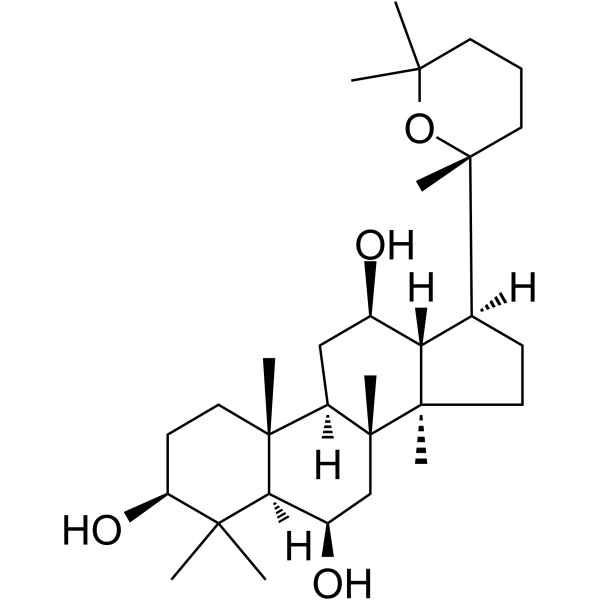
Panaxatriol is an orally active dammarane-type tetracyclic triterpene sapogenin. Panaxatriol enhances the phosphorylation levels of Akt, insulin receptor and p70S6K in skeletal muscle. Panaxatriol reduces the mRNA expression level of Atrogin1 in skeletal muscle. Panaxatriol induces apoptosis, pre-G1 cell cycle arrest and increased intracellular ROS levels in prostate cancer cells, decreases mitochondrial membrane potential, inhibits cell migration and reduces colony formation. Panaxatriol can be used in research related to insulin resistance, myocardial ischemia/reperfusion injury and prostate cancer [1][2][3].
|
-
-
- HY-178281
-
|
|
Potassium Channel
Sodium Channel
|
Neurological Disease
|
|
E0199 is a novel potent dual-target KV7/NaV modulator that activates the KV7 channel (KV7.2/7.3 (EC50 = 12.78 nM), KV7.2 (EC50 = 0.50 μM), and KV7.5 (EC50 = 27.14 nM) channels) while simultaneously blocks the NaV1.7 (IC50 = 0.52 μM), NaV1.8 (IC50 = 0.24 μM), and NaV1.9 (IC50 = 0.16 μM) channels. E0199 shows a potent analgesic effect without affecting heart and skeletal muscle ion channels critically in a chronic constriction injury (CCI) mouse model. E0199 can be used for Neuropathic pain (NP) research .
|
-

-
- HY-B0194S
-
|
|
Isotope-Labeled Compounds
Adrenergic Receptor
Apoptosis
Akt
Wnt
β-catenin
|
Neurological Disease
Endocrinology
Cancer
|
|
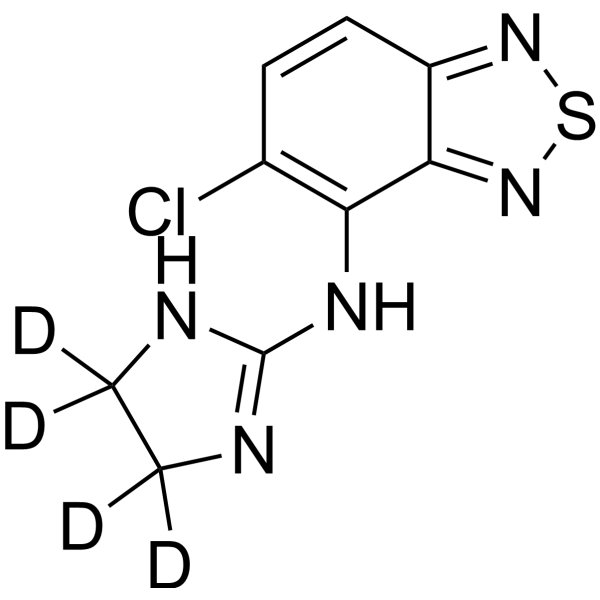
Tizanidine-d4 is the deuterium labeled Tizanidine (HY-B0194). Tizanidine, a skeletal muscle relaxant, is an orally effective central α2-adrenoceptor agonist (IC50 = 6.9 nmol). Tizanidine primarily exerts muscle relaxation effects by inhibiting the release of excitatory amino acids (glutamate and aspartate) from the presynaptic terminals of spinal cord interneurons. Tizanidine has anti-injury activity and can inhibit gastrointestinal (GI) transport. Tizanidine can inhibit the proliferation, migration, and invasion of lung cancer cells and induce cell apoptosis by upregulating Nischarin and inhibiting the AKT and Wnt3a/β-catenin signaling pathways. Tizanidine can be used to treat spasticity caused by diseases such as multiple sclerosis (MS), stroke, and spinal cord injury (SCI).
|
-
-
- HY-P3016B
-
|
EC 2.6.1.1, Human liver; GOT, Human liver; AST, Human liver
|
Aminotransferases (Transaminases)
|
Cardiovascular Disease
|
|
Aspartate aminotransferase (EC 2.6.1.1), Human liver is a metabolic regulator with the highest activity in the heart, liver and skeletal muscle. Aspartate aminotransferase, Human liver comprises two isozymes: the cytoplasmic form (AST1) and the mitochondrial form (AST2). By catalyzing reversible transamination reactions between oxaloacetate, L-glutamate and other substances, it is deeply involved in key physiological processes such as amino acid metabolism, the tricarboxylic acid cycle and neurotransmitter synthesis. Aspartate aminotransferase, Human liver also provides substrate support for the synthesis of urea and purines/pyrimidines. Aspartate aminotransferase, Human liver is a serum marker reflecting cardiac and hepatic injury, and its abnormal levels are also closely associated with myocardial infarction, cardiovascular diseases and various cancers .
|
-

-
- HY-117356A
-
|
|
P2Y Receptor
NF-κB
ERK
Apoptosis
|
Inflammation/Immunology
|
|
MRS2693 ammonium is the ammonium dalt form of MRS2693 (HY-117356). MRS2693 ammonium is a selective agonist for P2Y6 with an EC50 of 0.015 μM. MRS2693 ammonium protects C2C12 skeletal muscle cells from TNFα-induced apoptosis. MRS2693 ammonium reduces the activation of NF-kB, activates the ERK1/2 pathway, and has a cytoprotective effect on mouse ischemia-reperfusion injury model [2].
|
-

-
- HY-117356B
-
|
|
P2Y Receptor
NF-κB
ERK
|
Cardiovascular Disease
|
|
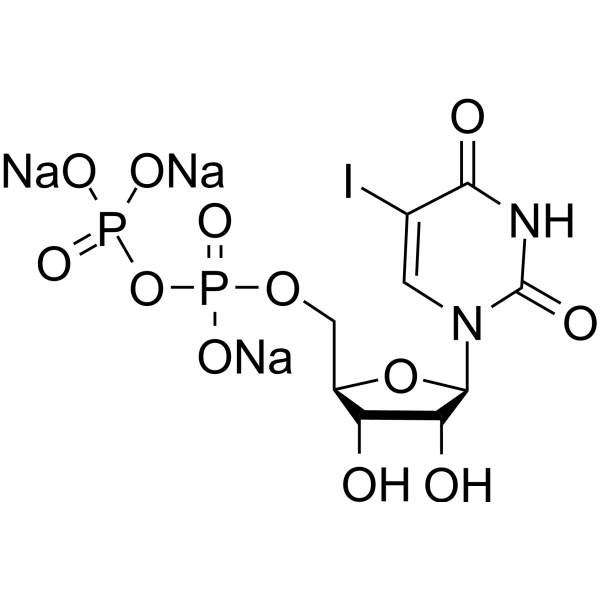
MRS2693 trisodium is a selective P2Y6 agonist with an EC50 value of 0.015 μM. MRS2693 trisodium can reduce the activation of NF-kappaB and activate the ERK1/2 pathway, and has a cytoprotective effect on mouse hindlimb skeletal muscle ischemia-reperfusion injury model .
|
-
-
- HY-161717
-
|
|
Adenosine Receptor
|
Cardiovascular Disease
|
|
MRS5663 (Compound 3a) is an A3AR agonist, with an EC50 of 5.62 nM for β-arrestin2 recruitment assay. MRS5663 has a cytoprotective effect on skeletal muscle ischemia-reperfusion injury/claudication model .
|
-

-
- HY-N0597R
-
|
|
Reference Standards
Others
|
Others
|
|
Panaxatriol (Standard) is the analytical standard of Panaxatriol. This product is intended for research and analytical applications. Panaxatriol is an orally active dammarane-type tetracyclic triterpene sapogenin. Panaxatriol enhances the phosphorylation levels of Akt, insulin receptor and p70S6K in skeletal muscle. Panaxatriol reduces the mRNA expression level of Atrogin1 in skeletal muscle. Panaxatriol induces apoptosis, pre-G1 cell cycle arrest and increased intracellular ROS levels in prostate cancer cells, decreases mitochondrial membrane potential, inhibits cell migration and reduces colony formation. Panaxatriol can be used in research related to insulin resistance, myocardial ischemia/reperfusion injury and prostate cancer .
|
-

-
- HY-B0194R
-
|
|
Reference Standards
Adrenergic Receptor
Apoptosis
Akt
Wnt
β-catenin
|
Neurological Disease
Endocrinology
Cancer
|
|
Tizanidine (Standard) is the analytical standard of Tizanidine (HY-B0194). This product is intended for research and analytical applications. Tizanidine, a skeletal muscle relaxant, is an orally effective central α2-adrenoceptor agonist (IC50 = 6.9 nmol). Tizanidine primarily exerts muscle relaxation effects by inhibiting the release of excitatory amino acids (glutamate and aspartate) from the presynaptic terminals of spinal cord interneurons. Tizanidine has anti-injury activity and can inhibit gastrointestinal (GI) transport. Tizanidine can inhibit the proliferation, migration, and invasion of lung cancer cells and induce cell apoptosis by upregulating Nischarin and inhibiting the AKT and Wnt3a/β-catenin signaling pathways. Tizanidine can be used to treat spasticity caused by diseases such as multiple sclerosis (MS), stroke, and spinal cord injury (SCI).
|
-

-
- HY-B0194AR
-
|
|
Reference Standards
Adrenergic Receptor
Apoptosis
Akt
Wnt
β-catenin
|
Neurological Disease
Endocrinology
Cancer
|
|
Tizanidine hydrochloride (Standard) is the analytical standard of Tizanidine hydrochloride (HY-B0194A). This product is intended for research and analytical applications. Tizanidine hydrochloride, a skeletal muscle relaxant, is an orally effective central α2-adrenoceptor agonist (IC50 = 6.9 nmol). Tizanidine hydrochloride primarily exerts muscle relaxation effects by inhibiting the release of excitatory amino acids (glutamate and aspartate) from the presynaptic terminals of spinal cord interneurons. Tizanidine hydrochloride has anti-injury activity and can inhibit gastrointestinal (GI) transport. Tizanidine hydrochloride can inhibit the proliferation, migration, and invasion of lung cancer cells and induce cell apoptosis by upregulating Nischarin and inhibiting the AKT and Wnt3a/β-catenin signaling pathways. Tizanidine hydrochloride can be used to treat spasticity caused by diseases such as multiple sclerosis (MS), stroke, and spinal cord injury (SCI).
|
-

-
- HY-B0194AS
-
|
|
Isotope-Labeled Compounds
Adrenergic Receptor
Apoptosis
Akt
Wnt
β-catenin
|
Neurological Disease
Endocrinology
Cancer
|
|
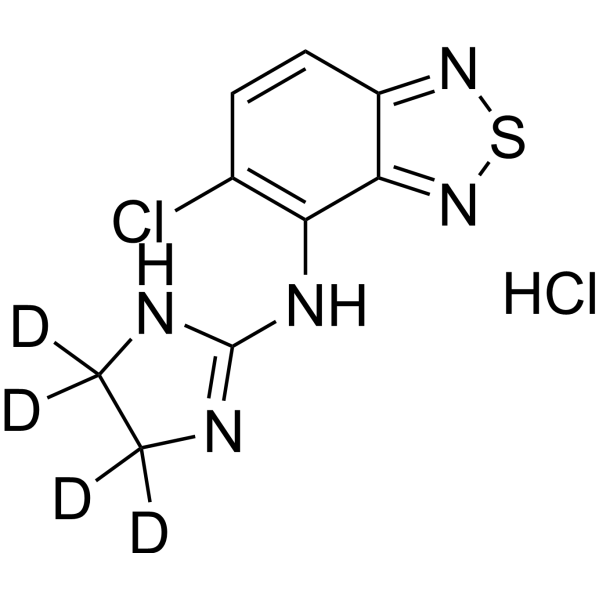
Tizanidine-d4 hydrochloride is deuterium labeled Tizanidine hydrochloride (HY-B0194A). Tizanidine hydrochloride, a skeletal muscle relaxant, is an orally effective central α2-adrenoceptor agonist (IC50 = 6.9 nmol). Tizanidine hydrochloride primarily exerts muscle relaxation effects by inhibiting the release of excitatory amino acids (glutamate and aspartate) from the presynaptic terminals of spinal cord interneurons. Tizanidine hydrochloride has anti-injury activity and can inhibit gastrointestinal (GI) transport. Tizanidine hydrochloride can inhibit the proliferation, migration, and invasion of lung cancer cells and induce cell apoptosis by upregulating Nischarin and inhibiting the AKT and Wnt3a/β-catenin signaling pathways. Tizanidine hydrochloride can be used to treat spasticity caused by diseases such as multiple sclerosis (MS), stroke, and spinal cord injury (SCI).
|
-
-
- HY-N19860
-
|
|
PIN1
|
Inflammation/Immunology
|
|
L-Balenine is an orally active Pin1 inhibitor and intracellular pH buffer. L-Balenine enhances the phagocytic activity of macrophages, and promotes the expression of pro-inflammatory and anti-inflammatory cytokines during muscle degeneration. L-Balenine also upregulates the expression of myogenic marker genes associated with regeneration, thereby effectively driving skeletal muscle regeneration. L-Balenine can be widely used in studies related to skeletal muscle injury and its repair mechanisms .
|
-

-
- HY-183626
-
|
|
PAI-1
Ser/Thr Protease
Furin
MMP
Notch
Apoptosis
|
Inflammation/Immunology
Cancer
|
|
TM5614 sodium is an orally active and specific PAI-1 inhibitor with an IC50 of <6.95 μM. TM5614 sodium blocks the interaction between PAI-1 and serine proteases or LRP-1, and enhances plasmin generation. TM5614 sodium restores macrophage efferocytosis and promotes macrophage polarization. TM5614 sodium alleviates PAI-1-mediated inhibition of Furin, promotes MT1-MMP maturation, activates the NOTCH1 signaling pathway, inhibits proliferation and induces apoptosis. TM5614 sodium promotes skeletal muscle regeneration and alleviates inflammation in a mouse model of skeletal muscle injury. TM5614 sodium can be used in research on skeletal muscle injury-induced inflammation and chronic myeloid leukemia .
|
-

-
- HY-148150A
-
|
|
Creatine Kinase
|
Cardiovascular Disease
Inflammation/Immunology
Cancer
|
|
Cyclocreatine phosphate dilithium is a synthetic intracellular energy buffer. Cyclocreatine phosphate dilithium mediates antiproliferative activity in cells with high creatine kinase levels and inhibits solid tumor growth. Cyclocreatine phosphate dilithium maintains adenosine triphosphate (ATP) levels and protects tissues from hypoxia, cellular damage and inflammation during ischemic events. Cyclocreatine phosphate dilithium accumulates in skeletal muscle, reduces muscle phosphocreatine and total creatine levels, and acts both as a bioenergetic/anti-inflammatory agent and an experimental tool for the assessment of ischemic injury. Cyclocreatine phosphate dilithium can be used in studies related to solid tumors, heart failure and ischemia .
|
-

-
- HY-N9980
-
|
|
PI3K
Akt
NF-κB
p38 MAPK
AP-1
|
Inflammation/Immunology
|
|
Antcin K is a selective inhibitor targeting the PI3K/Akt, NF-κB, MEK1/2-ERK, p38 and AP-1 pathways. Antcin K upregulates IL-10 expression, thereby inhibiting the production of pro-inflammatory factors, blocking monocyte adhesion, reducing tissue damage, and promoting myogenesis. Antcin K has significant anti-inflammatory, anti-damage and tissue protective activities. Antcin K is mainly used in the research of inflammation-related diseases such as periodontitis, rheumatoid arthritis, and skeletal muscle injury .
|
-

-
- HY-P3016C
-
|
EC 2.6.1.1, Human (HEK293); GOT, Human (HEK293); AST, Human (HEK293)
|
Aminotransferases (Transaminases)
|
Cardiovascular Disease
|
|
Aspartate aminotransferase (EC 2.6.1.1), Human (HEK293) is a metabolic regulator with the highest activity in the heart, liver and skeletal muscle. Aspartate aminotransferase, Human (HEK293) comprises two isozymes: the cytoplasmic form (AST1) and the mitochondrial form (AST2). By catalyzing reversible transamination reactions between oxaloacetate, L-glutamate and other substances, it is deeply involved in key physiological processes such as amino acid metabolism, the tricarboxylic acid cycle and neurotransmitter synthesis. Aspartate aminotransferase, Human (HEK293) also provides substrate support for the synthesis of urea and purines/pyrimidines. Aspartate aminotransferase, Human (HEK293) is a serum marker reflecting cardiac and hepatic injury, and its abnormal levels are also closely associated with myocardial infarction, cardiovascular diseases and various cancers .
|
-

| Cat. No. |
Product Name |
Category |
Target |
Chemical Structure |
-
- HY-N0597
-
-
-
- HY-N0597R
-
|
|
Panax ginseng C. A. Meyer
Triterpenes
Structural Classification
Terpenoids
Plants
Araliaceae
Source Classification
|
Reference Standards
Others
|
|
Panaxatriol (Standard) is the analytical standard of Panaxatriol. This product is intended for research and analytical applications. Panaxatriol is an orally active dammarane-type tetracyclic triterpene sapogenin. Panaxatriol enhances the phosphorylation levels of Akt, insulin receptor and p70S6K in skeletal muscle. Panaxatriol reduces the mRNA expression level of Atrogin1 in skeletal muscle. Panaxatriol induces apoptosis, pre-G1 cell cycle arrest and increased intracellular ROS levels in prostate cancer cells, decreases mitochondrial membrane potential, inhibits cell migration and reduces colony formation. Panaxatriol can be used in research related to insulin resistance, myocardial ischemia/reperfusion injury and prostate cancer .
|
-
-
- HY-N19860
-
|
|
Structural Classification
Natural Products
Animals
Source Classification
|
PIN1
|
|
L-Balenine is an orally active Pin1 inhibitor and intracellular pH buffer. L-Balenine enhances the phagocytic activity of macrophages, and promotes the expression of pro-inflammatory and anti-inflammatory cytokines during muscle degeneration. L-Balenine also upregulates the expression of myogenic marker genes associated with regeneration, thereby effectively driving skeletal muscle regeneration. L-Balenine can be widely used in studies related to skeletal muscle injury and its repair mechanisms .
|
-
-
- HY-N9980
-
|
|
Structural Classification
Microorganisms
Steroids
Source Classification
|
PI3K
Akt
NF-κB
p38 MAPK
AP-1
|
|
Antcin K is a selective inhibitor targeting the PI3K/Akt, NF-κB, MEK1/2-ERK, p38 and AP-1 pathways. Antcin K upregulates IL-10 expression, thereby inhibiting the production of pro-inflammatory factors, blocking monocyte adhesion, reducing tissue damage, and promoting myogenesis. Antcin K has significant anti-inflammatory, anti-damage and tissue protective activities. Antcin K is mainly used in the research of inflammation-related diseases such as periodontitis, rheumatoid arthritis, and skeletal muscle injury .
|
-
| Cat. No. |
Product Name |
Chemical Structure |
-
- HY-B0194S
-
|
|
|
Tizanidine-d4 is the deuterium labeled Tizanidine (HY-B0194). Tizanidine, a skeletal muscle relaxant, is an orally effective central α2-adrenoceptor agonist (IC50 = 6.9 nmol). Tizanidine primarily exerts muscle relaxation effects by inhibiting the release of excitatory amino acids (glutamate and aspartate) from the presynaptic terminals of spinal cord interneurons. Tizanidine has anti-injury activity and can inhibit gastrointestinal (GI) transport. Tizanidine can inhibit the proliferation, migration, and invasion of lung cancer cells and induce cell apoptosis by upregulating Nischarin and inhibiting the AKT and Wnt3a/β-catenin signaling pathways. Tizanidine can be used to treat spasticity caused by diseases such as multiple sclerosis (MS), stroke, and spinal cord injury (SCI).
|
-
-
- HY-B0194AS
-
|
|
|
Tizanidine-d4 hydrochloride is deuterium labeled Tizanidine hydrochloride (HY-B0194A). Tizanidine hydrochloride, a skeletal muscle relaxant, is an orally effective central α2-adrenoceptor agonist (IC50 = 6.9 nmol). Tizanidine hydrochloride primarily exerts muscle relaxation effects by inhibiting the release of excitatory amino acids (glutamate and aspartate) from the presynaptic terminals of spinal cord interneurons. Tizanidine hydrochloride has anti-injury activity and can inhibit gastrointestinal (GI) transport. Tizanidine hydrochloride can inhibit the proliferation, migration, and invasion of lung cancer cells and induce cell apoptosis by upregulating Nischarin and inhibiting the AKT and Wnt3a/β-catenin signaling pathways. Tizanidine hydrochloride can be used to treat spasticity caused by diseases such as multiple sclerosis (MS), stroke, and spinal cord injury (SCI).
|
-
Your information is safe with us. * Required Fields.
Inquiry Information
- Product Name:
- Cat. No.:
- Quantity:
- MCE Japan Authorized Agent:








