



Delcasertib
Based on 4 publication(s) in Google Scholar
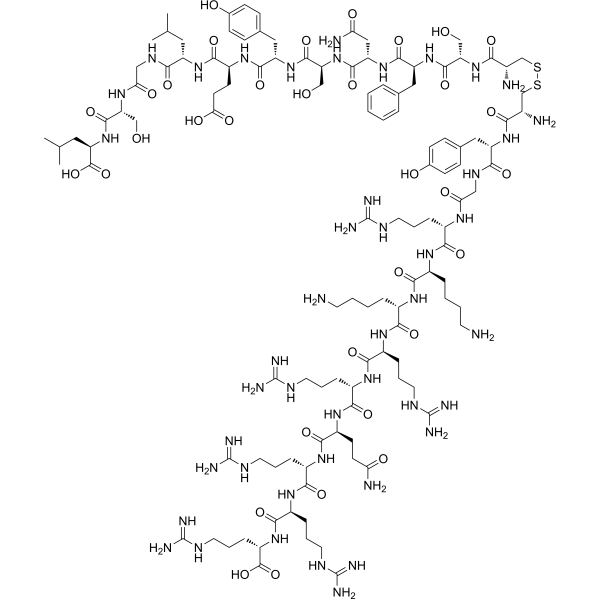
Delcasertib (KAI-9803) is a potent and selective δ-protein kinase C (δPKC) inhibitor. Delcasertib (KAI-9803) could ameliorate injury associated with ischemia and reperfusion in animal models of acute myocardial infarction (MI).
For research use only. We do not sell to patients.
- CAS No.: 949100-39-4
- Formula: C120H199N45O34S2
- Molecular Weight:2880.28
-
Storage:
Sealed storage, away from moisture.
Powder -80°C, 2 years , -20°C, 1 year* In solvent : -80°C, 6 months; -20°C, 1 month (sealed storage, away from moisture)

To place orders, for customer services and technical support, please contact: MedChemExpress USA
Tel: 609-228-6898 E-mail: [email protected] [email protected]


-
 Biological Activity
-
Chemical Information
-
Solvent & Solubility
- Protocols
- Purity & Documentation
- References
-
 Help & FAQs


-
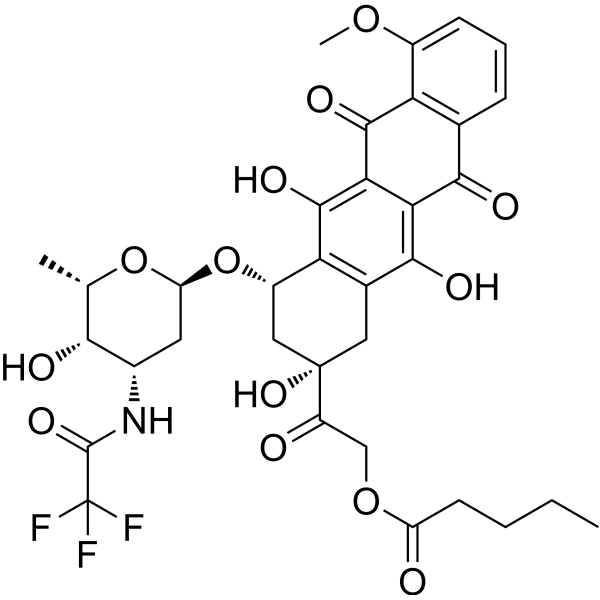
HY-13772
ValrubicinAntibiotic -
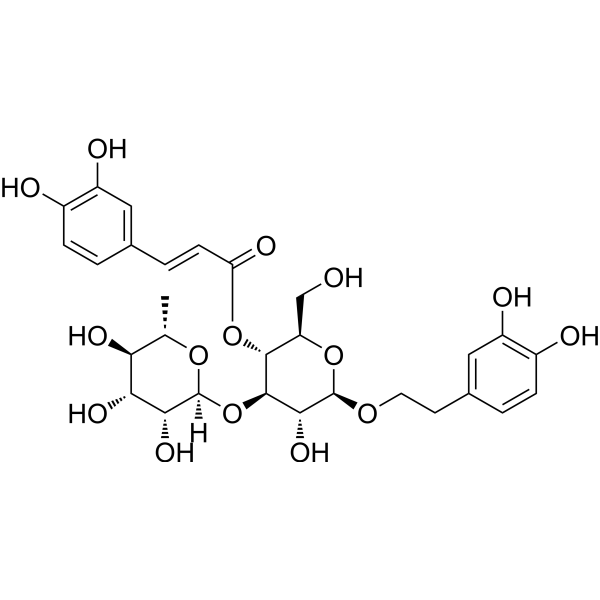
HY-N0021
VerbascosideBacterial Inhibitor -
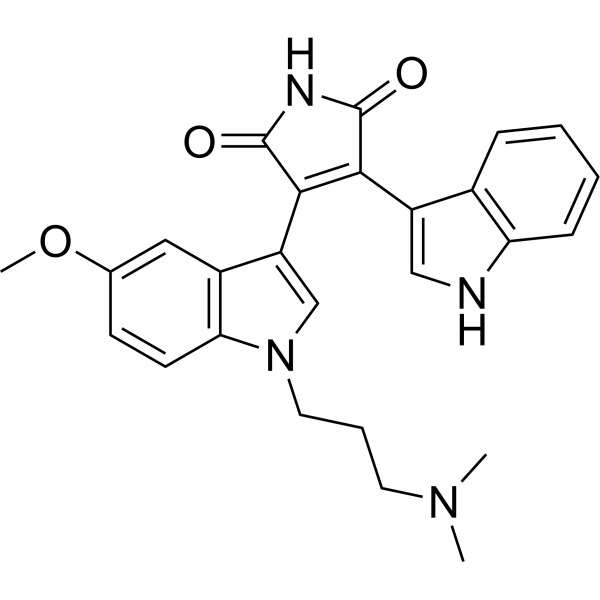
HY-13689
Go 6983PKC Inhibitor -
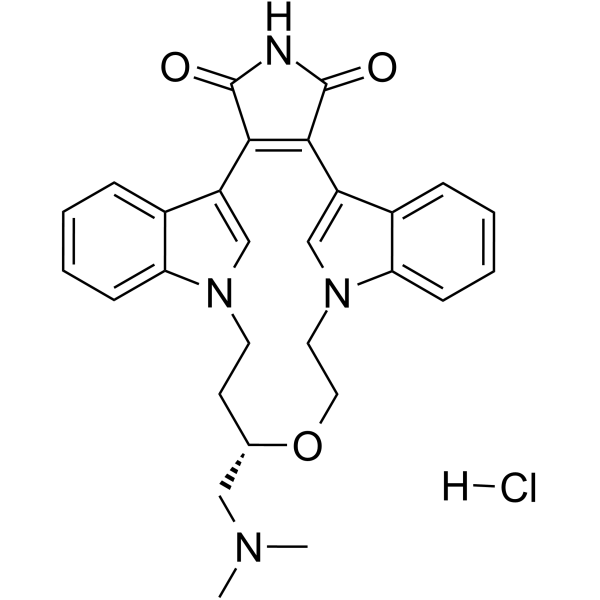
HY-10195B
Ruboxistaurin hydrochloridePKCβ Inhibitor -
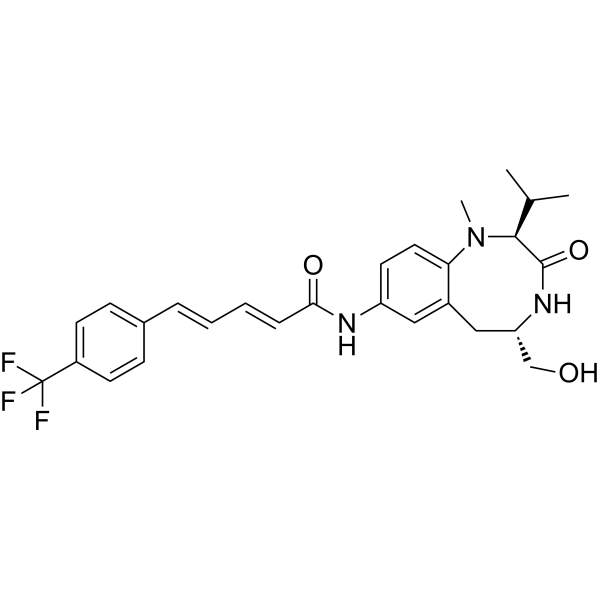
HY-12359
TPPBPKC Activator -
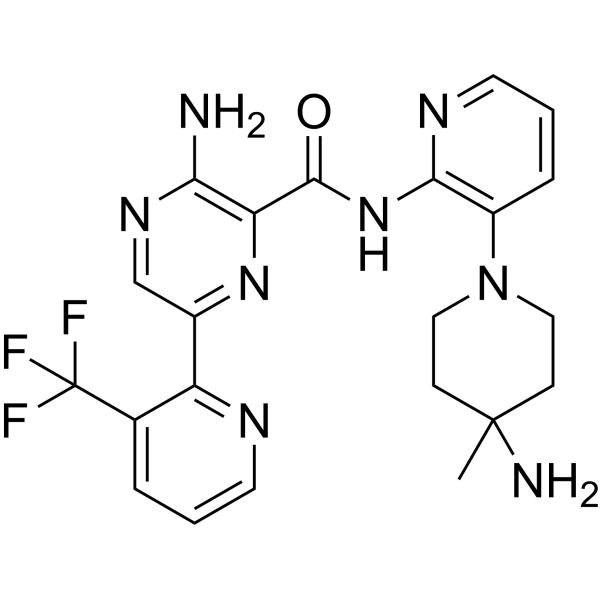
HY-101569
DarovasertibPKC Inhibitor -
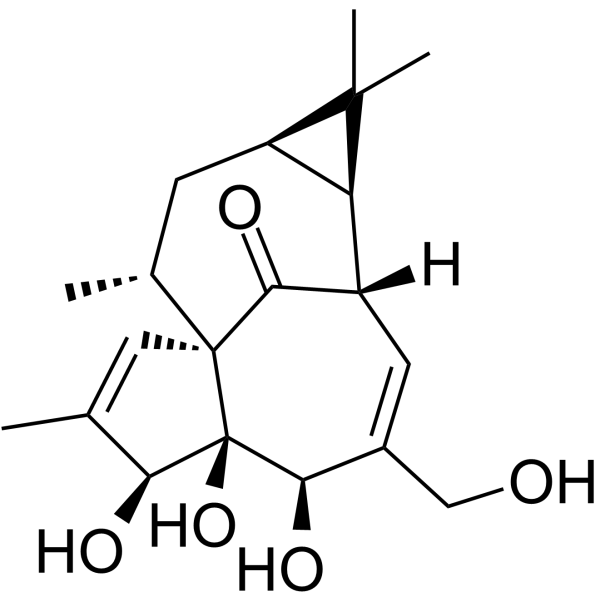
HY-N0865
IngenolPKC Activator -
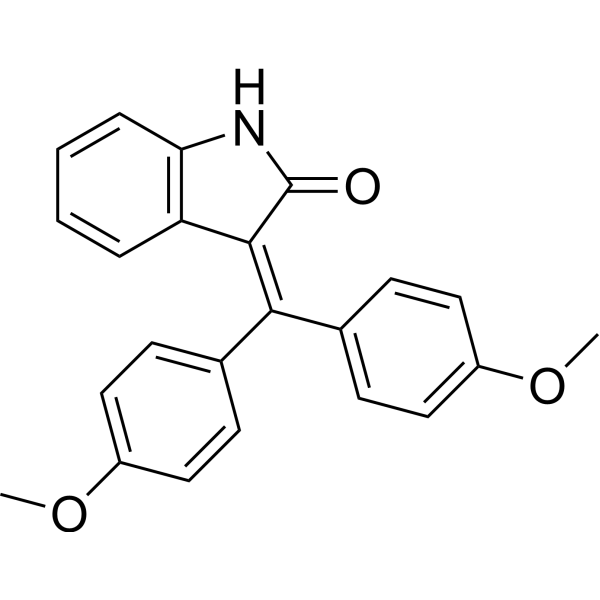
HY-18965
TAS-301PKC Inhibitor -
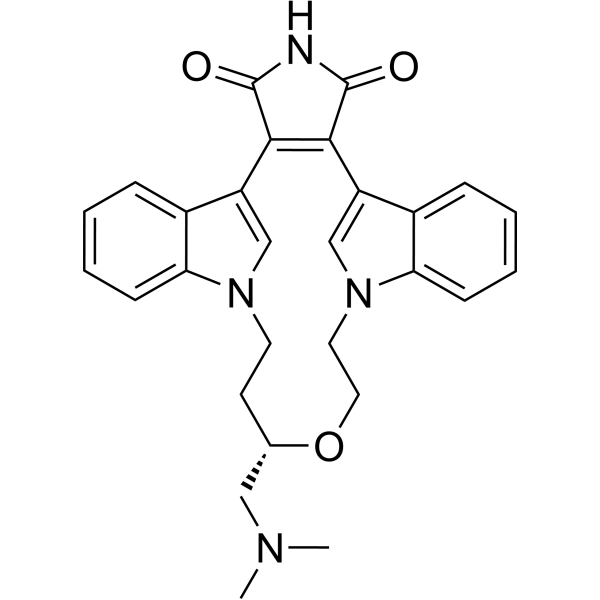
HY-10195
RuboxistaurinPKCβ Inhibitor -

HY-N0021R
Verbascoside (Standard)Bacterial Inhibitor -
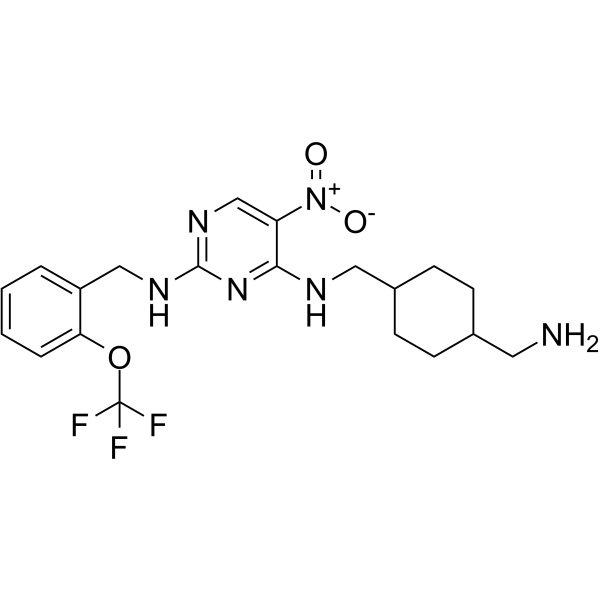
HY-112681
PKC-theta inhibitor 2PKC-θ Inhibitor -
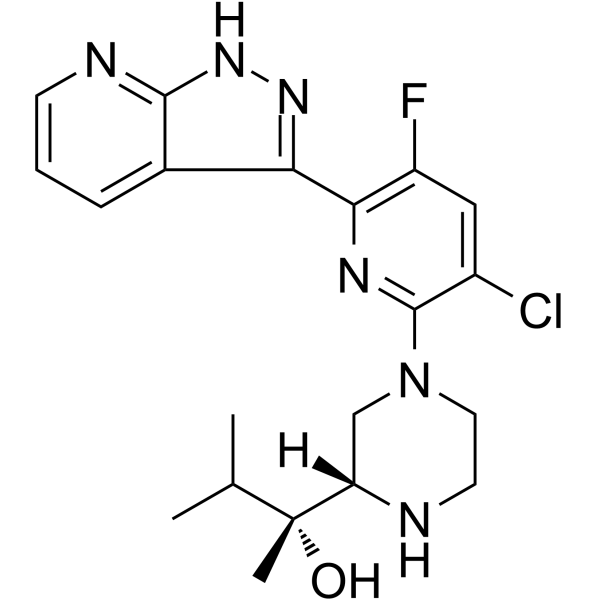
HY-112782
VTX-27PKC θ Inhibitor
Publications Citing Use of MedChemExpress (MCE) Delcasertib
More

Biological Activity
Description
IC50 & Target
[1]|
δPKC |
In Vitro
Delcasertib (KAI-9803) is composed of a selective δ-protein kinase C (δPKC) inhibitor peptide derived from the δV1-1 portion of δPKC (termed "cargo peptide" ), conjugated reversibly to the cell-penetrating peptide 11-amino acid, arginine-rich sequence of the HIV type 1 transactivator protein (TAT47–57; termed "carrier peptide" ) via a disulfide bond[1].
MedChemExpress (MCE) has not independently confirmed the accuracy of these methods. They are for reference only.
In Vivo
Delcasertib (KAI-9803) administration at the end of ischemia has been found to reduce cardiac damage caused by ischemia-reperfusion in a rat model of acute myocardial infarction[1].
Delcasertib (KAI-9803) has been studied for the prevention of reperfusion injury in patients undergoing angioplasty after acute myocardial infarction[2].
MedChemExpress (MCE) has not independently confirmed the accuracy of these methods. They are for reference only.
-
Animal Model:Six-week-old male Crl:CD(SD) rats[1].
-
Dosage:1 mg/kg (Pharmacokinetic Analysis).
-
Administration:Via the femoral vein.
-
Result:The distribution to tissues such as the liver, kidney, and heart is facilitated by the reversible conjugation to TAT47-57.


Chemical Information
-
CAS No. 949100-39-4
-
Appearance Solid
-
Molecular Weight 2880.28
-
Formula C120H199N45O34S2
-
Color White to off-white
-
Synonyms
KAI-9803; BMS-875944
-
Sequence
Sequence 1:Cys-Tyr-Gly-Arg-Lys-Lys-Arg-Arg-Gln-Arg-Arg-Arg;Sequence 1':Cys-Ser-Phe-Asn-Ser-Tyr-Glu-Leu-Gly-Ser-Leu (Disulfide bridge:Cys1-Cys1')
-
Sequence Shortening
Sequence 1:CYGRKKRRQRRR;Sequence 1':CSFNSYELGSL (Disulfide bridge:Cys1-Cys1')
-
Shipping
Room temperature in continental US; may vary elsewhere.
-
Storage
Sealed storage, away from moisture
Powder -80°C 2 years -20°C 1 year * In solvent : -80°C, 6 months; -20°C, 1 month (sealed storage, away from moisture)


Publications (4)
-
Journal Impact Factor
-
Most Recent
-
Nature
2021 Mar;591(7851):620-626. PMID: 33731924 -
Diabetes
Epoxygenase Cyp2c44 regulates hepatic lipid metabolism and insulin signaling by controlling FATP2 localization and activation of the DAG/PKCδ axis. [Abstract]2024 Aug 1;73(8):1229-1243. PMID: 38743615 -
-
J Leukoc Biol
2025 Apr 23;117(4):qiaf019. PMID: 39946245


Solvent & Solubility
In Vitro:
DMSO : ≥ 100 mg/mL (34.72 mM; Hygroscopic DMSO has a significant impact on the solubility of product, please use newly opened DMSO)
* "≥" means soluble, but saturation unknown.
Please refer to the solubility information to select the appropriate solvent. Once prepared, please aliquot and store the solution to prevent product inactivation from repeated freeze-thaw cycles.
Storage method and period of stock solution: -80°C, 6 months; -20°C, 1 month (sealed storage, away from moisture). When stored at -80°C, please use it within 6 months. When stored at -20°C, please use it within 1 month.
Please refer to the solubility information to select the appropriate solvent. Once prepared, please aliquot and store the solution to prevent product inactivation from repeated freeze-thaw cycles.
Storage method and period of stock solution: -80°C, 6 months; -20°C, 1 month (sealed storage, away from moisture). When stored at -80°C, please use it within 6 months. When stored at -20°C, please use it within 1 month.
Concentration (start) × Volume (start) = Concentration (final) × Volume (final)
In Vivo:
Select the appropriate dissolution method based on your experimental animal and administration route.
- For the following dissolution methods, please ensure to first prepare a clear stock solution using an In Vitro approach and then sequentially add co-solvents:
- To ensure reliable experimental results, the clarified stock solution can be appropriately stored based on storage conditions. As for the working solution for In Vivo experiments, it is recommended to prepare freshly and use it on the same day.
- The percentages shown for the solvents indicate their volumetric ratio in the final prepared solution. If precipitation or phase separation occurs during preparation, heat and/or sonication can be used to aid dissolution.
Add each solvent one by one: 10% DMSO 40% PEG300 5% Tween-80 45% Saline
Solubility: ≥ 7.69 mg/mL (2.67 mM); Clear solution
This protocol yields a clear solution of ≥ 7.69 mg/mL (saturation unknown).
Taking 1 mL working solution as an example, add 100 μL DMSO stock solution (76.9 mg/mL) to 400 μL PEG300, and mix evenly; then add 50 μL Tween-80 and mix evenly; then add 450 μL Saline to adjust the volume to 1 mL.
Preparation of Saline: Dissolve 0.9 g sodium chloride in ddH₂O and dilute to 100 mL to obtain a clear Saline solution.
Add each solvent one by one: 10% DMSO 90% (20% SBE-β-CD in Saline)
Solubility: ≥ 2.5 mg/mL (0.87 mM); Clear solution
This protocol yields a clear solution of ≥ 2.5 mg/mL (saturation unknown).
Taking 1 mL working solution as an example, add 100 μL DMSO stock solution (25.0 mg/mL) to 900 μL 20% SBE-β-CD in Saline, and mix evenly.
Preparation of 20% SBE-β-CD in Saline (4°C, storage for one week): 2 g SBE-β-CD powder is dissolved in 10 mL Saline, completely dissolve until clear.
In Vivo Dissolution Calculator
Please enter the basic information of animal experiments:
-
-
-
-
Recommended: Prepare an additional quantity of animals to account for potential losses during experiments.
Please enter your animal formula composition:
-
%DMSO +
Recommended: Keep the proportion of DMSO in working solution below 2% if your animal is weak.
-
%+
-
+%Tween-80 + +
-
%Saline +
The co-solvents required include: DMSO, . All of co-solvents are available by MedChemExpress (MCE). , Tween 80. All of co-solvents are available by MedChemExpress (MCE).
Working solution concentration: 0.22 mg/mL
Method for preparing stock solution: mg drug dissolved in μL DMSO. Stock solution concentration: mg/mL. * In solvent : -80°C, 6 months; -20°C, 1 month (sealed storage, away from moisture)
1. Take μL DMSO stock solution;
2. Add μL .
μL , mix evenly;
3. Then add μL Tween 80, mix evenly;
4. Then add μL
Please ensure that the stock solution in the first step is dissolved to a clear state, and add co-solvents in sequence. You can use ultrasonic heating (ultrasonic cleaner, recommended frequency 20-40 kHz), vortexing, etc. to assist dissolution.


Purity & Documentation
-
Data Sheet (287 KB)
-
SDS (252 KB)
- English - EN (252 KB)
- Français - FR (252 KB)
- Deutsch - DE (252 KB)
- Norwegian - NO (252 KB)
- Español - ES (252 KB)
- Swedish - SV (252 KB)
- Italian - IT (252 KB)
- Korean - KR (252 KB)
- Portuguese - PT (252 KB)
-
Handling Instructions (2659 KB)
References
[1]. Miyaji Y, et al. Distribution of KAI-9803, a novel δ-protein kinase C inhibitor, after intravenous administration to rats. Drug Metab Dispos. 2011 Oct;39(10):1946-53. [Content Brief]
[2]. Bates E, et al. Intracoronary KAI-9803 as an adjunct to primary percutaneous coronary intervention for acute ST-segment elevation myocardial infarction. Circulation. 2008 Feb 19;117(7):886-96. [Content Brief]


Complete Stock Solution Preparation Table
Please refer to the solubility information to select the appropriate solvent. Once prepared, please aliquot and store the solution to prevent product inactivation from repeated freeze-thaw cycles.
Storage method and period of stock solution: -80°C, 6 months; -20°C, 1 month (sealed storage, away from moisture). When stored at -80°C, please use it within 6 months. When stored at -20°C, please use it within 1 month.
| Optional Solvent | Concentration Solvent Mass | 1 mg | 5 mg | 10 mg | 25 mg |
|---|---|---|---|---|---|
| DMSO | 1 mM | 0.3472 mL | 1.7359 mL | 3.4719 mL | 8.6797 mL |
| 5 mM | 0.0694 mL | 0.3472 mL | 0.6944 mL | 1.7359 mL | |
| 10 mM | 0.0347 mL | 0.1736 mL | 0.3472 mL | 0.8680 mL | |
| 15 mM | 0.0231 mL | 0.1157 mL | 0.2315 mL | 0.5786 mL | |
| 20 mM | 0.0174 mL | 0.0868 mL | 0.1736 mL | 0.4340 mL | |
| 25 mM | 0.0139 mL | 0.0694 mL | 0.1389 mL | 0.3472 mL | |
| 30 mM | 0.0116 mL | 0.0579 mL | 0.1157 mL | 0.2893 mL |


Delcasertib Related Classifications
HY-106262 Related Classifications
 Powered by Bioz