1. MAPK/ERK Pathway Autophagy Apoptosis
  2. p38 MAPK Autophagy Apoptosis
  3. Ralimetinib dimesylate

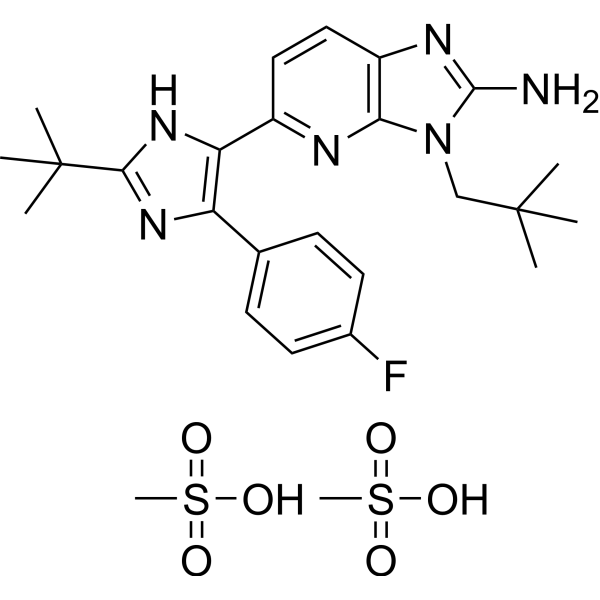
Ralimetinib dimesylate  (Synonyms: LY2228820 dimesylate)

製品番号: HY-13241 純度: 99.97%
COA 取扱説明書 Technical Support

Ralimetinib dimesylate (LY2228820 dimesylate) is a selective, ATP-competitive inhibitor of p38 MAPK α/β with IC50s of 5.3 and 3.2 nM, respectively. Ralimetinib (LY2228820) selectively inhibits phosphorylation of MK2 (Thr334), with no effect on phosphorylation of p38a MAPK, JNK, ERK1/2, c-Jun, ATF2, or c-Myc.

商品は「研究用試薬」です。人や動物の医療用・臨床診断用・食品用の製品ではありません。
研究用途以外に使用した場合、当社は一切の責任を負いかねます。

CAS 番号 : 862507-23-1

容量 価格(税別) 在庫状況 数量
>無料サンプル (0.1 - 0.2 mg)   今すぐ申し込む  
Solid + Solvent (Highly Recommended)
10 mM * 1 mL in DMSO
ready for reconstitution
USD 133 在庫あり
Solution
10 mM * 1 mL in DMSO USD 133 在庫あり
Solid
5 mg $99 在庫あり
10 mg $176 在庫あり
25 mg $300 在庫あり
50 mg $470 在庫あり
100 mg $600 在庫あり
200 mg   お問い合わせ  
500 mg   お問い合わせ  

* アイテムを追加する前、数量をご選択ください

This product is a controlled substance and not for sale in your territory.

カスタマーレビュー

Based on 15 publication(s) in Google Scholar

Other Forms of Ralimetinib dimesylate:

Top Publications Citing Use of Products

    Ralimetinib dimesylate purchased from MedChemExpress. Usage Cited in: Oncogene. 2026 Mar 5.  [Abstract]

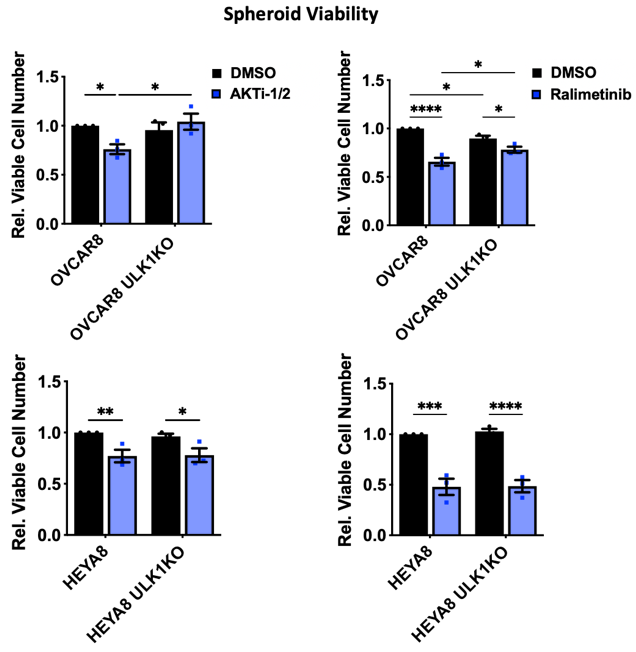
    Spheroids were cultured for 24 h before treating with either AKTi-1/2 (5 µM) or Ralimetinib dimesylate (15 µM) for 72 h before performing Trypan Blue Exclusion Assay. Treatment with AKTi-1/2 (AKT inhibitor) and Ralimetinib dimesylate (p38 inhibitor) resulted in significantly increased cell viability in OVCAR8-ULK1KO spheroids, while no differences were observed in HEYA8-ULK1KO spheroids.

    Ralimetinib dimesylate purchased from MedChemExpress. Usage Cited in: Cell Death Dis. 2021 Oct 23;12(11):994.  [Abstract]

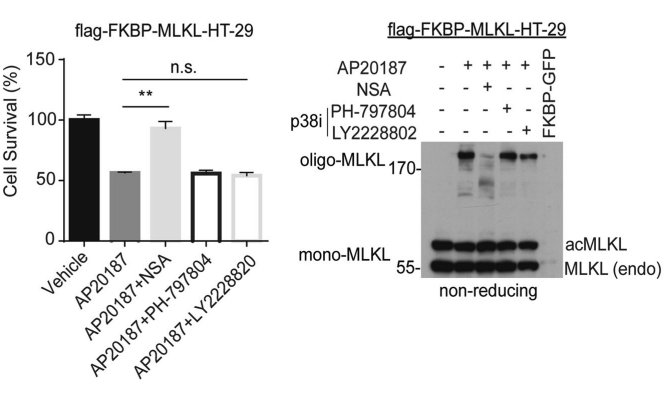
    HT-29 cells were transfected with an expression vector of flag-tagged MLKL fused with two AP20187 (10 μM)-binding (FKBPv) domains. The cells were pretreated with indicated compounds (Ralimetinib dimesylate (LY2228820, 10 μM), et al.) for 4 h followed by treatment with AP20187 to induce MLKL oligomerization. Cell viability was determined by CellTiter-Glo after treatment with AP20187 for 2 h (Left). Cell lysates were separated by non-reducing SDS/PAGE and analyzed by western blotting using MLKL antibody (Right).

    Ralimetinib dimesylate purchased from MedChemExpress. Usage Cited in: Mol Med Rep. 2019 Jul;20(1):735-744.  [Abstract]

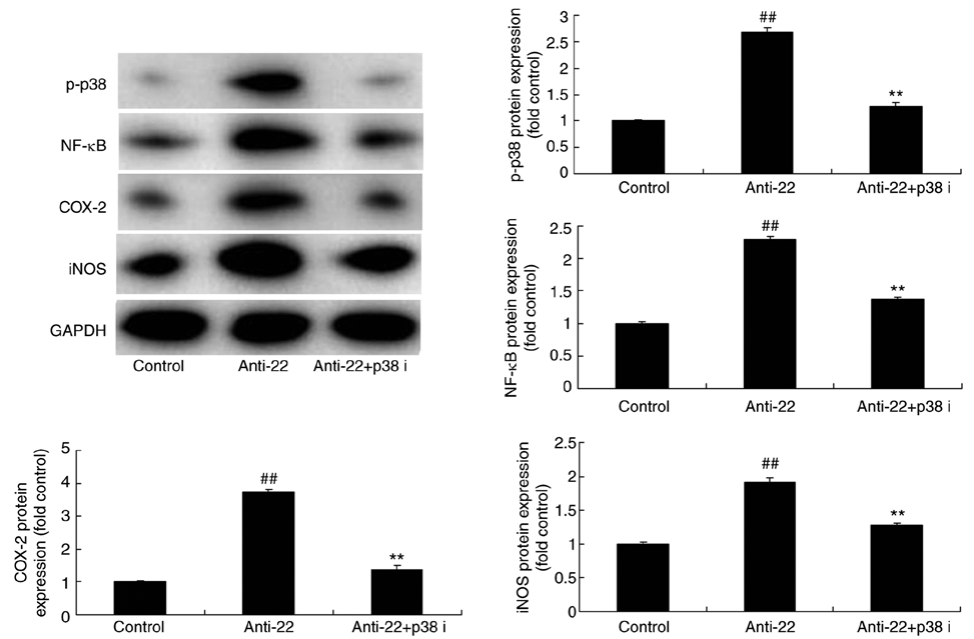
    p38 inhibitor Ralimetinib dimesylate (p38 i, 3 nM; 24 h) reduced the proinflammatory effects of Anti-22 in model in vitro. p-p38, NF-κB, COX-2 and iNOS protein expression was determined by western blotting and statistically analyzed.

    Ralimetinib dimesylate purchased from MedChemExpress. Usage Cited in: Mol Med Rep. 2019 Jul;20(1):735-744.  [Abstract]

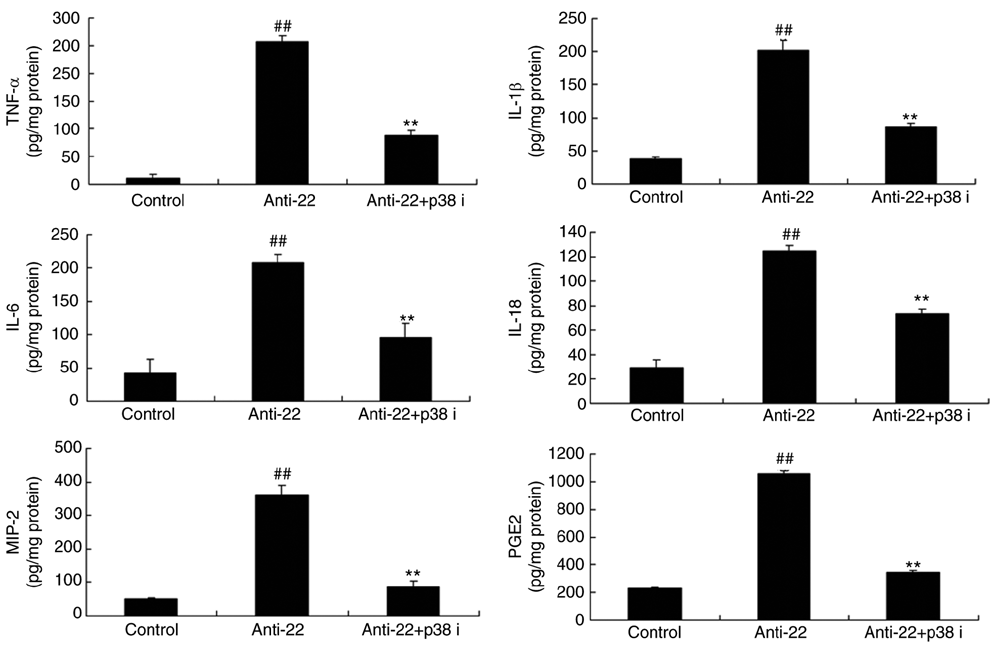
    p38 inhibitor Ralimetinib dimesylate (p38 i, 3 nM; 24 h) reduced the proinflammatory effects of Anti-22 in the in vitro stroke model. TNF-α, IL-1β, IL-6, IL-18, MIP-2 and PGE2 expression was determined by ELISA.

    Ralimetinib dimesylate purchased from MedChemExpress. Usage Cited in: EBioMedicine. 2015 Nov 19;2(12):1944-56.  [Abstract]

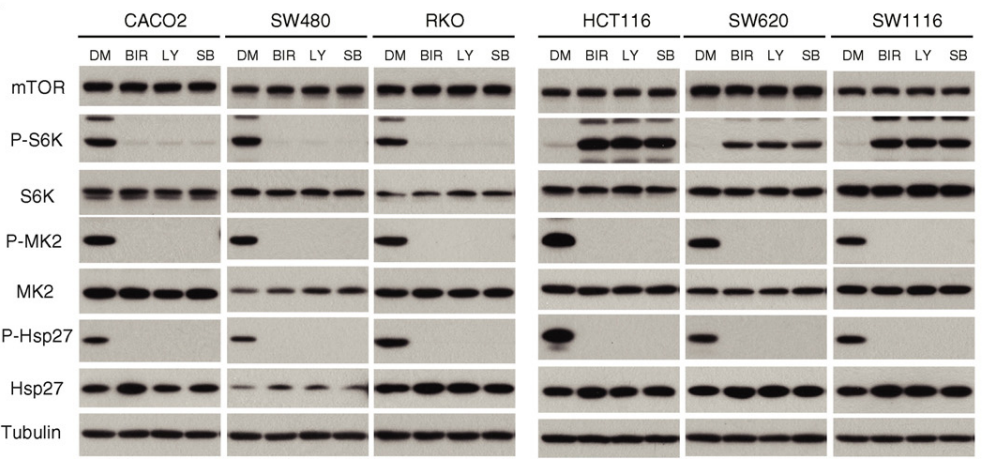
    CRC cells were treated with 4 μM Ralimetinib dimesylate (LY2228820), 10 μM BIRB796 or 10 μM SB202190 for 2 h and p38 and mTORC1 signaling was analyzed by immunoblot.

    p38 MAPK アイソフォーム固有の製品をすべて表示:

    • 生物活性

    • プロトコル

    • 純度とドキュメンテーション

    • 参考文献

    • カスタマーレビュー

    製品説明

    Ralimetinib dimesylate (LY2228820 dimesylate) is a selective, ATP-competitive inhibitor of p38 MAPK α/β with IC50s of 5.3 and 3.2 nM, respectively. Ralimetinib (LY2228820) selectively inhibits phosphorylation of MK2 (Thr334), with no effect on phosphorylation of p38a MAPK, JNK, ERK1/2, c-Jun, ATF2, or c-Myc.

    IC50 & Target[3]

    p38β MAPK

    3.2 nM (IC50)

    p38α MAPK

    5.3 nM (IC50)

    Cellular Effect
    Cell Line Type Value Description References
    Caco-2 CC50
    56.2 3
    Compound: LY2228820
    Toxicity against Caco-2 cells determined at 48 hours by intracellular ATP concentration using the CellTiter-Glo Luminescent Cell Viability Assay
    Toxicity against Caco-2 cells determined at 48 hours by intracellular ATP concentration using the CellTiter-Glo Luminescent Cell Viability Assay
    10.21203/rs.3.rs-23951/v1
    Caco-2 IC50
    0.87 3
    Compound: LY2228820
    Determination of IC50 values for inhibition of SARS-CoV-2 induced cytotoxicity of Caco-2 cells after 48 hours by high content imaging
    Determination of IC50 values for inhibition of SARS-CoV-2 induced cytotoxicity of Caco-2 cells after 48 hours by high content imaging
    10.21203/rs.3.rs-23951/v1
    Caco-2 CC50
    56.2 3
    Compound: LY2228820
    Toxicity against Caco-2 cells determined at 48 hours by intracellular ATP concentration using the CellTiter-Glo Luminescent Cell Viability Assay
    Toxicity against Caco-2 cells determined at 48 hours by intracellular ATP concentration using the CellTiter-Glo Luminescent Cell Viability Assay
    10.21203/rs.3.rs-23951/v1
    Caco-2 IC50
    0.87 3
    Compound: LY2228820
    Determination of IC50 values for inhibition of SARS-CoV-2 induced cytotoxicity of Caco-2 cells after 48 hours by high content imaging
    Determination of IC50 values for inhibition of SARS-CoV-2 induced cytotoxicity of Caco-2 cells after 48 hours by high content imaging
    10.21203/rs.3.rs-23951/v1
    Caco-2 IC50
    0.87 3
    Compound: LY2228820
    Determination of IC50 values for inhibition of SARS-CoV-2 induced cytotoxicity of Caco-2 cells after 48 hours by high content imaging
    Determination of IC50 values for inhibition of SARS-CoV-2 induced cytotoxicity of Caco-2 cells after 48 hours by high content imaging
    10.21203/rs.3.rs-23951/v1
    Caco-2 CC50
    56.2 3
    Compound: LY2228820
    Toxicity against Caco-2 cells determined at 48 hours by intracellular ATP concentration using the CellTiter-Glo Luminescent Cell Viability Assay
    Toxicity against Caco-2 cells determined at 48 hours by intracellular ATP concentration using the CellTiter-Glo Luminescent Cell Viability Assay
    10.21203/rs.3.rs-23951/v1
    体外実験

    Ralimetinib dimesylate inhibits p38α, as well as the level of phosphoMAPKAPK-2 (pMK2) in RAW 264.7 cells, with IC50 values of 7 nM and 34.3 nM, respectively. Furthermore, Ralimetinib dimesylate inhibits lipopolysaccharide (LPS)-induced TNFα formation in murine peritoneal macrophages, with IC50 of 5.2 nM[1]. In multiple myeloma (MM) cells, including INA6, RPMI-8226, U266, and RPMI-Dox40, Ralimetinib dimesylate (LY2228820) (200 nM-800 nM) significantly blocks p38MAPK signaling, as revealed by its inhibition on phosphorylation of HSP27, a downstream target of p38MAPK, without affecting the expression level of HSP27. Ralimetinib dimesylate (200 nM-400 nM) enhances bortezomib-induced cytotoxicity and apoptosis, but Ralimetinib dimesylate alone doesn't inhibit the growth of MM.1S cells. Ralimetinib dimesylate (200 nM-800 nM) also inhibits secretion of IL-6 and MIP-1α in long-term BM stromal cells (LT-BMSCs), BM mononuclear cells (BMMNCs), peripheral blood (PB) CD138+, CD138- or PB CD14+ cells. Ralimetinib dimesylate (400 nM-800 nM) also blocks osteoclastogenesis from CD14+ cells[2].

    MedChemExpress (MCE) has not independently confirmed the accuracy of these methods. They are for reference only.

    体内実験

    In LPS-induced mice, Ralimetinib dimesylate effectively inhibits the formation of TNFα with a threshold minimum 50% effective dose (TMED50) less than 1 mg/kg. In a rat model of collagen-inducedarthritis (CIA), Ralimetinib dimesylate displays potent effects on paw swelling, bone erosion, and cartilage destruction, with a threshold minimum 50% effective dose (TMED50)of 1.5 mg/kg[1]. Ralimetinib dimesylate inhibits tumor phospho-MK2 in a dose-dependent manner (TED50=1.95 mg/kg, TED70=11.17 mg/kg) in mice implanted with B16-F10 melanoma. Ralimetinib dimesylate inhibits MK2 phosphorylation: mouse in vivo TED50=1.01 mg/kg (compound exposure approximately 100 nM) and human ex vivo IC50=0.12 μM with either mouse or human PBMC[3].

    MedChemExpress (MCE) has not independently confirmed the accuracy of these methods. They are for reference only.

    分子量

    612.74

    分子式

    C26H37FN6O6S2

    CAS 番号
    Appearance

    Solid

    Color

    White to yellow

    SMILES

    FC1=CC=C(C=C1)C2=C(NC(C(C)(C)C)=N2)C3=NC4=C(C=C3)N=C(N)N4CC(C)(C)C.OS(C)(=O)=O.OS(C)(=O)=O

    輸送条件

    Room temperature in continental US; may vary elsewhere.

    保管条件

    4°C, sealed storage, away from moisture

    *In solvent : -80°C, 6 months; -20°C, 1 month (sealed storage, away from moisture)

    溶剤 & 溶解度
    体外: 

    DMSO : 61 mg/mL (99.55 mM; Need ultrasonic and warming; Hygroscopic DMSO has a significant impact on the solubility of product, please use newly opened DMSO)

    H2O : ≥ 33.33 mg/mL (54.40 mM)

    *"≥" means soluble, but saturation unknown.

    Preparing
    Stock Solutions
    Concentration Solvent Mass 1 mg 5 mg 10 mg
    1 mM 1.6320 mL 8.1601 mL 16.3201 mL
    5 mM 0.3264 mL 1.6320 mL 3.2640 mL
    10 mM 0.1632 mL 0.8160 mL 1.6320 mL
    View the Complete Stock Solution Preparation Table

    * Please refer to the solubility information to select the appropriate solvent. Once prepared, please aliquot and store the solution to prevent product inactivation from repeated freeze-thaw cycles.
    Storage method and period of stock solution: -80°C, 1 year; -20°C, 6 months (sealed storage, away from moisture). When stored at -80°C, please use it within 1 year. When stored at -20°C, please use it within 6 months.

    * Note: If you choose water as the stock solution, please dilute it to the working solution, then filter and sterilize it with a 0.22 μm filter before use.

    • Molarity Calculator

    • Dilution Calculator

    Mass (g) = Concentration (mol/L) × Volume (L) × Molecular Weight (g/mol)

    Mass
    =
    Concentration
    ×
    Volume
    ×
    Molecular Weight *

    Concentration (start) × Volume (start) = Concentration (final) × Volume (final)

    一般には略語で表示されます:C1V1 = C2V2

    濃度 (開始)

    C1

    ×
    体積 (開始)

    V1

    =
    濃度 (終了)

    C2

    ×
    体積 (終了)

    V2

    体内:

    Select the appropriate dissolution method based on your experimental animal and administration route.

    For the following dissolution methods, please ensure to first prepare a clear stock solution using an In Vitro approach and then sequentially add co-solvents:
    To ensure reliable experimental results, the clarified stock solution can be appropriately stored based on storage conditions. As for the working solution for in vivo experiments, it is recommended to prepare freshly and use it on the same day.
    The percentages shown for the solvents indicate their volumetric ratio in the final prepared solution. If precipitation or phase separation occurs during preparation, heat and/or sonication can be used to aid dissolution.

    • Protocol 1

      Add each solvent one by one:  10% DMSO    40% PEG300    5% Tween-80    45% Saline

      Solubility: ≥ 2.5 mg/mL (4.08 mM); Clear solution

      This protocol yields a clear solution of ≥ 2.5 mg/mL (saturation unknown).

      Taking 1 mL working solution as an example, add 100 μL DMSO stock solution (25.0 mg/mL) to 400 μL PEG300, and mix evenly; then add 50 μL Tween-80 and mix evenly; then add 450 μL Saline to adjust the volume to 1 mL.

      Preparation of Saline: Dissolve 0.9 g sodium chloride in ddH₂O and dilute to 100 mL to obtain a clear Saline solution.
    • Protocol 2

      Add each solvent one by one:  10% DMSO    90% (20% SBE-β-CD in Saline)

      Solubility: ≥ 2.5 mg/mL (4.08 mM); Clear solution

      This protocol yields a clear solution of ≥ 2.5 mg/mL (saturation unknown).

      Taking 1 mL working solution as an example, add 100 μL DMSO stock solution (25.0 mg/mL) to 900 μL 20% SBE-β-CD in Saline, and mix evenly.

      Preparation of 20% SBE-β-CD in Saline (4°C, storage for one week): 2 g SBE-β-CD powder is dissolved in 10 mL Saline, completely dissolve until clear.
    In Vivo Dissolution Calculator
    Please enter the basic information of animal experiments:

    Dosage

    mg/kg

    Animal weight
    (per animal)

    g

    Dosing volume
    (per animal)

    μL

    Number of animals

    Recommended: Prepare an additional quantity of animals to account for potential losses during experiments.
    Calculation results:
    Working solution concentration: mg/mL
    This product has good water solubility, please refer to the measured solubility data in water/PBS/Saline for details.
    The concentration of the stock solution you require exceeds the measured solubility. The following solution is for reference only.If necessary, please contact MedChemExpress (MCE).
    純度とドキュメンテーション
    参考文献
    キナーゼ実験
    [1]

    Inhibition of p38α is determined using recombinant human p38α in a standard filter binding protocol using ATP[γ-33P] and EGFR 21-mer peptide as substrate. Functional inhibition of TNFα in murine peritoneal macrophages is determined using LPS stimulation in the presence of Ralimetinib. To assess p38α activity in cells more directly, RAW 264.7 cells are treated with Ralimetinib and then stimulated with anisomycin. The level of p38α activity is detected using a phosphoMAPKAPK-2 (pMK2) (Thr 334) antibody which reacts with a residue specifically phosphorylated by p38α.

    MedChemExpress (MCE) はこれらの方法の精度を確認していません。 こちらは参照専用です。

    動物実験
    [3]

    Murine B16-F10 melanoma cells are cultured in Dulbecco's Modified Eagle Medium supplemented with l-glutamine, high glucose and 10% FBS (GIBCO 11965-092). C57/bl6 mice are implanted in the rear flank with B16-F10 cells (2×10⁶), and when tumors reach approximately 200 mm3 in size, are dosed orally with Ralimetinib dimesylate in 1% carboxymethylcellulose/0.25% Tween 80. Two hours postdose, tumors are excised, homogenized, and lysed for Western blot analysis. MK2 phosphorylation (p-Thr334), normalized to total glyceraldehyde-3-phosphate dehydrogenase, is quantified by chemiluminescent detection. The 50% or 70% threshold effective dose (TED50 and TED70, respectively) is calculated to approximate effective dose ranges for testing of Ralimetinib dimesylate in xenograft models, that is, where significant target inhibition is observed. The TED50 or TED70 is defined as the dose where a statistically significant effect is achieved, and there is at least 50% or 70% inhibition, respectively, compared with vehicle control.

    MedChemExpress (MCE) はこれらの方法の精度を確認していません。 こちらは参照専用です。

    参考文献

    Complete Stock Solution Preparation Table

    * Please refer to the solubility information to select the appropriate solvent. Once prepared, please aliquot and store the solution to prevent product inactivation from repeated freeze-thaw cycles.
    Storage method and period of stock solution: -80°C, 1 year; -20°C, 6 months (sealed storage, away from moisture). When stored at -80°C, please use it within 1 year. When stored at -20°C, please use it within 6 months.

    Optional Solvent Concentration Solvent Mass 1 mg 5 mg 10 mg 25 mg
    H2O / DMSO 1 mM 1.6320 mL 8.1601 mL 16.3201 mL 40.8003 mL
    5 mM 0.3264 mL 1.6320 mL 3.2640 mL 8.1601 mL
    10 mM 0.1632 mL 0.8160 mL 1.6320 mL 4.0800 mL
    15 mM 0.1088 mL 0.5440 mL 1.0880 mL 2.7200 mL
    20 mM 0.0816 mL 0.4080 mL 0.8160 mL 2.0400 mL
    25 mM 0.0653 mL 0.3264 mL 0.6528 mL 1.6320 mL
    30 mM 0.0544 mL 0.2720 mL 0.5440 mL 1.3600 mL
    40 mM 0.0408 mL 0.2040 mL 0.4080 mL 1.0200 mL
    50 mM 0.0326 mL 0.1632 mL 0.3264 mL 0.8160 mL
    DMSO 60 mM 0.0272 mL 0.1360 mL 0.2720 mL 0.6800 mL
    80 mM 0.0204 mL 0.1020 mL 0.2040 mL 0.5100 mL

    * Note: If you choose water as the stock solution, please dilute it to the working solution, then filter and sterilize it with a 0.22 μm filter before use.

    • No file chosen (Maximum size is: 1024 Kb)
    • If you have published this work, please enter the PubMed ID.
    • Your name will appear on the site.
    • Molarity Calculator

    • Dilution Calculator

    The molarity calculator equation

    Mass (g) = Concentration (mol/L) × Volume (L) × Molecular Weight (g/mol)

    質量   濃度   体積   分子量 *
    = × ×

    The dilution calculator equation

    Concentration (start) × Volume (start) = Concentration (final) × Volume (final)

    一般には略語で表示されます:C1V1 = C2V2

    濃度 (開始) × 体積 (開始) = 濃度 (終了) × 体積 (終了)
    × = ×
    C1   V1   C2   V2
    Help & FAQs
    • Do most proteins show cross-species activity?

      Species cross-reactivity must be investigated individually for each product. Many human cytokines will produce a nice response in mouse cell lines, and many mouse proteins will show activity on human cells. Other proteins may have a lower specific activity when used in the opposite species.

    最近チェックした製品:

    オンラインお問い合わせ

    Your information is safe with us. * Required Fields.

    製品名


    カスタマ需要量 *

    お名前 *


    タイトル

    メールアドレス *


    電話番号 *

    デパートメント


    組纖名 *

    市区町村

    都道府県

    国或いは地域 *


    必ず会社名を記載ください。個人への返信は行いません。

    備考

    バルクお問い合わせ

    Inquiry Information

    製品名:
    Ralimetinib dimesylate
    製品番号:
    HY-13241
    数量:
    MCE 日本正規代理店: