1. Membrane Transporter/Ion Channel Metabolic Enzyme/Protease Autophagy Immunology/Inflammation Neuronal Signaling Apoptosis
  2. Autophagy Calcium Channel NOD-like Receptor (NLR) Apoptosis PINK1/Parkin Mitochondrial Metabolism
  3. Mito-TEMPO

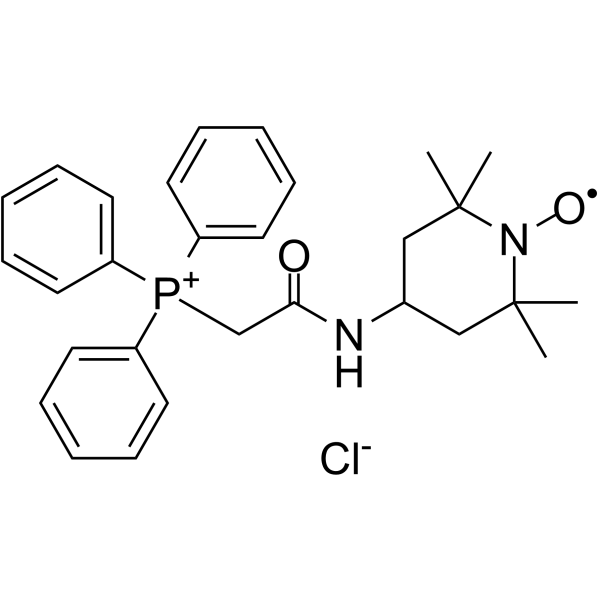
Mito-TEMPO is a mitochondria-targeted antioxidant. Mito-TEMPO induces mitophagy by activating the PINK1/Parkin pathway, inhibits NLRP3 inflammasome activation, restores mitochondrial membrane potential, and improves renal function and podocyte injury. Mito-TEMPO regulates Ca2+ homeostasis, inhibits Bnip3 overexpression, shortens action potential duration, and exerts antiarrhythmic effects. Mito-TEMPO reverses premature senescence, reduces trabecular bone loss, and decreases cell apoptosis. Mito-TEMPO can be used in studies of chronic kidney disease, age-related cardiac dysfunction, postmenopausal osteoporosis, and ischemic stroke.

商品は「研究用試薬」です。人や動物の医療用・臨床診断用・食品用の製品ではありません。
研究用途以外に使用した場合、当社は一切の責任を負いかねます。

CAS 番号 : 1334850-99-5

容量 価格(税別) 在庫状況 数量
>無料サンプル (0.1 - 0.2 mg)   今すぐ申し込む  
Solid + Solvent (Highly Recommended)
10 mM * 1 mL in DMSO
ready for reconstitution
USD 73 在庫あり
Solution
10 mM * 1 mL in DMSO USD 73 在庫あり
Solid
5 mg $65 在庫あり
10 mg $110 在庫あり
25 mg $250 在庫あり
50 mg $420 在庫あり
100 mg $700 在庫あり
200 mg   お問い合わせ  
500 mg   お問い合わせ  

* アイテムを追加する前、数量をご選択ください

This product is a controlled substance and not for sale in your territory.

カスタマーレビュー

Based on 164 publication(s) in Google Scholar

Other Forms of Mito-TEMPO:

Top Publications Citing Use of Products

顧客検証

WB
IF

    Mito-TEMPO purchased from MedChemExpress. Usage Cited in: Leukemia. 2023 Apr;37(4):765-775.  [Abstract]

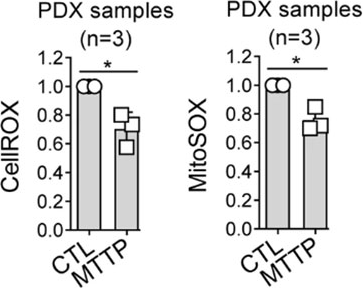
    Mito-TEMPO (MTTP; 50 nM; 48 h) efficiently reduces total and mitochondrial ROS content in PDX AML cells. CellROX dye, left panel, MitoSOX dye, right panel.

    Mito-TEMPO purchased from MedChemExpress. Usage Cited in: Redox Biol. 2020 Jul;34:101559.  [Abstract]

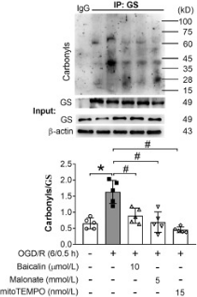
    GS carbonylation in astrocytes under OGD/R. Mito-TEMPO decreases GS carbonylation in astrocytes.

    Mito-TEMPO purchased from MedChemExpress. Usage Cited in: Cell Death Dis. 2020 May 5;11(5):319.  [Abstract]

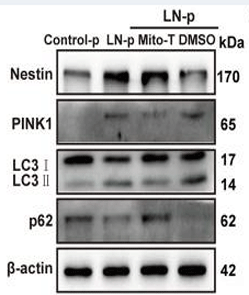
    Western blot assay shows the expression of nestin, PINK1, LC3 and p62 in the MPCs, which are pretreated with Mito-TEMPO and exposed to lupus nephritis plasma for 24 h.

    Calcium Channel アイソフォーム固有の製品をすべて表示:

    NOD-like Receptor (NLR) アイソフォーム固有の製品をすべて表示:

    • 生物活性

    • 純度とドキュメンテーション

    • 参考文献

    • カスタマーレビュー

    製品説明

    Mito-TEMPO is a mitochondria-targeted antioxidant. Mito-TEMPO induces mitophagy by activating the PINK1/Parkin pathway, inhibits NLRP3 inflammasome activation, restores mitochondrial membrane potential, and improves renal function and podocyte injury. Mito-TEMPO regulates Ca2+ homeostasis, inhibits Bnip3 overexpression, shortens action potential duration, and exerts antiarrhythmic effects. Mito-TEMPO reverses premature senescence, reduces trabecular bone loss, and decreases cell apoptosis. Mito-TEMPO can be used in studies of chronic kidney disease, age-related cardiac dysfunction, postmenopausal osteoporosis, and ischemic stroke[1][2][3][4].

    体外実験

    Mito-TEMPO (200 μM; 24 h) inhibits the activation of the NLRP3 inflammasome and protects human podocytes (HPC) from TNF-α-induced injury[1].
    Mito-TEMPO (200 μM; 24 h) improves mitochondrial function and induces PINK1/Parkin pathway-mediated mitophagy in TNF-α-injured human podocytes (HPC)[1].
    Mito-TEMPO (200 μM; 24 h) inhibits the activation of the NLRP3 inflammasome in TNF-α-injured human podocytes (HPC) in a Parkin-dependent manner[1].
    Mito-TEMPO (0.1-10 μM; 2 days) significantly reduces mitochondrial superoxide levels in bone marrow mesenchymal stem cells (BMSCs) of rats in the sham-operated group, short-term ovariectomized (ST-OVX) group, and long-term ovariectomized (LT-OVX) group, with the most prominent effect on BMSCs in the LT-OVX group at the concentration of 1 μM[3].
    Mito-TEMPO (1 μM; 7 days) upregulates the activity of alkaline phosphatase (ALP), an early osteogenic marker, in bone marrow mesenchymal stem cells (BMSCs) of rats with long-term ovariectomy (LT-OVX), and reverses the activity reduction caused by estrogen deficiency[3].
    Mito-TEMPO (1 μM; 2 days) alleviates premature senescence of bone marrow mesenchymal stem cells (BMSCs) in ovariectomized (LT-OVX) rats by reducing the expression of senescence markers, decreasing DNA damage, and ameliorating cell proliferation impairment[3].
    Mito-TEMPO (1 μM; 2 days) restores lysosomal acidity, reduces mature CTSB levels, and alleviates lysosomal dysfunction in bone marrow mesenchymal stem cells (BMSCs) from ovariectomized (LT-OVX) rats induced by estrogen deficiency[3].
    Mito-TEMPO (1 μM; 2 days) enhances mitophagy in bone marrow mesenchymal stem cells (BMSCs) from ovariectomized (LT-OVX) rats, which is evidenced by increased colocalization of mitochondrial markers and lysosomal markers[3].
    Mito-TEMPO (1 μM; 2 days) inhibits the activation of mitochondrial unfolded protein response (UPRmt) in bone marrow mesenchymal stem cells (BMSCs) of ovariectomized (LT-OVX) rats induced by estrogen deficiency by reducing the expression of HSP60 and CLPP proteins[3].
    Mito-TEMPO (1 μM; 2 days) restores mitochondrial membrane potential in bone marrow mesenchymal stem cells (BMSCs) from ovariectomized (LT-OVX) rats and alleviates estrogen deficiency-induced mitochondrial dysfunction[3].
    Mito-TEMPO (1 μM; 2 days) improves mitochondrial respiratory function, including basal respiration, ATP-coupled respiration, and maximal respiration, in bone marrow mesenchymal stem cells (BMSCs) from ovariectomized (LT-OVX) rats[3].

    MedChemExpress (MCE) has not independently confirmed the accuracy of these methods. They are for reference only.

    Western Blot Analysis[1]

    Cell Line: human podocyte cells (HPC)
    Concentration: 200 μM (Target Reagent); 100 nM (Parkin siRNA)
    Incubation Time: 24 h (co-treated with TNF-α); 24 h (Parkin siRNA transfection prior to TNF-α and Target Reagent treatment)
    Result: Lost the ability to significantly reduce the levels of NLRP3, cleaved caspase-1, or mature IL-1β in Parkin-silenced HPC, reversing the inhibitory effect observed in non-silenced cells.
    体内実験

    Mito-TEMPO (0.7 mg/kg; i.p.; once daily for 7 consecutive days) significantly improves renal function, alleviates podocyte injury, inhibits NLRP3 inflammasome activation, and induces PINK1/Parkin pathway-mediated mitophagy in rats with chronic kidney disease (CKD)[1].
    Mito-TEMPO (0.6 mg/kg; i.p.; once daily for 4 weeks) alleviates trabecular bone loss and reduces the expression of senescence and mitochondrial stress markers in ovariectomized rats with osteoporosis[3].
    Mito-TEMPO (0.7 mg/kg/day; i.p.; once daily for 14 consecutive days) exerts protective effects against ischemia-reperfusion-induced cardiac and neurological dysfunction in male Wistar albino rats, as evidenced by the normalization of hemodynamic, electrocardiographic, biochemical and histological parameters compared with the IR group[4].

    MedChemExpress (MCE) has not independently confirmed the accuracy of these methods. They are for reference only.

    Animal Model: Sprague-Dawley (male, 6-8 weeks old, 180-220 g, CKD induced by subcutaneous injection of 1 mg C-BSA emulsion followed by tail vein injection of 0.5 mg C-BSA every other day for 21 days)[1]
    Dosage: 0.7 mg/kg
    Administration: i.p.; daily; 7 days
    Result: Significantly reduced 24-hour urinary protein levels at 35 days post-modeling.
    Decreased serum creatinine (SCR) and blood urea nitrogen (BUN) levels compared to CKD model rats.
    Reduced mean density of podocyte injury marker desmin by ~55% compared to CKD model rats.
    Increased mean density of slit diaphragm protein podocin compared to CKD model rats.
    Suppressed podocyte foot process fusion and reduced thickened glomerular basement membrane (GBM) thickness compared to CKD model rats.
    Reduced colocalization of NLRP3 and ASC in glomeruli compared to CKD model rats.
    Decreased protein levels of NLRP3, cleaved caspase-1, and mature IL-1β compared to CKD model rats.
    Lowered mRNA levels of IL-1β and TNF-α compared to CKD model rats.
    Increased LC3 II/I ratio, PINK1, and Parkin protein levels compared to CKD model rats.
    Decreased p62 protein levels compared to CKD model rats.
    Enhanced colocalization of LC3 and mitochondrial marker COX IV compared to CKD model rats.
    Animal Model: Sprague-Dawley (female, 10 weeks old at procurement, average weight 220 g; bilateral ovariectomy-induced osteoporosis model)[3]
    Dosage: 0.6 mg/kg
    Administration: i.p.; daily; 4 weeks
    Result: Significantly inhibited trabecular bone loss in OVX rats.
    Improved trabecular bone thickness and density in treated OVX rats compared to vehicle-treated OVX rats.
    Restored bone mineralization and deposition capabilities in treated OVX rats.
    Reduced the expression of senescence-related marker p53 in the trabecular bone region of the proximal tibia.
    Significantly decreased the expression of HSP60 and CLPP, markers of mitochondrial unfolded protein response, in OVX rats.
    Animal Model: Wistar Albino (17-week-old male, initial body weight 250-304 g, middle cerebral artery occlusion followed by 3 days of reperfusion)[4]
    Dosage: 0.7 mg/kg/day
    Administration: i.p.; daily; 2 weeks
    Result: Increased final body weight to 302.57 g, compared to 285.75 g for the distilled water group.
    Reduced heart weight/body weight ratio to 3.01 mg/g, which was statistically significantly lower than the ischemia-reperfusion (IR) group's 3.39 mg/g.
    Normalized volume of electrically participating tissue, left ventricular ejection time, and heart rate to levels not significantly different from the sham group, and statistically significantly different from the IR group.
    Normalized P-R interval, QTc, T-wave time, T-wave repolarization time, and R-R interval to levels not significantly different from the sham group, and statistically significantly different from the IR group.
    Increased blood serum total antioxidant status (TAS) compared to the IR group; decreased total oxidant status (TOS) and oxidative stress index (OSI) compared to the IR group.
    Increased heart left ventricle cyclic adenosine monophosphate (cAMP) and inositol triphosphate (IP3) levels to values close to the sham group and statistically significantly higher than the IR group.
    Decreased brain right cerebral hemisphere catalase levels compared to the IR group.
    Improved heart left ventricle tissue morphology to show mostly normal cardiac muscle cells with minimal myofibril degeneration, compared to widespread abnormalities in the IR group.
    Improved brain right cerebral hemisphere tissue morphology to show mostly normal neurons and glial cells with fewer degenerative changes than the IR group.
    分子量

    510.03

    分子式

    C29H35ClN2O2P

    CAS 番号
    Appearance

    Solid

    Color

    Light yellow to orange

    SMILES

    [O]N1C(C)(C)CC(NC(C[P+](C2=CC=CC=C2)(C3=CC=CC=C3)C4=CC=CC=C4)=O)CC1(C)C.[Cl-]

    輸送条件

    Room temperature in continental US; may vary elsewhere.

    保管条件

    -20°C, sealed storage, away from moisture

    *In solvent : -80°C, 6 months; -20°C, 1 month (sealed storage, away from moisture)

    溶剤 & 溶解度
    体外: 

    DMSO : 100 mg/mL (196.07 mM; Need ultrasonic; Hygroscopic DMSO has a significant impact on the solubility of product, please use newly opened DMSO)

    H2O : 60 mg/mL (117.64 mM; Need ultrasonic)

    Preparing
    Stock Solutions
    Concentration Solvent Mass 1 mg 5 mg 10 mg
    1 mM 1.9607 mL 9.8033 mL 19.6067 mL
    5 mM 0.3921 mL 1.9607 mL 3.9213 mL
    10 mM 0.1961 mL 0.9803 mL 1.9607 mL
    View the Complete Stock Solution Preparation Table

    * Please refer to the solubility information to select the appropriate solvent. Once prepared, please aliquot and store the solution to prevent product inactivation from repeated freeze-thaw cycles.
    Storage method and period of stock solution: -80°C, 2 years; -20°C, 1 year (sealed storage, away from moisture). When stored at -80°C, please use it within 2 years. When stored at -20°C, please use it within 1 year.

    * Note: If you choose water as the stock solution, please dilute it to the working solution, then filter and sterilize it with a 0.22 μm filter before use.

    • Molarity Calculator

    • Dilution Calculator

    Mass (g) = Concentration (mol/L) × Volume (L) × Molecular Weight (g/mol)

    Mass
    =
    Concentration
    ×
    Volume
    ×
    Molecular Weight *

    Concentration (start) × Volume (start) = Concentration (final) × Volume (final)

    一般には略語で表示されます:C1V1 = C2V2

    濃度 (開始)

    C1

    ×
    体積 (開始)

    V1

    =
    濃度 (終了)

    C2

    ×
    体積 (終了)

    V2

    体内:

    Select the appropriate dissolution method based on your experimental animal and administration route.

    For the following dissolution methods, please ensure to first prepare a clear stock solution using an In Vitro approach and then sequentially add co-solvents:
    To ensure reliable experimental results, the clarified stock solution can be appropriately stored based on storage conditions. As for the working solution for in vivo experiments, it is recommended to prepare freshly and use it on the same day.
    The percentages shown for the solvents indicate their volumetric ratio in the final prepared solution. If precipitation or phase separation occurs during preparation, heat and/or sonication can be used to aid dissolution.

    • Protocol 1

      Add each solvent one by one:  10% DMSO    40% PEG300    5% Tween-80    45% Saline

      Solubility: ≥ 2.5 mg/mL (4.90 mM); Clear solution

      This protocol yields a clear solution of ≥ 2.5 mg/mL (saturation unknown).

      Taking 1 mL working solution as an example, add 100 μL DMSO stock solution (25.0 mg/mL) to 400 μL PEG300, and mix evenly; then add 50 μL Tween-80 and mix evenly; then add 450 μL Saline to adjust the volume to 1 mL.

      Preparation of Saline: Dissolve 0.9 g sodium chloride in ddH₂O and dilute to 100 mL to obtain a clear Saline solution.
    • Protocol 2

      Add each solvent one by one:  10% DMSO    90% (20% SBE-β-CD in Saline)

      Solubility: ≥ 2.5 mg/mL (4.90 mM); Clear solution

      This protocol yields a clear solution of ≥ 2.5 mg/mL (saturation unknown).

      Taking 1 mL working solution as an example, add 100 μL DMSO stock solution (25.0 mg/mL) to 900 μL 20% SBE-β-CD in Saline, and mix evenly.

      Preparation of 20% SBE-β-CD in Saline (4°C, storage for one week): 2 g SBE-β-CD powder is dissolved in 10 mL Saline, completely dissolve until clear.

    For the following dissolution methods, please prepare the working solution directly. It is recommended to prepare fresh solutions and use them promptly within a short period of time.
    The percentages shown for the solvents indicate their volumetric ratio in the final prepared solution. If precipitation or phase separation occurs during preparation, heat and/or sonication can be used to aid dissolution.

    • Protocol 1

      Add each solvent one by one:  PBS

      Solubility: 50 mg/mL (98.03 mM); Clear solution; Need ultrasonic

    In Vivo Dissolution Calculator
    Please enter the basic information of animal experiments:

    Dosage

    mg/kg

    Animal weight
    (per animal)

    g

    Dosing volume
    (per animal)

    μL

    Number of animals

    Recommended: Prepare an additional quantity of animals to account for potential losses during experiments.
    Calculation results:
    Working solution concentration: mg/mL
    This product has good water solubility, please refer to the measured solubility data in water/PBS/Saline for details.
    The concentration of the stock solution you require exceeds the measured solubility. The following solution is for reference only.If necessary, please contact MedChemExpress (MCE).
    純度とドキュメンテーション

    純度: 99.19%

    参考文献

    Complete Stock Solution Preparation Table

    * Please refer to the solubility information to select the appropriate solvent. Once prepared, please aliquot and store the solution to prevent product inactivation from repeated freeze-thaw cycles.
    Storage method and period of stock solution: -80°C, 2 years; -20°C, 1 year (sealed storage, away from moisture). When stored at -80°C, please use it within 2 years. When stored at -20°C, please use it within 1 year.

    Optional Solvent Concentration Solvent Mass 1 mg 5 mg 10 mg 25 mg
    H2O / DMSO 1 mM 1.9607 mL 9.8033 mL 19.6067 mL 49.0167 mL
    5 mM 0.3921 mL 1.9607 mL 3.9213 mL 9.8033 mL
    10 mM 0.1961 mL 0.9803 mL 1.9607 mL 4.9017 mL
    15 mM 0.1307 mL 0.6536 mL 1.3071 mL 3.2678 mL
    20 mM 0.0980 mL 0.4902 mL 0.9803 mL 2.4508 mL
    25 mM 0.0784 mL 0.3921 mL 0.7843 mL 1.9607 mL
    30 mM 0.0654 mL 0.3268 mL 0.6536 mL 1.6339 mL
    40 mM 0.0490 mL 0.2451 mL 0.4902 mL 1.2254 mL
    50 mM 0.0392 mL 0.1961 mL 0.3921 mL 0.9803 mL
    60 mM 0.0327 mL 0.1634 mL 0.3268 mL 0.8169 mL
    80 mM 0.0245 mL 0.1225 mL 0.2451 mL 0.6127 mL
    100 mM 0.0196 mL 0.0980 mL 0.1961 mL 0.4902 mL

    * Note: If you choose water as the stock solution, please dilute it to the working solution, then filter and sterilize it with a 0.22 μm filter before use.

    • No file chosen (Maximum size is: 1024 Kb)
    • If you have published this work, please enter the PubMed ID.
    • Your name will appear on the site.
    • Molarity Calculator

    • Dilution Calculator

    The molarity calculator equation

    Mass (g) = Concentration (mol/L) × Volume (L) × Molecular Weight (g/mol)

    質量   濃度   体積   分子量 *
    = × ×

    The dilution calculator equation

    Concentration (start) × Volume (start) = Concentration (final) × Volume (final)

    一般には略語で表示されます:C1V1 = C2V2

    濃度 (開始) × 体積 (開始) = 濃度 (終了) × 体積 (終了)
    × = ×
    C1   V1   C2   V2
    Help & FAQs
    • Do most proteins show cross-species activity?

      Species cross-reactivity must be investigated individually for each product. Many human cytokines will produce a nice response in mouse cell lines, and many mouse proteins will show activity on human cells. Other proteins may have a lower specific activity when used in the opposite species.

    最近チェックした製品:

    オンラインお問い合わせ

    Your information is safe with us. * Required Fields.

    製品名


    カスタマ需要量 *

    お名前 *


    タイトル

    メールアドレス *


    電話番号 *

    デパートメント


    組纖名 *

    市区町村

    都道府県

    国或いは地域 *


    必ず会社名を記載ください。個人への返信は行いません。

    備考

    バルクお問い合わせ

    Inquiry Information

    製品名:
    Mito-TEMPO
    製品番号:
    HY-112879
    数量:
    MCE 日本正規代理店: