Infection
-
Infection Related Products (18686)
Related Products (18686)

-
Antibodies (22)
-
VRC-01
 0 Images
VRC-01 is a broadly neutralizing IgG1 monoclonal antibody that targets HIV-1 envelope glycoprotein gp120 Protein. VRC-01 blocks HIV-1 viral entry by mimicking CD4 receptor interaction with HIV-1 gp120 and neutralizes broad HIV-1 clades. VRC-01 can be used for the research of HIV-1 infection.
-
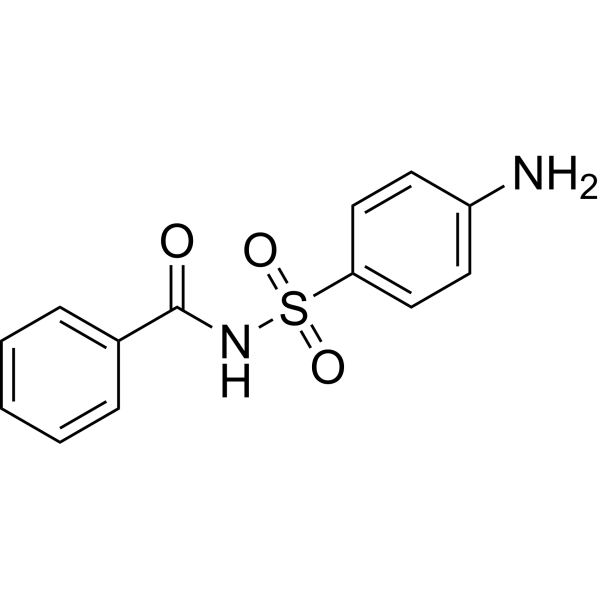
Sulfabenzamide
 0 Images
Sulfabenzamide (N-Sulfanilylbenzamide) is a sulfonamide antibacterial agent. Sulfabenzamide exhibit antibacterial activity against Staphylococcus aureus (ATCC 25923) and Escherichia coli (ATCC 8739). Sulfabenzamide can promote autophagic cell autophagy in breast cancer cells through p53/ DRAM pathway. Sulfabenzamide increases caspase-3 activity, deactivates PARP1 and DNA-PK, downregulates AKT1 and AKT2. Sulfabenzamide can be used for the researches of breast cancer and bacterial infections.
-
Tripotassium phosphate
 0 Images
Tripotassium phosphate is a Bactericid with bactericidal activity primarily against Gram-negative bacteria. Tripotassium phosphate reduces the population counts of Enterobacteriaceae and Campylobacter in poultry skin rinsates. Tripotassium phosphate fails to reduce the population count of Enterococcus in poultry skin rinsates.
-
Imipenem monohydrate (Standard)
 0 ImagesSynonyms: N-Formimidoyl thienamycin monohydrate (Standard); MK0787 monohydrate (Standard)
Imipenem (monohydrate) (Standard) is the analytical standard of Imipenem (monohydrate). This product is intended for research and analytical applications. Imipenem monohydrate, a stable crystalline derivative of thienamycin, is an antibiotic and has the excellent activity against a broad range of gram-positive and gram-negative aerobic and anaerobic bacteria. Imipenem monohydrate can be used for the research of carbapenem-nonsusceptible and P. aeruginosa biofilm infections.
-
Pneumocandin B0
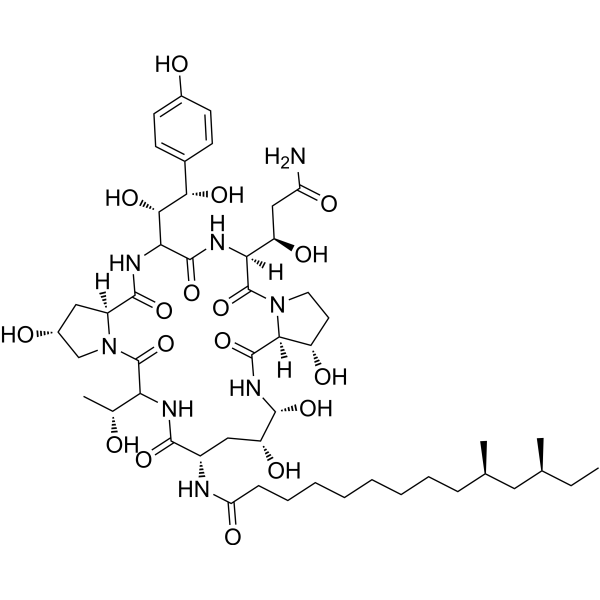 0 ImagesCat. No.: HY-17578CAS No.: 135575-42-7Synonyms: L-688786
Pneumocandin B0 (L-688786) is the precursor of the synthetic antifungal agent Cancidas (Caspofungin acetate) (HY-17006). Pneumocandin B0 can be isolated from fungus Glarea lozoyensis.
-
5-Azacytidine (Standard)
 0 ImagesSynonyms: Azacitidine (Standard); 5-AzaC (Standard); Ladakamycin (Standard)
5-Azacytidine (Standard) is the analytical standard of 5-Azacytidine. This product is intended for research and analytical applications. 5-Azacytidine (Azacitidine; 5-AzaC; Ladakamycin) is a nucleoside analogue of cytidine that specifically inhibits DNA methylation. 5-Azacytidine is incorporated into DNA to covalently trap DNA methyltransferases and contributes to reverse epigenetic changes. 5-Azacytidine induces cell autophagy.
-
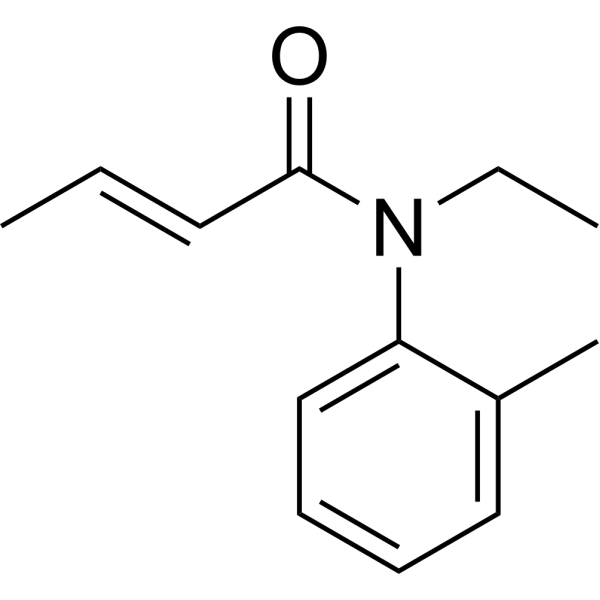
Crotamiton
 0 Images
Crotamiton is a TRPV4 inhibitor. Crotamiton inhibits TRPV4 currents. Crotamiton inhibits TRPV4 selective agonist-induced pruritus-related behaviors in mice. Crotamiton inhibits Histamine- and Chloroquine-induced calcium influx via the H1R/TRPV1, MRGPRA3/TRPA1 pathways, and also suppresses calcium influx in primary mouse dorsal root ganglion neurons. Crotamiton is applicable to research related to pruritus, scabies, and non-scabietic pruritus.
-
β-Thujaplicinol
 0 ImagesSynonyms: 3-Hydroxy-5-isopropyltropolone
-
δ-Cadinene
 0 Images
δ-Cadinene ((+)-δ-Cadinene) is a sesquiterpene in essential oils. δ-Cadinene shows antiproliferative and pro-apoptotic effects on human ovary cancer (OVCAR-3) cells. δ-Cadinene has trichomonacidal, antimicrobial, antifungal and anticancer properties.
-
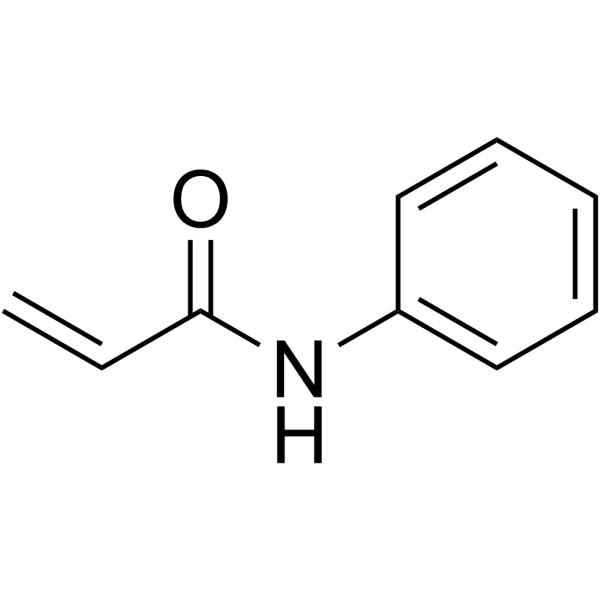
N-Phenylacrylamide
 0 Images
N-Phenylacrylamide is a special polymer showing high affinity with Ochratoxin A, a colorless and crystalline mycotoxin compound. N-Phenylacrylamide can be applied in the field of mycotoxin extraction, and be used for the security research of agricultural commodities and foods made from cereals and grapes.
-
Diazaborine
 0 Images
Diazaborine is an inhibitor for enoyl-acyl carrier protein (enoyl ACP) in an NAD+-dependent manner. Diazaborine exhibits antibacterial activity, MIC for E. coli and K. pneumoniae is 25 and 3.12 μg/mL.
-
1,9-Dimethylmethylene blue
 0 Images
1,9-Dimethylmethylene blue is a photosensitizer, virus inactivator and hemoglobin oxidant derived from methylene blue. When activated, 1,9-Dimethylmethylene blue generates reactive oxygen species including singlet oxygen, and acts as a metachromatic dye. When activated in monomeric or dimeric form, 1,9-Dimethylmethylene blue induces photoinactivation of R17 phage and vesicular stomatitis virus and oxidizes hemoglobin via non-singlet oxygen reactive oxygen species or singlet oxygen-mediated pathways, respectively. The monomeric form, with higher nucleic acid affinity, achieves virus inactivation under specific conditions without forming methemoglobin. 1,9-Dimethylmethylene blue binds to substances such as glycosaminoglycans to produce color changes. Although it is susceptible to interference from non-glycosaminoglycan components in urine, it is still applicable to spectrophotometric analysis for glycosaminoglycan quantification. With these unique photochemical and binding properties, 1,9-Dimethylmethylene blue is widely used in studies of viral infections and related biochemical analyses.
-
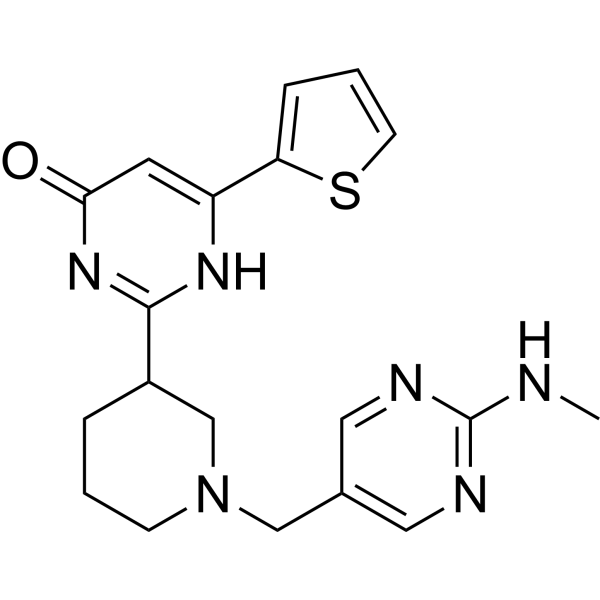
Ribocil
 0 Images
Ribocil is a selective inhibitor targeting the bacterial FMN riboswitch, regulating the bacterial riboflavin riboswitch. Ribocil competitively binds to the FMN binding site, mimicking the natural ligand FMN to induce conformational changes in the riboswitch, inhibiting ribB gene expression, reducing riboflavin synthesis, and thus inhibiting bacterial growth. Ribocil strongly inhibits GFP expression (EC50=0.3 μM). Ribocil exhibits in vivo antibacterial activity in a mouse model and can be used to study antibacterial drugs related to drug-resistant bacterial infections and bacterial riboflavin metabolic pathways[1][2].
-
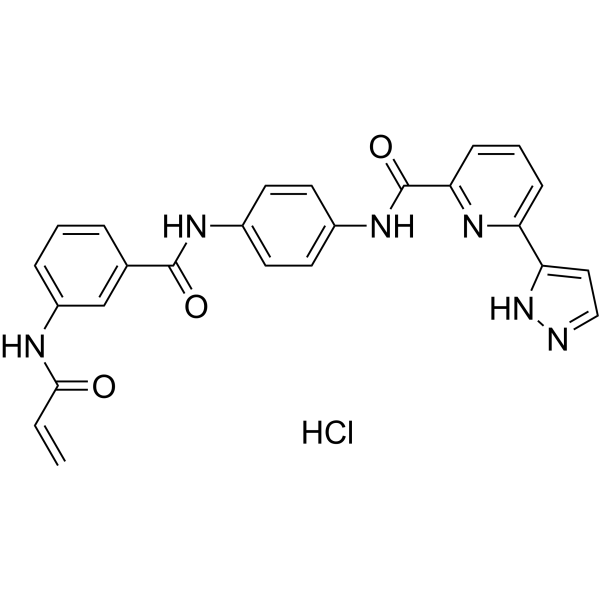
Methylprednisolone succinate
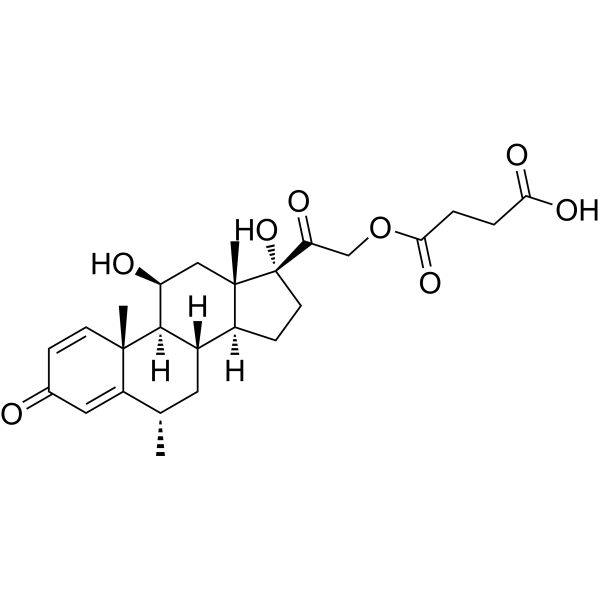 0 ImagesSynonyms: Methylprednisolone hydrogen succinate
Methylprednisolone succinate (Methylprednisolone hydrogen succinate) is a prodrug of Methylprednisolone (HY-B0260) and glucocorticoid with immunosuppressant and anti-inflammatory activity. Methylprednisolone succinate binds cytosolic glucocorticoid receptors, translocates to nuclei, and modulates target gene transcription. Methylprednisolone succinate alters Bax, Bcl-2, occludin, and ZO-1 expression; attenuates TLR4/NF-κB signaling; suppresses proinflammatory cytokine production and immune cell activation. Methylprednisolone succinate can be used for the research of intracranial haemorrhage, rheumatoid arthritis, multiple sclerosis, preterminal cancer, inflammatory conditions, shock, immediate-type hypersensitivity, acute myocardial ischemia, hypoxic heart muscle damage, and traumatic spinal cord injury.
-
Canertinib dihydrochloride
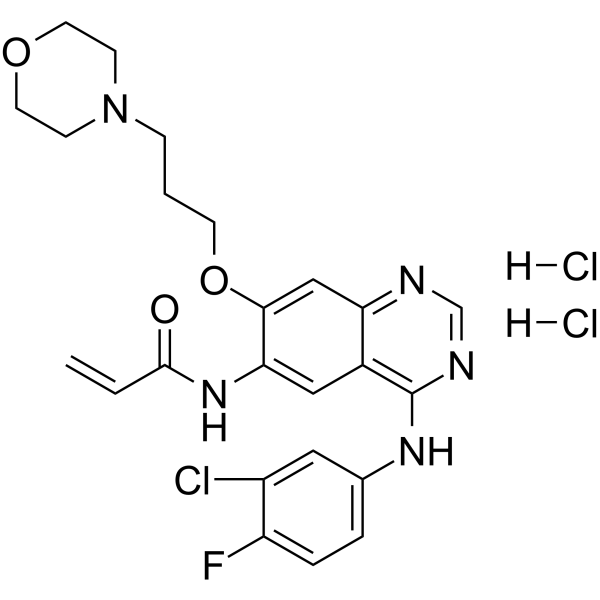 0 ImagesSynonyms: CI-1033 dihydrochloride; PD-183805 dihydrochloride
-
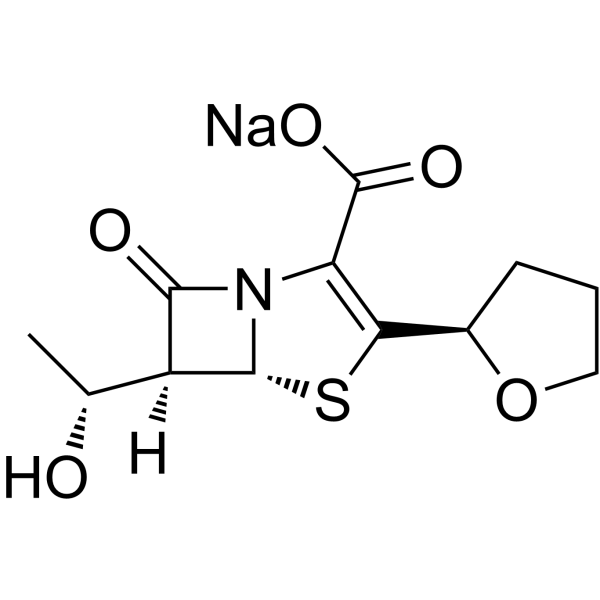
Faropenem sodium
 0 Images
Faropenem sodium is an orally bioavailable penem antibiotic. Faropenem sodium regulates inorganic phosphate transporter Npt1. Faropenem sodium inhibits M. tuberculosis (MIC of 1.3 μg/mL) and B. anthracis.
-
Indotecan
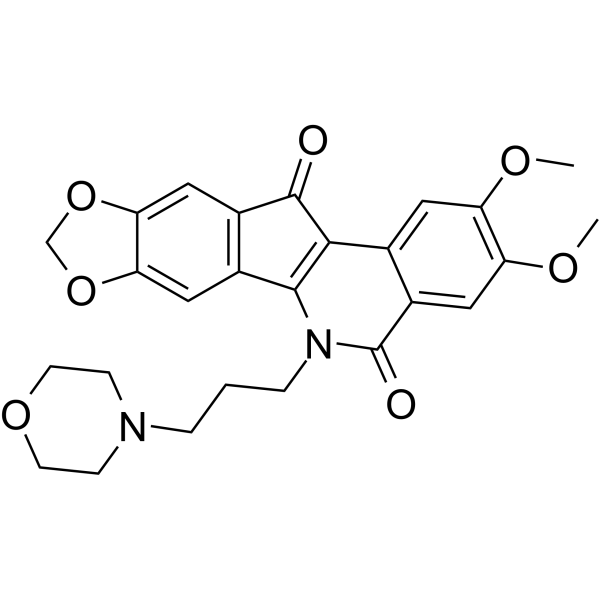 0 ImagesSynonyms: LMP-400; NSC-724998
Indotecan (LMP-400), an indenoisoquinoline derivative, is a potent Topoisomerase I inhibitor, with IC50s of 300, 1200, 560 nM for P388, HCT116, MCF-7 cell lines, respectively. Indotecan prevents the relaxation of supercoiled DNA and can be used for the research of visceral leishmaniasis.
-
TBA-7371
 0 Images
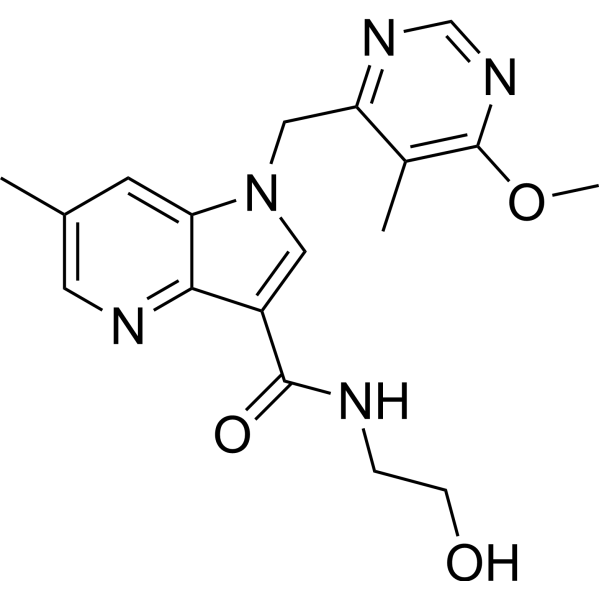
TBA-7371 is an orally active and non-covalent inhibitor of Decaprenylphosphoryl-β-D-ribose oxidase (DprE1) of Mycobacterium tuberculosis (MIC=0.64 μg/mL). TBA-7371 can block the synthesis of arabinose in the bacterial cell wall, resulting in cell wall structural defects, thereby exerting an anti-tuberculosis effect. TBA-7371 can be used in the research of anti-tuberculosis drugs and has a synergistic bactericidal effect with Bedaquiline (HY-14881) and other drugs.