



Rimantadine
Based on 1 publication(s) in Google Scholar
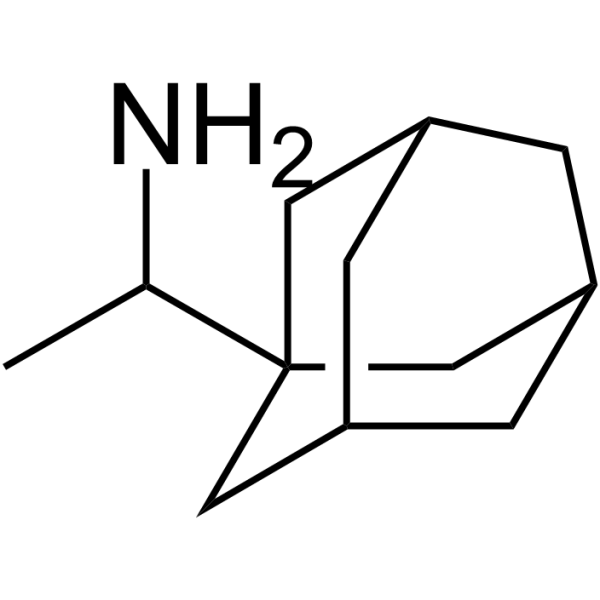
Rimantadine (1-Rimantadine) is an orally active inhibitor for M2 protein, which blocks the hydrogen ion channel activity, prevents the entry and replication of the virus, and exhibits board-spectrum antiviral activity. Rimantadine significantly inhibits hepatitis A virus (HAV) replication at the post-entry stage in Huh7 cells. Rimantadine enhances autophagy. Rimantadine has a significant protective effect against H3N2 virus in mouse model.
Nos produits utilisent uniquement pour la recherche. Nous ne vendons pas aux patients.
- Pureté : 99.86%
- CAS No.: 13392-28-4
- Formule: C12H21N
- Masse moléculaire:179.30
-
Stockage:
-20°C, protect from light
* In solvent : -80°C, 6 months; -20°C, 1 month (protect from light)

To place orders, for customer services and technical support, please contact: MedChemExpress USA
Tel: 609-228-6898 E-mail: [email protected] [email protected]


-
 Activité biologique
-
Chemical Information
-
Solvant et solubilité
- Protocole
- Pureté et documentation
- Références
-
 Help & FAQs


-
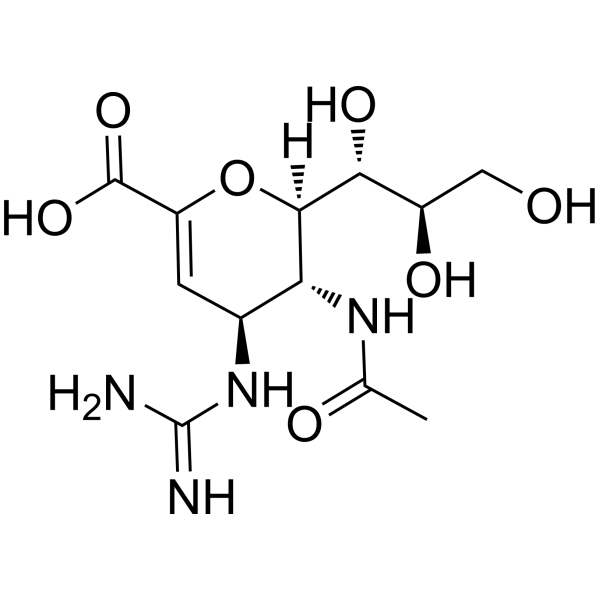
HY-13210
ZanamivirNeuraminidase Inhibitor -
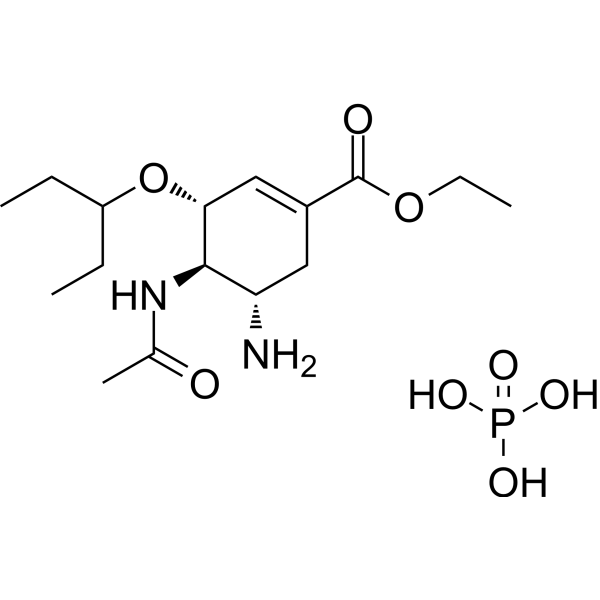
HY-17016
Oseltamivir phosphateInfluenza A/B Inhibitor -
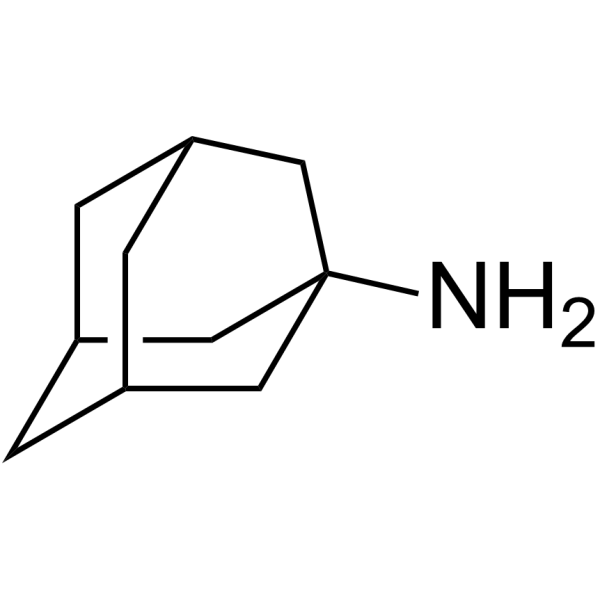
HY-B0402
AmantadineAntiviral Agent -
HY-B0338A
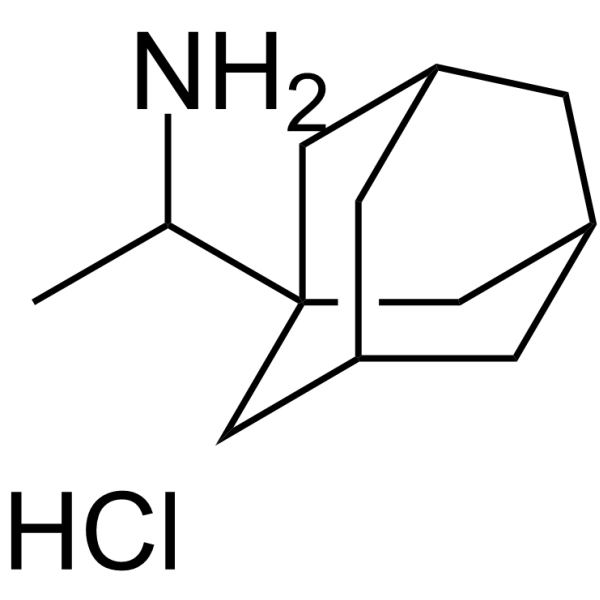
Rimantadine hydrochlorideAntiviral Agent -
HY-50001
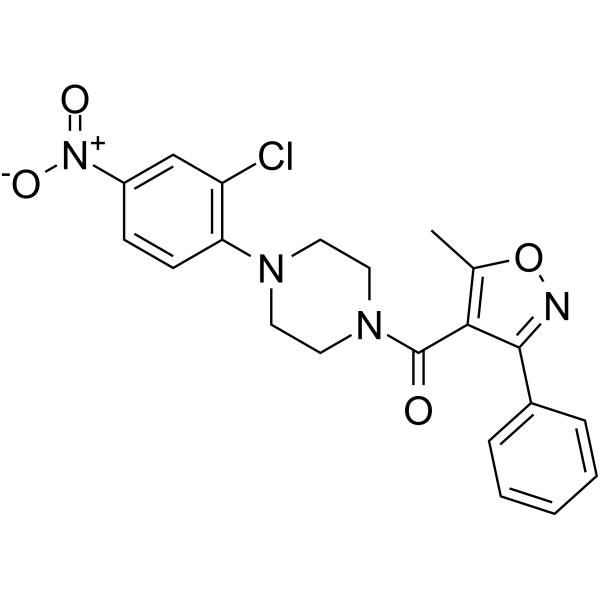
NucleozinInfluenza Virus Inhibitor -
HY-12353A
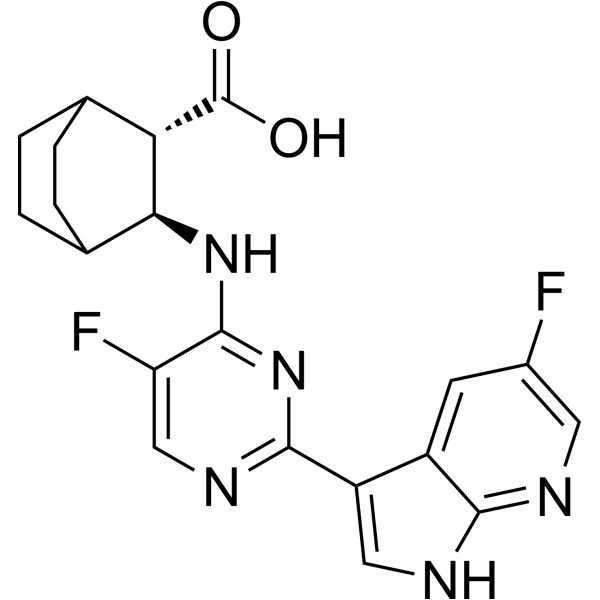
PimodivirInfluenza A Inhibitor -
HY-14904A
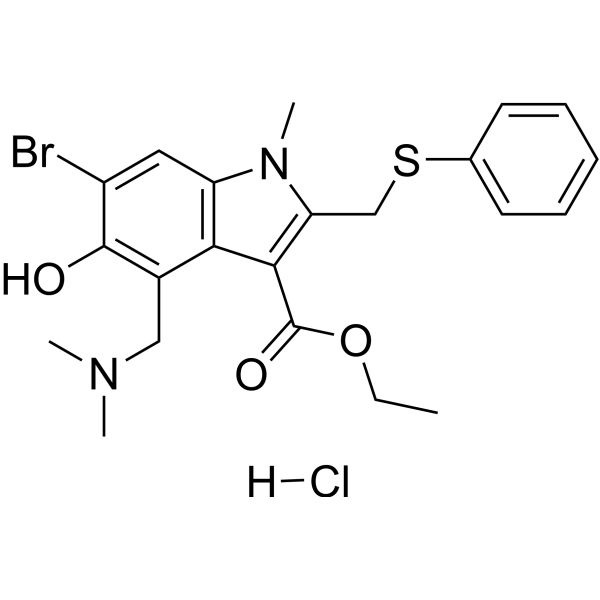
Umifenovir hydrochlorideAntiviral Agent -
HY-17015A
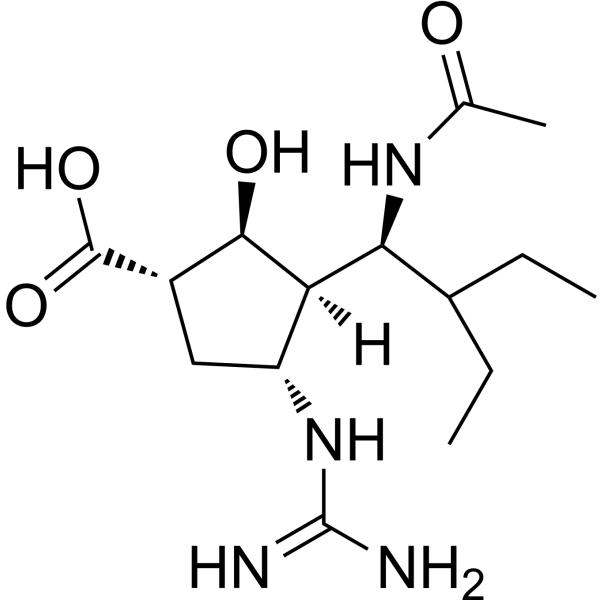
PeramivirCyclopentane neuraminidase Inhibitor -

HY-B0338R
Rimantadine (Standard)Anti-Influenza Virus Agent -
HY-17015
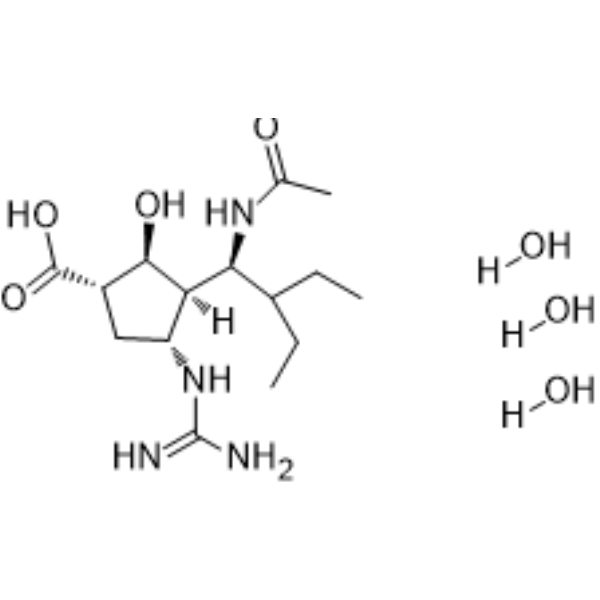
Peramivir trihydrateInfluenza Virus Inhibitor -
HY-112543
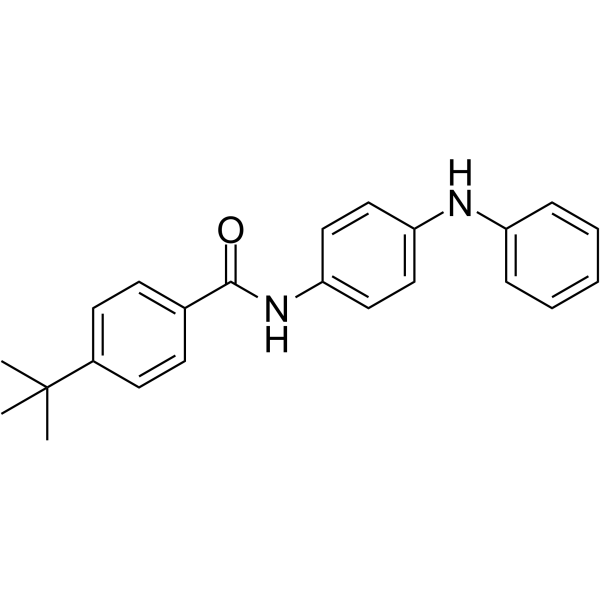
S119-8Influenza Virus Inhibitor -

HY-17015R
Peramivir trihydrate (Standard)Influenza Virus Inhibitor
Publications Citing Use of MedChemExpress (MCE) Rimantadine
More

Activité biologique
Description
Cellular Effect
|
Cell Line

|
Type | Value | Description | References |
|---|---|---|---|---|
| HEK293 | IC50 |
288 μM
Compound: rimantadine
|
Inhibition of human MATE2K-mediated ASP+ uptake expressed in HEK293 cells after 1.5 mins by fluorescence assay
Inhibition of human MATE2K-mediated ASP+ uptake expressed in HEK293 cells after 1.5 mins by fluorescence assay
|
[PMID: 23241029] |
| HEK293 | IC50 |
4.4 μM
Compound: rimantadine
|
Inhibition of human OCT2-mediated ASP+ uptake expressed in HEK293 cells after 3 mins by fluorescence assay
Inhibition of human OCT2-mediated ASP+ uptake expressed in HEK293 cells after 3 mins by fluorescence assay
|
[PMID: 23241029] |
| HEK293 | IC50 |
7.3 μM
Compound: rimantadine
|
Inhibition of human MATE1-mediated ASP+ uptake expressed in HEK293 cells after 1.5 mins by fluorescence assay
Inhibition of human MATE1-mediated ASP+ uptake expressed in HEK293 cells after 1.5 mins by fluorescence assay
|
[PMID: 23241029] |
| Hepatocyte | IC50 |
35.6 nM
Compound: Rimantadine
|
Antimicrobial activity against Plasmodium yoelii 265 liver infected in mammalian hepatocytes after 48 hrs
Antimicrobial activity against Plasmodium yoelii 265 liver infected in mammalian hepatocytes after 48 hrs
|
[PMID: 18212104] |
| MDCK | CC50 |
>100 μM
Compound: 2
|
Cytotoxicity against MDCK cells after 72 hrs by crystal violet staining based spectrophotometric method
Cytotoxicity against MDCK cells after 72 hrs by crystal violet staining based spectrophotometric method
|
[PMID: 29541360] |
| MDCK | CC50 |
>100 μM
Compound: rimantadin
|
Cytotoxicity against MDCK cells assessed as decrease in cell viability by MTS assay
Cytotoxicity against MDCK cells assessed as decrease in cell viability by MTS assay
|
[PMID: 18778942] |
| MDCK | CC50 |
>100 μM
Compound: rimantadine
|
Cytotoxicity against dog MDCK cells assessed as cell viability after 72 hrs by MTS assay
Cytotoxicity against dog MDCK cells assessed as cell viability after 72 hrs by MTS assay
|
[PMID: 24900429] |
| MDCK | CC50 |
>100 μM
Compound: Rimantadine
|
Cytotoxicity against dog MDCK cells assessed as inhibition of cell growth incubated for 72 hrs by CellTiter96 Aqueous One Solution cell proliferation assay
Cytotoxicity against dog MDCK cells assessed as inhibition of cell growth incubated for 72 hrs by CellTiter96 Aqueous One Solution cell proliferation assay
|
[PMID: 37252100] |
| MDCK | CC50 |
>100 μM
Compound: RMN
|
Cytotoxicity against MDCK cells by MTS assay
Cytotoxicity against MDCK cells by MTS assay
|
[PMID: 19281225] |
| MDCK | CC50 |
>200 μg/mL
Compound: Rimantadine
|
Cytotoxicity against MDCK cells assessed as cell viability by MTS assay
Cytotoxicity against MDCK cells assessed as cell viability by MTS assay
|
[PMID: 20971531] |
| MDCK | CC50 |
>200 μM
Compound: Rimantadine
|
Cytotoxicity against MDCK cells assessed as cell viability by colorimetric formazan-based MTS assay
Cytotoxicity against MDCK cells assessed as cell viability by colorimetric formazan-based MTS assay
|
[PMID: 22459876] |
| MDCK | CC50 |
>200 μM
Compound: Rimantadine
|
Cytotoxicity against MDCK cells assessed as cell viability measured after 4 days by formazan-based MTS assay
Cytotoxicity against MDCK cells assessed as cell viability measured after 4 days by formazan-based MTS assay
|
[PMID: 27112451] |
| MDCK | CC50 |
>200 μM
Compound: Rimantadine
|
Cytotoxicity against dog MDCK cells assessed as reduction in cell viability incubated for 3 days by coulter counter method
Cytotoxicity against dog MDCK cells assessed as reduction in cell viability incubated for 3 days by coulter counter method
|
[PMID: 31586832] |
| MDCK | CC50 |
>400 μM
Compound: Rimantadine
|
Cytotoxicity against dog MDCK cells assessed as reduction in cell viability measured after 5 to 6 days by MTS assay
Cytotoxicity against dog MDCK cells assessed as reduction in cell viability measured after 5 to 6 days by MTS assay
|
[PMID: 28477572] |
| MDCK | CC50 |
>500 μM
Compound: Rimantadine
|
Cytotoxicity against MDCK cells assessed as reduction in cell viability after 72 hrs by MTS assay
Cytotoxicity against MDCK cells assessed as reduction in cell viability after 72 hrs by MTS assay
|
[PMID: 24974341] |
| MDCK | CC50 |
>500 μM
Compound: Rimantadine
|
Cytotoxicity against MDCK cells after 72 hrs by MTS assay
Cytotoxicity against MDCK cells after 72 hrs by MTS assay
|
[PMID: 25752526] |
| MDCK | CC50 |
>500 μM
Compound: Rimantadine
|
Cytotoxicity against MDCK cells assessed as reduction in cell viability after 72 hrs by MTS assay
Cytotoxicity against MDCK cells assessed as reduction in cell viability after 72 hrs by MTS assay
|
[PMID: 28418242] |
| MDCK | CC50 |
>500 μM
Compound: Rimantadine
|
Cytotoxicity against MDCK cells assessed as reduction in cell viability measured after 3 to 6 days by MTS assay
Cytotoxicity against MDCK cells assessed as reduction in cell viability measured after 3 to 6 days by MTS assay
|
[PMID: 29886325] |
| MDCK | CC50 |
>500 μM
Compound: Rimantadine
|
Cytotoxicity against MDCK cells assessed as reduction in cell viability after 3 days by MTS assay
Cytotoxicity against MDCK cells assessed as reduction in cell viability after 3 days by MTS assay
|
[PMID: 30170320] |
| MDCK | CC50 |
1395 μM
Compound: Rimantadine
|
Cytotoxicity against dog MDCK cells after 48 hrs by MTT assay
Cytotoxicity against dog MDCK cells after 48 hrs by MTT assay
|
[PMID: 23489622] |
| MDCK | CC50 |
203 μM
Compound: Rimantadine
|
Cytotoxicity against MDCK cells after 72 hrs by MTS assay
Cytotoxicity against MDCK cells after 72 hrs by MTS assay
|
[PMID: 24237039] |
| MDCK | CC50 |
218 μM
Compound: Rimantadine
|
Cytotoxicity against dog MDCK cells assessed as cell viability by MTS assay
Cytotoxicity against dog MDCK cells assessed as cell viability by MTS assay
|
[PMID: 23117173] |
| MDCK | CC50 |
318.9 μM
Compound: Rimantadine
|
Cytotoxicity against MDCK cells after 48 hrs by MTT assay
Cytotoxicity against MDCK cells after 48 hrs by MTT assay
|
[PMID: 29716780] |
| MDCK | CC50 |
326 μM
Compound: Rimantadine
|
Cytotoxicity against MDCK cells assessed as cell death incubated for 48 hrs by MTT assay
Cytotoxicity against MDCK cells assessed as cell death incubated for 48 hrs by MTT assay
|
[PMID: 33171219] |
| MDCK | CC50 |
335 μM
Compound: Rimantadine
|
Cytotoxicity against MDCK cells assessed as reduction in cell viability after 48 hrs by MTT assay
Cytotoxicity against MDCK cells assessed as reduction in cell viability after 48 hrs by MTT assay
|
[PMID: 30746065] |
| MDCK | CC50 |
335.2 μM
Compound: Rimantadine
|
Cytotoxicity against MDCK cells after 48 hrs by MTT assay
Cytotoxicity against MDCK cells after 48 hrs by MTT assay
|
[PMID: 30108810] |
| MDCK | CC50 |
350 μM
Compound: Rimantadine
|
Cytotoxicity against MDCK cells assessed as reduction in cell viability after 48 hrs by MTT assay
Cytotoxicity against MDCK cells assessed as reduction in cell viability after 48 hrs by MTT assay
|
[PMID: 27591012] |
| MDCK | CC50 |
360 μM
Compound: Rimantadine
|
Cytotoxicity against MDCK cells incubated for 48 hrs by MTT assay
Cytotoxicity against MDCK cells incubated for 48 hrs by MTT assay
|
[PMID: 28886889] |
| MDCK | CC50 |
363 μM
Compound: Rimantadine
|
Cytotoxicity against MDCK cells after 48 hrs by MTT assay
Cytotoxicity against MDCK cells after 48 hrs by MTT assay
|
[PMID: 28501512] |
| MDCK | CC50 |
363 μM
Compound: Rimantadine
|
Cytotoxicity against dog MDCK cells assessed as reduction in cell viability by MTT assay
Cytotoxicity against dog MDCK cells assessed as reduction in cell viability by MTT assay
|
[PMID: 33129992] |
| MDCK | CC50 |
472 μg/mL
Compound: Rimantadin
|
Cytotoxicity against MDCK cells by MTS assay
Cytotoxicity against MDCK cells by MTS assay
|
[PMID: 20724039] |
| MDCK | CC50 |
62 μg/mL
Compound: Rimantadine
|
Cytotoxicity in MDCK cells assessed as reduction in cell viability incubated for 48 hrs by MTT assay
Cytotoxicity in MDCK cells assessed as reduction in cell viability incubated for 48 hrs by MTT assay
|
[PMID: 31375291] |
| MDCK | CC50 |
62 μM
Compound: Rimantadine
|
Cytotoxicity against MDCK cells after 24 hrs by MTT assay
Cytotoxicity against MDCK cells after 24 hrs by MTT assay
|
[PMID: 30390440] |
| MDCK | EC50 |
>100 μM
Compound: rimantadine
|
Antiviral activity against amantidine and rimantadine-resistant Influenza B virus (B/HK/5/72) infected in MDCK cells assessed as virus-induced cytopathic effect by MTS assay
Antiviral activity against amantidine and rimantadine-resistant Influenza B virus (B/HK/5/72) infected in MDCK cells assessed as virus-induced cytopathic effect by MTS assay
|
[PMID: 24900429] |
| MDCK | EC50 |
>100 μM
Compound: rimantadine
|
Antiviral activity against amantidine and rimantadine-resistant Influenza B virus (B/HK/5/72) infected in MDCK cells assessed as virus-induced cytopathic effect measured 3 days post infection by microscopic analysis
Antiviral activity against amantidine and rimantadine-resistant Influenza B virus (B/HK/5/72) infected in MDCK cells assessed as virus-induced cytopathic effect measured 3 days post infection by microscopic analysis
|
[PMID: 24900429] |
| MDCK | EC50 |
>100 μM
Compound: Rimantadine
|
Antiviral activity against Influenza B virus infected in MDCK cells assessed as reduction of virus-induced cytopathic effect after 3 days by colorimetric formazan-based MTS assay
Antiviral activity against Influenza B virus infected in MDCK cells assessed as reduction of virus-induced cytopathic effect after 3 days by colorimetric formazan-based MTS assay
|
[PMID: 32214762] |
| MDCK | EC50 |
>100 μM
Compound: RMN
|
Antiviral activity against influenza B virus in MDCK cells assessed as reduction of virus-induced cytopathicity by MTS method
Antiviral activity against influenza B virus in MDCK cells assessed as reduction of virus-induced cytopathicity by MTS method
|
[PMID: 19281225] |
| MDCK | EC50 |
>100 μM
Compound: RMN
|
Antiviral activity against influenza B virus in MDCK cells assessed as reduction of virus-induced cytopathicity by visual cytopathic effect scoring method
Antiviral activity against influenza B virus in MDCK cells assessed as reduction of virus-induced cytopathicity by visual cytopathic effect scoring method
|
[PMID: 19281225] |
| MDCK | EC50 |
>100 μM
Compound: RMN
|
Antiviral activity against influenza H3N2 virus in MDCK cells assessed as reduction of virus-induced cytopathicity by MTS method
Antiviral activity against influenza H3N2 virus in MDCK cells assessed as reduction of virus-induced cytopathicity by MTS method
|
[PMID: 19281225] |
| MDCK | EC50 |
>100 μM
Compound: RMN
|
Antiviral activity against influenza H3N2 virus in MDCK cells assessed as reduction of virus-induced cytopathicity by visual cytopathic effect scoring method
Antiviral activity against influenza H3N2 virus in MDCK cells assessed as reduction of virus-induced cytopathicity by visual cytopathic effect scoring method
|
[PMID: 19281225] |
| MDCK | EC50 |
>200 μg/mL
Compound: Rimantadine
|
Antiviral activity against Influenza B virus infected in MDCK cells assessed as inhibition of virus induced cytopathicity after 2 to 4 days by MTS assay
Antiviral activity against Influenza B virus infected in MDCK cells assessed as inhibition of virus induced cytopathicity after 2 to 4 days by MTS assay
|
[PMID: 20971531] |
| MDCK | EC50 |
>200 μg/mL
Compound: Rimantadine
|
Antiviral activity against Influenza B virus infected in MDCK cells assessed as inhibition of virus induced cytopathicity by visual scoring of CPE
Antiviral activity against Influenza B virus infected in MDCK cells assessed as inhibition of virus induced cytopathicity by visual scoring of CPE
|
[PMID: 20971531] |
| MDCK | EC50 |
>200 μM
Compound: Rimantadine
|
Antiviral activity against Influenza A virus H3N2 infected in MDCK cells assessed as inhibition of virus-induced cytopathogenicity after 4 days by colorimetric formazan-based MTS assay
Antiviral activity against Influenza A virus H3N2 infected in MDCK cells assessed as inhibition of virus-induced cytopathogenicity after 4 days by colorimetric formazan-based MTS assay
|
[PMID: 22459876] |
| MDCK | EC50 |
>200 μM
Compound: Rimantadine
|
Antiviral activity against Influenza A virus H3N2 infected in MDCK cells assessed as reduction visual scoring of virus-induced cytopathogenicity after 4 days
Antiviral activity against Influenza A virus H3N2 infected in MDCK cells assessed as reduction visual scoring of virus-induced cytopathogenicity after 4 days
|
[PMID: 22459876] |
| MDCK | EC50 |
>200 μM
Compound: Rimantadine
|
Antiviral activity against Influenza B virus infected in MDCK cells assessed as inhibition of virus-induced cytopathogenicity after 4 days by colorimetric formazan-based MTS assay
Antiviral activity against Influenza B virus infected in MDCK cells assessed as inhibition of virus-induced cytopathogenicity after 4 days by colorimetric formazan-based MTS assay
|
[PMID: 22459876] |
| MDCK | EC50 |
>200 μM
Compound: Rimantadine
|
Antiviral activity against Influenza B virus infected in MDCK cells assessed as reduction visual scoring of virus-induced cytopathogenicity after 4 days
Antiviral activity against Influenza B virus infected in MDCK cells assessed as reduction visual scoring of virus-induced cytopathogenicity after 4 days
|
[PMID: 22459876] |
| MDCK | EC50 |
>200 μM
Compound: rimantadine
|
Antiviral activity against influenza B virus infected in dog MDCK cells assessed as reduction of virus-induced cytopathogenicity by MTS assay
Antiviral activity against influenza B virus infected in dog MDCK cells assessed as reduction of virus-induced cytopathogenicity by MTS assay
|
[PMID: 23811093] |
| MDCK | EC50 |
>500 μM
Compound: Rimantadine
|
Antiviral activity against Influenza B virus (B/HK/5/72) infected in MDCK cells assessed as virus-induced cytopathic effect after 3 days by microscopic analysis
Antiviral activity against Influenza B virus (B/HK/5/72) infected in MDCK cells assessed as virus-induced cytopathic effect after 3 days by microscopic analysis
|
[PMID: 23117173] |
| MDCK | EC50 |
>500 μM
Compound: Rimantadine
|
Antiviral activity against Influenza B virus (B/HK/5/72) infected in MDCK cells assessed as virus-induced cytopathic effect after 3 days by MTS assay
Antiviral activity against Influenza B virus (B/HK/5/72) infected in MDCK cells assessed as virus-induced cytopathic effect after 3 days by MTS assay
|
[PMID: 23117173] |
| MDCK | EC50 |
>500 μM
Compound: Rimantadine
|
Antiviral activity against Influenza B virus (B/Hong Kong/05/1972) harboring wild type M2 channel infected in MDCK cells assessed as reduction of cytopathic effect after 72 hrs by microsocopic analysis
Antiviral activity against Influenza B virus (B/Hong Kong/05/1972) harboring wild type M2 channel infected in MDCK cells assessed as reduction of cytopathic effect after 72 hrs by microsocopic analysis
|
[PMID: 24237039] |
| MDCK | EC50 |
>500 μM
Compound: Rimantadine
|
Antiviral activity against Influenza B virus (B/Hong Kong/05/1972) harboring wild type M2 channel infected in MDCK cells assessed as reduction of cytopathic effect after 72 hrs by MTS assay
Antiviral activity against Influenza B virus (B/Hong Kong/05/1972) harboring wild type M2 channel infected in MDCK cells assessed as reduction of cytopathic effect after 72 hrs by MTS assay
|
[PMID: 24237039] |
| MDCK | EC50 |
>500 μM
Compound: Rimantadine
|
Antiviral activity against Influenza A virus A/Virginia/ATCC3/2009 infected in MDCK cells assessed as reduction in host cell viability after 72 hrs by MTS assay
Antiviral activity against Influenza A virus A/Virginia/ATCC3/2009 infected in MDCK cells assessed as reduction in host cell viability after 72 hrs by MTS assay
|
[PMID: 24974341] |
| MDCK | EC50 |
>500 μM
Compound: Rimantadine
|
Antiviral activity against Influenza A virus A/Virginia/ATCC3/2009 infected in MDCK cells assessed as virus-induced cytopathic effect after 72 hrs by microscopy
Antiviral activity against Influenza A virus A/Virginia/ATCC3/2009 infected in MDCK cells assessed as virus-induced cytopathic effect after 72 hrs by microscopy
|
[PMID: 24974341] |
| MDCK | EC50 |
>500 μM
Compound: Rimantadine
|
Antiviral activity against Influenza B virus (B/HK/05/1972) infected in MDCK cells assessed as reduction in host cell viability after 72 hrs by MTS assay
Antiviral activity against Influenza B virus (B/HK/05/1972) infected in MDCK cells assessed as reduction in host cell viability after 72 hrs by MTS assay
|
[PMID: 24974341] |
| MDCK | EC50 |
>500 μM
Compound: Rimantadine
|
Antiviral activity against Influenza B virus (B/HK/05/1972) infected in MDCK cells assessed as virus-induced cytopathic effect after 72 hrs by microscopy
Antiviral activity against Influenza B virus (B/HK/05/1972) infected in MDCK cells assessed as virus-induced cytopathic effect after 72 hrs by microscopy
|
[PMID: 24974341] |
| MDCK | EC50 |
>500 μM
Compound: Rimantadine
|
Antiviral activity against Influenza B virus (B/Hong Kong/05/1972) infected in MDCK cells assessed as cell viability after 72 hrs by MTS assay
Antiviral activity against Influenza B virus (B/Hong Kong/05/1972) infected in MDCK cells assessed as cell viability after 72 hrs by MTS assay
|
[PMID: 25752526] |
| MDCK | EC50 |
>500 μM
Compound: Rimantadine
|
Antiviral activity against Influenza B virus (B/Hong Kong/05/1972) infected in MDCK cells assessed as reduction of virus-induced cytopathic effect after 72 hrs by microscopic analysis
Antiviral activity against Influenza B virus (B/Hong Kong/05/1972) infected in MDCK cells assessed as reduction of virus-induced cytopathic effect after 72 hrs by microscopic analysis
|
[PMID: 25752526] |
| MDCK | EC50 |
≤ 0.362 μM
Compound: Rimantadine
|
Antiviral activity against Influenza A virus (A/Hong Kong/7/1987(H3N2)) infected in MDCK cells assessed as inhibition of virus-induced cytopathogenicity by MTS assay
Antiviral activity against Influenza A virus (A/Hong Kong/7/1987(H3N2)) infected in MDCK cells assessed as inhibition of virus-induced cytopathogenicity by MTS assay
|
[PMID: 20805012] |
| MDCK | EC50 |
0.01 μM
Compound: rimantadine
|
Antiviral activity against influenza A virus H3N3 subtype infected in dog MDCK cells assessed as reduction of virus-induced cytopathogenicity by MTS assay
Antiviral activity against influenza A virus H3N3 subtype infected in dog MDCK cells assessed as reduction of virus-induced cytopathogenicity by MTS assay
|
[PMID: 23811093] |
| MDCK | EC50 |
0.02 μg/mL
Compound: Rimantadine
|
Antiviral activity against Influenza A H3N2 virus subtype infected in MDCK cells assessed as inhibition of virus induced cytopathicity after 2 to 4 days by MTS assay
Antiviral activity against Influenza A H3N2 virus subtype infected in MDCK cells assessed as inhibition of virus induced cytopathicity after 2 to 4 days by MTS assay
|
[PMID: 20971531] |
| MDCK | EC50 |
0.02 μM
Compound: rimantadine
|
Antiviral activity against Influenza A virus (A/HK/7/87(H3N2)) infected in MDCK cells assessed as virus plaque reduction preincubated for 1 hr followed by compound wash out and incubated for 72 hrs by crystal violet staining
Antiviral activity against Influenza A virus (A/HK/7/87(H3N2)) infected in MDCK cells assessed as virus plaque reduction preincubated for 1 hr followed by compound wash out and incubated for 72 hrs by crystal violet staining
|
[PMID: 25899336] |
| MDCK | EC50 |
0.03 μg/mL
Compound: Rimantadine
|
Antiviral activity against Influenza A H3N2 virus subtype infected in MDCK cells assessed as inhibition of virus induced cytopathicity by visual scoring of CPE
Antiviral activity against Influenza A H3N2 virus subtype infected in MDCK cells assessed as inhibition of virus induced cytopathicity by visual scoring of CPE
|
[PMID: 20971531] |
| MDCK | EC50 |
0.046 μM
Compound: Rimantadine
|
Antiviral activity against Influenza A virus (A/HK/7/1987(H3N2)) infected in MDCK cells assessed as reduction in host cell viability after 72 hrs by MTS assay
Antiviral activity against Influenza A virus (A/HK/7/1987(H3N2)) infected in MDCK cells assessed as reduction in host cell viability after 72 hrs by MTS assay
|
[PMID: 24974341] |
| MDCK | EC50 |
0.051 μM
Compound: Rimantadine
|
Antiviral activity against Influenza A virus (A/HK/7/1987(H3N2)) infected in MDCK cells assessed as virus-induced cytopathic effect after 72 hrs by microscopy
Antiviral activity against Influenza A virus (A/HK/7/1987(H3N2)) infected in MDCK cells assessed as virus-induced cytopathic effect after 72 hrs by microscopy
|
[PMID: 24974341] |
| MDCK | EC50 |
0.08 μM
Compound: Rimantadine
|
Antiviral activity against Influenza A virus H3N2 infected MDCK cells assessed as reduction of virus-induced cytopathic effect after 3 days by colorimetric formazan-based MTS assay
Antiviral activity against Influenza A virus H3N2 infected MDCK cells assessed as reduction of virus-induced cytopathic effect after 3 days by colorimetric formazan-based MTS assay
|
[PMID: 32214762] |
| MDCK | EC50 |
0.12 μM
Compound: Rimantadine
|
Antiviral activity against Influenza A virus (A/Hong Kong/7/1987(H3N2)) harboring wild type M2 channel infected in MDCK cells assessed as reduction of cytopathic effect after 72 hrs by MTS assay
Antiviral activity against Influenza A virus (A/Hong Kong/7/1987(H3N2)) harboring wild type M2 channel infected in MDCK cells assessed as reduction of cytopathic effect after 72 hrs by MTS assay
|
[PMID: 24237039] |
| MDCK | EC50 |
0.15 μM
Compound: rimantadine
|
Antiviral activity against Influenza A virus (A/HK/7/87(H3N2)) infected in MDCK cells assessed as cell viability after 72 hrs by MTS assay
Antiviral activity against Influenza A virus (A/HK/7/87(H3N2)) infected in MDCK cells assessed as cell viability after 72 hrs by MTS assay
|
[PMID: 25899336] |
| MDCK | EC50 |
0.17 μM
Compound: rimantadine
|
Antiviral activity against Influenza A virus (A/HK/7/87 (H3N2)) infected in MDCK cells assessed as virus-induced cytopathic effect measured 3 days post infection by microscopic analysis
Antiviral activity against Influenza A virus (A/HK/7/87 (H3N2)) infected in MDCK cells assessed as virus-induced cytopathic effect measured 3 days post infection by microscopic analysis
|
[PMID: 24900429] |
| MDCK | EC50 |
0.362 μM
Compound: rimantadine
|
Antiviral activity against influenza A/Hong Kong/7/87 (H3N2) in MDCK cells assessed as inhibition of virus-induced cytopathic effect by MTS assay
Antiviral activity against influenza A/Hong Kong/7/87 (H3N2) in MDCK cells assessed as inhibition of virus-induced cytopathic effect by MTS assay
|
[PMID: 17588747] |
| MDCK | EC50 |
0.45 μM
Compound: rimantadine
|
Antiviral activity against Influenza A virus (A/Ishikawa/7/82 (H3N2)) infected in MDCK cells assessed as virus-induced cytopathic effect measured 3 days post infection by microscopic analysis
Antiviral activity against Influenza A virus (A/Ishikawa/7/82 (H3N2)) infected in MDCK cells assessed as virus-induced cytopathic effect measured 3 days post infection by microscopic analysis
|
[PMID: 24900429] |
| MDCK | EC50 |
0.5 μM
Compound: rimantadine
|
Antiviral activity against amantadine-sensitive Influenza A virus (A/Ned/378/05 (H1N1)) infected in MDCK cells assessed as virus-induced cytopathic effect measured 3 days post infection by microscopic analysis
Antiviral activity against amantadine-sensitive Influenza A virus (A/Ned/378/05 (H1N1)) infected in MDCK cells assessed as virus-induced cytopathic effect measured 3 days post infection by microscopic analysis
|
[PMID: 24900429] |
| MDCK | EC50 |
0.53 μM
Compound: 2
|
Antiviral activity against Influenza A virus A/Victoria/3/75(H3N2) infected in MDCK cells expressing wild type M2 after overnight incubation by fluorescence-based miniplaque assay
Antiviral activity against Influenza A virus A/Victoria/3/75(H3N2) infected in MDCK cells expressing wild type M2 after overnight incubation by fluorescence-based miniplaque assay
|
[PMID: 24793875] |
| MDCK | EC50 |
0.62 μM
Compound: Rimantadine
|
Antiviral activity against Influenza A virus (A/Hong Kong/7/1987(H3N2)) harboring wild type M2 channel infected in MDCK cells assessed as reduction of cytopathic effect after 72 hrs by microsocopic analysis
Antiviral activity against Influenza A virus (A/Hong Kong/7/1987(H3N2)) harboring wild type M2 channel infected in MDCK cells assessed as reduction of cytopathic effect after 72 hrs by microsocopic analysis
|
[PMID: 24237039] |
| MDCK | EC50 |
0.81 μM
Compound: rimantadine
|
Antiviral activity against Influenza A virus (A/HK/7/87(H3N2)) infected in MDCK cells assessed as reduction of virus-induced cytopathic effect after 72 hrs by microscopic analysis
Antiviral activity against Influenza A virus (A/HK/7/87(H3N2)) infected in MDCK cells assessed as reduction of virus-induced cytopathic effect after 72 hrs by microscopic analysis
|
[PMID: 25899336] |
| MDCK | EC50 |
0.85 μM
Compound: rimantadine
|
Antiviral activity against influenza virus A/Hong Kong/7/87 H3N2 in MDCK cells assessed as effect on virus-induced cytopathogenicity by MTS assay
Antiviral activity against influenza virus A/Hong Kong/7/87 H3N2 in MDCK cells assessed as effect on virus-induced cytopathogenicity by MTS assay
|
[PMID: 18954995] |
| MDCK | EC50 |
1.1 μM
Compound: Rimantadine
|
Antiviral activity against Influenza A virus (A/Hong Kong/7/1987(H3N2)) infected in MDCK cells assessed as cell viability after 72 hrs by MTS assay
Antiviral activity against Influenza A virus (A/Hong Kong/7/1987(H3N2)) infected in MDCK cells assessed as cell viability after 72 hrs by MTS assay
|
[PMID: 25752526] |
| MDCK | EC50 |
1.6 μM
Compound: 2
|
Antiviral activity against Influenza A virus A2/Taiwan/1/64(H2N2) infected in MDCK cells expressing wild type M2 after overnight incubation by fluorescence-based miniplaque assay
Antiviral activity against Influenza A virus A2/Taiwan/1/64(H2N2) infected in MDCK cells expressing wild type M2 after overnight incubation by fluorescence-based miniplaque assay
|
[PMID: 24793875] |
| MDCK | EC50 |
1.9 μM
Compound: rimantadine
|
Antiviral activity against amantadine-sensitive Influenza A virus (A/FM/1/47 (H1N1)) infected in MDCK cells assessed as virus-induced cytopathic effect measured 3 days post infection by microscopic analysis
Antiviral activity against amantadine-sensitive Influenza A virus (A/FM/1/47 (H1N1)) infected in MDCK cells assessed as virus-induced cytopathic effect measured 3 days post infection by microscopic analysis
|
[PMID: 24900429] |
| MDCK | EC50 |
110 μM
Compound: 2
|
Antiviral activity against Influenza A virus (A/California/07/2009(H1N1)) infected in MDCK cells expressing M2 S31N mutant after overnight incubation by fluorescence-based miniplaque assay
Antiviral activity against Influenza A virus (A/California/07/2009(H1N1)) infected in MDCK cells expressing M2 S31N mutant after overnight incubation by fluorescence-based miniplaque assay
|
[PMID: 24793875] |
| MDCK | EC50 |
12 μg/mL
Compound: Rimantadine
|
Antiviral activity against Influenza A H1N1 virus subtype infected in MDCK cells assessed as inhibition of virus induced cytopathicity after 2 to 4 days by MTS assay
Antiviral activity against Influenza A H1N1 virus subtype infected in MDCK cells assessed as inhibition of virus induced cytopathicity after 2 to 4 days by MTS assay
|
[PMID: 20971531] |
| MDCK | EC50 |
15 μM
Compound: Rimantadine
|
Antiviral activity against Influenza A virus (A/Puerto Rico/8/34(H1N1)) infected in MDCK cells assessed as cell viability after 72 hrs by MTS assay
Antiviral activity against Influenza A virus (A/Puerto Rico/8/34(H1N1)) infected in MDCK cells assessed as cell viability after 72 hrs by MTS assay
|
[PMID: 25752526] |
| MDCK | EC50 |
17.8 μM
Compound: Rimantadine
|
Antiviral activity against Influenza A virus H1N1 infected in MDCK cells assessed as inhibition of virus-induced cytopathogenicity after 4 days by colorimetric formazan-based MTS assay
Antiviral activity against Influenza A virus H1N1 infected in MDCK cells assessed as inhibition of virus-induced cytopathogenicity after 4 days by colorimetric formazan-based MTS assay
|
[PMID: 22459876] |
| MDCK | EC50 |
18 μM
Compound: Rimantadine
|
Antiviral activity against Influenza A virus (A/Puerto Rico/8/34(H1N1)) harboring M2 channel S31N and V27T mutant infected in MDCK cells assessed as reduction of cytopathic effect after 72 hrs by microsocopic analysis
Antiviral activity against Influenza A virus (A/Puerto Rico/8/34(H1N1)) harboring M2 channel S31N and V27T mutant infected in MDCK cells assessed as reduction of cytopathic effect after 72 hrs by microsocopic analysis
|
[PMID: 24237039] |
| MDCK | EC50 |
2.5 μM
Compound: Rimantadine
|
Antiviral activity against Influenza A virus (A/PR/8/34(H1N1)) infected in MDCK cells assessed as virus-induced cytopathic effect after 3 days by MTS assay
Antiviral activity against Influenza A virus (A/PR/8/34(H1N1)) infected in MDCK cells assessed as virus-induced cytopathic effect after 3 days by MTS assay
|
[PMID: 23117173] |
| MDCK | EC50 |
2.7 μM
Compound: Rimantadine
|
Antiviral activity against Influenza A virus (A/PR/8/34(H1N1)) infected in MDCK cells assessed as virus-induced cytopathic effect after 3 days by microscopic analysis
Antiviral activity against Influenza A virus (A/PR/8/34(H1N1)) infected in MDCK cells assessed as virus-induced cytopathic effect after 3 days by microscopic analysis
|
[PMID: 23117173] |
| MDCK | EC50 |
20 μM
Compound: Rimantadine
|
Antiviral activity against Influenza A virus H1N1 infected in MDCK cells assessed as reduction visual scoring of virus-induced cytopathogenicity after 4 days
Antiviral activity against Influenza A virus H1N1 infected in MDCK cells assessed as reduction visual scoring of virus-induced cytopathogenicity after 4 days
|
[PMID: 22459876] |
| MDCK | EC50 |
24.2 μM
Compound: Rimantadine
|
Antiviral activity against Unidentified Influenza A virus (H1N1) infected MDCK cells assessed as reduction of virus-induced cytopathic effect after 3 days by colorimetric formazan-based MTS assay
Antiviral activity against Unidentified Influenza A virus (H1N1) infected MDCK cells assessed as reduction of virus-induced cytopathic effect after 3 days by colorimetric formazan-based MTS assay
|
[PMID: 32214762] |
| MDCK | EC50 |
29 μM
Compound: rimantadine
|
Antiviral activity against influenza virus A/Puerto Rico/8/34 H1N1 in MDCK cells assessed as effect on virus-induced cytopathogenicity by MTS assay
Antiviral activity against influenza virus A/Puerto Rico/8/34 H1N1 in MDCK cells assessed as effect on virus-induced cytopathogenicity by MTS assay
|
[PMID: 18954995] |
| MDCK | EC50 |
3.3 μM
Compound: 2
|
Antiviral activity against Influenza A virus (A/Puerto Rico/8/34(H1N1)) infected in MDCK cells expressing M2 V27T/S31N mutant after overnight incubation by fluorescence-based miniplaque assay
Antiviral activity against Influenza A virus (A/Puerto Rico/8/34(H1N1)) infected in MDCK cells expressing M2 V27T/S31N mutant after overnight incubation by fluorescence-based miniplaque assay
|
[PMID: 24793875] |
| MDCK | EC50 |
310 μM
Compound: 2
|
Antiviral activity against Influenza A virus A/WS/33(H1N1) infected in MDCK cells expressing M2 S31N mutant after overnight incubation by fluorescence-based miniplaque assay
Antiviral activity against Influenza A virus A/WS/33(H1N1) infected in MDCK cells expressing M2 S31N mutant after overnight incubation by fluorescence-based miniplaque assay
|
[PMID: 24793875] |
| MDCK | EC50 |
33.2 μM
Compound: RMN
|
Antiviral activity against influenza H1N1 virus in MDCK cells assessed as reduction of virus-induced cytopathicity by MTS method
Antiviral activity against influenza H1N1 virus in MDCK cells assessed as reduction of virus-induced cytopathicity by MTS method
|
[PMID: 19281225] |
| MDCK | EC50 |
4 μg/mL
Compound: Rimantadine
|
Antiviral activity against Influenza A H1N1 virus subtype infected in MDCK cells assessed as inhibition of virus induced cytopathicity by visual scoring of CPE
Antiviral activity against Influenza A H1N1 virus subtype infected in MDCK cells assessed as inhibition of virus induced cytopathicity by visual scoring of CPE
|
[PMID: 20971531] |
| MDCK | EC50 |
4 μM
Compound: Rimantadine
|
Antiviral activity against Influenza A virus (A/Hong Kong/7/1987(H3N2)) infected in MDCK cells assessed as reduction of virus-induced cytopathic effect after 72 hrs by microscopic analysis
Antiviral activity against Influenza A virus (A/Hong Kong/7/1987(H3N2)) infected in MDCK cells assessed as reduction of virus-induced cytopathic effect after 72 hrs by microscopic analysis
|
[PMID: 25752526] |
| MDCK | EC50 |
4 μM
Compound: Rimantadine
|
Antiviral activity against Influenza A virus (A/Puerto Rico/8/34(H1N1)) infected in MDCK cells assessed as reduction of virus-induced cytopathic effect after 72 hrs by microscopic analysis
Antiviral activity against Influenza A virus (A/Puerto Rico/8/34(H1N1)) infected in MDCK cells assessed as reduction of virus-induced cytopathic effect after 72 hrs by microscopic analysis
|
[PMID: 25752526] |
| MDCK | EC50 |
4.3 μM
Compound: Rimantadine
|
Antiviral activity against Influenza A virus (A/Puerto Rico/8/34(H1N1)) harboring M2 channel S31N and V27T mutant infected in MDCK cells assessed as reduction of cytopathic effect after 72 hrs by MTS assay
Antiviral activity against Influenza A virus (A/Puerto Rico/8/34(H1N1)) harboring M2 channel S31N and V27T mutant infected in MDCK cells assessed as reduction of cytopathic effect after 72 hrs by MTS assay
|
[PMID: 24237039] |
| MDCK | EC50 |
4.6 μM
Compound: Rimantadine
|
Antiviral activity against Influenza A virus (A/PR/8/34(H1N1)) infected in MDCK cells assessed as virus-induced cytopathic effect after 72 hrs by microscopy
Antiviral activity against Influenza A virus (A/PR/8/34(H1N1)) infected in MDCK cells assessed as virus-induced cytopathic effect after 72 hrs by microscopy
|
[PMID: 24974341] |
| MDCK | EC50 |
40 μg/mL
Compound: Rimantadin
|
Antiviral activity against Influenza A virus H3N2 infected in MDCK cells assessed as protection against virus-induced cytopathogenicity after 2 days
Antiviral activity against Influenza A virus H3N2 infected in MDCK cells assessed as protection against virus-induced cytopathogenicity after 2 days
|
[PMID: 20724039] |
| MDCK | EC50 |
40 μM
Compound: Rimantadine
|
Antiviral activity against Influenza A virus (A/X-31(H3N2)) infected in MDCK cells assessed as virus-induced cytopathic effect after 3 days by MTS assay
Antiviral activity against Influenza A virus (A/X-31(H3N2)) infected in MDCK cells assessed as virus-induced cytopathic effect after 3 days by MTS assay
|
[PMID: 23117173] |
| MDCK | EC50 |
43.5 μM
Compound: Rimantadine
|
Antiviral activity against 100 infective dose of influenza A virus A/St. Petersburg/34/72 (H3N2) infected in dog MDCK cells assessed as virus-induced cytopathic effect after 48 hrs
Antiviral activity against 100 infective dose of influenza A virus A/St. Petersburg/34/72 (H3N2) infected in dog MDCK cells assessed as virus-induced cytopathic effect after 48 hrs
|
[PMID: 23489622] |
| MDCK | EC50 |
44 μM
Compound: Rimantadine
|
Antiviral activity against Influenza A virus A/PR/8/34 infected in MDCK cells assessed as reduction of virus-induced cytopathic effect measured after 4 days by formazan-based MTS assay
Antiviral activity against Influenza A virus A/PR/8/34 infected in MDCK cells assessed as reduction of virus-induced cytopathic effect measured after 4 days by formazan-based MTS assay
|
[PMID: 27112451] |
| MDCK | EC50 |
45 μM
Compound: Rimantadine
|
Antiviral activity against Influenza A virus (A/X-31(H3N2)) infected in MDCK cells assessed as virus-induced cytopathic effect after 3 days by microscopic analysis
Antiviral activity against Influenza A virus (A/X-31(H3N2)) infected in MDCK cells assessed as virus-induced cytopathic effect after 3 days by microscopic analysis
|
[PMID: 23117173] |
| MDCK | EC50 |
45 μM
Compound: RMN
|
Antiviral activity against influenza H1N1 virus in MDCK cells assessed as reduction of virus-induced cytopathicity by visual cytopathic effect scoring method
Antiviral activity against influenza H1N1 virus in MDCK cells assessed as reduction of virus-induced cytopathicity by visual cytopathic effect scoring method
|
[PMID: 19281225] |
| MDCK | EC50 |
5 μg/mL
Compound: 5b
|
Antiviral activity against Influenza A virus (A/Puerto Rico/8/34(H1N1)) infected in MDCK cells assessed as virus yield after 48 hrs end-point dilution method
Antiviral activity against Influenza A virus (A/Puerto Rico/8/34(H1N1)) infected in MDCK cells assessed as virus yield after 48 hrs end-point dilution method
|
[PMID: 20006516] |
| MDCK | EC50 |
5.1 μM
Compound: rimantadine
|
Antiviral activity against Influenza A virus (A/PR/8/34(H1N1)) infected in MDCK cells assessed as cell viability after 72 hrs by MTS assay
Antiviral activity against Influenza A virus (A/PR/8/34(H1N1)) infected in MDCK cells assessed as cell viability after 72 hrs by MTS assay
|
[PMID: 25899336] |
| MDCK | EC50 |
5.3 μM
Compound: Rimantadine
|
Antiviral activity against Influenza A virus (A/PR/8/34(H1N1)) infected in MDCK cells assessed as reduction in host cell viability after 72 hrs by MTS assay
Antiviral activity against Influenza A virus (A/PR/8/34(H1N1)) infected in MDCK cells assessed as reduction in host cell viability after 72 hrs by MTS assay
|
[PMID: 24974341] |
| MDCK | EC50 |
5.45 μM
Compound: Rimantadine
|
Antiviral activity against 1 infective dose of influenza A virus A/St. Petersburg/34/72 (H3N2) infected in dog MDCK cells assessed as virus-induced cytopathic effect after 48 hrs
Antiviral activity against 1 infective dose of influenza A virus A/St. Petersburg/34/72 (H3N2) infected in dog MDCK cells assessed as virus-induced cytopathic effect after 48 hrs
|
[PMID: 23489622] |
| MDCK | EC50 |
53 μg/mL
Compound: Rimantadin
|
Antiviral activity against Influenza A virus H3N2 infected in MDCK cells assessed as cell viability after 2 days by MTS assay
Antiviral activity against Influenza A virus H3N2 infected in MDCK cells assessed as cell viability after 2 days by MTS assay
|
[PMID: 20724039] |
| MDCK | EC50 |
58 μg/mL
Compound: Rimantadin
|
Antiviral activity against influenza A virus H1N1 infected in MDCK cells assessed as cell viability after 2 days by MTS assay
Antiviral activity against influenza A virus H1N1 infected in MDCK cells assessed as cell viability after 2 days by MTS assay
|
[PMID: 20724039] |
| MDCK | EC50 |
6.4 μM
Compound: rimantadine
|
Antiviral activity against influenza A virus H1N1 subtype infected in dog MDCK cells assessed as reduction of virus-induced cytopathogenicity by MTS assay
Antiviral activity against influenza A virus H1N1 subtype infected in dog MDCK cells assessed as reduction of virus-induced cytopathogenicity by MTS assay
|
[PMID: 23811093] |
| MDCK | EC50 |
62 μM
Compound: Rimantadine
|
Antiviral activity against Influenza A virus A/PR/8/34 infected in MDCK cells assessed as reduction of virus induced cytopathic effect measured by visual scoring of cytopathic effect
Antiviral activity against Influenza A virus A/PR/8/34 infected in MDCK cells assessed as reduction of virus induced cytopathic effect measured by visual scoring of cytopathic effect
|
[PMID: 27112451] |
| MDCK | EC50 |
63 μM
Compound: rimantadine
|
Antiviral activity against amantadine-resistant Influenza A virus (A/PR/8/34 (H1N1)) infected in MDCK cells assessed as virus-induced cytopathic effect measured 3 days post infection by microscopic analysis
Antiviral activity against amantadine-resistant Influenza A virus (A/PR/8/34 (H1N1)) infected in MDCK cells assessed as virus-induced cytopathic effect measured 3 days post infection by microscopic analysis
|
[PMID: 24900429] |
| MDCK | EC50 |
66.7 μM
Compound: Rimantadine
|
Cytotoxicity against MDCK cells assessed as reduction in cell viability after 48 hrs by MTT assay
Cytotoxicity against MDCK cells assessed as reduction in cell viability after 48 hrs by MTT assay
|
[PMID: 25801933] |
| MDCK | EC50 |
68 μg/mL
Compound: Rimantadin
|
Antiviral activity against influenza A virus H1N1 infected in MDCK cells assessed as protection against virus-induced cytopathogenicity after 2 days
Antiviral activity against influenza A virus H1N1 infected in MDCK cells assessed as protection against virus-induced cytopathogenicity after 2 days
|
[PMID: 20724039] |
| MDCK | EC50 |
7 μM
Compound: rimantadine
|
Antiviral activity against Influenza A virus (A/X-31(H3N2)) infected in MDCK cells assessed as virus-induced cytopathic effect measured 3 days post infection by microscopic analysis
Antiviral activity against Influenza A virus (A/X-31(H3N2)) infected in MDCK cells assessed as virus-induced cytopathic effect measured 3 days post infection by microscopic analysis
|
[PMID: 24900429] |
| MDCK | EC50 |
7.6 μM
Compound: rimantadine
|
Antiviral activity against Influenza A virus (A/PR/8/34(H1N1)) infected in MDCK cells assessed as reduction of virus-induced cytopathic effect after 72 hrs by microscopic analysis
Antiviral activity against Influenza A virus (A/PR/8/34(H1N1)) infected in MDCK cells assessed as reduction of virus-induced cytopathic effect after 72 hrs by microscopic analysis
|
[PMID: 25899336] |
| MDCK | ED50 |
56.9 μM
Compound: Rimantadine
|
Antiviral activity against Influenza virus A/California/07/09 (H1N1) pdm09 infected in MDCK cells after 48 hrs followed by incubated in chicken erythrocytes for 1 hr by hemagglutinination based end-point dilution method
Antiviral activity against Influenza virus A/California/07/09 (H1N1) pdm09 infected in MDCK cells after 48 hrs followed by incubated in chicken erythrocytes for 1 hr by hemagglutinination based end-point dilution method
|
[PMID: 23099095] |
| MDCK | IC50 |
11 μM
Compound: Rimantadine
|
Inhibition of Influenza A virus (A/Puerto Rico/8/34(H1N1)) PA endonuclease infected in MDCK cells assessed as reduction in virus titer treated with cells for 1 hr prior to viral infection for 1 hr followed by compound washout and subsequent compound addit
Inhibition of Influenza A virus (A/Puerto Rico/8/34(H1N1)) PA endonuclease infected in MDCK cells assessed as reduction in virus titer treated with cells for 1 hr prior to viral infection for 1 hr followed by compound washout and subsequent compound addit
|
[PMID: 30390440] |
| MDCK | IC50 |
44 μM
Compound: Rimantadine
|
Antiviral activity against Influenza A virus (A/California/07/09(H1N1)) pdm09 infected in chicken erythrocytes incubated for 1 hr with supernatants from 1 hr compound pre-treated MDCK cells infected with Influenza A virus (A/California/07/2009(H1N1)) pdm0
Antiviral activity against Influenza A virus (A/California/07/09(H1N1)) pdm09 infected in chicken erythrocytes incubated for 1 hr with supernatants from 1 hr compound pre-treated MDCK cells infected with Influenza A virus (A/California/07/2009(H1N1)) pdm0
|
[PMID: 27591012] |
In Vitro
Rimantadine (0-10 μg/mL, 72 h) inhibits the HAV subgenomic replicon and HAV replication in Huh7 and IHH cells infected with HAV HA11-1299 genotype IIIA[1].
Rimantadine (0-10 μg/mL, 48 h) significantly inhibits HAV HM175 genotype IB subgenomic replicon replication dose-dependently in HuhT7 cells[1].
Rimantadine (10 μg/mL, 1 h) significantly inhibits HAV HA11-1299 genotype IIA replication at the post-entry stage in Huh7 cells[1].
Rimantadine (10 μg/mL, 48 h) enhances the expression of LC3, increases the number of lysosomes, and stimulates the fusion of lysosomes and autophagosomes in Huh7 cells[1].
MedChemExpress (MCE) has not independently confirmed the accuracy of these methods. They are for reference only.
-
Cell Line:HAV-infected Huh7 cell
-
Concentration:0-10 μg/mL
-
Incubation Time:72 h
-
Result:Induced autophagy.
-
Cell Line:HAV-infected Huh7 cell
-
Concentration:10 μg/mL
-
Incubation Time:1 h
-
Result:Significantly inhibited HAV replication both at full-time and at post-entry stages by 60% and 70% respectively.
-
Cell Line:HAV-infected Huh7 cell
-
Concentration:10 μg/mL
-
Incubation Time:72 h
-
Result:Upregulated the expression of LC3A and LC3B.
Inhibited the expression and phosphorylation of mTOR in HAV-infected Huh7 cells.
In Vivo
Rimantadine (5-10 mg/kg/day, p.o., twice daily for 5 d) reduces the lung viral titers of ICR mice infected with influenza A (H3N2) virus in combination with Oseltamivir[2].
MedChemExpress (MCE) has not independently confirmed the accuracy of these methods. They are for reference only.
-
Animal Model:Male white ICR mice infected with influenza A (H3N2) virus[2]
-
Dosage:5, 10, 20, 40 or 80 mg/kg/day
-
Administration:Intraperitoneal injection (i.p.) twice daily for 5 d
-
Result:Fully protected infected animals with 80 mg/kg/day incombination with 10 mg/kg/day Oseltamivir.
Decreased the infectious virus content.
Essai clinique
| NCT Number | Sponsor | Condition | Start Date |
Phase
|
|---|---|---|---|---|
| NCT01329991 | 2011-05 | PHASE1 |


Chemical Information
-
CAS No. 13392-28-4
-
Appearance Liquid (Density: 1.033±0.06 g/cm3)
-
Masse moléculaire 179.30
-
Formule C12H21N
-
Color Colorless to light yellow
-
SMILES
CC(C1(C[C@H](C2)C3)C[C@H]3C[C@H]2C1)N
-
Synonyms
1-Rimantadine
-
Livraison
Room temperature in continental US; may vary elsewhere.
-
Stockage
-20°C, protect from light
* In solvent : -80°C, 6 months; -20°C, 1 month (protect from light)


Publications (1)
-
Journal Impact Factor
-
Most Recent


Solvant et solubilité
In Vitro:
DMSO : 25 mg/mL (139.43 mM; ultrasonic and warming and heat to 60°C; Hygroscopic DMSO has a significant impact on the solubility of product, please use newly opened DMSO)
Please refer to the solubility information to select the appropriate solvent. Once prepared, please aliquot and store the solution to prevent product inactivation from repeated freeze-thaw cycles.
Storage method and period of stock solution: -80°C, 6 months; -20°C, 1 month (protect from light). When stored at -80°C, please use it within 6 months. When stored at -20°C, please use it within 1 month.
Please refer to the solubility information to select the appropriate solvent. Once prepared, please aliquot and store the solution to prevent product inactivation from repeated freeze-thaw cycles.
Storage method and period of stock solution: -80°C, 6 months; -20°C, 1 month (protect from light). When stored at -80°C, please use it within 6 months. When stored at -20°C, please use it within 1 month.
Concentration (start) × Volume (start) = Concentration (final) × Volume (final)
In Vivo:
Select the appropriate dissolution method based on your experimental animal and administration route.
- For the following dissolution methods, please ensure to first prepare a clear stock solution using an In Vitro approach and then sequentially add co-solvents:
- To ensure reliable experimental results, the clarified stock solution can be appropriately stored based on storage conditions. As for the working solution for In Vivo experiments, it is recommended to prepare freshly and use it on the same day.
- The percentages shown for the solvents indicate their volumetric ratio in the final prepared solution. If precipitation or phase separation occurs during preparation, heat and/or sonication can be used to aid dissolution.
Add each solvent one by one: 10% DMSO 40% PEG300 5% Tween-80 45% Saline
Solubility: ≥ 2.5 mg/mL (13.94 mM); Clear solution
This protocol yields a clear solution of ≥ 2.5 mg/mL (saturation unknown).
Taking 1 mL working solution as an example, add 100 μL DMSO stock solution (25.0 mg/mL) to 400 μL PEG300, and mix evenly; then add 50 μL Tween-80 and mix evenly; then add 450 μL Saline to adjust the volume to 1 mL.
Preparation of Saline: Dissolve 0.9 g sodium chloride in ddH₂O and dilute to 100 mL to obtain a clear Saline solution.
Add each solvent one by one: 10% DMSO 90% (20% SBE-β-CD in Saline)
Solubility: ≥ 2.5 mg/mL (13.94 mM); Clear solution
This protocol yields a clear solution of ≥ 2.5 mg/mL (saturation unknown).
Taking 1 mL working solution as an example, add 100 μL DMSO stock solution (25.0 mg/mL) to 900 μL 20% SBE-β-CD in Saline, and mix evenly.
Preparation of 20% SBE-β-CD in Saline (4°C, storage for one week): 2 g SBE-β-CD powder is dissolved in 10 mL Saline, completely dissolve until clear.
In Vivo Dissolution Calculator
Please enter the basic information of animal experiments:
-
-
-
-
Recommended: Prepare an additional quantity of animals to account for potential losses during experiments.
Please enter your animal formula composition:
-
%DMSO +
Recommended: Keep the proportion of DMSO in working solution below 2% if your animal is weak.
-
%+
-
+%Tween-80 + +
-
%Saline +
The co-solvents required include: DMSO, . All of co-solvents are available by MedChemExpress (MCE). , Tween 80. All of co-solvents are available by MedChemExpress (MCE).
Working solution concentration: 0.22 mg/mL
Method for preparing stock solution: mg drug dissolved in μL DMSO. Stock solution concentration: mg/mL. * In solvent : -80°C, 6 months; -20°C, 1 month (protect from light)
1. Take μL DMSO stock solution;
2. Add μL .
μL , mix evenly;
3. Then add μL Tween 80, mix evenly;
4. Then add μL
Please ensure that the stock solution in the first step is dissolved to a clear state, and add co-solvents in sequence. You can use ultrasonic heating (ultrasonic cleaner, recommended frequency 20-40 kHz), vortexing, etc. to assist dissolution.


Pureté et documentation
-
Fiche technique (282 KB)
-
SDS (393 KB)
- English - EN (393 KB)
- Français - FR (393 KB)
- Deutsch - DE (393 KB)
- Norwegian - NO (393 KB)
- Español - ES (393 KB)
- Swedish - SV (393 KB)
- Italian - IT (393 KB)
- Korean - KR (393 KB)
- Portuguese - PT (393 KB)
-
Instruction de manipulation (2659 KB)
Références
[1]. Sasaki-Tanaka R, et al., Amantadine and Rimantadine Inhibit Hepatitis A Virus Replication through the Induction of Autophagy. J Virol. 2022 Sep 28;96(18):e0064622. [Content Brief]
[2]. Simeonova L, et al., Prophylactic and therapeutic combination effects of rimantadine and oseltamivir against influenza virus A (H3N2) infection in mice. Antiviral Res. 2012 Aug;95(2):172-81. [Content Brief]


Complete Stock Solution Preparation Table
Please refer to the solubility information to select the appropriate solvent. Once prepared, please aliquot and store the solution to prevent product inactivation from repeated freeze-thaw cycles.
Storage method and period of stock solution: -80°C, 6 months; -20°C, 1 month (protect from light). When stored at -80°C, please use it within 6 months. When stored at -20°C, please use it within 1 month.
| Optional Solvent | Concentration Solvent Mass | 1 mg | 5 mg | 10 mg | 25 mg |
|---|---|---|---|---|---|
| DMSO | 1 mM | 5.5772 mL | 27.8862 mL | 55.7724 mL | 139.4311 mL |
| 5 mM | 1.1154 mL | 5.5772 mL | 11.1545 mL | 27.8862 mL | |
| 10 mM | 0.5577 mL | 2.7886 mL | 5.5772 mL | 13.9431 mL | |
| 15 mM | 0.3718 mL | 1.8591 mL | 3.7182 mL | 9.2954 mL | |
| 20 mM | 0.2789 mL | 1.3943 mL | 2.7886 mL | 6.9716 mL | |
| 25 mM | 0.2231 mL | 1.1154 mL | 2.2309 mL | 5.5772 mL | |
| 30 mM | 0.1859 mL | 0.9295 mL | 1.8591 mL | 4.6477 mL | |
| 40 mM | 0.1394 mL | 0.6972 mL | 1.3943 mL | 3.4858 mL | |
| 50 mM | 0.1115 mL | 0.5577 mL | 1.1154 mL | 2.7886 mL | |
| 60 mM | 0.0930 mL | 0.4648 mL | 0.9295 mL | 2.3239 mL | |
| 80 mM | 0.0697 mL | 0.3486 mL | 0.6972 mL | 1.7429 mL | |
| 100 mM | 0.0558 mL | 0.2789 mL | 0.5577 mL | 1.3943 mL |


Rimantadine Related Classifications
HY-B0338 Related Classifications
 Powered by Bioz