



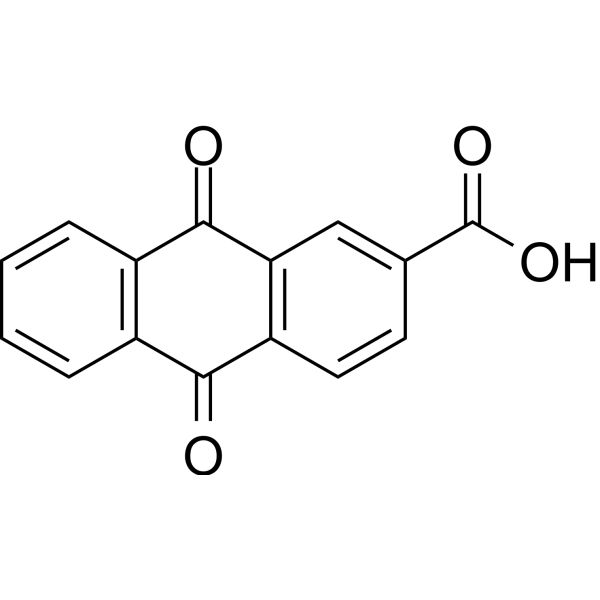
Anthraquinone-2-carboxylic acid

Based on 1 Customer Validation
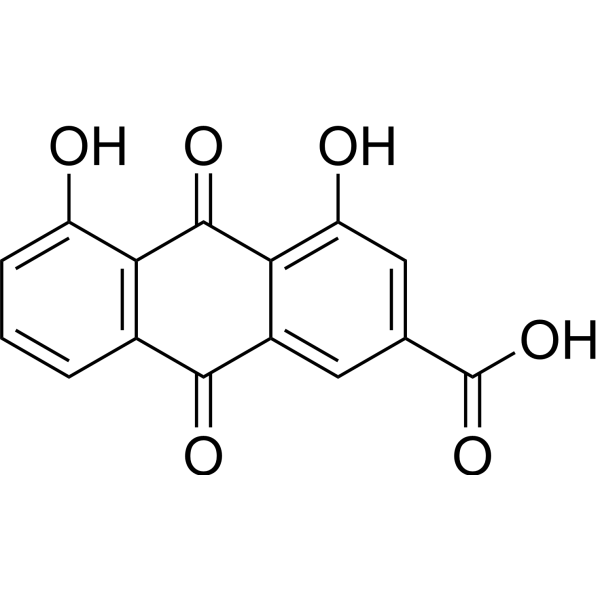
Anthraquinone-2-carboxylic acid is an orally active anthraquinone compound and Antibacterial agent. Anthraquinone-2-carboxylic acid can be isolated from Bajitian. Anthraquinone-2-carboxylic acid inhibits the activation of DPP-IV, COX-2, NF-κB and AP-1. Anthraquinone-2-carboxylic acid blocks IAV-induced activation of the RIG-I/STAT1 pathway, alleviates IAV-mediated weight loss, and protects against lethal IAV infection. Anthraquinone-2-carboxylic acid inhibits the growth of various Staphylococcus strains. It possesses potent anti-inflammatory, immunomodulatory, analgesic and antibacterial activities.\n
For research use only. We do not sell to patients.
- Purity : 98.0%
- CAS No.: 117-78-2
- Formula: C15H8O4
- Molecular Weight:252.22
-
Storage:Powder -20°C, 3 years , 4°C, 2 years ; In solvent -80°C, 6 months , -20°C, 1 month

To place orders, for customer services and technical support, please contact: MedChemExpress USA
Tel: 609-228-6898 E-mail: [email protected] [email protected]


-
 Biological Activity
-
Chemical Information
-
Solvent & Solubility
- Purity & Documentation
- References
-
 Help & FAQs


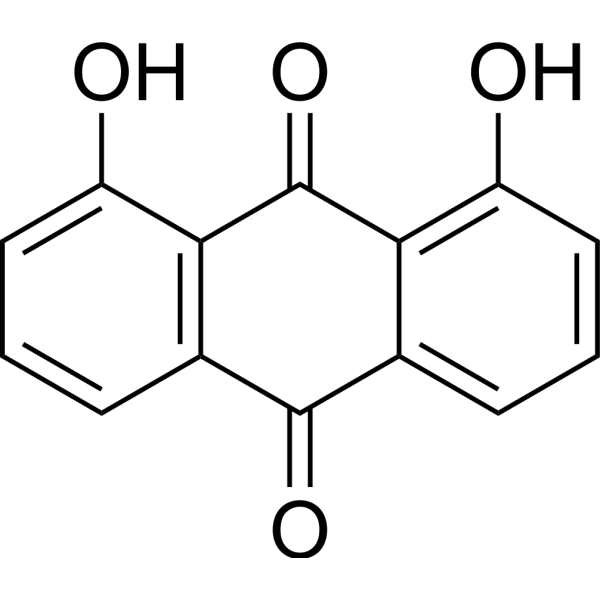

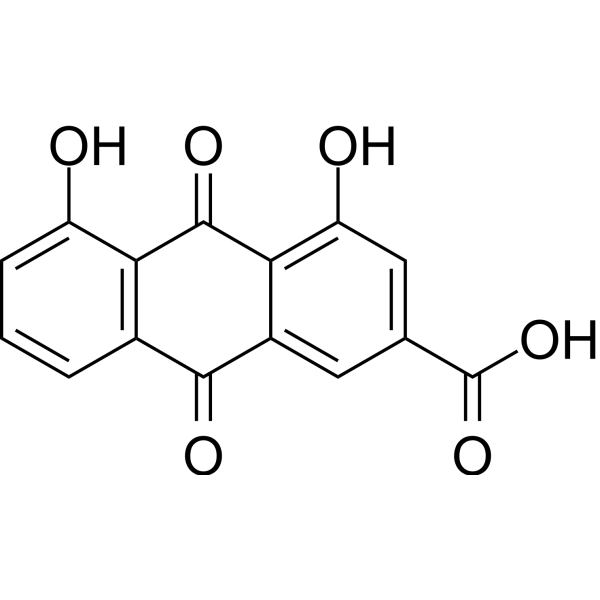
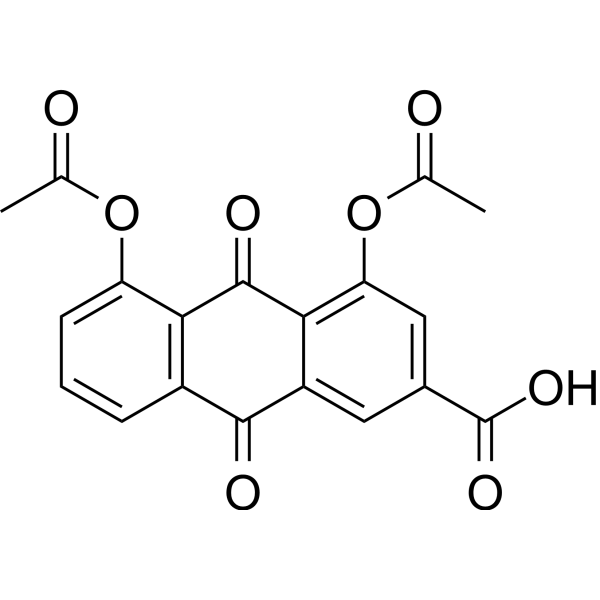
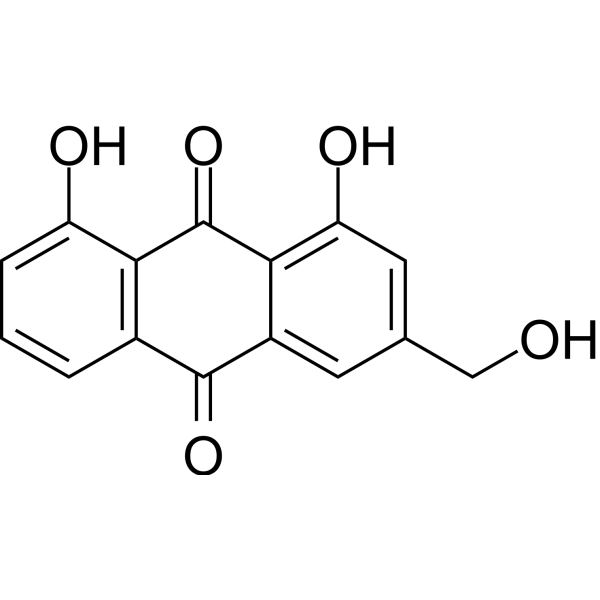
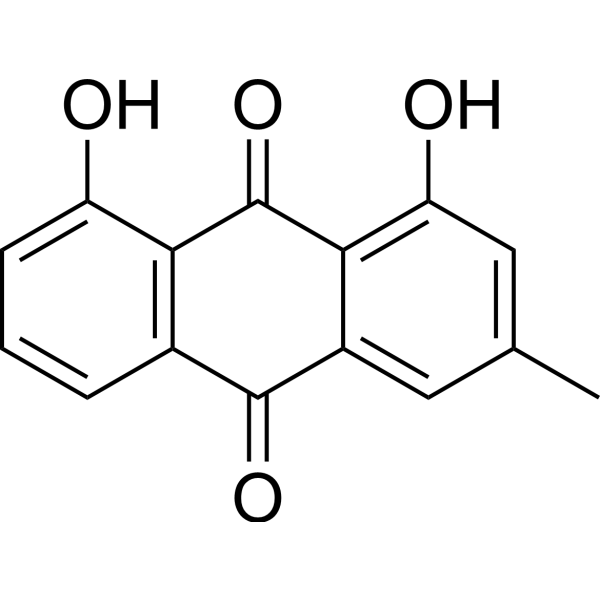

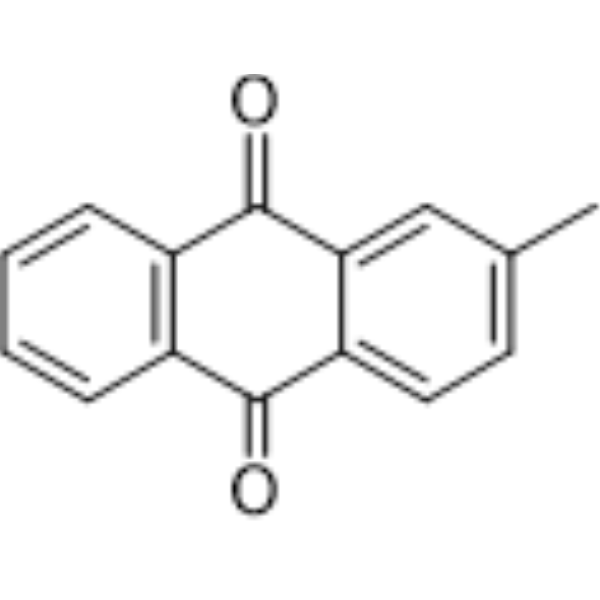
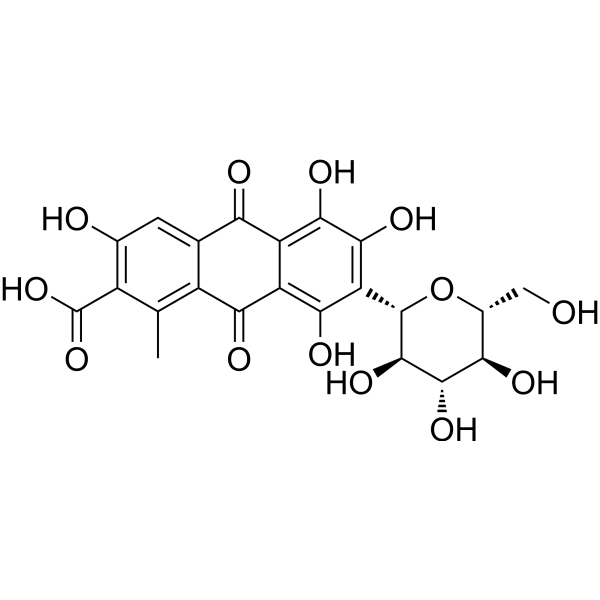
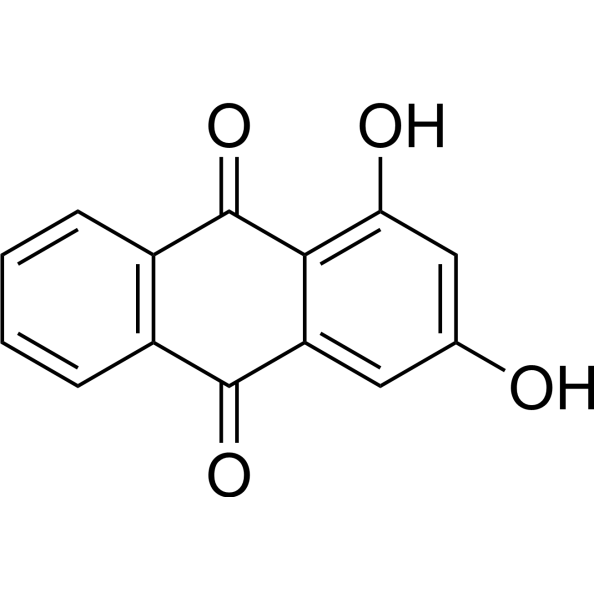
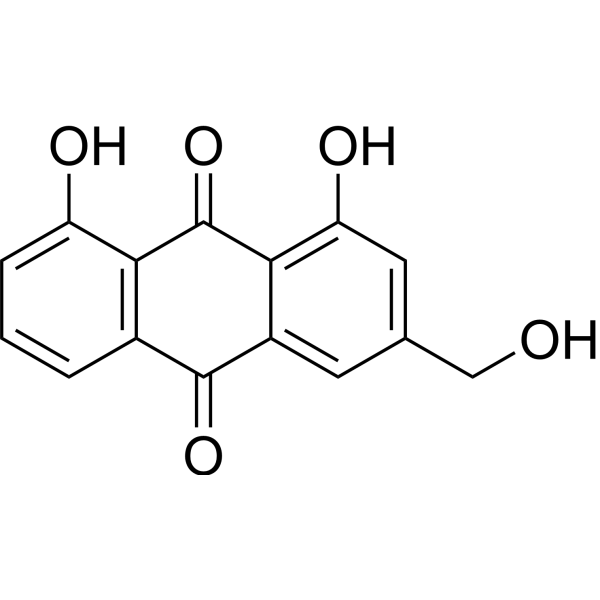
All AP-1 Isoforms
More

Biological Activity
Description
IC50 & Target
[1]|
DPP-4 |
COX-2 |
STAT1 |
In Vitro
Anthraquinone-2-carboxylic acid (50 μM; 6 h) potently inhibits LPS-induced expression of iNOS, TNF-α and COX-2 mRNA in RAW264.7 macrophages[1].
Anthraquinone-2-carboxylic acid (50 μM; 16 h) potently inhibits LPS-induced COX-2 protein expression in RAW264.7 macrophages[1].
Anthraquinone-2-carboxylic acid (50 μM) potently inhibits PMA-induced NF-κB and AP-1 promoter activities in HEK293 cells[1].
Anthraquinone-2-carboxylic acid (0.005-100 μM; 72 h for cytotoxicity assay) inhibits the cytopathic effect induced by four different influenza virus strains in MDCK cells, with EC50 values ranging from 33.34 to 73.45 μM, and shows no cytotoxicity at concentrations up to 100 μM[2].
Anthraquinone-2-carboxylic acid (1.23-100 μM) reduces the viral RNA copy number and infectious particle yield of H1N1 PR/8 in MDCK cells in a dose-dependent manner, with the maximum inhibitory effect observed at 100 μM[2].
Anthraquinone-2-carboxylic acid (3.7-100 μM; 24 h) reduces the expressions of PB2, NP and NS1 proteins in A549 cells in a dose-dependent manner[2].
Anthraquinone-2-carboxylic acid (3.7-100 μM; 24 h) dose-dependently inhibits the activation of the RIG-I/STAT1 signaling pathway in A549 cells induced by H1N1 PR/8[2].
Anthraquinone-2-carboxylic acid (18 h) inhibits the growth of various Staphylococcus strains, with an MIC of 62.5 µg/mL against S. epidermidis ATCC 12228, 125 µg/mL against S. aureus ATCC 25923 and S. epidermidis KCTC 13171, and 250 µg/mL against MRSA1, MRSA2, and S. saprophyticus ATCC 15305[3].
Anthraquinone-2-carboxylic acid (18 h) acts synergistically with copper oxide nanoparticles against *Staphylococcus aureus* ATCC 25923, reducing its effective MIC from 125 µg/mL to 15.6 µg/mL, with a resulting FICI of 0.375[3].
MedChemExpress (MCE) has not independently confirmed the accuracy of these methods. They are for reference only.
-
Cell Line:murine RAW264.7 macrophage cells (LPS-stimulated)
-
Concentration:50 μM
-
Incubation Time:6 h
-
Result:Significantly suppressed LPS-induced mRNA expression of inducible nitric oxide synthase (iNOS), tumor necrosis factor-α (TNF-α), and cyclooxygenase-2 (COX-2), with statistically significant reductions (P < 0.01) compared to LPS-treated control cells.
-
Cell Line:murine RAW264.7 macrophage cells (LPS-stimulated)
-
Concentration:25 μM, 50 μM
-
Incubation Time:16 h
-
Result:Significantly reduced LPS-induced COX-2 protein levels (P < 0.01) compared to LPS-treated control cells at 50 μM.
Did not produce a statistically significant reduction of LPS-induced COX-2 protein levels at 25 μM.
-
Cell Line:A549 cells
-
Concentration:3.7-100 μM
-
Incubation Time:24 h
-
Result:Dose-dependently suppressed viral PB2, NP, and NS1 protein levels.
Reduced PB2 protein levels to ~20% of virus-only control levels at 100 μM.
Reduced NP protein levels to ~10% of virus-only control levels at 100 μM.
Reduced NS1 protein levels to ~30% of virus-only control levels at 100 μM.
-
Cell Line:A549 cells infected with H1N1 PR/8
-
Concentration:3.7-100 μM
-
Incubation Time:24 h
-
Result:Dose-dependently decreased virus-induced upregulation of MDA5, RIG-I, p-STAT1, STAT1, and TRIM25 protein levels.
Caused a non-statistically significant downward trend in MAVS protein levels.
In Vivo
Anthraquinone-2-carboxylic acid (3-30 mg/kg; p.o.; single dose 30 minutes prior to aspirin) reduces aspirin-induced gastric mucosal lesions by 78% and suppresses neutrophil infiltration and inflammatory signaling in stomach tissue[1].
Anthraquinone-2-carboxylic acid (3-30 mg/kg; p.o.; daily; 7 days) significantly reduces arachidonic acid-induced ear edema in mice[1].
Anthraquinone-2-carboxylic acid (30-60 mg/kg; p.o.; single dose 60 minutes prior to acetic acid) reduces acetic acid-induced abdominal writhes by 57% and 72%, respectively, in mice[1].
Anthraquinone-2-carboxylic acid (10-100 mg/kg; i.g.; daily; 5 days) dose-dependently protects BALB/c mice from lethal influenza A virus infection, with the 100 mg/kg dose rescuing 60% of mice, reducing viral loads in lung tissue, and mitigating lung injury and pro-inflammatory cytokine production[2].
MedChemExpress (MCE) has not independently confirmed the accuracy of these methods. They are for reference only.
-
Animal Model:ICR (male, 6 weeks old, HCl/EtOH-induced gastritis)[1]
-
Dosage:3 mg/kg; 30 mg/kg
-
Administration:p.o.; three times every 8 hours in one day
-
Result:Reduced HCl/EtOH-induced gastric mucosal erosive lesions by up to 73% at 30 mg/kg.
Significantly suppressed COX-2 mRNA expression in stomach tissue at both doses, with statistically significant reduction at 30 mg/kg relative to vehicle control.
Inhibited HCl/EtOH-induced phosphorylation of p38, Src, and Syk, and reduced degradation of IRAK1 in stomach tissue at both doses, with statistically significant effects at 30 mg/kg relative to vehicle control.
-
Animal Model:ICR (male, 6 weeks old, aspirin-induced gastritis)[1]
-
Dosage:3 mg/kg; 30 mg/kg
-
Administration:p.o.; single dose 30 minutes prior to aspirin
-
Result:Reduced aspirin-induced gastric mucosal erosive lesions by up to 78% at 30 mg/kg.
Significantly reduced MPO activity (a marker of neutrophil infiltration) in stomach tissue at both doses relative to vehicle control.
Reduced gastric mucosal damage observed via histopathology at 30 mg/kg.
Inhibited aspirin-induced degradation of IRAK1 in stomach tissue at both doses relative to vehicle control.
-
Animal Model:ICR (male, 6 weeks old, arachidonic acid-induced ear edema and nociception)[1]
-
Dosage:3 mg/kg; 30 mg/kg
-
Administration:p.o.; daily; 7 days
-
Result:Significantly reduced arachidonic acid-induced ear edema at both doses relative to vehicle control.
-
Animal Model:ICR (male, 6 weeks old, acetic acid-induced abdominal nociception)[1]
-
Dosage:3 mg/kg; 30 mg/kg; 60 mg/kg
-
Administration:p.o.; single dose 60 minutes prior to acetic acid
-
Result:Reduced acetic acid-induced abdominal writhes by 57% at 30 mg/kg relative to vehicle control.
Reduced acetic acid-induced abdominal writhes by 72% at 60 mg/kg relative to vehicle control.
-
Animal Model:BALB/c (female, 7 weeks old, 16-18 g, intranasal inoculation with 3×LD50 of H1N1 PR/8 strain)[2]
-
Dosage:100 mg/kg; 10 mg/kg
-
Administration:i.g.; daily; 5 days
-
Result:Rescued 60% of mice from lethal influenza A virus challenge, mitigated initial weight loss, and facilitated progressive body weight restoration.
Significantly reduced lung viral RNA copy numbers (p < 0.0001) and infectious viral particle titers (p < 0.05) at 2 days post infection.
Alleviated influenza-induced lung pathology (reduced vascular congestion, edema, necrosis, and inflammatory cell infiltration) and significantly decreased lung expression of pro-inflammatory cytokines IL-1β and IL-6 (p < 0.05).
Provided partial protection, with improved survival and reduced weight loss compared to vehicle controls, but with less pronounced effects than the 100 mg/kg dose.


Chemical Information
-
CAS No. 117-78-2
-
Appearance Solid
-
Molecular Weight 252.22
-
Formula C15H8O4
-
Color Off-white to light yellow
-
SMILES
O=C(C1=C2C=CC=C1)C(C=C3C(O)=O)=C(C=C3)C2=O
-
Structure Classification
-
Initial Source
-
Shipping
Room temperature in continental US; may vary elsewhere.
-
Storage
Powder -20°C 3 years 4°C 2 years In solvent -80°C 6 months -20°C 1 month


Solvent & Solubility
In Vitro:
DMSO : 25 mg/mL (99.12 mM; Need ultrasonic; Hygroscopic DMSO has a significant impact on the solubility of product, please use newly opened DMSO)
Please refer to the solubility information to select the appropriate solvent. Once prepared, please aliquot and store the solution to prevent product inactivation from repeated freeze-thaw cycles.
Storage method and period of stock solution: -80°C, 6 months; -20°C, 1 month. When stored at -80°C, please use it within 6 months. When stored at -20°C, please use it within 1 month.
Please refer to the solubility information to select the appropriate solvent. Once prepared, please aliquot and store the solution to prevent product inactivation from repeated freeze-thaw cycles.
Storage method and period of stock solution: -80°C, 6 months; -20°C, 1 month. When stored at -80°C, please use it within 6 months. When stored at -20°C, please use it within 1 month.
Concentration (start) × Volume (start) = Concentration (final) × Volume (final)


Purity & Documentation
-
Data Sheet (295 KB)
-
SDS (393 KB)
- English - EN (393 KB)
- Français - FR (393 KB)
- Deutsch - DE (393 KB)
- Norwegian - NO (393 KB)
- Español - ES (393 KB)
- Swedish - SV (393 KB)
- Italian - IT (393 KB)
- Korean - KR (393 KB)
- Portuguese - PT (393 KB)
-
Handling Instructions (2659 KB)
References
[1]. Park JG, et al. Anti-Inflammatory and Antinociceptive Activities of Anthraquinone-2-Carboxylic Acid. Mediators Inflamm. 2016;2016:1903849. [Content Brief]
[2]. Ren S, et al. Anthraquinone-2-Carboxylic Acid Is a Potential Antiviral Candidate Against Influenza Viruses In Vitro and In Vivo. Viruses. 2025;17(5):628. Published 2025 Apr 27. [Content Brief]


Complete Stock Solution Preparation Table
Please refer to the solubility information to select the appropriate solvent. Once prepared, please aliquot and store the solution to prevent product inactivation from repeated freeze-thaw cycles.
Storage method and period of stock solution: -80°C, 6 months; -20°C, 1 month. When stored at -80°C, please use it within 6 months. When stored at -20°C, please use it within 1 month.
| Optional Solvent | Concentration Solvent Mass | 1 mg | 5 mg | 10 mg | 25 mg |
|---|---|---|---|---|---|
| DMSO | 1 mM | 3.9648 mL | 19.8240 mL | 39.6479 mL | 99.1198 mL |
| 5 mM | 0.7930 mL | 3.9648 mL | 7.9296 mL | 19.8240 mL | |
| 10 mM | 0.3965 mL | 1.9824 mL | 3.9648 mL | 9.9120 mL | |
| 15 mM | 0.2643 mL | 1.3216 mL | 2.6432 mL | 6.6080 mL | |
| 20 mM | 0.1982 mL | 0.9912 mL | 1.9824 mL | 4.9560 mL | |
| 25 mM | 0.1586 mL | 0.7930 mL | 1.5859 mL | 3.9648 mL | |
| 30 mM | 0.1322 mL | 0.6608 mL | 1.3216 mL | 3.3040 mL | |
| 40 mM | 0.0991 mL | 0.4956 mL | 0.9912 mL | 2.4780 mL | |
| 50 mM | 0.0793 mL | 0.3965 mL | 0.7930 mL | 1.9824 mL | |
| 60 mM | 0.0661 mL | 0.3304 mL | 0.6608 mL | 1.6520 mL | |
| 80 mM | 0.0496 mL | 0.2478 mL | 0.4956 mL | 1.2390 mL |


Anthraquinone-2-carboxylic acid Related Classifications
HY-W031757 Related Classifications
 Powered by Bioz