



RIG-I
RIG-I is a cytosolic RNA sensor that detects viral RNA and drives innate antiviral immunity through type I interferon and inflammatory gene induction[1]. Mechanistically, RIG-I recognizes RNA carrying a 5′-triphosphate end generated by viral polymerases, and its C-terminal regulatory domain binds this 5′-triphosphate RNA to activate downstream signaling[2][3]. Full activation requires base-paired RNA structures together with a free 5′-triphosphate, which defines a practical ligand design principle for RIG-I activation assays[4]. After ligand recognition, RIG-I-like receptor signaling converges on MAVS and promotes interferon-centered antiviral responses[1][5]. In infection models, RIG-I and MDA5 show non-redundant virus recognition, and knockout studies demonstrate that both receptors remain critical for host antiviral defense[6]. Compared with MDA5, RIG-I preferentially recognizes short 5′-triphosphate RNA ligands, whereas MDA5 recognizes long genomic RNA and replication intermediates[7]. For experimental applications, optimized RIG-I agonist M8 induces immunogenic cell death markers in human cancer cells and activates dendritic cells, supporting its use in tumor-immune signaling studies[8]. In HPV-associated cancer models, M8 also triggers cancer cell death and natural killer cell activation, providing a defined tool for evaluating RIG-I-driven antitumor immunity[9].
References:
- [1]. Rehwinkel J, et al. RIG-I-like receptors: their regulation and roles in RNA sensing. Nat Rev Immunol. 2020 Sep;20(9):537-551. [Content Brief]
- [2]. Hornung V, et al. 5'-Triphosphate RNA is the ligand for RIG-I. Science. 2006 Nov 10;314(5801):994-7. [Content Brief]
- [3]. Cui S, et al. The C-terminal regulatory domain is the RNA 5'-triphosphate sensor of RIG-I. Mol Cell. 2008 Feb 1;29(2):169-79. [Content Brief]
- [4]. Schmidt A, et al. 5'-triphosphate RNA requires base-paired structures to activate antiviral signaling via RIG-I. Proc Natl Acad Sci U S A. 2009 Jul 21;106(29):12067-72. [Content Brief]
- [5]. Habisov S, et al. Caging the elephant: selective autophagy tackles giant intracellular protein crystals. Mol Cell. 2015 Apr 2;58(1):5-7. [Content Brief]
- [6]. Kato H, et al. Differential roles of MDA5 and RIG-I helicases in the recognition of RNA viruses. Nature. 2006 May 4;441(7089):101-5. [Content Brief]
- [7]. Reikine S, et al. Pattern Recognition and Signaling Mechanisms of RIG-I and MDA5. Front Immunol. 2014 Jul 23;5:342. [Content Brief]
- [8]. Castiello L, et al. An optimized retinoic acid-inducible gene I agonist M8 induces immunogenic cell death markers in human cancer cells and dendritic cell activation. Cancer Immunol Immunother. 2019 Sep;68(9):1479-1492. [Content Brief]
- [9]. Girone C, et al. The RIG-I agonist M8 triggers cell death and natural killer cell activation in human papillomavirus-associated cancer and potentiates cisplatin cytotoxicity. Cancer Immunol Immunother. 2023 Sep;72(9):3097-3110. [Content Brief]
-
RIG-I Related Products (11)
Related Products (11)

- 1
-
Polyinosinic-polycytidylic acid
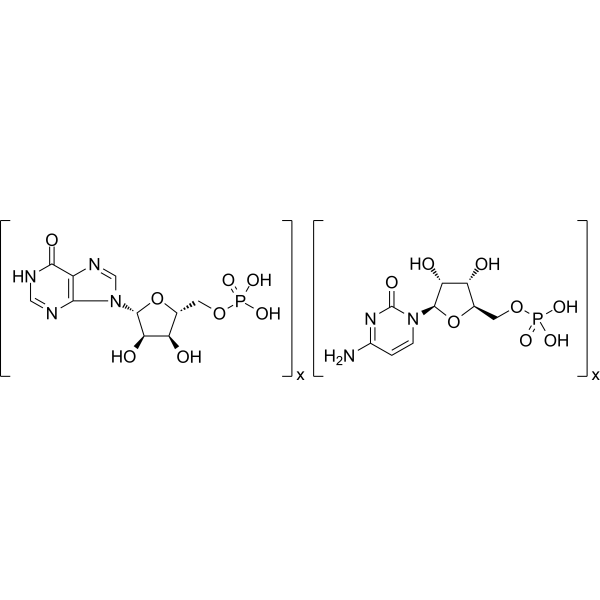 0 ImagesSynonyms: Poly(I:C)Polyinosinic-polycytidylic acid (Poly(I:C)) is a synthetic analog of double-stranded RNA and an agonist of toll-like receptor 3 (TLR3) and retinoic acid inducible gene I (RIG-I)-like receptors (RIG-I and MDA5). Polyinosinic-polycytidylic acid can be used as a vaccine adjuvant to enhance innate and adaptive immune responses, and to alter the tumor microenvironment. Polyinosinic-polycytidylic acid can directly trigger cancer cells to undergo apoptosis.
-
Polyinosinic-polycytidylic acid sodium
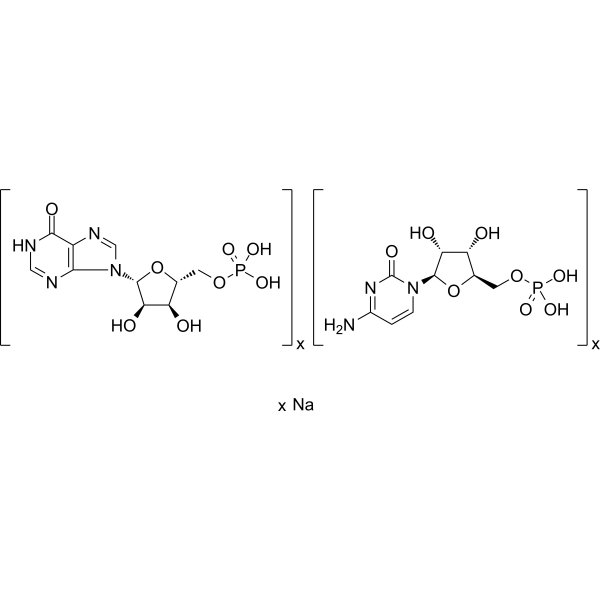 0 ImagesSynonyms: Poly(I:C) sodiumPolyinosinic-polycytidylic acid (Poly(I:C)) sodium is a synthetic analog of double-stranded RNA and an agonist of toll-like receptor 3 (TLR3) and retinoic acid inducible gene I (RIG-I)-like receptors (RIG-I and MDA5). Polyinosinic-polycytidylic acid sodium can be used as a vaccine adjuvant to enhance innate and adaptive immune responses, and to alter the tumor microenvironment. Polyinosinic-polycytidylic acid sodium can directly trigger cancer cells to undergo apoptosis.
-
Poly (I:C):Kanamycin (1:1)
 0 ImagesCat. No.: HY-107202APoly(I:C):Kanamycin (1:1) is a mixture of Poly(I:C) (HY-107202) and Kanamycin (HY-16566). Poly(I:C) is a synthetic analog of double-stranded RNA and an agonist of toll-like receptor 3 (TLR3) and retinoic acid inducible gene I (RIG-I)-like receptors (RIG-I and MDA5). Poly(I:C) can be used as a vaccine adjuvant to enhance innate and adaptive immune responses, and to alter the tumor microenvironment. Poly(I:C) can directly trigger cancer cells to undergo apoptosis. Kanamycin stabilizes Poly(I:C).
-
KIN1408
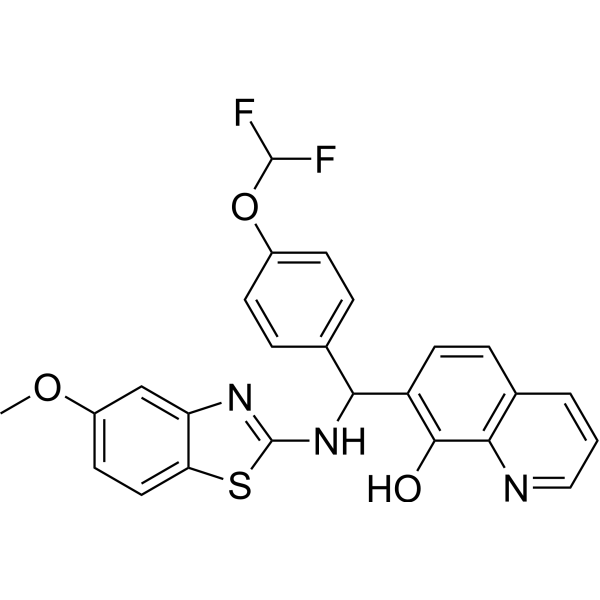 0 ImagesKIN1408 is an agonist of the RIG-1-like receptor (RLR) pathway and exhibits a broad-spectrum antiviral activity. KIN1408 exhibits activity against HCV, influenza A, dengue virus 2, Ebola, Nipah, and Lassa viruses.
-
Poly (I:C):Kanamycin (1:1) sodium
 0 ImagesCat. No.: HY-135748APurity: 99.0%Poly (I:C):Kanamycin (1:1) sodium is an isometric complex of Poly (I:C) (HY-135748) and Kanamycin (HY-16566). Poly(I:C) sodium, a synthetic analog of double-stranded RNA, is a TLR3 and retinoic acid-inducible gene I receptor (RIG-I and MDA5) agonist. Poly(I:C) sodium can be used as a vaccine adjuvant to enhance innate and adaptive immune responses and induce apoptosis in cancer cells. Kanamycin is an orally active antibacterial agent (Gram-negative/positive bacteria) that inhibits translocation and causes miscoding by binding to the 70S ribosomal subunit. Kanamycin shows good inhibitory activity against Mycobacterium tuberculosis (susceptible and drug-resistant) and Klebsiella pneumoniae, and can be used in the research of tuberculosis and pneumonia.
-
Anti-Influenza agent 12
 0 ImagesCat. No.: HY-189215CAS No.: 3087067-85-1Anti-Influenza agent 12 is an orally active inhibitor of influenza A virus infection. Anti-Influenza agent 12 inhibits RIG-I-mediated innate immune signaling and TLR3-mediated signaling pathways. Anti-Influenza agent 12 inhibits NF-κB phosphorylation and downregulates the expression levels of IRF3, ASC, iNOS, IL-4, IL-6, and IFN-α inflammatory genes. Anti-Influenza agent 12 inhibits viral nucleoprotein (NP) and matrix protein 2 (M2) mRNA transcription and protein synthesis. Anti-Influenza agent 12 inhibits virus-induced apoptosis, reduces ROS and NO production, and maintains mitochondrial membrane potential. Anti-Influenza agent 12 exhibits broad-spectrum activity against H1N1 and H3N2 subtypes, reduces viral load, and alleviates lung tissue damage. Anti-Influenza agent 12 can be used for research on influenza A virus infection.
-
Tubeimoside II
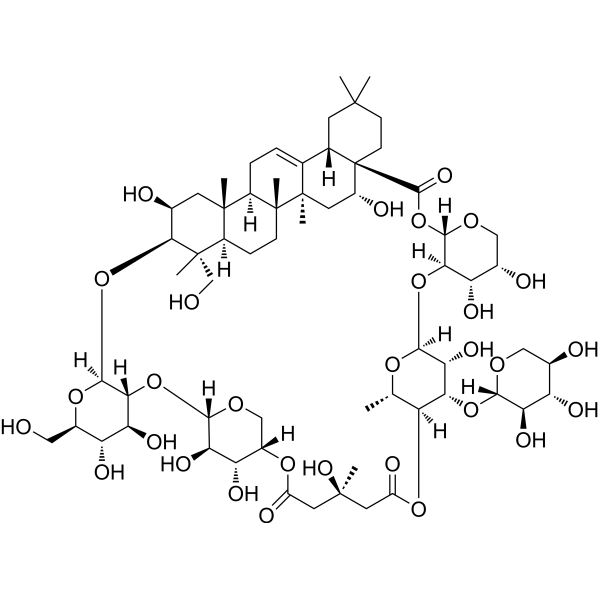 0 ImagesSynonyms: Tubeimoside-BTubeimoside II is an orally active triterpenoid saponin and antiviral agent that binds to PACT/PRKRA with Kd values of 5.37 μM and 133.1 μM, respectively. Tubeimoside II inhibits oxidase-dependent EGFR activation and reduces TGF-β1-induced oxidative stress. Tubeimoside II activates the RIG-I signaling pathway and increases IFN-β secretion. Tubeimoside II suppresses TPA-induced ear edema, mouse sarcoma 180 growth, and TPA-induced skin tumor formation. Tubeimoside II exerts broad-spectrum antiviral activity against SARS-CoV-2, HCoV-OC43, and IAV-H1N1/FM1. Tubeimoside II can be used in research related to retinoblastoma, respiratory viral infections, skin tumors, and sarcoma 180.
-
KIN1400
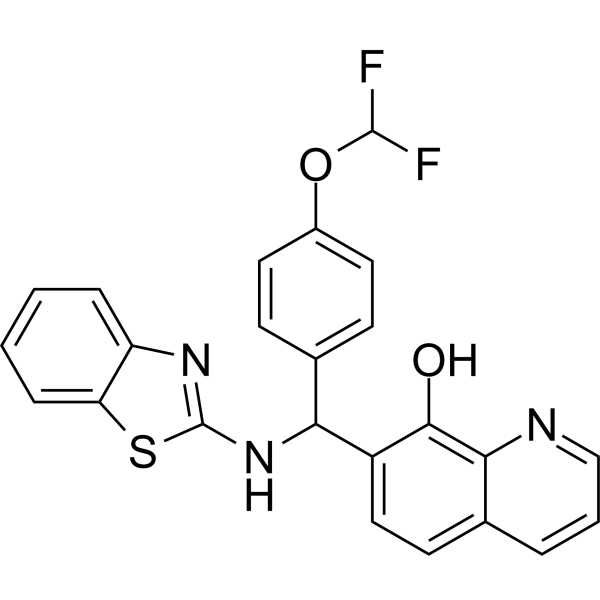 0 ImagesKIN1400 is a potent IRF3 activator. KIN1400 triggers IRF3-dependent innate immune antiviral genes (RIG-I, MDA5, IFIT1, and Mx1) and IFN-β expression. KIN1400 inhibits WNV and DV, two mosquito-borne members of the Flaviviridae and the genus Flavivirus. KIN1400 also inhibits HCV replication. KIN1400 induces innate antiviral immunity through a MAVS-IRF3 axis.
-
KIN101
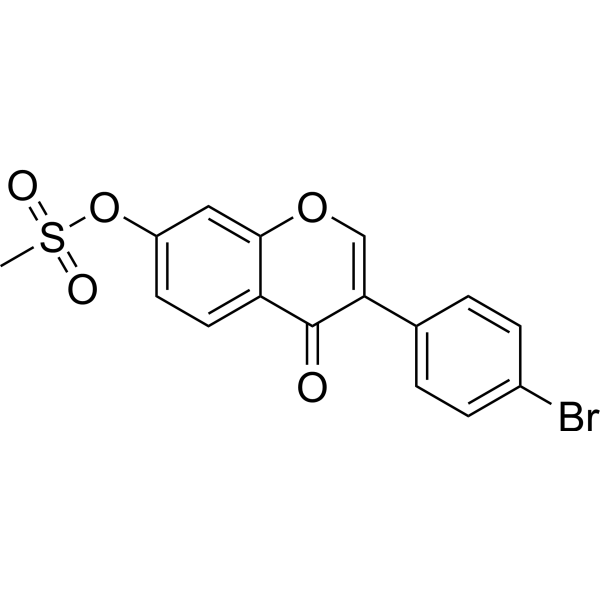 0 ImagesKIN101 is a potent RNA viral inhibitor with IC50s of 2 μM, >5 μM for influenza virus and Dengue virus (DNV), respectively. KIN101, an isoflavone agonist of IRF-3 dependent signaling, induces IRF-3 nuclear translocation. KIN101 has broad-spectrum activity against RNA viruses.
-
Tubeimoside II (Standard)
 0 ImagesCat. No.: HY-N0891RCAS No.: 115810-12-3Synonyms: Tubeimoside-B (Standard)Tubeimoside II (Standard) (Tubeimoside-B (Standard)) is the analytical standard of Tubeimoside II (HY-N0891). This product is intended for research and analytical applications. Tubeimoside II is an orally active triterpenoid saponin and antiviral agent that binds to PACT/PRKRA with Kd values of 5.37 μM and 133.1 μM, respectively. Tubeimoside II inhibits oxidase-dependent EGFR activation and reduces TGF-β1-induced oxidative stress. Tubeimoside II activates the RIG-I signaling pathway and increases IFN-β secretion. Tubeimoside II suppresses TPA-induced ear edema, mouse sarcoma 180 growth, and TPA-induced skin tumor formation. Tubeimoside II exerts broad-spectrum antiviral activity against SARS-CoV-2, HCoV-OC43, and IAV-H1N1/FM1. Tubeimoside II can be used in research related to retinoblastoma, respiratory viral infections, skin tumors, and sarcoma 180.

- 1



