



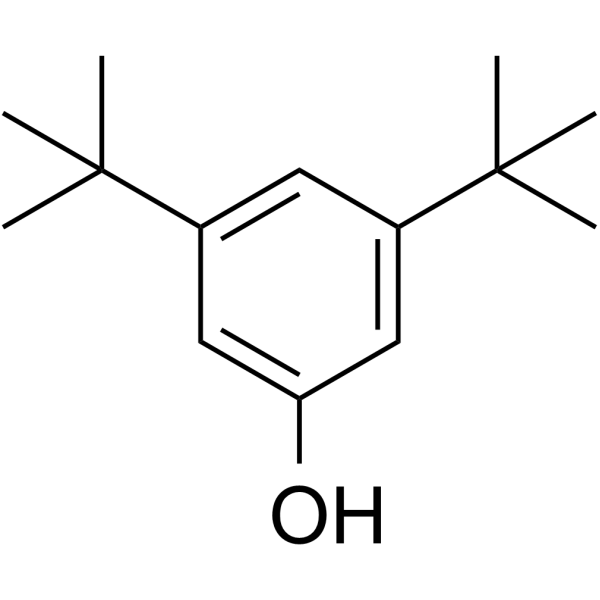
3,5-Di-tert-butylphenol

Based on 1 Customer Validation
3,5-Di-tert-butylphenol is an volatile organic compound with anti-biofilm and antifungal activities. 3,5-Di-tert-butylphenol induces accumulation of reactive oxygen species (ROS) in C. albicans cells. 3,5-Di-tert-butylphenol also has antibacterial activities.
For research use only. We do not sell to patients.
- Purity : 99.91%
- CAS No.: 1138-52-9
- Formula: C14H22O
- Molecular Weight:206.33
-
Storage:
4°C, stored under nitrogen
* In solvent : -80°C, 6 months; -20°C, 1 month (stored under nitrogen)

To place orders, for customer services and technical support, please contact: MedChemExpress USA
Tel: 609-228-6898 E-mail: [email protected] [email protected]


-
 Biological Activity
-
Chemical Information
-
Solvent & Solubility
- Protocols
- Purity & Documentation
- References
-
 Help & FAQs


-
HY-75342
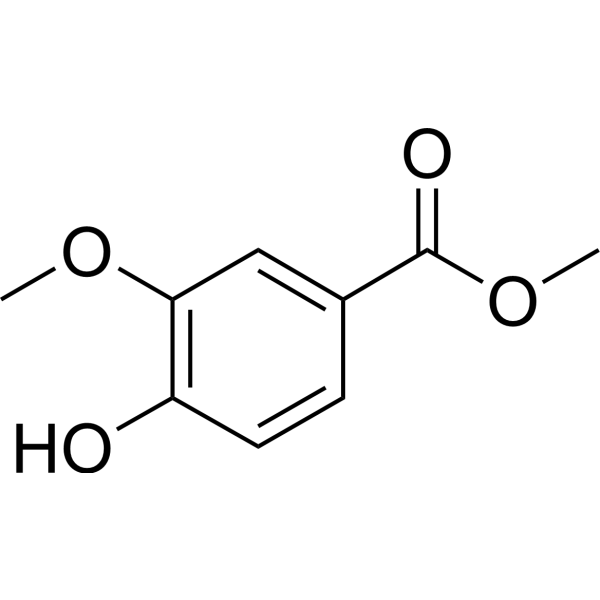
Methyl vanillateWnt/β-catenin Activator -

HY-W041080R
3,5-Di-tert-butylphenol (Standard)Standard of 3,5-Di-tert-butylphenol -

HY-W012187
3,5-Di-tert-butyl-4-hydroxybenzaldehydeButylated Hydroxytoluene Metabolite -

HY-W019334
3,4-Dimethylpyrazole phosphateNitrification Inhibitor -

HY-W012187R
3,5-Di-tert-butyl-4-hydroxybenzaldehyde (Standard)Butylated Hydroxytoluene Metabolite


Biological Activity
Description
In Vitro
3,5-Di-tert-butylphenol inhibits Candida growth, with the greatest MIC of ~250 μg/mL against C. tropicalis (CT) and 100 μg/mL against C. albicans (MTCC 11802) (CA-2) and Candida albicans (MTCC 186) (CAMT)[1].
3,5-Di-tert-butylphenol (20 μg/mL; 48 h) damages the cell membrane of Candida cells. In addition, 3,5-Di-tert-butylphenol induces accumulation of reactive oxygen species (ROS) which contribute to its pronounced anti-biofilm activity[1].
3,5-Di-tert-butylphenol has antimicrobial activities against a wide range of bacterial strains, including B. cereus ATCC 11778, S. aureus ATCC 25923, S. epidermidis CIP81.55, and C. acnes ATCC 1897, with MIC values of 32 μg/mL, 32 μg/mL, 16 μg/mL, and 64 μg/mL, respectively[1].
MedChemExpress (MCE) has not independently confirmed the accuracy of these methods. They are for reference only. Further protocols information, click here.


Chemical Information
-
CAS No. 1138-52-9
-
Appearance Solid
-
Molecular Weight 206.33
-
Formula C14H22O
-
Color Off-white to light brown
-
SMILES
OC1=CC(C(C)(C)C)=CC(C(C)(C)C)=C1
-
Structure Classification
-
Initial Source
Endophytic Burkholderia cenocepacia
-
Shipping
Room temperature in continental US; may vary elsewhere.
-
Storage
4°C, stored under nitrogen
* In solvent : -80°C, 6 months; -20°C, 1 month (stored under nitrogen)


Solvent & Solubility
In Vitro:
DMSO : 100 mg/mL (484.66 mM; Need ultrasonic; Hygroscopic DMSO has a significant impact on the solubility of product, please use newly opened DMSO)
Please refer to the solubility information to select the appropriate solvent. Once prepared, please aliquot and store the solution to prevent product inactivation from repeated freeze-thaw cycles.
Storage method and period of stock solution: -80°C, 6 months; -20°C, 1 month (stored under nitrogen). When stored at -80°C, please use it within 6 months. When stored at -20°C, please use it within 1 month.
Please refer to the solubility information to select the appropriate solvent. Once prepared, please aliquot and store the solution to prevent product inactivation from repeated freeze-thaw cycles.
Storage method and period of stock solution: -80°C, 6 months; -20°C, 1 month (stored under nitrogen). When stored at -80°C, please use it within 6 months. When stored at -20°C, please use it within 1 month.
Concentration (start) × Volume (start) = Concentration (final) × Volume (final)
In Vivo:
Select the appropriate dissolution method based on your experimental animal and administration route.
- For the following dissolution methods, please ensure to first prepare a clear stock solution using an In Vitro approach and then sequentially add co-solvents:
- To ensure reliable experimental results, the clarified stock solution can be appropriately stored based on storage conditions. As for the working solution for In Vivo experiments, it is recommended to prepare freshly and use it on the same day.
- The percentages shown for the solvents indicate their volumetric ratio in the final prepared solution. If precipitation or phase separation occurs during preparation, heat and/or sonication can be used to aid dissolution.
Add each solvent one by one: 10% DMSO 40% PEG300 5% Tween-80 45% Saline
Solubility: 2.5 mg/mL (12.12 mM); Suspended solution; Need ultrasonic
This protocol yields a suspended solution of 2.5 mg/mL. Suspended solution can be used for oral and intraperitoneal injection.
Taking 1 mL working solution as an example, add 100 μL DMSO stock solution (25.0 mg/mL) to 400 μL PEG300, and mix evenly; then add 50 μL Tween-80 and mix evenly; then add 450 μL Saline to adjust the volume to 1 mL.
Preparation of Saline: Dissolve 0.9 g sodium chloride in ddH₂O and dilute to 100 mL to obtain a clear Saline solution.
Add each solvent one by one: 10% DMSO 90% (20% SBE-β-CD in Saline)
Solubility: ≥ 2.5 mg/mL (12.12 mM); Clear solution
This protocol yields a clear solution of ≥ 2.5 mg/mL (saturation unknown).
Taking 1 mL working solution as an example, add 100 μL DMSO stock solution (25.0 mg/mL) to 900 μL 20% SBE-β-CD in Saline, and mix evenly.
Preparation of 20% SBE-β-CD in Saline (4°C, storage for one week): 2 g SBE-β-CD powder is dissolved in 10 mL Saline, completely dissolve until clear.
In Vivo Dissolution Calculator
Please enter the basic information of animal experiments:
-
-
-
-
Recommended: Prepare an additional quantity of animals to account for potential losses during experiments.
Please enter your animal formula composition:
-
%DMSO +
Recommended: Keep the proportion of DMSO in working solution below 2% if your animal is weak.
-
%+
-
+%Tween-80 + +
-
%Saline +
The co-solvents required include: DMSO, . All of co-solvents are available by MedChemExpress (MCE). , Tween 80. All of co-solvents are available by MedChemExpress (MCE).
Working solution concentration: 0.22 mg/mL
Method for preparing stock solution: mg drug dissolved in μL DMSO. Stock solution concentration: mg/mL. * In solvent : -80°C, 6 months; -20°C, 1 month (stored under nitrogen)
1. Take μL DMSO stock solution;
2. Add μL .
μL , mix evenly;
3. Then add μL Tween 80, mix evenly;
4. Then add μL
Please ensure that the stock solution in the first step is dissolved to a clear state, and add co-solvents in sequence. You can use ultrasonic heating (ultrasonic cleaner, recommended frequency 20-40 kHz), vortexing, etc. to assist dissolution.

Protocols
-
Research Protocol for Infectious Diseases
Infectious-disease experiments test how pathogens interact with host barriers, innate immune receptors, inflammatory signaling, pathogen replication, and tissue injury; pattern-recognition receptors such as TLRs, RIG-I-like receptors, NOD-like receptors, and inflammasomes detect microbial molecules and activate NF-κB, interferon, and cytokine responses. The central hypothesis is that infection severity reflects the balance between pathogen burden and host response: protective inflammation restricts pathogen growth, whereas excessive or mislocalized inflammation contributes to tissue damage and disease phenotype. Unresolved questions include which host pathways are protective versus pathogenic, why some infection models fail to translate to human disease, and which combined readouts best predict clinically relevant infection outcomes.
-
ROS/oxidative-stress fluorescent staining
ROS/oxidative-stress fluorescent staining uses cell-permeant fluorogenic probes that become fluorescent after oxidation inside cells or tissues; commonly used examples include DCFH-DA/DCFDA for broad cellular oxidant detection, DHE for superoxide-related signal detection, MitoSOX for mitochondrial superoxide-related signal detection, and CellROX probes for oxidative-stress-associated fluorescence readouts. The assay detects probe oxidation rather than a single ROS species unless the probe and analysis method have been chemically validated for that species. DCFH-DA enters cells, is deacetylated by intracellular esterases to DCFH, and produces fluorescent DCF after oxidation, so the readout is used as an operational measure of total cellular oxidative stress rather than a species-specific ROS measurement. DHE and MitoSOX can report superoxide-related oxidation, but red fluorescence alone can include non-specific ethidium-like oxidation products; HPLC or optimized spectral approaches are


Purity & Documentation
-
Data Sheet (274 KB)
-
SDS (476 KB)
- English - EN (476 KB)
- Français - FR (476 KB)
- Deutsch - DE (476 KB)
- Norwegian - NO (476 KB)
- Español - ES (476 KB)
- Swedish - SV (476 KB)
- Italian - IT (476 KB)
- Korean - KR (476 KB)
- Portuguese - PT (476 KB)
-
Handling Instructions (2659 KB)
References
[1]. Janarthanam Rathna, et al. Anti-biofilm mechanisms of 3,5-di-tert-butylphenol against clinically relevant fungal pathogens. Biofouling. 2016 Oct;32(9):979-93. [Content Brief]
[2]. Rouvier F, et al. Identification of 2,4-Di-tert-Butylphenol as an Antimicrobial Agent Against Cutibacterium acnes Bacteria from Rwandan Propolis. Antibiotics (Basel). 2024 Nov 13;13(11):1080. [Content Brief]


Complete Stock Solution Preparation Table
Please refer to the solubility information to select the appropriate solvent. Once prepared, please aliquot and store the solution to prevent product inactivation from repeated freeze-thaw cycles.
Storage method and period of stock solution: -80°C, 6 months; -20°C, 1 month (stored under nitrogen). When stored at -80°C, please use it within 6 months. When stored at -20°C, please use it within 1 month.
| Optional Solvent | Concentration Solvent Mass | 1 mg | 5 mg | 10 mg | 25 mg |
|---|---|---|---|---|---|
| DMSO | 1 mM | 4.8466 mL | 24.2330 mL | 48.4660 mL | 121.1651 mL |
| 5 mM | 0.9693 mL | 4.8466 mL | 9.6932 mL | 24.2330 mL | |
| 10 mM | 0.4847 mL | 2.4233 mL | 4.8466 mL | 12.1165 mL | |
| 15 mM | 0.3231 mL | 1.6155 mL | 3.2311 mL | 8.0777 mL | |
| 20 mM | 0.2423 mL | 1.2117 mL | 2.4233 mL | 6.0583 mL | |
| 25 mM | 0.1939 mL | 0.9693 mL | 1.9386 mL | 4.8466 mL | |
| 30 mM | 0.1616 mL | 0.8078 mL | 1.6155 mL | 4.0388 mL | |
| 40 mM | 0.1212 mL | 0.6058 mL | 1.2117 mL | 3.0291 mL | |
| 50 mM | 0.0969 mL | 0.4847 mL | 0.9693 mL | 2.4233 mL | |
| 60 mM | 0.0808 mL | 0.4039 mL | 0.8078 mL | 2.0194 mL | |
| 80 mM | 0.0606 mL | 0.3029 mL | 0.6058 mL | 1.5146 mL | |
| 100 mM | 0.0485 mL | 0.2423 mL | 0.4847 mL | 1.2117 mL |


3,5-Di-tert-butylphenol Related Classifications
HY-W041080 Related Classifications
 Powered by Bioz