Infection
-
Infection 관련 제품 (18904)
관련 제품 (18904)

-
Antibodies (22)
-
Exalamide
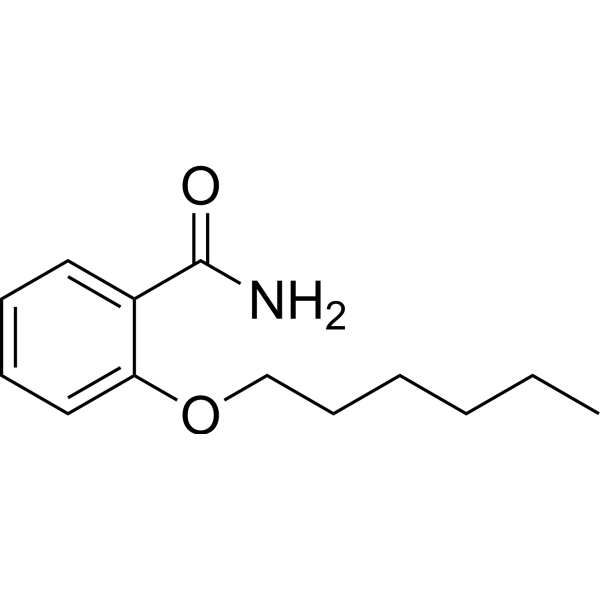 0 ImagesSynonyms: 2-(Hexyloxy)benzamide
Exalamide (2-(Hexyloxy)benzamide), an arenecarboxamide, is a potent antifungal agent.
-
4''-Oxoavermectin B1a
 0 Images
4''-Oxoavermectin B1a is a potentiator targeting GABA (γ-aminobutyric acid) and glutamate-gated chloride channels with insecticidal and acaricidal activities. 4''-Oxoavermectin B1a is promising for research of agricultural pests.
-
4′-Hydroxy-2′-methylacetophenone
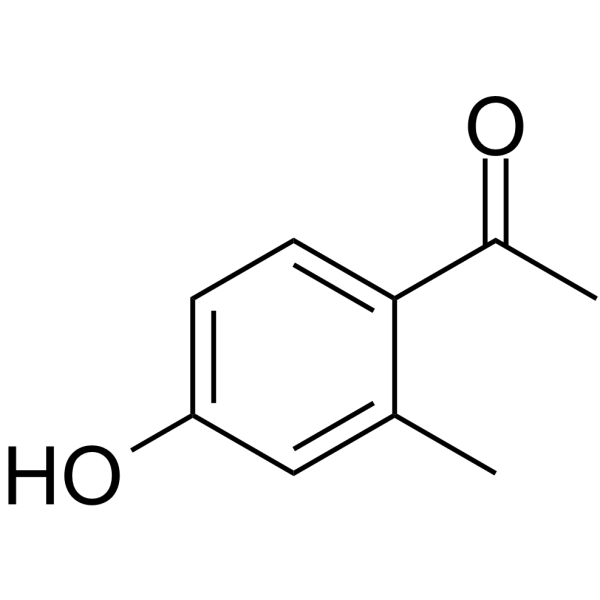 0 Images
4′-Hydroxy-2′-methylacetophenone is an aroma compound in red wine, which can be isolated from the cv. Bobal grape variety. 4′-Hydroxy-2′-methylacetophenone accumulates in adipose tissues and exerts non-specific membrane effects on Tetrahymena pyriformis. 4′-Hydroxy-2′-methylacetophenone inhibits the growth of Tetrahymena pyriformis.
-
Metalaxyl (Standard)
 0 Images
Metalaxyl (Standard) is the analytical standard of Metalaxyl. This product is intended for research and analytical applications. Metalaxyl is a fungicide agent that inhibits the protein synthesis in fungi. Metalaxyl against downy mildews and soil-borne diseases by Phytium ssp. and Phytophthora ssp..
-
25-Desacetyl rifampicin
 0 ImagesCat. No.: HY-125587CAS No.: 16783-99-6Synonyms: Desacetylrifampicin
25-Desacetyl rifampicin (Desacetylrifampicin) is a metabolite of Rifampin (HY-B0272) via β-esterase. Rifampicin is a potent and broad spectrum antibiotic against bacterial pathogens.
-
N-Decanoyl-L-homoserine lactone (Standard)
 0 ImagesSynonyms: C10-HSL (Standard)
Formoterol (hemifumarate hydrate) (Standard) is the analytical standard of Formoterol (hemifumarate hydrate). This product is intended for research and analytical applications. Formoterol hemifumarate hydrate is a selective, long-acting beta 2-adrenoceptor agonist. Formoterol is a bronchodilator used for the research of the asthma and chronic obstructive pulmonary disease (COPD). Formoterol hemifumarate hydrate induces mitochondrial biogenesis and promotes cognitive recovery after traumatic brain injury.

-
PPA-904
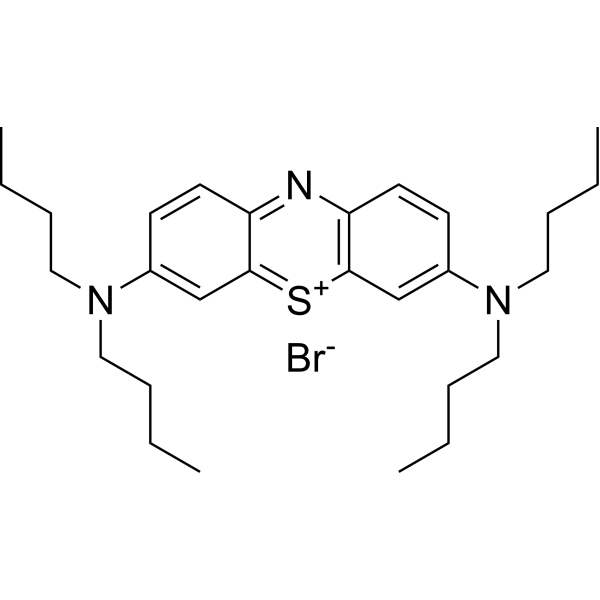 0 Images
PPA-904 is a specific phenothiazine photosensitizer in photodynamic research (PDT) research, especially topical application for cutaneous leishmaniasis in vivo.
-
1-Methyl-4-nitroimidazole
 0 Images
1-Methyl-4-nitroimidazole is an antibacterial agent. 1-Methyl-4-nitroimidazole is reduced by bacterial nitroreductases to form toxic derivatives, which cause DNA damage, inhibit bacterial nucleic acid synthesis, generate toxic superoxides through futile cycling of reduced radical anions, and induce bacterial cell death. 1-Methyl-4-nitroimidazole exhibits moderate in vitro activity against bacteria and fungal. 1-Methyl-4-nitroimidazole can be used in the research of skin infections, purulent infections and urinary tract infections.
-
Pyrimethanil (Standard)
 0 Images
Pyrimethanil (Standard) is the analytical standard of Pyrimethanil. This product is intended for research and analytical applications. Pyrimethanil is an anilinopyrimidine and broad-spectrum contact fungicide for the control of Botrytis spp. on a wide variety of crops. Pyrimethanil inhibits the biosynthesis of methionine and other amino acids in Botrytis cinerea. Pyrimethanil can be used for the research of fungal diseases prevention on fruit, vegetable and ornamental plants with mold infection.
-
Amprolium hydrochloride
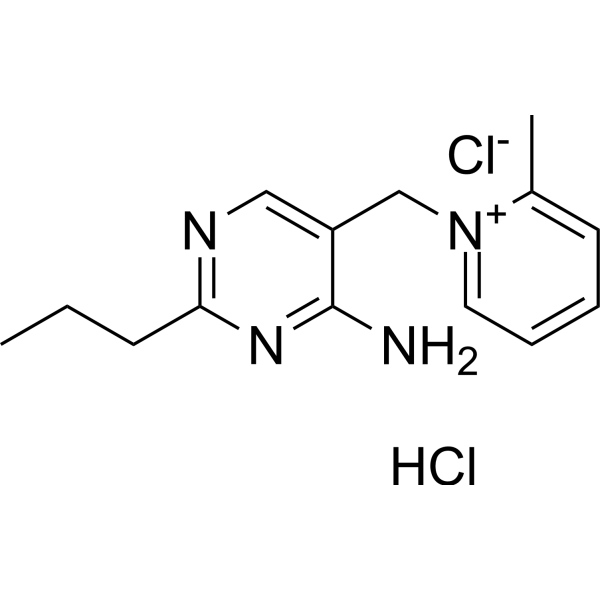 0 Images
Amprolium hydrochloride is a thiamine transporter inhibitor and antiparasitic agent with oral activity and blood-brain barrier penetration. Amprolium hydrochloride blocks thiamine transport at the blood-brain barrier and intestine, and competitively inhibits thiamine pyrophosphokinase, inducing thiamine pyrophosphate deficiency and impairing carbohydrate synthesis. Amprolium hydrochloride induces oxidative stress, alters antioxidant enzyme activity, and inhibits acetylcholinesterase (AchE) activity. Amprolium hydrochloride disrupts reproductive organs and gametogenesis, and causes histopathological and ultrastructural damage to multiple organs. Amprolium hydrochloride induces thiamine deficiency, reduces body weight gain in mice, and causes psychomotor behavioral changes and nephropathy. Amprolium hydrochloride exhibits molluscicidal activity against the terrestrial snail Eobania vermiculata, and reduces the shedding of Eimeria meleagrimitis oocysts in feces and litter. Amprolium hydrochloride can be used for research on thiamine deficiency and coccidiosis.
-
Anti-Influenza agent 10
 0 ImagesCat. No.: HY-180269
Anti-Influenza agent 10 (Compound 41) is an influenza A virus RNA-dependent RNA polymerase (RdRp) inhibitor. Anti-Influenza agent 10 exhibits potent antiviral activity against A/PR/8/34(H1N1) with an IC50 of 0.29μM and a KD of 4.11 μM. Anti-Influenza agent 10 can inhibit the assembly of the viral RdRp complex by disrupting the protein interaction between PA and PB1 subunits, thereby blocking the transcription and replication of the viral genome. Anti-Influenza agent 10 shows significant broad-spectrum effects on multiple influenza virus strains, such as H3N2, H3N8 and H9N2 with IC50 values of 3.96, 1.91 and 1.45 μM. Anti-Influenza agent 10 can be used for the research of influenza A Virus Infection.
-
Vanillic acid-13C6
 0 Images
Vanillic acid-13C6 is the 13C labeled isotope of Vanillic acid-13C6(HY-N0708 ).Vanillic acid is a flavoring agent found in edible plants and fruits, and in the root of angelica. Vanillic acid inhibits NF-κB activation. It has anti-inflammatory and antimicrobial activities.

-
(Z)-9-Tricosene
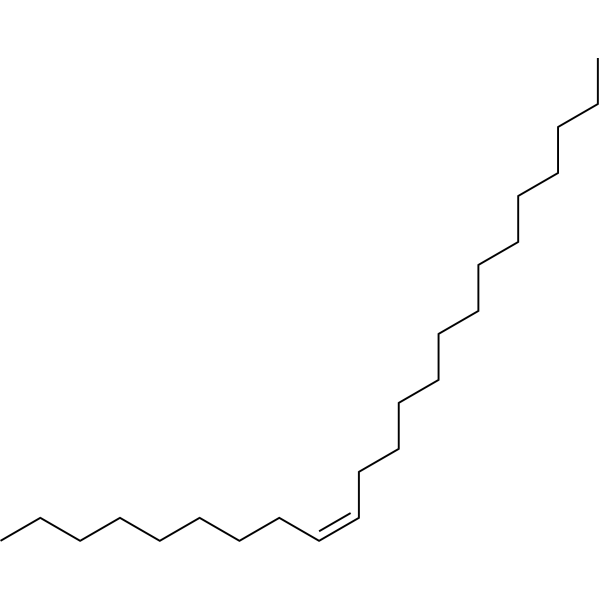 0 ImagesSynonyms: cis-9-Tricosene
(Z)-9-Tricosene (cis-9-Tricosene) is an insect pheromone found in dipteran flies. (Z)-9-Tricosene has multiple functions as a sex pheromone, aggregation pheromone and aphrodisiac pheromone, and mediates insect behaviors such as attraction, oviposition and mating via antennal receptors (e.g., the Or7a receptor). (Z)-9-Tricosene can be used in studies related to insecticides and insect chemical ecology.
-
Metalaxyl-M (Standard)
 0 ImagesCat. No.: HY-B0843ARCAS No.: 70630-17-0Synonyms: (R)-Metalaxyl (Standard)
Metalaxyl-M ((R)-Metalaxyl) (Standard) is the analytical standard of Metalaxyl-M (HY-B0843A). This product is intended for research and analytical applications. Metalaxyl-M ((R)-Metalaxyl) is an orally active and selective inhibitor of fungal RNA polymerase, which exerts fungicidal activity by selectively interfering with the synthesis of fungal ribosomal RNA. Metalaxyl-M can also be used to induce inflammation in hepatocytes and regulate tryptophan metabolism. Metalaxyl-M can be used in ecotoxicology studies.
-
Polypodine B
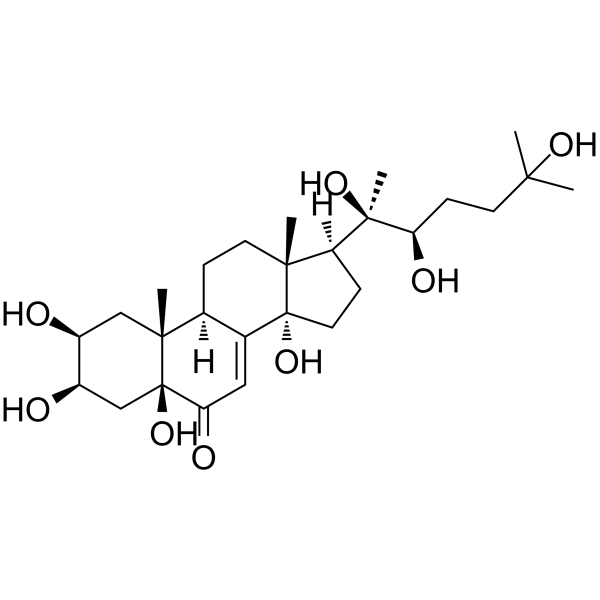 0 ImagesSynonyms: 5β-Hydroxyecdysterone
Polypodine B is a natural ecdysone ester isolated from the bark of Dacrydium intermedium. Polypodine B significantly inhibits the activity of Acanthamoeba castellani. Polypodine B has moderate antifungal activity. Polypodine B can be used for research on parasitic diseases and fungal infections.
-
Tolprocarb
 0 Images
Tolprocarb is an oomyces fungicide, which has a strong inhibitory effect on rice blast fungus Magnaporthe grisea by inhibiting polyketide synthase in melanin synthesis pathway .
-
Phosphoglycolic acid
 0 Images
Phosphoglycolic acid is a metabolite and a bacterial cytoplasmic component. Phosphoglycolic acid acts as a by-product generated during the preparation of phosphoglycolohydroxamic acid via hydrolysis of ethyl phosphoglycolate. Phosphoglycolic acid also functions as an active component of postbiotics.
-
Sisomicin sulfate (Standard)
 0 Images
Sisomicin (sulfate) (Standard) is the analytical standard of Sisomicin (sulfate). This product is intended for research and analytical applications. Sisomicin sulfate is a broad-spectrum aminoglycoside antibiotic produced by Micromonospora inyoensis. Sisomicin sulfate is highly active against Gram-positive bacteria[4].