



Cefalonium

Based on 1 Customer Validation
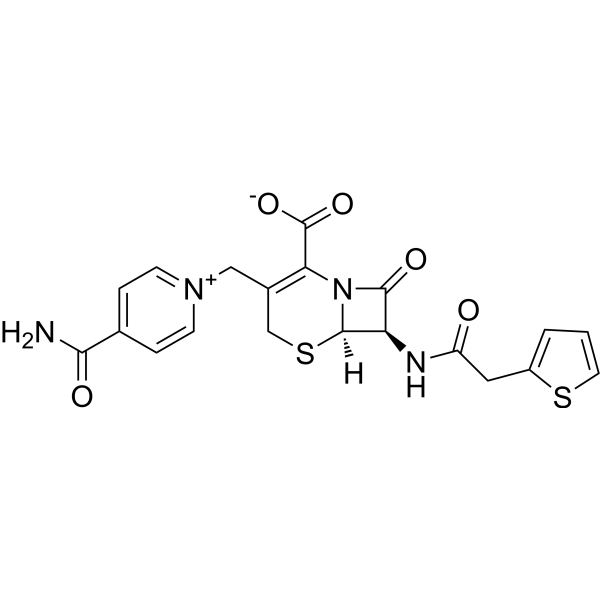
Cefalonium is a first-generation cephalosporin bactericidal antimicrobial agent. Cefalonium can be used in studies related to bovine mastitis, Staphylococcus aureus-induced mastitis and intramammary infections.
Nur für Forschungszwecke. Wir verkaufen nicht an Patienten.
- Reinheit : 98.85%
- CAS. Nr.: 5575-21-3
- Formel: C20H18N4O5S2
- Molecular Weight:458.51
-
Speicherung:Powder -20°C, 3 years ; In solvent -80°C, 6 months , -20°C, 1 month

To place orders, for customer services and technical support, please contact: MedChemExpress USA
Tel: 609-228-6898 E-mail: [email protected] [email protected]


-
 Biologische Aktivität
-
Chemical Information
-
Lösungsmittel & Löslichkeit
- Protokoll
- Reinheit & Dokumentation
- Verweise
-
 Help & FAQs


-
HY-115349
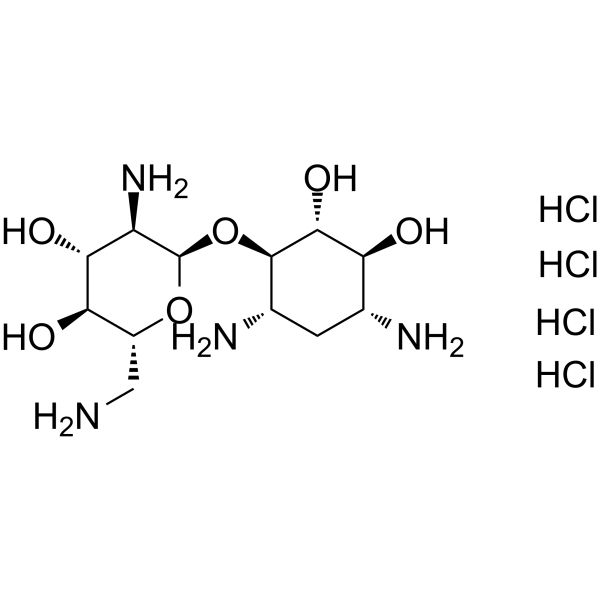
Neamine tetrahydrochlorideAminoglycoside Antibiotic -
HY-A0279A
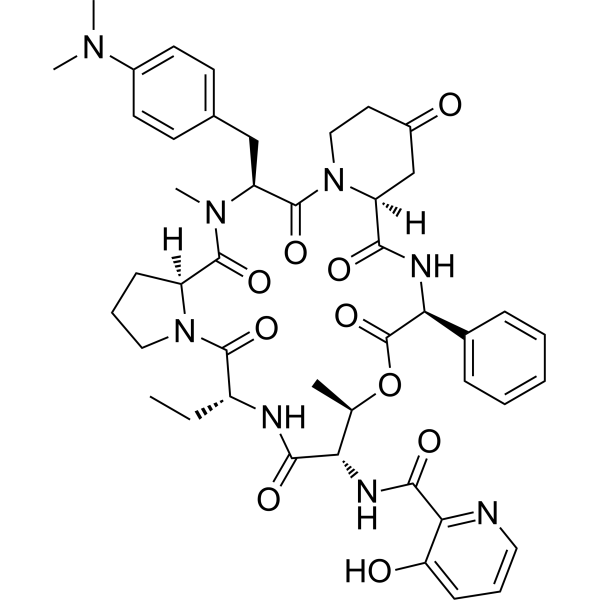
Pristinamycin IACycle-Peptidic Macrolactone -

HY-B1252R
Cefalonium (Standard)Reference Standard -

HY-125569
Leucomycin A5Antibiotic -
HY-B1802C
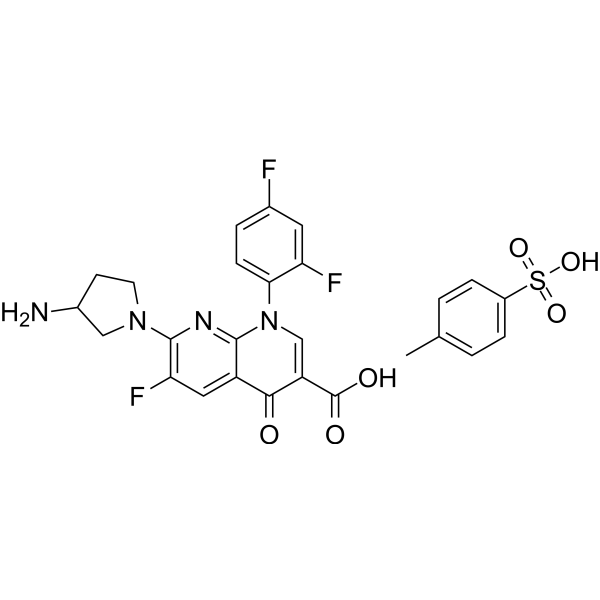
Tosufloxacin tosylateFluoroquinolone Antibiotic -

HY-B1802CR
Tosufloxacin tosylate (Standard)Fluoroquinolone Antibiotic -

HY-A0279AR
Pristinamycin IA (Standard)Cycle-Peptidic Macrolactone -
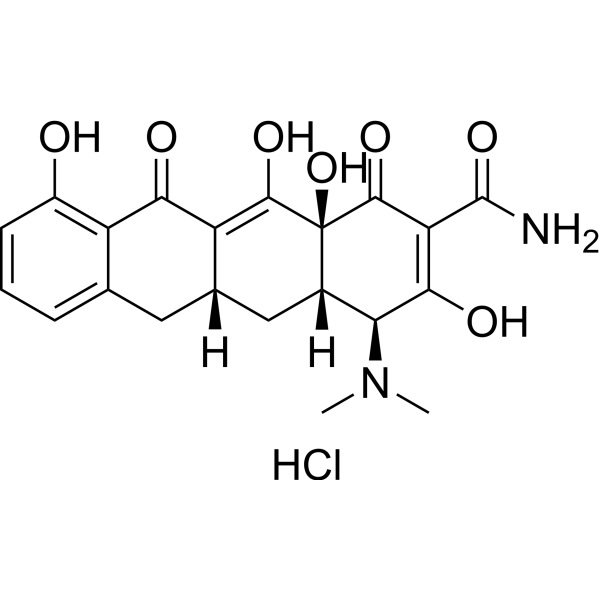
HY-17466A
Sancycline hydrochlorideBacterial Inhibitor, Translation Inhibitor -

HY-156074
Erythromycin propionateAntibiotic
Alle Antibiotic Isoform-spezifische Produkte anzeigen
More

Biologische Aktivität
Beschreibung
In Vitro
Cefalonium (10 µg per disk, 30 µg per disk; 18 h) produces zone diameters that correlate significantly with cefalonium MIC50s for Staphylococcus aureus isolates from bovine mastitis, with epidemiological cut-off values of ≥ 22 mm and ≥ 29 mm, respectively[1].
Cefalonium (16-20 h) potently inhibits the bovine mastitis isolate S. aureus Newbould 305 in vitro with an MIC of 0.06 μg/mL, and shows consistent activity against 330 global bovine mastitis S. aureus strains with an MIC50 of 0.08 μg/mL[2].
MedChemExpress (MCE) has not independently confirmed the accuracy of these methods. They are for reference only.
In Vivo
Cefalonium (single intramammary syringe dose; intramammary infusion; single dose; at drying off) alone results in a 7.3% incidence of new intramammary infections at calving across all dry period lengths, with efficacy declining to an 11.4% new infection rate at calving for cows with dry periods of 10 weeks or longer; the total incidence of mammary gland inflammation in the first 100 days of lactation is not significantly different from the comparison group[3].
MedChemExpress (MCE) has not independently confirmed the accuracy of these methods. They are for reference only.
-
Animal Model:CD-1 (female, 12-14 days post-offspring birth, ~50 g, lactating, mastitis model induced by intramammary injection of Staphylococcus aureus Newbould 305)[2]
-
Dosage:200 μg/gland; 400 μg/gland; 800 μg/gland
-
Administration:i.mam.; single dose
-
Result:Reduced mean bacterial load to 3.09 log10 CFU/g gland and resulted in 0% of glands cleared at 200 μg/gland.
Reduced mean bacterial load to 3.01 log10 CFU/g gland and resulted in 75% of glands cleared at 400 μg/gland; in a confirmatory study, reduced mean bacterial load to 1.70 log10 CFU/g gland and resulted in 100% of glands cleared at 400 μg/gland.
Reduced mean bacterial load to 3.00 log10 CFU/g gland and resulted in 100% of glands cleared at 800 μg/gland.
Achieved an ED2log10 of 27 μg/gland, ED4log10 of 105 μg/gland, PD50 of 362 μg/gland, and PD100 of 800 μg/gland.
-
Animal Model:Dairy cows (Institute for Animal Health research herd, managed on commercial lines; dried off abruptly at end of lactation, under natural exposure to intramammary infection pathogens)[3]
-
Dosage:single intramammary syringe dose
-
Administration:intramammary infusion; single dose; at drying off
-
Result:Resulted in a 7.3% incidence of new intramammary infections at calving across all dry period lengths.
Resulted in a 6% incidence of new intramammary infections at calving for cows with a dry period of <10 weeks.
Resulted in an 11.4% incidence of new intramammary infections at calving for cows with a dry period of ≥10 weeks.
Was associated with 15 total cases of mammary gland inflammation in the first 100 days of lactation for quarters infected at calving.
Resulted in 36 total cases of mammary gland inflammation in the first 100 days of lactation, with no significant difference compared to the comparison group.


Chemical Information
-
CAS. Nr. 5575-21-3
-
Appearance Solid
-
Molecular Weight 458.51
-
Formel C20H18N4O5S2
-
Color White to light yellow
-
SMILES
O=C(N[C@H]1[C@@]2([H])SCC(C[N+]3=CC=C(C(N)=O)C=C3)=C(C([O-])=O)N2C1=O)CC4=CC=CS4
-
Versand
Room temperature in continental US; may vary elsewhere.
-
Speicherung
Powder -20°C 3 years In solvent -80°C 6 months -20°C 1 month


Lösungsmittel & Löslichkeit
In Vitro:
DMSO : 100 mg/mL (218.10 mM; Need ultrasonic; Hygroscopic DMSO has a significant impact on the solubility of product, please use newly opened DMSO)
Please refer to the solubility information to select the appropriate solvent. Once prepared, please aliquot and store the solution to prevent product inactivation from repeated freeze-thaw cycles.
Storage method and period of stock solution: -80°C, 6 months; -20°C, 1 month. When stored at -80°C, please use it within 6 months. When stored at -20°C, please use it within 1 month.
Please refer to the solubility information to select the appropriate solvent. Once prepared, please aliquot and store the solution to prevent product inactivation from repeated freeze-thaw cycles.
Storage method and period of stock solution: -80°C, 6 months; -20°C, 1 month. When stored at -80°C, please use it within 6 months. When stored at -20°C, please use it within 1 month.
Konzentration (Stammlösung) × Volumen (Stammlösung) = Konzentration (Ziellösung) × Volumen (Ziellösung)


Reinheit & Dokumentation
-
Data Sheet (286 KB)
-
SDS (701 KB)
- English - EN (701 KB)
- Français - FR (701 KB)
- Deutsch - DE (701 KB)
- Norwegian - NO (701 KB)
- Español - ES (701 KB)
- Swedish - SV (701 KB)
- Italian - IT (701 KB)
- Korean - KR (701 KB)
- Portuguese - PT (701 KB)
-
Handling Instructions (2659 KB)
Verweise
[1]. Harada K, et al. Assessment of the Usefulness of Cefapirin and Cefalonium Disks for Susceptibility Testing of Staphylococcus aureus Isolates from Bovine Mastitis. Antibiotics (Basel). 2020 Apr 21;9(4):197. [Content Brief]
[2]. Demon D, et al. The intramammary efficacy of first generation cephalosporins against Staphylococcus aureus mastitis in mice. Veterinary microbiology. 2012 Nov 09;160(1-2):141-50. [Content Brief]
[3]. Berry EA, et al. Effect of an intramammary teat seal and dry cow antibiotic in relation to dry period length on postpartum mastitis. Journal of dairy science. 2007 Feb;90(2):760-5. [Content Brief]


Complete Stock Solution Preparation Table
Please refer to the solubility information to select the appropriate solvent. Once prepared, please aliquot and store the solution to prevent product inactivation from repeated freeze-thaw cycles.
Storage method and period of stock solution: -80°C, 6 months; -20°C, 1 month. When stored at -80°C, please use it within 6 months. When stored at -20°C, please use it within 1 month.
| Optional Solvent | Concentration Solvent Mass | 1 mg | 5 mg | 10 mg | 25 mg |
|---|---|---|---|---|---|
| DMSO | 1 mM | 2.1810 mL | 10.9049 mL | 21.8098 mL | 54.5244 mL |
| 5 mM | 0.4362 mL | 2.1810 mL | 4.3620 mL | 10.9049 mL | |
| 10 mM | 0.2181 mL | 1.0905 mL | 2.1810 mL | 5.4524 mL | |
| 15 mM | 0.1454 mL | 0.7270 mL | 1.4540 mL | 3.6350 mL | |
| 20 mM | 0.1090 mL | 0.5452 mL | 1.0905 mL | 2.7262 mL | |
| 25 mM | 0.0872 mL | 0.4362 mL | 0.8724 mL | 2.1810 mL | |
| 30 mM | 0.0727 mL | 0.3635 mL | 0.7270 mL | 1.8175 mL | |
| 40 mM | 0.0545 mL | 0.2726 mL | 0.5452 mL | 1.3631 mL | |
| 50 mM | 0.0436 mL | 0.2181 mL | 0.4362 mL | 1.0905 mL | |
| 60 mM | 0.0363 mL | 0.1817 mL | 0.3635 mL | 0.9087 mL | |
| 80 mM | 0.0273 mL | 0.1363 mL | 0.2726 mL | 0.6816 mL | |
| 100 mM | 0.0218 mL | 0.1090 mL | 0.2181 mL | 0.5452 mL |


Cefalonium Related Classifications
HY-B1252 Related Classifications
 Powered by Bioz