Inflammation/Immunology
-
Inflammation/Immunology Related Products (20898)
Related Products (20898)

-
Antibodies (115)
-
Related Compound Screening Libraries (4)
-
Xenin-8 acetate
 0 ImagesCat. No.: HY-P1257B
Xenin-8 acetate is the C-terminal octapeptide fragment of xenin, which belongs to the xenopsin family of peptides. Xenin-8 acetate stimulates basal insulin secretion, dose-dependently enhances glucose (EC50 = 0.16 nM) and arginine-induced insulin release, and enhances arginine- and Carbamoylcholine chloride (HY-B1208)-induced glucagon secretion. Xenin-8 acetate antagonizes the inhibition of glucagon release by elevated glucose. Xenin-8 acetate can be used in research on type 2 diabetes and obesity-related glucose metabolic disorders.
-
4-Ipomeanol
 0 ImagesCat. No.: HY-106315CAS No.: 32954-58-8
4-Ipomeanol is a pneumotoxin. 4-Ipomeanol can be produced by the common sweet potato, Ipomoea batatas, in the presence of Fusarium solani. 4-Ipomeanol can be bioactivated by CYP4B1.
-
Pyracrenic acid
 0 ImagesCat. No.: HY-130294CAS No.: 80832-44-6
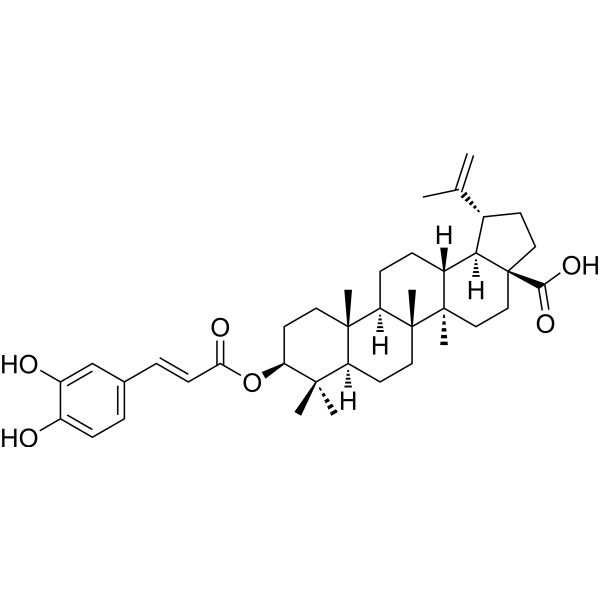
Pyracrenic acid is an elastase inhibitor (IC50 = 2.42 µM), can be obtained from the bark of Pyracantha crenulata. Pyracrenic acid has DPPH free radical scavenging activity and anti-inflammatory activity.
-
Sinomenine hydrochloride (Standard)
 0 ImagesSynonyms: Cucoline hydrochloride (Standard)
Sinomenine hydrochloride (Standard) is the analytical standard of Sinomenine hydrochloride. This product is intended for research and analytical applications. Sinomenine hydrochloride (Cucoline hydrochloride), an alkaloid extracted from Sinomenium acutum, is a blocker of the NF-κB activation. Sinomenine also is an activator of μ-opioid receptor.
-
Cladophorol A
 0 ImagesCat. No.: HY-N15159CAS No.: 146776-30-9
Cladophorol A is a cyclic GMP-AMP synthase (cGAS) inhibitor. Cladophorol A binds to the conserved adenosine nucleobase binding site within the cGAS active site to inhibit its catalytic activity. Cladophorol A effectively inhibits the overactivation of the cGAS-STING pathway with an IC50 of 370 nM. Cladophorol A inhibits asexual blood-stage Plasmodium falciparum with an EC50 of 0.7 μg/mL. Cladophorol A can be used for the researches of inflammatory disease and malaria.
-
N-Acetylnornuciferine
 0 Images
N-Acetylnornuciferine is an aporphine alkaloid, whose family members possess potential antibacterial, antiviral, antioxidant, or anticancer activities. N-Acetylnornuciferine can be extracted from the dried roots of Liriodendron tulipifera (American tulip tree, a plant of the Magnoliaceae family) using ethanol.
-
1,2-Distearoyl-sn-Glycero-3-Phosphatidylglycerol
 0 ImagesCat. No.: HY-148601CAS No.: 217939-97-4Synonyms: DSPG
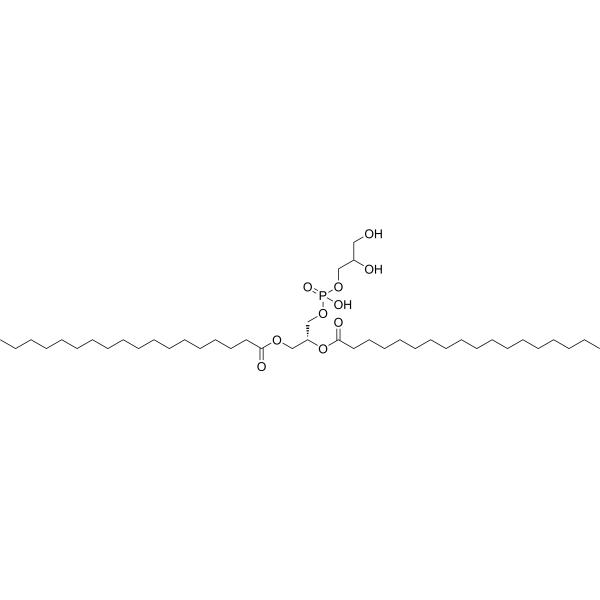
1,2-Distearoyl-sn-Glycero-3-Phosphatidylglycerol (DSPG) is an anionic (negatively charged) phospholipid. 1,2-Distearoyl-sn-Glycero-3-Phosphatidylglycerol is used to prepare lipid microbubbles as ultrasound contrast agents. 1,2-Distearoyl-sn-Glycero-3-Phosphatidylglycerol can be used to construct liposomes as vaccine carriers for the treatment of atherosclerosis. 1,2-Distearoyl-sn-Glycero-3-Phosphatidylglycerol is applicable to the research of drug delivery and diagnostic preparations.
-
Anti-L1-CAM Antibody
 0 ImagesCat. No.: HY-P992253
-
Cefetamet pivoxyl
 0 ImagesCat. No.: HY-B1894CAS No.: 65243-33-6Synonyms: Ro 15-8075 free base
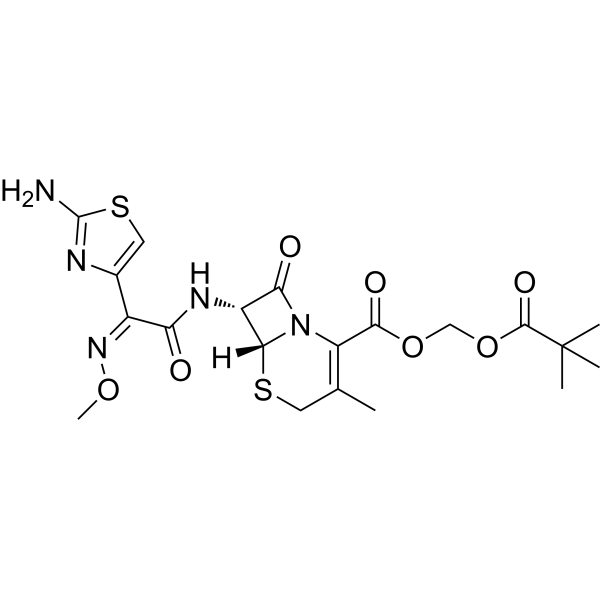
Cefetamet pivoxyl (Ro 15-8075 free base) is an orally active cephalosporin Antibiotic and a prodrug of Cefetamet (HY-A0111). After ingestion, Cefetamet pivoxyl is hydrolyzed by gastrointestinal esterases to form Cefetamet. Cefetamet pivoxyl is primarily active against aerobic Gram-negative bacteria (such as Enterobacteriaceae, Neisseria, Haemophilus) and some Gram-positive bacteria (such as non-enterococcal streptococci). Cefetamet pivoxyl exhibits potent in vivo antibacterial activity against strains of Gram-positive bacteria (S. pyogenes) and Gram-negative bacteria (E. coli, K. pneumoniae, S. marcescens, P. vulgaris, P. mirabilis, H. influenzae).
-
Siponimod-d11
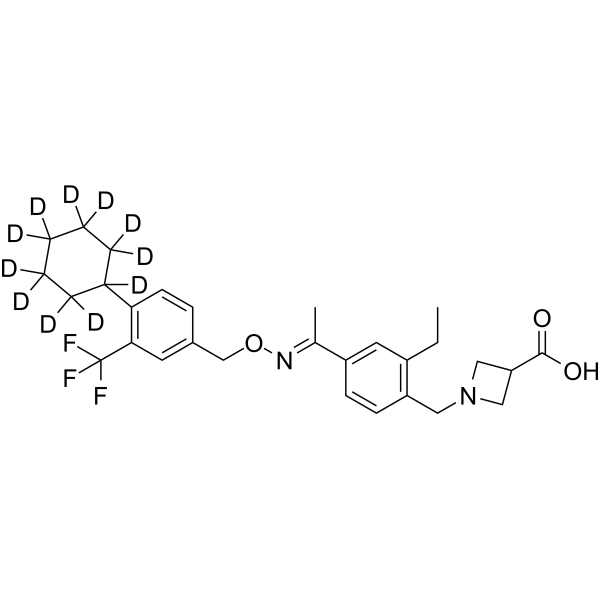 0 ImagesCat. No.: HY-12355SCAS No.: 2104759-32-0Synonyms: BAF-312-d11
Siponimod-d11 (BAF-312-d11) is deuterium labeled Siponimod (HY-12355). Siponimod is an orally active, blood-brain barrier penetrant dual agonist of S1P1/S1P5, with EC50 values of 0.39 nM and 0.98 nM, respectively. Siponimod induces S1P1 internalization, activates GIRK channels, inhibits lymphocyte egress, reduces peripheral lymphocyte counts, triggers transient bradycardia, prevents synaptic neurodegeneration, promotes remyelination, alleviates demyelination, and prevents the loss of GABAergic interneurons. Siponimod can be used in research related to multiple sclerosis.
-
Cedrol (Standard)
 0 ImagesSynonyms: (+)-Cedrol (Standard); α-Cedrol (Standard)
Cedrol (Standard) is the analytical standard of Cedrol. This product is intended for research and analytical applications. Cedrol is a potent competitive inhibitor of cytochrome P-450(CYP) enzyme. Cedrol plays an anticancer role by inducing cell cycle arrest and Caspase-dependent apoptosis. Cedrol acts as a neutrophil agonist that can desensitize cells to subsequent stimulation of N-formyl peptides. Cedrol prevents neuropathic pain caused by chronic contractile injury by inhibiting oxidative stress and inflammation. In addition, Cedrol has antibacterial, hair loss prevention and anti-anxiety properties.
-
C5aR-IN-2
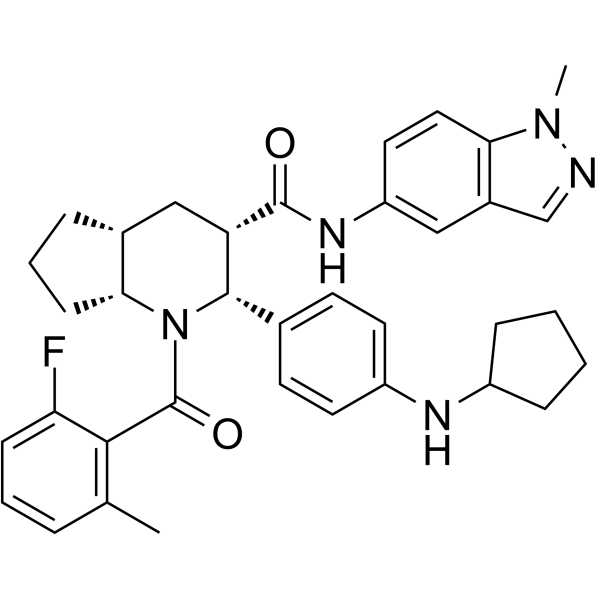 0 ImagesCat. No.: HY-147586CAS No.: 2761048-06-8
C5aR-IN-2 is a potent inhibitor of C5aR. Increased level of C5a has been associated with disorders such as autoimmune disorders and inflammatory disorders. C5aR-IN-2 has the potential for the research of inflammation diseases (extracted from patent WO2022028586A1, compound 49).
-
16:0 DNP Cap PE monoammonium
 0 ImagesCat. No.: HY-N15882CAS No.: 474943-10-7
16:0 DNP Cap PE monoammonium is an antigenic lipid that plays a role in promoting antigen presentation on lipid bilayers.
-
TLR8 agonist 11
 0 ImagesCat. No.: HY-188010CAS No.: 1449680-12-9
TLR8 agonist 11 is a selective human Toll-like receptor 8 (TLR8) agonist. TLR8 agonist 11 activates the hTLR8-dependent NF-κB signaling pathway. TLR8 agonist 11 can be used for the research of inflammation and immune-related diseases.
-
Ilexoside O
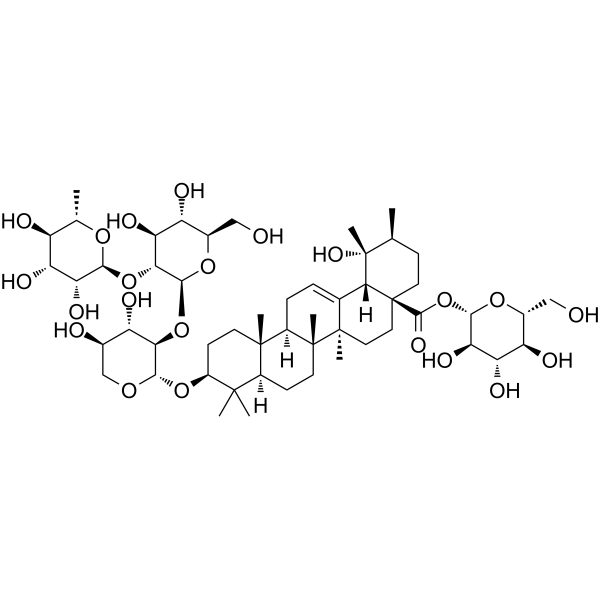 0 ImagesCat. No.: HY-N9324CAS No.: 136552-23-3
Ilexoside O is a triterpene saponin isolated from the roots of Ilex pubescens. Ilexoside O exhibits weak xanthine oxidase (XOD) inhibitory activity (IC50=53.05 μM).
-
PROTAC NLRP3 degrader-1
 0 ImagesCat. No.: HY-186342CAS No.: 3115501-20-4
PROTAC NLRP3 degrader-1 is a PROTAC degrader targeting NLRP3. PROTAC NLRP3 degrader-1 recruits VHL E3 ubiquitin ligase to form a ternary complex with NLRP3, inducing VHL-dependent ubiquitination and proteasomal degradation of the inflammasome sensor NLRP3. PROTAC NLRP3 degrader-1 reduces IL-1β release. PROTAC NLRP3 degrader-1 can be used for research on NLRP3-related inflammation, metabolic inflammation, and cancer.
-
Galectin-3/galectin-8-IN-2
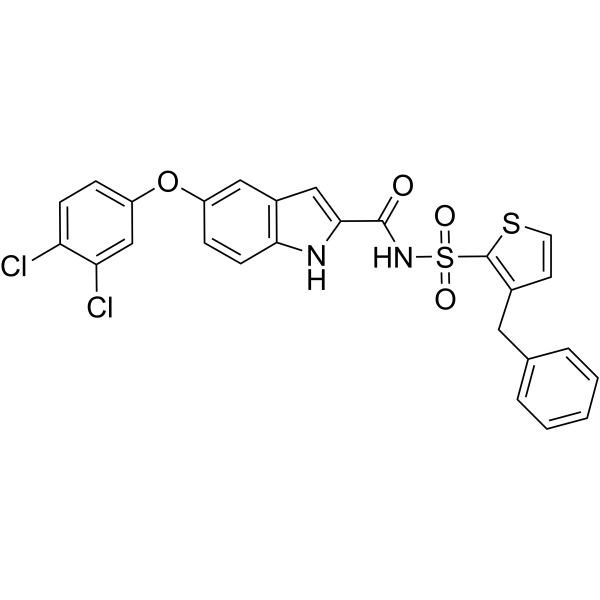 0 ImagesCat. No.: HY-155192
Galectin-3/galectin-8-IN-2 (Compound 57) is a dual Galectin-3 and galectin-8 C-terminal domain inhibitor, with Kd values of 12.8 μM and 2.06 μM respectively. Galectin-3/galectin-8-IN-2 inhibits the MRC-5 lung fibroblast cells migration. Galectin-3/galectin-8-IN-2 can be used for research of cancer and tissue fibrosis.
-
NLRP3-IN-27
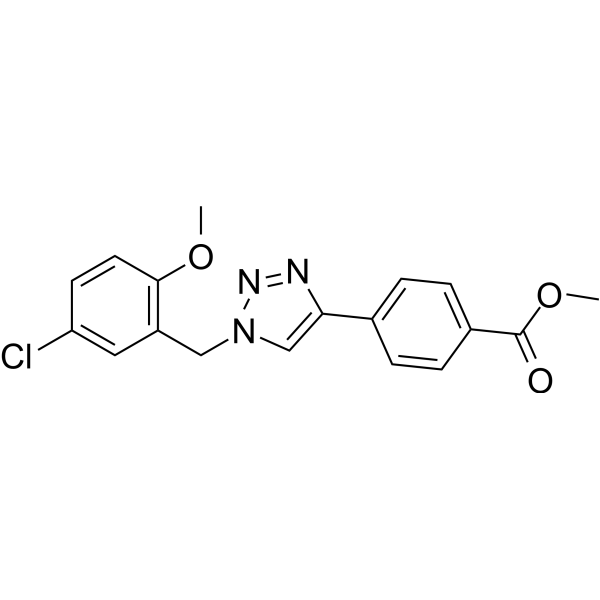 0 ImagesCat. No.: HY-161120CAS No.: 2997864-57-8
NLRP3-IN-27 is a selective NLRP3 inhibitor with a IC50 value of 0.55 μM. NLRP3-IN-27 can be used in the study of inflammation and immunity.
-
2'-5' Oligoadenylate Synthetase 1, Human
 0 ImagesCat. No.: HY-E70619
2'-5' Oligoadenylate Synthetase 1, Human is an enzyme induced by IFNs that is activated by the presence of double-stranded RNA and stimulates the oligomerisation of ATP into 2′,5′-linked oligoadenylates (2-5A). 2'-5' Oligoadenylate Synthetase 1, Human plays an important role in inflammatory immune reactions.