



Beta-secretase
BACE; β-Secretase
Beta-secretase (BACE) is a transmembrane aspartic proteinase responsible for cleaving the amyloid precursor protein (APP) to generate the soluble ectodomain sAPPbeta and its C-terminal fragment CTFbeta. BACE is a major target of Alzheimer's disease (AD) therapeutics. There are two forms of the enzyme: BACE1 and BACE2.
Deposition of amyloid-β protein (Aβ) to form neuritic plaques is the characteristic neuropathology of Alzheimer's disease (AD). Aβ is generated from APP by β- and γ-secretase cleavages. BACE1 is the β-secretase and its inhibition induces severe side effects, whereas its homolog BACE2 normally suppresses Aβ by cleaving APP/Aβ at the θ-site (Phe20) within the Aβ domain.
Beta-secretase Isoform Specific Products
All Product Categories
-
Beta-secretase Related Products (143)
Related Products (143)

-
Antibodies (1)
-
Beta-secretase Isoform Comparison
-
TB-9
 0 ImagesCat. No.: HY-164956CAS No.: 1415033-91-8TB-9, a Tasiamide B (HY-N15154) derivative, is a potent cathepsin D, cathepsin E, and BACE1 inhibitor with IC50s of 0.0783 nM, 0.724 nM, and 54.2 nM, respectively.
-
GRL-8234
 0 ImagesCat. No.: HY-10104CAS No.: 913071-81-5GRL-8234 is a potent β-secretase (BACE1) inhibitor with blood-brain barrier penetration (Ki = 1.8 nM). GRL-8234 can rescue age-related cognitive decline in Tg2576 mice. GRL-8234 can be used in the research related to Alzheimer's disease (AD).

-
Eslicarbazepine acetate (Standard)
 0 ImagesSynonyms: BIA 2-093 (Standard)Eslicarbazepine acetate (Standard) is the analytical standard of Eslicarbazepine acetate. This product is intended for research and analytical applications. Eslicarbazepine acetate (BIA 2-093), an antiepileptic agent, is a dual a dual Inhibitor of β-Secretase and voltage-gated sodium channel.
-
AChE-IN-63
 0 ImagesCat. No.: HY-158261CAS No.: 876685-78-8AChE-IN-63 (Compound 5AD) is a selective inhibitor of hAChE (IC50=0.103 μM). AChE-IN-63 also inhibits hBChE and hBACE-1 (IC50= 10 μM (hBChE); 1.342 μM (hBACE-1)). AChE-IN-63 inhibits Aβ aggregation, preventing the formation and deposition of Aβ1-42. AChE-IN-63 can effectively penetrate the blood-brain barrier and is orally effective. It is primarily used in Alzheimer's disease research.
-
2-Acetoxyacorenone
 0 ImagesCat. No.: HY-W750970CAS No.: 185154-95-42-Acetoxyacorenone (compound 8) is a sesquiterpenoid, which can be isolated from the rhizome of Acorus tatarinowii. 2-Acetoxyacorenone has potent AChE and β-BACE1 inhibitory activity and can be used in the study of Alzheimer's disease.
-
TAK-070 Free base
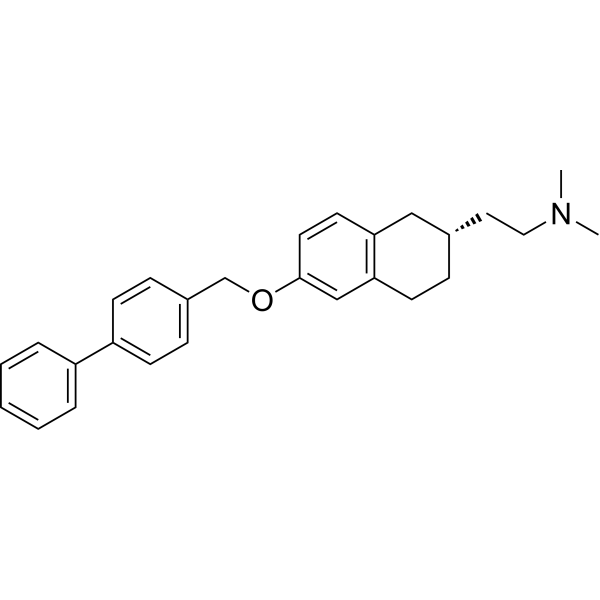 0 ImagesCat. No.: HY-114234ACAS No.: 212571-56-7TAK-070 Free base is a noncompetitive and orally active BACE1 inhibitor (IC50: 3.15 μM). TAK-070 Free base can be used for research of Alzheimer’s disease (AD). TAK-070 Free base inhibits brain levels of soluble Aβ, and improves cognitive impairments in AD model.
-
BACE1-IN-12
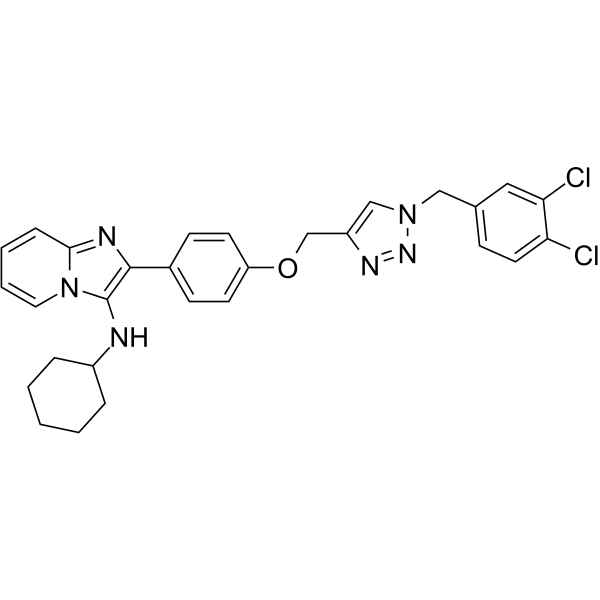 0 ImagesCat. No.: HY-147851CAS No.: 2479315-19-8BACE1-IN-12 (compound 7g) is a potent and BBB-penetrated BACE1 inhibitor, with an IC50 of 8.9 µM. BACE1-IN-12 shows selective BuChE (butyrylcholinesterase) inhibitory activity with an IC50 of 3.2 µM. BACE1-IN-12 shows effective antioxidant effect with an IC50 of 10.2 μM (DPPH). BACE1-IN-12 might be served as a potential anti-Alzheimer agent.
-
β-Secretase Inhibitor III
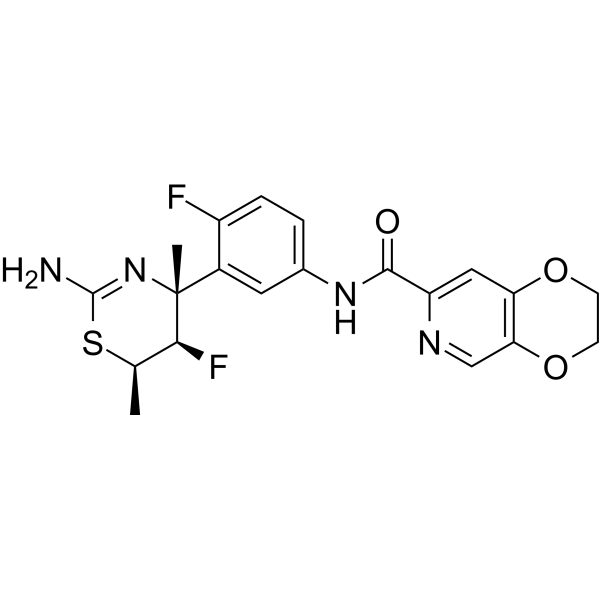 0 ImagesCat. No.: HY-139720CAS No.: 2760674-85-7β-Secretase Inhibitor III is an extremely selective BACE1 inhibitor (Ki = 0.13 nM).
-
SSZ
 0 ImagesSSZ is a multi-target inhibitor, which targets multiple pathological mechanisms of Alzheimer's disease (AD). SSZ targets acetylcholinesterase, butyrylcholinesterase, β-site amyloid precursor protein cleavage enzyme 1 (BACE1), and γ-secretase. SSZ ameliorates Alzheimer’s diseases and exhibits neuroprotective effect in mice.

-
OM99-2
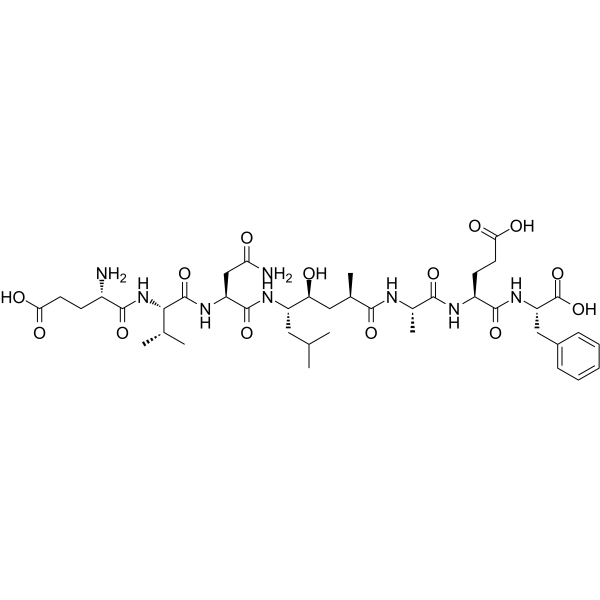 0 ImagesCat. No.: HY-P2713CAS No.: 314266-76-7OM99-2, an eight residue peptidomimetic, tight-binding inhibitor of human brain memapsin 2 with a Ki value of 9.58 nM. OM99-2 is significantly advanced the development of BACE1 inhibitor. OM99-2 has the potential for the research of the Alzheimer's disease.
-
LY-2434074
 0 ImagesCat. No.: HY-10143CAS No.: 883446-27-3LY-2434074 is a selective β-secretase (BACE) inhibitor with an IC50 <100 nM. LY-2434074 can inhibit amyloid-β (Aβ40 and Aβ42) production. LY-2434074 can be used for the research of neurological disease, such as Alzheimer's disease.
-
β-Secretase Inhibitor II
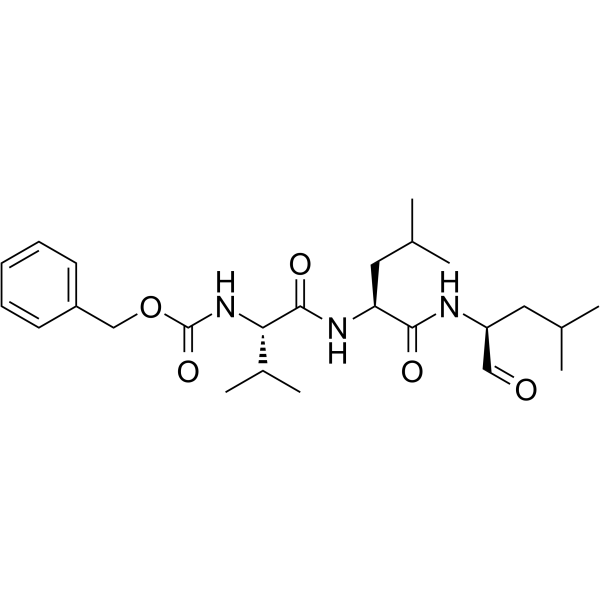 0 ImagesCat. No.: HY-136736CAS No.: 263563-09-3β-Secretase Inhibitor II is a β-Secretase inhibitor. β-Secretase Inhibitor II is a simple tripeptide aldehyde (IC50=700 nM for inhibition of total Aβ and IC50=2.5 μM for Aβ1–42). β-Secretase Inhibitor II can be used for the research of Alzheimer's disease.
-
AChE-IN-82
 0 ImagesCat. No.: HY-170938AChE-IN-82 (compound 49) is an acetylcholinesterase (AChE) inhibitor. AChE-IN-82 inhibits eeAChE, eqBChE, hMAO-A, hMAO-B, and BACE-1 with IC50s of 0.072, 9.81, 14.52, 0.024, 2.42 μM, respectively. AChE-IN-82 inhibits COX-1, COX-2 and 5-LOX with IC50s of 60.41, 0.187, 0.18 μM, respectively. AChE-IN-82 shows an excellent neuroprotective effect by significantly reducing oxidative stress induced by H2 O2.
-
Lanabecestat hydrochloride
 0 ImagesCat. No.: HY-100740ACAS No.: 1383986-31-9Synonyms: AZD-3293 hydrochloride; LY3314814 hydrochlorideLanabecestat (AZD3293; LY3314814) hydrochloride is a potent BACE1 inhibitor that has been investigated for its potential as a modifying treatment for Alzheimer's disease. Lanabecestat (hydrochloride) demonstrated significant dose- and time-dependent reductions in concentrations of amyloid beta peptides in plasma, cerebrospinal fluid, and brain. Lanabecestat (hydrochloride) was also shown to produce reductions in Aβ neuritic plaque burden without demonstrating clinical benefits or slowing the progression of Alzheimer's disease pathophysiology.
-
β-Secretase substrate VI, fluorogenic
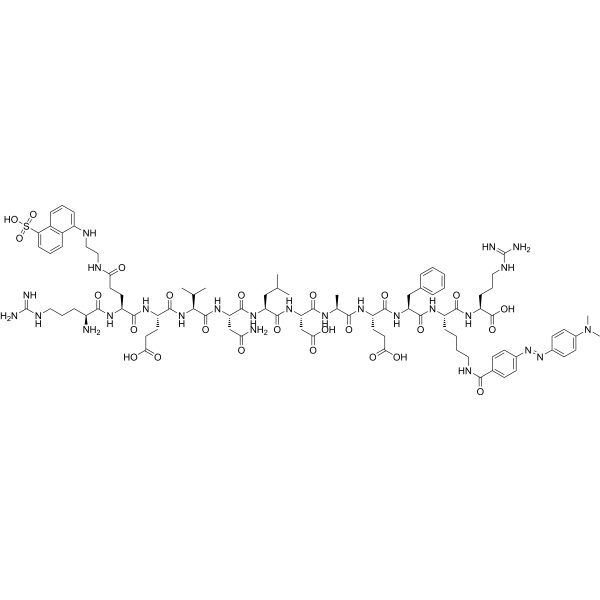 0 ImagesCat. No.: HY-P4899CAS No.: 310427-94-2Synonyms: RE(EDANS)EVNLDAEFK(DABCYL)Rβ-Secretase substrate VI, fluorogenic is an EDANS and DABCYL double-labeled peptide,serves as a fluorescent substrate for BACE1(Em=360nm,Ex=528nm). β-Secretase substrate VI, fluorogenic can be used for BACE1 activity measurement and the enzyme activity level is directly proportional to the fluorescence reaction.
-
BACE1-IN-9
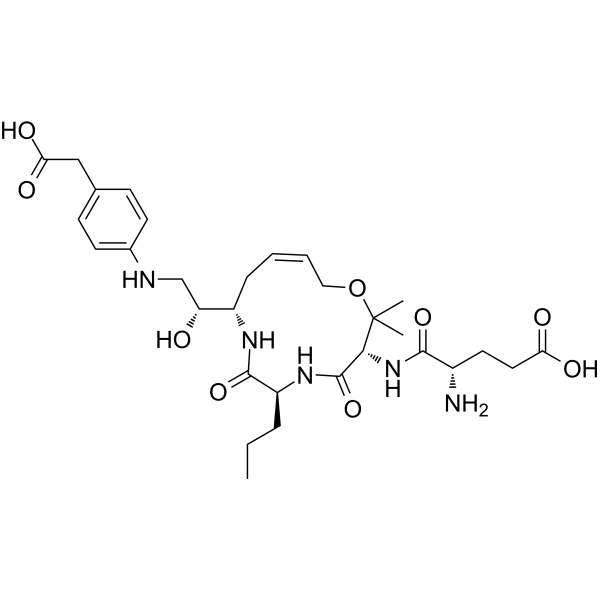 0 ImagesCat. No.: HY-144741CAS No.: 2872604-91-4BACE1-IN-9 (compound 82b) is a potent BACE1 (β-site APP cleaving enzyme 1) inhibitor, with an IC50 of 1.2 µM.
-
hAChE/hBACE-1-IN-2
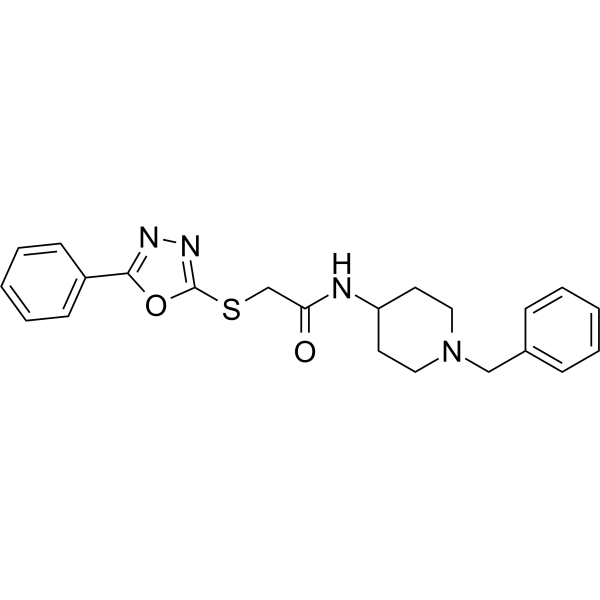 0 ImagesCat. No.: HY-149288hAChE/hBACE-1-IN-2 is a potent, orally active, blood-brain barrier transboundary triple inhibitor of hAChE, hBChE, and HACE-1 with IC50s of 0.113 μM, 1.48 μM and 0.38 μM, respectively. hAChE/hBACE-1-IN-2 has antioxidant activity. hAChE/hBACE-1-IN-2 also inhibits Aβ11-42 aggregation. hAChE/hBACE-1-IN-2 can be used to study Alzheimer's disease.




