COX
Cyclooxygenase
Cyclooxygenase (COX), officially known as prostaglandin-endoperoxide synthase (PTGS), is an enzyme that is responsible for formation of important biological mediators called prostanoids, including prostaglandins, prostacyclin and thromboxane. Pharmacological inhibition of COX can provide relief from the symptoms of inflammation and pain. Drugs, like Aspirin, that inhibit cyclooxygenase activity have been available to the public for about 100 years. Two cyclooxygenase isoforms have been identified and are referred to as COX-1 and COX-2. Under many circumstances the COX-1 enzyme is produced constitutively (i.e., gastric mucosa) whereas COX-2 is inducible (i.e., sites of inflammation). Non-steroidal anti-inflammatory drugs (NSAID), such as aspirin and ibuprofen, exert their effects through inhibition of COX. The main COX inhibitors are the non-steroidal anti-inflammatory drugs (NSAIDs).
COX Isoform Specific Products
All Product Categories
-
COX Related Products (1297)
Related Products (1297)

-
Antibodies (6)
-
COX Isoform Comparison
-
Glucametacine
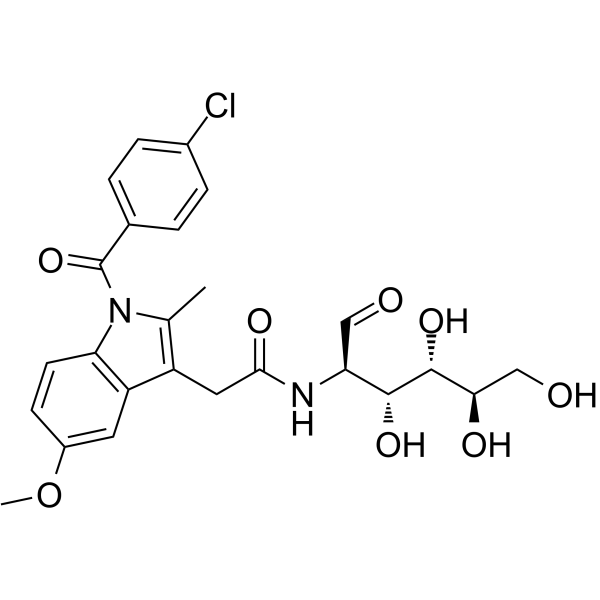 0 ImagesCat. No.: HY-111392CAS No.: 52443-21-7Glucametacine is an anti-inflammatory agent.
-
Oxaprozin-d10
 0 ImagesCat. No.: HY-W709448Synonyms: Oxaprozinum-d10; Wy21743-d10Oxaprozin-d10 (Oxaprozinum-d10; Wy21743-d10) is the deuterium labeled Oxaprozin (HY-B0808). Oxaprozin is an orally active and potent COX inhibitor, with IC50 values of 2.2 μM for human platelet COX-1 and and 36 μM for IL-1-stimulated human synovial cell COX-2, respectively. Oxaprozin also inhibits the activation of NF-κB. Oxaprozin induces cell apoptosis. Oxaprozin shows anti-inflammatory activity. Oxaprozin-mediated inhibition of the Akt/IKK/NF-κB pathway contributes to its anti-inflammatory properties.
-
Esculentic acid
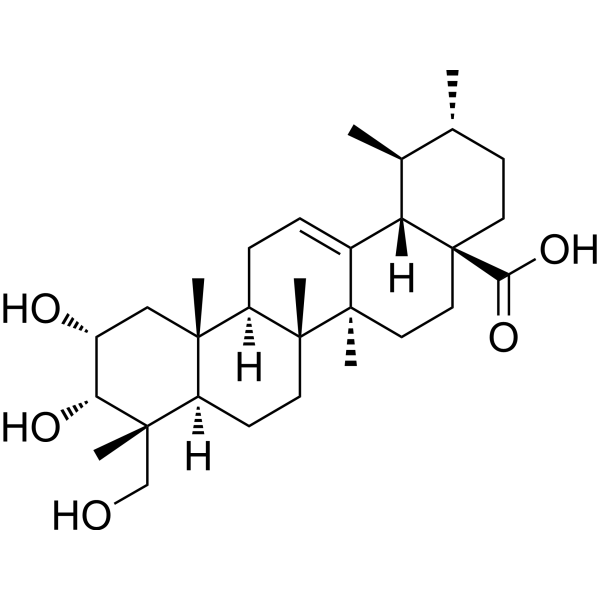 0 ImagesCat. No.: HY-N3866CAS No.: 103974-74-9Esculentic acid is a selective COX-2 inhibitor and has anti-inflammatory effect. Esculentic acid is a pentacyclic triterpenoid that can be extracted from the Chinese herb Phytolacca esculenta.
-
Sinapyl alcohol (Standard)
 0 ImagesCat. No.: HY-W109812RCAS No.: 537-33-7Sinapyl alcohol (Standard) is the analytical standard of Sinapyl alcohol. This product is intended for research and analytical applications. Sinapyl alcohol is an orally active anti-inflammatory and antinociceptive agent. Sinapyl alcohol reduces the expression level of inducible NO synthase and COX-2[1].
-
Ibufenac-13C6
 0 ImagesCat. No.: HY-W756637Synonyms: Dytransin-13C6Ibufenac-13C6 (Dytransin-13C6) is the 13C-labeled Ibufenac (HY-W040672). Ibufenac (Dytransin) is an orally active nonsteroidal anti-inflammatory agent. Ibufenac exerts anti-inflammatory, analgesic and antipyretic effects. Ibufenac is being studied for the treatment of rheumatic diseases such as rheumatoid arthritis.
-
SC-75416
 0 ImagesCat. No.: HY-19500CAS No.: 215122-74-0SC-75416 is a selective cyclooxygenase-2 inhibitor. Its pharmacokinetic/pharmacodynamic (PK/PD) model was used for development and clinical trial simulation to design a study protocol to verify its analgesic effect in a post-oral surgery pain model. The simulation results showed that 360 mg of SC-75416 may provide better pain relief than 400 mg of ibuprofen. The actual clinical trial results confirmed this hypothesis, and 360 mg of SC-75416 was indeed superior to 400 mg of ibuprofen in pain relief. The PK/PD model of SC-75416 showed good predictive performance and successfully predicted its clinical effect. These research results show that SC-75416, as a new selective COX-2 inhibitor, has potential clinical application value in the management of post-oral surgery pain.
-
(S)-(+)-Ketoprofen-13C,d3
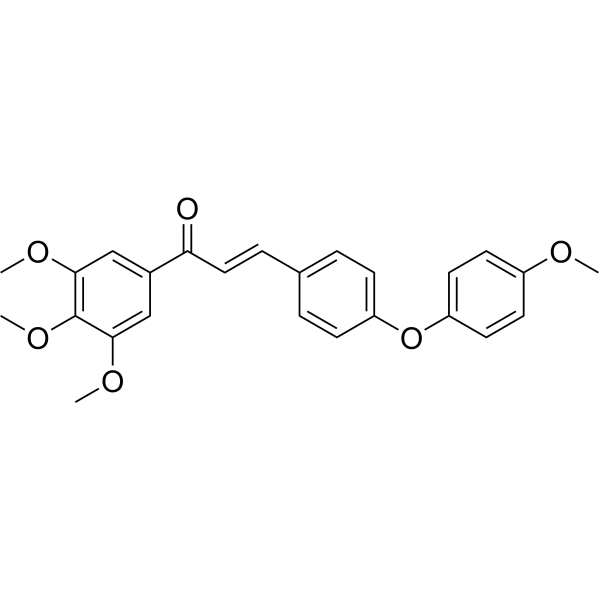
 0 ImagesCat. No.: HY-W778002CAS No.: 1330260-99-5(S)-(+)-Ketoprofen-13C,d3 is the deuterium and 13C-labeled S-(+)-Ketoprofen (HY-B2137). S-(+)-Ketoprofen is a potent inhibitor of both COX-1 and COX-2 with IC50s of 1.9 and 27 nM, respectively.
-
Diclofenac Amide-13C6
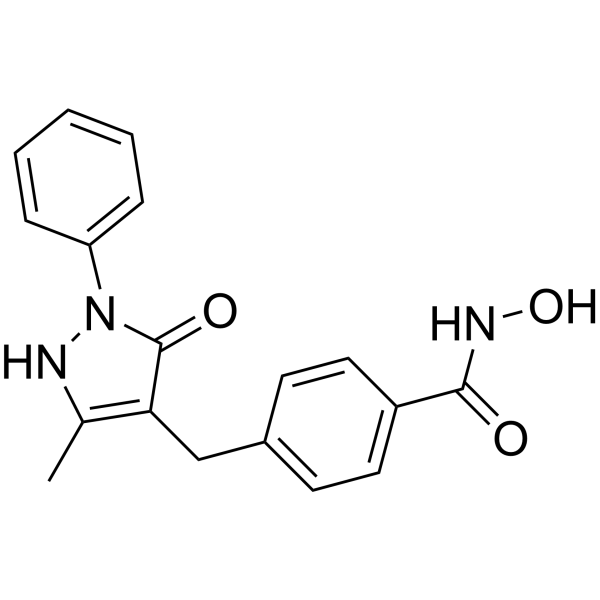
 0 ImagesCat. No.: HY-W747879Diclofenac Amide-13C6 is the 13C-labeled Diclofenac amide (HY-134521). Diclofenac amide is a prodrug for Diclofenac sodium (HY-15037). Diclofenac amide is an orally active inhibitor for COX-1/2, that inhibits the production of prostaglandins (PG) and thromboxanes (TX). Diclofenac amide exhibits anti-inflammatory efficacy in Carrageenan (HY-125474)-induced rat paw edema model without causing gastric ulcer (300 μmol/kg).
-
Anti-inflammatory agent 68
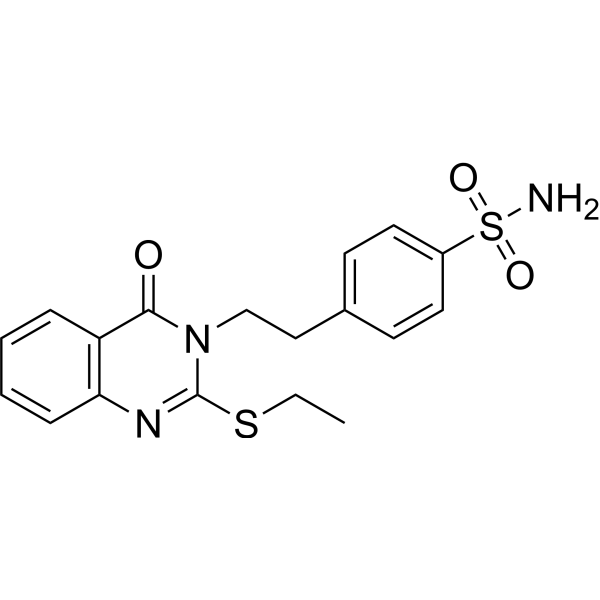
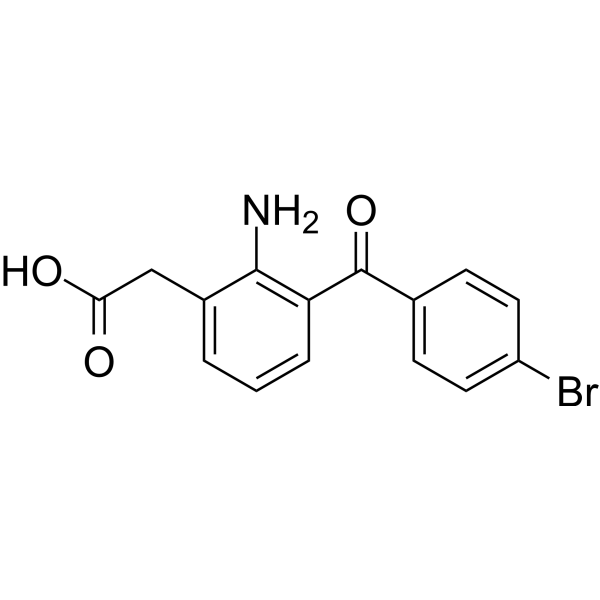
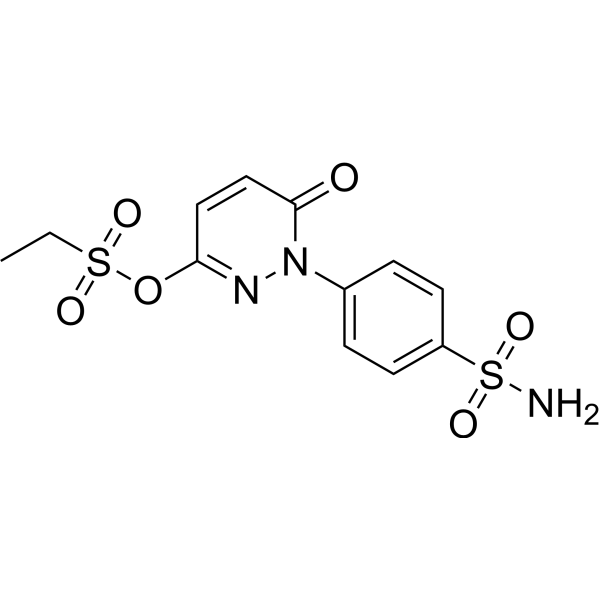 0 ImagesCat. No.: HY-163117Anti-inflammatory agent 68 (compound 7b) is a dual inhibitor of carbonic anhydrase and COX-2, a sulfonamide derivative of Polmacoxib (HY-16726), with anti-inflammatory properties and analgesic activity. Anti-inflammatory agent 68 has IC50s of 12.6 μM and 60 nM for COX-1 and COX-2, respectively. The Ki of anti-inflammatory agent 68 binding to different isoforms of carbonic anhydrase are 52.6 nM (CA I), 79.1 nM (CA II), 58.1 nM (CA IX), and 17.2 nM (CA XII).
-
Loxoprofen sodium dihydrate
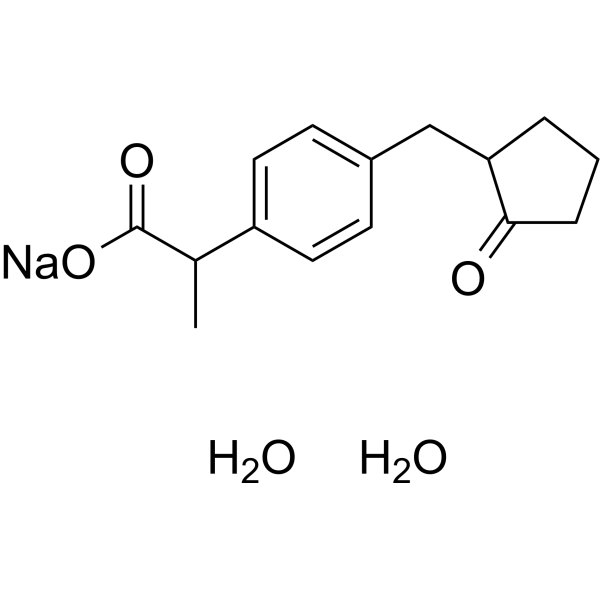 0 ImagesCat. No.: HY-B0578BCAS No.: 226721-96-6Loxoprofen sodium dihydrate is a non-steroidal, orally active anti-inflammatory agent with analgesic and anti-pyretic properties. Loxoprofen sodium dihydrate is a nonselective COX inhibitor with IC50s of 6.5 and 13.5 μM for COX-1 and COX-2, respectively. Loxoprofen sodium dihydrate can reduce atherosclerosis and shows antitumor activity.
-
Neokadsuranic acid B
 0 ImagesCat. No.: HY-N19877CAS No.: 123828-59-1Neokadsuranic acid B is a 14 (13→12)-seco-lanostane-type triterpenoid acid that exists in the stems of Kadsura longipedunculata and Radix Aconiti Lateralis Preparata. It has high binding affinity for PTGS2 (COX-2). Neokadsuranic acid B shows promise for research into rheumatoid arthritis.
-
4'-Aarboxylic acid imrecoxib-d7
 0 ImagesCat. No.: HY-144463S4'-Aarboxylic acid imrecoxib-d7 is the deuterium labeled 4'-Aarboxylic acid imrecoxib (HY-154846). 4'-Aarboxylic acid imrecoxib is a metabolite of Imrecoxib, a selective COX-II inhibitor.
-
C2 Ceramide (d14:1/2:0)
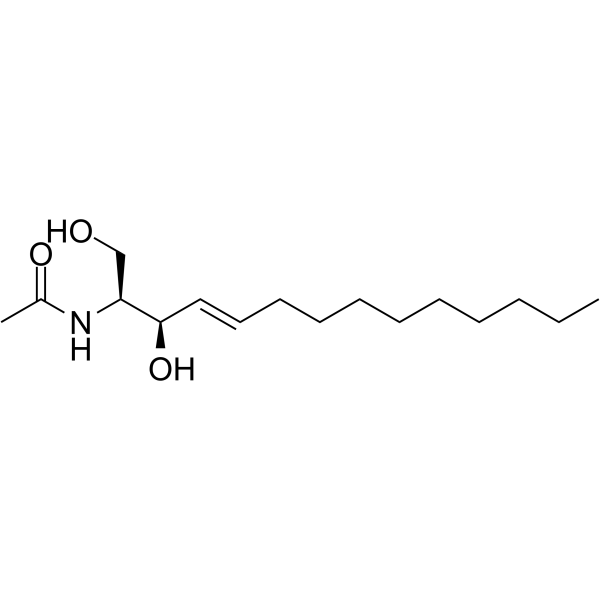 0 ImagesCat. No.: HY-116877CAS No.: 2097561-20-9C2 Ceramide (d14:1/2:0) is a composition for diagnosing diseases associated with cyclooxygenase 2 (COX2) overexpression. C2 Ceramide (d14:1/2:0) exhibits a strong binding activity to COX2 protein (extracted from patent WO2019235824A1).
-
Macelignan (Standard)
 0 ImagesCat. No.: HY-N0064RCAS No.: 107534-93-0Synonyms: (+)-Anwulignan (Standard); Anwuligan (Standard)Macelignan (Standard) is the analytical standard of Macelignan. This product is intended for research and analytical applications. Macelignan ((+)-Anwulignan; Anwuligan) is an orally active lignan isolated from Myristica fragrans. Macelignan possesses many pharmacological activities, including anti-inflammatory, anti-cancer, anti-diabetes, and neuroprotective activities.
-
Lonazolac hemicalcium
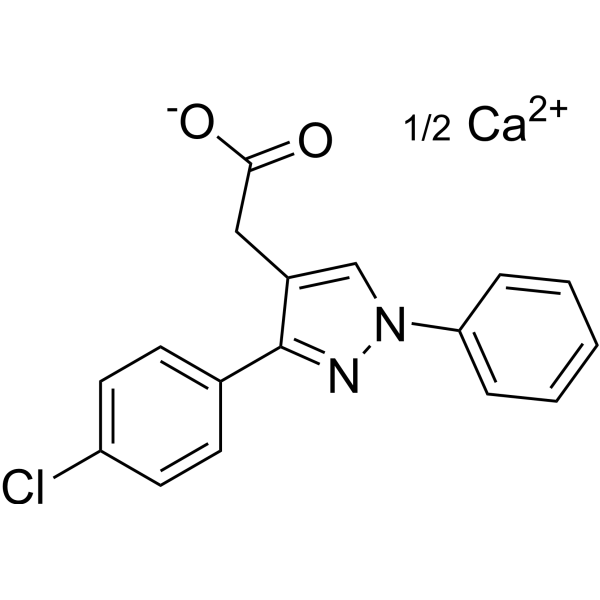 0 ImagesCat. No.: HY-137149CAS No.: 75821-71-5Lonazolac (hemicalcium) is the calcium salt form of Lonazolac. Lonazolac is a nonsteroidal antirheumatic agent with anti-inflammatory properties.