



EGFR
Epidermal growth factor receptor; ErbB-1; HER1
The EGFR family of receptor tyrosine kinases (RTK) comprises four distinct receptors: the EGFR (also known as ErbB-1/HER1), ErbB-2 (neu, HER2), ErbB-3 (HER3) and ErbB-4 (HER4). All EGFR family members are characterized by a modular structure consisting of an extracellular ligand-binding domain, a single hydrophobic transmembrane region, and the intracellular part harbouring the highly conserved tyrosine kinase domain. The ErbB family of receptor tyrosine kinases (RTKs) couples binding of extracellular growth factor ligands to intracellular signaling pathways regulating diverse biologic responses, including proliferation, differentiation, cell motility, and survival. Ten growth factors and their ErbB specificities are: EGF, amphiregulin (AR), and TGF bind ErbB-1; betacellulin, and epiregulin bind both ErbB-1 and ErbB-4; the neuregulins (also called heregulins and Neu differentiation factors) NRG-1 and NRG-2 bind ErbB-3 and ErbB-4; and NRG-3 and NRG-4 bind ErbB-4. No known ligand binds ErbB-2. The three best characterized signaling pathways induced through ErbBs are Ras-mitogen-activated protein kinase (Ras-MAPK), phosphatidylinositol 3 kinase-protein kinase B (PI3K-PKB/Akt), and phospholipase C-protein kinase C (PLC-PKC) pathways.
EGFR Isoform Specific Products
All Product Categories
-
EGFR Inhibitors
(1035)
View all products
-
EGFR Agonists
(4)
View all products
-
EGFR Antagonists
(5)
View all products
-
EGFR Activators
(8)
View all products
-
EGFR Modulators
(7)
View all products
-
EGFR Chemicals
(3)
View all products
-
EGFR Inducers
(4)
View all products
-
EGFR Degraders
(45)
View all products
-
EGFR Controls
(6)
View all products
-
EGFR Substrate
(1)
View all products
-
EGFR Ligands
(19)
View all products
-
ErbB2/HER2 Proteins
(39)
View all products
-
ErbB3/HER3 Proteins
(15)
View all products
-
EGFR Proteins
(46)
View all products
-
ErbB4/HER4 Proteins
(10)
View all products
-
EGFR Related Products (1259)
Related Products (1259)

-
Recombinant Proteins (110)
-
Antibodies (19)
-
EGFR Isoform Comparison
-
EGFR-IN-103
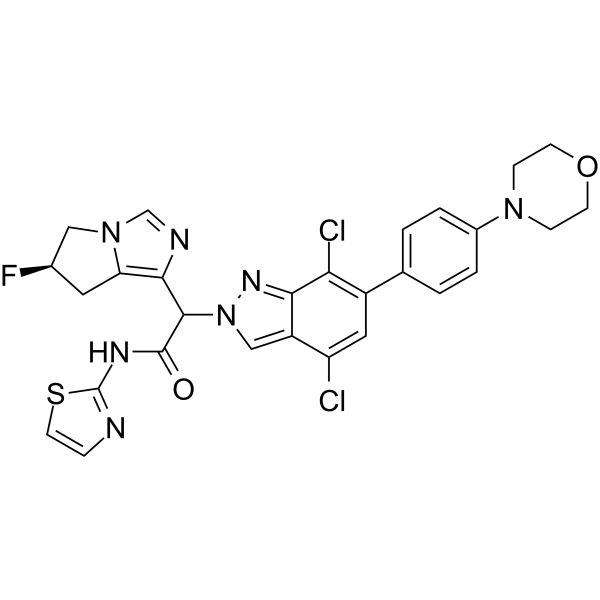 0 ImagesCat. No.: HY-163354CAS No.: 2568506-66-9EGFR-IN-103 (compound 1) is a potent EGFR inhibitor with an IC50 of 6 nM for pEGFR.
-
ZW-49
 0 ImagesCat. No.: HY-181954CAS No.: 2055109-19-6ZW-49 is an orally active pan-EGFR inhibitor with IC50 values at 0.03-1.5 nM. ZW-49 inhibits all subgroups of EGFR mutations with selectivity over wild-type EGFR and other target families. ZW-49 blocks the ATP-binding pocket, occupies a conserved hydrophobic subpocket, avoids steric conflicts with PACC mutation P loops. ZW-49 inhibits cancer cells proliferation, induces G0/G1 phase cell-cycle arrest and apoptosis, and demonstrates anti-proliferative activity in xenograft mice models. ZW-49 can be used for the research of cancer, such as non-small cell lung cancer.
-
HER2-IN-6
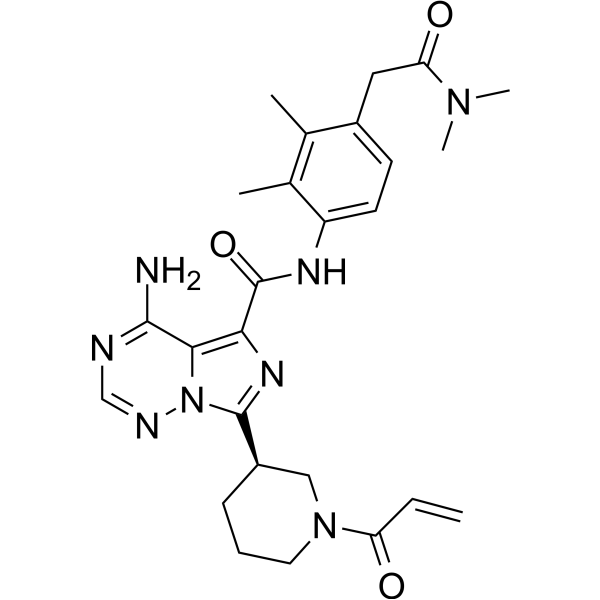 0 ImagesCat. No.: HY-143734CAS No.: 2691891-38-8HER2-IN-6 is a potent inhibitor of HER2. HER2-IN-6 has the potential for the research of wild and/or mutant EGFR and/or HER2 kinase mediated tumor (extracted from patent WO2021164697A1, compound 11).
-
Befotertinib mesylate
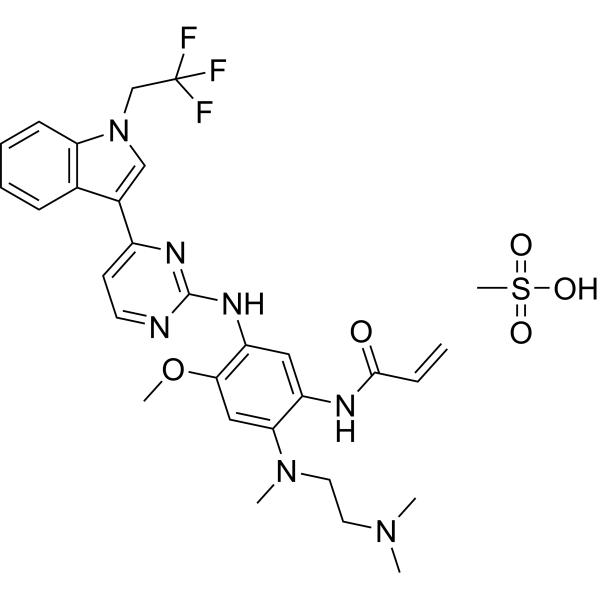 0 ImagesCat. No.: HY-137433ACAS No.: 2226167-02-6Synonyms: D-0316 mesylateBefotertinib (D-0316) mesylate is an orally active EGFR inhibitor and ABCB1 inhibitor. Befotertinib mesylate selectively targets EGFR mutations including EGFRT790M, EGFRL858R and delE746-A750, forms covalent bonds with EGFRC797, inhibits oncogenic signaling pathways, and exerts antiproliferative effects. Befotertinib mesylate inhibits ABCB1-mediated drug efflux, activates the ATPase activity of ABCB1, acts as a chemosensitizer and apoptosis enhancer, and restores the sensitivity of multidrug-resistant cancer cells. Befotertinib mesylate can be used in research related to multidrug-resistant cancers and non-small cell lung cancer.
-
Varlitinib tosylate
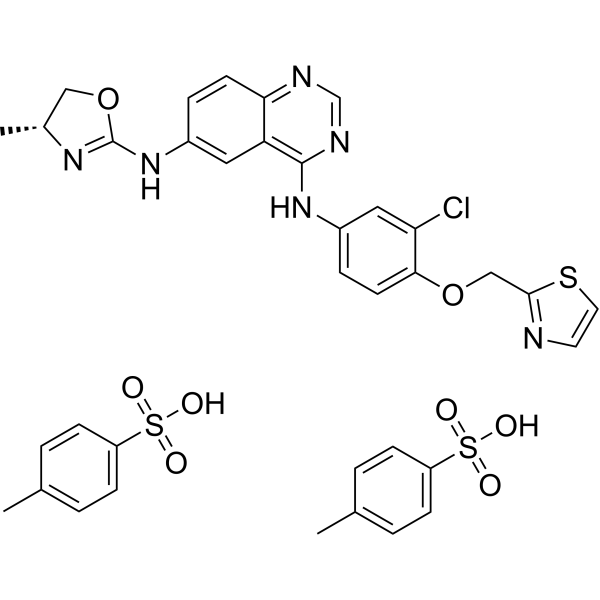 0 ImagesCat. No.: HY-10530ACAS No.: 1146629-86-8Synonyms: ASLAN001 tosylate; ARRY-334543 tosylateVarlitinib (ASLAN001) tosylate is a potent, reversible, small molecule pan-EGFR inhibitor with IC50s of 7, 2, 4 nM for HER1, HER2 and HER4, respectively.
-
EGFR-IN-15
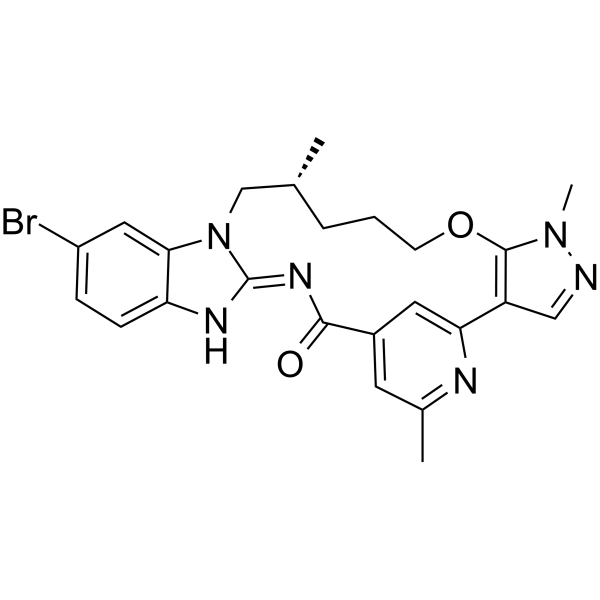 0 ImagesCat. No.: HY-138746CAS No.: 2573869-16-4EGFR-IN-15 (compound I-005) is a EGFR inhibitor with an IC50 of 4 nM. EGFR-IN-15 can be used for oncological diseases research.
-
EGFR/HER2-IN-2
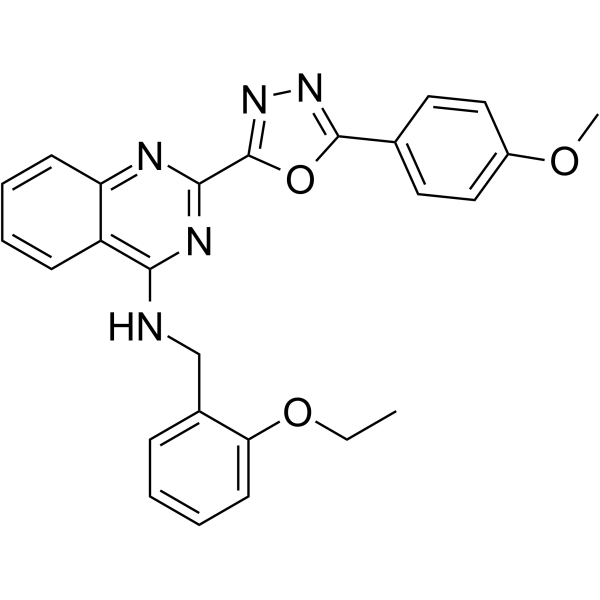 0 ImagesCat. No.: HY-115951CAS No.: 1215571-02-0
-
Mefatinib
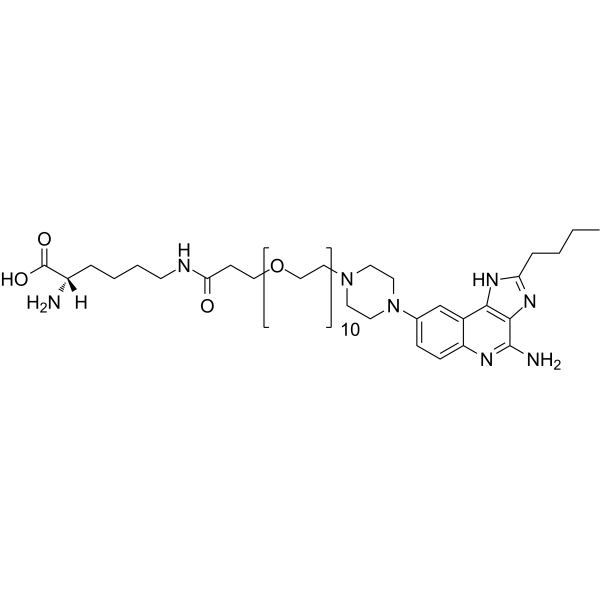
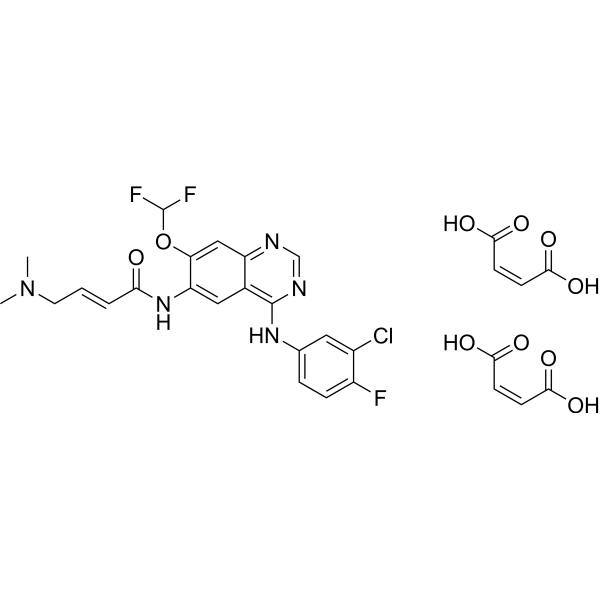 0 ImagesSynonyms: Mifanertinib dimaleateMefatinib (Mifanertinib dimaleate) is an orally active EGFR and HER2 kinase inhibitor with IC50 values of 0.4 nM and 11.7 nM, respectively. Mefatinib inhibits tumor growth in mouse models of lung cancer xenografts that overexpress EGFR/HER2, carry EGFR mutations, or carry Erlotinib (HY-50896)-resistant EGFR double mutations. Mefatinib can be used for the research of advanced EGFR-mutant non-small cell lung cancer.
-
Sacibertinib
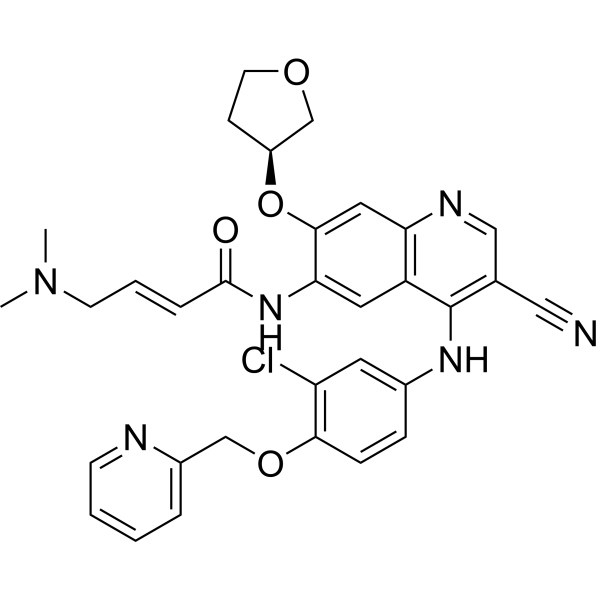 0 ImagesCat. No.: HY-147303CAS No.: 1351941-69-9Sacibertinib is a tyrosine kinase (Trk) inhibitor with EC50 value of 110 nM and 244 nM for EGFR-TK phosphorylation and HER2, respectively. Antineoplastic activity.
-
ErbB-1/ErbB-2 tyrosine kinase-IN-1
 0 ImagesCat. No.: HY-123726CAS No.: 231277-83-1ErbB-1/ErbB-2 tyrosine kinase-IN-1 is a dual ErbB-1/ErbB-2 tyrosine kinase inhibitor with IC50 values of 0.027 μM and 0.026 μM. ErbB-1/ErbB-2 tyrosine kinase-IN-1 targets the ATP binding region of ErbB-1 and ErbB-2 tyrosine kinases. ErbB-1/ErbB-2 tyrosine kinase-IN-1 inhibits cancer cells proliferation.
-
SU 5402 (GMP)
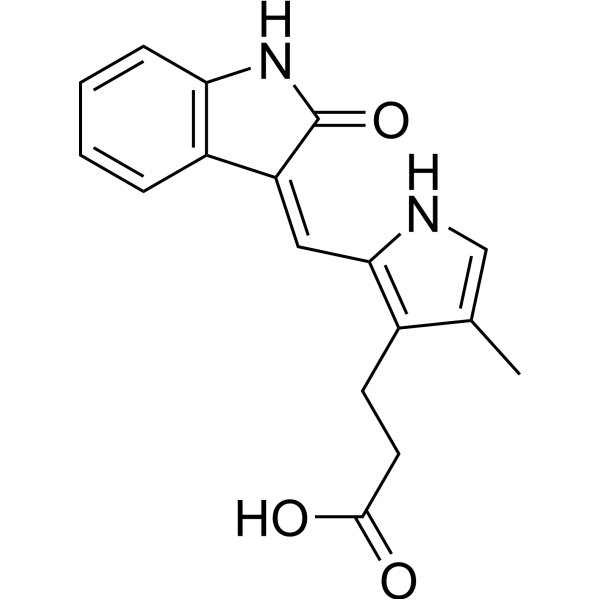 0 ImagesCat. No.: HY-10407GCAS No.: 215543-92-3SU 5402 (GMP) is SU 5402 (HY-10407) produced by using GMP guidelines. GMP small molecules work appropriately as an auxiliary reagent for cell therapy manufacture. SU 5402 is a potent multi-targeted receptor tyrosine kinase inhibitor with IC50 of 20 nM, 30 nM, and 510 nM for VEGFR2, FGFR1, and PDGFRβ, respectively.
-
EGFR/CA-IX-IN-1
 0 ImagesCat. No.: HY-174232EGFR/CA-IX-IN-1 (Compound 14) is a dual inhibitor against epidermal growth factor receptor (EGFR) and carbonic anhydrase IX (CA-IX) with IC50 values of 5.92 nM and 63 nM, respectively. EGFR/CA-IX-IN-1 shows strong cytotoxicity against breast cancer cells (MDA-MB-231, MCF-7) with IC50 values of 5.78 μM and 8.05 μM, respectively. EGFR/CA-IX-IN-1 inhibits the catalytic activity of CA-IX, up-regulates BAX/Bcl-2, activates caspases, and arrests the cell cycle at the G1 phase. EGFR/CA-IX-IN-1 is promising for research of breast cancer.
-
MP-RM-1
 0 ImagesCat. No.: HY-P991243MP-RM-1 is an antibody-based, non-competitive ErbB-3 inhibitor with a Kd value of 32.7 nM. MP-RM-1 inhibits both ligand-dependent and ligand-independent ErbB-3 activation, blocks ErbB-2/ErbB-3 heterodimerization, induces ErbB-3 internalization and degradation, and suppresses the phosphorylation of downstream Akt. MP-RM-1 exerts its antagonistic effect through a non-competitive mechanism. MP-RM-1 inhibits tumor growth in melanoma and prostate cancer xenograft models in nude mice and reduces the proliferative activity of tumor cells.
-
BI-8128
 0 ImagesCat. No.: HY-171884CAS No.: 2769714-36-3BI-8128 is a potent EGFR inhibitor, with IC50 values of 12, 6.7, 22, 10, and 3 nM against wild-type, T790M, C797S, T790M/C797S, and L858R/T790M/C797S mutant EGFR, respectively. BI-8128 significantly inhibits the proliferation of Ba/F3 and PC-9 drug-resistant mutant cells. BI-8128 is applicable for the research of non-small cell lung cancer.
-
PROTAC EGFR degrader 18
 0 ImagesCat. No.: HY-184497PROTAC EGFR degrader 18 is a VHL-based PROTAC degrader targeting EGFR. PROTAC EGFR degrader 18 inhibits tumor cell proliferation and induces apoptosis. When functionalized with hyaluronic acid, PROTAC EGFR degrader 18 achieves specific enrichment at tumor sites via CD44-mediated targeting, exerting anti-tumor activity while significantly reducing systemic toxicity. PROTAC EGFR degrader 18 can be used for the research of non-small cell lung cancer.

-
Lavendustin A (Standard)
 0 ImagesCat. No.: HY-18963RCAS No.: 125697-92-9Synonyms: RG-14355 (Standard)Lavendustin A (Standard) is the analytical standard of Lavendustin A. This product is intended for research and analytical applications. Lavendustin A (RG-14355) is a potent, selective and ATP-competitive inhibitor of epidermal growth factor receptor (EGFR) tyrosine kinase, with an IC50 of 11 nM. Lavendustin A does not inhibit protein kinase A or C. Lavendustin A can suppress VEGF-induced angiogenesis[1][2].
-
EGFR C797S/L858R Recombinant Human Active Protein Kinase
 0 ImagesCat. No.: HY-E70696EGFR is a driver of tumorigenesis. EGFR is mainly found in an auto-inhibited, dimerization-incompetent, state at the plasma membrane (PM). Ligand binding promotes receptor dimerization, which determines a series of structural rearrangements that are conveyed to the cytoplasmic domain allowing the formation of asymmetric dimers between the two juxtaposed catalytic domains. EGFR has multiple mutants. EGFR C797S/L858R Recombinant Human Active Protein Kinase is a recombinant EGFR C797S/L858R protein that can be used to study EGFR C797S/L858R-related functions.




