



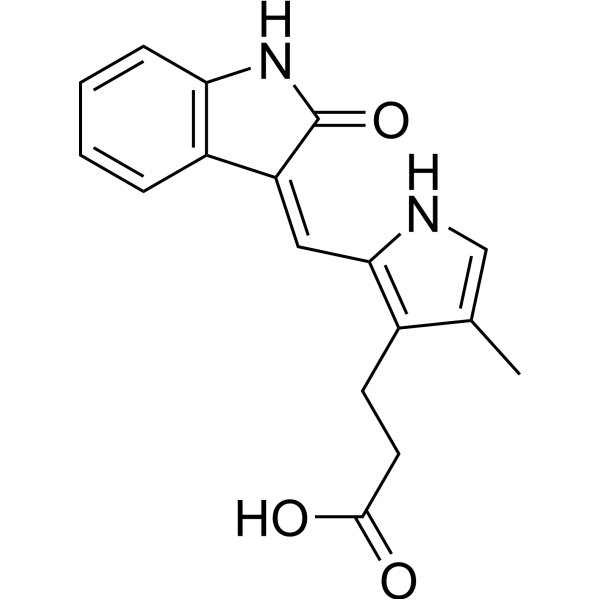
SU 5402 (GMP) is SU 5402 (HY-10407) produced by using GMP guidelines. GMP small molecules work appropriately as an auxiliary reagent for cell therapy manufacture. SU 5402 is a potent multi-targeted receptor tyrosine kinase inhibitor with IC50 of 20 nM, 30 nM, and 510 nM for VEGFR2, FGFR1, and PDGFRβ, respectively.
Nur für Forschungszwecke. Wir verkaufen nicht an Patienten.
- CAS. Nr.: 215543-92-3
- Formel: C17H16N2O3
- Molecular Weight:296.32
-
Speicherung:
Please store the product under the recommended conditions in the Certificate of Analysis.

To place orders, for customer services and technical support, please contact: MedChemExpress USA
Tel: 609-228-6898 E-mail: [email protected] [email protected]


-
 Biologische Aktivität
-
Chemical Information
- Reinheit & Dokumentation
- Verweise
-
 Help & FAQs


-
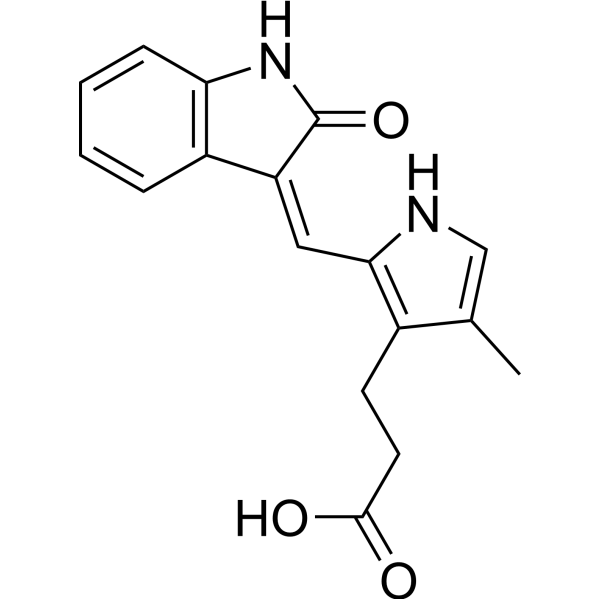
HY-10407
SU 5402Tyrosine Kinase Inhibitor -
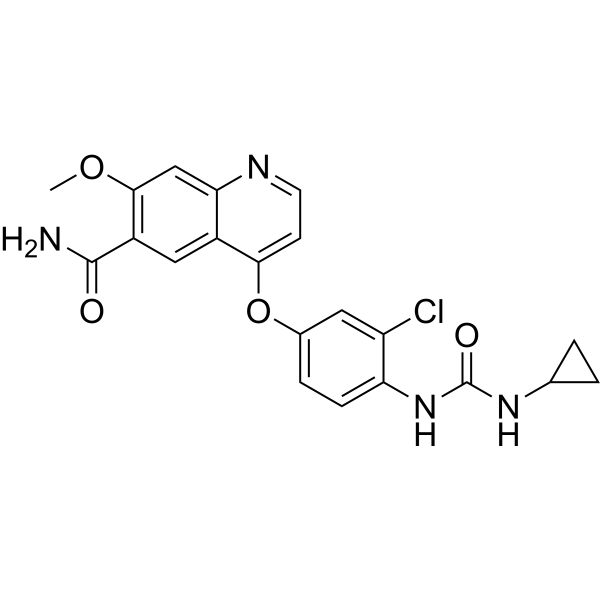
HY-10981
LenvatinibVEGFR/FGFR Inhibitor -
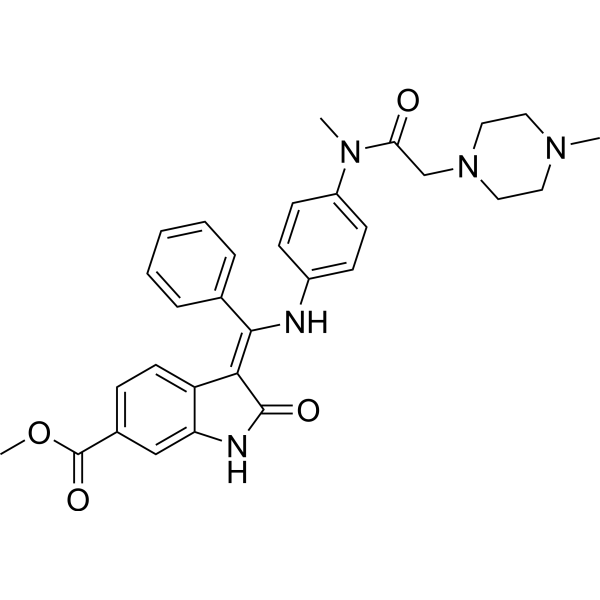
HY-50904
NintedanibPDGFR/VEGFR/FGFR Inhibitor -
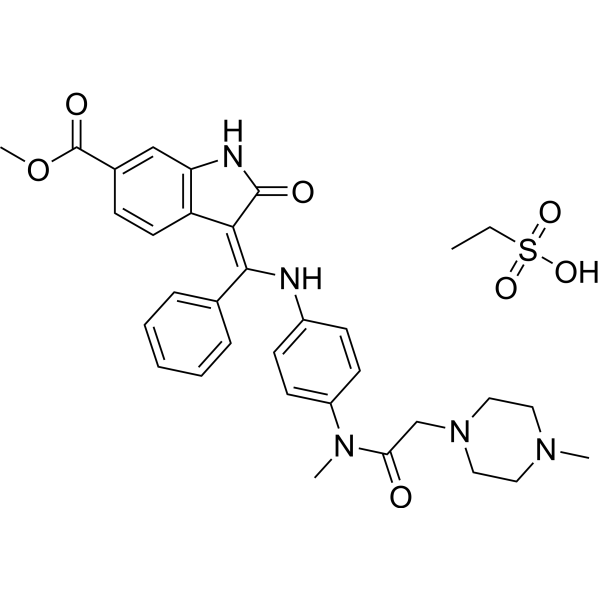
HY-11106
Nintedanib esylatePDGFR/VEGFR/FGFR Inhibitor -
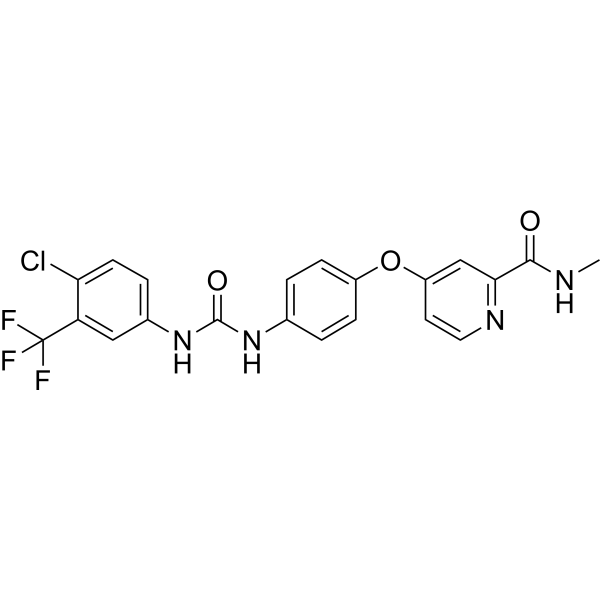
HY-10201
SorafenibMultikinase Inhibitor -
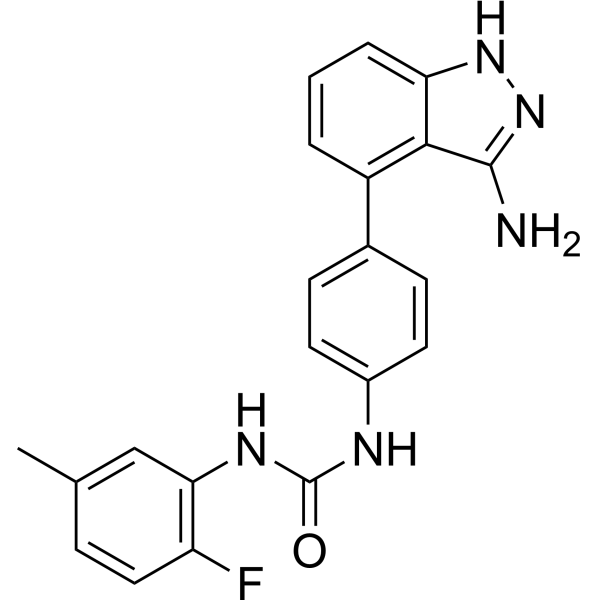
HY-50751
LinifanibMulti-Targeted RTK Inhibitor -
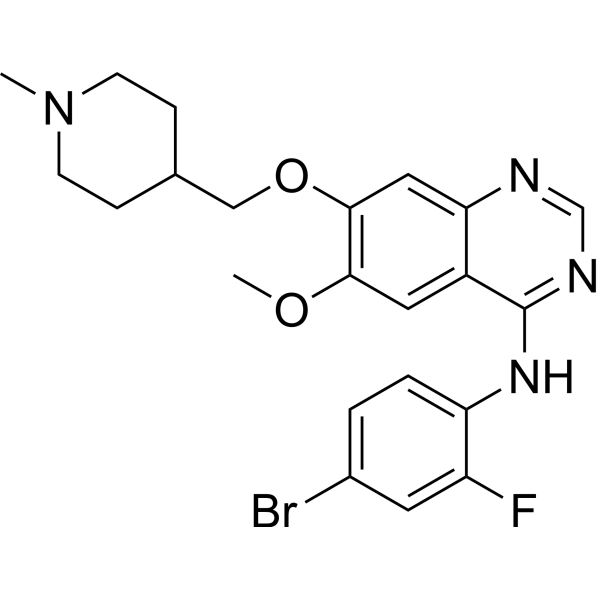
HY-10260
VandetanibVEGFR2/3 Inhibitor -
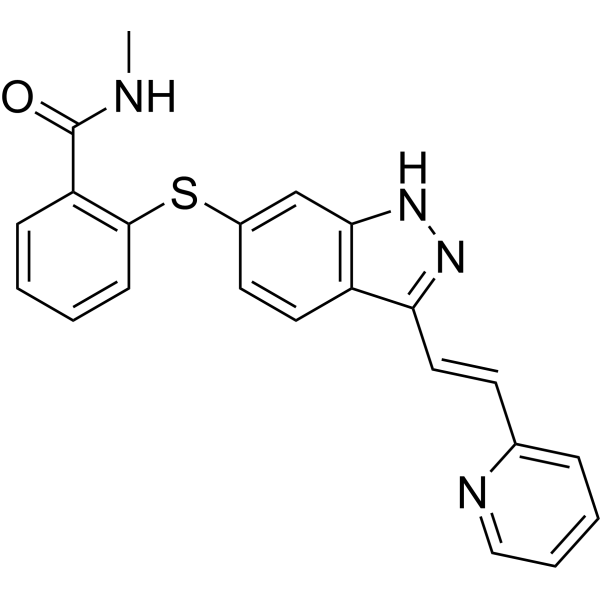
HY-10065
AxitinibTyrosine Kinase Inhibitor -

HY-10407R
SU 5402 (Standard)Reference Standard -
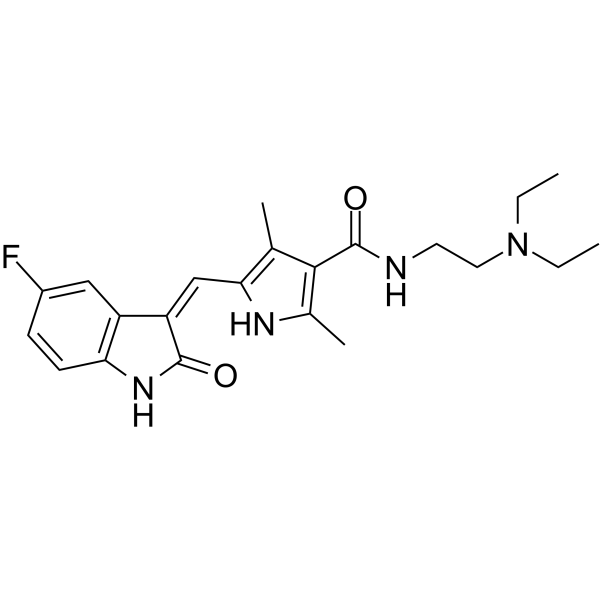
HY-10255A
SunitinibMulti-targeted RTK Inhibitor -
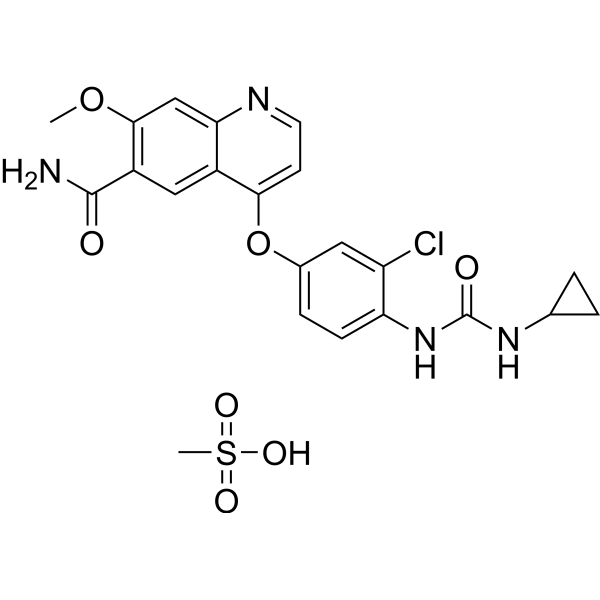
HY-10981A
Lenvatinib mesylatec-Kit Inhibitor -
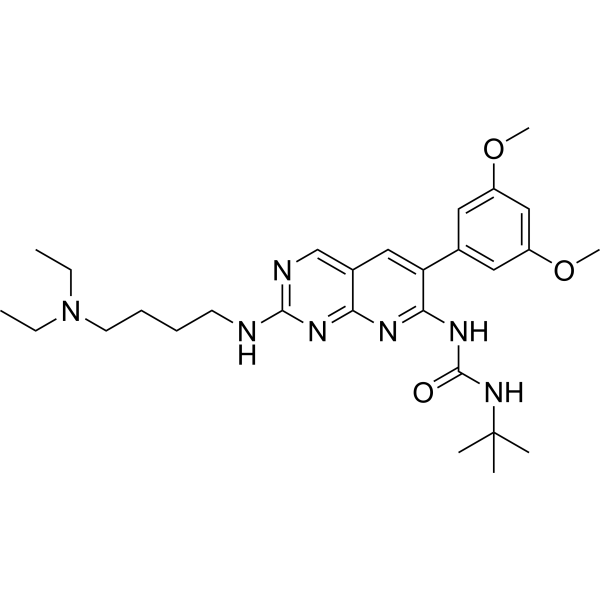
HY-10321
PD173074FGFR1 Inhibitor
Alle VEGFR Isoform-spezifische Produkte anzeigen
MoreAlle EGFR Isoform-spezifische Produkte anzeigen
More

Biologische Aktivität
Beschreibung
IC50 & Target
|
VEGFR2 20 nM (IC50) |
PDGFRβ 510 nM (IC50) |
EGFR 30 nM (IC50) |
Cellular Effect
|
Cell Line

|
Type | Value | Description | References |
|---|---|---|---|---|
| HUVEC | IC50 |
>50 μM
Compound: 2
|
Evaluated for the inhibition of cell proliferation induced by EGF in HUVEC or NIH3T3 cells
Evaluated for the inhibition of cell proliferation induced by EGF in HUVEC or NIH3T3 cells
|
[PMID: 10893303] |
| HUVEC | IC50 |
0.05 μM
Compound: 2
|
Evaluated for the inhibition of cell proliferation induced by VEGF in HUVEC or NIH3T3 cells
Evaluated for the inhibition of cell proliferation induced by VEGF in HUVEC or NIH3T3 cells
|
[PMID: 10893303] |
| HUVEC | IC50 |
2.8 μM
Compound: 2
|
Evaluated for the inhibition of cell proliferation induced by FGF in HUVEC or NIH3T3 cells
Evaluated for the inhibition of cell proliferation induced by FGF in HUVEC or NIH3T3 cells
|
[PMID: 10893303] |
| HUVEC | IC50 |
28.4 μM
Compound: 2
|
Evaluated for the inhibition of cell proliferation induced by PDGF in HUVEC or NIH3T3 cells
Evaluated for the inhibition of cell proliferation induced by PDGF in HUVEC or NIH3T3 cells
|
[PMID: 10893303] |
| NIH3T3 | IC50 |
10 μM
Compound: SU-5402
|
Inhibition of acidic FGF-stimulated FGFR1 tyrosine autophosphorylation in mouse NIH/3T3 cells by immunoblotting
Inhibition of acidic FGF-stimulated FGFR1 tyrosine autophosphorylation in mouse NIH/3T3 cells by immunoblotting
|
[PMID: 9139660] |
In Vitro
SU 5402 (GMP) (5 μM, added at days 4, 6 and 8 of differentiation) inhibits neural induction from hiPSC as well as hESC (TZ1 hiPSC or H9 hESC), indicating that FGF signaling is required for neural induction[1].
SU 5402 (GMP) (0.8 μM, from day 2 to day 12), together with PD184352 and CHIR99021, enhances the reprogramming efficiency and increases the number of colonies (reprogram MEFs to iPSCs)[2].
SU 5402 (GMP) together with PD184352 and CHIR99021 accelerate differentiation of iPSCs[2].
SU 5402 (GMP) (10 μM, from day 5 to day 17) efficiently differentiates IWR-1 (HY-12238)-treated hiPSCs into retinal pigment epithelium (RPE) progenitors[3].
SU 5402 (GMP) enhances neuronal differentiation efficiency[4].
MedChemExpress (MCE) has not independently confirmed the accuracy of these methods. They are for reference only.


Chemical Information
-
CAS. Nr. 215543-92-3
-
Molecular Weight 296.32
-
Formel C17H16N2O3
-
SMILES
O=C(CCC1=C(NC=C1C)/C=C2C(NC3=C\2C=CC=C3)=O)O
-
Versand
Room temperature in continental US; may vary elsewhere.
-
Speicherung
Please store the product under the recommended conditions in the Certificate of Analysis.


Reinheit & Dokumentation
Verweise
[1]. Zeng H, et al. Specification of region-specific neurons including forebrain glutamatergic neurons from human induced pluripotent stem cells. PLoS One. 2010 Jul 29;5(7):e11853. [Content Brief]
[2]. Nishihara K, et al. Induced Pluripotent Stem Cells Reprogrammed with Three Inhibitors Show Accelerated Differentiation Potentials with High Levels of 2-Cell Stage Marker Expression. Stem Cell Reports. 2019 Feb 12;12(2):305-318. [Content Brief]
[3]. Ito A, et al. Efficient and robust induction of retinal pigment epithelium cells by tankyrase inhibition regardless of the differentiation propensity of human induced pluripotent stem cells. Biochem Biophys Res Commun. 2021 May 7;552:66-72. [Content Brief]
[4]. Chambers SM, et al. Combined small-molecule inhibition accelerates developmental timing and converts human pluripotent stem cells into nociceptors. Nat Biotechnol. 2012 Jul 1;30(7):715-20. [Content Brief]

Calculators
Konzentration (Stammlösung) × Volumen (Stammlösung) = Konzentration (Ziellösung) × Volumen (Ziellösung)


SU 5402 (GMP) Related Classifications
HY-10407G Related Classifications
 Powered by Bioz