



IFNAR
Interferon-α/β receptor; Interferon-alpha/beta receptor
The interferon-α/β receptor (IFNAR) is composed of two subunits, IFNAR1 and IFNAR2, encoding transmembrane polypeptides. Type-I IFNs, interferon α (IFN-α) and interferon β (IFN-β), act through a shared receptor complex, IFNAR. Binding of type-I IFN to IFNAR1 will robustly activate Janus activated kinase-signal transducer and activator of transcription (JAK-STAT) signaling pathway. Aberrant activation of the type-I IFN response results in a spectrum of disorders called interferonopathies.
Type-I IFN response occurs when IFN-α/β binds to their receptor complex, IFNAR. The ligand-receptor complex is phosphorylated, presumably by pre-associated Janus activated kinases (JAKs) namely tyrosine kinase 2 (TYK2) on IFNAR1 and JAK1 on IFNAR2. The phosphorylated receptors are docking sites for signal transducers and activators of transcription (STAT) factors that dimerise and translocate to the nucleus. STATs 1, 2, 3, 4, and 5 are activated by type-I IFNs in many cell types. Other kinases (e.g., mitogen-activated protein kinases) and transcription factors (e.g., nuclear factor-κB) can also be activated in response to type-I IFNs. Multiple pathways and IFN-regulated genes are activated by IFNs, many of which remain unknown.
All Product Categories
-
IFNAR Inhibitors
(123)
View all products
-
IFNAR Agonists
(11)
View all products
-
IFNAR Antagonists
(6)
View all products
-
IFNAR Activators
(84)
View all products
-
IFNAR Modulators
(4)
View all products
-
IFNAR Inducers
(23)
View all products
-
IFNAR Degrader
(1)
View all products
-
IFNAR Control
(1)
View all products
-
IFN-α/β Receptor Proteins
(16)
View all products
-
IFN-alpha/beta R2 Proteins
(6)
View all products
-
IFNAR Related Products (324)
Related Products (324)

-
Recombinant Proteins (16)
-
Antibodies (14)
-
Frenlosirsen
 0 ImagesCat. No.: HY-177632CAS No.: 2304711-81-5Synonyms: ION-935918; ION251Frenlosirsen (ION-935918; ION251) is an antisense oligonucleotide and also an IRF4 inhibitor. Frenlosirsen inhibits the survival of malignant plasma cells, reduces the burden of myeloma progenitor cells and prevents disease recurrence. Frenlosirsen is applicable to myeloma-related research.
-
Sim-9
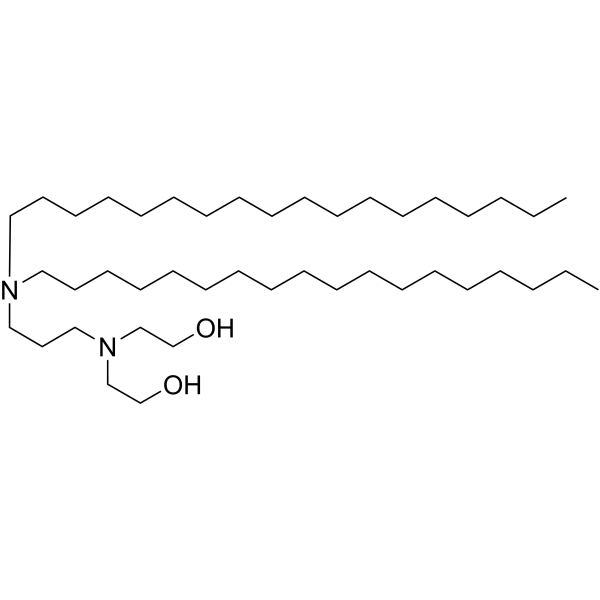
 0 ImagesSim-9 is a covalent allosteric inhibitor of interferon regulatory factor 3 (IRF3). Sim-9 binds covalently to the Cys222 residue of IRF3, induces its conformational change, blocks its interactions with TRIF, MAVS and STING, and inhibits IRF3 homodimerization and type I interferon response. Sim-9 exhibits significant anti-inflammatory, organ-protective and survival benefits in mouse models of sepsis and acute pancreatitis. Sim-9 can be used for research related to inflammatory diseases.
-
2',3'-cGAMP-d8 ammonium
 0 ImagesCat. No.: HY-100564BSPurity: 99.88%Synonyms: 2'-3'-Cyclic GMP-AMP-d8 ammonium2',3'-cGAMP-d8 (2'-3'-Cyclic GMP-AMP-d8) ammonium is the deuterated-labeled 2',3'-cGAMP ammonium. 2',3'-cGAMP (2'-3'-cyclic GMP-AMP) is a endogenous cGAMP in mammalian cells. 2',3'-cGAMP binds to STING with a high affinity and is a potent inducer of interferon-β (IFNβ). 2',3'-cGAMP is produced in mammalian cells in response to DNA in the cytoplasm.
-
Anti-Mouse TREM2 Antibody (178)
 0 ImagesCat. No.: HY-P991754Purity: 98.92%Anti-Mouse TREM2 Antibody (178) is an antibody targeting mouse TREM2, which blocks the binding of ligands to TREM2 and inhibits TREM2-mediated signaling pathways. Anti-Mouse TREM2 Antibody (178) inhibits the tumor growth of MCA/1956 sarcoma in mice. Anti-Mouse TREM2 Antibody (178) enhances IFNγ production by intratumoral CD8+ T cells and TNFα production by intratumoral CD4+ T cells. Anti-Mouse TREM2 Antibody (178) can be used in the research of sarcoma, colorectal cancer and breast tumors. The recommended isotype control is Rat IgG2a kappa, Isotype Control (HY-P990679).
-
Anti-Mouse IFNγR/CD119 Antibody (GR-20)
 0 ImagesCat. No.: HY-P990233Anti-Mouse IFNγR/CD119 Antibody (GR-20) is a rat-derived IgG2a κ type antibody inhibitor, targeting to mouse IFNγR/CD119.Anti-Mouse IFNγR/CD119 Antibody (GR-20) reacts with the mouse IFNγR (interferon gamma receptor) α chain also known as CD119 and IFNγ receptor 1. Anti-Mouse IFNγR/CD119 Antibody (GR-20) blocks the binding of IFNγ to CD119 therefore inhibiting IFNγ signaling. Anti-Mouse IFNγR/CD119 Antibody (GR-20) can be used for the researches of cancer, infection, inflammation and immunology, such as melanoma and C. trachomatis infected genital tract inflammation.
-
Ezurpimtrostat
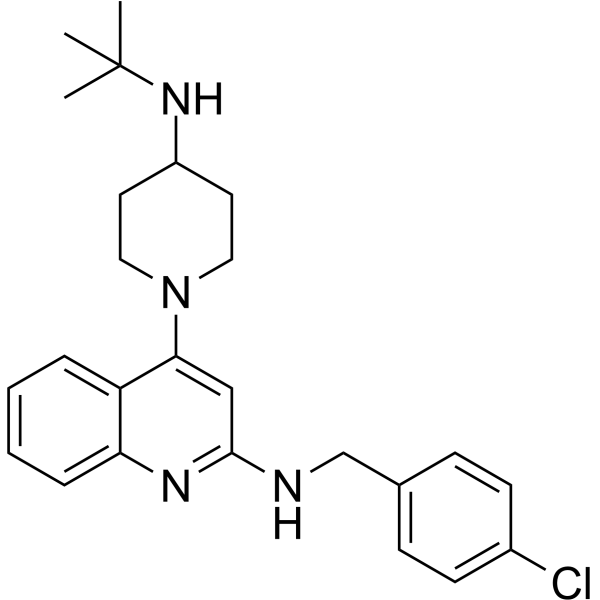 0 ImagesSynonyms: GNS561Ezurpimtrostat (GNS561) is an orally active PPT1 inhibitor, autophagy inhibitor, immunomodulator, anti-inflammatory agent, and anticancer agent. Ezurpimtrostat inhibits PPT1, dysregulates lysosomal function, redistributes mTOR, and induces apoptosis. Ezurpimtrostat reduces IFN‑α, CRP, immune complex deposition, and SARS‑CoV‑2 viral load. Ezurpimtrostat can be used for the study of systemic lupus erythematosus, SARS‑CoV‑2, hepatocellular carcinoma, fibrosis, and related disorders.
-
Vaxfectin
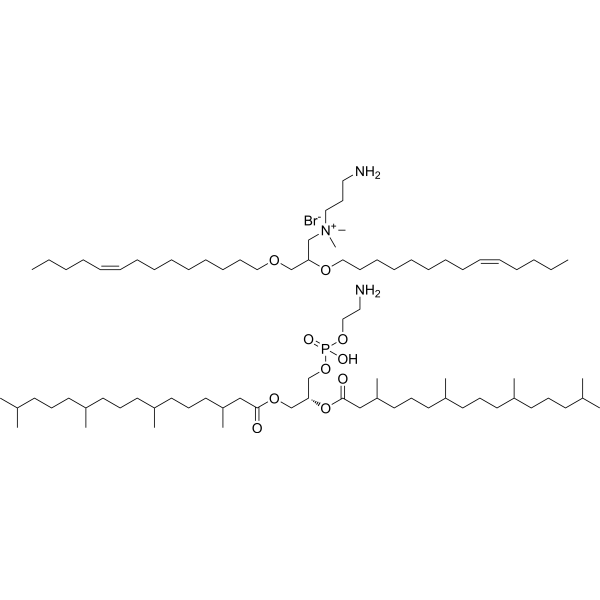 0 ImagesVaxfectin is a second-generation cationic lipid-based suspension that adjuvants effectively both pDNA and protein-based vaccines. Vaxfectin can boost the immune response against a range of pDNA-expressed pathogenic antigens in vivo. Vaxfectin can increase IgG titers and give rise to an IL-6 dependent enhancement of the humoral immune response without altering the Th1 type immune response. Vaxfectin can be studied for vaccine formulation.
-
2'2'-cGAMP disodium
 0 ImagesCat. No.: HY-137709APurity: 99.6%
-
Anti-CD19 Antibody (4G7)
 0 ImagesCat. No.: HY-P990870Purity: 98%Anti-CD19 Antibody (4G7) is an anti-human CD19 IgG1 monoclonal antibody. Anti-CD19 Antibody (4G7) reduces the killing effect of CAR T cells on Raji cells. Anti-CD19 Antibody (4G7) can be used for research on immunology. Anti-CD19 Antibody (4G7) is often used in flow cytometry. The recommend isotype control of Anti-CD19 Antibody (4G7): Mouse IgG1 kappa, Isotype Control (HY-P99977).
-
Icotrokinra hydrochloride
 0 ImagesCat. No.: HY-P10587BPurity: 99.74%Synonyms: JNJ-77242113 hydrochloride; JNJ-2113 hydrochloride; PN-235 hydrochlorideIcotrokinra (JNJ-77242113) hydrochloride is an orally available, selective antagonist of the IL-23 receptor. Icotrokinra hydrochloride inhibits IL-23-induced STAT3 phosphorylation in peripheral blood mononuclear cells (IC50=5.6 pM) and inhibits IL-23-induced interferon IFN-γ production in NK cells with an IC50 of 18.4 pM. Icotrokinra hydrochloride exhibits anti-inflammatory activity in a rat TNBS-induced colitis model. Icotrokinra hydrochloride can be used in the study of psoriasis, psoriatic arthritis, and inflammatory bowel disease.
-
Mesopram
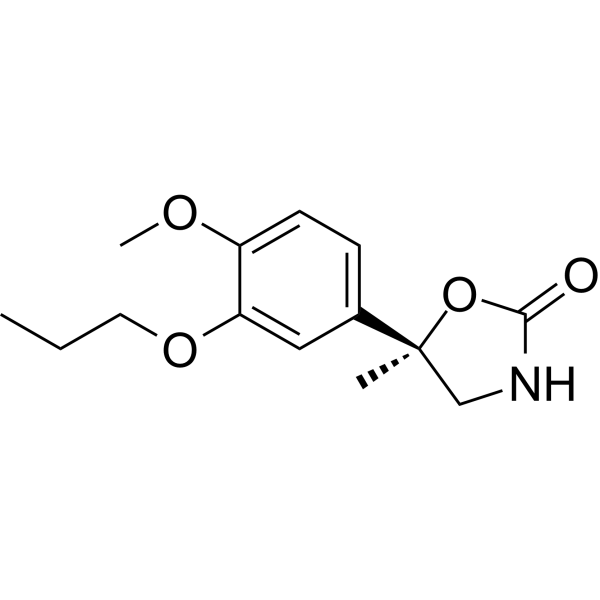 0 ImagesSynonyms: DaxalipramMesopram (Daxalipram) is an orally active phosphodiesterase (PDE) 4 inhibitor. Mesopram inhibits the synthesis of proinflammatory cytokines TNF-α and IFN-γ. Mesopram demonstrates efficacy in ameliorating Dextran sulfate sodium (DSS) (HY-116282C)-induced murine colitis. Mesopram can be used for the study of chronic inflammatory diseases.
-
PROTAC HPK1 Degrader-5
 0 ImagesCat. No.: HY-175547CAS No.: 3108744-13-1PROTAC HPK1 Degrader-5 is an orally effective and selective HPK1 PROTAC degrader with a DC50 of 5.0 nM. PROTAC HPK1 Degrader-5 recruits the CRBN E3 ligase to specifically induce the degradation of HPK1 via the ubiquitin-proteasome system, which in turn significantly inhibits SLP76 phosphorylation and enhances the activation of the ERK pathway, thereby stimulating the release of IL-2 and IFN-γ. PROTAC HPK1 Degrader-5 can be used in studies related to tumor immunity (e.g., colorectal cancer).
-
NDI-101150
 0 ImagesCat. No.: HY-159643CAS No.: 2628486-22-4NDI-101150 is an orally active, potent and selective hematopoietic progenitor cell kinase 1 (HPK1) inhibitor with an IC50 of 0.7 nM. NDI-101150 blocks HPK1-mediated negative regulation of immune receptor signaling, inhibits immunosuppression of T cell activation, enhances antigen-specific antibody production and augments B-cell activation. NDI-101150 inhibits tumor growth in syngeneic tumor models, establishes durable antitumor immune memory, and synergizes with anti-PD1 to enhance exhausted T cell activity and drive tumor regressions. NDI-101150 can be used for the research of cancer, such as breast cancer and colon cancer.
-
Spartalizumab
 0 ImagesSynonyms: PDR001Spartalizumab is a humanized PD-1 IgG4 monoclonal antibody, with a Kd of 0.83 nM for human PD-1 and a Kd of 0.93 nM for cynomolgus monkey PD-1. Spartalizumab binds to PD-1 and blocks its interaction with the ligands PD-L1 and PD-L2. Spartalizumab induces increased IFNγ release. Spartalizumab can be used in the research of anaplastic thyroid carcinoma (ATC) and neuroendocrine neoplasms (NENs).
-
DPPE-PEG350
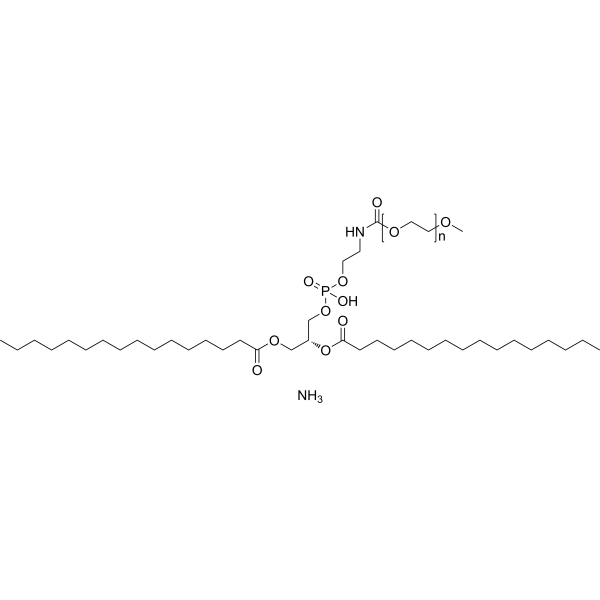 0 ImagesSynonyms: 16:0 PEG350 PE; 1,2-Dipalmitoyl-sn-glycero-3-phosphoethanolamine-N-[methoxy(polyethylene glycol)-350] ammoniumDPPE-PEG350 (16:0 PEG350 PE) is a CD1d lipid antagonist. DPPE-PEG350 blocks alpha-GalCer-dependent ERK tyrosine kinase phosphorylation in cells. DPPE-PEG350 inhibits cellular IL-4 and IFN-gamma production following alpha-GalCer stimulation. DPPE-PEG350 selectively antagonizes iNKT without affecting MHC class II-dependent OVA-specific Th2 responses. DPPE-PEG350 reduces MCP-1 and VCAM-1 protein expression and necrotic core formation in atherosclerotic lesions. DPPE-PEG350 can be used for research on asthma and atherosclerosis.
-
IFN-α Receptor Recognition Peptide 1
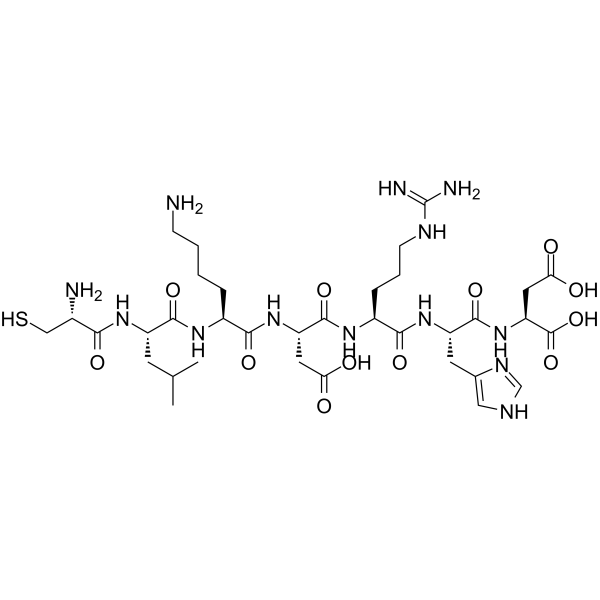 0 ImagesCat. No.: HY-P1758CAS No.: 153840-64-3Synonyms: IRRP1IFN-α Receptor Recognition Peptide 1 (IRRP1) is an amino acid synthetic peptide and also a regulator of IFN-α Receptor. IFN-α Receptor Recognition Peptide 1 binds to IFNAR2, enhances the binding capacity of IFN-α receptor, and slightly increases the IFN-α-induced growth inhibitory activity. IFN-α Receptor Recognition Peptide 1 inhibits IFN-α-induced STAT1 phosphorylation and STAT-DNA binding by blocking the activation of IFNAR by IFN-α. IFN-α Receptor Recognition Peptide 1 increases the occupancy of IFN-α on cell surface receptors, enhances the phosphorylation activation of ISGF3, and elevates IFN-α-induced antiviral activity. IFN-α Receptor Recognition Peptide 1 can be used in studies related to encephalomyocarditis virus infection.
-
Alcudacigib
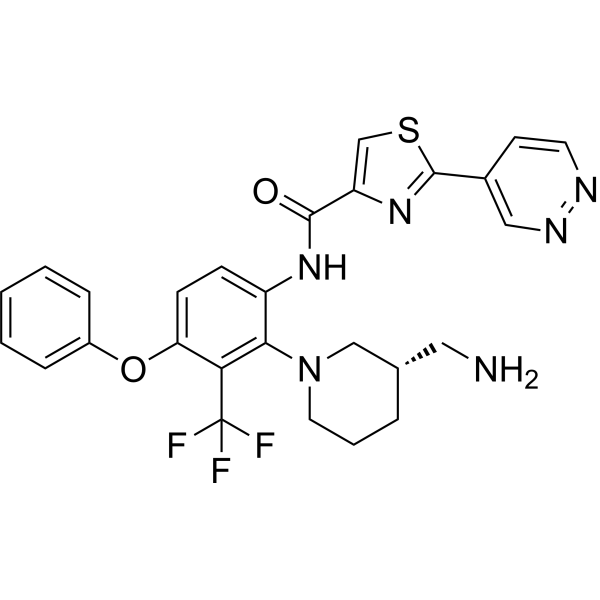 0 ImagesCat. No.: HY-153793CAS No.: 2660218-70-0Synonyms: DGKζ-IN-1Alcudacigib (ASP1570; DGKζ-IN-1) is an orally active diacylglycerol kinase ζ (DGKζ) inhibitor, with an IC50 of 4.7 nM against human DGKζ and an IC50 of 3.0 nM against mouse DGKζ. Alcudacigib selectively inhibits the kinase activity of DGKζ and induces proteasome-dependent degradation of DGKζ protein. Alcudacigib enhances the anti-tumor functions of T cells and NK cells. Alcudacigib can be used for the research of advanced/metastatic solid tumors.
-
ODN D-SL03
 0 ImagesCat. No.: HY-150749CAS No.: 1198621-85-0ODN D-SL03 is a C class CpG oligonucleotides, can induce stimulate PBMCs to produce high level of IFN-α. ODN D-SL03 can activate human B cells, NK cells and mononuclear cells and up-regulate expression of CD80, CD86 and HLA-DR on the surface of subsets in human PBMCs. ODN D-SL03 also can inhibit the growth of the tumor. ODN D-SL03 sequence: 5'-tcgcgaacgttcgccgcgttcgaacgcgg-3'.




