



MSA-2-Pt
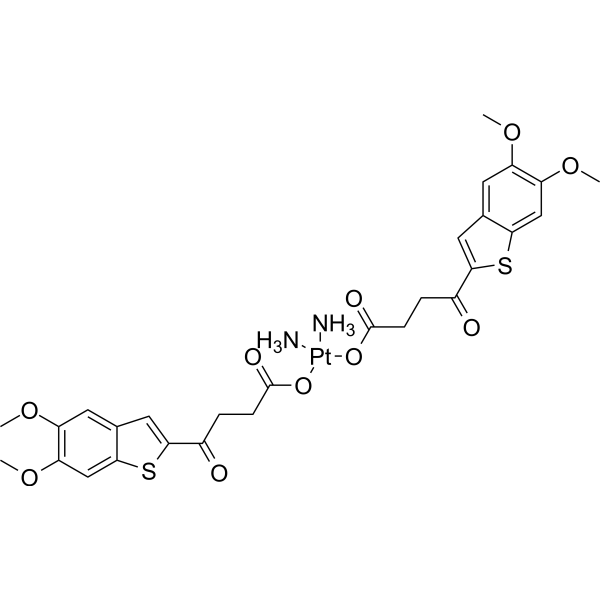
MSA-2-Pt, platinum salt-modified MSA-2 (HY-136927), is a STING agonist. MSA-2-Pt inducing cell
death by platinum and activating the STING pathway by MSA-2. MSA-2-Pt direct activates STING pathway, induces phosphorylation of TBK1, IRF3, and NF-κB p65. MSA-2-Pt enhances tumor infiltration of CD4+ and CD8+ T cells, and induces tumor cell death and apoptosis in mouse colon carcinoma and melanoma models.
Nos produits utilisent uniquement pour la recherche. Nous ne vendons pas aux patients.
- CAS No.: 3028778-96-0
- Formule: C28H32N2O10PtS2
- Masse moléculaire:815.78
-
Stockage:
Please store the product under the recommended conditions in the Certificate of Analysis.

To place orders, for customer services and technical support, please contact: MedChemExpress USA
Tel: 609-228-6898 E-mail: [email protected] [email protected]


-
 Activité biologique
-
Chemical Information
- Protocole
- Pureté et documentation
- Références
-
 Help & FAQs




Activité biologique
Description
death by platinum and activating the STING pathway by MSA-2. MSA-2-Pt direct activates STING pathway, induces phosphorylation of TBK1, IRF3, and NF-κB p65. MSA-2-Pt enhances tumor infiltration of CD4+ and CD8+ T cells, and induces tumor cell death and apoptosis in mouse colon carcinoma and melanoma models[1].
IC50 & Target
[1]|
TBK1 |
IRF3 |
In Vitro
MSA-2-Pt (25-300 μM; 12-24 h) induces dose-dependent cell death in mouse colon adenocarcinoma MC38 cells, with significant cytotoxicity observed at concentrations ≥75 μM after 24 h[1].
MSA-2-Pt (10-50 μM; 24 h) activates IFN-β secretion in mouse macrophage RAW264.7 cells[1].
MSA-2-Pt (10-50 μM; 3 h) activates the STING signaling pathway in mouse macrophage RAW264.7 cells, inducing phosphorylation of STING, TBK1, IRF3, and NF-κB p65 at concentrations of 10, 25, and 50 μM after 3 h[1].
MedChemExpress (MCE) has not independently confirmed the accuracy of these methods. They are for reference only. Further protocols information, click here.
-
Cell Line:mouse colon adenocarcinoma MC38 cells
-
Concentration:25 μM, 50 μM, 75 μM, 100 μM, 200 μM, 300 μM
-
Incubation Time:12; 24 h;
-
Result:Induced significant MC38 cell death starting at 75 μM, with a dose-dependent reduction in cell viability.
Reduced cell viability to ~20% or lower at 100 μM and above.
Confirmed significant pyroptotic cell death in MC38 cells treated with 75 μM for 12 h and 24 h via microscopic imaging.
-
Cell Line:mouse macrophage RAW264.7 cells
-
Concentration:10 μM, 25 μM, 50 μM
-
Incubation Time:3 h
-
Result:Increased levels of phosphorylated P65 (p-P65) compared to control.
Induced phosphorylation of STING, TBK1, and IRF3 in a concentration-dependent manner.
In Vivo
MSA-2-Pt (150 μg; i.t.; three doses on day 9, 11, 15) exhibits significant antitumor efficacy in poorly immunogenic B16F10 melanoma-bearing mice, with 22% of treated mice achieving tumor-free status and significantly extended survival[1].
MSA-2-Pt (150 μg; i.t.; single dose) activates the STING pathway (via elevated serum IFN-β), enhances tumor infiltration of CD4+ and CD8+ T cells, and induces tumor cell death and apoptosis in MC38 colon carcinoma-bearing mice[1].
MedChemExpress (MCE) has not independently confirmed the accuracy of these methods. They are for reference only.
-
Animal Model:Colon carcinoma C57BL/6 mice (female, 6 weeks old, subcutaneous injection of 2×10⁵ MC38 cells)[1]
-
Dosage:150 μg
-
Administration:intratumorly injection; three doses on day 13, 15, 19
-
Result:Significantly reduced tumor growth relative to the control group.
Achieved tumor-free status in 7 out of 9 treated mice.
Significantly increased survival compared to the control group.
-
Animal Model:Melanoma C57BL/6 mice (female, 6 weeks old, subcutaneous injection of 2×10⁵ B16F10 cells)[1]
-
Dosage:150 μg
-
Administration:intratumorly injection; three doses
-
Result:Significantly reduced tumor growth relative to the control group.
Achieved tumor-free status in 2 out of 9 treated mice.
Significantly increased survival compared to the control group.
-
Animal Model:Colon carcinoma C57BL/6 mice (female, 6 weeks old, subcutaneous injection of 2×10⁵ MC38 cells)[1]
-
Dosage:150 μg
-
Administration:intratumorly injection; single dose
-
Result:Increased serum IFN-β levels significantly relative to the control group.
Increased the ratio of CD4+ T cells of total cells and CD8+ T cells of total cells in tumor tissue relative to the control group.
Induced significant tumor cell death observed via H&E staining.
Induced a significantly higher proportion of tumor cell apoptosis observed via TUNEL staining.


Chemical Information
-
CAS No. 3028778-96-0
-
Masse moléculaire 815.78
-
Formule C28H32N2O10PtS2
-
SMILES
O=C(CCC(C1=CC2=C(C=C(C(OC)=C2)OC)S1)=O)[O-][Pt+2]([NH3])([NH3])[O-]C(CCC(C3=CC4=C(C=C(C(OC)=C4)OC)S3)=O)=O
-
Livraison
Room temperature in continental US; may vary elsewhere.
-
Stockage
Please store the product under the recommended conditions in the Certificate of Analysis.

Protocole
-
Kinase activity and phosphorylation assays
Kinase activity assays measure the ability of kinases to transfer phosphate groups from ATP to specific substrates, while phosphorylation assays detect the presence and levels of phosphorylated proteins. Common methods include radiolabeled ATP incorporation (e. g. ,), ADP release detection via bioluminescence (e. g. ,[3]), enzyme-linked immunosorbent assays (ELISA) for phospho-specific epitopes (e. g. ,[6]), and microtiter-based formats for high-throughput screening (e. g. ,[8]). The ADP-Glo assay quantifies kinase activity by measuring ADP produced during phosphorylation using a luciferase-based system. Radiometric assays involve autoradiography or scintillation counting after incorporation of 32P-labeled ATP into substrate proteins. ELISA-based approaches rely on phospho-specific antibodies to detect activated kinases in cell lysates or purified samples.
-
Western Blot
Western blotting (WB) is a commonly used experimental method in molecular biology, biochemistry, and immunogenetics for identifying and quantifying target proteins. It combines gel electrophoresis with immunoassay, enabling researchers to analyze protein expression, post-translational modifications, and molecular weight.
-
Apoptosis
Apoptosis, also called programmed cell death, is generally characterized by distinct morphological characteristics.
-
TUNEL staining for apoptotic DNA fragmentation
TUNEL staining detects DNA strand breaks by using terminal deoxynucleotidyl transferase to add labeled nucleotides to exposed 3′-OH DNA termini, generating either microscopic staining in fixed cells or tissue sections, or fluorescence/cytometric signal in cell suspensions. TUNEL positivity reflects DNA fragmentation but should not be interpreted alone as definitive apoptosis, because TUNEL can also label necrotic, autolytic, mechanically damaged, or DNA-repair-associated DNA breaks.
-
Cell Cytotoxicity Assay
Cytotoxicity assays are usually based on the assessment of cell membrane damage, which can also be indirectly detected by measuring cell viability. Detection methods include MTT assay, CKK-8 assay, LDH assay and ATP assay, etc.
-
Mammalian live/dead viability and cytotoxicity staining
Live/dead viability and cytotoxicity staining assays are based on the simultaneous detection of intracellular esterase activity in metabolically active (viable) cells and membrane integrity loss in non-viable cells. In commonly used dual-staining approaches, membrane-permeant fluorogenic substrates are converted by intracellular esterases into fluorescent products in live cells, while impermeant DNA-binding dyes selectively enter cells with compromised plasma membranes and label nucleic acids in dead or dying cells, enabling discrimination between viable and non-viable populations by fluorescence microscopy or flow cytometry.
-
Annexin V plus membrane-impermeant dye apoptosis staining
Annexin V-based apoptosis assays rely on the detection of phosphatidylserine (PS) externalization from the inner leaflet of the plasma membrane to the outer leaflet, an early biochemical hallmark of apoptosis. Fluorescently labeled Annexin V binds PS in a calcium-dependent manner, enabling identification of early apoptotic cells by flow cytometry or fluorescence microscopy. When combined with a membrane-impermeant DNA-binding dye (e. g. , propidium iodide), this approach allows discrimination between viable (Annexin V−/dye−), early apoptotic (Annexin V+/dye−), and late apoptotic or necrotic (Annexin V+/dye+) cell populations by assessing membrane integrity and PS exposure.
-
Research Protocol for Multiple sequence alignment
Multiple sequence alignment is a computational method for arranging DNA, RNA, or protein sequences so that homologous residues or nucleotides are placed in the same columns, enabling conservation analysis, motif detection, structure prediction, phylogenetic inference, and evolutionary interpretation. MSA accuracy depends on sequence similarity, length variation, insertions and deletions, domain architecture, sequence number, and algorithm choice; therefore, no single aligner is optimal for every dataset. Commonly used MSA tools include MAFFT, MUSCLE, Clustal Omega, and T-Coffee; MAFFT provides multiple strategies for diverse alignment problems, MUSCLE emphasizes speed and accuracy, Clustal Omega scales well to large protein datasets, and T-Coffee uses consistency information to improve alignment reliability. Unresolved issues include alignment uncertainty in divergent sequences, over-alignment of unrelated regions, variable effects of automated trimming, and propagation of alignment er
-
Apoptosis Solutions
Apoptosis is a regulated, generally non-lytic cell-death pathway that removes unwanted, damaged, infected, or abnormal cells through coordinated morphological changes, caspase activation, DNA fragmentation, and membrane remodeling. The intrinsic apoptosis pathway is controlled mainly by mitochondrial outer membrane permeabilization, BCL-2 family proteins, cytochrome c release, apoptosome formation, caspase-9 activation, and downstream executioner caspase-3/7 activation. The extrinsic apoptosis pathway is initiated by death receptors such as Fas, TNFR, and TRAIL receptors, which recruit adaptor proteins and activate caspase-8 before engaging executioner caspases or mitochondrial amplification through BID cleavage. Apoptosis is linked to many phenotypes, including cancer cell killing, tissue homeostasis, immune regulation, neurodegeneration, infection response, and treatment-induced cytotoxicity; unresolved questions include how apoptosis interacts with necroptosis, pyroptosis, ferroptos
-
Protocol for Kinase activity and phosphorylation assays
Kinase activity assays measure transfer of phosphate from ATP to a protein or peptide substrate, generating phosphorylated substrate, ADP, or incorporated radiolabeled phosphate as the readout; phosphorylation assays measure site-specific phosphorylation in cells or tissues as a proxy for kinase-pathway activation, inhibition, or substrate regulation. Phosphorylation can be detected by phospho-specific Western blot, immunoprecipitation kinase assay, phospho-immunofluorescence, phospho-flow cytometry, luminescent ADP detection, radiolabeled ATP incorporation, or reporter-based pathway assays, and these readouts can be applied to cancer cells, primary neurons, mouse tumors, organoids, inflammatory macrophages, ferroptosis studies, and mitophagy studies when the kinase target is biologically relevant.
-
Research Protocol for Inflammation-related Diseases
The NLRP3 inflammasome is a cytosolic innate immune signaling platform that integrates priming signals and danger-signal activation to promote caspase-1 activation, maturation of IL-1β and IL-18, and gasdermin D-mediated pyroptotic cell death. The core experimental logic is to determine whether inflammatory disease phenotypes are driven by increased NLRP3 expression, ASC-containing inflammasome assembly, caspase-1 cleavage, GSDMD cleavage, and extracellular release of IL-1β/IL-18 rather than by nonspecific cell injury alone. The pathway is strongly linked to inflammation-related disease phenotypes because monosodium urate crystals activate NALP3/NLRP3 inflammasome signaling in gout-like crystal inflammation, cholesterol crystals activate NLRP3 inflammasomes in atherogenesis models, and DSS-induced intestinal inflammation has been reported to involve NLRP3 inflammasome activity. However, experimental colitis studies also show context-dependent protective effects of NLRP3 inflammasome co


Pureté et documentation
-
Fiche technique (275 KB)
-
SDS (252 KB)
- Français - FR (252 KB)
- Deutsch - DE (252 KB)
- Norwegian - NO (252 KB)
- Español - ES (252 KB)
- Swedish - SV (252 KB)
- Italian - IT (252 KB)
- Korean - KR (252 KB)
- Portuguese - PT (252 KB)
-
Instruction de manipulation (2659 KB)
Références

Calculators
Concentration (start) × Volume (start) = Concentration (final) × Volume (final)


MSA-2-Pt Related Classifications
HY-162133 Related Classifications
 Powered by Bioz