



IKK-α
The inhibitor of nuclear factor-κB kinase alpha (IKK-α) serves as a pivotal regulator of the NF-κB signaling pathway, controlling both canonical and non-canonical activation cascades[1][2]. Mechanistically, IKK-α phosphorylates inhibitory κB (IκB) proteins and select non-NF-κB substrates, thereby modulating transcriptional programs involved in inflammation, immunity, and cell survival[2][1]. Compared with the IKK-β isoform, IKK-α exhibits distinct substrate specificity and preferential engagement in non-canonical signaling, influencing developmental and homeostatic processes[2][1]. In disease models, dysregulated IKK-α activity contributes to chronic inflammatory conditions, including pulmonary inflammation and arthritis, and can affect tumor progression via modulation of NF-κB-independent targets such as p53 and TSC1[3][4][2]. Experimentally, selective inhibition of IKK-α using small molecules or disruption of protein-protein interactions within the IKK complex provides a strategy to delineate isoform-specific functions without broadly suppressing NF-κB[3][5][4]. Additionally, IKK-α modulation is applied in splicing-dependent autophagy studies and cancer models to probe its role in alternative splicing and cellular stress responses[16]. These applications underscore the importance of IKK-α in both fundamental signaling research and translational therapeutic exploration.
References:
- [1]. Gamble C, et al. Inhibitory kappa B Kinases as targets for pharmacological regulation. Br J Pharmacol. 2012 Feb;165(4):802-19. [Content Brief]
- [2]. Llona-Minguez S, et al. Small-molecule inhibitors of IκB kinase (IKK) and IKK-related kinases. Pharm Pat Anal. 2013 Jul;2(4):481-98. [Content Brief]
- [3]. Liu F, et al. IKK biology. Immunol Rev. 2012 Mar;246(1):239-53. [Content Brief]
- [4]. Ziegelbauer K, et al. A selective novel low-molecular-weight inhibitor of IkappaB kinase-beta (IKK-beta) prevents pulmonary inflammation and shows broad anti-inflammatory activity. Br J Pharmacol. 2005 May;145(2):178-92. [Content Brief]
- [5]. Chariot A. The NF-kappaB-independent functions of IKK subunits in immunity and cancer. Trends Cell Biol. 2009;19(8):404-413.
-
IKK-α Related Products (20)
Related Products (20)

-
Antibodies (6)
- 1
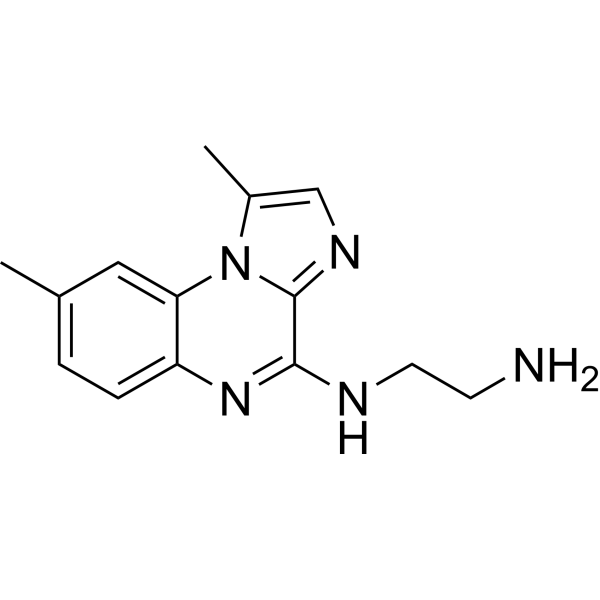
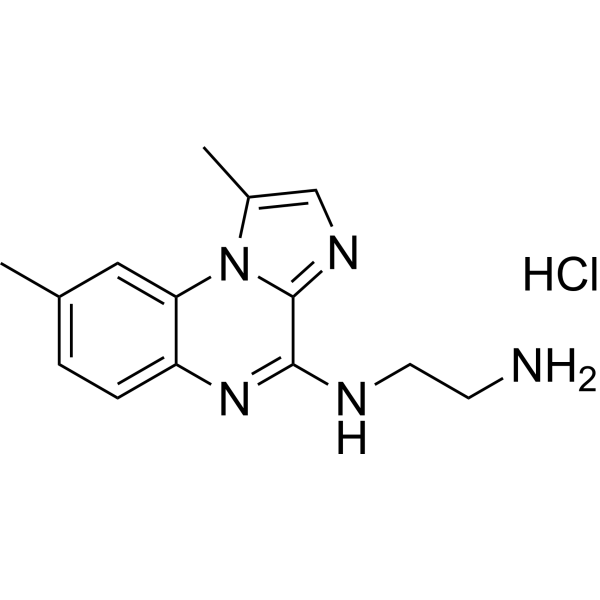
-
IKK 16
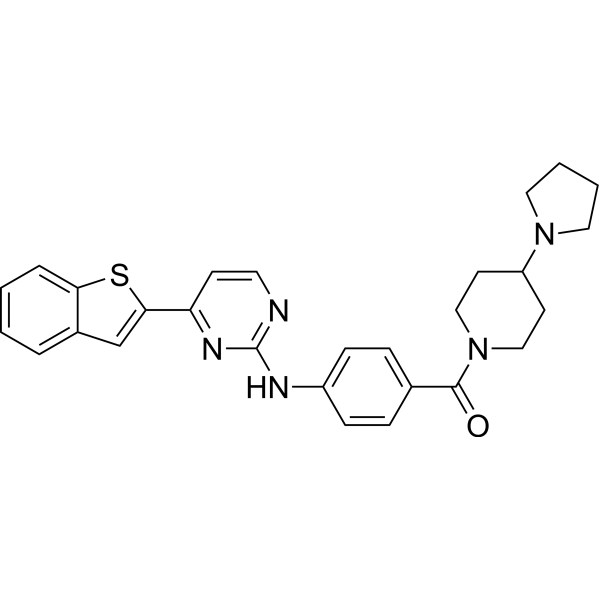 0 ImagesIKK 16 is an orally active IKK inhibitor. IKK 16 shows IC50s of 40 nM, 70 nM, 200 nM, and 50 nM for IKK2, IKK complex, IKK1, and LRRK 2, respectively. IKK 16 is also a pan-PKD inhibitor, inhibiting PKD1, PKD2, and PKD3 with IC50s of 153.9, 115, and 99.7 nM, respectively. IKK 16 is also an ABCB1 inhibitor, interfering with the binding of ABCB1 to its substrates. IKK 16 protects against LPS (HY-D1056)-induced multiple organ dysfunction by reducing the acute inflammatory response induced by endotoxin exposure. IKK 16 can restore renal function and alleviate fibrosis in acute kidney injury. IKK 16 attenuates cardiac dysfunction associated with polymicrobial sepsis in mice with type 2 diabetes mellitus (T2DM) by inhibiting the NF-κB pathway.
-
Peramivir
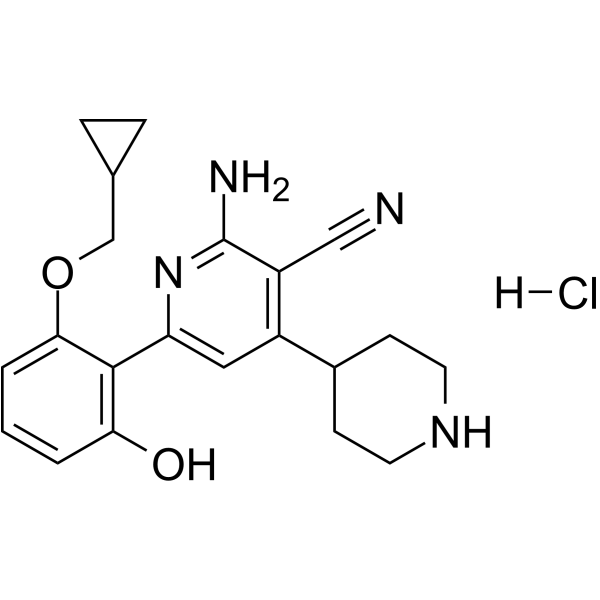
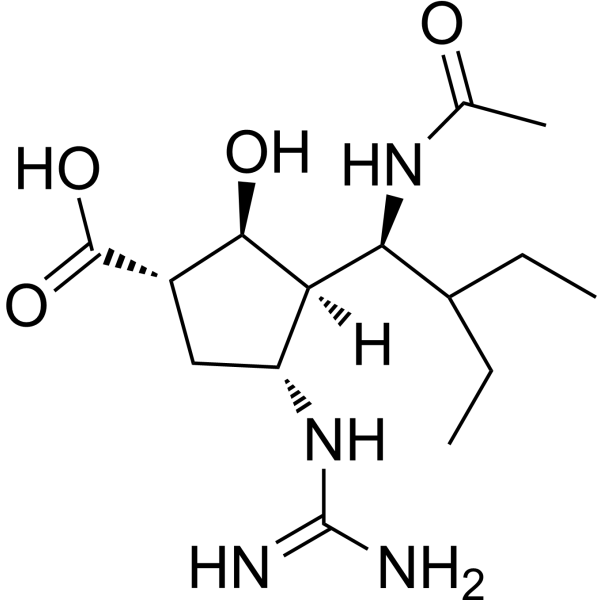 0 ImagesSynonyms: RWJ-270201; BCX-1812Peramivir is an novel cyclopentane neuraminidase inhibitor of influenza virus. Peramivir has antiviral activity and anti-cytokines stom effects. Peramivir can be used for the research of COVID-19.
-
EM982
 0 ImagesCat. No.: HY-189761EM982 is an Erythromycin (HY-B0220)-derived IKKβ inhibitor that blocks IKKβ/IκBα phosphorylation and Toll-like receptor ligand-induced NF-κB activation. EM982 downregulates TNF‑α, IL‑6, and IL‑8, while upregulating IL‑10. EM982 can be used in immunomodulation-related research.
-
SMU-H1
 0 ImagesCat. No.: HY-189658CAS No.: 2410782-67-9SMU-H1 is a TLR2 agonist with a KD of 12.1 nM for mouse TLR2 and an EC50 of 5.14 nM in HEK-Blue hTLR2 cells. SMU-H1 binds TLR2 and activates MyD88-dependent signaling. SMU-H1 activates the NF-κB and MAPK signaling pathways. SMU-H1 induces proinflammatory cytokine production. SMU-H1 promotes M1 macrophage polarization and dendritic cell activation. SMU-H1 can be used for research on Lewis lung cancer.
-
IKK 16 hydrochloride
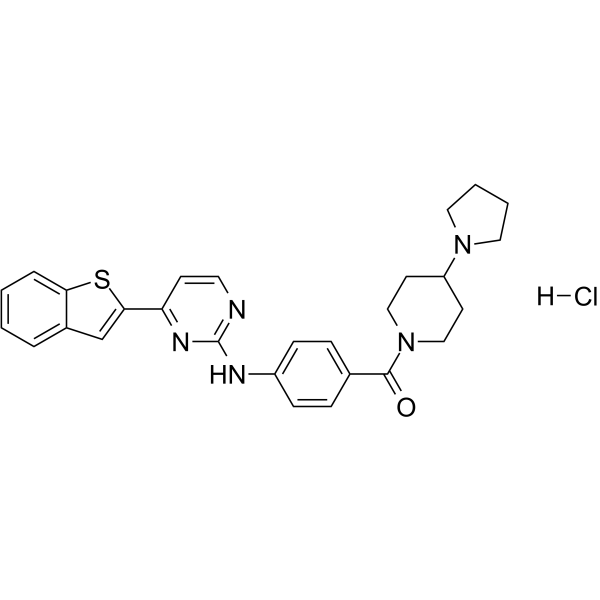 0 ImagesIKK 16 hydrochloride is an orally active IKK inhibitor. IKK 16 hydrochloride shows IC50s of 40 nM, 70 nM, 200 nM, and 50 nM for IKK2, IKK complex, IKK1, and LRRK 2, respectively. IKK 16 hydrochloride is also a pan-PKD inhibitor, inhibiting PKD1, PKD2, and PKD3 with IC50s of 153.9, 115, and 99.7 nM, respectively. IKK 16 hydrochloride is also an ABCB1 inhibitor, interfering with the binding of ABCB1 to its substrates. IKK 16 hydrochloride protects against LPS (HY-D1056)-induced multiple organ dysfunction by reducing the acute inflammatory response induced by endotoxin exposure. IKK 16 hydrochloride can restore renal function and alleviate fibrosis in acute kidney injury. IKK 16 hydrochloride attenuates cardiac dysfunction associated with polymicrobial sepsis in mice with type 2 diabetes mellitus (T2DM) by inhibiting the NF-κB pathway.
-
BAY32-5915
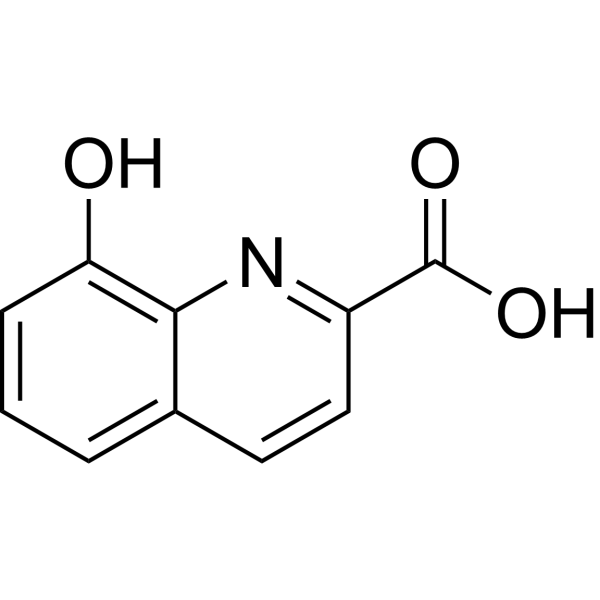 0 ImagesBAY32-5915 is a potent IKKα inhibitor with an IC50 value of 60 nM. BAY32-5915 has not affect Doxorubicin (HY-15142A)-induced NF-κB activation.
-
SU1261
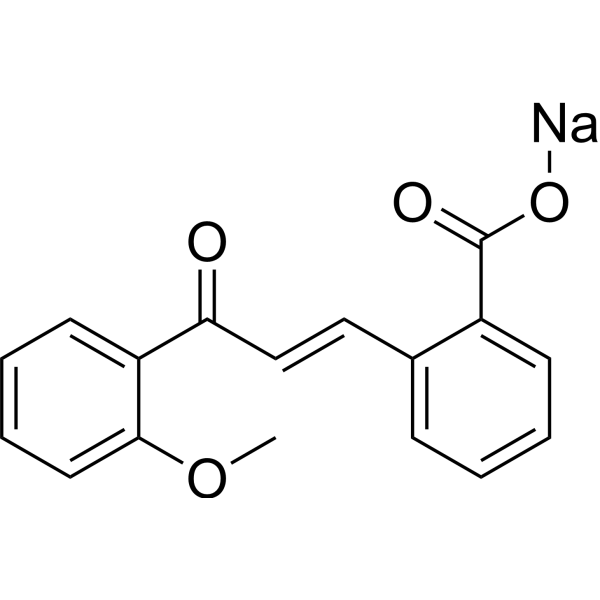
 0 ImagesSU1261 is an IKK inhibitor with Ki values of 10 nM and 680 nM for IKKα and IKKβ, respectively. SU1261 can inhibit non-canonical NF-κB signaling in U2OS osteosarcoma cells.
-
INH14
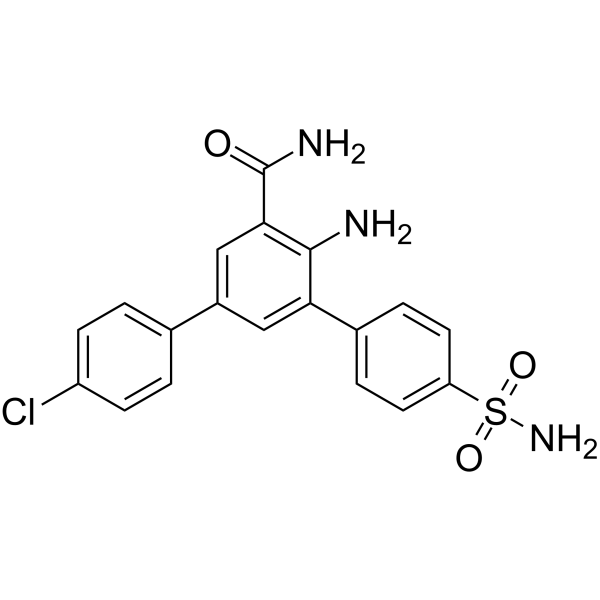
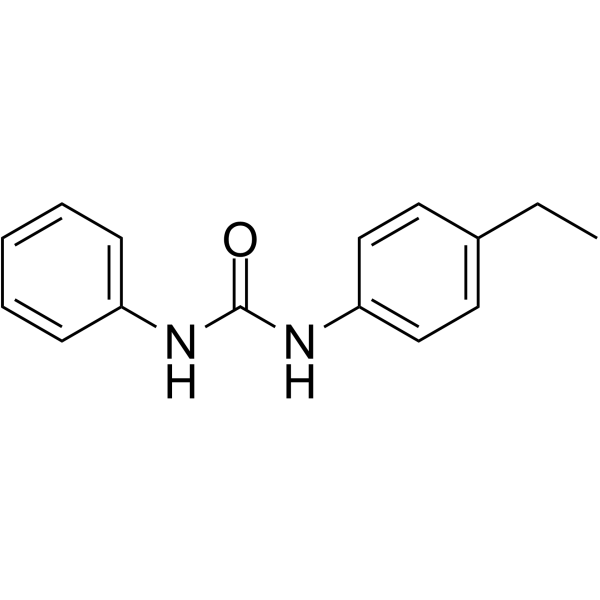 0 ImagesINH14 is a cell permeable inhibitor of IKKα/IKKβ, with IC50s of 8.97 and 3.59 μM, respectively. INH14 inhibits the IKKα/β-dependent TLR inflammatory response. INH14 also inhibits downstream of TAK1/TAB1 and NF-kB pathways. Anti-inflammatory and anti-cancer activity.
-
MAP3K14-IN-1
 0 ImagesCat. No.: HY-124865CAS No.: 2113617-02-8MAP3K14-IN-1 (Compound 173) is a MAP3K14 (NIK kinase) inhibitor with an IC50 of 1.8 nM. MAP3K14-IN-1 inhibits the autophosphorylation of MAP3K14 kinase. MAP3K14-IN-1 reduces the level of phosphorylated IKKα in cancer cells. MAP3K14-IN-1 inhibits the proliferation of multiple myeloma cells. MAP3K14-IN-1 can be used in research related to multiple myeloma.
-
ACHP
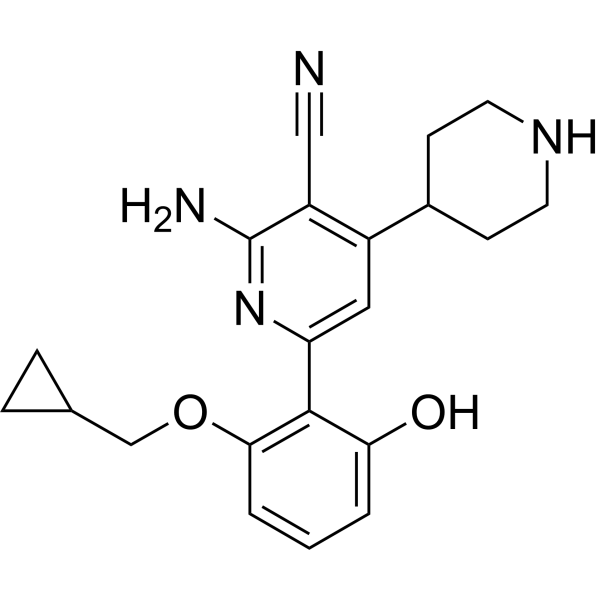 0 ImagesCat. No.: HY-107592CAS No.: 406208-42-2ACHP (compound 4j) is a selective and orally active IκB kinase inhibitor with IC50 values of 8.5 nM and 250 nM for IKKβ and IKKα, respectively. ACHP can effectively inhibit the STAT3 signaling pathway and induce cancer cell cycle arrest and apoptosis. ACHP shows anti-inflammatory activity in a mouse ear edema model. ACHP can be used in anti-inflammatory and anti-cancer (such as multiple myeloma and leukemia) studies.
-
HIF-1α-IN-8
 0 ImagesCat. No.: HY-175521HIF-1α-IN-8 is an orally active HIF-1α inhibitor, with an IC50 of 2.02 μM. HIF-1α-IN-8 significantly suppresses the expression of inflammation factors of IL-6 and NO, reduces hypoxia-induced ROS production and apoptosis in C8-D1A cells. HIF-1α-IN-8 inhibits HIF-1α/IKKα/NF-κB signaling pathway and reduces the expression of blood-brain barrier permeability-related proteins. HIF-1α-IN-8 reduces brain water content and oxidative stress level in mice with high altitude cerebral edema (HACE) model. HIF-1α-IN-8 can be used for the study of high altitude cerebral edema (HACE).
-
DN203316
 0 ImagesCat. No.: HY-162963CAS No.: 2982696-04-6Synonyms: PPARδ agonist 11DN203316 (PPARδ agonist 11) is a potent, selective, orally active PPARδ agonist (EC50 = 20 nM) with high selectivity over PPARα and PPARγ. DN203316 suppresses NF-κB-mediated inflammatory signaling, inhibits ferroptosis by upregulating xCT and GPX4, and attenuates STING-TBK1-IRF3-driven fibrogenic responses. DN203316 is useful for research on inflammatory disorders, metabolic dysfunction-associated steatohepatitis (MASH), and liver fibrosis.
-
Vitedoamine A
 0 ImagesCat. No.: HY-N17353CAS No.: 819861-41-1Vitedoamine A is a Phenylnaphthalene-type lignan alkaloid. Vitedoamine A can be isolated from Vitex negundo. Vitedoamine A inhibits the activity of IKKβ with an IC50 value of 39 μM. Vitedoamine A could inhibit the transcriptional activity of NF-κB, and suppress the production of NO and reduce the expressions of inflammatory cytokines (IL-1β, IL-6, and TNF-α). Vitedoamine A inhibits the phosphorylation of IKKα/β and p65, and prevents the degradation of IκBα. Vitedoamine A possesses anti-rheumatoid arthritis capacity.
-
HDAC6-IN-71
 0 ImagesCat. No.: HY-180829CAS No.: 3062867-16-4HDAC6-IN-71 (Compound 24) is a HDAC6 inhibitor with IC50 values for HDAC6 and HDAC1 of 13.68 and 443.12 nM respectively. HDAC6-IN-71 effectively inhibits the production of NO by mouse macrophages, with its IC50 being 2.31 μM. HDAC6-IN-71 inhibits the HDAC6-NF-κB signaling pathway, reduces the levels of phosphorylated IκB-α and IKK-α/β, and suppresses the expression of downstream inflammatory proteins COX-2 and iNOS. HDAC6-IN-71 significantly alleviates ulcerative colitis in mice.
-
Dihydroparadol
 0 ImagesCat. No.: HY-184337CAS No.: 143111-84-6Dihydroparadol is a iNOS inhibitor with an IC50 of 7.24 μM, and it is found in ginger. Dihydroparadol partially inhibits the catalytic activity of iNOS, blocks the nuclear translocation of NF-κB p65, reduces NF-κB activity, and attenuates lipopolysaccharide-induced degradation of IκB-α, thereby inhibiting NF-κB-mediated iNOS gene expression and protein production. Dihydroparadol inhibits lipopolysaccharide-induced nitric oxide production in macrophages and exhibits anti-inflammatory activity. Dihydroparadol increases ABCA1 protein abundance by elevating mRNA levels and reducing proteasomal degradation, and also increases ABCG1 protein abundance by enhancing protein stability. Dihydroparadol promotes cholesterol efflux from cholesterol-loaded macrophages via apolipoprotein A1-mediated and plasma-mediated pathways. Dihydroparadol inhibits PDGF-induced vascular smooth muscle cell proliferation, shows no cytotoxicity to vascular smooth muscle cells within the tested concentration range, and does not interfere with endothelial cell proliferation. Dihydroparadol can be used in the research of inflammatory diseases, atherosclerosis and cardiovascular diseases.
- 1




