



PKD1
PKD1 encodes polycystin-1 (PC1), a large transmembrane protein that functions as a receptor-like signaling molecule in renal epithelial cells and other tissues, where it integrates extracellular cues with intracellular responses involved in tissue homeostasis and morphogenesis[1][2]. Mechanistically, PC1 forms a functional complex with polycystin-2 (PC2), and this receptor-channel assembly localizes to the plasma membrane, endoplasmic reticulum, and primary cilium, where it participates in mechanosensory and calcium-dependent signaling pathways that regulate epithelial function[2][3]. Through its extensive extracellular domains and intracellular signaling capacity, PC1 contributes to cell-cell adhesion, cell-matrix interactions, and signal transduction processes that maintain normal tubular architecture[4][5]. Disease relevance is highlighted by the fact that PKD1 mutations account for the majority of autosomal dominant polycystic kidney disease (ADPKD) cases, in which disruption of polycystin signaling promotes progressive renal cyst formation and loss of kidney function[2][6]. In experimental models, loss of PKD1 alters ciliary signaling and cellular responses linked to cystogenesis, supporting a central role for PC1 in maintaining renal epithelial integrity[3][6]. Compared with the related isoform PC2 encoded by PKD2, which functions primarily as a TRPP cation channel, PC1 acts predominantly as the receptor-like component of the polycystin complex and provides distinct extracellular sensing and signaling functions[2][6]. For experimental applications, studies have identified GPCR-like properties of PC1, including regulation through its GPCR proteolytic site (GPS) and stalk-dependent signaling mechanisms, providing useful frameworks for mechanistic investigations of polycystin-mediated signaling pathways[2][7].
References:
- [1]. National Library of Medicine.
- [2]. Maser RL, et al. The GPCR properties of polycystin-1- A new paradigm. Front Mol Biosci. 2022 Nov 4;9:1035507. [Content Brief]
- [3]. Ta CM, et al. Structure and function of polycystin channels in primary cilia. Cell Signal. 2020 Aug;72:109626. [Content Brief]
- [4]. Torres VE, et al. Autosomal dominant polycystic kidney disease: the last 3 years. Kidney Int. 2009 Jul;76(2):149-68. [Content Brief]
- [5]. Wilson PD, et al. The PKD1 gene product, polycystin-1, is a tyrosine-phosphorylated protein that colocalizes with alpha2beta1-integrin in focal clusters in adherent renal epithelia. Lab Invest. 1999 Oct;79(10):1311-23. [Content Brief]
- [6]. Walker RV, et al. Ciliary exclusion of Polycystin-2 promotes kidney cystogenesis in an autosomal dominant polycystic kidney disease model. Nat Commun. 2019 Sep 6;10(1):4072. [Content Brief]
- [7]. Pawnikar S, et al. Activation of polycystin-1 signaling by binding of stalk-derived peptide agonists. Elife. 2024 Oct 7;13:RP95992. [Content Brief]
All Product Categories
-
PKD1 Related Products (13)
Related Products (13)

- 1
-
IKK 16
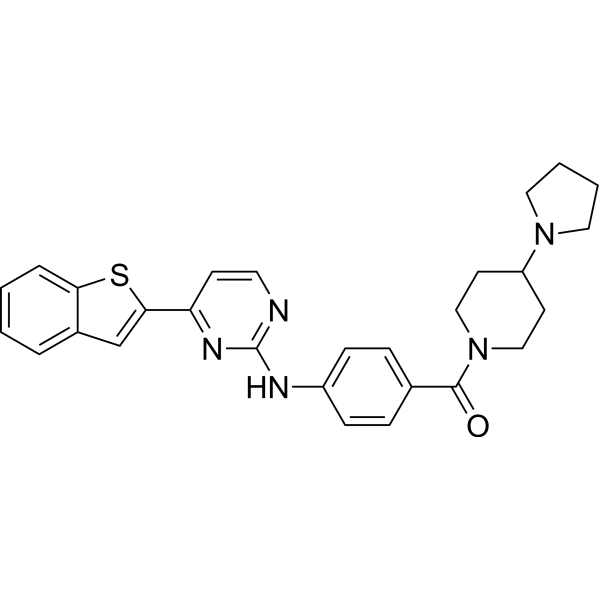 0 ImagesIKK 16 is an orally active IKK inhibitor. IKK 16 shows IC50s of 40 nM, 70 nM, 200 nM, and 50 nM for IKK2, IKK complex, IKK1, and LRRK 2, respectively. IKK 16 is also a pan-PKD inhibitor, inhibiting PKD1, PKD2, and PKD3 with IC50s of 153.9, 115, and 99.7 nM, respectively. IKK 16 is also an ABCB1 inhibitor, interfering with the binding of ABCB1 to its substrates. IKK 16 protects against LPS (HY-D1056)-induced multiple organ dysfunction by reducing the acute inflammatory response induced by endotoxin exposure. IKK 16 can restore renal function and alleviate fibrosis in acute kidney injury. IKK 16 attenuates cardiac dysfunction associated with polymicrobial sepsis in mice with type 2 diabetes mellitus (T2DM) by inhibiting the NF-κB pathway.
-
CRT0066101 dihydrochloride
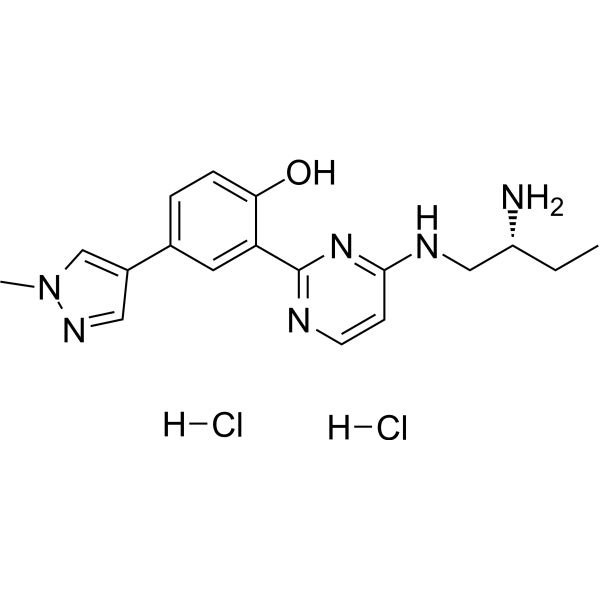 0 ImagesCRT0066101 dihydrochloride is a potent and orally active PKD inhibitor with IC50 values of 1 nM, 2.5 nM and 2 nM for PKD1, PKD2, and PKD3, respectively. CRT0066101 dihydrochloride is also a potent PIM2 inhibitor with an IC50 of ~135.7 nM. CRT0066101 dihydrochloride exhibits anti-inflammatory activity in mice LPS (HY-D1056)-induced lung injury models, and has anticancer effects.
-
CRT0066101
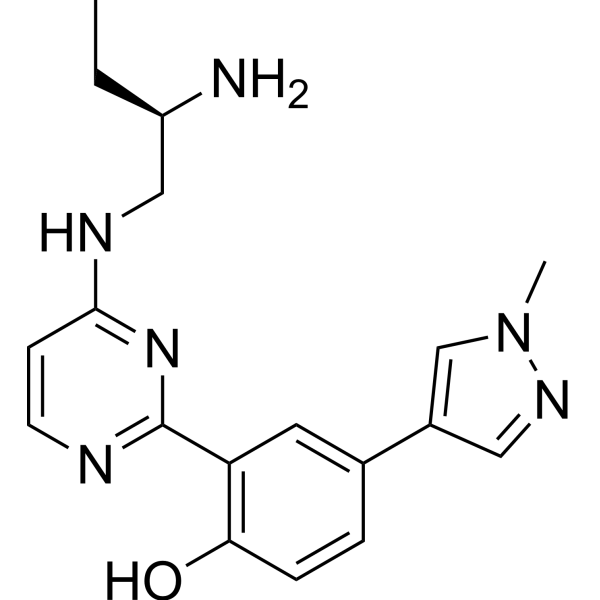 0 ImagesCRT0066101 is a potent and orally active PKD inhibitor with IC50 values of 1 nM, 2.5 nM and 2 nM for PKD1, PKD2, and PKD3, respectively. CRT0066101 is also a potent PIM2 inhibitor with an IC50 of ~135.7 nM. CRT0066101 exhibits anti-inflammatory activity in mice LPS (HY-D1056)-induced lung injury models, and has anticancer effects.
-
IKK 16 hydrochloride
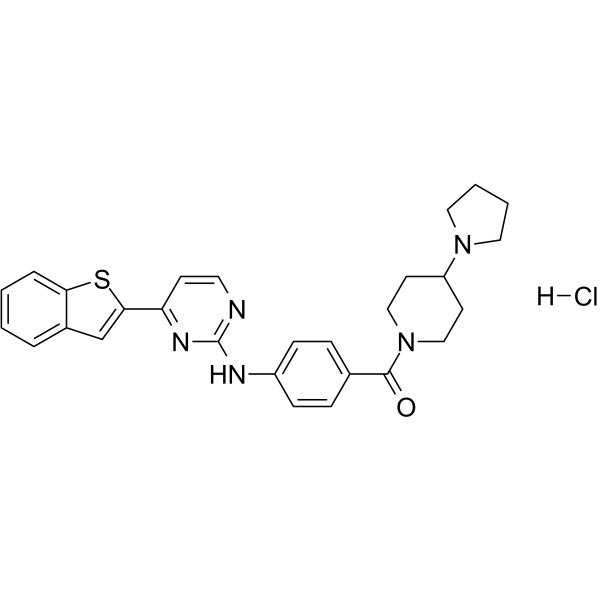 0 ImagesIKK 16 hydrochloride is an orally active IKK inhibitor. IKK 16 hydrochloride shows IC50s of 40 nM, 70 nM, 200 nM, and 50 nM for IKK2, IKK complex, IKK1, and LRRK 2, respectively. IKK 16 hydrochloride is also a pan-PKD inhibitor, inhibiting PKD1, PKD2, and PKD3 with IC50s of 153.9, 115, and 99.7 nM, respectively. IKK 16 hydrochloride is also an ABCB1 inhibitor, interfering with the binding of ABCB1 to its substrates. IKK 16 hydrochloride protects against LPS (HY-D1056)-induced multiple organ dysfunction by reducing the acute inflammatory response induced by endotoxin exposure. IKK 16 hydrochloride can restore renal function and alleviate fibrosis in acute kidney injury. IKK 16 hydrochloride attenuates cardiac dysfunction associated with polymicrobial sepsis in mice with type 2 diabetes mellitus (T2DM) by inhibiting the NF-κB pathway.
-
BPKDi
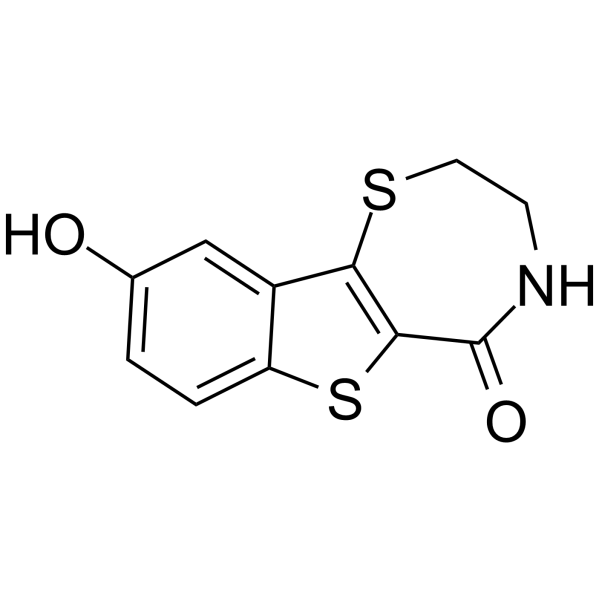
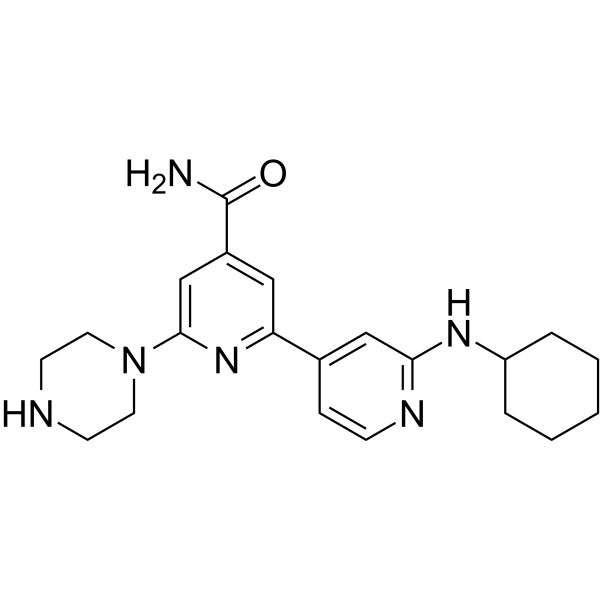 0 ImagesBPKDi is an inhibitor of PKD. BPKDi inhibits three members of the PKD family, PKD1, PKD2, and PKD3, with IC50 values of 1 nM, 9 nM, and 1 nM, respectively. BPKDi blocks signal-dependent phosphorylation and nuclear export of class IIa HDACs in cardiomyocytes and concomitantly suppresses hypertrophy of these cells.
-
PKC/PKD-IN-1
 0 ImagesPKC/PKD-IN-1 (Compound 13C) is an orally active dual protein kinase C/D (PKC/PKD) inhibitor with an IC50 value of 0.6 nM for PKD1. PKC/PKD-IN-1 can attenuate high-salt diet-induced cardiac hypertrophy and can be used in the study of heart failure.
-
3-IN-PP1
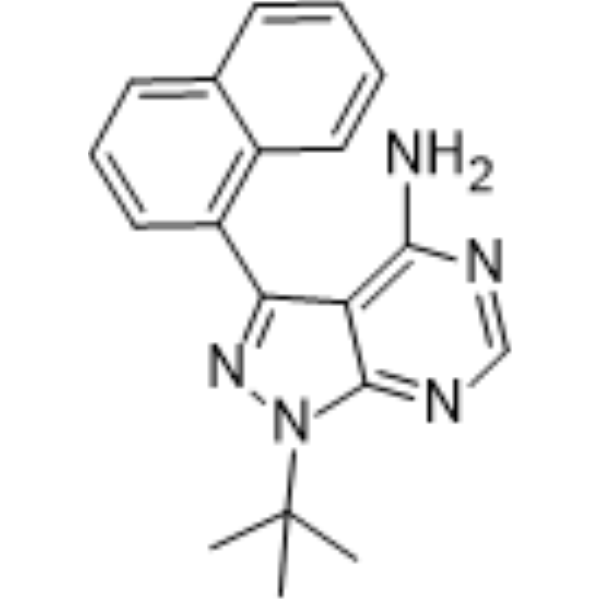
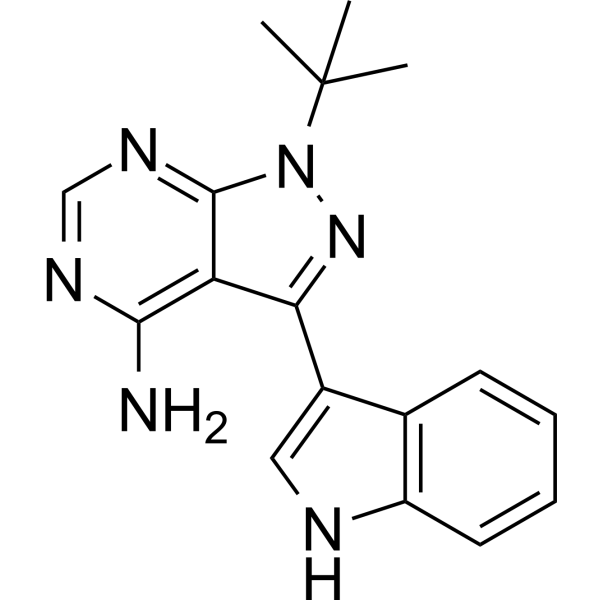 0 Images3-IN-PP1 is a protein kinase D (PKD) inhibitor. 3-IN-PP1 has potent pan-PKD inhibitory activity for PKD1, PKD2 and PKD3 with IC50 values of 108, 94 and 108 nM, respectively. 3-IN-PP1 also is a broad spectrum anticancer agent and has inhibition of several tumor cells growth. 3-IN-PP1 can be used for the research of cancer.
-
CRT0066101 trihydrochloride
 0 ImagesCRT0066101 trihydrochloride is the trihydrochloride salt form of CRT0066101 (HY-15698). CRT0066101 trihydrochloride is an orally active PKD inhibitor with IC50 values of 1 nM, 2.5 nM and 2 nM for PKD1, PKD2, and PKD3, respectively. CRT0066101 trihydrochloride is also an inhibitor for PIM2 with an IC50 of ~135.7 nM. CRT0066101 trihydrochloride exhibits anti-inflammatory activity in mice LPS (HY-D1056)-induced lung injury models, and has anticancer effects.
-
Protein kinase D inhibitor 1
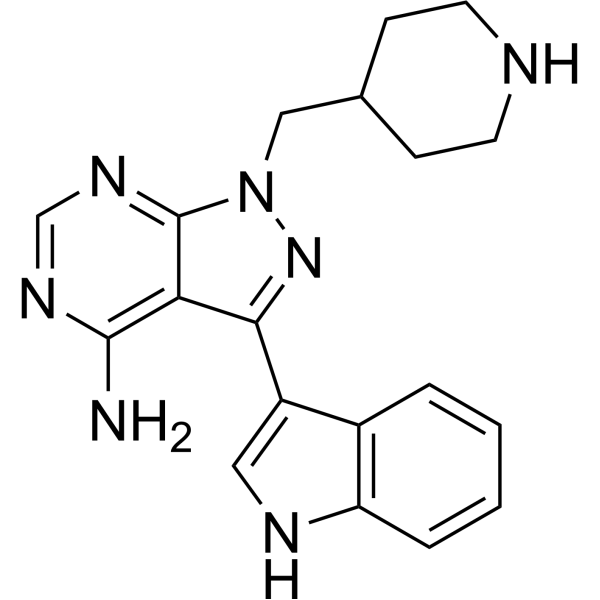 0 ImagesCat. No.: HY-151372CAS No.: 2489320-03-6Protein kinase D inhibitor 1 (compound 17m) is a pan-PKD inhibitor, with IC50 values ranging from 17 to 35 nM. Protein kinase D inhibitor 1 inhibits PKD-dependent cortactin phosphorylation.
- 1



