



PKD2
PKD2 encodes polycystin-2/TRPP2, a six-transmembrane, non-selective cation channel that localizes to the primary cilium, plasma membrane, and endoplasmic reticulum[1][2]. Mechanistically, PKD2 supports ciliary ion-channel activity in renal collecting duct epithelium, where the native channel conducts K+ and Na+ and is sensitized by high intraciliary Ca2+[1]. Through interaction with PKD1, PKD2 contributes to a receptor-ion-channel complex that links extracellular cues to Ca2+-dependent signaling, including WNT/Ca2+ responses[3]. In disease models, loss of PKD2 or exclusion of channel-functional polycystin-2 from cilia promotes renal cystogenesis, supporting a cilia-centered mechanism in autosomal dominant polycystic kidney disease[1][4]. Compared with PKD1, PKD2 provides the required ciliary channel subunit, while PKD1 can confer distinct channel properties within the PKD1-PKD2 complex[1][5]. Compared with PKD2L1, PKD2 shows different ciliary ion selectivity, because PKD2L1-containing channels preferentially conduct Ca2+[1][6]. For experimental applications, direct ciliary electrophysiology and heterologous ciliary expression provide practical systems for evaluating PKD2 variants and channel behavior[1]. Pharmacological work should distinguish PKD2 from associated subunits, because pregnenolone sulfate and isosakuranetin modulate a TRPM3-dependent TRPP2 ciliary channel rather than proving PKD2-specific agonism or inhibition[7].
References:
- [1]. Liu X, et al. Polycystin-2 is an essential ion channel subunit in the primary cilium of the renal collecting duct epithelium. Elife. 2018 Feb 14;7:e33183. [Content Brief]
- [2]. Hardy E, et al. Polycystins as components of large multiprotein complexes of polycystin interactors. Cell Signal. 2020 Aug;72:109640. [Content Brief]
- [3]. Kim S, et al. The polycystin complex mediates Wnt/Ca(2+) signalling. Nat Cell Biol. 2016 Jul;18(7):752-764. [Content Brief]
- [4]. Walker RV, et al. Ciliary exclusion of Polycystin-2 promotes kidney cystogenesis in an autosomal dominant polycystic kidney disease model. Nat Commun. 2019 Sep 6;10(1):4072. [Content Brief]
- [5]. Wang Z, et al. The ion channel function of polycystin-1 in the polycystin-1/polycystin-2 complex. EMBO Rep. 2019 Nov 5;20(11):e48336. [Content Brief]
- [6]. DeCaen PG, et al. Direct recording and molecular identification of the calcium channel of primary cilia. Nature. 2013 Dec 12;504(7479):315-8. [Content Brief]
- [7]. Kleene SJ, et al. The TRPP2-dependent channel of renal primary cilia also requires TRPM3. PLoS One. 2019 Mar 18;14(3):e0214053. [Content Brief]
All Product Categories
-
PKD2 Related Products (12)
Related Products (12)

- 1
-
IKK 16
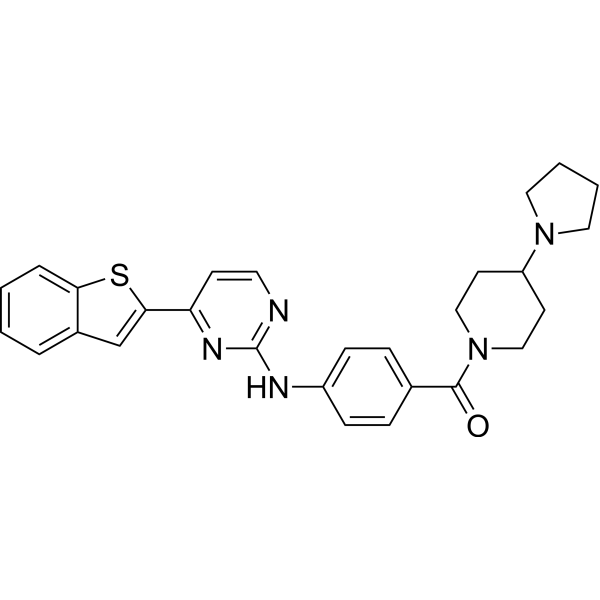 0 ImagesIKK 16 is an orally active IKK inhibitor. IKK 16 shows IC50s of 40 nM, 70 nM, 200 nM, and 50 nM for IKK2, IKK complex, IKK1, and LRRK 2, respectively. IKK 16 is also a pan-PKD inhibitor, inhibiting PKD1, PKD2, and PKD3 with IC50s of 153.9, 115, and 99.7 nM, respectively. IKK 16 is also an ABCB1 inhibitor, interfering with the binding of ABCB1 to its substrates. IKK 16 protects against LPS (HY-D1056)-induced multiple organ dysfunction by reducing the acute inflammatory response induced by endotoxin exposure. IKK 16 can restore renal function and alleviate fibrosis in acute kidney injury. IKK 16 attenuates cardiac dysfunction associated with polymicrobial sepsis in mice with type 2 diabetes mellitus (T2DM) by inhibiting the NF-κB pathway.
-
CRT0066101 dihydrochloride
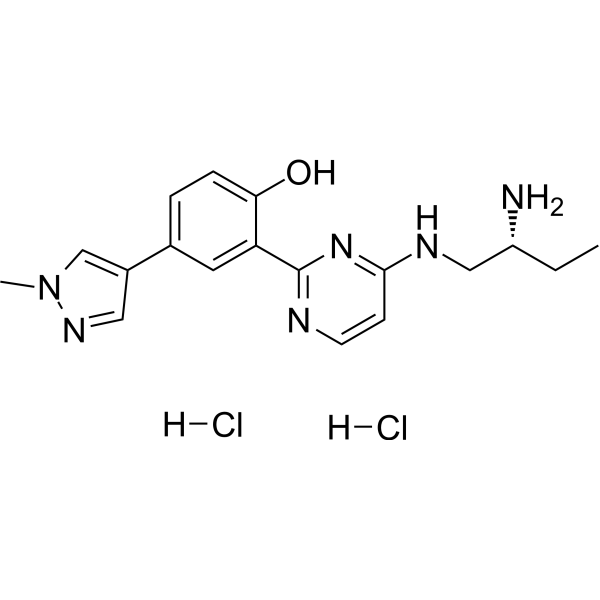 0 ImagesCRT0066101 dihydrochloride is a potent and orally active PKD inhibitor with IC50 values of 1 nM, 2.5 nM and 2 nM for PKD1, PKD2, and PKD3, respectively. CRT0066101 dihydrochloride is also a potent PIM2 inhibitor with an IC50 of ~135.7 nM. CRT0066101 dihydrochloride exhibits anti-inflammatory activity in mice LPS (HY-D1056)-induced lung injury models, and has anticancer effects.
-
CRT0066101
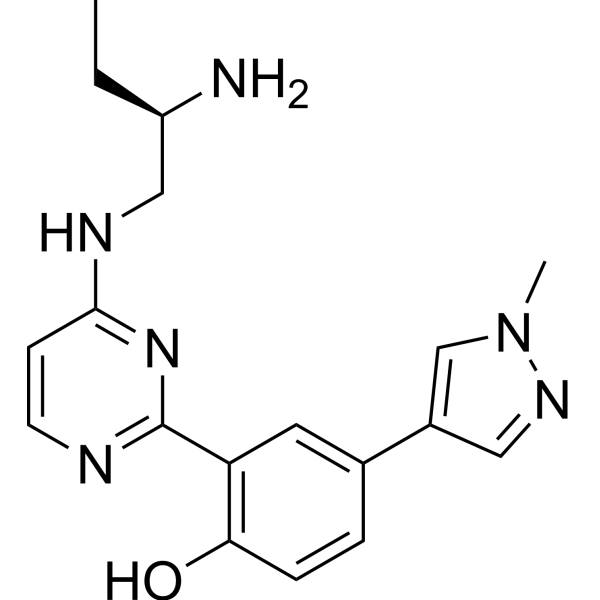 0 ImagesCRT0066101 is a potent and orally active PKD inhibitor with IC50 values of 1 nM, 2.5 nM and 2 nM for PKD1, PKD2, and PKD3, respectively. CRT0066101 is also a potent PIM2 inhibitor with an IC50 of ~135.7 nM. CRT0066101 exhibits anti-inflammatory activity in mice LPS (HY-D1056)-induced lung injury models, and has anticancer effects.
-
IKK 16 hydrochloride
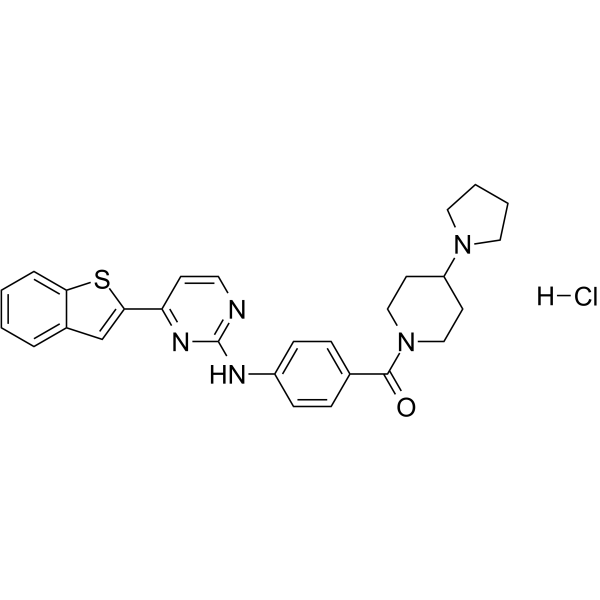 0 ImagesIKK 16 hydrochloride is an orally active IKK inhibitor. IKK 16 hydrochloride shows IC50s of 40 nM, 70 nM, 200 nM, and 50 nM for IKK2, IKK complex, IKK1, and LRRK 2, respectively. IKK 16 hydrochloride is also a pan-PKD inhibitor, inhibiting PKD1, PKD2, and PKD3 with IC50s of 153.9, 115, and 99.7 nM, respectively. IKK 16 hydrochloride is also an ABCB1 inhibitor, interfering with the binding of ABCB1 to its substrates. IKK 16 hydrochloride protects against LPS (HY-D1056)-induced multiple organ dysfunction by reducing the acute inflammatory response induced by endotoxin exposure. IKK 16 hydrochloride can restore renal function and alleviate fibrosis in acute kidney injury. IKK 16 hydrochloride attenuates cardiac dysfunction associated with polymicrobial sepsis in mice with type 2 diabetes mellitus (T2DM) by inhibiting the NF-κB pathway.
-
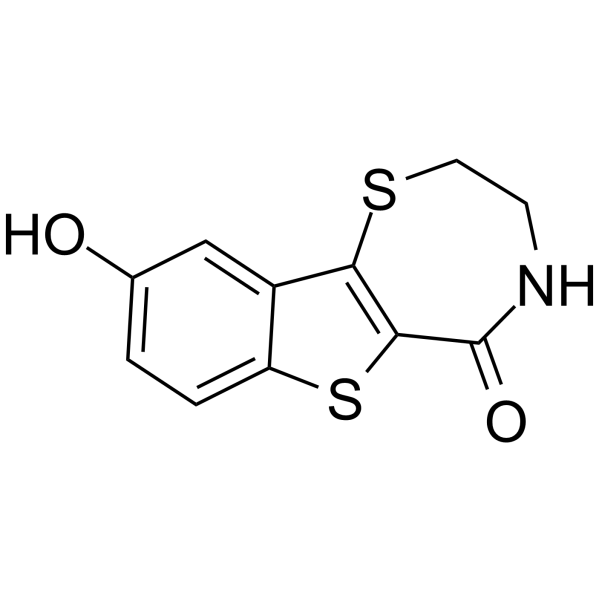
BPKDi
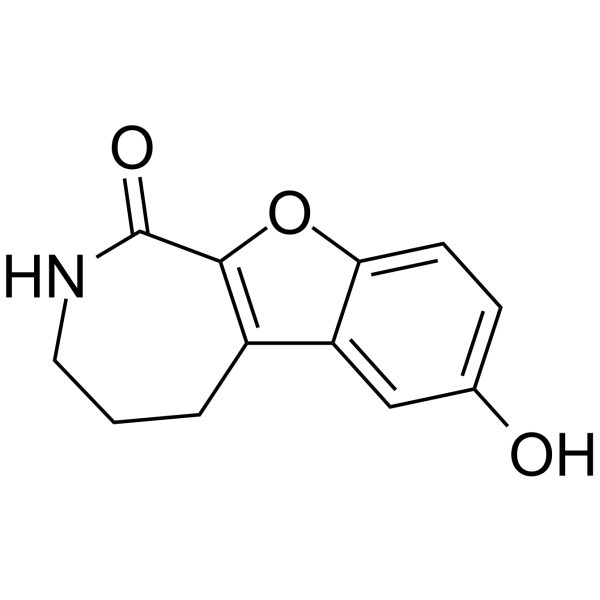
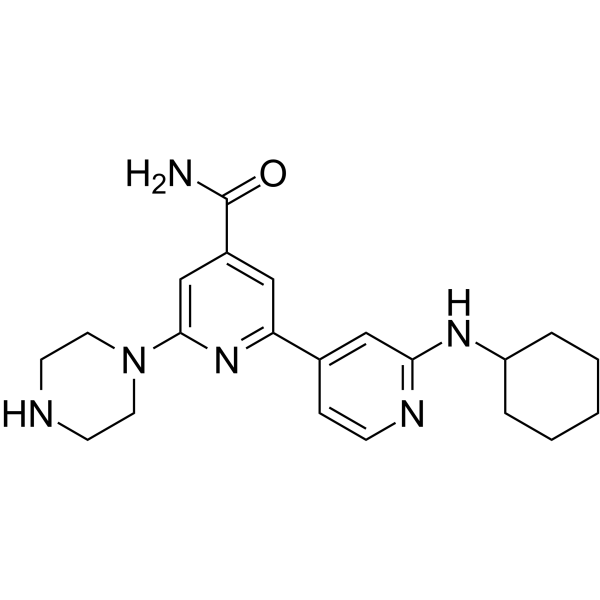 0 ImagesBPKDi is an inhibitor of PKD. BPKDi inhibits three members of the PKD family, PKD1, PKD2, and PKD3, with IC50 values of 1 nM, 9 nM, and 1 nM, respectively. BPKDi blocks signal-dependent phosphorylation and nuclear export of class IIa HDACs in cardiomyocytes and concomitantly suppresses hypertrophy of these cells.
-
3-IN-PP1
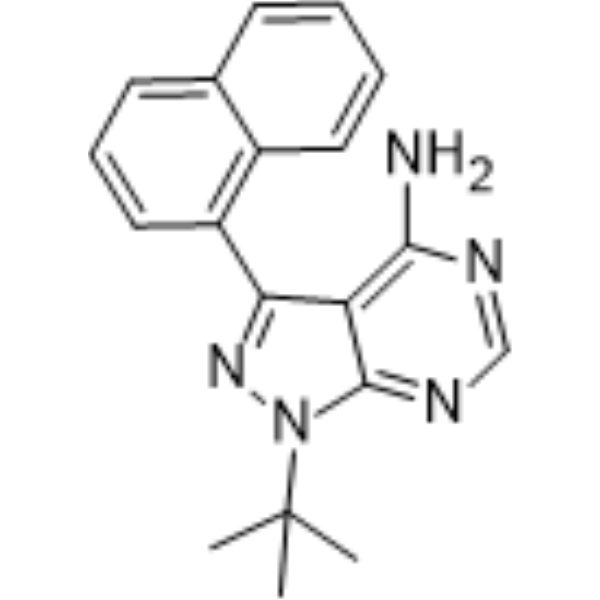
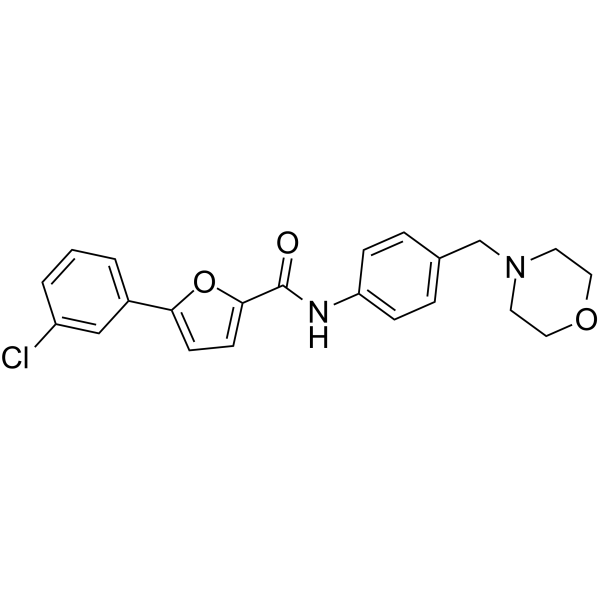
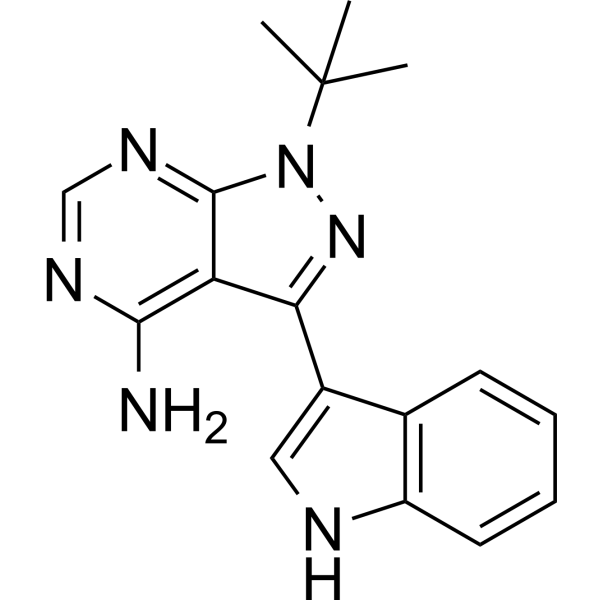 0 Images3-IN-PP1 is a protein kinase D (PKD) inhibitor. 3-IN-PP1 has potent pan-PKD inhibitory activity for PKD1, PKD2 and PKD3 with IC50 values of 108, 94 and 108 nM, respectively. 3-IN-PP1 also is a broad spectrum anticancer agent and has inhibition of several tumor cells growth. 3-IN-PP1 can be used for the research of cancer.
-
CRT0066101 trihydrochloride
 0 ImagesCRT0066101 trihydrochloride is the trihydrochloride salt form of CRT0066101 (HY-15698). CRT0066101 trihydrochloride is an orally active PKD inhibitor with IC50 values of 1 nM, 2.5 nM and 2 nM for PKD1, PKD2, and PKD3, respectively. CRT0066101 trihydrochloride is also an inhibitor for PIM2 with an IC50 of ~135.7 nM. CRT0066101 trihydrochloride exhibits anti-inflammatory activity in mice LPS (HY-D1056)-induced lung injury models, and has anticancer effects.
-
Protein kinase D inhibitor 1
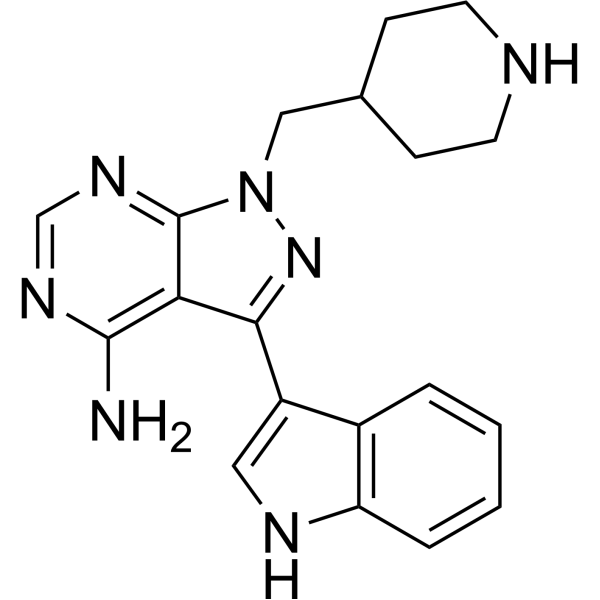 0 ImagesCat. No.: HY-151372CAS No.: 2489320-03-6Protein kinase D inhibitor 1 (compound 17m) is a pan-PKD inhibitor, with IC50 values ranging from 17 to 35 nM. Protein kinase D inhibitor 1 inhibits PKD-dependent cortactin phosphorylation.
- 1



