JAK
Janus kinase
Janus kinase (JAK) is a family of intracellular, nonreceptor tyrosine kinases that transduce cytokine-mediated signals via the JAK-STAT pathway. Since members of the type I and type II cytokine receptor families possess no catalytic kinase activity, they rely on the JAK family of tyrosine kinases to phosphorylate and activate downstream proteins involved in their signal transduction pathways. The receptors exist as paired polypeptides, thus exhibiting two intracellular signal-transducing domains. JAKs associate with a proline-rich region in each intracellular domain, which is adjacent to the cell membrane and called a box1/box2 region. After the receptor associates with its respective cytokine/ligand, it goes through a conformational change, bringing the two JAKs close enough to phosphorylate each other. The JAK autophosphorylation induces a conformational change within itself, enabling it to transduce the intracellular signal by further phosphorylating and activating transcription factors called STATs. The activated STATs dissociate from the receptor and form dimers before translocating to the cell nucleus, where they regulate transcription of selected genes.
JAK Isoform Specific Products
All Product Categories
-
JAK Inhibitors
(553)
View all products
-
JAK Agonists
(2)
View all products
-
JAK Antagonists
(4)
View all products
-
JAK Activators
(26)
View all products
-
JAK Modulators
(8)
View all products
-
JAK Degraders
(14)
View all products
-
JAK Control
(1)
View all products
-
JAK Substrate
(1)
View all products
-
JAK Ligands
(5)
View all products
-
Janus Kinase 1 (JAK1) Proteins
(4)
View all products
-
JAK Related Products (648)
Related Products (648)

-
Recombinant Proteins (4)
-
Antibodies (7)
-
JAK Isoform Comparison
-
PROTAC JAK1 degrader 1
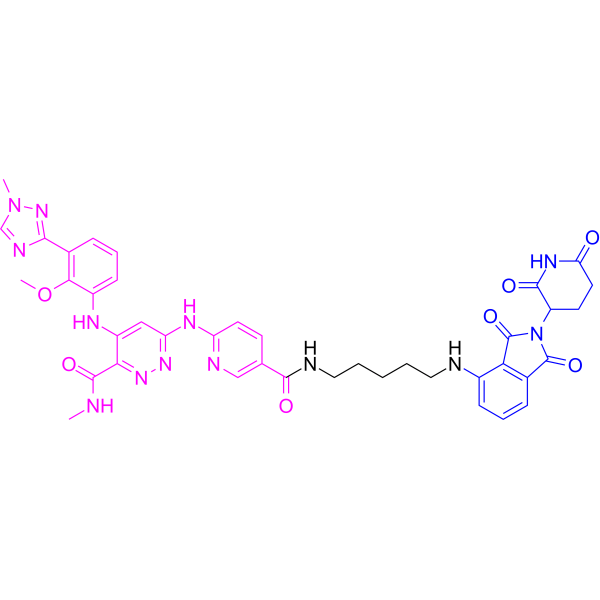
 0 ImagesPROTAC JAK1 degrader 1 is a JAK1 PROTAC degrader with a DC50 of 214 nM and an IC50 of 5.2 nM. PROTAC JAK1 degrader 1 inhibits the downstream JAK-STAT signaling pathway by degrading JAK1. PROTAC JAK1 degrader 1 exhibits antiproliferative activity in cells. PROTAC JAK1 degrader 1 can be used for research on leukemia.

-
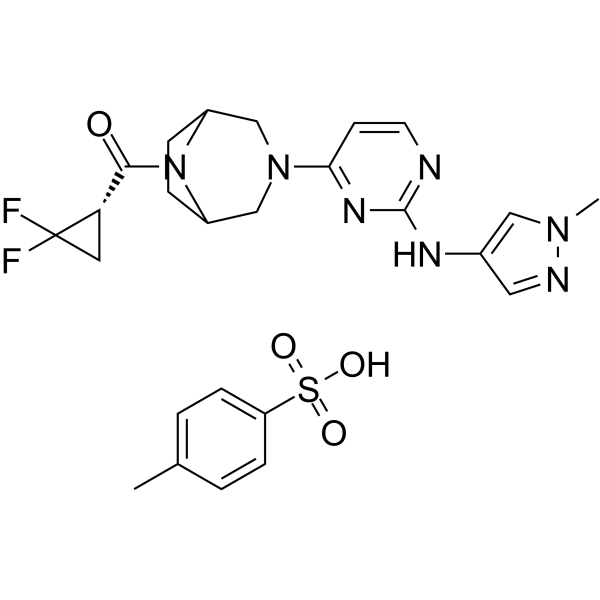
Cadefrecitinib
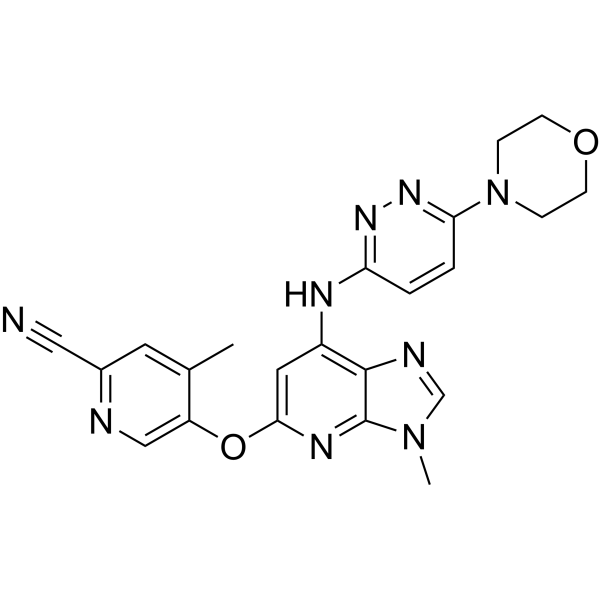 0 ImagesSynonyms: GLPG3667Cadefrecitinib (GLPG3667) is a reversible, ATP-competitive and orally active TYK2 inhibitor with an IC50 of 2.3 nM. Cadefrecitinib inhibits IFNα/pSTAT1, and the IC50 values in human peripheral blood mononuclear cell (PBMC) and whole blood assays are 70 nM and 623 nM, respectively. Cadefrecitinib has the potential for the study of inflammatory and autoimmune diseases.
-
(E/Z)-Zotiraciclib hydrochloride
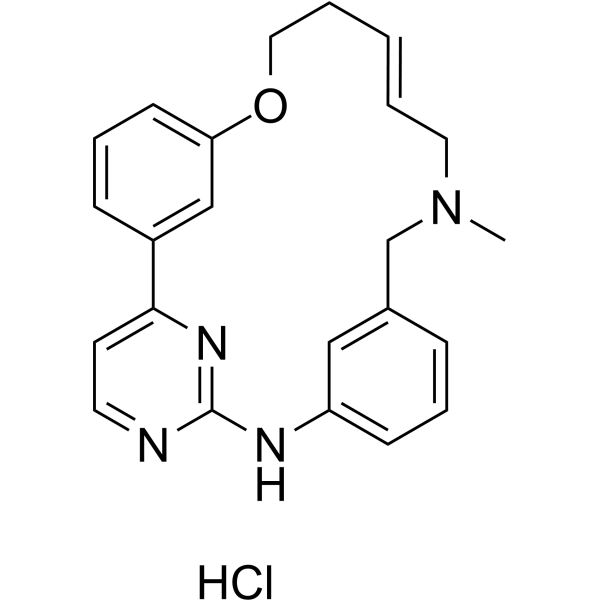 0 ImagesSynonyms: (E/Z)-TG02 hydrochloride; (E/Z)-SB1317 hydrochloride
-
UNC1062
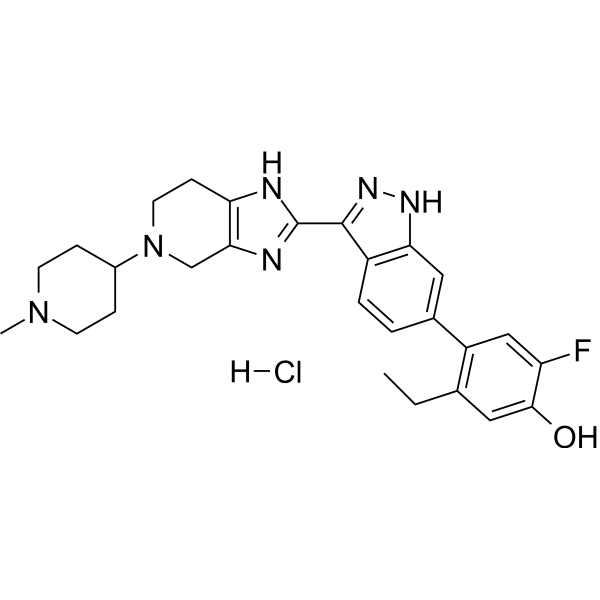
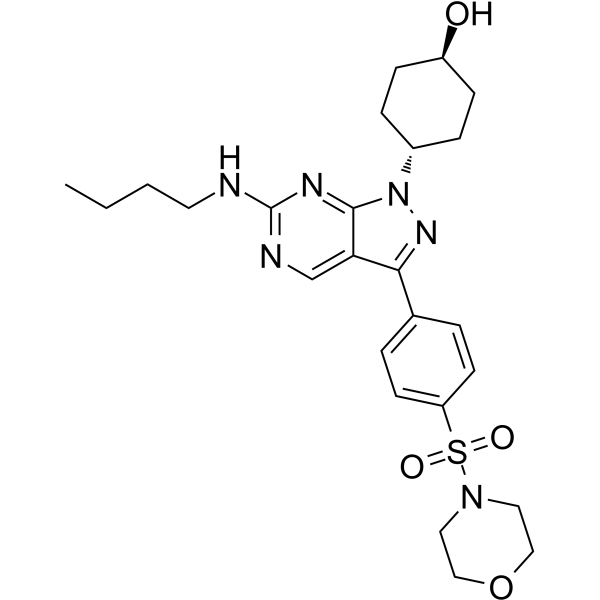 0 ImagesUNC1062 is a highly selective tyrosine kinase (MERTK) inhibitor with an IC50 of 1.1 nM (Morrison Ki = 0.33 nM). UNC1062 exhibits good selectivity for the TAM family (TYRO3 IC50 = 60 nM, AXL IC50 = 85 nM). UNC1062 exhibits significant anti-proliferative effects and induces apoptosis in various cancer models (such as melanoma, gastric cancer, and acute myeloid leukemia). UNC1062 inhibits multiple pathways, including MAPK/ERK, PI3K/AKT and JAK/STAT and affects the motility of head and neck squamous cell carcinoma (HNSCC) cells through the RhoA signaling pathway. UNC1062 inhibits macrophage efferocytosis, and it suitable for research on atherosclerosis.
-
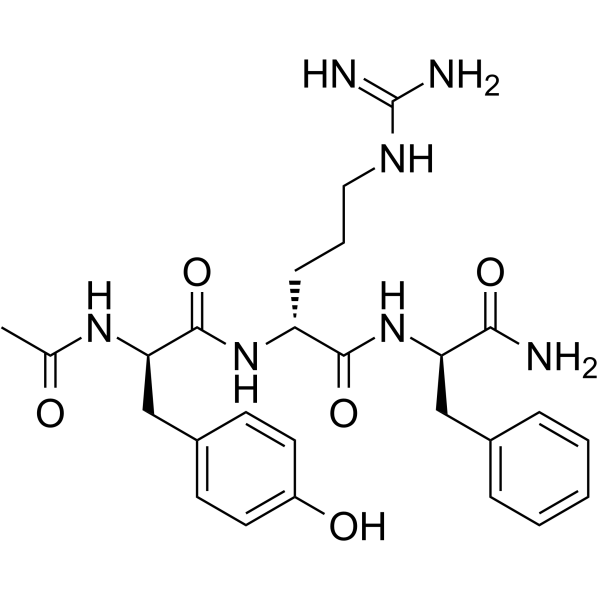
Zotiraciclib
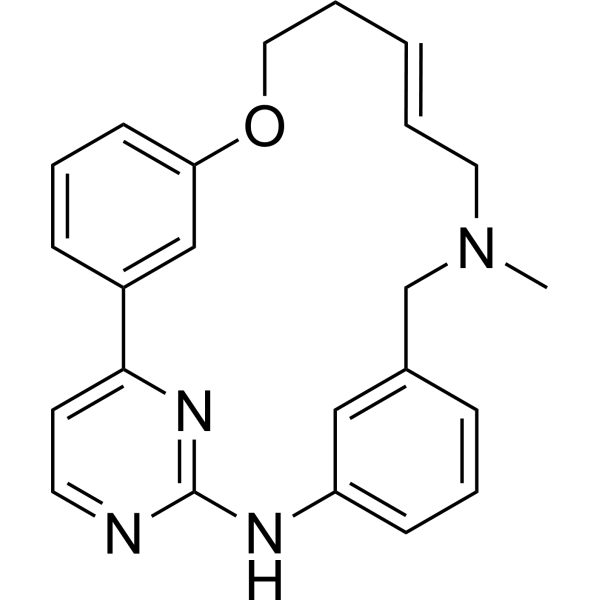 0 ImagesSynonyms: TG02; SB1317Zotiraciclib (TG02; SB1317) is an orally active JAK2/FLT3/CDK2 inhibitor with IC50 values of 13 nM, 73 nM and 56 nM, respectively. Zotiraciclib inhibits cancer cell proliferation, tumor growth and the activity of CYP2D6. Zotiraciclib exhibits high plasma protein binding rate, Caco-2 permeability and tissue distribution capacity, as well as metabolic stability in human and canine liver microsomes. Zotiraciclib achieves tumor growth inhibition in nude mouse models of colon cancer and lymphoma xenografts. Zotiraciclib can be used for research related to colon cancer, B-cell lymphoma, advanced leukemia, acute leukemia and multiple myeloma.
-
Ifidancitinib
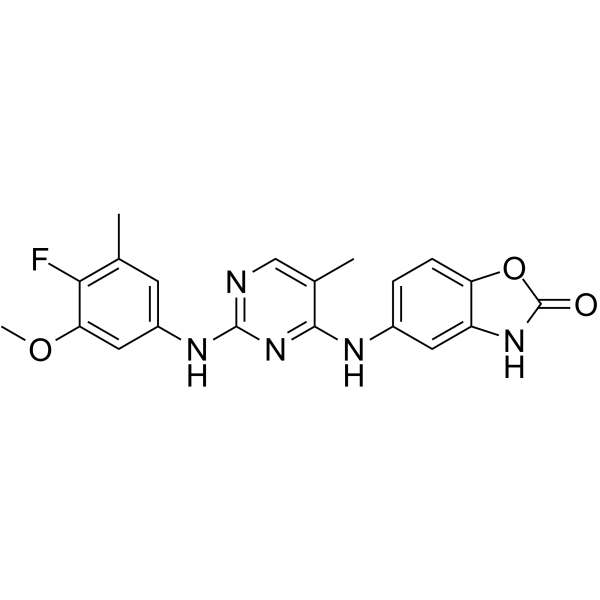 0 ImagesSynonyms: ATI-50002; ATI-502

-
Secretoneurin, rat
 0 ImagesSecretoneurin, rat is a 33-amino acid neuropeptide produced by proteolytic processing of chromogranin II, widely distributed in the central and peripheral nervous systems, and its release is calcium-dependent. Secretoneurin, rat modulates the activities of caspase-3, caspase-1, the NLRP3 inflammasome, IGF-1R, VEGFR1, VEGFR2, FGFR3, AMPK, ERK1/2/MAPK, and Jak2/Stat3 pathways. Secretoneurin, rat regulates neuronal apoptosis, synaptic structure, inflammation, neurogenesis, angiogenesis, oxidative stress, cardiomyocyte hypertrophy, dopamine release, and cell migration and proliferation. Secretoneurin, rat is used in studies of global cerebral ischemia, myocardial infarction, stroke, and cardiac hypertrophy.
-
RGB-286638 free base
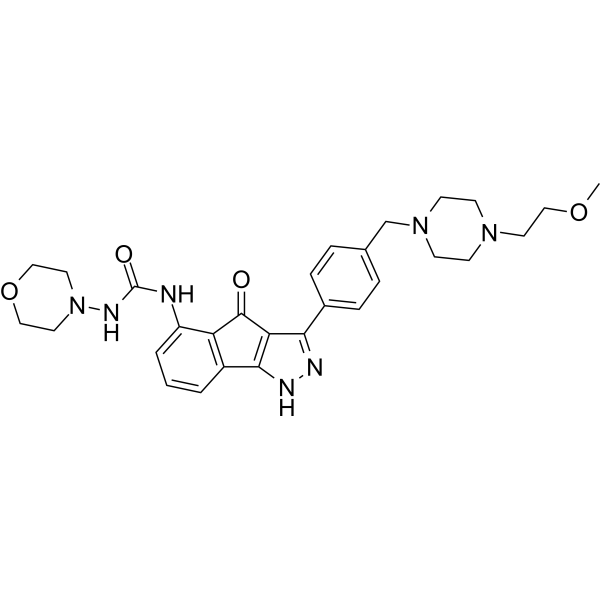 0 ImagesRGB-286638 free base is a potent inhibitor of CDK and MAPK9. RGB-286638 free base inhibits the activities of cyclin T1-CDK9, cyclin B1-CDK1, cyclin E-CDK2, cyclin D1-CDK4, cyclin E-CDK3 and p35-CDK5, with IC50 values of 1, 2, 3, 4, 5 and 5 nM, respectively. RGB-286638 free base inhibits GSK-3β and TAK1, with IC50 values of 3 nM and 5 nM, respectively. RGB-286638 free base induces caspase-dependent Apoptosis in cells. RGB-286638 free base delays tumor growth in an orthotopic glioblastoma mouse model. RGB-286638 free base extends survival in multiple myeloma models. RGB-286638 free base can be used in research related to glioblastoma and multiple myeloma.
-
Desmethoxyyangonin
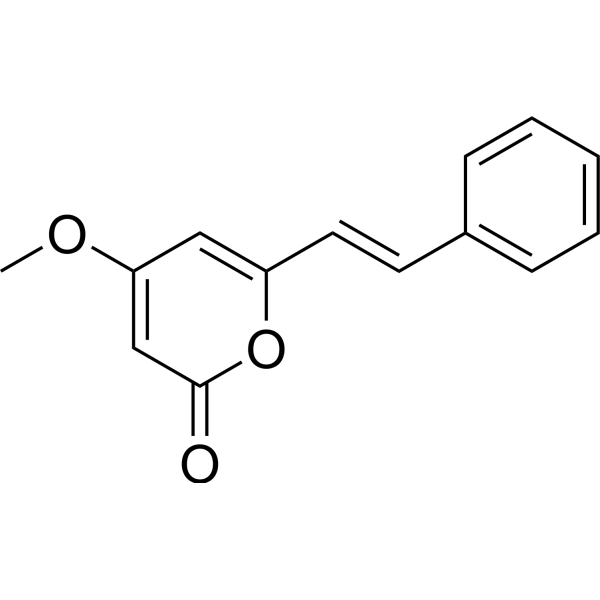 0 ImagesSynonyms: Demethoxyyangonin; 5,6-DehydrokavainDesmethoxyyangonin is one of the six major kavalactones found in the Piper methysticum (kava) plant. Desmethoxyyangonin is a selective inhibitor of monoamine oxidase-B (MAO-B) (IC50: 0.123 µM). Desmethoxyyangonin exerts anti-inflammatory effects by inhibiting Jak2/STAT3 and IKK signaling pathways. Desmethoxyyangonin induces CYP3A23 expression and leads to skeletal muscle relaxation.
-
Deuruxolitinib
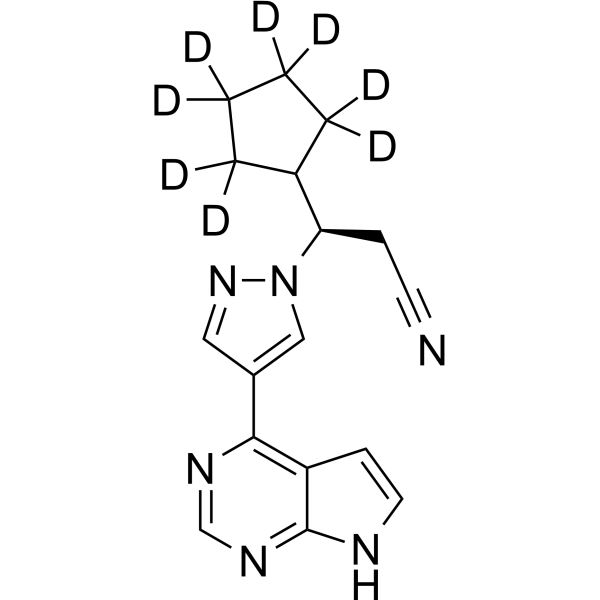 0 ImagesSynonyms: CTP-543; Ruxolitinib-d8; INCB18424-d8Deuruxolitinib (CTP-543; Ruxolitinib-d8) is a deuterated analog of Ruxolitinib (HY-50856) and an orally active, selective inhibitor of JAK1 and JAK2. Deuruxolitinib blocks Janus kinase-mediated cytokine receptor signaling and proinflammatory cytokine gene expression. Deuruxolitinib is primarily metabolized in the liver via CYP2C9. Deuruxolitinib promotes scalp hair regrowth in severe chronic alopecia areata. Deuruxolitinib is used in alopecia areata-related research.
-
JAK-IN-23
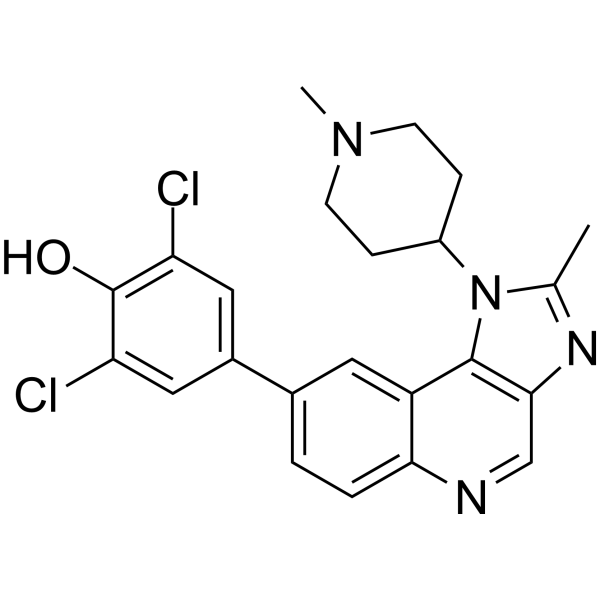 0 ImagesJAK-IN-23 is an orally active double inhibitor of JAK/STAT and NF-κB. JAK-IN-23 can inhibit JAK1/2/3 with IC50 values of 8.9 nM, 15 nM and 46.2 nM, respectively. JAK-IN-23 has potent inhibitory activities against interferon-stimulated genes (ISG) and NF-κB pathways with IC50 values of 3.3 nM and 150.7 nM, respectively. JAK-IN-23 has great anti-inflammatory that decreases the release of various proinflammatory factors. JAK-IN-23 can be used for the research of inflammatory bowel disease (IBD).
-
ZM39923 hydrochloride
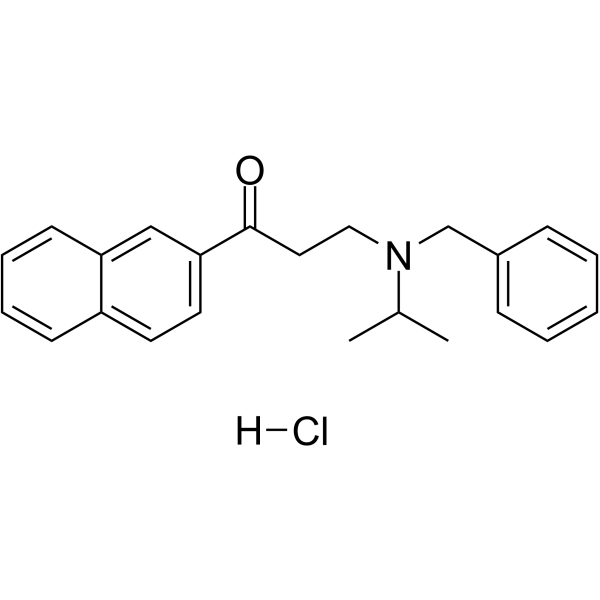 0 ImagesZM39923 hydrochloride is a JAK3 inhibitor, with a pIC50 of 7.1; ZM39923 hydrochloride also potently inhibits tissue transglutaminase (TGM2) with an IC50 of 10 nM.