



JNK
c-Jun N-terminal kinase
JNK (c-Jun N-terminal kinase), a kinase subfamily belonging to the MAPK, is activated in response to various stress stimuli and possesses a wide variety of regulatory functions. The JNK family of serine/threonine protein kinases comprises three isoforms (JNK1, JNK2 and JNK3). JNKs are involved in the emergence and progression of diverse pathologies such as neurodegenerative, cardiovascular and metabolic disorders as well as inflammation and cancer.
Similar to the other MAP kinases, JNKs are activated by a phosphorylation cascade generally involving two types of upstream kinases, the so-called MAP kinase kinase kinases (MAP3K, MKKK) and the MAP kinase kinases (MAP2K; MKK). At the MAP2K level, JNKs are activated by MKK4 and MKK7, the former is a common activator of the JNK and the p38 MAP kinase signaling pathway. The JNK cascade shares various intersection points with other pathways making it a part of a complex signaling network.
JNK Isoform Specific Products
All Product Categories
-
JNK Related Products (555)
Related Products (555)

-
Antibodies (16)
-
JNK Isoform Comparison
-
Umckalin
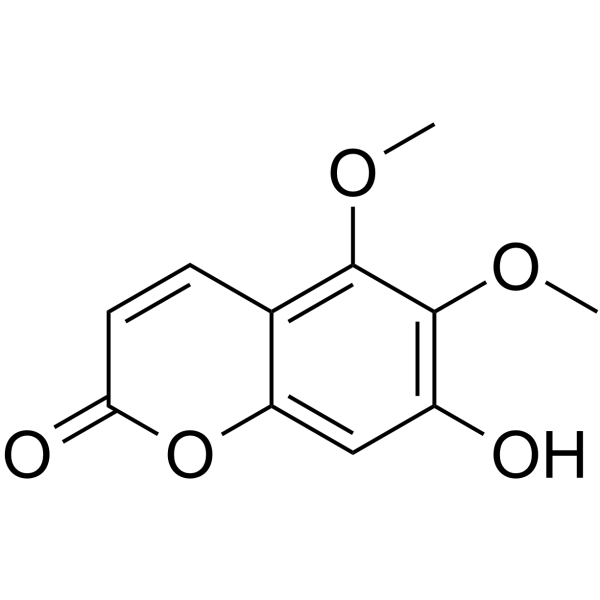 0 ImagesCat. No.: HY-N8712CAS No.: 43053-62-9
-
SET-171
 0 ImagesCat. No.: HY-168337CAS No.: 3052985-32-4SET-171 is a JNK (c-Jun N-terminal kinase) inhibitor that exhibits significant anticancer activity and lipid metabolism regulation by inhibiting liver pyruvate kinase (PKL) expression. In anticancer studies, SET-171 shows IC50 values of 8.82 μM and 2.97 μM against HepG2 and Huh7 cell lines, respectively, indicating high cytotoxicity. Additionally, in non-alcoholic fatty liver disease (NAFLD)-related studies, SET-171 significantly reduces triacylglycerol (TAG) levels and inhibits the expression of steatosis-related proteins. SET-171 holds promise for research on hepatocellular carcinoma (HCC) and NAFLD.
-
Mapk10 Rat Pre-designed siRNA Set A
 0 ImagesCat. No.: HY-RS08097
Mapk10 Rat Pre-designed siRNA Set A contains three designed siRNAs for Mapk10 gene (Rat), as well as a negative control, a positive control, and a FAM-labeled negative control.
-
Vernodalin
 0 ImagesCat. No.: HY-N19029CAS No.: 21871-10-3Vernodalin is an orally active, cytotoxic sesquiterpene lactone with a Kd value of 9.55 μM for p38 MAPK. Vernodalin downregulates the expression of phosphorylated ERK, JNK, AKT, PI3K, mTOR, p38MAPK, FAK, MMP-2, MMP-9, and uPA, while upregulates the expression of TIMP-1 and TIMP-2. Vernodalin increases ROS production, upregulates the expression of Bax and caspase 3, downregulates the expression of Bcl-2, and induces apoptosis (apoptosis), oxidative stress response and cell cycle arrest. Vernodalin inhibits the proliferation, adhesion and metastasis of cancer cells. Vernodalin enhances the activity of VEGF-B, AMPK and eNOS signaling pathways. Vernodalin alleviates myocardial injury and restores hemodynamic parameters. Vernodalin inhibits the growth of Trypanosoma brucei rhodesiense. Vernodalin can be used in research related to various cancers including gastric cancer, colorectal cancer and lung cancer, as well as African human trypanosomiasis and myocardial infarction.
-
Cernuumolide J
 0 ImagesCat. No.: HY-N13294CAS No.: 2019163-02-9Synonyms: TMJ-105Cernuumolide J (TMJ-105) is an JAK2/STAT3 inhibitor. Cernuumolide J induces G2/M phase arrest and apoptosis in HEL leukemia cells by downregulating the phosphorylation of JAK2, STAT3, and Erk, and activating the phosphorylation of JNK and p38 MAPK. Cernuumolide J inhibits HEL leukemia cell growth in a time- and concentration-dependent manner, with an IC50 value of 1.79 μM. Cernuumolide J can be used for research in the field of anti-cancer therapy.
-
Saquinavir-d9
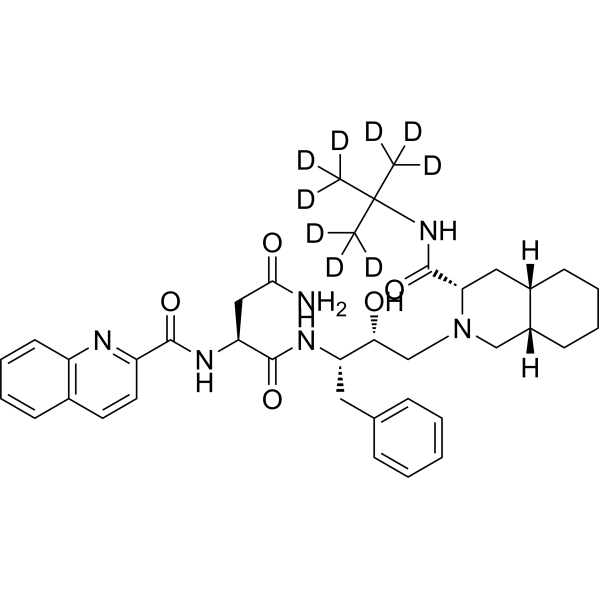 0 ImagesCat. No.: HY-17007SCAS No.: 1356355-11-7Synonyms: Ro 31-8959-d9Saquinavir-d9 (Ro 31-8959-d9) is the deuterium labeled Saquinavir (HY-17007). Saquinavir (Ro 31-8959) is an orally active HIV protease inhibitor that can be used in the research of AIDS. Saquinavir also has anti-inflammatory activity and can induce apoptosis of human red blood cells.
-
β5i-IN-2
 0 ImagesCat. No.: HY-187220CAS No.: 3119216-05-3β5i-IN-2 is a potent, selective, and orally active inhibitor of the immunoproteasome β5i subunit, with an IC50 of 0.08 μM against human β5i. β5i-IN-2 inhibits LPS (HY-D1056)- and IFN-γ-induced expression of IL-1β, IL-6, and TNF-α, and suppresses the JNK, ERK, and NF-κB signaling pathways. β5i-IN-2 can be used in research related to rheumatoid arthritis and ulcerative colitis.
-
LZK-IN-1
 0 ImagesCat. No.: HY-189202CAS No.: 2912371-82-3LZK-IN-1 is an orally active and selective LZK inhibitor with a Kd of 2.7 nM. LZK-IN-1 disrupts the LZK-AKT protein-protein interaction, blocks AKT autophosphorylation, and reduces the activation of the downstream JNK pathway. LZK-IN-1 inhibits the proliferation of cancer cells with MAP3K13 amplification and reduces in vivo tumor growth in xenograft mouse models. LZK-IN-1 can be used for the study of esophageal squamous cell carcinoma and head and neck squamous cell carcinoma with MAP3K13 amplification.
-
Norkurarinol
 0 ImagesCat. No.: HY-N18197CAS No.: 52483-01-9Norkurarinol is a prenylated flavonoid. Norkurarinol can be isolated from Sophora flavescens. Norkurarinol potently inhibits mushroom Tyrosinase DOPA oxidase activity with an IC50 of 2.1 μM. Norkurarinol inhibits poly(I:C)-induced NF-κB/AP-1 activation. Norkurarinol inhibits pro-inflammatory cytokines (TNF-α, IL-6). Norkurarinol inhibits phosphorylation of p38, JNK, and ERK1/2. Norkurarinol increases phosphorylation of IRF3. Norkurarinol has antiviral activity against Rotavirus KJ56-1
-
Desipramine
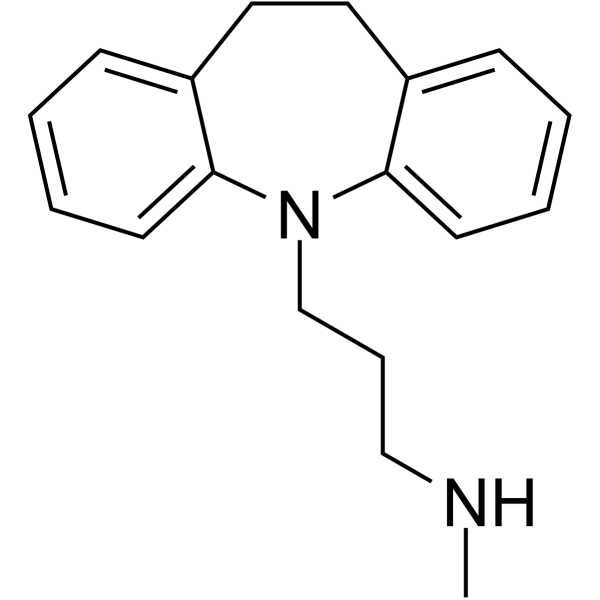 0 ImagesDesipramine is a first-generation tricyclic antidepressant. Desipramine selectively binds to norepinephrine transporter and blocks neuronal norepinephrine reuptake. Desipramine activates MAPK signaling via ERK1/2, JNK, and p38, represses NF-κB and AP-1 activity, and induces apoptosis via ROS elevation, mitochondrial membrane potential reduction, and intracellular calcium increase. Desipramine also shows anyi-inflammatory activity, inhibiting TNF-α production. Desipramine can be used for the research of hepatocellular cancer, inflammation, and neurological diseases.
-
7-O-Galloyl-D-sedoheptulose
 0 ImagesCat. No.: HY-N16527CAS No.: 233690-85-27-O-Galloyl-D-sedoheptulose is an orally effective polyphenolic compound. 7-O-Galloyl-D-sedoheptulose lowers the serum levels of glucose, leptin, insulin, C-peptide, resistin, TNF-α, IL-6, and increases the serum level of adiponectin. 7-O-Galloyl-D-sedoheptulose significantly reduces the levels of ROS and lipid peroxidation products (TBARS) by down-regulating the protein expression of NADPH oxidase subunit Nox-4 and p22phox. 7-O-Galloyl-D-sedoheptulose down-regulates NF-κB and related pro-inflammatory factors (COX-2, iNOS), inhibits the phosphorylation of JNK and the activity of its downstream AP-1. 7-O-Galloyl-D-sedoheptulose reduces the expression of TGF-β1 and fibronectin, indicating its potential in anti-tissue fibrosis. 7-O-Galloyl-D-sedoheptulose can be used for the study of type 2 diabetes and its hepatic and pancreatic complications.
-
HE4-1 leech peptide
 0 ImagesCat. No.: HY-P11650CAS No.: 2531396-44-6HE4-1 leech peptide is a p38 MAPK inhibitor with an additional c-Jun N-terminal kinase (JNK) inhibitory role. HE4-1 leech peptide suppresses macrophage migration, and does not significantly affect macrophage immunological activities including phagocytic ability, lysozyme activity, and expression levels of most inflammatory factors. HE4-1 leech peptide can be used for the research of atherosclerosis.
-
Anti-inflammatory agent 100
 0 ImagesCat. No.: HY-173416Anti-inflammatory agent 100 (Compound (+)-4S-23) is an anti-inflammatory agent. Anti-inflammatory agent 100 inhibits MAPK and NF-κB signaling, and also inhibits NF-κB pathway by suppressing the phosphorylation of IκB-α and blocking nuclear translocation of phosphorylated p65. Anti-inflammatory agent 100 inhibits NO production (IC50: 0.5 μM) and TNF-α, IL-6, IL-1β secretion.
-
Gy-CATH
 0 ImagesCat. No.: HY-P11467Gy-CATH is an anionic antimicrobial peptide. Gy-CATH activates MAPK and NF-κB signaling pathways (elevated levels of phospho-ERK, -p38, -JNK, -p65, and -IκBα). Gy-CATH upregulates the expression levels of three physiological anticoagulant pathways. Gy-CATH inhibits ADP-, Collagen-, and PMA-induced platelet aggregation. Gy-CATH has no direct antimicrobial activity, but shows significant preventive abilities against mice infected with Staphylococcus aureus, Escherichia coli, and Methicillin (HY-121544)-resistant Staphylococcus aureus. Gy-CATH exhibits potent immunomodulatory activity, enhancing macrophage-and neutrophil-mediated bactericidal functions. Gy-CATH significantly reduces the extent of pulmonary fibrin deposition and prevents thrombosis in mice.
-
ATX inhibitor 26
 0 ImagesCat. No.: HY-173483CAS No.: 2940248-11-1ATX inhibitor 26 is an Autotaxin (ATX) inhibitor with an IC50 of 57 nM in human plasma. ATX inhibitor 26 inhibits cell migration and collagen gel contraction. ATX inhibitor 26 has significant anti-fibrotic effects, reducing collagen deposition in a Bleomycin (BLM) (HY-108345)-induced pulmonary fibrosis model.
-
LRRK2/JNK3-IN-1
 0 ImagesCat. No.: HY-184652LRRK2/JNK3-IN-1 is a brain-penetrant multi-target inhibitor of LRRK2 (including G2019S mutant and wild-type) and JNK3, with enzymatic IC50 values of 3.90 nM against LRRK2G2019S, 3.24 nM against wild-type LRRK2, and 22.1 nM against JNK3. LRRK2/JNK3-IN-1 displays favorable selectivity in a 97-kinase profiling screen, and also shows inhibitory activity against JNK1, JNK2, and MKNK2. LRRK2/JNK3-IN-1 can be used for the research of Parkinson's disease.
-
Dendrobine (Standard)
 0 ImagesDendrobine (Standard) is the analytical standard of Dendrobine. This product is intended for research and analytical applications. Dendrobine is an alkaloid isolated from Dendrobium nobile. Dendrobine possesses antiviral activity against influenza A viruses, with IC50s of 3.39 μM, 2.16 μM and 5.32 μM for A/FM-1/1/47 (H1N1), A/Puerto Rico/8/34 H274Y (H1N1) and A/Aichi/2/68 (H3N2), respectively. Dendrobine activates the JNK/p38/Nrf2 signaling pathway. Dendrobine exhibits antiviral, antitumor, anti-inflammatory, and neuroprotective properties.
-
Santamarine
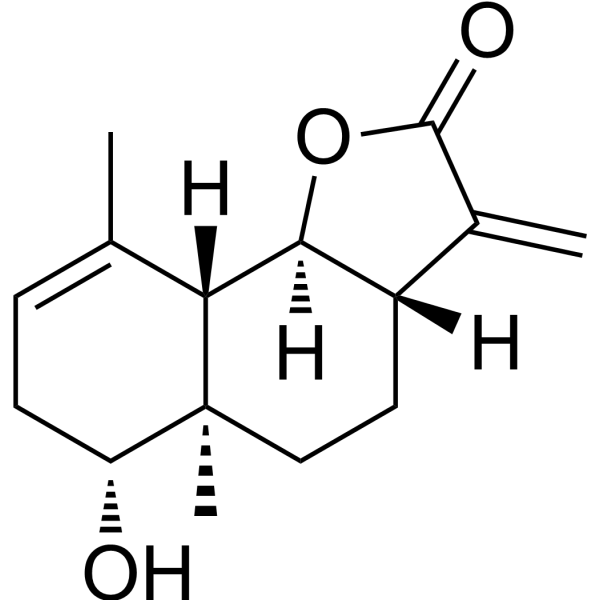 0 ImagesSantamarine (Santamarin; Balchanin) is a sesquiterpene lactone found in Artemisia scoparia. Santamarine shows anti-inflammatory, antioxidant, anticancer and anti-photoaging activities. Santamarine suppresses UVA-induced phosphorylation of JNK and p38 MAPK, nuclear translocation of phosphorylated c-Fos and c-Jun, and AP-1-mediated MMP-1 transcription and secretion. Santamarine suppresses NF-κB signaling, iNOS, COX-2, TNF-α, and IL-1β production. Santamarine inhibits thioredoxin reductase activity, induces ROS production, mitochondrial apoptosis, G2/M cell cycle arrest, and DNA damage, and reduces cancer cell growth. Santamarine can be used for the photoaging, inflammatory diseases and cancer.
-
Astin B
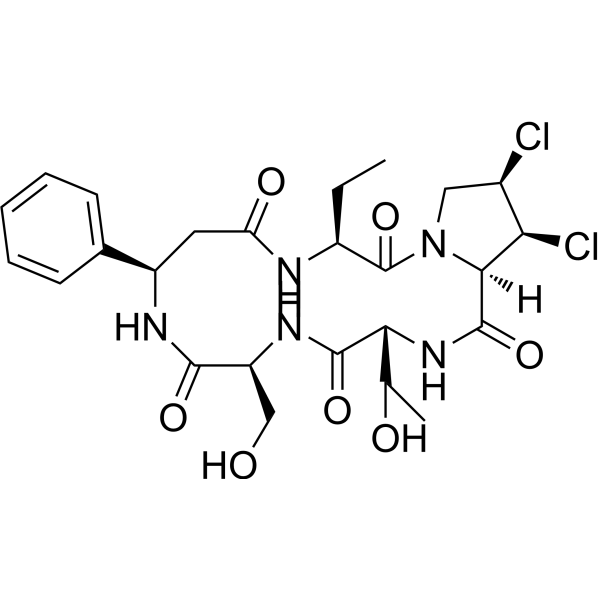 0 ImagesCat. No.: HY-P3148CAS No.: 151201-76-2Astin B is a orally active and potent cyclic pentapeptide, that can be isolated from Aster tataricus. Astin B has hepatotoxic effects in vitro and in vivo and that hepatic injury was primarily mediated by apoptosis in a mitochondria/caspase-dependent manner. Astin B induces autophagy in L-02 cells, increases LC3-II and decreases p62 expression.
-
Oxonantenine
 0 ImagesCat. No.: HY-N19654CAS No.: 15358-38-0Oxonantenine is an isoquinoline alkaloid isolated from the seeds of Nandina domestica that exhibits cytotoxicity against cancer cells. Oxonantenine binds to proteins associated with the MAPK and NF-κB signaling pathways, including JUN, MAPK1, p38, MAPK3, ERK, JNK3, and p65. Oxonantenine is one of the main components of Fangji Huangqi Tang. Oxonantenine can be used in studies related to non-small cell lung cancer and rheumatoid arthritis.




