1. Signaling Pathways
  2. NF-κB
  3. NF-κB

NF-κB

Nuclear factor-κB; Nuclear factor-kappaB

NF-κB (Nuclear factor kappa-light-chain-enhancer of activated B cells) is a protein complex that controls transcription of DNA. NF-κB is found in almost all animal cell types and is involved in cellular responses to stimuli such as stress, cytokines, free radicals, ultraviolet irradiation, oxidized LDL, and bacterial or viral antigens. NF-κB plays a key role in regulating the immune response to infection. Incorrect regulation of NF-κB has been linked to cancer, inflammatory, and autoimmune diseases, septic shock, viral infection, and improper immune development. NF-κB has also been implicated in processes of synaptic plasticity and memory. There are five proteins in the mammalian NF-κB family: NF-κB1, NF-κB2, RelA, RelB, c-Rel.

Cat. No. Product Name Effect Purity Chemical Structure
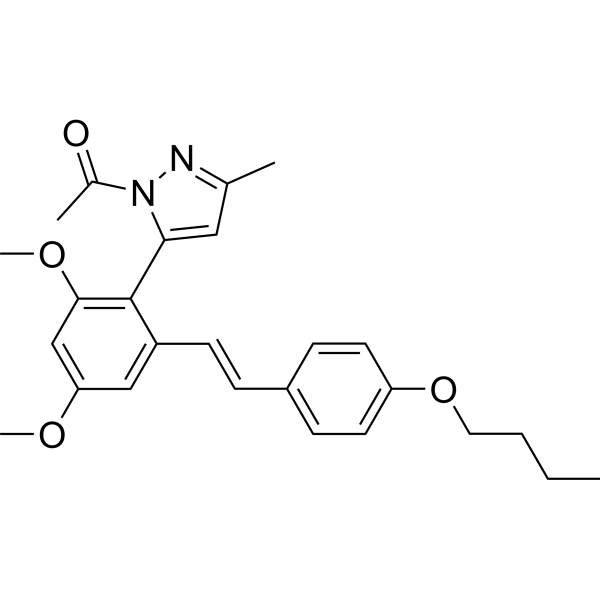
  • HY-149351
    NF-κB-IN-10
    Inhibitor
    NF-κB-IN-10 (compound E1) is an NF-κB inhibitor that can improve heart failure by reducing oxidative stress and inflammation by regulating Nrf2/NF-κB signaling pathway. NF-κB-IN-10 inhibits LPS-induced NO production and expression of iNOS and COX-2 in RAW264.7 cells. NF-κB-IN-10 can be used in the research of cardiovascular diseases.
    NF-κB-IN-10
  • HY-114214
    CKD-712
    Inhibitor
    CKD-712 is an orally active multi-target tetrahydroisoquinoline derivatived and a potent inhibitor of the NF-κB pathway. CKD-712 selectively inhibits MMP-9 with no effect on MMP-2, downregulates the expression of TNF-α, IL-6, cyclin A, cyclin B, CDK-1 and other proteins, and activates the PI3K/Akt signaling pathway. CKD-712 blocks the activation and nuclear translocation of NF-κB, downregulates inflammatory factors and pro-tumor metastatic proteins, and induces G2/M phase arrest in tumor cells and thereby inhibits the invasion of cancer cells. CKD-712 can be used for the research of sepsis, myocardial ischemia-reperfusion injury and non-small cell lung cancer.
    CKD-712
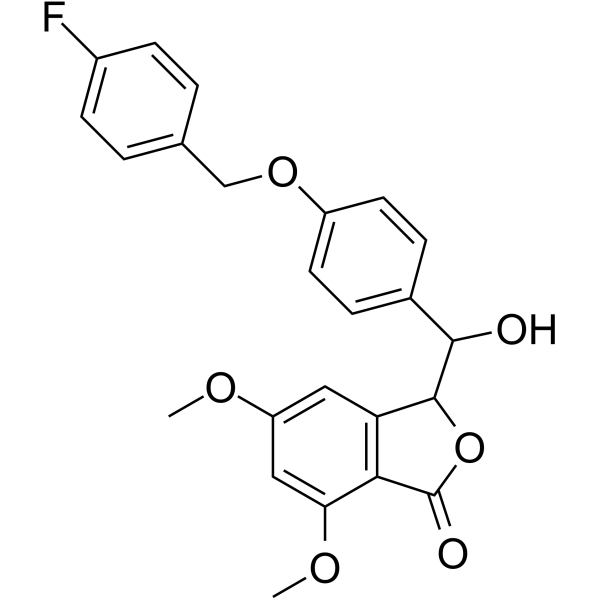
  • HY-168207
    TH023
    Inhibitor
    TH023 is an inhibitor for the TLR4 signaling pathway, that targets especially the formation of TLR4 homodimer. TH023 inhibits secreted embryonic alkaline phosphatase in cell HEK-Blue hTLR4 with an IC50 of 0.354 μM, and inhibits the NO expression in RAW264.7 with an IC50 of 1.61μM. TH023 also inhibits the activation of NF-κB, reduces the nuclear translocation of NF-κB p65. TH023 exhibits anti-inflammatory efficacy in LPS (HY-D1056)-induced mouse acute sepsis model, and ameliorates the mouse lung injury.
    TH023
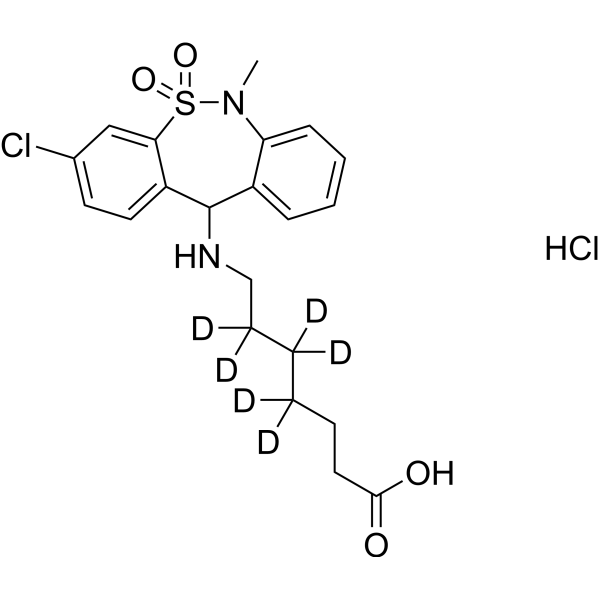
  • HY-144224S
    Tianeptine-d6 (hydrochloride)
    Inhibitor
    Tianeptine-d6 hydrochloride is the deuterium labeled Tianeptine hydrochloride. Tianeptine hydrochloride is an atypical antidepressant. Tianeptine hydrochloride is a moderate-intensity agonist of the μ-opioid receptor (MOR), and to a lesser extent, is an agonist of the δ-opioid receptor (DOR). Tianeptine hydrochloride is a glutamate modulator that can enhance AMPA receptor and antagonize NMDA receptor. Tianeptine hydrochloride increases sensitivity of the α1 adrenergic receptor, which only manifests in chronic treatment. Tianeptine hydrochloride exerts neuroprotective effects under stress/inflammation-induced conditions, exhibiting anti-inflammatory and antioxidant properties. Tianeptine hydrochloride inhibits MMP-9 by suppressing the PI3K/Akt-mediated NF-κB pathway. Tianeptine hydrochloride can be used to alleviate symptoms of depression and anxiety, but does not cause sedative effects.
    Tianeptine-d<sub>6</sub> (hydrochloride)
  • HY-N6908R
    Continentalic acid (Standard)
    Inhibitor
    Continentalic acid (Standard) is the analytical standard of Continentalic acid (HY-N6908). This product is intended for research and analytical applications. Continentalic acid is a diterpenoid organic acid. Continentalic acid exhibits multiple activities including anti-inflammatory, antioxidant, neuroprotective, antibacterial and antitumor effects. Continentalic acid alleviates oxidative stress, reduces pro-inflammatory cytokine production, inhibits MAPK phosphorylation and neutrophil infiltration, and induces growth inhibition and apoptosis of cancer cells. Continentalic acid can be used in research related to traumatic brain injury, cancer, inflammation and infections.
    Continentalic acid (Standard)
  • HY-146421
    Anti-inflammatory agent 21
    Inhibitor
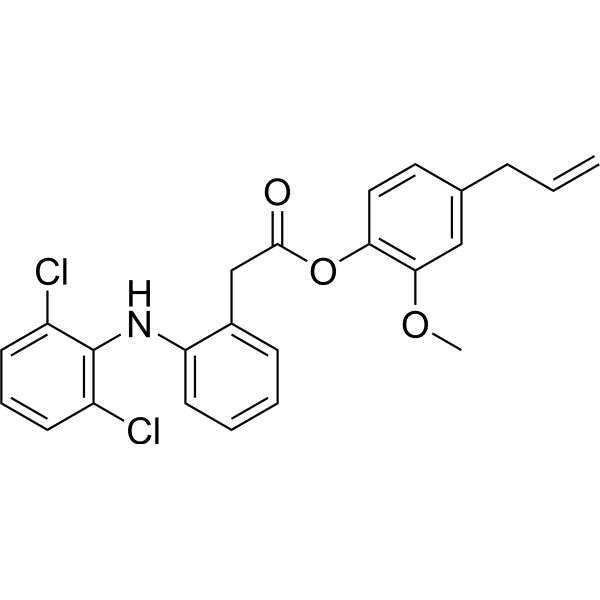
    Anti-inflammatory agent 21 (compound 9o) is an orally active and low cytotoxic anti-inflammatory agent, with an IC50 value of 0.76 μM for NO. Anti-inflammatory agent 21 acts via accumulation ROS and blocks the NF-κB/MAPK signaling pathway. Anti-inflammatory agent 21 can ameliorate cartilage destruction and inflammatory cell infiltration in arthritis rats model.
    Anti-inflammatory agent 21
  • HY-17437C
    (Rac)-Mefloquine
    Inhibitor
    (Rac)-Mefloquine ((Rac)-Mefloquin) is an orally active NF-κB inhibitor. (Rac)-Mefloquine inhibits the NF-κB and IKK signaling pathways, suppresses NF-κB-Luc luciferase activity, blocks the activation of p65 and IκBα, and reduces the expression of downstream target genes of NF-κB. (Rac)-Mefloquine activates apoptosis-related factors and induces apoptosis in tumor cells. (Rac)-Mefloquine functions as a tumor cell inhibitor. (Rac)-Mefloquine can be used for the research of colorectal cancer.
    (Rac)-Mefloquine
  • HY-P10081
    CTP-NBD
    Inhibitor
    CTP-NBD is a cell permeable specific NFκB peptide inhibitor. CTP-NBD could be used in colitis study
    CTP-NBD
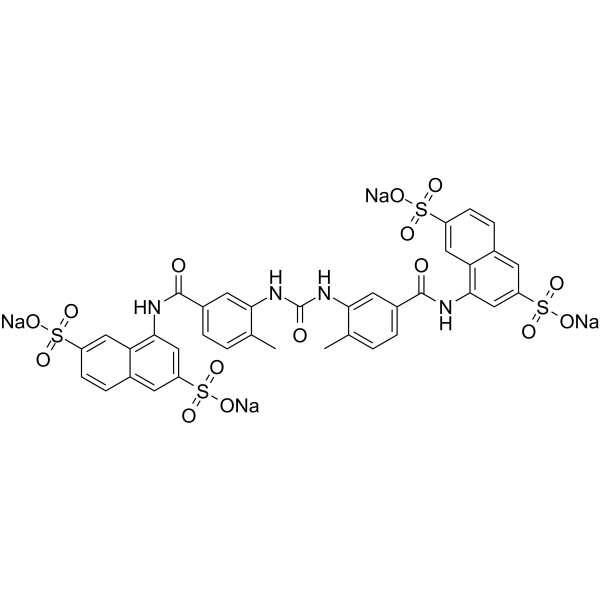
  • HY-108659
    NF340
    Inhibitor
    NF340 is a P2Y11 receptor inhibitor with a pIC50 of 7.3-7.7 against human P2Y11 receptor, and it exhibits high selectivity over other P2Y family receptors. NF340 binds to the ATP-binding amino acid residues of the P2Y11 receptor to inhibit its activity, block nociceptive activity, and reduce spinal dorsal horn P2Y11 receptor upregulation induced by spinal nerve injury. NF340 attenuates the NFκB signaling pathway activated by IL-1β by decreasing IκBα phosphorylation, nuclear p65 accumulation, and NFκB promoter activity. NF340 inhibits IL-1β-induced pro-inflammatory cytokine expression, reduces intracellular ROS and 4-HNE levels, and suppresses IL-1β-induced matrix metalloproteinase expression in primary fibroblast-like synoviocytes. NF340 inhibits ATP-induced elevation of intracellular Ca2+ concentration and cell migration in human hepatocellular carcinoma cells. NF340 can be used in the research of neuropathic pain, myocardial ischemia/reperfusion injury, inflammatory pain, rheumatoid arthritis, and hepatocellular carcinoma.
    NF340
  • HY-N0908R
    Ginsenoside Rg5 (Standard)
    Inhibitor
    Ginsenoside Rg5 (Standard) is the analytical standard of Ginsenoside Rg5. This product is intended for research and analytical applications. Ginsenoside Rg5 is the main component of Red ginseng and IGF-1R agonist. Ginsenoside Rg5 compets for the binding site of IGF-1R and blocks the binding of IGF-1 to IGF-1R (IC50 about 90 nM). Ginsenoside Rg5 also inhibits the mRNA expression of COX-2 via suppression of the DNA binding activities of NF-κB p65.
    Ginsenoside Rg5 (Standard)
  • HY-N17888
    Ephemeranthol A
    Inhibitor
    Ephemeranthol A is a phenanthrene compound with anticancer and anti-inflammatory activities. Ephemeranthol A exerts significant anti-inflammatory effects in macrophages by inhibiting the NF-κB and MAPK signaling pathways. Ephemeranthol A induces apoptosis and inhibits metastasis of lung cancer cells by suppressing the FAK/Akt signaling and EMT processes. Ephemeranthol A can be used for the research of acute and chronic inflammatory diseases and non-small cell lung cancer.
    Ephemeranthol A
  • HY-N0608A
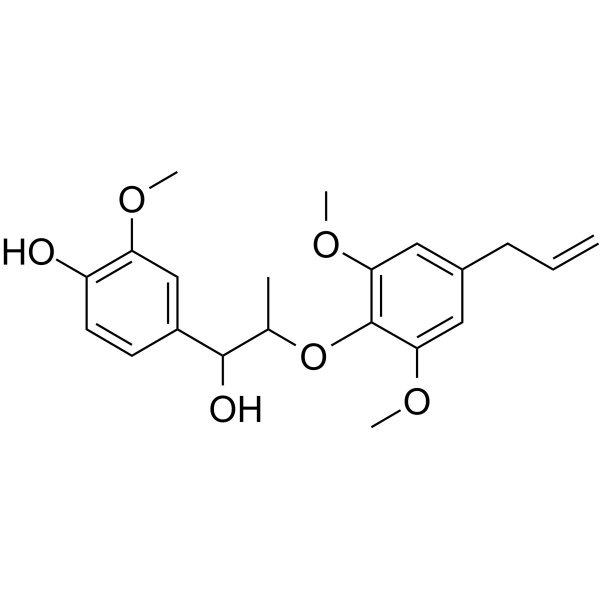
    (Rac)-Myrislignan
    Inhibitor 99.0%
    (Rac)-Myrislignan is the racemate of Myrislignan. Myrislignan, a lignan isolated from Myristica fragrans Houtt, possesses anti-inflammatory activities. Myrislignan attenuates LPS-induced inflammation reaction in murine macrophage cells through inhibition of NF-kB signalling pathway activation.
    (Rac)-Myrislignan
  • HY-155646
    Anti-inflammatory agent 48
    Inhibitor
    Anti-inflammatory agent 48 is an anti-inflammatory agent based on its role in inhibiting the NF-κB signaling pathway and activating HO-1 expression.
    Anti-inflammatory agent 48
  • HY-N0559R
    Kirenol (Standard)
    Inhibitor
    Kirenol (Standard) is the analytical standard of Kirenol (HY-N0559). This product is intended for research and analytical applications. Kirenol is a diterpenoid compound, an orally active apoptosis inducer and signaling pathway regulator, with a Kd value of 5.47 μM against the target CK2. Kirenol promotes the cleavage of Bid into tBid, regulates the protein levels/phosphorylation of Bax, Bcl-2, p53 and p21, and induces caspase-independent apoptosis, S-phase cell cycle arrest, ROS accumulation and cytotoxicity in cancer cells. Kirenol activates the CK2/AKT and AMPK-mTOR-ULK1 pathways, inhibits the signaling of NF-κB, TGF-β/Smads and NLRP3 inflammasome, and regulates the GSK3β, BMP and Wnt/β-catenin pathways. Kirenol induces autophagy, mitophagy and osteoblast differentiation, promotes mitochondrial fusion, and exerts antioxidant, anti-inflammatory, antifibrotic, renoprotective, cardioprotective, neuroprotective and analgesic effects. Kirenol is applicable to research related to chronic myeloid leukemia, ischemic stroke, diabetic nephropathy, heart failure, acute lung injury and osteoporosis.
    Kirenol (Standard)
  • HY-111024R
    2,2,5,7,8-Pentamethyl-6-Chromanol (Standard)
    Inhibitor
    2,2,5,7,8-Pentamethyl-6-Chromanol (Standard) is the analytical standard of 2,2,5,7,8-Pentamethyl-6-Chromanol. This product is intended for research and analytical applications. 2,2,5,7,8-Pentamethyl-6-Chromanol (PMC) is the anti-oxidant moiety of vitamin E (α-tocopherol). 2,2,5,7,8-Pentamethyl-6-Chromanol has potent androgen receptor (AR) signaling modulation and anti-cancer activity against prostate cancer cell lines[1].
    2,2,5,7,8-Pentamethyl-6-Chromanol (Standard)
  • HY-N11739
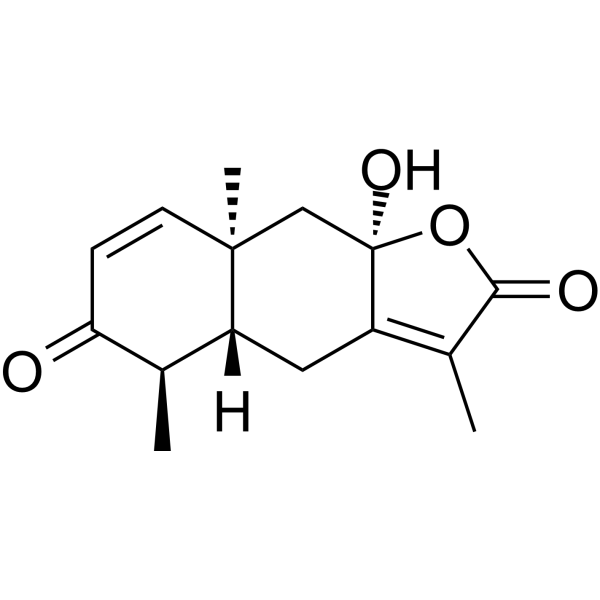
    Helenalin isobutyrate
    Inhibitor
    Helenalin isobutyrate is an NF-κB (p65 subunit) inhibitor with anti-inflammatory activity. Helenalin isobutyrate irreversibly alkylates cysteine sulfhydryl groups in the p65 subunit to inhibit NF-κB complex DNA binding activity.
    Helenalin isobutyrate
  • HY-N11775
    Eudebeiolide B
    Inhibitor
    Eudebeiolide B is a compound that can be isolated from Salvia plebeia R. Br. Eudebeiolide B inhibits osteoclastogenesis by regulating RANKL-induced NF-κB, c-Fos and calcium signaling. Eudebeiolide B can be used for osteoclast-related diseases research.
    Eudebeiolide B
  • HY-175037
    DNH28
    Inhibitor
    DNH28 is a potent NF-κB and MAPK inhibitor with an IC50 of 0.93 μM against HepG2 cells. DNH28 promotes apoptosis by down-regulating the expression of Bcl-2, up-regulating the expression of BAX and Cleaved-caspase-3. DNH28 blocks the cell cycle and inhibits migration. DNH28 can be used for the study of hepatocellular carcinoma (HCC).
    DNH28
  • HY-124281
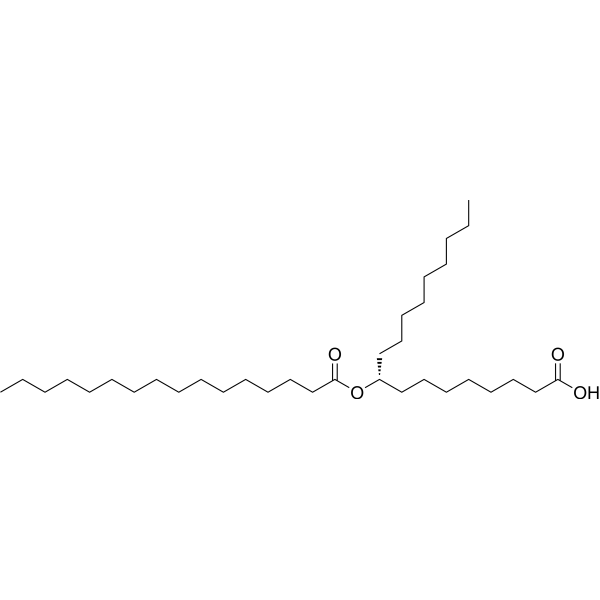
    9(R)-PAHSA
    Inhibitor
    9(R)-PAHSA is a R-enantiomer of 9-PAHSA. 9-PAHSA is an orally available anti-inflammatory lipid that lowers blood sugar and reduces inflammation.
    9(R)-PAHSA
  • HY-N17736
    Chikusetsusaponin IVa methyl ester
    Inhibitor
    Chikusetsusaponin IVa methyl ester (CME) is a natural triterpenoid saponin compound. Chikusetsusaponin IVa methyl ester induces G0/G1 cell cycle arrest and apoptosis in colon cancer cells by inhibiting the Wnt/β-catenin signaling pathway. By inhibiting the NF-κB and AP-1 signaling pathways, Chikusetsusaponin IVa methyl ester significantly reduces the production of NO, PGE₂ and pro-inflammatory cytokines (TNF-α, IL-6, IL-1β), and downregulates the levels of iNOS and COX-2. Chikusetsusaponin IVa methyl ester can be used in researches on colorectal cancer and inflammation.
    Chikusetsusaponin IVa methyl ester
Cat. No. Product Name / Synonyms Application Reactivity

NF-κB transcription factors are critical regulators of immunity, stress responses, apoptosis and differentiation. In mammals, there are five members of the transcription factor NF-κB family: RELA (p65), RELB and c-REL, and the precursor proteins NF-κB1 (p105) and NF-κB2 (p100), which are processed into p50 and p52, respectively. NF-κB transcription factors bind as dimers to κB sites in promoters and enhancers of a variety of genes and induce or repress transcription. NF-κB activation occurs via two major signaling pathways: the canonical and the non-canonical NF-κB signaling pathways[1]


The canonical NF-κB pathway is triggered by signals from a large variety of immune receptors, such as TNFR, TLR, and IL-1R, which activate TAK1. TAK1 then activates IκB kinase (IKK) complex, composed of catalytic (IKKα and IKKβ) and regulatory (NEMO) subunits, via phosphorylation of IKKβ. Upon stimulation, the IKK complex, largely through IKKβ, phosphorylates members of the inhibitor of κB (IκB) family, such as IκBα and the IκB-like molecule p105, which sequester NF-κB members in the cytoplasm. IκBα associates with dimers of p50 and members of the REL family (RELA or c-REL), whereas p105 associates with p50 or REL (RELA or c-REL). Upon phosphorylation by IKK, IκBα and p105 are degradated in the proteasome, resulting in the nuclear translocation of canonical NF-κB family members, which bind to specific DNA elements, in the form of various dimeric complexes, including RELA-p50, c-REL-p50, and p50-p50. Atypical, IKK-independent pathways of NF-κB induction also provide mechanisms to integrate parallel signaling pathways to increase NF-κB activity, such as hypoxia, UV and genotoxic stress.


The non-canonical NF-κB pathway is induced by certain TNF superfamily members, such as CD40L, BAFF and lymphotoxin-β (LT-β), which stimulates the recruitment of TRAF2, TRAF3, cIAP1/2 to the receptor complex. Activated cIAP mediates K48 ubiquitylation and proteasomal degradation of TRAF3, resulting in stabilization and accumulation of the NFκB-inducing kinase (NIK). NIK phosphorylates and activates IKKα, which in turn phosphorylates p100, triggering p100 processing, and leading to the generation of p52 and the nuclear translocation of p52 and RELB[2][3].


Reference:

[1]. Oeckinghaus A, et al. The NF-kappaB family of transcription factors and its regulation.Cold Spring Harb Perspect Biol. 2009 Oct;1(4):a000034. 
[2]. Taniguchi K, et al. NF-κB, inflammation, immunity and cancer: coming of age. Nat Rev Immunol. 2018 May;18(5):309-324.
[3]. Perkins ND,et al. Integrating cell-signalling pathways with NF-kappaB and IKK function. Nat Rev Mol Cell Biol. 2007 Jan;8(1):49-62.

Your Search Returned No Results.

Sorry. There is currently no product that acts on isoform together.

Please try each isoform separately.