1. Signaling Pathways
  2. Apoptosis
  3. TNF Receptor

TNF Receptor

Tumor Necrosis Factor Receptor; TNFR

Tumor necrosis factor (TNF) is a major mediator of apoptosis as well as inflammation and immunity, and it has been implicated in the pathogenesis of a wide spectrum of human diseases, including sepsis, diabetes, cancer, osteoporosis, multiple sclerosis, rheumatoid arthritis, and inflammatory bowel diseases.

TNF-α is a 17-kDa protein consisting of 157 amino acids that is a homotrimer in solution. In humans, the gene is mapped to chromosome 6. Its bioactivity is mainly regulated by soluble TNF-α–binding receptors. TNF-α is mainly produced by activated macrophages, T lymphocytes, and natural killer cells. Lower expression is known for a variety of other cells, including fibroblasts, smooth muscle cells, and tumor cells. In cells, TNF-α is synthesized as pro-TNF (26 kDa), which is membrane-bound and is released upon cleavage of its pro domain by TNF-converting enzyme (TACE).

Many of the TNF-induced cellular responses are mediated by either one of the two TNF receptors, TNF-R1 and TNF-R2, both of which belong to the TNF receptor super-family. In response to TNF treatment, the transcription factor NF-κB and MAP kinases, including ERK, p38 and JNK, are activated in most types of cells and, in some cases, apoptosis or necrosis could also be induced. However, induction of apoptosis or necrosis is mainly achieved through TNFR1, which is also known as a death receptor. Activation of the NF-κB and MAPKs plays an important role in the induction of many cytokines and immune-regulatory proteins and is pivotal for many inflammatory responses.

Cat. No. Product Name Effect Purity Chemical Structure
  • HY-171592
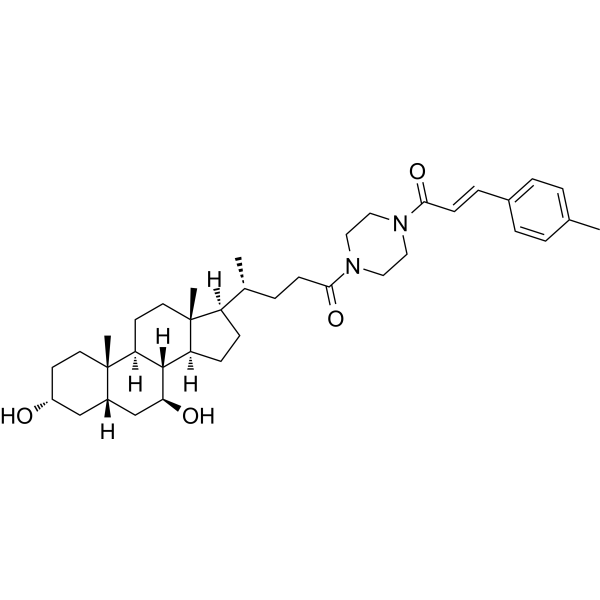
    RIPK2-IN-7
    Inhibitor
    RIPK2-IN-7 (Compound 10w) is an orally active, selective RIPK2 inhibitor (IC50: 0.6 nM). RIPK2-IN-7 inhibits RIPK2 kinase activity, blocks the nucleotide-binding oligomerization domain (NOD) signaling pathway, and reduces the production of inflammatory factors (such as TNFα). RIPK2-IN-7 can be used in the study of inflammatory bowel disease (IBD).
    RIPK2-IN-7
  • HY-124665
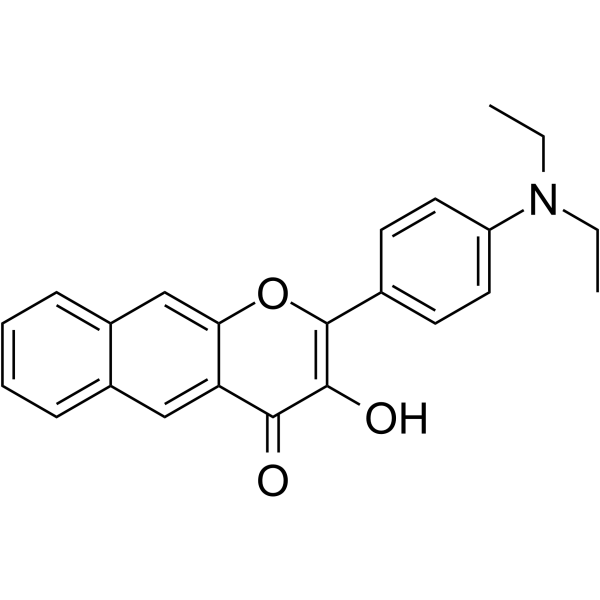
    LMP-420
    Inhibitor
    LMP-420 is a selective tumor necrosis factor-α (TNF-α) inhibitor. LMP-420 reduces the release of pro-inflammatory cytokines (e.g., IL-1β, IL-2), inducing the expression of anti-inflammatory cytokine IL-10 and anti-apoptotic molecules SOCS-1 and Mn-SOD. LMP-420 also downregulates chemokines (e.g., IP-10, MCP-1) to reduce immune cell infiltration. LMP-420 is promising for research of type 1 diabetes mellitus, inflammatory diseases (e.g., colitis), and HIV-Mycobacterium tuberculosis coinfection.
    LMP-420
  • HY-N18025
    Kaempferol 3-O-(2G-glucosylrutinoside)-7-O-glucoside
    Inhibitor
    Kaempferol 3-O-(2G-glucosylrutinoside)-7-O-glucoside is an anti-inflammatory agent. Kaempferol 3-O-(2G-glucosylrutinoside)-7-O-glucoside exerts significant anti-inflammatory effects in LPS (HY-D1056)-induced RAW 264.7 macrophages by inhibiting the NF-κB, MAPK and Akt signaling pathways, thereby reducing the production of inflammatory mediators (NO, PGE2) and pro-inflammatory cytokines (TNF-α, IL-1β, IL-6).
    Kaempferol 3-O-(2G-glucosylrutinoside)-7-O-glucoside
  • HY-141439
    TBE 31
    Inhibitor
    TBE 31 is an orally active Keap1/Nrf2 pathway activator and NQO1 inducer with a Dm value of 1.1 nM for NQO1. TBE 31 binds to cysteine residues of Keap1, inhibits ubiquitination and degradation of Nrf2, thereby activating the expression of ARE-dependent genes. TBE 31 induces cytoprotective enzymes including NQO1 and GST isoforms, promotes Nrf2 accumulation, and upregulates Nrf2-regulated genes related to antioxidation and lipid metabolism. TBE 31 inhibits pro-inflammatory responses, formation of AFB1-DNA adducts, endoplasmic reticulum stress, cell apoptosis (apoptosis), hepatic fibrosis, oxidative stress, and the expression of ChREBP. TBE 31 reduces the number of tumors in a mouse model of ultraviolet-induced skin carcinogenesis. TBE 31 enhances nerve growth factor-induced neurite outgrowth. TBE 31 attenuates LPS-induced serum TNF-α levels and immobility time in mice. TBE 31 can be used in research related to liver cancer, skin cancer, inflammation-related depression, and non-alcoholic steatohepatitis.
    TBE 31
  • HY-N19615
    Isoeucommin A
    Inhibitor
    Isoeucommin A is a lignan compound. Isoeucommin A activates the Nrf2/HO-1 pathway and induces phosphorylation of GSK-3β. Isoeucommin A reduces the levels of pro-inflammatory cytokines TNF-α, IL-1β and IL-6, decreases the oxidative stress marker MDA, increases the antioxidants SOD and GSH, and alleviates oxidative stress in mesangial cells. Isoeucommin A alleviates renal tissue injury, improves impaired renal function and enhances the viability of renal tubular epithelial cells in diabetic nephropathy models. Isoeucommin A can be used in the research of diabetic nephropathy.
    Isoeucommin A
  • HY-P991464
    IBI37G5
    Inhibitor
    IBI37G5 is a human monoclonal antibody (mAb) targeting TNFRSF18/GITR/CD357. IBI37G5 has anti-tumor activity in MC38 and B16F10 mouse tumor models. IBI37G5 can be used in the study of cancer immunity.
    IBI37G5
  • HY-160433
    TNF-α-IN-12
    Inhibitor
    TNF-α-IN-12 is a TNF-α inhibitor with IC50 of 0.1 μM. TNF-α-IN-12 can decrease the TNF-α blood levels.
    TNF-α-IN-12
  • HY-179502
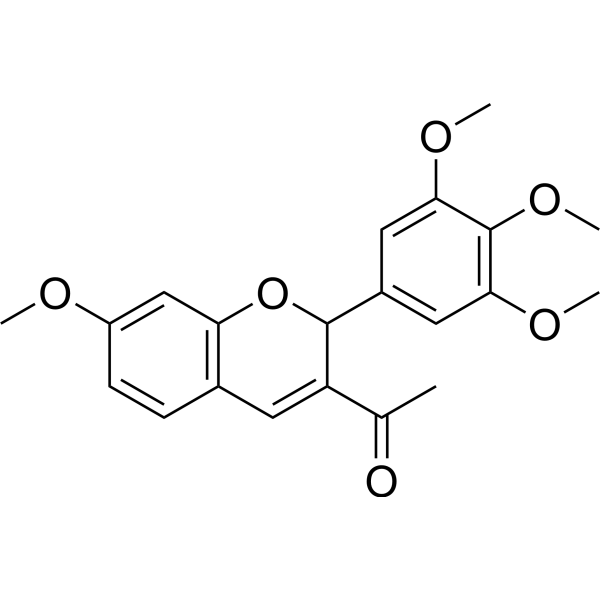
    Anti-inflammatory agent 107
    Inhibitor
    Anti-inflammatory agent 107 is an orally active anti-inflammatory agent. Anti-inflammatory agent 107 inhibits and NF-κB with a superior binding affinity of -9.4578 kcal/mol. Anti-inflammatory agent 107 reduces levels of inflammatory biomarkers (TNF-α, IL-6, INF-γ, NF-κβ, C-reactive protein and Erythrocyte Sedimentation Rate) and enhances the endogenous antioxidant defense system by elevating SOD (Superoxide Dismutase), CAT (Catalase) and GSH (Glutathione) activities. Anti-inflammatory agent 107 not induces liver toxicity and demonstrates hepatoprotective effects. Anti-inflammatory agent 107 dose-dependently ameliorates leukocyte infiltration and tissue edema. Anti-inflammatory agent 107 can be used for anti-inflammatory research.
    Anti-inflammatory agent 107
  • HY-N10009
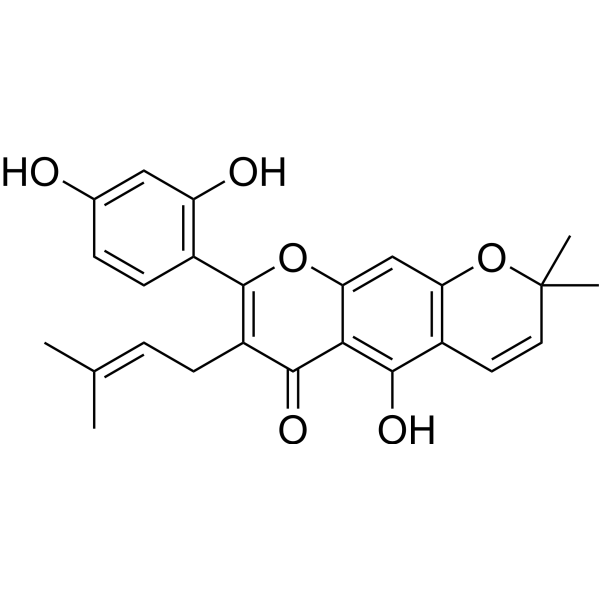
    Cudraflavone B
    Inhibitor
    Cudraflavone B is a prenylated flavonoid with anti-inflammatory and anti-tumor properties. Cudraflavone B is also a dual inhibitor of COX-1 and COX-2. Cudraflavone B blocks the translocation of nuclear factor κB (NF-κB) from the cytoplasm to the nucleus in macrophages. Thus, Cudraflavone B inhibits tumor necrosis factor α (TNFα) gene expression and secretion. Cudraflavone B also triggers the mitochondrial apoptotic pathway, activates NF-κB, the MAPK p38, and ERK, and induced the expression of SIRT1. Thus Cudraflavone B inhibits the growth of human oral squamous cell carcinoma cells.
    Cudraflavone B
  • HY-P991614
    IBI356
    Inhibitor
    IBI356 is a humanized monoclonal antibody inhibitor targeting OX40L/CD134L/CD252. IBI356 can be used to study chronic inflammatory skin diseases, such as atopic dermatitis.
    IBI356
  • HY-149496
    Akt/NF-κB/MAPK-IN-1
    Inhibitor
    Akt/NF-κB/MAPK-IN-1 (compound 2m) is a potent and orally active inhibitor against NO (IC50=7.70 μM) with no significant toxicity. Akt/NF-κB/MAPK-IN-1 shows anti-inflammatory activity by inhibiting Akt/NF-κB and MAPK signaling pathways.
    Akt/NF-κB/MAPK-IN-1
  • HY-N3602A
    rel-Cleroindicin F
    Inhibitor
    rel-Cleroindicin F (Rengyolone) is a cyclohexyl acetyl compound that can be isolated from the fruit of forsythia and has anti-inflammatory activity. It strongly inhibits the production of nitric oxide (NO) and tumor necrosis factor-alpha (TNF-α). rel-Cleroindicin F does this by downregulating the activity of NF-κB and NF-κB kinases in RAW 264.7 cells stimulated by LPS (HY-D1056), thus inhibiting the expression of inducible nitric oxide synthase (NO Synthase) and nitric oxide production.
    rel-Cleroindicin F
  • HY-182369
    VA06
    Inhibitor
    VA06 is a derivative of QS-21 (HY-101092A) that retains potent adjuvant activity while significantly reducing toxicity. VA06 self-assembles into flexible worm-like micelles with continuously elongated nanostructures and enhanced drug-loading encapsulation capacity. VA06 induces antigen-specific antibody production, enhances the secretion of TNF-α, IFN-γ and IL-2 in CD4+ and CD8+ T cells, and promotes the expression of immune-related and antiviral-related genes in mature dendritic cells. VA06 does not require liposome formulation, which simplifies production and storage processes. VA06 can be used in the research of varicella-zoster virus infection and Mycobacterium tuberculosis infection.
    VA06
  • HY-P992395
    JNJ-64164711
    Inhibitor
    JNJ-64164711 (JNJ-711) is a bifunctional antibody that simultaneously targets human GITR/TNFRSF18 and FcγRIIIa. JNJ-64164711 binds to the GITR domain to activate the NF-κB signaling pathway, while binding to FcγRIIIa to support antibody-dependent cellular cytotoxicity (ADCC). JNJ-64164711 can specifically eliminate GITR-positive hematological tumor cells, activated T cells and intratumoral regulatory T cells through the ADCC mechanism, thereby significantly enhancing the body's anti-tumor immune response. JNJ-64164711 can be used in research related to non-small cell lung cancer, colorectal cancer, prostate cancer, renal cell carcinoma and hematological tumors.
    JNJ-64164711
  • HY-144368
    CO delivery molecule 1
    Inhibitor
    CO delivery molecule 1 (compound 4) localizes to the endoplasmic reticulum, mitochondria, and lysosomes. Subcellular localization of CO delivery molecule 1 results in CO-induced toxicity effects. Anti-inflammatory effects of CO delivery molecule 1, as measured by TNF-α suppression, occur at the nanomolar level in the absence of CO release, and are enhanced with visible-light-induced CO release.
    CO delivery molecule 1
  • HY-P991638
    XmAb-2513
    Inhibitor
    XmAb-2513 is a humanized monoclonal antibody inhibitor targeting CD30. XmAb-2513 has significant anti-proliferative activity and superior antibody-dependent cell-mediated cytotoxicity (ADCC) as well as antibody-dependent cell-mediated phagocytosis (ADCP). XmAb-2513 can be used for hematologic malignancies like Hodgkin Lymphoma (HL) and Anaplastic Large Cell Lymphoma (ALCL) research.
    XmAb-2513
  • HY-12085S3
    Apremilast-d3
    Inhibitor
    Apremilast-d3 (CC-10004-d3) is deuterium labeled Apremilast. Apremilast (CC-10004) is an orally available inhibitor of type-4 cyclic nucleotide phosphodiesterase (PDE-4) with an IC50 of 74 nM. Apremilast inhibits TNF-α release by lipopolysaccharide (LPS) with an IC50 of 104 nM.
    Apremilast-d<sub>3</sub>
  • HY-147950
    PDE4-IN-10
    Inhibitor
    PDE4-IN-10 (compound 7a) is a potent PDE4 inhibitor, with an IC50 of 7.01 μM for PDE4B. PDE4-IN-10 shows selectivity, microsomal stability, inhibition of TNF-α and no major toxicities in vitro.
    PDE4-IN-10
  • HY-N0358R
    1,4-Dicaffeoylquinic acid (Standard)
    Inhibitor
    1,4-Dicaffeoylquinic acid (Standard) (1,4-DCQA (Standard)) is the analytical standard of 1,4-Dicaffeoylquinic acid (HY-N0358). This product is intended for research and analytical applications. 1,4-Dicaffeoylquinic acid (1,4-DCQA) is a phenylpropanoid compound that can be isolated from Xanthii fructus and an inhibitor of xanthine oxidase (IC50: 7.36 μM). 1,4-Dicaffeoylquinic acid has anti-inflammatory activity and can inhibit the production of TNF-α induced by LPS (HY-D1056).
    1,4-Dicaffeoylquinic acid (Standard)
  • HY-P991809
    Anti-Mouse CD70 Antibody (TAN 1-7)
    Inhibitor
    Anti-Mouse CD70 Antibody (TAN 1-7) reacts with the mouse CD70. Anti-Mouse CD70 Antibody (TAN 1-7) is a non-depleting antibody which blocks the CD70-CD27 interaction. Recommend Isotype Controls: Rat IgG2a kappa, Isotype Control (HY-P990679).
    Anti-Mouse CD70 Antibody (TAN 1-7)
Cat. No. Product Name / Synonyms Species Source
Cat. No. Product Name / Synonyms Application Reactivity

Following the binding of TNF to TNF receptors, TNFR1 binds to TRADD, which recruits RIPK1, TRAF2/5 and cIAP1/2 to form TNFR1 signaling complex I; TNFR2 binds to TRAF1/2 directly to recruit cIAP1/2. Both cIAP1 and cIAP2 are E3 ubiquitin ligases that add K63 linked polyubiquitin chains to RIPK1 and other components of the signaling complex. The ubiquitin ligase activity of the cIAPs is needed to recruit the LUBAC, which adds M1 linked linear polyubiquitin chains to RIPK1. K63 polyubiquitylated RIPK1 recruits TAB2, TAB3 and TAK1, which activate signaling mediated by JNK and p38, as well as the IκB kinase complex. The IKK complex then activates NF-κB signaling, which leads to the transcription of anti-apoptotic factors-such as FLIP and Bcl-XL-that promote cell survival. 


The formation of TNFR1 complex IIa and complex IIb depends on non-ubiquitylated RIPK1. For the formation of complex IIa, ubiquitylated RIPK1 in complex I is deubiquitylated by CYLD. This deubiquitylated RIPK1 dissociates from the membrane-bound complex and moves into the cytosol, where it interacts with TRADD, FADD, Pro-caspase 8 and FLIPL to form complex IIa. By contrast, complex IIb is formed when the RIPK1 in complex I is not ubiquitylated owing to conditions that have resulted in the depletion of cIAPs, which normally ubiquitylate RIPK1. This non-ubiquitylated RIPK1 dissociates from complex I, moves into the cytosol, and assembles with FADD, Pro-caspase 8, FLIPL and RIPK3 (but not TRADD) to form complex IIb. For either complex IIa or complex IIb to prevent necroptosis, both RIPK1 and RIPK3 must be inactivated by the cleavage activity of the Pro-caspase 8-FLIPL heterodimer or fully activated caspase 8. The Pro-caspase 8 homodimer generates active Caspase 8, which is released from complex IIa and complex IIb. This active Caspase 8 then carries out cleavage reactions to activate downstream executioner caspases and thus induce classical apoptosis. 


Formation of the complex IIc (necrosome) is initiated either by RIPK1 deubiquitylation mediated by CYLD or by RIPK1 non-ubiquitylation due to depletion of cIAPs, similar to complex IIa and complex IIb formation. RIPK1 recruits numerous RIPK3 molecules. They come together to form amyloid microfilaments called necrosomes. Activated RIPK3 phosphorylates and recruits MLKL, eventually leading to the formation of a supramolecular protein complex at the plasma membrane and necroptosis [1][2].


Reference:
[1]. Brenner D, et al. Regulation of tumour necrosis factor signalling: live or let die.Nat Rev Immunol. 2015 Jun;15(6):362-74. 
[2]. Conrad M, et al. Regulated necrosis: disease relevance and therapeutic opportunities.Nat Rev Drug Discov. 2016 May;15(5):348-66. 
 

Your Search Returned No Results.

Sorry. There is currently no product that acts on isoform together.

Please try each isoform separately.