



Tyrosinase
Tyrosinase is a copper-containing metalloprotein belonging to the type-3 copper protein family, together with haemocyanins and catechol oxidases. Tyrosinases are the catalysts in mammals responsible for the formation of melanin in skin and hair color, as well as browning in fruit and vegetables following cell damage.
Tyrosinases are found in various prokaryotes as well as in plants, fungi, arthropods, and mammals and are responsible for pigmentation, wound healing, radiation protection, and primary immune response. Tyrosinases perform two sequential enzymatic reactions: hydroxylation of monophenols and oxidation of diphenols to form quinones which polymerize spontaneously to melanin. In plants, sponges, and many invertebrates, tyrosinases are important for wound healing and primary immune responses; in arthropods, they play a role in sclerotization, and in bacteria, tyrosinases protect DNA from UV damage.
All Product Categories
-
Tyrosinase Inhibitors
(279)
View all products
-
Tyrosinase Antagonist
(1)
View all products
-
Tyrosinase Activators
(10)
View all products
-
Tyrosinase Modulator
(1)
View all products
-
Tyrosinase Inducer
(1)
View all products
-
Tyrosinase Degrader
(1)
View all products
-
Tyrosinase Substrates
(7)
View all products
-
Tyrosinase Ligand
(1)
View all products
-
Tyrosinase Related Products (325)
Related Products (325)

-
Antibodies (9)
-
Tyrosinase-IN-44
 0 ImagesCat. No.: HY-178055CAS No.: 10200-72-3Tyrosinase-IN-44 (Compound 3) is a Tyrosinase inhibitor with IC50s of 0.47 and 0.53 μM for monophenolase and diphenolase, respectively. Tyrosinase-IN-44 has superior glutathione peroxidase-like catalytic and DPPH radical scavenging activity. Tyrosinase-IN-44 has potent antibrowning activity in banana and apple juices by directly inhibiting polyphenol oxidase (PPO) and offering antioxidant activity. Tyrosinase-IN-44 can be used for redox regulation and food preservation.
-
Tyrosinase-IN-25
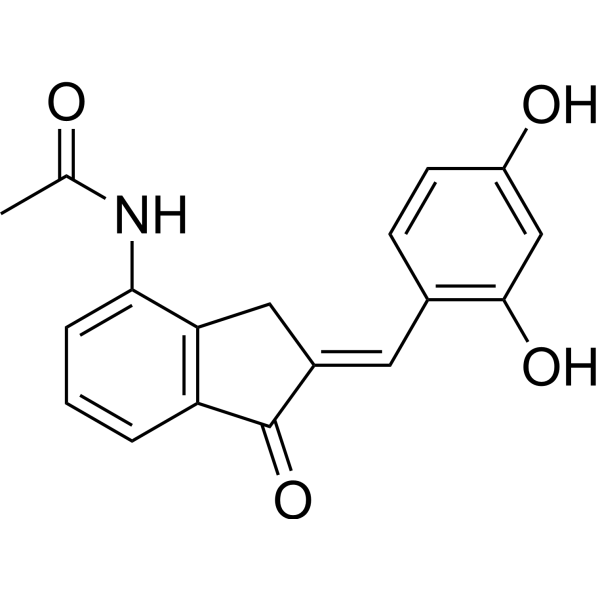 0 ImagesCat. No.: HY-163326Tyrosinase-IN-25 (compound 1l) is an inhibitor of tyrosinase and melanin biosynthesis in human melanoma cells.
-
Tyrosinase-IN-8
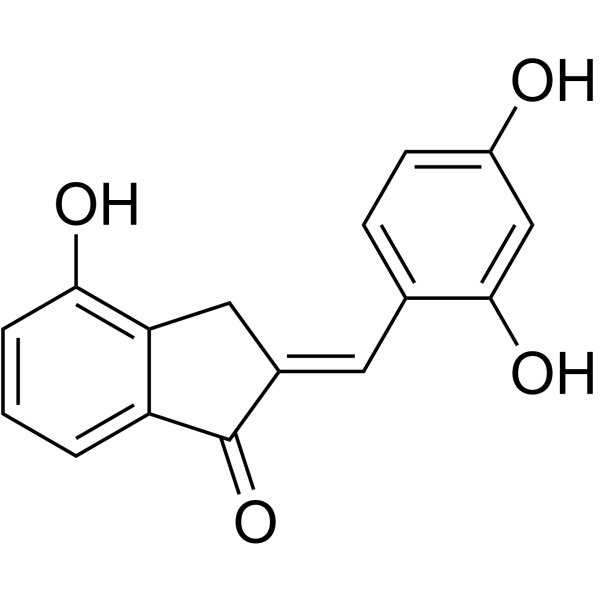 0 ImagesCat. No.: HY-151979Tyrosinase-IN-8 is a potent tyrosinase inhibitor with an IC50 value of 1.6 µM. Tyrosinase-IN-8 inhibits cell growth with low cytotoxicity.
-
Cardanol diene
 0 ImagesCat. No.: HY-121374CAS No.: 51546-63-5Cardanol diene is a phenol found in cashew nut shell liquid that inhibits tyrosinase with an IC50 value of 52.5 μM in vitro.1 Cardanol diene is also used to synthesize cardanol-metal complexes that inhibit uropathogenic E. coli biofilm formation.
-
Broussonin C
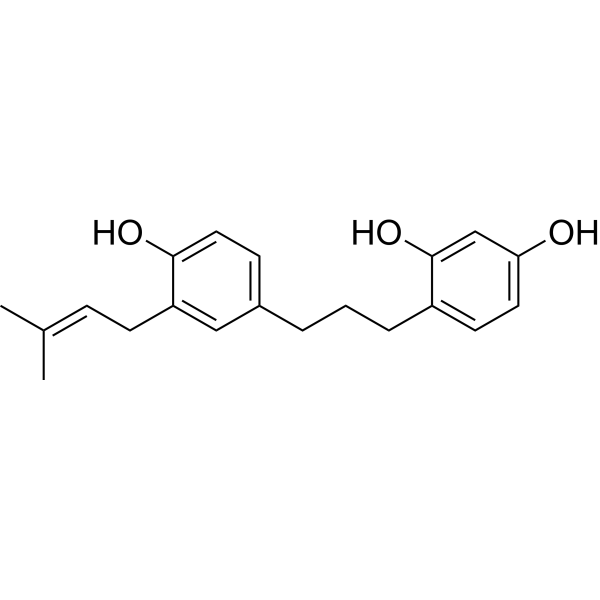 0 ImagesCat. No.: HY-N2962CAS No.: 76045-49-3Broussonin C is a competitive inhibitor of Tyrosinase that can be isolated from Broussonetia kazinoki. Broussonin C inhibits monophenolase and diphenolase with IC50s of 0.43 and 0.57 μM, respectively.
-
Tyrosinase-IN-14
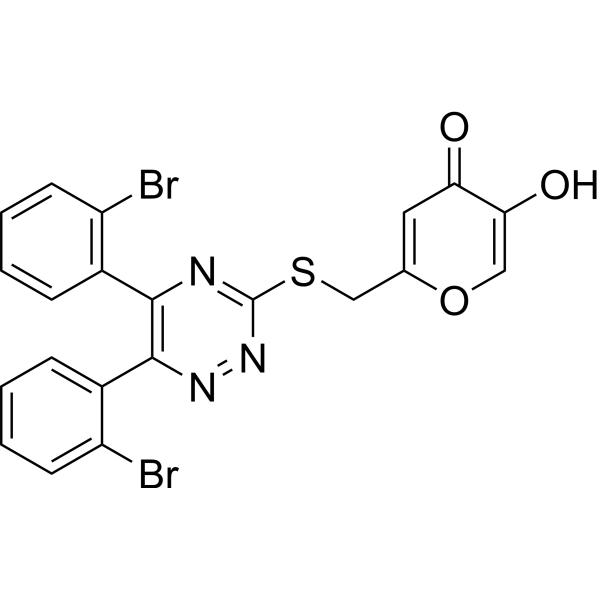 0 ImagesCat. No.: HY-155247Tyrosinase-IN-14 (compound 7m) is a tyrosinase inhibitor that reduces the catalytic activity of tyrosinase by changing its secondary structure. Tyrosinase-IN-14 has low cytotoxicity and anti-browning activity in fruits. Tyrosinase-IN-14 effectively inhibits banana browning during storage.
-
Tyrosinase-IN-27
 0 ImagesCat. No.: HY-158235CAS No.: 2966803-96-1Tyrosinase-IN-27 (compound 6f) is a tyrosinase (TYR) inhibitor (IC50: 0.88 μM) that statically quenches TYR. Tyrosinase-IN-27 increases the hydrophobicity of the enzyme microenvironment by binding to TYR, reducing the content of α-helices in the enzyme and changing its secondary structure. Tyrosinase-IN-27 can be used in the food industry to effectively inhibit the browning of lotus root slices..
-
Aequinetin
 0 ImagesCat. No.: HY-N20679CAS No.: 31025-53-3Synonyms: Chrysin 7-β--D-glucosideAequinetin is a tyrosinase inhibitor, and docking results show that it forms hydrogen bonds and hydrophobic interactions with key protein residues of NF-κB p65, MAPK10 and ERK1.
-
Norkurarinol
 0 ImagesCat. No.: HY-N18197CAS No.: 52483-01-9Norkurarinol is a prenylated flavonoid. Norkurarinol can be isolated from Sophora flavescens. Norkurarinol potently inhibits mushroom Tyrosinase DOPA oxidase activity with an IC50 of 2.1 μM. Norkurarinol inhibits poly(I:C)-induced NF-κB/AP-1 activation. Norkurarinol inhibits pro-inflammatory cytokines (TNF-α, IL-6). Norkurarinol inhibits phosphorylation of p38, JNK, and ERK1/2. Norkurarinol increases phosphorylation of IRF3. Norkurarinol has antiviral activity against Rotavirus KJ56-1
-
D-Tyrosine-d2
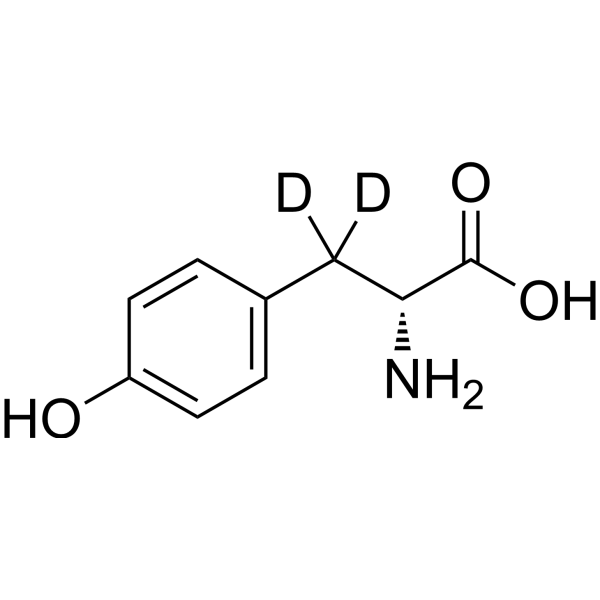 0 ImagesCat. No.: HY-Y0444SCAS No.: 1202064-22-9D-Tyrosine-d2 is the deuterium labeled D-Tyrosine (HY-Y0444). D-Tyrosine is the D-isomer of tyrosine. D-Tyrosine negatively regulates melanin synthesis by inhibiting tyrosinase activity. D-Tyrosine inhibits biofilm formation and trigger the self-dispersal of biofilms without suppressing bacterial growth.
-
Tec-IN-14
 0 ImagesCat. No.: HY-111289CAS No.: 852838-07-4
-
Piceid 6″-O-azelaic acid ester
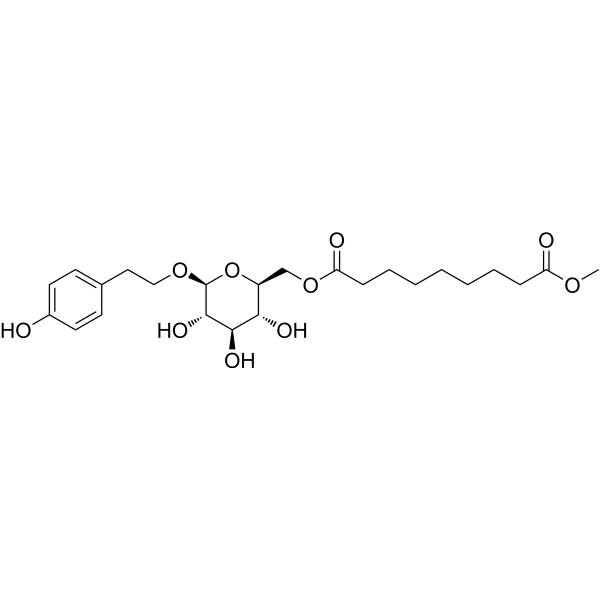 0 ImagesCat. No.: HY-139857Piceid 6″-O-azelaic acid ester shows high intracellular tyrosinase inhibitory and depigmentating activities.
-
AI10-a2
 0 ImagesCat. No.: HY-184909AI10-a2 is a tyrosinase (tyrosinase) inhibitor, with IC50 values of 0.92 μM against mushroom tyrosinase using L-DOPA (HY-N0304) as the substrate and 0.68 μM using L-Tyrosine (HY-N0473) as the substrate. AI10-a2 inhibits intracellular melanin (melanin) production and reduces head pigmentation in zebrafish embryos. AI10-a2 can be used for the research of hyperpigmentation disorders.
-
7-Methoxy obtusifolin
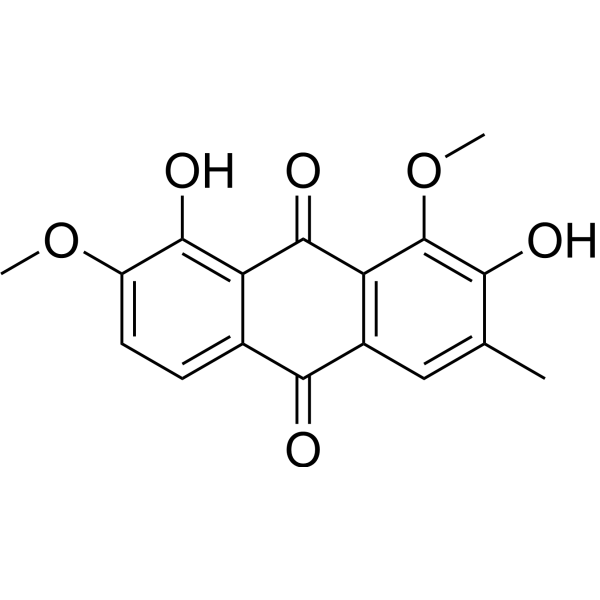 0 ImagesCat. No.: HY-N11521CAS No.: 1820806-09-47-Methoxy obtusifolin (Compound 4) is a competitive tyrosinase inhibitor with an IC50 of 7.0 μM.
-
Tyrosinase-IN-38
 0 ImagesCat. No.: HY-162909Tyrosinase-IN-38 (compound 6b) is a competitive Tyrosinase inhibitor with IC50 value of 25.82 μM. Tyrosinase-IN-38 has antioxidant activity.
-
3-Feruloyl-4',6'-diacetyl sucrose
 0 ImagesCat. No.: HY-N17917CAS No.: 1823192-28-43-Feruloyl-4',6'-diacetyl sucrose is a feruloyl sucrose ester that can be found in the roots of Oryza sativa.
-
Tyrosinase-IN-2
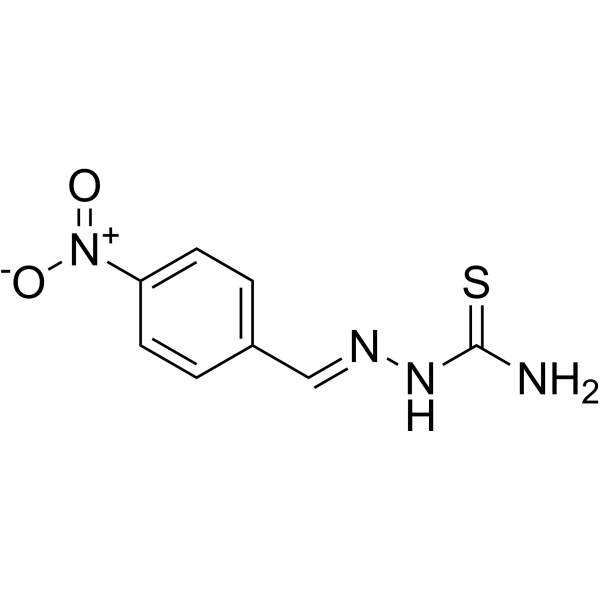 0 ImagesTyrosinase-IN-2 (compound 67) is a potent inhibitor of tyrosinase. Tyrosinase is a copper-containing metalloenzyme that is responsible for the rate-limiting catalytic step in the melanin biosynthesis and enzymatic browning. Tyrosinase-IN-2 has the potential for the research of skin whitening agents and food preservatives.
-
Tyrosinase-IN-10
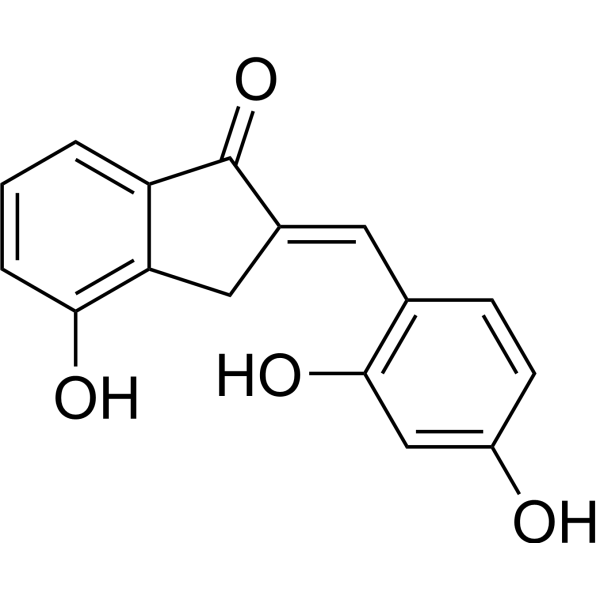 0 ImagesCat. No.: HY-152194CAS No.: 2873418-48-3Tyrosinase-IN-10 (Compound 23) is a partially competitive tyrosinase inhibitor with an IC50 of 1.6 μM against tyrosinase activity from human melanoma cell lysates.
-
Glabrene
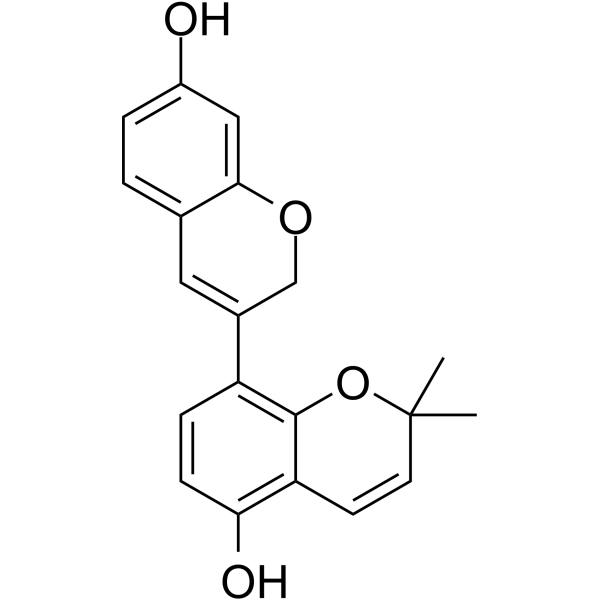 0 ImagesCat. No.: HY-N3943CAS No.: 60008-03-9Glabrene, an isoflavene derived from licorice root, shows estrogen-like activity. Glabrene is a tyrosinase inhibitor with an IC50 of 3.5 μM.
-
Schisanhenol B
 0 ImagesCat. No.: HY-N0859ACAS No.: 102681-52-7Schisanhenol B is one of the active ingredients of schisandra chinensis. Schisanhenol B is a tyrosinase inhibitor. Schisanhenol B has good binding activity with PIK3CG and can be used in the study of heart failure.




