



Heme Oxygenase (HO)
Heme Oxygenase
Heme oxygenase (HO) is an enzyme that catalyzes the degradation of heme to produce biliverdin/bilirubin, ferrous iron and carbon monoxide. Heme oxygenase (HO) can be divided into inducible type (HO-1) and constitutive type (HO-2). HO-1 is a kind of heat shock protein 32 (HSP32). Its expression level is low in normal physiological state, but it will increase significantly when induced by various stimuli such as oxidative stress, heavy metals, and inflammatory factors. HO-2 is continuously and stably expressed in brain, testis and other tissues, and is involved in maintaining the normal physiological function of cells. Heme oxygenase (HO) plays a key role in cell stress response and homeostasis, and the dysregulation of its expression or activity is related to the pathophysiology of cardiovascular disease, diabetes, obesity, lung disease, gastrointestinal disease, renal dysfunction, dermatitis, cancer and other diseases[1].
Heme Oxygenase (HO) Isoform Specific Products
All Product Categories
-
Heme Oxygenase (HO) Inhibitors
(21)
View all products
-
Heme Oxygenase (HO) Agonists
(5)
View all products
-
Heme Oxygenase (HO) Activators
(49)
View all products
-
Heme Oxygenase (HO) Modulators
(4)
View all products
-
Heme Oxygenase (HO) Inducers
(14)
View all products
-
Heme Oxygenase (HO) Control
(1)
View all products
-
Heme Oxygenase (HO) Related Products (106)
Related Products (106)

-
Heme Oxygenase (HO) Isoform Comparison
-
FXR agonist 18
 0 ImagesCat. No.: HY-183692CAS No.: 3061938-00-6FXR agonist 18 is an orally active FXR agonist, with an EC50 of 10 nM against human FXR and an EC50 of 1360 nM against human TGR5. FXR agonist 18 inhibits inflammatory responses by reducing nitrite production, downregulating the expression of pro-inflammatory genes (Tnf, Adgre1, Cyp8b1, upregulating the expression of FXR, Hmox1, Nqo1, Nrf2, and enhancing antioxidant responses. FXR agonist 18 ameliorates liver fibrosis in mice, exhibits protective effects in mice with cholestatic liver injury, and shows anti-MASH efficacy. FXR agonist 18 can be used in studies of metabolic dysfunction-associated steatohepatitis.
-
SIN 14
 0 ImagesCat. No.: HY-173518CAS No.: 3064262-80-9SIN 14, a derivative of Sinomenine (HY-15122), is an orally active HO-1 activator (KD = 17.2 μM). SIN 14 binds to the catalytic core domain of HO-1 and induces HO-1 activation in catalysis. SIN 14 significantly increases HO-1 stability. SIN 14 has anti-inflammatory effects and inhibits M1 macrophage polarization while promoting M2 polarization in LPS (Lipopolysaccharides)(HY-D1056)-induced RAW264.7 cells. SIN 14 inhibits inflammatory mediator production (eg: NO, IL-6, IL-1β and CCL2, inhibits production of ROS and down-regulates the expression of COX-2 and iNOS. SIN 14 can inhibit RA-related inflammatory edema in collagen-induced arthritis (ClA) mice.
-
Carveol (Standard)
 0 ImagesCat. No.: HY-W017370RCAS No.: 99-48-9Carveol (Standard) is the analytical standard of Carveol. This product is intended for research and analytical applications. Carveol is an orally active monoterpenoid alcohol with neuroprotective, antioxidant, anti-inflammatory, anticonvulsant, antidiabetic, hypolipidemic and hepatoprotective activities. Carveol upregulates the expression of Bcl2, downregulates the expression of caspase-3, TNF-α, IL1β and IL6, activates the Nrf2/HO-1 antioxidant signaling pathway, inhibits the RAGE/NF-κB signaling pathway, and suppresses neuroinflammation and neuronal apoptosis. Carveol inhibits α-synuclein aggregation, improves cognitive ability, and inhibits α-amylase activity. Carveol exerts neuroprotective effects in a rat model of Parkinson's disease. Carveol exhibits antidiabetic effects in alloxan-induced diabetic rats. Carveol alleviates PTZ-induced seizures in rats. Carveol can be used in research related to Parkinson's disease, epilepsy, diabetes and ischemic stroke.
-
Nrf2/HO-1 activator 4
 0 ImagesCat. No.: HY-184698CAS No.: 3072761-08-8Nrf2/HO-1 activator 4 is a Nrf2/HO-1 activator. Nrf2/HO-1 activator 4 inhibits nitric oxide production and the expression of pro-inflammatory cytokines IL-1β, IL-6, TNF-α, as well as upstream inflammatory enzymes COX-2 and iNOS. Nrf2/HO-1 activator 4 reduces ROS accumulation, and restores GSH levels and SOD activity. Nrf2/HO-1 activator 4 ameliorates depression-like behaviors in mice. Nrf2/HO-1 activator 4 can be used for research on major depressive disorder.
-
TrxR1-IN-B19
 0 ImagesCat. No.: HY-120914CAS No.: 170950-29-5Synonyms: GO-Y015TrxR1-IN-B19 (GO-Y015) is a Curcumin (HY-N0005) derivative and TrxR1 inhibitor. TrxR1-IN-B19 inhibits de novo selenoprotein synthesis, suppresses SeP and GPx expression, and impairs selenium incorporation into Sec-tRNA[Sec]. TrxR1-IN-B19 induces Nrf2 accumulation through Keap1 cysteine modification, HO-1 expression, GSH synthesis, ROS accumulation, ER stress, mitochondrial dysfunction, Apoptosis, and G2/M phase arrest. TrxR1-IN-B19 improves glucose tolerance and insulin sensitivity, lowers blood glucose, inhibits tumor growth, and reduces arsenic accumulation. TrxR1-IN-B19 can be used for research on type 2 diabetes, arsenite-induced toxicity, and gastric cancer.
-
Keap1/Nrf2/ARE activator 2
 0 ImagesCat. No.: HY-180155CAS No.: 3105470-83-2Keap1/Nrf2/ARE activator 2 is an activator of Keap1/Nrf2/ARE pathway and non-competitively inhibits AChE with an IC50 of 14.79 μM and a Ki of 1.35 μM. Keap1/Nrf2/ARE activator 2 promotes Nrf2 nuclear translocation, leading to antioxidant gene upregulation and enhanced cellular defense against oxidative stress. Keap1/Nrf2/ARE activator exhibits robust neuroprotection against both H2O2- and Scopolamine (SCA) (HY-N0296)-induced injury in PC12 cells. Keap1/Nrf2/ARE activator 2 ameliorates memory impairment and the neuro-inflammation associated with SCA-initiated cognitive dysfunction in a zebrafish model. Keap1/Nrf2/ARE activator 2 can be used for the research of Alzheimer's disease.
-
QC-308
 0 ImagesCat. No.: HY-182604CAS No.: 1353712-58-9QC-308 is a HO-1/HO-2 inhibitor, with an IC50 of 0.27 μM against rat HO-1 and an IC50 of 0.46 μM against rat HO-2. QC-308 inhibits the activities of rat HO-1 and HO-2 in carbon monoxide generation assays using spleen and brain microsomes, respectively. QC-308 also exhibits senolytic activity, reducing the survival rate of adipogenic progenitor cells in skeletal muscle fibers of senescent mice and human skeletal muscle myoblasts. QC-308 is applicable for senescence-related research.
-
MGF24
 0 ImagesCat. No.: HY-P11124CAS No.: 1611488-66-4MGF24 is a modified protease-resistant MGF derivative. MGF24 protects dopaminergic neurons from 6-Hydroxydopamine (6-OHDA) (HY-113028)-induced apoptosis by inducing Heme oxygenase-1 (HO-1). MGF24 activates PKC-ε, which in turn activates Nrf2, up-regulating HO-1. MGF24 has neuroprotective activity and reduces myocardial infarct size in sheep models of myocardial ischemia. MGF24 can be used for neurological diseases like stroke, nerve injury and amyotrophic lateral sclerosis research.
-
(-)-(E)-Guggulsterone (Standard)
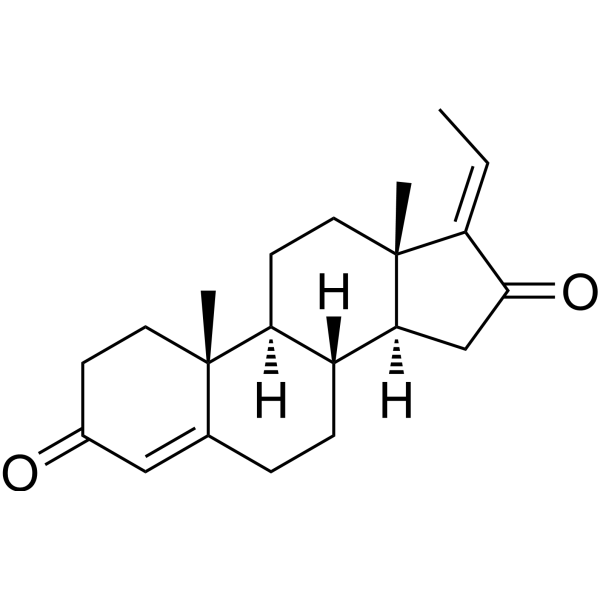 0 ImagesSynonyms: (E)-Guggulsterone (Standard)(-)-(E) -guggulsterone (Standard) is the analytical standard for (-)-(E) -guggulsterone ((E)-Guggulsterone) (HY-N7781). (-)-(E)-Guggulsterone is an orally active natural stereoisomer of Guggulsterone (HY-107738). (-)-(E)-Guggulsterone is an antagonist for the Farnesoid X Receptor (FXR) with an IC50 of 24.06 μM and possesses potent hypolipidemic properties. (-)-(E)-Guggulsterone suppresses dengue virus (DENV) replication by upregulating antiviral interferon responses by inducing HO-1 expression via Nrf2 activation. (-)-(E)-Guggulsterone exhibits antibacterial activities against Bacillus subtilis, Staphylococcus aureus and Pseudomonas aeruginosa. (-)-(E)-Guggulsterone has cardiac protective and antioxidant activities in rats.
-
Dankasterone A
 0 ImagesCat. No.: HY-N17406CAS No.: 244303-77-3Dankasterone A is a secondary metabolite. Dankasterone A can be derived from the Fungus Talaromyces purpurogenu. Dankasterone A upregulates HO-1 protein expression, induces Apoptosis, induces excessive ROS production. Dankasterone A has anti-cancer activity against prostate cancer.
-
Ginnalin A
 0 ImagesCat. No.: HY-N17603CAS No.: 76746-56-0Synonyms: AcertanninGinnalin A (Acertannin) is a Nrf2 activator. Ginnalin A shows antiproliferative activity against HCT116, SW480 and SW620 cells with IC50 values of 24.8, 22.0, and 39.7 μM, respectively. Ginnalin A can induce cancer cells S phase arrest. Ginnalin A can activate the p62-Keap1-Nrf2 signaling pathway, significantly upregulate the mRNA and protein expression of Nrf2, HO-1, and NQO1, and promote the transport of Nrf2 from the cytoplasm to the nucleus. Ginnalin A can be used for the research of colon cancer.
-
CD-10
 0 ImagesCat. No.: HY-174395CD-10 is an orally active and BBB-penatrable Keap1-Nrf2 protein-protein interaction (PPI) inhibitor. CD-10 binds to Keap1 with a KD value of 193 nM. CD-10 exhibits potent anti-oxidative and anti-inflammatory effects through Keap1-Nrf2 pathway activation, evidenced by reduced levels of MDA, IL-4, IL-10 and increased expression of HO-1. CD-10 effectively alleviated anxiety and depressive behaviors and restored serum neurotransmitter levels by promoting Nrf2 nuclear translocation in the chronic unpredictable mild stress (CUMS) mouse model. CD-10 can be used for the study of depression.
-
QC-308 hydrochloride
 0 ImagesCat. No.: HY-134310CAS No.: 1353586-18-1QC-308 hydrochloride is a HO-1/HO-2 inhibitor, with an IC50 of 0.27 μM against rat HO-1 and an IC50 of 0.46 μM against rat HO-2. QC-308 hydrochloride inhibits the activities of rat HO-1 and HO-2 in carbon monoxide generation assays using spleen and brain microsomes, respectively. QC-308 hydrochloride also exhibits senolytic activity, reducing the survival rate of adipogenic progenitor cells in skeletal muscle fibers of senescent mice and human skeletal muscle myoblasts. QC-308 hydrochloride is applicable for senescence-related research.
-
Nrf2 activator-24
 0 ImagesCat. No.: HY-182040Nrf2 activator-24 is a Nrf2 activator with anti-inflammatory and antioxidant activities. Nrf2 activator-24 promotes the nuclear translocation of Nrf2, thereby inducing the expression of downstream antioxidant and cytoprotective genes. Nrf2 activator-24 inhibits cytokine-driven inflammatory responses in keratinocytes. Nrf2 activator-24 attenuates inflammation, nitrosation and oxidative stress responses in macrophages. Nrf2 activator-24 alleviates local inflammation and atopic dermatitis-like symptoms in DNCB-induced mouse models. Nrf2 activator-24 can be used in research related to atopic dermatitis.
-
Neuroprotective agent 12
 0 ImagesCat. No.: HY-174339CAS No.: 2522599-69-3Neuroprotective agent 12 is an orally active and BBB-penetrable neuroprotective agent. Neuroprotective agent 12 has potent neuroprotective effects with robust anti-oxidation and anti-inflammation. Neuroprotective agent 12 significantly inhibits glutamate- and acrolein-induced cell death, reduces PDE4B expression but increases the HO-1, p-CREB and BDNF levels. Neuroprotective agent 12 exhibits potent neuroprotection in traumatic brain injury (TBI) mice model, promising for TBI and other central nervous system diseases.
-
D-Leucine amide-CDDO-Me-HMP
 0 ImagesCat. No.: HY-179613CAS No.: 2749600-16-4D-Leucine amide-CDDO-Me-HMP is a prodrug composed of CDDO-Me (HY-13324) and ligustrazine (HY-N0264). D-Leucine amide-CDDO-Me-HMP can protect against CCl4-induced liver injury. D-Leucine amide-CDDO-Me-HMP can inhibit ROS production, alleviates mitochondrial damage and inhibits cell apoptosis. D-Leucine amide-CDDO-Me-HMP can be used for the research of liver injury.
-
Tricetinidin chloride
 0 ImagesCat. No.: HY-N17651CAS No.: 65618-21-5Tricetinidin chloride is an antioxidant. Tricetinidin chloride protects rat renal cells against oxidative stress and DNA damage by reducing ROS production, increasing GSH levels, restoring mitochondrial membrane potential, and upregulating HO-1 expression. Tricetinidin chloride also inhibits the expression of IgE receptors on human mast cells. Tricetinidin chloride can be used in the research of inflammatory and allergic diseases.
-
Heme Oxygenase-1-IN-3
 0 ImagesCat. No.: HY-162857CAS No.: 1043712-39-5
-
Delphinidin-3-O-galactoside chloride (Standard)
 0 ImagesCat. No.: HY-N6606RCAS No.: 28500-00-7Delphinidin-3-O-galactoside chloride (Standard) is the analytical standard of Delphinidin-3-O-galactoside chloride (HY-N6606). This product is intended for research and analytical applications. Delphinidin-3-O-galactoside chloride is an anthocyanin found in abbiteye blueberry. Delphinidin-3-O-galactoside chloride show inhibitory activitiesagainst α-glucosidase with an IC50 of 68.33 μM, and tyrosinase with an IC50 of 34.14 μM. Delphinidin-3-O-galactoside chloride attenuates HO-1 and HSP70 messenger RNA down-regulation, suppresses cytotoxicity, reduces endoplasmic reticulum stress responses, scavenges free radicals, reduces intracellular triglyceride levels and lipid droplet accumulation. Delphinidin-3-O-galactoside chloride can be used for the researches of diabesity, melanoma and inflammation.
-
AMPK activator 20
 0 ImagesCat. No.: HY-120913CAS No.: 1243184-62-4AMPK activator 20 is an α1-selective AMPK activator. AMPK activator 20 inhibits Helicobacter pylori-induced ROS production. AMPK activator 20 induces AMPK-dependent expression of Heme oxygenase-1. AMPK activator 20 suppresses Helicobacter pylori-induced Apoptosis. AMPK activator 20 exerts protective activity against Helicobacter pylori-induced cytotoxicity via an AMPK-dependent pathway. AMPK activator 20 is applicable to research related to Helicobacter pylori infection and gastric diseases.



