1. Signaling Pathways
  2. PI3K/Akt/mTOR
  3. mTOR

mTOR

Mammalian target of Rapamycin

mTOR (mammalian target of Rapamycin) is a protein that in humans is encoded by the mTOR gene. mTOR is a serine/threonine protein kinase that regulates cell growth, cell proliferation, cell motility, cell survival, protein synthesis, and transcription. mTOR belongs to the phosphatidylinositol 3-kinase-related kinase protein family. mTOR integrates the input from upstream pathways, including growth factors and amino acids. mTOR also senses cellular nutrient, oxygen, and energy levels. The mTOR pathway is dysregulated in human diseases, such as diabetes, obesity, depression, and certain cancers. Rapamycin inhibits mTOR by associating with its intracellular receptor FKBP12. The FKBP12-rapamycin complex binds directly to the FKBP12-Rapamycin Binding (FRB) domain of mTOR, inhibiting its activity.

Cat. No. Product Name Effect Purity Chemical Structure
  • HY-130133
    DHW-221
    Inhibitor
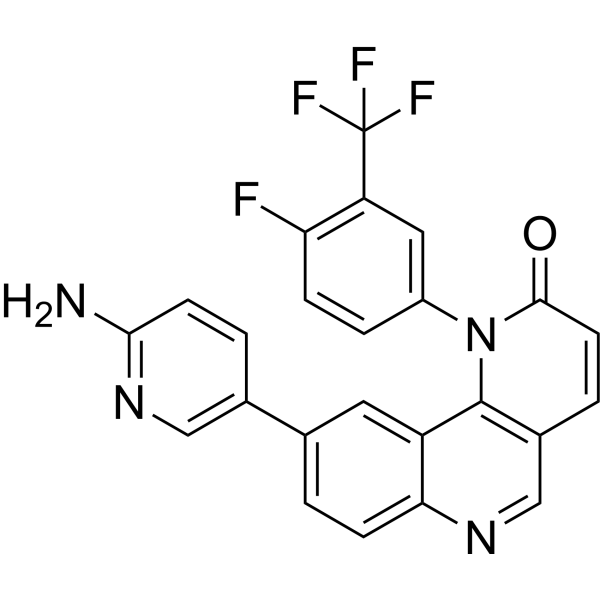
    DHW-221 is a potent orally active dual PI3K/mTOR inhibitor, exhibiting low nanomolar potency against all four Class I PI3K isoforms and mTOR (PI3Kα, IC50 = 0.50 nM; PI3Kβ, IC50 = 1.9 nM; PI3Kγ, IC50 = 1.8 nM; PI3Kδ, IC50 = 0.74 nM; mTOR, IC50 = 3.9 nM). DHW-221 exerts antitumor effects by blocking the PI3K/Akt/mTOR pathway and inducing mitochondrial apoptosis and paraptosis (via Endoplasmic Reticulum (ER) stress and MAPK signaling) and arrests cell cycle, thereby inhibiting cell migration, invasion and angiogenesis. DHW-221 inhibits tumor growth in both the A549/Taxol (HY-B0015) and the HCC827 xenograft mouse models. DHW-221 can be used for non-small cell lung cancer (NSCLC), colon and breast cancer research.
    DHW-221
  • HY-115869
    RMC-4529
    Inhibitor
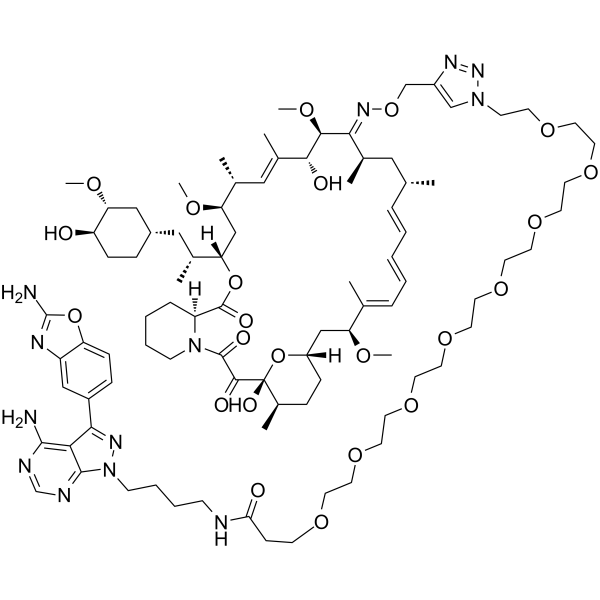
    RMC-4529 has an IC50 value of 1.0 nM against p-4E-BP1-(T37/46) in mTOR kinase cellular assay.
    RMC-4529
  • HY-N6896R
    Isoviolanthin (Standard)
    Inhibitor
    Isoviolanthin (Standard) is the analytical standard of Isoviolanthin (HY-N6896). This product is intended for research and analytical applications. Isoviolanthin is a flavonoid glycoside. Isoviolanthin can be extracted from Dendrobium officinale. Isoviolanthin has a strong affinity for binding to KDM6B, CHAC2, ESCO2, and IPO4. Isoviolanthin decreases MMP-2 and MMP-9. Isoviolanthin inhibits TGF-β/Smad and PI3K/Akt/mTOR signaling pathways. Isoviolanthin increases Fhl3 expression. Isoviolanthin has cytoprotective effects. Isoviolanthin has anticancer activity against hepatocellular carcinoma.
    Isoviolanthin (Standard)
  • HY-122352
    OSU-03013
    Inhibitor
    OSU-03013 is a Celecoxib (HY-14398) analog. OSU-03013 can promote apoptosis, up-regulate E-cadherin, and down-regulate β-catenin, c-myc, Wnt1, and N-cadherin. OSU-03013 reduces cell migration and invasion. OSU-03013 regulates both Wnt and mTOR expression to inhibit colon cancer (CC) cell proliferation. OSU-03013 can be used for CC cancer research.
    OSU-03013
  • HY-174379
    KRAS IN-44
    Inhibitor
    KRAS IN-44 (Compound S2C2M2) is a PDE6D degrader. KRAS IN-44 inhibits PDE6D-dependent KRAS trafficking and KRAS downstream signaling pathways. KRAS IN-44 down-regulates EGF-induced the phosphorylation of PI3K, AKT, and mTOR. KRAS IN-44 increases Apoptosis. KRAS IN-44 has antitumor activity against hepatoblastoma.
    KRAS IN-44
  • HY-181020
    Deltafluorine
    Inhibitor
    Deltafluorine is a phosphodiesterase delta (PDEδ) inhibitor with an IC50 of 27 nM, a KD of 148 nM. Deltafluorine covalently modifies the specific glutamate residue p.E88 in the ligand binding site of PDEδ, interfering with its chaperone function. Deltafluorine inhibits signaling through the MAPK and Akt-mTOR pathway, reduces ERK1/2 expression. Deltafluorine reduces tumor volume in an autochthonous mouse model of Kras-driven lung adenocarcinoma. Deltafluorine can be used for the research of lung adenocarcinoma.
    Deltafluorine
  • HY-N13338
    Avicin D
    Inhibitor
    Avicin D is a plant triterpenoid. Avicin D induces Autophagy by activation of AMPK. Avicin D inhibits mTOR and S6 kinase activity. Avicin D selectively induces Apoptosis and downregulates p-STAT-3, bcl-2, and Survivin. Avicin D has properties of being a selective Glucocorticoid receptor modulator. Avicin D inhibits NF-κB activation. Avicin D shows anti-tumor effects against cutaneous T-cell lymphomas.
    Avicin D
  • HY-172678
    PUC-10
    Inhibitor
    PUC-10 is a 5-HT6 receptor antagonist with a Ki of 14.6 nM and an IC50 of 32 nM. In silico predictions suggest that PUC-10 is orally active and can cross the blood-brain barrier. PUC-10 can induce autophagy in SH-SY5Y cells by inhibiting the mTOR pathway. PUC-10 can be used in the research of neurological disorders.
    PUC-10
  • HY-172816
    Carbonic anhydrase inhibitor 32
    Inhibitor
    Carbonic anhydrase inhibitor 32 (compound 5B) is an orally active and selective hCA (Carbonic anhydrase ) II/VII inhibitor with the Ki values of 6.3 nM, 10.1 nM and 681 nM for hCA II, hCA VII and hCA I,respectively. Carbonic anhydrase inhibitor 32 shows neuroprotective and anticonvulsant potential by reducing mTOR activation, and raising hippocampus KCC2 levels.
    Carbonic anhydrase inhibitor 32
  • HY-125535
    OSU-53
    Inhibitor
    OSU-53 is an orally active AMPK activator (EC50: 0.3 μM) and a direct mTOR inhibitor. OSU-53 induces autophagy and increases conversion of LC3 I to LC3 II. OSU-53 also modulates energy homeostasis by suppressing fatty acid biosynthesis and shifting the metabolism to oxidation by up-regulating the expression of PGC1α and NRF-1. OSU-53 has antitumor activity in various tumor models, such as breast cancer and thyroid cancer.
    OSU-53
  • HY-10681S1
    Gedatolisib-d6
    Inhibitor
    Gedatolisib-d6 (PKI-587-d6) is the deuterium labeled Gedatolisib (HY-10681). Gedatolisib (PKI-587) is a highly potent dual inhibitor of PI3Kα, PI3Kγ, and mTOR with IC50s of 0.4 nM, 5.4 nM and 1.6 nM, respectively. Gedatolisib is equally effective in both complexes of mTOR, mTORC1 and mTORC2.
    Gedatolisib-d<sub>6</sub>
  • HY-P992392
    JM1-24-3
    Inhibitor
    JM1-24-3 is an anti-MUC18 mouse monoclonal antibody with a Kd value of 1.60e-9 M. JM1-24-3 reduces the phosphorylation levels of p-AKT (Ser473) and p-mTOR (Ser2448) in a time-dependent manner. JM1-24-3 exhibits anticancer activity against melanoma. JM1-24-3 can be used in studies related to metastatic melanoma.
    JM1-24-3
  • HY-P10992
    YVPGP
    Inhibitor
    YVPGP is an oligopeptide exacted from Anthopleura anjunae. YVPGP has a significant antitumor activity by mediating PI3K/AKT/mTOR signaling pathway. YVPGP arrests DU-145 cells in the S phase and induces apoptosis via mitochondrial and death receptor pathways (caspase3, 7, 8, 9). YVPGP effectively inhibits tumor growth in DU-145 xenografts mice model, promising for prostate cancer research.
    YVPGP
  • HY-RS08811
    Mtor Mouse Pre-designed siRNA Set A
    Inhibitor

    Mtor Mouse Pre-designed siRNA Set A contains three designed siRNAs for Mtor gene (Mouse), as well as a negative control, a positive control, and a FAM-labeled negative control.

    Mtor Mouse Pre-designed siRNA Set A
  • HY-15281
    QL-IX-55
    Inhibitor
    QL-IX-55 is a selective ATP-competitive inhibitor of mTORC1/2 with IC50s of 50/50/10-50 nM for Human mTORC1/Yeast mTORC1/Yeast mTORC2, respectively.
    QL-IX-55
  • HY-185460
    Pertuzumab-LD3
    Inhibitor
    Pertuzumab-LD3 is a humanized antibody-drug conjugate (ADC) targeting HER2. Pertuzumab-LD3 consists of the anti-HER2 humanized IgG1 monoclonal antibody Pertuzumab (HY-P9912), the cleavable linker Gly-Gly-Phe-Gly (HY-P3669), and the PI3K/mTOR-IN-21 (HY-185456) payload. Pertuzumab-LD3 can be used in research on metastatic HER2-positive breast cancer.
    Pertuzumab-LD3
  • HY-156671B
    RMC-4998 TFA
    Inhibitor 99.02%
    RMC-4998 TFA is an orally active inhibitor targeting the active or GTP-bound state of the KRASG12C mutant. RMC-4998 TFA can form a ternary complex with intracellular CYPA and the activated KRASG12C mutant, with an IC50 value of 28 nM. RMC-4998 TFA can inhibit ERK signaling in KRASG12C mutant cancer cells and induce apoptosis. RMC-4998 TFA can be used for for non-small cell lung cancer (NSCLC) research.
    RMC-4998 TFA
  • HY-144687
    ATM Inhibitor-4
    Inhibitor
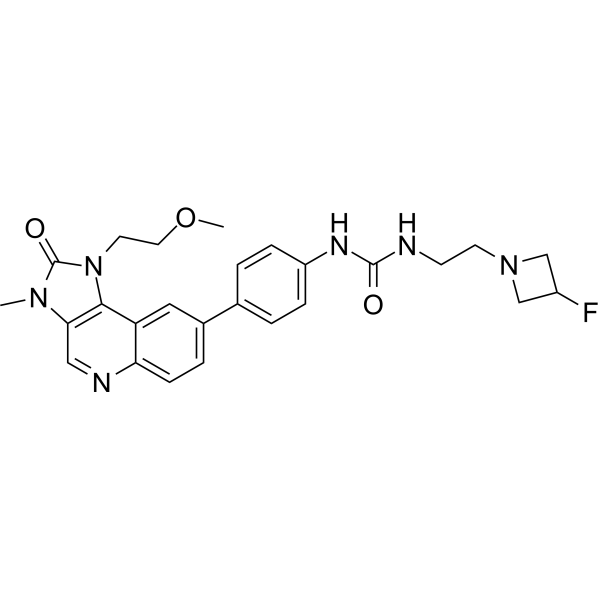
    ATM Inhibitor-4 (compound 39) is a potent and selective ATM inhibitor, with an IC50 of 0.32 nM. ATM Inhibitor-4 shows stronger inhibition of PI3K kinases family. ATM Inhibitor-4 shows a full inhibition of mTOR at 1 μM. ATM Inhibitor-4 exhibits favorable metabolic stability.
    ATM Inhibitor-4
  • HY-N0107R
    Cyclovirobuxine D (Standard)
    Inhibitor
    Cyclovirobuxine D (Standard) is the analytical standard of Cyclovirobuxine D. This product is intended for research and analytical applications. Cyclovirobuxine D (CVB-D) is the main active component of the traditional Chinese medicine Buxus microphylla. Cyclovirobuxine D induces autophagy and attenuates the phosphorylation of Akt and mTOR. Cyclovirobuxine D inhibits cell proliferation of gastric cancer cells through suppression of cell cycle progression and inducement of mitochondria-mediated apoptosis. Cyclovirobuxine D is beneficial for heart failure induced by myocardial infarction.
    Cyclovirobuxine D (Standard)
  • HY-101349A
    L 741742 hydrochloride
    Inhibitor
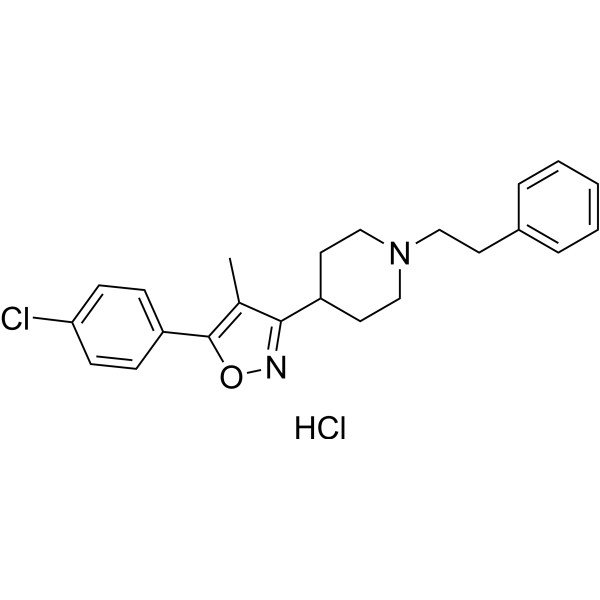
    L 741742 hydrochloride is a highly selective and brain-penetrant D4 dopamine receptor antagonist, with Ki values of 3.5 nM, 770 nM and >1700 nM for human D4, D3 and D2 receptors, respectively. L 741742 hydrochloride suppresses PDGFRβ, ERK1/2, and mTOR signaling pathways, and impairs autophagic flux while disrupting lysosomal function.L 741742 hydrochloride induces G0/G1 cell-cycle arrest and apoptosis, promotes neuronal differentiation of normal human neural stem cells, selectively inhibits growth and clonogenic potential of glioblastoma neural stem cells and primary glioblastoma tumor cells, exerts synergistic effects with Temozolomide (TMZ) (HY-17364) against glioblastoma neural stem cells in vitro, and inhibits glioblastoma neural stem cell xenograft growth in immunocompromised mice. L 741742 hydrochloride can be used for the research of schizophrenia and glioblastoma.
    L 741742 hydrochloride
Cat. No. Product Name / Synonyms Application Reactivity

The mammalian target of rapamycin (mTOR) signaling pathway integrates both intracellular and extracellular signals and serves as a central regulator of cell metabolism, growth, proliferation and survival[1]. mTOR is the catalytic subunit of two distinct complexes called mTORC1 and mTORC2. mTORC1 comprises DEPTOR, PRAS40, RAPTOR, mLST8, mTOR, whereas mTORC2 comprises DEPTOR, mLST8, PROTOR, RICTOR, mSIN1, mTOR[2]. Rapamycin binds to FKBP12 and inhibits mTORC1 by disrupting the interaction between mTOR and RAPTOR. mTORC1 negatively regulates autophagy through multiple inputs, including inhibitory phosphorylation of ULK1 and TFEB. mTORC1 promotes protein synthesis through activation of the translation initiation promoter S6K and through inhibition of the inhibitory mRNA cap binding 4E-BP1, and regulates glycolysis through HIF-1α. It promotes de novo lipid synthesis through the SREBP transcription factors. mTORC2 inhibits FOXO1,3 through SGK and Akt, which can lead to increased longevity. The complex also regulates actin cytoskeleton assembly through PKC and Rho kinase[3]


Growth factors: Growth factors can signal to mTORC1 through both PI3K-Akt and Ras-Raf-MEK-ERK axis. For example, ERK and RSK phosphorylate TSC2, and inhibit it.


Insulin Receptor: The activated insulin receptor recruits intracellular adaptor protein IRS1. Phosphorylation of these proteins on tyrosine residues by the insulin receptor initiates the recruitment and activation of PI3K. PIP3 acts as a second messenger which promotes the phosphorylation of Akt and triggers the Akt-dependent multisite phosphorylation of TSC2. TSC is a heterotrimeric complex comprised of TSC1, TSC2, and TBC1D7, and functions as a GTPase activating protein (GAP) for the small GTPase Rheb, which directly binds and activates mTORC1. mTORC2 primarily functions as an effector of insulin/PI3K signaling. 


Wnt: The Wnt pathway activates mTORC1. Glycogen synthase kinase 3β (GSK-3β) acts as a negative regulator of mTORC1 by phosphorylating TSC2. mTORC2 is activated by Wnt in a manner dependent on the small GTPase RAC1[4].


Amino acids: mTORC1 senses both lysosomal and cytosolic amino acids through distinct mechanisms. Amino acids induce the movement of mTORC1 to lysosomal membranes, where the Rag proteins reside. A complex named Ragulator, interact with the Rag GTPases, recruits them to lysosomes through a mechanism dependent on the lysosomal v-ATPase, and is essential for mTORC1 activation. In turn, lysosomal recruitment enables mTORC1 to interact with GTP-bound RHEB, the end point of growth factor. Cytosolic leucine and arginine signal to mTORC1 through a distinct pathway comprised of the GATOR1 and GATOR2 complexes.    


Stresses: mTORC1 responds to intracellular and environmental stresses that are incompatible with growth such as low ATP levels, hypoxia, or DNA damage. A reduction in cellular energy charge, for example during glucose deprivation, activates the stress responsive metabolic regulator AMPK, which inhibits mTORC1 both indirectly, through phosphorylation and activation of TSC2, as well as directly through the phosphorylation of RAPTOR. Sestrin1/2 are two transcriptional targets of p53 that are implicated in the DNA damage response, and they potently activate AMPK, thus mediating the p53-dependent suppression of mTOR activity upon DNA damage. During hypoxia, mitochondrial respiration is impaired, leading to low ATP levels and activation of AMPK. Hypoxia also affects mTORC1 in AMPK-independent ways by inducing the expression of REDD1, the protein products of which then suppress mTORC1 by promoting the assembly of TSC1-TSC2[2].


Reference:

[1]. Laplante M, et al.mTOR signaling at a glance.J Cell Sci. 2009 Oct 15;122(Pt 20):3589-94. 
[2]. Zoncu R, et al. mTOR: from growth signal integration to cancer, diabetes and ageing.Nat Rev Mol Cell Biol. 2011 Jan;12(1):21-35. 
[3]. Johnson SC, et al. mTOR is a key modulator of ageing and age-related disease.Nature. 2013 Jan 17;493(7432):338-45.
[4]. Shimobayashi M, et al. Making new contacts: the mTOR network in metabolism and signalling crosstalk.Nat Rev Mol Cell Biol. 2014 Mar;15(3):155-62.

Your Search Returned No Results.

Sorry. There is currently no product that acts on isoform together.

Please try each isoform separately.