Search Result
Results for "
CXCR4+antagonist
" in MedChemExpress (MCE) Product Catalog:
1
Isotope-Labeled Compounds
| Cat. No. |
Product Name |
Target |
Research Areas |
Chemical Structure |
-
- HY-10046
-
Plerixafor
Maximum Cited Publications
102 Publications Verification
AMD 3100; JM3100; SID791
|
CXCR
HIV
|
Infection
Inflammation/Immunology
Endocrinology
Cancer
|
|
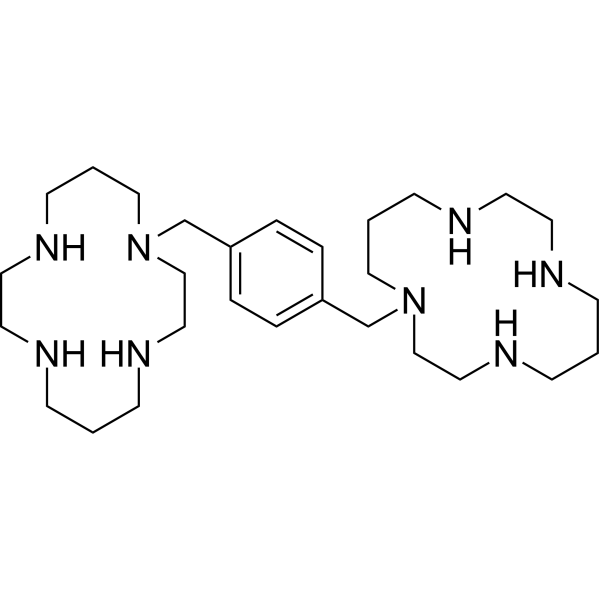
Plerixafor (AMD 3100) is a selective CXCR4 antagonist with an IC50 of 44 nM. Plerixafor, an immunostimulant and a hematopoietic stem cell (HSC) mobilizer, is an allosteric agonist of CXCR7. Plerixafor inhibits HIV-1 and HIV-2 replication with an EC50 of 1-10 nM [4] .
|
-
-
- HY-50912
-
-
-
- HY-12488
-
LY2510924
Maximum Cited Publications
13 Publications Verification
|
CXCR
|
Endocrinology
Cancer
|
|
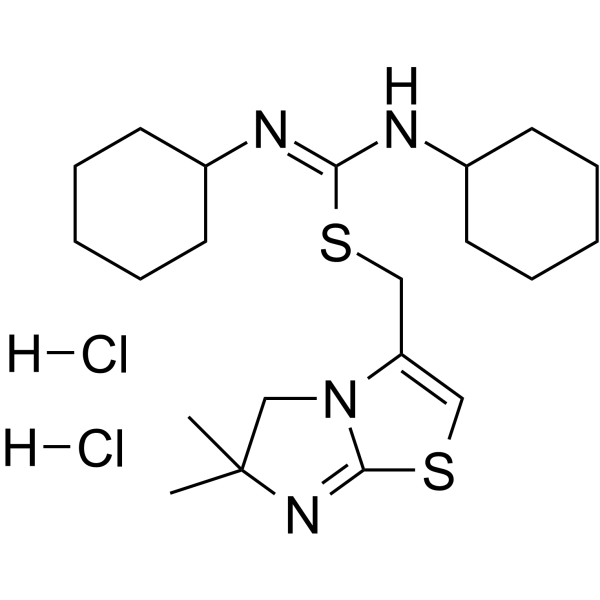
LY2510924 is a potent and selective CXCR4 antagonist that blocks SDF-1 binding to CXCR4 with an IC50 of 0.079 nM.
|
-
-
- HY-50101A
-
|
AMD-070 trihydrochloride; AMD-11070 trihydrochloride
|
CXCR
HIV
|
Infection
Endocrinology
Cancer
|
|
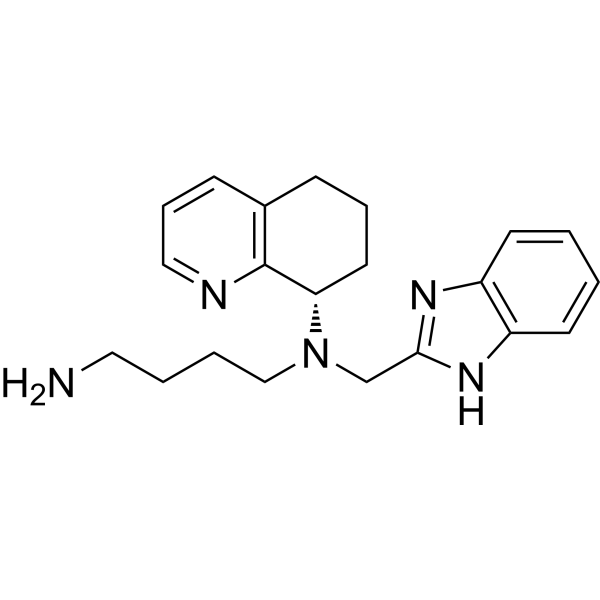
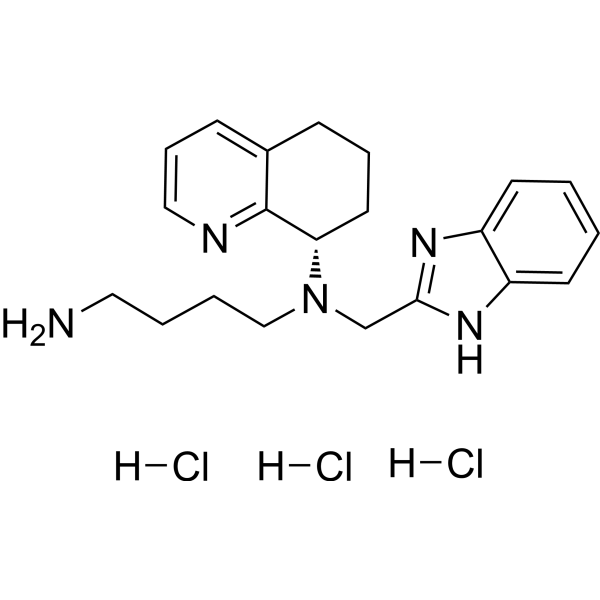
Mavorixafor trihydrochloride (AMD-070 trihydrochloride) is a potent, selective and orally available CXCR4 antagonist, with an IC50 value of 13 nM against CXCR4 125I-SDF binding, and also inhibits the replication of T-tropic HIV-1 (NL4.3 strain) in MT-4 cells and PBMCs with an IC50 of 1 and 9 nM, respectively.Mavorixafor trihydrochloride can be used for the study of WHIM syndrome .
|
-
-
- HY-50101
-
|
AMD-070; AMD-11070
|
CXCR
HIV
|
Infection
Endocrinology
Cancer
|
|
Mavorixafor (AMD-070) is a potent, selective and orally available CXCR4 antagonist, with an IC50 value of 13 nM against CXCR4 125I-SDF binding, and also inhibits the replication of T-tropic HIV-1 (NL4.3 strain) in MT-4 cells and PBMCs with an IC50 of 1 and 9 nM, respectively. Mavorixafor can be used for the study of WHIM syndrome .
|
-
-
- HY-P0171
-
|
BKT140 (4-fluorobenzoyl); BL-8040; TF14016
|
CXCR
|
Endocrinology
Cancer
|
|
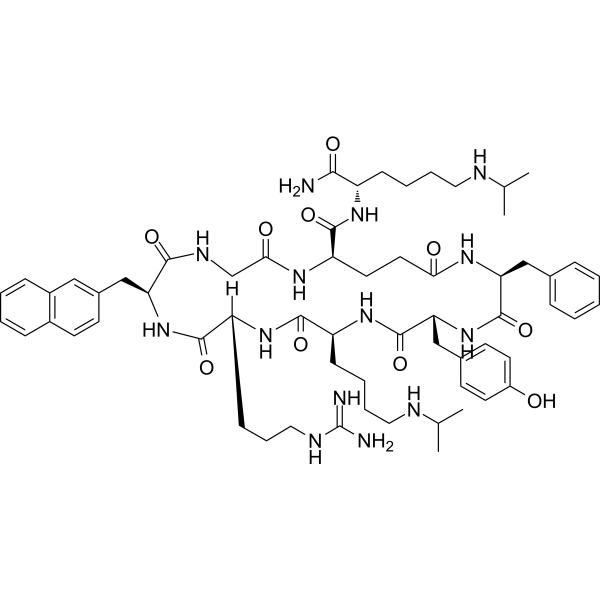
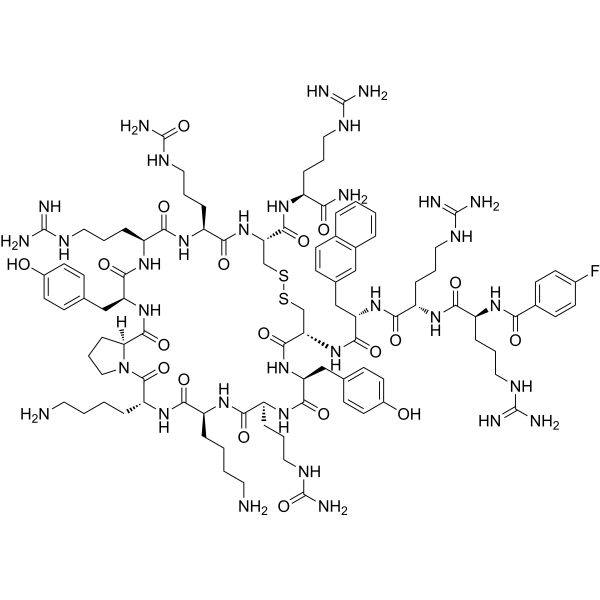
Motixafortide (BKT140 4-fluorobenzoyl) is a novel CXCR4 antagonist with an IC50 vakue of ~1 nM.
|
-
-
- HY-101458A
-
-
-
- HY-P1103
-
|
|
CXCR
|
Cancer
|
|
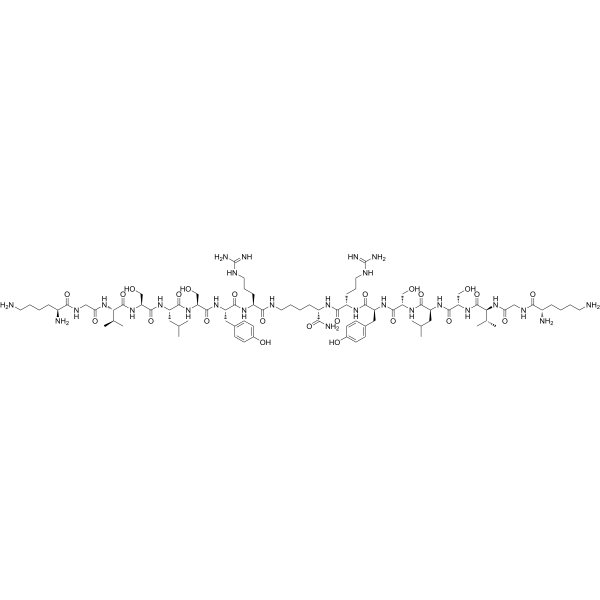
CTCE-9908 is a potent and selective CXCR4 antagonist. CTCE-9908 induces mitotic catastrophe, cytotoxicity and inhibits migration in CXCR4-expressing ovarian cancer cells .
|
-
-
- HY-P1102
-
TC14012
4 Publications Verification
|
CXCR
HIV
|
Infection
Cancer
|
|
TC14012, a serum-stable derivative of T140, is a selective and peptidomimetic CXCR4 antagonist with an IC50 of 19.3 nM. TC14012 is a potent CXCR7 agonist with an EC50 of 350 nM for recruiting β-arrestin 2 to CXCR7. TC14012 has anti-HIV activity and anti-cancer activity .
|
-
-
- HY-50101C
-
|
AMD-070 hydrochloride; AMD-11070 hydrochloride
|
CXCR
HIV
|
Infection
Cancer
|
|
Mavorixafor (AMD-070) hydrochloride is a potent, selective and orally available CXCR4 antagonist, with an IC50 value of 13 nM against CXCR4 125I-SDF binding. Mavorixafor hydrochloride also inhibits the replication of T-tropic HIV-1 (NL4.3 strain) in MT-4 cells and PBMCs with an IC50 of 1 nM and 9 nM, respectively. Mavorixafor hydrochloride can be used for the study of WHIM syndrome .
|
-
-
- HY-P1682A
-
|
POL6326 TFA
|
CXCR
Arrestin
|
Cancer
|
|
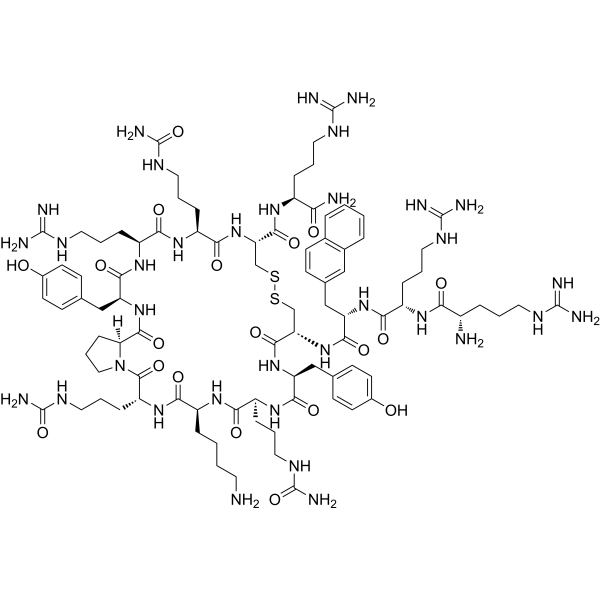
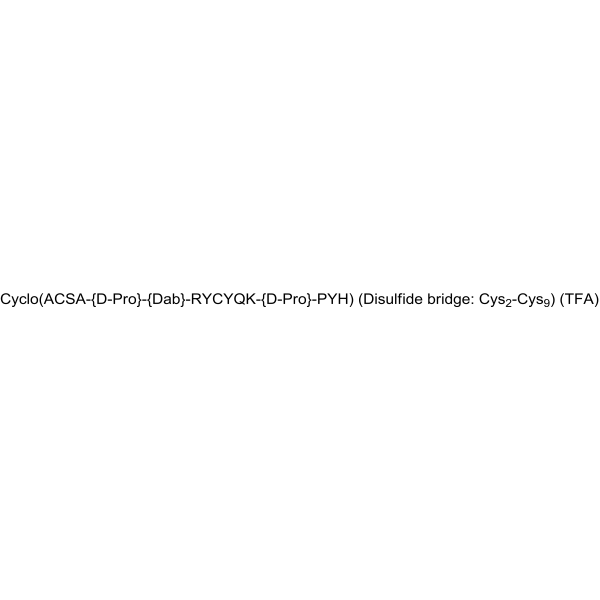
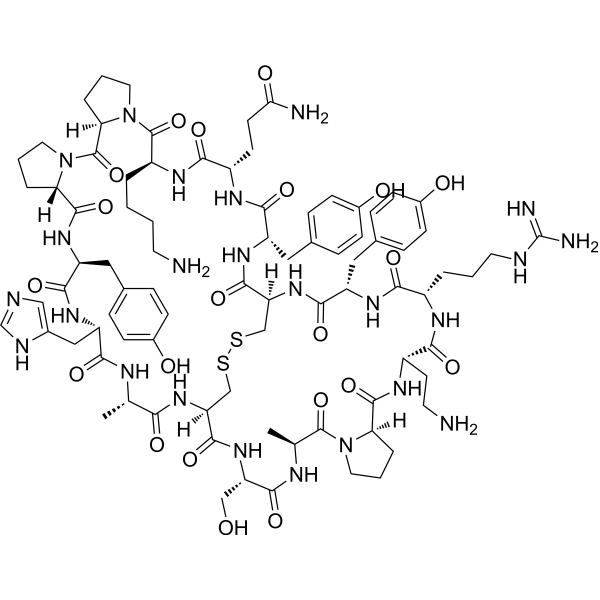
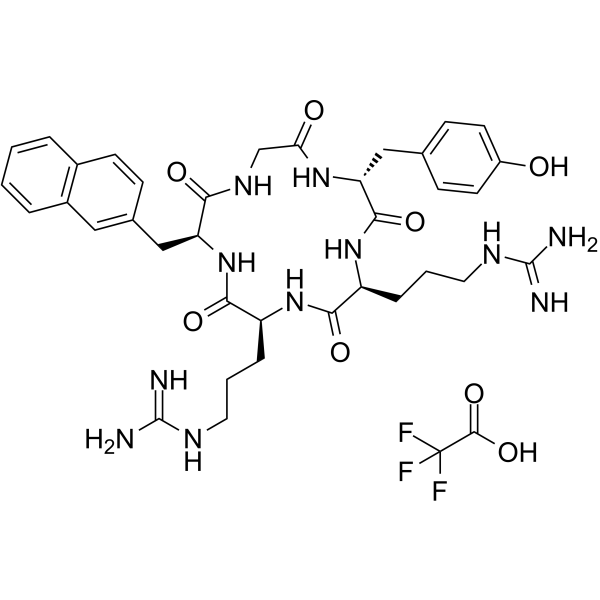
Balixafortide TFA (POL6326 TFA) is a potent, selective, well-tolerated peptidic CXCR4 antagonist with an IC50 < 10 nM. Balixafortide TFA shows 1000-fold selective for CXCR4 than a large panel of receptors including CXCR7. Balixafortide TFA blocks β-arrestin recruitment and calcium flux with IC50s < 10 nM. Balixafortide TFA is also a potent hematopoietic stem and progenitor cell (HSPC) mobilizing agent. Anti-cancer effects .
|
-
-
- HY-19867A
-
|
TG-0054 hydrobromide
|
CXCR
|
Cardiovascular Disease
Cancer
|
|
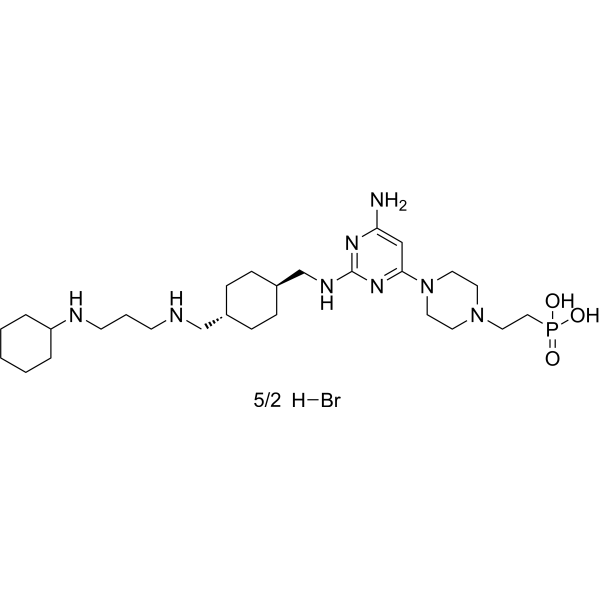
Burixafor (TG-0054) hydrobromide is a potent CXCR4 antagonist with a pIC50 of 7.4. Burixafor hydrobromide inhibits the binding of CXCL12 to CXCR4, antagonizes CXCL12-induced recruitment of Gαᵢ and β-arrestin2, and blocks the downstream Gαᵢ-mediated inhibitory effect on cAMP signal transduction. Burixafor hydrobromide mobilizes CD34 + hematopoietic stem/progenitor cells (HSPC) from the bone marrow to the peripheral blood. Burixafor hydrobromide can be used for research on autologous hematopoietic stem cell transplantation (ASCT) .
|
-
-
- HY-P1104A
-
|
|
CXCR
HIV
|
Infection
|
|
FC131 TFA is a CXCR4 antagonist, inhibits [ 125I]-SDF-1 binding to CXCR4, with an IC50 of 4.5 nM. Anti-HIV activity .
|
-
-
- HY-P1682
-
|
POL6326
|
CXCR
Arrestin
|
Cancer
|
|
Balixafortide (POL6326) is a potent, selective, well-tolerated peptidic CXCR4 antagonist with an IC50 < 10 nM. Balixafortide shows 1000-fold selective for CXCR4 than a large panel of receptors including CXCR7. Balixafortide blocks β-arrestin recruitment and calcium flux with IC50s < 10 nM. Balixafortide is also a potent hematopoietic stem and progenitor cell (HSPC) mobilizing agent. Anti-cancer effects .
|
-
-
- HY-P4111
-
|
|
CXCR
|
Inflammation/Immunology
Cancer
|
|
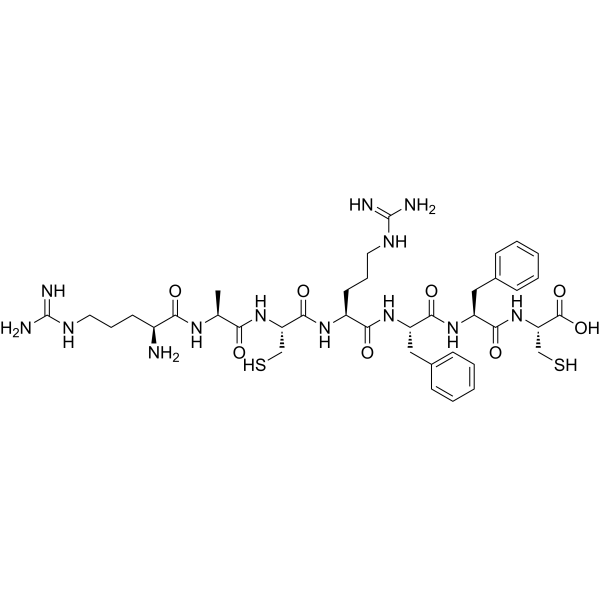
Peptide R is a cyclic peptide and a specific CXCR4 antagonist. Peptide R exhibits excellent ability to effectively remodel tumor stroma. Peptide R has potential for use in tumor research .
|
-
-
- HY-146401
-
|
|
CXCR
|
Cancer
|
|
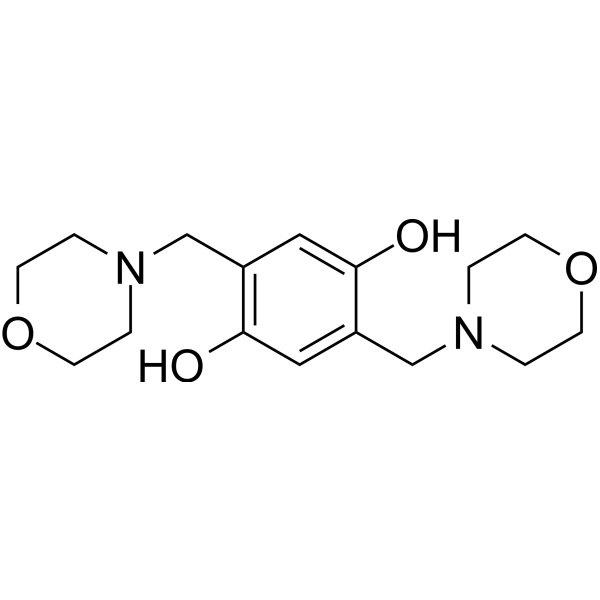
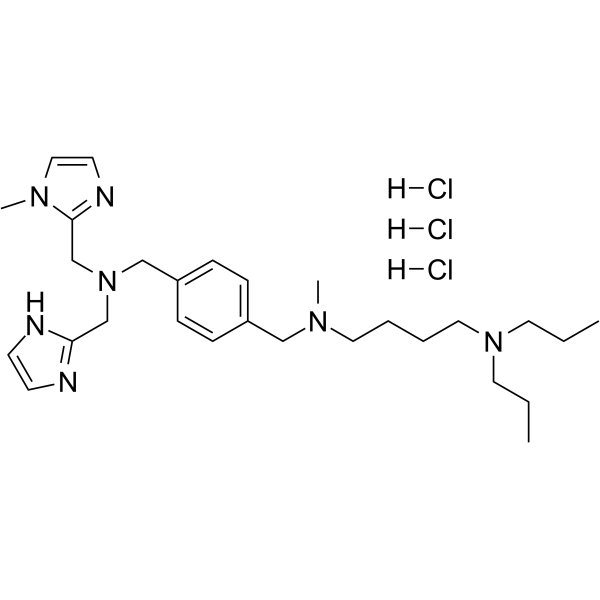
CXCR4 antagonist 6 (compound 46) is a potent CXCR4 antagonist with an IC50 value of 79 nM. CXCR4 antagonist 6 inhibits CXCL12 induced cytosolic calcium flux (IC50 = 0.25 nM). CXCR4 antagonist 6 significantly mitigates CXCL12/CXCR4 mediated cell migration. CXCR4 antagonist 6 exhibits marked efficacy in a cancer metastasis model in mice .
|
-
-
- HY-168531
-
|
|
CXCR
|
Cancer
|
|
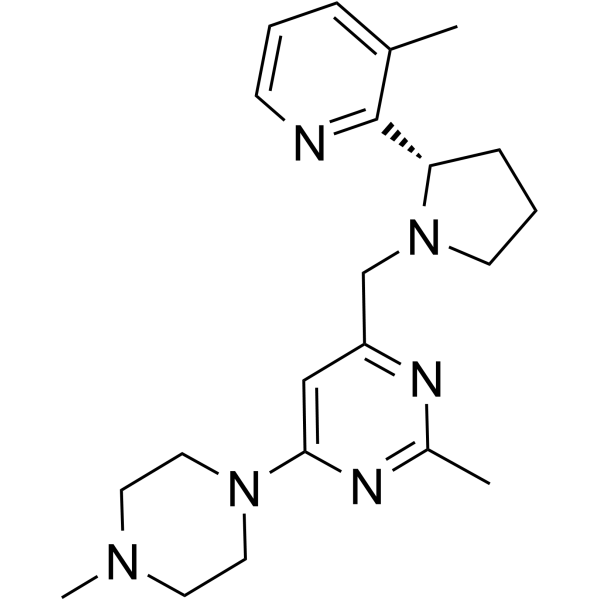
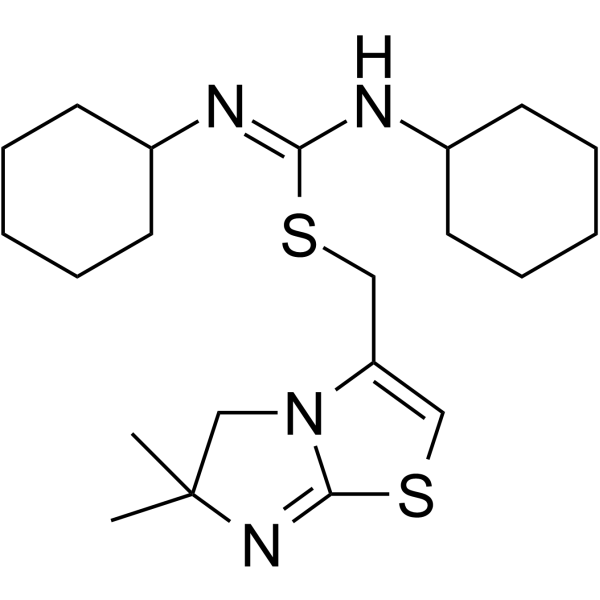
EMU-116 is an orally active CXCR4 antagonist. EMU-116 can be used in the study of cancer .
|
-
-
- HY-101458
-
-
-
- HY-122058A
-
|
|
CXCR
HIV
|
Infection
Inflammation/Immunology
|
|
KRH-3955 hydrochloride is an orally bioavailable CXCR4 antagonist. KRH-3955 hydrochloride inhibits SDF-1α binding to CXCR4 with an IC50 of 0.61 nM. KRH-3955 hydrochloride is also a highly potent and selective inhibitor of X4 HIV-1, with an EC50 of 0.3 to 1.0 nM .
|
-
-
- HY-136437
-
|
|
CXCR
HIV
|
Infection
|
|
CXCR4 antagonist 1 is a potent CXCR4 antagonist. CXCR4 antagonist 1 has anti-HIV activity .
|
-
-
- HY-147979
-
|
|
CXCR
|
Infection
Cancer
|
|
CXCR4 antagonist 9 (Compound 2) is a CXCR4 antagonist with an IC50 of 15 nM. CXCR4 antagonist 9 inhibits CXCL12 induced cytosolic calcium increase with an IC50 of 1.3 nM .
|
-
-
- HY-147808
-
|
|
CXCR
HIV
|
Infection
Inflammation/Immunology
Cancer
|
|
CXCR4 antagonist 7 (Compound PARA-B) is a CXCR4 antagonist with the IC50 of 9.3 nM. CXCR4 antagonist 7 can be used for the research of HIV infection, inflammatory diseases, cancer, and WHIM syndrome .
|
-
-
- HY-144286
-
|
|
CXCR
|
Infection
|
|
CXCR4 antagonist 3 (compound 12a) is a potent antagonist of CXCR4 with an IC50 of 11 nM. CXCR4 antagonist 3 is a congener of TIQ15. CXCR4 antagonist 3 demonstrates the best overall properties including CXCR4 antagonism, CYP 2D6 inhibition, metabolic stability, and permeability. CXCR4 antagonist 3 has the potential for the research of human immunodeficiency virus .
|
-
-
- HY-168095
-
|
|
CXCR
|
Cancer
|
|
CXCR4 antagonist 10 (compound 21) is a potent antagonist of CXCR4, with the IC50 of 7.8 nM. CXCR4 antagonist 10 plays an important role in cancer research .
|
-
-
- HY-103009
-
MSX-127
1 Publications Verification
|
CXCR
|
Cancer
|
|
MSX-127 is a CXCR4 antagonist. MSX-127 inhibits cancer metastasis .
|
-
-
- HY-103010
-
|
|
CXCR
|
Cancer
|
|
MSX-130 is a CXCR4 antagonist. MSX-130 inhibits cancer metastasis .
|
-
-
- HY-123819
-
|
|
CXCR
|
Infection
|
|
KRH-1636 is a CXC chemokine receptor (CXCR) 4 antagonist. KRH-1636 can be used in HIV-1 research .
|
-
-
- HY-144285
-
|
|
CXCR
HIV
|
Inflammation/Immunology
|
|
CXCR4 antagonist 4 is a potent, orally active CXCR4 antagonist (IC50=24 nM) with diminished CYP 2D6 activity, improved PAMPA permeability, potent inhibition of human immunodeficiency virus entry (IC50=7 nM) .
|
-
-
- HY-P1104
-
|
|
CXCR
HIV
|
Infection
|
|
FC131 is a potent CXCR4 antagonist. FC131 inhibits [ 125I]-SDF-1 binding to CXCR4 with an IC50 of 4.5 nM. FC131 has anti-HIV activity .
|
-
-
- HY-146413
-
|
|
CXCR
HIV
|
Infection
Cancer
|
|
HF50731 (compound 21) is a potent CXCR4 antagonist. HF50731 shows strong CXCR4 binding affinity, with IC50 of 19.8 nM. HF50731 effectively inhibits calcium mobilization, cell migration, and HIV-1 infection via CXCR4 coreceptor, with IC50 values of 119.2 nM, 621.4 nM and 1.5 μM .
|
-
-
- HY-10046S
-
-
-
- HY-P11011
-
|
Pep R54; CXCR4 antagonist peptide 19
|
CXCR
|
Cancer
|
|
Peptide R54 (Pep R54; CXCR4 antagonist peptide 19) is an antagonistic peptide targeting CXCR4 with significant anticancer activity. Peptide R54 inhibits CXCR4-dependent cell migration, epithelial-mesenchymal transition, and lung metastasis development, with better serum stability and higher CXCR4 affinity than the lead compound (IC50=20 nM). Peptide R54 synergizes with anti-PD-1 therapy to exert anti-tumor activity in vivo, enhances granzyme activity, and reduces infiltration of Foxp3 cells. Peptide R54 can be used in the study of colon cancer, ovarian cancer, and melanoma .
|
-
-
- HY-132936
-
|
|
CXCR
|
Others
|
|
CXCR4 antagonist 2 is a CXCR4 antagonist with an IC50 value of 47 nM.
|
-
-
- HY-147978
-
|
|
CXCR
|
Infection
Cancer
|
|
CXCR4 antagonist 8 (Compound 3) is a CXCR4 antagonist with an IC50 of 57 nM. CXCR4 antagonist 8 inhibits CXCL12 induced cytosolic calcium increase with an IC50 of 0.24 nM. CXCR4 antagonist 8 inhibits CXLC12/CXCR4 mediated cell migration .
|
-
-
- HY-146372
-
|
|
CXCR
|
Cancer
|
|
CXCR4 antagonist 5 (compound 23) is a highly potent CXCR4 antagonist with an IC50 value of 8.8 nM. CXCR4 antagonist 5 can inhibit CXCL12-induced cytosolic calcium increase (IC50 = 0.02 nM) and inhibits CXCR4/CXLC12-mediated chemotaxis. CXCR4 antagonist 5 has good physicochemical properties and in vitro safety profiles, inhibiting CYP isozymes and hERG marginally or moderately .
|
-
-
- HY-111224
-
|
|
HIV
CXCR
|
Infection
|
|
GSK812397 is a CXCR4 antagonist with potential for the treatment of HIV infection. To evaluate the clinical potential of GSK812397, kilogram-scale agent candidates are needed. Here, an improved, scalable synthetic route for the CXCR4 antagonist GSK812397 is described. This new route has been scaled up in a 50-liter stationary facility to obtain 1.2 kg of agent substance in 20% overall yield and >99% chemical and enantiomeric purity in five steps. CXC chemokine receptor 4 (CXCR4) is a 7-transmembrane protein that functions in part as a host co-receptor for multiple strains of HIV-1. It is thought that targeting CXCR4 will help inhibit the replication of several late cytopathic viruses; therefore, CXCR4 antagonists are one of the most promising new classes of experimental anti-HIV agents. GSK812397 is a potent CXCR4 antagonist and is therefore a candidate for investigation for the treatment of HIV infection.
|
-
-
- HY-50912R
-
|
AMD3100 octahydrochloride (Standard); JM3100 octahydrochloride (Standard); SID791 octahydrochloride (Standard)
|
CXCR
HIV
Virus Protease
Reference Standards
|
Inflammation/Immunology
Endocrinology
Cancer
|
|
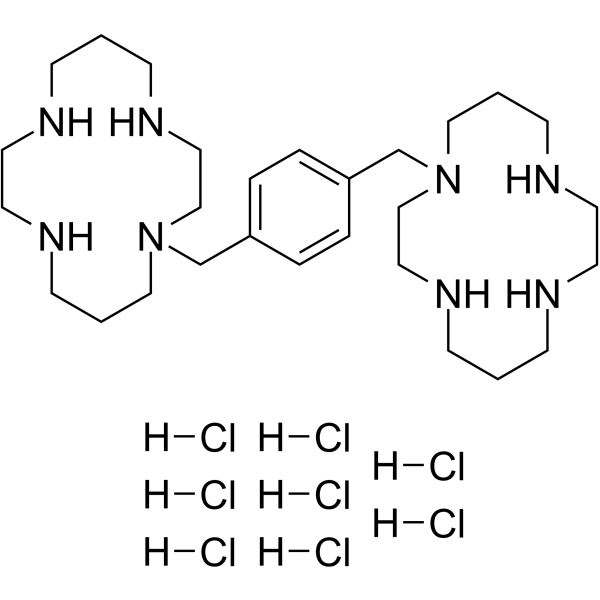
Plerixafor (octahydrochloride) (Standard) is the analytical standard of Plerixafor (octahydrochloride). This product is intended for research and analytical applications. Plerixafor octahydrochloride (AMD3100 octahydrochloride) is a selective CXCR4 antagonist with an IC50 of 44 nM.
|
-
-
- HY-P1103A
-
|
|
CXCR
|
Cancer
|
|
CTCE-9908 TFA is a potent and selective CXCR4 antagonist. CTCE-9908 TFA induces mitotic catastrophe, cytotoxicity and inhibits migration in CXCR4-expressing ovarian cancer cells .
|
-
-
- HY-P4111A
-
|
|
CXCR
|
Cancer
|
|
Peptide R (TFA) is a synthetic and specific CXCR4 antagonist. Peptide R (TFA) shows outstanding capacities to remodel the tumor stroma. Peptide R (TFA) can be used for solid tumor (glioblastoma, etc.) research .
|
-
-
- HY-115493
-
|
|
CXCR
|
Others
|
|
TIQ-15 is a potent CXCR4 antagonist with an IC50 value of 6 nM for CXCR4 Ca 2+ flux. TIQ-15 inhibits CYP450 2D6 with an IC50 value of 0.32 μM .
|
-
-
- HY-129094
-
|
|
CXCR
|
Cancer
|
|
ICT5040 is a small molecule CXCR4 antagonist (IC50=3.8 μM). ICT5040 inhibits CXCL12-mediated proliferation and migration, and suppresses CXCL12-induced intracellular calcium mobilisation in U87 glioma cells .
|
-
-
- HY-P1102A
-
|
|
CXCR
HIV
|
Infection
Cancer
|
|
TC14012 TFA, a serum-stable derivative of T140, is a selective and peptidomimetic CXCR4 antagonist with an IC50 of 19.3 nM. TC14012 TFA is a potent CXCR7 agonist with an EC50 of 350 nM for recruiting β-arrestin 2 to CXCR7. TC14012 TFA has anti-HIV activity and anti-cancer activity .
|
-
-
- HY-10046R
-
|
AMD 3100 (Standard); JM3100 (Standard); SID791 (Standard)
|
Reference Standards
CXCR
HIV
|
Infection
Inflammation/Immunology
Endocrinology
Cancer
|
|
Plerixafor (Standard) is the analytical standard of Plerixafor. This product is intended for research and analytical applications. Plerixafor (AMD 3100) is a selective CXCR4 antagonist with an IC50 of 44 nM. Plerixafor, an immunostimulant and a hematopoietic stem cell (HSC) mobilizer, is an allosteric agonist of CXCR7. Plerixafor inhibits HIV-1 and HIV-2 replication with an EC50 of 1-10 nM [4] .
|
-
-
- HY-P10973
-
|
|
CXCR
ERK
|
Cancer
|
|
Peptide R analogue 10 (compound 10) is an analog of the CXCR4 antagonist peptide Peptide R (HY-P4111) with stronger antagonistic potency, specificity and plasma stability. Peptide R analogue 10 can inhibit CXCL12-mediated cell migration, ERK phosphorylation and CXCR4 internalization. Peptide R analogue 10 can be used in the study of CXCR4 overexpressing leukemia and colon cancer .
|
-
-
- HY-122058
-
|
|
HIV
|
Infection
|
|
KRH-3955 is a CXCR4 antagonist with good bioavailability and potent anti-HIV-1 activity. KRH-3955 can effectively inhibit the replication of X4 HIV-1, including clinical isolates from different donors. KRH-3955 also shows activity against recombinant X4 HIV-1 containing reverse transcriptase, protease and tyrosinase resistance mutations. KRH-3955 can inhibit the binding of SDF-1alpha to CXCR4 and calcium ion signaling through this receptor. KRH-3955 inhibits the binding of an antibody against CXCR4 to CXCR4, showing a potent antagonistic effect on CXCR4. KRH-3955 shows an oral bioavailability of 25.6% in rats and can inhibit the replication of X4 HIV-1 in vivo .
|
-
-
- HY-P11011A
-
|
Pep R54 acetate; CXCR4 antagonist peptide 19 acetate
|
CXCR
ERK
Akt
|
Cancer
|
|
Peptide R54 acetate (Pep R54 acetate) is a CXCR4 antagonist. Peptide R54 acetate inhibits CXCL12-dependent activation of pERK1/2 and pAKT. The combination of Peptide R54 acetate and Nivolumab (HY-P9903) suppresses melanoma growth. Peptide R54 (acetate) is applicable to research related to melanoma and ovarian cancer .
|
-
-
- HY-103009R
-
|
|
Reference Standards
CXCR
|
Cancer
|
|
MSX-127 (Standard) is the analytical standard of MSX-127 (HY-103009). This product is intended for research and analytical applications. MSX-127 is a CXCR4 antagonist. MSX-127 inhibits cancer metastasis .
|
-
-
- HY-103010R
-
|
|
Reference Standards
CXCR
|
Cancer
|
|
MSX-130 (Standard) is the analytical standard of MSX-130 (HY-103010). This product is intended for research and analytical applications. MSX-130 is a CXCR4 antagonist. MSX-130 inhibits cancer metastasis .
|
-
-
- HY-101458AR
-
|
|
CXCR
Reference Standards
HIV
|
Inflammation/Immunology
Endocrinology
Cancer
|
|
IT1t (dihydrochloride) (Standard) is the analytical standard of IT1t (dihydrochloride) (HY-101458A). This product is intended for research and analytical applications. IT1t dihydrochloride is a potent CXCR4 antagonist; inhibits CXCL12/CXCR4 interaction with an IC50 of 2.1 nM.
|
-
-
- HY-P992405
-
|
|
CXCR
|
Cancer
|
|
MEDI-3185 is a potent CXCR4 antagonist. MEDI-3185 binds CXCR4 via CDR3H and ECL2 β-strand/β-strand interaction, blocks SDF-1 access and displaces SDF-1. MEDI-3185 can be used for the research of hematologic tumors, ovarian tumors .
|
-
- HY-19867
-
|
TG-0054
|
CXCR
|
Cancer
|
|
Burixafor (TG-0054) is a potent CXCR4 antagonist with a pIC50 of 7.4. Burixafor inhibits the binding of CXCL12 to CXCR4, antagonizes CXCL12-induced recruitment of Gαᵢ and β-arrestin2, and blocks the downstream Gαᵢ-mediated inhibitory effect on cAMP signal transduction. Burixafor mobilizes CD34 + hematopoietic stem/progenitor cells (HSPC) from the bone marrow to the peripheral blood. Burixafor can be used for research on autologous hematopoietic stem cell transplantation (ASCT) .
|
-
| Cat. No. |
Product Name |
Target |
Research Area |
-
- HY-12488
-
LY2510924
Maximum Cited Publications
13 Publications Verification
|
CXCR
|
Endocrinology
Cancer
|
|
LY2510924 is a potent and selective CXCR4 antagonist that blocks SDF-1 binding to CXCR4 with an IC50 of 0.079 nM.
|
-
- HY-P0171
-
|
BKT140 (4-fluorobenzoyl); BL-8040; TF14016
|
CXCR
|
Endocrinology
Cancer
|
|
Motixafortide (BKT140 4-fluorobenzoyl) is a novel CXCR4 antagonist with an IC50 vakue of ~1 nM.
|
-
- HY-P1103
-
|
|
CXCR
|
Cancer
|
|
CTCE-9908 is a potent and selective CXCR4 antagonist. CTCE-9908 induces mitotic catastrophe, cytotoxicity and inhibits migration in CXCR4-expressing ovarian cancer cells .
|
-
- HY-P1102
-
TC14012
4 Publications Verification
|
CXCR
HIV
|
Infection
Cancer
|
|
TC14012, a serum-stable derivative of T140, is a selective and peptidomimetic CXCR4 antagonist with an IC50 of 19.3 nM. TC14012 is a potent CXCR7 agonist with an EC50 of 350 nM for recruiting β-arrestin 2 to CXCR7. TC14012 has anti-HIV activity and anti-cancer activity .
|
-
- HY-P1682A
-
|
POL6326 TFA
|
CXCR
Arrestin
|
Cancer
|
|
Balixafortide TFA (POL6326 TFA) is a potent, selective, well-tolerated peptidic CXCR4 antagonist with an IC50 < 10 nM. Balixafortide TFA shows 1000-fold selective for CXCR4 than a large panel of receptors including CXCR7. Balixafortide TFA blocks β-arrestin recruitment and calcium flux with IC50s < 10 nM. Balixafortide TFA is also a potent hematopoietic stem and progenitor cell (HSPC) mobilizing agent. Anti-cancer effects .
|
-
- HY-P1104A
-
|
|
CXCR
HIV
|
Infection
|
|
FC131 TFA is a CXCR4 antagonist, inhibits [ 125I]-SDF-1 binding to CXCR4, with an IC50 of 4.5 nM. Anti-HIV activity .
|
-
- HY-P1682
-
|
POL6326
|
CXCR
Arrestin
|
Cancer
|
|
Balixafortide (POL6326) is a potent, selective, well-tolerated peptidic CXCR4 antagonist with an IC50 < 10 nM. Balixafortide shows 1000-fold selective for CXCR4 than a large panel of receptors including CXCR7. Balixafortide blocks β-arrestin recruitment and calcium flux with IC50s < 10 nM. Balixafortide is also a potent hematopoietic stem and progenitor cell (HSPC) mobilizing agent. Anti-cancer effects .
|
-
- HY-P4111
-
|
|
CXCR
|
Inflammation/Immunology
Cancer
|
|
Peptide R is a cyclic peptide and a specific CXCR4 antagonist. Peptide R exhibits excellent ability to effectively remodel tumor stroma. Peptide R has potential for use in tumor research .
|
-
- HY-168095
-
|
|
CXCR
|
Cancer
|
|
CXCR4 antagonist 10 (compound 21) is a potent antagonist of CXCR4, with the IC50 of 7.8 nM. CXCR4 antagonist 10 plays an important role in cancer research .
|
-
- HY-144285
-
|
|
CXCR
HIV
|
Inflammation/Immunology
|
|
CXCR4 antagonist 4 is a potent, orally active CXCR4 antagonist (IC50=24 nM) with diminished CYP 2D6 activity, improved PAMPA permeability, potent inhibition of human immunodeficiency virus entry (IC50=7 nM) .
|
-
- HY-P1104
-
|
|
CXCR
HIV
|
Infection
|
|
FC131 is a potent CXCR4 antagonist. FC131 inhibits [ 125I]-SDF-1 binding to CXCR4 with an IC50 of 4.5 nM. FC131 has anti-HIV activity .
|
-
- HY-P11011
-
|
Pep R54; CXCR4 antagonist peptide 19
|
CXCR
|
Cancer
|
|
Peptide R54 (Pep R54; CXCR4 antagonist peptide 19) is an antagonistic peptide targeting CXCR4 with significant anticancer activity. Peptide R54 inhibits CXCR4-dependent cell migration, epithelial-mesenchymal transition, and lung metastasis development, with better serum stability and higher CXCR4 affinity than the lead compound (IC50=20 nM). Peptide R54 synergizes with anti-PD-1 therapy to exert anti-tumor activity in vivo, enhances granzyme activity, and reduces infiltration of Foxp3 cells. Peptide R54 can be used in the study of colon cancer, ovarian cancer, and melanoma .
|
-
- HY-P1103A
-
|
|
CXCR
|
Cancer
|
|
CTCE-9908 TFA is a potent and selective CXCR4 antagonist. CTCE-9908 TFA induces mitotic catastrophe, cytotoxicity and inhibits migration in CXCR4-expressing ovarian cancer cells .
|
-
- HY-P4111A
-
|
|
CXCR
|
Cancer
|
|
Peptide R (TFA) is a synthetic and specific CXCR4 antagonist. Peptide R (TFA) shows outstanding capacities to remodel the tumor stroma. Peptide R (TFA) can be used for solid tumor (glioblastoma, etc.) research .
|
-
- HY-P1102A
-
|
|
CXCR
HIV
|
Infection
Cancer
|
|
TC14012 TFA, a serum-stable derivative of T140, is a selective and peptidomimetic CXCR4 antagonist with an IC50 of 19.3 nM. TC14012 TFA is a potent CXCR7 agonist with an EC50 of 350 nM for recruiting β-arrestin 2 to CXCR7. TC14012 TFA has anti-HIV activity and anti-cancer activity .
|
-
- HY-P10973
-
|
|
CXCR
ERK
|
Cancer
|
|
Peptide R analogue 10 (compound 10) is an analog of the CXCR4 antagonist peptide Peptide R (HY-P4111) with stronger antagonistic potency, specificity and plasma stability. Peptide R analogue 10 can inhibit CXCL12-mediated cell migration, ERK phosphorylation and CXCR4 internalization. Peptide R analogue 10 can be used in the study of CXCR4 overexpressing leukemia and colon cancer .
|
-
- HY-P11011A
-
|
Pep R54 acetate; CXCR4 antagonist peptide 19 acetate
|
CXCR
ERK
Akt
|
Cancer
|
|
Peptide R54 acetate (Pep R54 acetate) is a CXCR4 antagonist. Peptide R54 acetate inhibits CXCL12-dependent activation of pERK1/2 and pAKT. The combination of Peptide R54 acetate and Nivolumab (HY-P9903) suppresses melanoma growth. Peptide R54 (acetate) is applicable to research related to melanoma and ovarian cancer .
|
| Cat. No. |
Product Name |
Target |
Research Area |
Image |
-
- HY-P992405
-
|
|
CXCR
|
Cancer
|
|
MEDI-3185 is a potent CXCR4 antagonist. MEDI-3185 binds CXCR4 via CDR3H and ECL2 β-strand/β-strand interaction, blocks SDF-1 access and displaces SDF-1. MEDI-3185 can be used for the research of hematologic tumors, ovarian tumors .
|
-
(5)
| Cat. No. |
Product Name |
Chemical Structure |
-
- HY-10046S
-
|
|
|
Plerixafor-d4 is the deuterium labeled Plerixafor. Plerixafor (AMD 3100) is a selective CXCR4 antagonist with an IC50 of 44 nM. Plerixafor, an immunostimulant and a hematopoietic stem cell (HSC) mobilizer, is an allosteric agonist of CXCR7. Plerixafor inhibits HIV-1 and HIV-2 replication with an EC50 of 1-10 nM [4] .
|
-
Your information is safe with us. * Required Fields.
Inquiry Information
- Product Name:
- Cat. No.:
- Quantity:
- MCE Japan Authorized Agent:

