Search Result
Results for "
Coronaviruses (CoVs)
" in MedChemExpress (MCE) Product Catalog:
2
Biochemical Assay Reagents
1
Isotope-Labeled Compounds
| Cat. No. |
Product Name |
Target |
Research Areas |
Chemical Structure |
-
- HY-135853
-
Molnupiravir
Maximum Cited Publications
71 Publications Verification
EIDD-2801; MK-4482
|
SARS-CoV
Influenza Virus
|
Infection
|
|
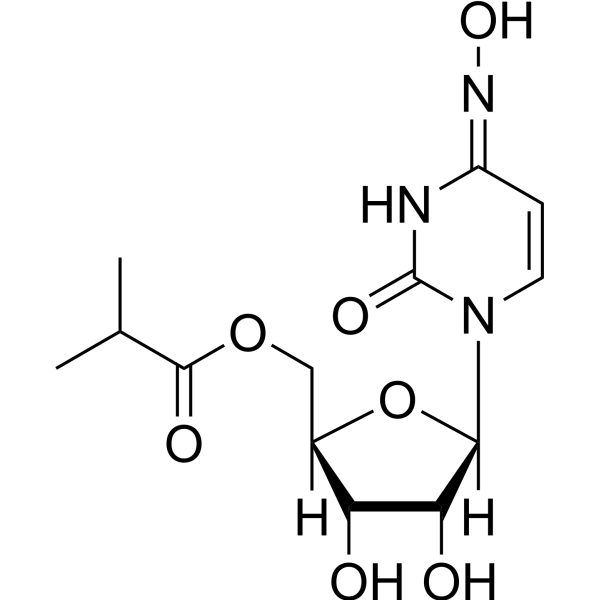
Molnupiravir (EIDD-2801) is an orally bioavailable proagent of the ribonucleoside analog EIDD-1931. Molnupiravir has broad spectrum antiviral activity against influenza virus and multiple coronaviruses, such as SARS-CoV-2, MERS-CoV, SARS-CoV. Molnupiravir has the potential for the research of COVID-19, and seasonal and pandemic influenza .
|
-
-
- HY-138794
-
XL177A
5 Publications Verification
|
Deubiquitinase
Histone Demethylase
SARS-CoV
|
Cancer
|
|
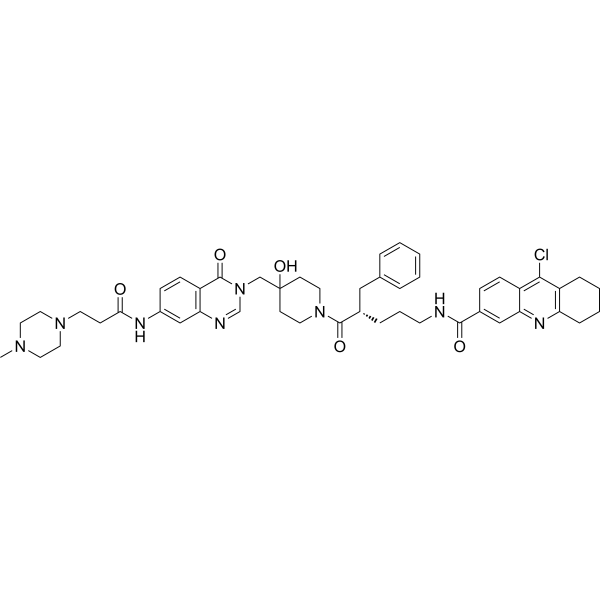
XL177A is a covalent USP7 inhibitor that blocks the deubiquitinase activity of USP7. XL177A destabilizes non-canonical PRC1 complexes or KDM6A and reduces chromatin deposition of H2AK119Ub, thereby relieving the repression of neuronal differentiation programs. Meanwhile, XL177A also regulates the ELOF1-UVSSA-USP7-nuclear β-catenin axis, decreasing the transcription levels of related proteins and the accumulation of nuclear β-catenin. XL177A exerts antiviral effects by reducing the expression levels of coronavirus receptors, and exhibits inhibitory activity against APC-mutated colorectal cancer cells, neuroblastoma, and coronaviruses including SARS-CoV-2 variants. XL177A is mainly used in studies related to colorectal cancer, neuroblastoma, and coronavirus infections .
|
-
-
- HY-P99423
-
|
ADG 20
|
SARS-CoV
|
Infection
|
|
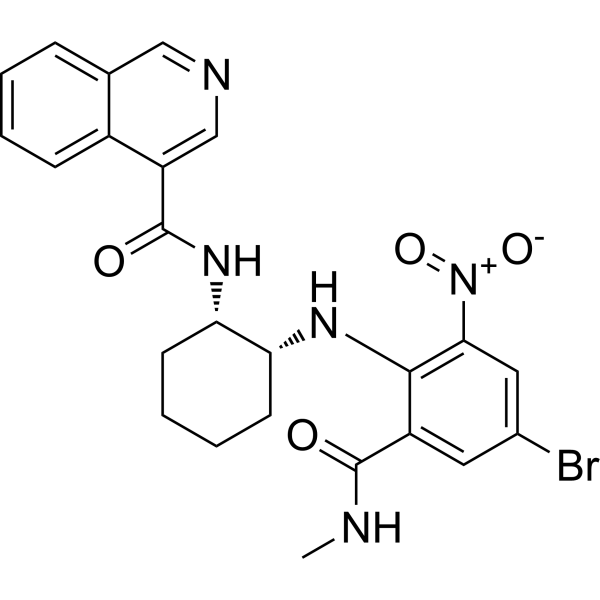
Adintrevimab (ADG 20) is a human IgG1 monoclonal SARS-CoV (SARS-CoV) antibody. Adintrevimab inhibits SARS-CoV-2 variants and other SARS-like coronaviruses with pandemic potential .
|
-

-
- HY-117813
-
|
|
Nucleoside Antimetabolite/Analog
DNA/RNA Synthesis
Dengue Virus
Flavivirus
CHIKV
SARS-CoV
|
Infection
|
|
2-Thiouridine is an orally active modified nucleobase. 2-Thiouridine stabilizes U:A base pairs and destabilizes U:G wobble base pairs. 2-Thiouridine significantly improves the efficiency and accuracy of nonenzymatic replication of mixed-sequence A/U-containing RNA templates. 2-Thiouridine exhibits antiviral activity against multiple positive-sense single-stranded RNA viruses (DENV2, ZIKV, YFV, JEV, WNV, CHIKV, human coronaviruses ( [HCoV]-229E, HCoV-OC43, SARS-CoV), and MERS-CoV) .
|
-

-
- HY-149535
-
|
WU-04
|
SARS-CoV
|
Infection
|
|
Iscartrelvir (WU-04) is a non-covalent inhibitor of SARS-CoV-2, targeting the 3CLpro protein. Iscartrelvir has high inhibitory effect on the 3CLpro protein of 6 SARS-CoV-2 variants (Alpha, Beta, Gamma, Delta, Lambda and Omicron) and 2 coronaviruses (SARS-CoV and MERS-CoV) .
|
-
-
- HY-135853S
-
|
EIDD-2801-d7; MK-4482-d7
|
SARS-CoV
Influenza Virus
|
Inflammation/Immunology
|
|
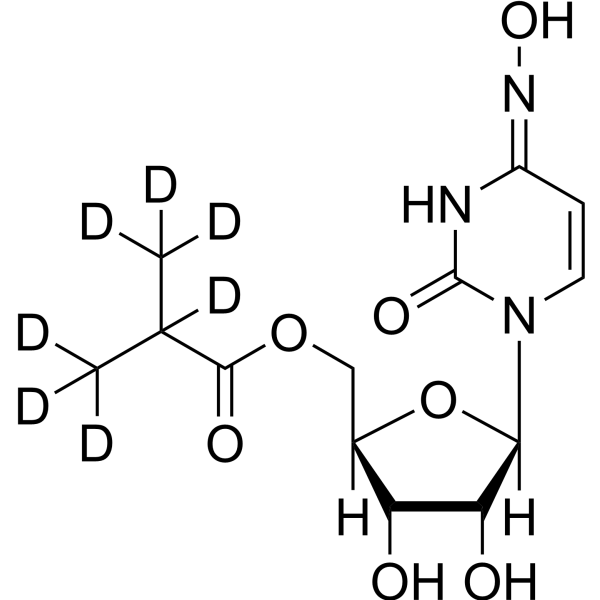
Molnupiravir-d7 is the deuterium labeled Molnupiravir. Molnupiravir (EIDD-2801) is an orally bioavailable prodrug of the ribonucleoside analog EIDD-1931. Molnupiravir has broad spectrum antiviral activity against influenza virus and multiple coronaviruses, such as SARS-CoV-2, MERS-CoV, SARS-CoV. Molnupiravir has the potential for the research of COVID-19, and seasonal and pandemic influenza .
|
-
-
- HY-N12697A
-
|
|
SARS-CoV
Virus Protease
Influenza Virus
Fungal
|
Infection
|
|
Polycarpine hydrochloride (1a) is a broad-spectrum Mpro inhibitor (IC50 = 30 nM) that can be isolated from the Polycarpa aurata and also serves as an anti-coronaviral agent. Polycarpine hydrochloride possesses antiviral and antifungal activities, with IC50 values of 30.0 nM and 0.12 μM against SARS-CoV-2 Mpro and PEDV Mpro, respectively .
|
-

-
- HY-170524
-
|
|
SARS-CoV
DNA Methyltransferase
Cytochrome P450
|
Infection
|
|
TDI-015051 is a highly selective, orally active antiviral agent that targets the coronavirus NSP14 guanine-N7 methyltransferase. TDI-015051 binds to substrates in a non-competitive manner and forms a stable ternary complex, precisely blocking the capping and methylation processes of viral mRNA. TDI-015051 potently inhibits a variety of coronaviruses (including SARS-CoV-2 and MERS). By impairing viral replication and translation and inducing a moderate type I interferon-mediated immune response, it significantly reduces pulmonary viral load and exhibits a synergistic effect with Nirmatrelvir (HY-138687). In addition, TDI-015051 does not inhibit non-coronavirus methyltransferases, and the drug-resistant mutations it induces impair viral fitness, demonstrating excellent antiviral properties and safety. TDI-015051 can be used for research on COVID-19 and the replication mechanism of coronaviruses .The IC50 values of TDI-015051 against SARS-CoV-2, α-hCoV-NL63, α-hCoV-229E, β-hCoV-MERS are 0.15 nM, 1.7 nM, 2.6 nM and 3.6 nM, respectively, and the Ka value against SARS-CoV-2 is 0.061 nM .
|
-

-
- HY-P11012
-
|
|
SARS-CoV
|
Infection
|
|
EK1 is a peptide-based fusion inhibitor of coronaviruses (CoVs) with broad spectrum inhibition to a number of CoV species. EK1 shows substantially improved pan-CoV fusion inhibitory activity. EK1 potently inhibits SARS-CoV-2. EK1 can form a stable six-helix bundle (6HB) structure with both short α-hCoV and long β-hCoV N-terminal heptad repeats .
|
-

-
- HY-163783
-
|
|
Casein Kinase
|
Infection
|
|
CSNK2-IN-1 is a potent and selective CSNK2 inhibitor with IC50 of 1.7 nM and 0.66 nM for CSNK2A1 and CSNK2A2, respectively. CSNK2-IN-1 has antiviral activity against beta-coronaviruses such as SARS-CoV-2 and MHV. CSNK2-IN-1 has good solubility, metabolic stability, and low cytotoxicity, but its plasma concentration in vivo decreases rapidly and is insufficient to achieve pharmacological effects. CSNK2-IN-1 can be used in the research of antiviral drug development .
|
-

-
- HY-138794A
-
|
|
Deubiquitinase
|
Cancer
|
|
(Rac)-XL177A is the racemic isomer of XL177A (HY-138794). XL177A is a covalent USP7 inhibitor that blocks the deubiquitinase activity of USP7. XL177A destabilizes non-canonical PRC1 complexes or KDM6A and reduces chromatin deposition of H2AK119Ub, thereby relieving the repression of neuronal differentiation programs. Meanwhile, XL177A also regulates the ELOF1-UVSSA-USP7-nuclear β-catenin axis, decreasing the transcription levels of related proteins and the accumulation of nuclear β-catenin. XL177A exerts antiviral effects by reducing the expression levels of coronavirus receptors, and exhibits inhibitory activity against APC-mutated colorectal cancer cells, neuroblastoma, and coronaviruses including SARS-CoV-2 variants. XL177A is mainly used in studies related to colorectal cancer, neuroblastoma, and coronavirus infections .
|
-

-
- HY-135853R
-
|
EIDD-2801 (Standard); MK-4482 (Standard)
|
Reference Standards
SARS-CoV
Influenza Virus
|
Infection
|
|
Molnupiravir (Standard) is the analytical standard of Molnupiravir. This product is intended for research and analytical applications. Molnupiravir (EIDD-2801) is an orally bioavailable proagent of the ribonucleoside analog EIDD-1931. Molnupiravir has broad spectrum antiviral activity against influenza virus and multiple coronaviruses, such as SARS-CoV-2, MERS-CoV, SARS-CoV. Molnupiravir has the potential for the research of COVID-19, and seasonal and pandemic influenza .
|
-

-
- HY-136149A
-
|
|
SARS-CoV
Virus Protease
|
Infection
|
|
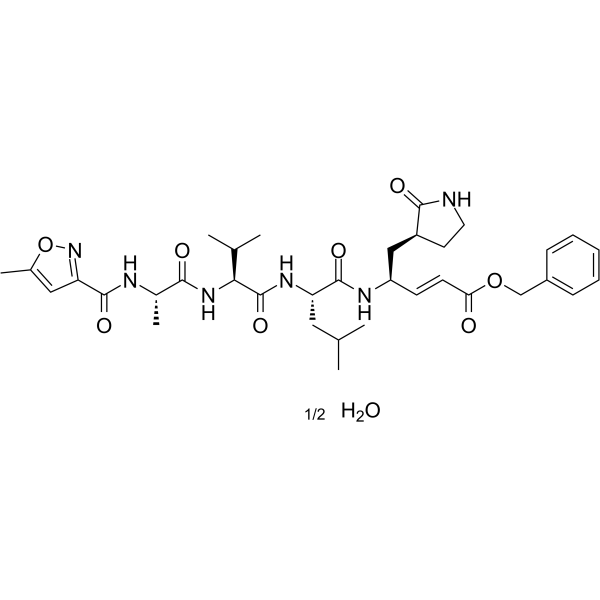
Mpro inhibitor N3 hemihydrate is a potent inhibitor of SARS-CoV-2 Mpro with an EC50 of 16.77 μM for SARS-CoV-2. Mpro inhibitor N3 hemihydrate specifically inhibits Mpro from multiple coronaviruses, including SARS-CoV and MERS-CoV. Mpro inhibitor N3 hemihydrate displays inhibition against HCoV-229E, FIPV, and MHV-A59 with individual IC50 of 4.0 μM, 8.8 μM, and 2.7 μM, respectively .
|
-
-
- HY-175344
-
|
|
SARS-CoV
Virus Protease
Ser/Thr Protease
|
Infection
Inflammation/Immunology
|
|
TMP1 is an orally active bispecific inhibitor of M pro (IC50 = 312.5 nM)/TMPRSS2 (IC50 = 1.28 μM, KD = 10.10 μM). TMP1 exhibits broad protection against different SARS-CoV-2 variants in vitro. TMP1 cross-protects against highly pathogenic coronaviruses (SARS-CoV-1, SARS-CoV-2, and MERS-CoV) in vivo and effectively blocks the transmission of SARS-CoV-2. TMP1 can inhibit infection by SARS-CoV-2 escape mutants that are resistant to Nivolumab (HY-P9903). TMP1 can be used in coronavirus research .
|
-

-
- HY-161371
-
|
|
Ser/Thr Protease
|
Cancer
|
|
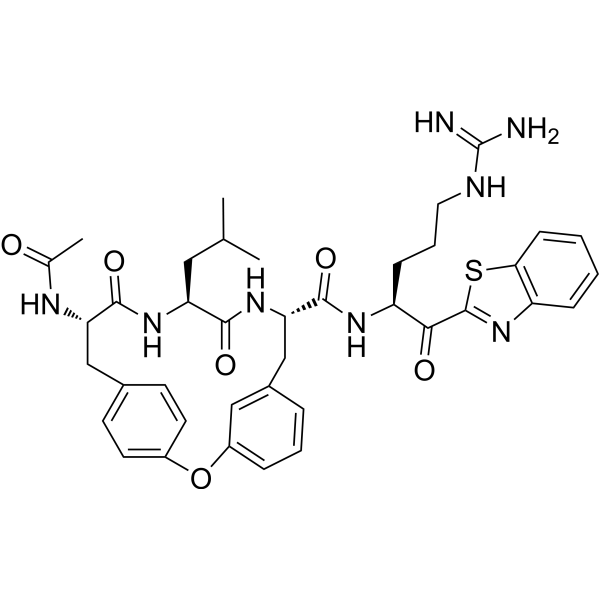
VD5123 is a serine protease inhibitor. VD5123 inhibits TMPRS2, HGFA, matriptase, hepsin with IC50s of 15, 3980, 140, 37 nM respectively. VD5123 can be used for antiviral research, such as SARS-CoV-2 and broad panel of coronaviruses and influenza viruses .
|
-
-
- HY-175029
-
|
|
SARS-CoV
Virus Protease
|
Infection
|
|
ALG-097558 is an orally active 3CLpro inhibitor. ALG-097558 demonstrates pan-coronavirus activity against various SARS-CoV-2 variants as well as other human coronaviruses (HCoVs) such as SARS-CoV-1, α-HCoV 229E, and β-HCoV OC43. ALG-097558 demonstrates potent inhibition with IC50s of 2 nM (SARS-CoV-2 3CLpro) and 6 nM (229E 3CLpro). ALG-097558 demonstrates antiviral activity in the SARS-CoV-2 hamster infection model. ALG-097558 can be used for the study of viral infections[1].
|
-

-
- HY-P10975
-
|
|
SARS-CoV
Influenza Virus
Enterovirus
|
Infection
|
|
P9R is an antiviral peptide. P9R has broad-spectrum antiviral activities against the coronaviruses (SARS-CoV-2, MERS-CoV and SARS-CoV), A(H1N1)pdm09, A(H7N9) virus, and rhinovirus. P9R directly binds to viruses and inhibits virus-host endosomal acidification. P9R significantly protects mice from A(H1N1)pdm09 infection without generating drug-resistant virus. P9R can be used for pH-dependent respiratory viruses research .
|
-

-
- HY-P10689
-
|
|
SARS-CoV
|
Infection
|
|
NQK-A8 peptide is an immunodominant peptide of seasonal coronaviruses HKU1-CoV and OC43-CoV .
|
-

-
- HY-172960
-
|
|
SARS-CoV
Virus Protease
|
Infection
Inflammation/Immunology
|
|
SARS-CoV-2 Mpro-IN-44 (Compound 25) is a broad-spectrum coronavirus main protease (Mpro) inhibitor. SARS-CoV-2 Mpro-IN-44 has inhibitory activity against a variety of high-risk coronaviruses (including SARS-CoV-2 and PEDV, etc.) (IC50: < 0.6 μM). SARS-CoV-2 Mpro-IN-44 achieves broad-spectrum inhibition of coronaviruses by enhancing the interaction with the conserved sites of Mpro. SARS-CoV-2 Mpro-IN-44 can be used for anti-coronavirus drug development .
|
-

-
- HY-175015
-
|
|
SARS-CoV
|
Infection
|
|
SARS-CoV-2 Mpro-IN-46 (Compound 12) is a SARS-CoV-2 main protease inhibitor with an IC50 of ∼25 μM. SARS-CoV-2 Mpro-IN-46 has potent antiviral activity with low cytotoxicity against SARS-CoV-2 (IC50: 7.4 μM). SARS-CoV-2 Mpro-IN-46 can be used for coronaviruses COVID-19 research .
|
-

-
- HY-174320
-
|
|
SARS-CoV
|
Infection
|
|
SARS-CoV-2-IN-112 (Compound 6f) is an orally active and non-peptidic SARS-CoV-2 main protease inhibitor with an IC50 of 6.48 μM. SARS-CoV-2-IN-11 has potent antiviral activity with low cytotoxicity against WI-38 cells (IC50: 53.81 μM). SARS-CoV-2-IN-112 can be used for coronaviruses COVID-19 research .
|
-

-
- HY-144833
-
|
|
SARS-CoV
|
Infection
|
|
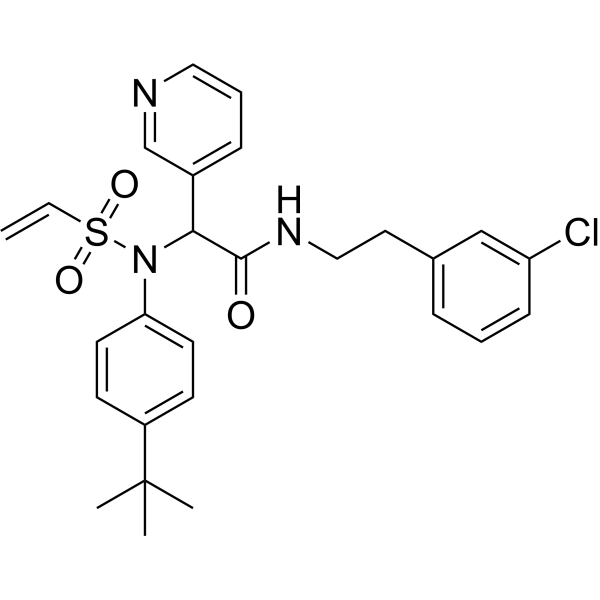
SARS-CoV-2 3CLpro-IN-1 (Compound 14c) is a potent inhibitor of SARS-CoV-2 3CL pro. 3CL pro (main coronaviruses cysteine-protease) has been identified as a promising target for the development of antiviral agents. SARS-CoV-2 3CLpro-IN-1 has the potential for the research of infection diseases .
|
-
-
- HY-161789
-
|
|
PROTACs
SARS-CoV
Virus Protease
|
Infection
|
|
PROTAC SARS-CoV-2 Mpro degrader-3 (Compound P2) exhibits antiviral activity through the degradation of the main protease (Mpro) of human coronaviruses (HCoVs) (DC50=27 μM). PROTAC SARS-CoV-2 Mpro degrader-3 inhibits the viral replication, with EC50 of 4.6 μM, 4.6 μM, and 0.71 μM, for human coronaviruses HCoV-229E, HCoV-OC43 and SARS-CoV-2, respectively. (Pink: ligand for target protein Mpro ligand 2 (HY-161791); Black: linker (HY-161792); Blue: ligand for E3 ligase (S,R,S)-AHPC (HY-125845)) .
|
-

-
- HY-172214
-
|
|
SARS-CoV
Virus Protease
|
Infection
|
|
AB-343 is a selective covalent inhibitor of SARS-CoV-2 Mpro, with an IC50 of 8 nM and a Ki of 2.8 nM. AB-343 can effectively inhibit the main proteases of SARS-CoV-2 and many other coronaviruses, and is also active against some resistant variants. AB-343 can be used in the research of treating coronavirus infection-related diseases .
|
-

-
- HY-174439
-
|
|
SARS-CoV
Virus Protease
Drug Metabolite
|
Infection
|
|
Nsp12-IN-2 (Compound 8), the triphosphate metabolite of 4'-thiouridine (HY-W113081), is a SARS-CoV-2 Nsp12 inhibitor. Nsp12-IN-2 inhibits the RNA-dependent RNA polymerase (RdRp) activity of the SARS-CoV-2 Nsp12-Nsp7-Nsp8 complex, terminates RNA synthesis and also blocks the RNAylation and NMPylation of Nsp9. Nsp12-IN-2 is promising for research of infections caused by SARS-CoV-2, other coronaviruses, and other RNA viruses .
|
-

-
- HY-181033
-
|
|
Virus Protease
SARS-CoV
|
Infection
|
|
(M)-AVI-4773 is an orally active, blood-brain barrier permeable coronaviruses M Pro inhibitor with an IC50 of 2.5 nM aginst SARS-CoV-2 M Pro. (M)-AVI-4773 produces a rapid onset antiviral effect in mouse models of MERS-CoV and SARS-CoV-2 infection .
|
-

-
- HY-P992281
-
|
|
SARS-CoV
|
Infection
|
|
Anti-Nucleocapsid Antibody (N-18) is an antibody targeting Nucleocapsid, a structural protein of coronaviruses. Anti-Nucleocapsid Antibody (N-18) is applicable to studies on SARS-CoV-2 infection .
|
-

-
- HY-178027
-
|
|
SARS-CoV
|
Infection
|
|
SARS-CoV-2 nsp14-IN-6 (Compound 35) is a SARS-CoV-2 Nsp14 MTase inhibitor with an IC50 of 0.24 μM. SARS-CoV-2 nsp14-IN-6 has potent antiviral activity against SARS-CoV-2 replication. SARS-CoV-2 nsp14-IN-6 increases lipophilicity, further improving cell permeability. SARS-CoV-2 nsp14-IN-6 can be used for human coronaviruses research .
|
-

-
- HY-178027A
-
|
|
SARS-CoV
|
Infection
|
|
SARS-CoV-2 nsp14-IN-6 (Compound 35) ammonium is a SARS-CoV-2 Nsp14 MTase inhibitor with an IC50 of 0.24 μM. SARS-CoV-2 nsp14-IN-6 ammonium has potent antiviral activity against SARS-CoV-2 replication. SARS-CoV-2 nsp14-IN-6 ammonium increases lipophilicity, further improving cell permeability. SARS-CoV-2 nsp14-IN-6 ammonium can be used for human coronaviruses research .
|
-

-
- HY-178696
-
|
|
Virus Protease
Cathepsin
SARS-CoV
|
Infection
|
|
UAWJ9-36-3 is a M pro and cathepsin L (IC50: 1.81 μM) inhibitor. UAWJ9-36-3 shows potent binding and enzymatic inhibition against the M pros from SARS-CoV-2, SARS-CoV, MERS-CoV, HCoV-OC43, HCoV-NL63, HCoV-229E, and HCoV-HKU1. UAWJ9-36-3 demonstrates broad-spectrum antiviral activity against not only SARS-CoV-2, but also the common human coronaviruses HCoV-OC43, HCoV-NL63, and HCoV-229E .
|
-

-
- HY-179630
-
|
|
Deubiquitinase
SARS-CoV
VISTA
|
Infection
Cancer
|
|
MS102 is an orally active ubiquitin specific peptidase 2 (USP2) inhibitor with an IC50 of 5.46 μM. MS102 has viable antiviral activity against ACE2-dependent coronaviruses. MS102 significantly reduces V-domain Ig suppressor of T cell activation (VISTA) protein abundance in vitro and in vivo. MS102 can be used for the study of SARS-CoV-2. MS102 can be used in combination with anti-PD-1 immunotherapy to enhance the anti-tumor immune response .
|
-

-
- HY-183761
-
|
|
SARS-CoV
|
Infection
|
|
Antiviral agent 86 is an anti-coronavirus agent. Antiviral agent 86 acts as a binder of coronavirus non-structural protein 15 (nsp15), with a Ka value of 67 μM against human targets. Antiviral agent 86 inhibits the replication of HCoV-229E and SARS-CoV-2. Antiviral agent 86 exerts inhibitory effects at the post-entry lifecycle stage of coronaviruses in host cells and inhibits the formation of viral double-stranded RNA (dsRNA). Antiviral agent 86 exhibits an additive antiviral effect when used in combination with GS-441524. Antiviral agent 86 can be used in studies related to coronavirus infections .
|
-

-
- HY-138794G
-
|
|
Deubiquitinase
SARS-CoV
Histone Demethylase
|
Cancer
|
|
XL177A GMP is XL177A (HY-138794) produced by using GMP guidelines. GMP small molecules works appropriately as an auxiliary reagent for cell therapy manufacture. XL177A is a covalent USP7 inhibitor that blocks the deubiquitinase activity of USP7. XL177A destabilizes non-canonical PRC1 complexes or KDM6A and reduces chromatin deposition of H2AK119Ub, thereby relieving the repression of neuronal differentiation programs. Meanwhile, XL177A also regulates the ELOF1-UVSSA-USP7-nuclear β-catenin axis, decreasing the transcription levels of related proteins and the accumulation of nuclear β-catenin. XL177A exerts antiviral effects by reducing the expression levels of coronavirus receptors, and exhibits inhibitory activity against APC-mutated colorectal cancer cells, neuroblastoma, and coronaviruses including SARS-CoV-2 variants. XL177A is mainly used in studies related to colorectal cancer, neuroblastoma, and coronavirus infections .
|
-

| Cat. No. |
Product Name |
Type |
-
- HY-138794G
-
|
|
Fluorescent Dyes
|
|
XL177A GMP is XL177A (HY-138794) produced by using GMP guidelines. GMP small molecules works appropriately as an auxiliary reagent for cell therapy manufacture. XL177A is a covalent USP7 inhibitor that blocks the deubiquitinase activity of USP7. XL177A destabilizes non-canonical PRC1 complexes or KDM6A and reduces chromatin deposition of H2AK119Ub, thereby relieving the repression of neuronal differentiation programs. Meanwhile, XL177A also regulates the ELOF1-UVSSA-USP7-nuclear β-catenin axis, decreasing the transcription levels of related proteins and the accumulation of nuclear β-catenin. XL177A exerts antiviral effects by reducing the expression levels of coronavirus receptors, and exhibits inhibitory activity against APC-mutated colorectal cancer cells, neuroblastoma, and coronaviruses including SARS-CoV-2 variants. XL177A is mainly used in studies related to colorectal cancer, neuroblastoma, and coronavirus infections .
|
| Cat. No. |
Product Name |
Type |
-
- HY-117813
-
|
|
Biochemical Assay Reagents
|
|
2-Thiouridine is an orally active modified nucleobase. 2-Thiouridine stabilizes U:A base pairs and destabilizes U:G wobble base pairs. 2-Thiouridine significantly improves the efficiency and accuracy of nonenzymatic replication of mixed-sequence A/U-containing RNA templates. 2-Thiouridine exhibits antiviral activity against multiple positive-sense single-stranded RNA viruses (DENV2, ZIKV, YFV, JEV, WNV, CHIKV, human coronaviruses ( [HCoV]-229E, HCoV-OC43, SARS-CoV), and MERS-CoV) .
|
-
- HY-138794G
-
|
|
Biochemical Assay Reagents
|
|
XL177A GMP is XL177A (HY-138794) produced by using GMP guidelines. GMP small molecules works appropriately as an auxiliary reagent for cell therapy manufacture. XL177A is a covalent USP7 inhibitor that blocks the deubiquitinase activity of USP7. XL177A destabilizes non-canonical PRC1 complexes or KDM6A and reduces chromatin deposition of H2AK119Ub, thereby relieving the repression of neuronal differentiation programs. Meanwhile, XL177A also regulates the ELOF1-UVSSA-USP7-nuclear β-catenin axis, decreasing the transcription levels of related proteins and the accumulation of nuclear β-catenin. XL177A exerts antiviral effects by reducing the expression levels of coronavirus receptors, and exhibits inhibitory activity against APC-mutated colorectal cancer cells, neuroblastoma, and coronaviruses including SARS-CoV-2 variants. XL177A is mainly used in studies related to colorectal cancer, neuroblastoma, and coronavirus infections .
|
| Cat. No. |
Product Name |
Target |
Research Area |
-
- HY-P11012
-
|
|
SARS-CoV
|
Infection
|
|
EK1 is a peptide-based fusion inhibitor of coronaviruses (CoVs) with broad spectrum inhibition to a number of CoV species. EK1 shows substantially improved pan-CoV fusion inhibitory activity. EK1 potently inhibits SARS-CoV-2. EK1 can form a stable six-helix bundle (6HB) structure with both short α-hCoV and long β-hCoV N-terminal heptad repeats .
|
-
- HY-P10975
-
|
|
SARS-CoV
Influenza Virus
Enterovirus
|
Infection
|
|
P9R is an antiviral peptide. P9R has broad-spectrum antiviral activities against the coronaviruses (SARS-CoV-2, MERS-CoV and SARS-CoV), A(H1N1)pdm09, A(H7N9) virus, and rhinovirus. P9R directly binds to viruses and inhibits virus-host endosomal acidification. P9R significantly protects mice from A(H1N1)pdm09 infection without generating drug-resistant virus. P9R can be used for pH-dependent respiratory viruses research .
|
-
- HY-P10689
-
|
|
SARS-CoV
|
Infection
|
|
NQK-A8 peptide is an immunodominant peptide of seasonal coronaviruses HKU1-CoV and OC43-CoV .
|
| Cat. No. |
Product Name |
Target |
Research Area |
Image |
-
- HY-P99423
-
|
ADG 20
|
SARS-CoV
|
Infection
|
|
Adintrevimab (ADG 20) is a human IgG1 monoclonal SARS-CoV (SARS-CoV) antibody. Adintrevimab inhibits SARS-CoV-2 variants and other SARS-like coronaviruses with pandemic potential .
|
-

(5)
-
- HY-P992281
-
|
|
SARS-CoV
|
Infection
|
|
Anti-Nucleocapsid Antibody (N-18) is an antibody targeting Nucleocapsid, a structural protein of coronaviruses. Anti-Nucleocapsid Antibody (N-18) is applicable to studies on SARS-CoV-2 infection .
|
-
(5)
| Cat. No. |
Product Name |
Category |
Target |
Chemical Structure |
| Cat. No. |
Product Name |
Chemical Structure |
-
- HY-135853S
-
|
|
|
Molnupiravir-d7 is the deuterium labeled Molnupiravir. Molnupiravir (EIDD-2801) is an orally bioavailable prodrug of the ribonucleoside analog EIDD-1931. Molnupiravir has broad spectrum antiviral activity against influenza virus and multiple coronaviruses, such as SARS-CoV-2, MERS-CoV, SARS-CoV. Molnupiravir has the potential for the research of COVID-19, and seasonal and pandemic influenza .
|
-
| Cat. No. |
Product Name |
|
Classification |
-
- HY-181033
-
|
|
|
Alkynes
|
|
(M)-AVI-4773 is an orally active, blood-brain barrier permeable coronaviruses M Pro inhibitor with an IC50 of 2.5 nM aginst SARS-CoV-2 M Pro. (M)-AVI-4773 produces a rapid onset antiviral effect in mouse models of MERS-CoV and SARS-CoV-2 infection .
|
| Cat. No. |
Product Name |
Target |
Research Areas |
Chemical Structure |
-
- HY-138794G
-
|
|
Deubiquitinase
SARS-CoV
Histone Demethylase
|
Cancer
|
|
XL177A GMP is XL177A (HY-138794) produced by using GMP guidelines. GMP small molecules works appropriately as an auxiliary reagent for cell therapy manufacture. XL177A is a covalent USP7 inhibitor that blocks the deubiquitinase activity of USP7. XL177A destabilizes non-canonical PRC1 complexes or KDM6A and reduces chromatin deposition of H2AK119Ub, thereby relieving the repression of neuronal differentiation programs. Meanwhile, XL177A also regulates the ELOF1-UVSSA-USP7-nuclear β-catenin axis, decreasing the transcription levels of related proteins and the accumulation of nuclear β-catenin. XL177A exerts antiviral effects by reducing the expression levels of coronavirus receptors, and exhibits inhibitory activity against APC-mutated colorectal cancer cells, neuroblastoma, and coronaviruses including SARS-CoV-2 variants. XL177A is mainly used in studies related to colorectal cancer, neuroblastoma, and coronavirus infections .
|
-
Your information is safe with us. * Required Fields.
Inquiry Information
- Product Name:
- Cat. No.:
- Quantity:
- MCE Japan Authorized Agent:








