Search Result
Results for "
NK-3 receptor
" in MedChemExpress (MCE) Product Catalog:
-
- HY-P0187
-
|
|
Neurokinin Receptor
|
Neurological Disease
Endocrinology
|
|
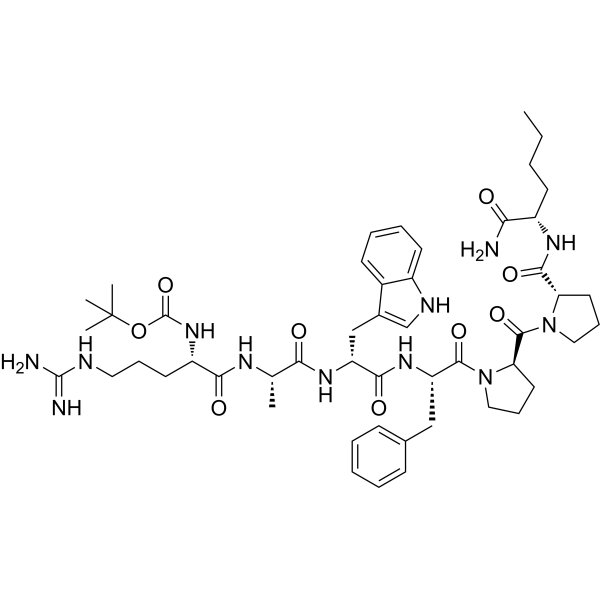
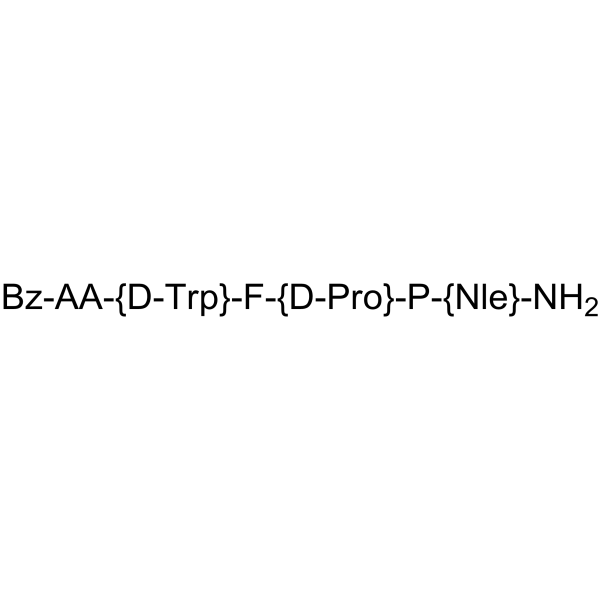
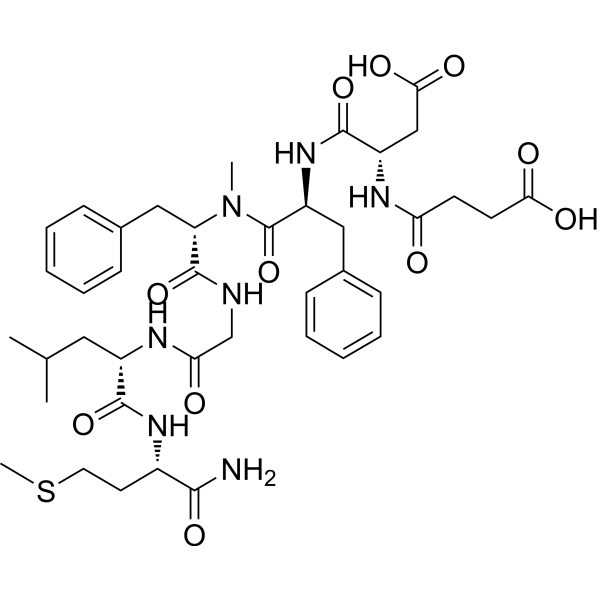
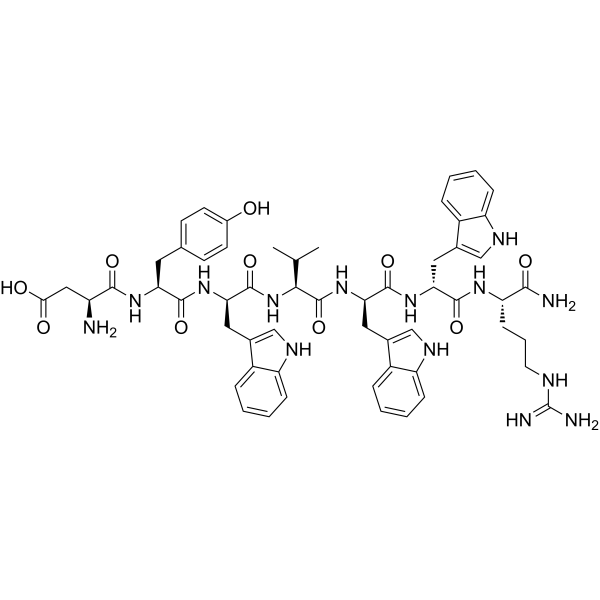
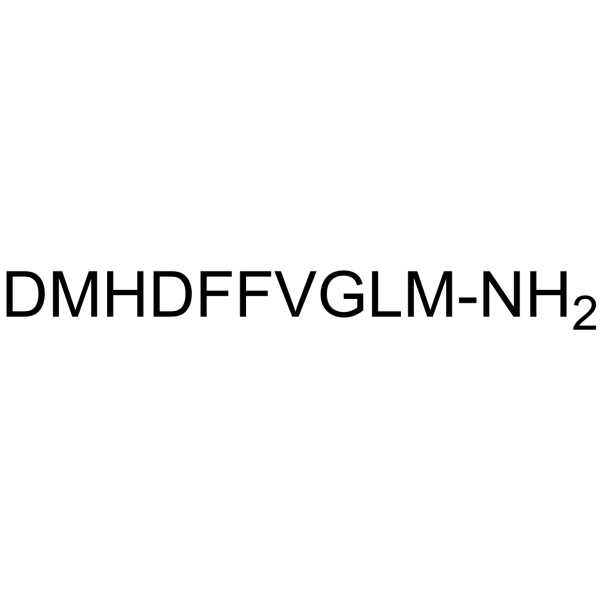
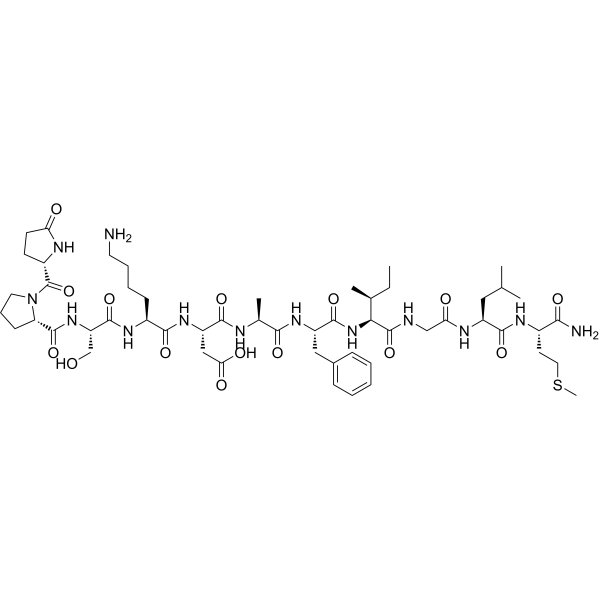
Senktide is a potent, selective agonist of the neuromedin K3 (NK3) receptor (EC50=0.5-3 nM). Senktide less potently agonizes the NK1 receptor (EC50=35 µM). Senktide is promising for research of neurological disease .
|
-
-
- HY-19632
-
-
-
- HY-109171
-
|
NT-814; BAY3427080
|
Neurokinin Receptor
|
Cardiovascular Disease
Neurological Disease
|
|
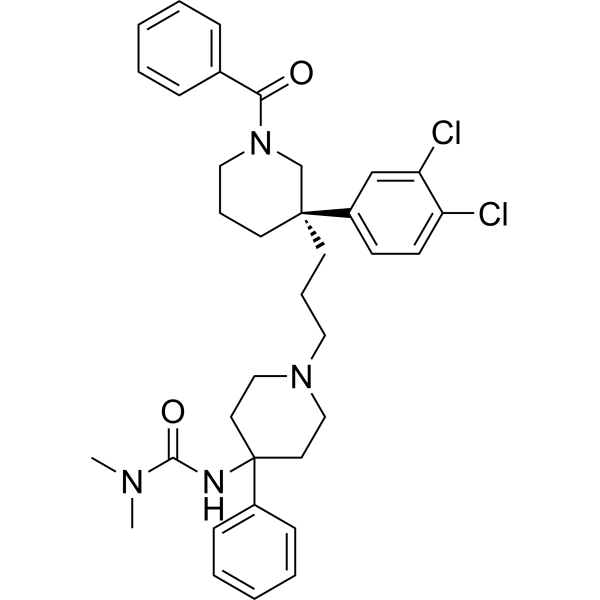
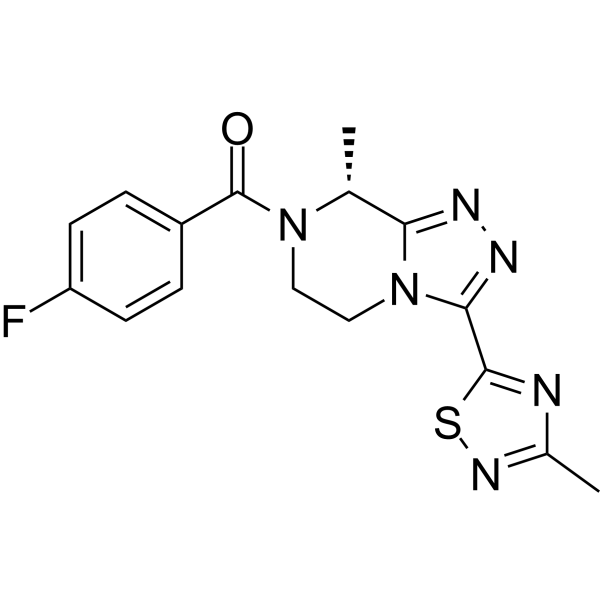
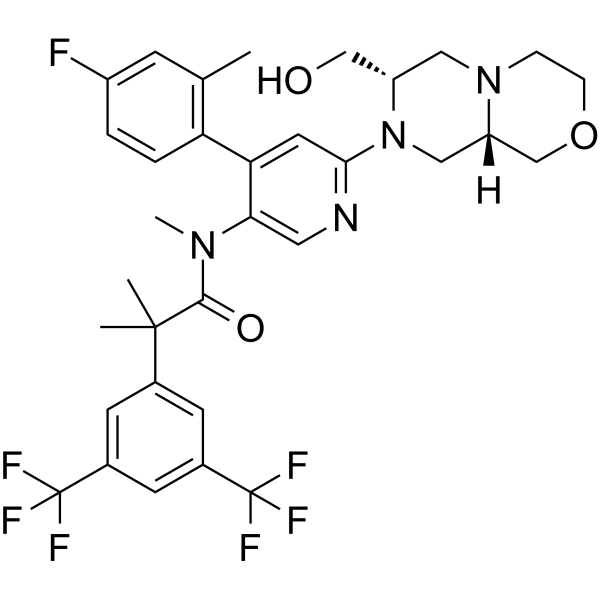
Elinzanetant is an orally active and selective NK-1 and NK-3 receptor antagonist. Elinzanetant alleviates menopause-associated vasomotor symptoms, including hot flashes and night sweats. Elinzanetant reduces estradiol and progesterone levels. Elinzanetant can be used for the research of moderate to severe vasomotor and sleep disorders associated with menopause .
|
-
-
- HY-14432
-
-
-
- HY-15722
-
-
-
- HY-101249
-
|
|
Neurokinin Receptor
|
Neurological Disease
Cancer
|
|
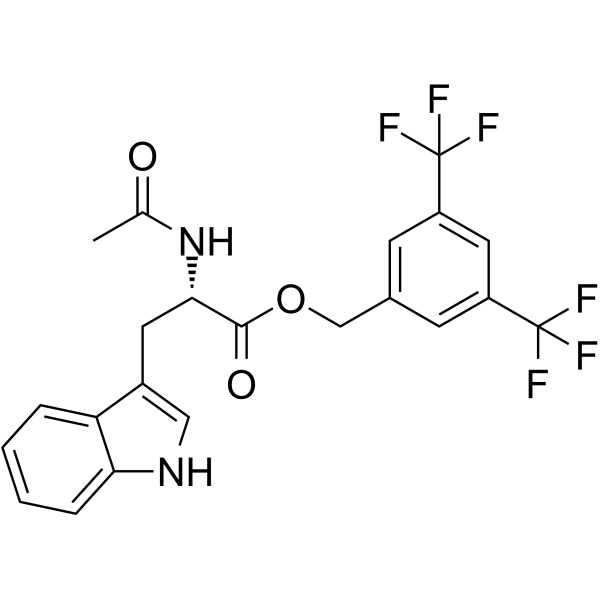
L-732138 is a selective, potent and competitive neurokinin-1 (NK-1) receptor antagonist with an IC50 of 2.3 nM. L-732138 has 200-fold more potent in cloned human NK-1 receptors than cloned rat NK-1 receptors, and has > 1000-fold more potent than human NK-2 and NK-3 receptors. L-732138 can reduce hyperalgesia and has antitumor action .
|
-
-
- HY-14552
-
|
SB 223412
|
Neurokinin Receptor
|
Neurological Disease
Endocrinology
|
|
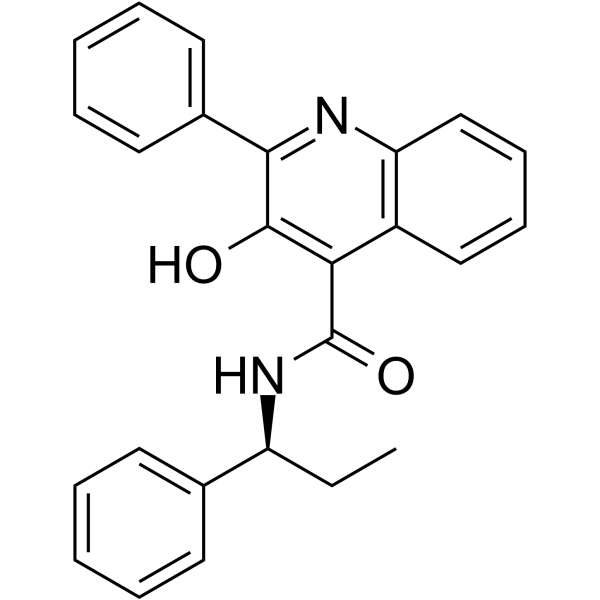
Talnetant (SB 223412) is a selective, competitive, brain-permeable NK3 receptor antagonist with a Ki of 1.4 nM in hNK-3-CHO cells. Talnetant is 100-fold more selective for hNK-3 relative to the hNK-2 receptor and has no affinity for hNK-1. Talnetant can be used in schizophrenia-related studies .
|
-
-
- HY-P0242
-
-
-
- HY-P0242A
-
-
-
- HY-14551
-
|
SR142801
|
Neurokinin Receptor
|
Neurological Disease
|
|
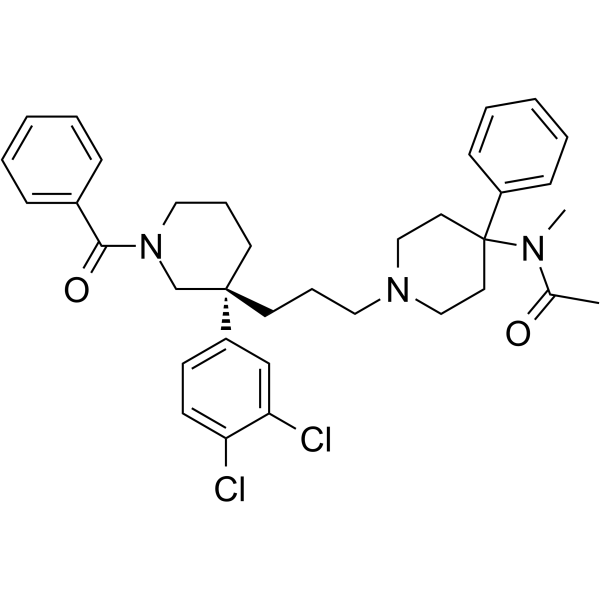
Osanetant (SR142801) is a selective NK3 receptor antagonist. Osanetant produces anxiolytic- and antidepressant-like effects and is researched for schizophrenia .
|
-
-
- HY-P1278
-
|
|
Neurokinin Receptor
|
Neurological Disease
|
|
GR 64349 is a potent and highly selective NK2 receptor peptide agonist, with an EC50 of 3.7 nM in rat colon. GR 64349 exhibits selectivity >1000 and >300-fold with respect to NK1 and NK3 receptors, respectively .
|
-
-
- HY-107691
-
|
|
Neurokinin Receptor
|
Neurological Disease
Endocrinology
Cancer
|
|
GR 159897 is a highly potent, selective, competitive, brain-penetrated non-peptide neurokinin 2 (NK2) receptor antagonist. GR 159897 has little or no affinity for NK1 and NK3 receptors. GR 159897 inhibits binding of [ 3H]GR100679 to human NK2 (hNK2)-CHO cells and rat colon membranes with pKis of 9.51 and 10, respectively. Antagonizes bronchoconstriction. Anxiolytic-like and anti-tumor effects .
|
-
-
- HY-P0006
-
-
-
- HY-133206A
-
|
Pronetupitant chloride monohydrochloride
|
Neurokinin Receptor
|
Cancer
|
|
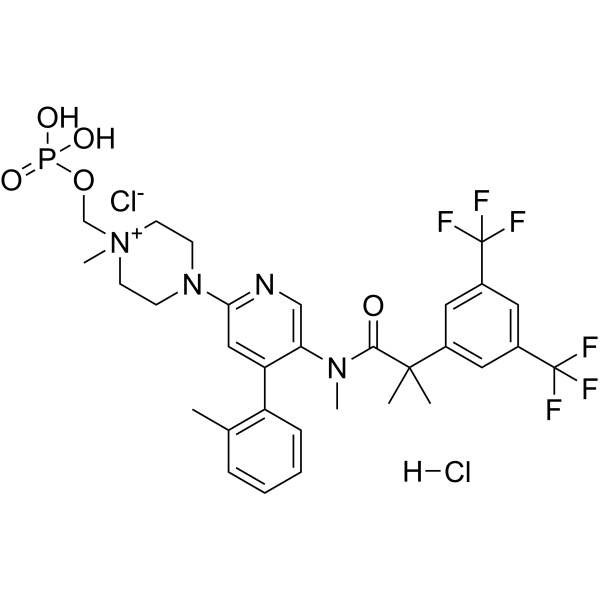
Fosnetupitant chloride monohydrochloride (Pronetupitant chloride monohydrochloride) is an NK1 antagonist with pKi values of 9.5, 6.1 for human NK1 and NK3 receptor, respectively. Fosnetupitant chloride monohydrochloride is a methylene phosphate prodrug of Netupitant .
|
-
-
- HY-117380
-
|
|
Neurokinin Receptor
|
Neurological Disease
|
|
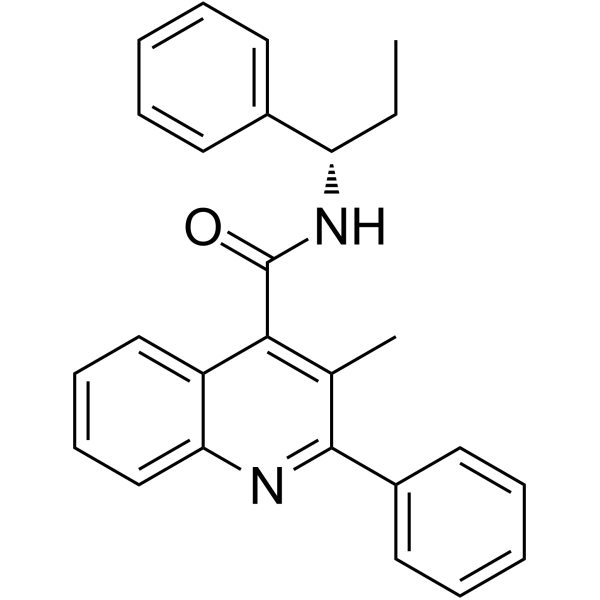
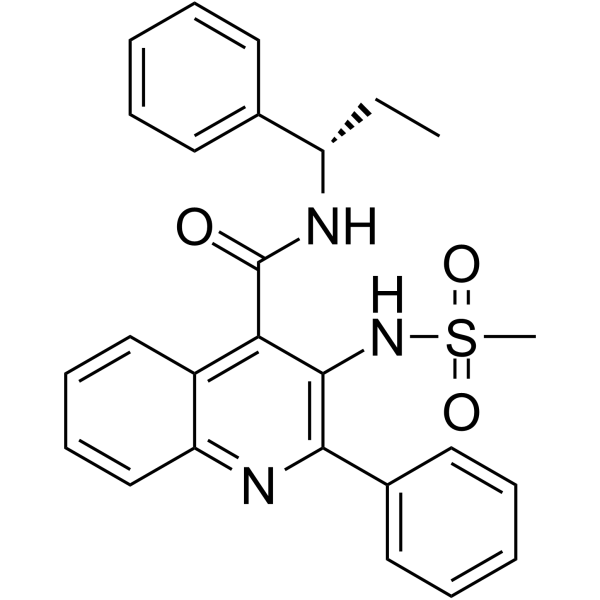
SB 235375 is a potent and selective antagonist of the human neurokinin-3 (hNK-3) receptor designed by optimizing the structure of 2-phenyl-4-quinolinecarboxylic acid amide. SB 235375 displays high affinity for the hNK-3 receptor, with significantly higher binding affinities than hNK-2 and hNK-1 receptors. In vitro studies demonstrated its ability to block NK-3 receptor-mediated contraction and calcium mobilization, while in vivo, SB 223412 demonstrated oral and intravenous activity against NK-3 receptor-driven responses in animal models .
|
-
-
- HY-18006
-
NKP608
1 Publications Verification
|
Neurokinin Receptor
Wnt
Bcl-2 Family
β-catenin
Cyclin G-associated Kinase (GAK)
VEGFR
Caspase
Cadherin
Apoptosis
|
Neurological Disease
Metabolic Disease
Inflammation/Immunology
Cancer
|
|
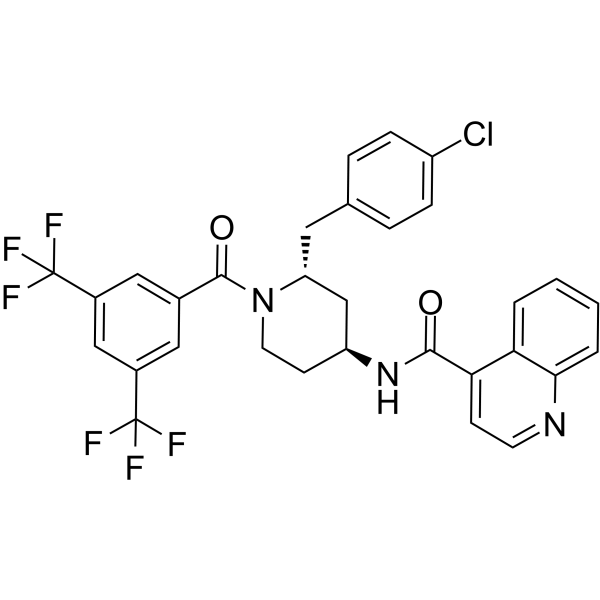
NKP608 is a non-peptidic derivative of 4-aminopiperidine, a highly selective, orally active, neurokinin-1 (NK1) receptor antagonist with IC50 of 2.6 nM. NKP608 is active both in vitro and in vivo, showing extremely low affinity for NK2, NK3 receptors. NKP608 exerts its effects by blocking the NK₁ receptor, regulate cell proliferation and apoptosis, affect neurotransmitter functions and gastric mucosal repair mechanisms, and suppress the Wnt/β-catenin pathway in antitumor research. NKP608 is applicable to research related to various diseases, including cough, anxiety disorders, depression, gastric mucosal injury, and colorectal cancer .
|
-
-
- HY-P3862
-
|
|
Neurokinin Receptor
|
Neurological Disease
Endocrinology
|
|
[MePhe7]-Neurokinin B is an neurokinin NK-3 receptor (NK3R) agonist with an IC50 value of 3 nM. [MePhe7]-Neurokinin B is a potential regulator of pulsatile gonadotropin-releasing hormone (GnRH) secretion via activation of the neurokinin-3 receptor (NK3R) .
|
-
-
- HY-151413
-
|
|
Neurokinin Receptor
|
Neurological Disease
|
|
MEN 10207 is a selective NK-2 tachykinin receptor (Neurokinin Receptor) antagonist. MEN 10207 has pA2 values of 5.2, 7.9 and 4.9 in three monoreceptor in vitro assays for NK-1, NK-2 and NK-3 tachykinin receptors, respectively.
|
-
-
- HY-P3854
-
|
|
Neurokinin Receptor
|
Neurological Disease
|
|
GR 83074 is a potent and selective NK-2 (Neurokinin Receptor) antagonist with a pKB of 8.23. GR 83074 is inactive as an NK-3 antagonist and exhibits a 340-fold NK-2/NK-1 selectivity .
|
-
-
- HY-P1277
-
-
-
- HY-116822
-
|
|
Neurokinin Receptor
|
Neurological Disease
|
|
SSR 146977 is a potent and selective antagonist of the tachykinin NK3 receptor. SSR 146977 inhibits the binding of radioactive neurokinin B to NK3 receptors in Chinese hamster ovary cells, with a Ki of 0.26 nM .
|
-
-
- HY-14551B
-
|
(S)-SR142801
|
Neurotensin Receptor
|
Neurological Disease
|
|
(S)-Osanetant is the S-enantiomer of Osanetant. Osanetant (SR142801) is a selective NK3 receptor antagonist. Osanetant produces anxiolytic- and antidepressant-like effects and is researched for schizophrenia .
|
-
-
- HY-137462
-
|
L-Leucyl-L-phenylalaninamide
|
Neurokinin Receptor
|
Neurological Disease
Inflammation/Immunology
|
|
Leucyl-phenylalanine amide (L-Leucyl-L-phenylalaninamide) is a dipeptide analog. Leucyl-phenylalanine amide is a ligand of SP1-7 with a Ki value of 10.2 nM. Leucyl-phenylalanine amide shows no binding activity to human NK-1 or NK-3 receptors .
|
-
-
- HY-P1198
-
|
|
Neurokinin Receptor
|
Neurological Disease
|
|
Hemokinin 1, human is a selective tachykinin neurokinin 1 (NK1) receptor full agonist. Hemokinin 1, human is a full agonist at NK2 and NK3 receptor. Hemokinin 1, human can produces an opioid-independent analgesia .
|
-
-
- HY-14552A
-
|
SB 223412 hydrochloride; SB 223412-A
|
Neurokinin Receptor
|
Neurological Disease
Endocrinology
|
|
Talnetant (SB 223412) hydrochloride is a selective, competitive, brain-permeable NK3 receptor antagonist with a Ki of 1.4 nM in hNK-3-CHO cells. Talnetant hydrochloride is 100-fold more selective for hNK-3 relative to the hNK-2 receptor and has no affinity for hNK-1. Talnetant hydrochloride can be used in schizophrenia-related studies .
|
-
-
- HY-P3802
-
|
|
Neurokinin Receptor
|
Neurological Disease
|
|
[D-Trp2,7,9] Substance P is a tachykinin (Neurokinin Receptor) antagonist with Ki values of 1 μM, 1.3 μM, and ~9 μM for NK-1, NK-2,and NK-3 receptor, respectively .
|
-
-
- HY-107692
-
|
|
Neurokinin Receptor
|
Neurological Disease
|
|
SB 218795 is a potent and selective non-peptide NK3 receptor antagonist, with a Ki 13 nM for hNK3. SB 218795 shows about 90-fold and 7000-fold selectivity for hNK3 over hNK2 and hNK1, respectively. SB 218795 can inhibit NK3 receptor-mediated pupillary constriction of the rabbit .
|
-
-
- HY-14551C
-
|
SR142801 monohydrochloride
|
Neurokinin Receptor
|
Neurological Disease
|
|
Osanetant (SR142801) monohydrochloride is a selective NK3 receptor antagonist. Osanetant monohydrochloride produces anxiolytic- and antidepressant-like effects .
|
-
-
- HY-107693
-
-
-
- HY-116958
-
|
|
Neurokinin Receptor
|
Inflammation/Immunology
|
|
SCH 206272 is a selective antagonist of the tachykinin (NK) receptor. SCH 206272 inhibits binding at human tachykinin NK(1), NK(2), and NK(3) receptors (Ki = 1.3, 0.4, and 0.3 nM, respectively). SCH 206272 has an orally active .
|
-
-
- HY-P1277A
-
|
|
Neurokinin Receptor
|
Neurological Disease
|
|
GR 94800 TFA is a potent and selective NK2 receptor peptide antagonist, with pKB values of 9.6, 6.4 and 6.0 for NK2, NK1 and NK3 receptors, respectively .
|
-
-
- HY-116268
-
|
|
Neurokinin Receptor
|
Neurological Disease
|
|
GSK256471 is a non-peptide tachykinin NK3 receptor antagonist with a pKi of 8.9 for the human recombinant NK3 receptor and 8.4 for the guinea pig native receptor. GSK256471 exhibits >100-fold selectivity for NK1 (pKi = 5.2) and NK2 (pKi = 7.3) receptors. GSK256471 noncompetitively inhibits neurokinin B (NKB) (HY-P0242)-induced inositol phosphate accumulation, and this inhibition is irreversible. GSK256471 inhibits wet dog shaking behavior and suppresses dopamine release. GSK256471 could be used to study schizophrenia .
|
-
-
- HY-P1278A
-
|
|
Neurokinin Receptor
|
Neurological Disease
|
|
GR 64349 is a potent and highly selective NK2 receptor peptide agonist, with an EC50 of 3.7 nM in rat colon. GR 64349 exhibits selectivity >1000 and >300-fold with respect to NK1 and NK3 receptors, respectively .
|
-
-
- HY-P1198A
-
|
|
Neurokinin Receptor
|
Neurological Disease
|
|
Hemokinin 1, human TFA is a selective tachykinin neurokinin 1 (NK1) receptor full agonist. Hemokinin 1, human TFA is a full agonist at NK2 and NK3 receptor. Hemokinin 1, human TFA can produces an opioid-independent analgesia .
|
-
-
- HY-W755425
-
|
|
Neurokinin Receptor
|
Neurological Disease
|
|
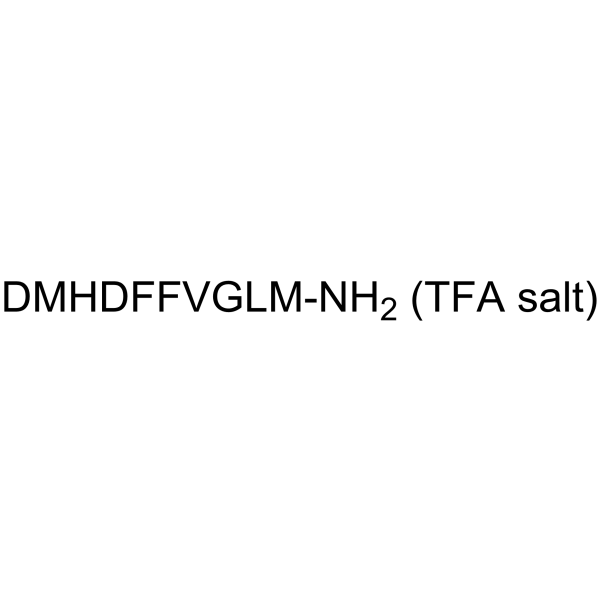
Senktide TFA is a potent, selective agonist of the neuromedin K3 (NK3) receptor (EC50=0.5-3 nM). Senktide TFA less potently agonizes the NK1 receptor (EC50=35 µM). Senktide TFA is promising for research of neurological disease .
|
-
-
- HY-19633
-
|
|
Neurokinin Receptor
|
Infection
Endocrinology
|
|
CS-003 Free base (CS-003), a triple tachykinin receptor antagonist, shows high affinities for human (Neurokinin) NK1, NK2 and NK3 receptors with Ki values of 2.3 nM, 0.54 nM and 0.74 nM, respectively. CS-003 Free base (CS-003) has therapeutic efficacy on respiratory diseases associated with neurokinins.
|
-
-
- HY-120167
-
|
|
Neurokinin Receptor
|
Neurological Disease
Inflammation/Immunology
|
|
YM-44778 is a neurokinin receptor antagonist. The pKi values for NK1, NK2 and NK3 are 8.08, 8.55 and 8.24, respectively. YM-44778 inhibits the increase of bladder pressure induced by substance [Sar9,Met(O2)11] -P (HY-P1012) in anestheticized rats .
|
-
-
- HY-149358
-
|
|
Neurokinin Receptor
|
Endocrinology
|
|
NK3R-IN-1 (compound 16x), a imidazolepiperazine derivative, is an orally active Neurokinin Receptor NK3R inhibitor. NK3R-IN-1 decreases blood luteinizing hormone levels in ovariectomy (OVX) model .
|
-
-
- HY-122286
-
|
|
Neurokinin Receptor
|
Neurological Disease
|
|
SB 414240 is a selective neurokinin-2 receptor (NK-2R) antagonist with Kis of 1 nM and 193 nM for human NK-3R and human NK-2R, respectively. SB 414240 does not bind the human μ-opioid receptor (hMOR). SB 414240 can be used for the study of neurological disease .
|
-
-
- HY-14432R
-
-
-
- HY-121164
-
|
|
Neurokinin Receptor
|
Neurological Disease
|
|
GSK172981 is a brain-penetrant tachykinin NK3 receptor antagonist with pKi values of 7.7 and 7.8 for human and native guinea pig NK3 receptors, respectively. GSK172981 can be used for the study of schizophrenia .
|
-
-
- HY-182423
-
|
|
Neurokinin Receptor
|
Neurological Disease
|
|
RO5328673 is an orally active, blood-brain barrier permeable neurokinin receptor antagonist that effectively targets human NK3 receptors (Ki=0.4 nM, Ka=0.1 nM), human NK2 receptors (Ki=1.1 nM, Ka=0.9 nM), and guinea pig NK3 receptors (Ka=0.1 nM and 0.13 nM). RO5328673 acts as an insurmountable antagonist of NK3 receptors with a slow dissociation rate, while it shows rapid association and dissociation rates at human NK2 receptors. RO5328673 potently inhibits senktide (HY-P0187)-induced enhancement of spontaneous activity in dopaminergic neurons and reverses senktide-induced changes in motor activity of gerbils. RO5328673 is widely applicable to research related to schizophrenia .
|
-
-
- HY-107692R
-
|
|
Reference Standards
Neurokinin Receptor
|
Neurological Disease
|
|
SB 218795 (Standard) is the analytical standard of SB 218795 (HY-107692). This product is intended for research and analytical applications. SB 218795 is a potent and selective non-peptide NK3 receptor antagonist, with a Ki 13 nM for hNK3. SB 218795 shows about 90-fold and 7000-fold selectivity for hNK3 over hNK2 and hNK1, respectively. SB 218795 can inhibit NK3 receptor-mediated pupillary constriction of the rabbit .
|
-
-
- HY-P11429
-
|
|
Neurokinin Receptor
|
Metabolic Disease
|
|
[Asp5,6,Me-Phe8] Substance P (5-11) is a tachykinin NK-3 receptor agonist. [Asp5,6,Me-Phe8] Substance P (5-11) reduces alcohol intake in genetically selected alcohol-preferring rats .
|
-
-
- HY-101249R
-
|
|
Neurokinin Receptor
Reference Standards
|
Neurological Disease
Cancer
|
|
L-732138 (Standard) is the analytical standard of L-732138 (HY-101249). This product is intended for research and analytical applications. L-732138 is a selective, potent and competitive neurokinin-1 (NK-1) receptor antagonist with an IC50 of 2.3 nM. L-732138 has 200-fold more potent in cloned human NK-1 receptors than cloned rat NK-1 receptors, and has > 1000-fold more potent than human NK-2 and NK-3 receptors. L-732138 can reduce hyperalgesia and has antitumor action .
|
-
-
- HY-N9554
-
|
|
Neurokinin Receptor
Endogenous Metabolite
Calcium Channel
|
Neurological Disease
Inflammation/Immunology
|
|
WIN-64821 is a secondary metabolite produced by Aspergillus species, and acts as a Neurokinin Receptor antagonist. The Ki values of WIN-64821 for NK1, NK2 and NK3 receptors are 0.24 (human astrocytoma cells), 0.26 (rat duodenum) and 15.2 (guinea pig forebrain) μM, respectively. WIN-64821 inhibits apamin-induced contraction of rat vas deferens, blocks substance P-induced contraction of guinea pig ileum and Ca 2+ efflux in human astrocytoma cells. WIN-64821 is applicable to analgesic and anti-inflammatory research .
|
-
-
- HY-181682
-
|
|
Neurokinin Receptor
|
Endocrinology
|
|
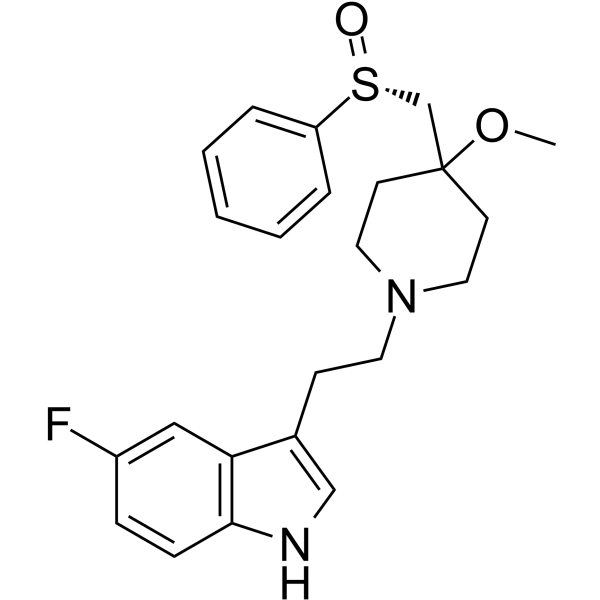
NK3R antagonist-1 is an orally active neurokinin-3 receptor (NK3R) antagonist with an IC50 of 53.61 nM. NK3R antagonist-1 reduces plasma luteinizing hormone (LH) levels in ovariectomized rat models. NK3R antagonist-1 is applicable to research related to menopausal hot flushes .
|
-
-
- HY-P0187
-
|
|
Neurokinin Receptor
|
Neurological Disease
Endocrinology
|
|
Senktide is a potent, selective agonist of the neuromedin K3 (NK3) receptor (EC50=0.5-3 nM). Senktide less potently agonizes the NK1 receptor (EC50=35 µM). Senktide is promising for research of neurological disease .
|
-
- HY-P0242
-
-
- HY-P0242A
-
-
- HY-P1278
-
|
|
Neurokinin Receptor
|
Neurological Disease
|
|
GR 64349 is a potent and highly selective NK2 receptor peptide agonist, with an EC50 of 3.7 nM in rat colon. GR 64349 exhibits selectivity >1000 and >300-fold with respect to NK1 and NK3 receptors, respectively .
|
-
- HY-P0006
-
-
- HY-P3862
-
|
|
Neurokinin Receptor
|
Neurological Disease
Endocrinology
|
|
[MePhe7]-Neurokinin B is an neurokinin NK-3 receptor (NK3R) agonist with an IC50 value of 3 nM. [MePhe7]-Neurokinin B is a potential regulator of pulsatile gonadotropin-releasing hormone (GnRH) secretion via activation of the neurokinin-3 receptor (NK3R) .
|
-
- HY-151413
-
|
|
Neurokinin Receptor
|
Neurological Disease
|
|
MEN 10207 is a selective NK-2 tachykinin receptor (Neurokinin Receptor) antagonist. MEN 10207 has pA2 values of 5.2, 7.9 and 4.9 in three monoreceptor in vitro assays for NK-1, NK-2 and NK-3 tachykinin receptors, respectively.
|
-
- HY-P3854
-
|
|
Neurokinin Receptor
|
Neurological Disease
|
|
GR 83074 is a potent and selective NK-2 (Neurokinin Receptor) antagonist with a pKB of 8.23. GR 83074 is inactive as an NK-3 antagonist and exhibits a 340-fold NK-2/NK-1 selectivity .
|
-
- HY-P1277
-
-
- HY-P1198
-
|
|
Neurokinin Receptor
|
Neurological Disease
|
|
Hemokinin 1, human is a selective tachykinin neurokinin 1 (NK1) receptor full agonist. Hemokinin 1, human is a full agonist at NK2 and NK3 receptor. Hemokinin 1, human can produces an opioid-independent analgesia .
|
-
- HY-P3802
-
|
|
Neurokinin Receptor
|
Neurological Disease
|
|
[D-Trp2,7,9] Substance P is a tachykinin (Neurokinin Receptor) antagonist with Ki values of 1 μM, 1.3 μM, and ~9 μM for NK-1, NK-2,and NK-3 receptor, respectively .
|
-
- HY-P1277A
-
|
|
Neurokinin Receptor
|
Neurological Disease
|
|
GR 94800 TFA is a potent and selective NK2 receptor peptide antagonist, with pKB values of 9.6, 6.4 and 6.0 for NK2, NK1 and NK3 receptors, respectively .
|
-
- HY-P1278A
-
|
|
Neurokinin Receptor
|
Neurological Disease
|
|
GR 64349 is a potent and highly selective NK2 receptor peptide agonist, with an EC50 of 3.7 nM in rat colon. GR 64349 exhibits selectivity >1000 and >300-fold with respect to NK1 and NK3 receptors, respectively .
|
-
- HY-P1198A
-
|
|
Neurokinin Receptor
|
Neurological Disease
|
|
Hemokinin 1, human TFA is a selective tachykinin neurokinin 1 (NK1) receptor full agonist. Hemokinin 1, human TFA is a full agonist at NK2 and NK3 receptor. Hemokinin 1, human TFA can produces an opioid-independent analgesia .
|
-
- HY-W755425
-
|
|
Neurokinin Receptor
|
Neurological Disease
|
|
Senktide TFA is a potent, selective agonist of the neuromedin K3 (NK3) receptor (EC50=0.5-3 nM). Senktide TFA less potently agonizes the NK1 receptor (EC50=35 µM). Senktide TFA is promising for research of neurological disease .
|
-
- HY-P11429
-
|
|
Neurokinin Receptor
|
Metabolic Disease
|
|
[Asp5,6,Me-Phe8] Substance P (5-11) is a tachykinin NK-3 receptor agonist. [Asp5,6,Me-Phe8] Substance P (5-11) reduces alcohol intake in genetically selected alcohol-preferring rats .
|
| 製品番号 |
製品名 |
Category |
Target |
構造式 |
入力情報は安全に管理されます. ※ 必須入力項目.
Inquiry Information
- 製品名:
- 製品番号:
- 数量:
- MCE 日本正規代理店: