Search Result
Results for "
acidic hydrolysis
" in MedChemExpress (MCE) Product Catalog:
26
Biochemical Assay Reagents
1
Isotope-Labeled Compounds
| Cat. No. |
Product Name |
Target |
Research Areas |
Chemical Structure |
-
- HY-W011063
-
|
|
Cathepsin
|
Metabolic Disease
|
|
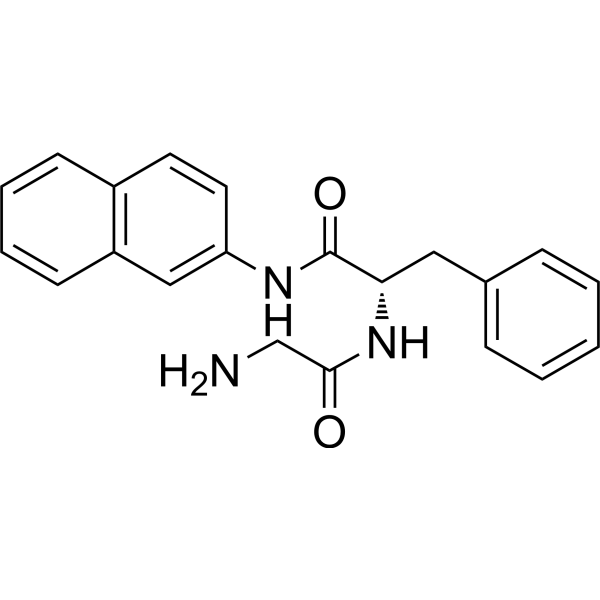
Gly-Phe-β-naphthylamide is a substrate of Cathepsin C (HY-P2922) and belongs to the lysosomal agonist. Gly-Phe-β-naphthylamide can freely pass through the cell membrane and organelle membrane. Gly-Phe-β-naphthylamide will be specifically hydrolyzed by Cathepsin C, ultimately leading to a permeability lysis when it enters the acidic compartment. Gly-Phe-β-naphthylamide can be used to study lysosomal hydrolysis, lysosomal membrane permeability, and the function of cathepsin C .
|
-
-
- HY-P2831
-
|
CESs
|
Endogenous Metabolite
|
Metabolic Disease
|
|
Esterase, pig liver (CESs), namely carboxylate hydrolases, are widely distributed in nature, commonly found in mammalian liver, and often used in biochemical research. Esterase catalyzes the hydrolysis of a variety of endogenous and exogenous substrates, including esters, thioesters, carbamates, and amides, hydrolyzing carboxylic acid esters to the corresponding alcohols and carboxylic acids .
|
-
-
- HY-W040256
-
|
ACP
|
Endogenous Metabolite
|
Metabolic Disease
Cancer
|
|
Acid phosphatase, wheat (ACP) is a hydrolase enzyme found in wheat. Acid phosphatase, wheat catalyses the hydrolysis of orthophosphate monoesters under acidic conditions .
|
-
-
- HY-E70130
-
|
|
Others
|
Others
|
|
Snailase, Snail gastrointestinal is an enzyme mixture composed of more than 20 enzymes, which is often used for enzymatic hydrolysis of purified flavonoid glycosides. Snailase can be obtained from the digestive tract and includes cellulase, sucrase, hemicellulase, pectinase, polygalacturonase, protease, etc .
|
-

-
- HY-148123
-
|
|
Biochemical Assay Reagents
|
Neurological Disease
|
|
Glycerophospholipids and cephalins are a class of phospholipid compounds and important components of neural membranes. Glycerophospholipids and cephalins are hydrolysis substrates of phospholipase (such as PLA2, PLC, and PLD). After complete hydrolysis, they produce 1 mol of glycerol, phosphate, ethanolamine, and 2 mol of fatty acids, respectively. Glycerophospholipids and cephalins can maintain membrane structure, fluidity, and ion permeability, and serve as precursors of second messengers such as arachidonic acid and diacylglycerol. Glycerophospholipids and cephalins can regulate signal transduction, cell apoptosis, and membrane transport, and are used in the study of neurodegenerative diseases (such as Alzheimer's disease) .
|
-
-
- HY-142021
-
|
|
Cathepsin
Parasite
|
Infection
Inflammation/Immunology
|
|
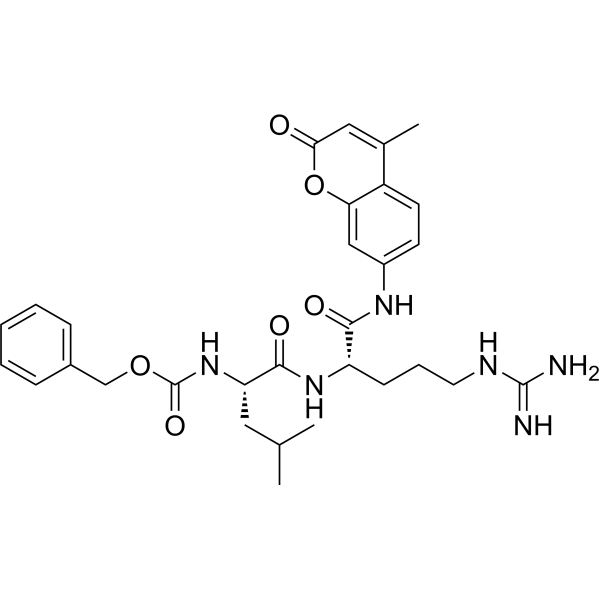
Z-Leu-Arg-AMC is a fluorogenic peptide substrate for cysteine proteases (e.g., Cathepsin) (Ex=350 nm,Em=460 nm). Z-Leu-Arg-AMC is preferentially cleaved by Cathepsin K and S under weakly acidic conditions, while its hydrolysis relies on residual Cathepsin S activity at neutral pH. Z-Leu-Arg-AMC serves as a substrate for recombinant Sphenophorus levis Cathepsin L, falcipain-2, falcipain-3, berghepain-2, knowlepain-2, vivapain-2, as well as falcipain-2 chimeras and constructs. It enables quantitative detection of cysteine protease activity in human inflammatory bronchoalveolar lavage fluid via fluorescence generation. Z-Leu-Arg-AMC can be used in research related to pulmonary inflammatory diseases and malaria .
|
-
-
- HY-129043
-
|
|
Drug Metabolite
|
Infection
|
|
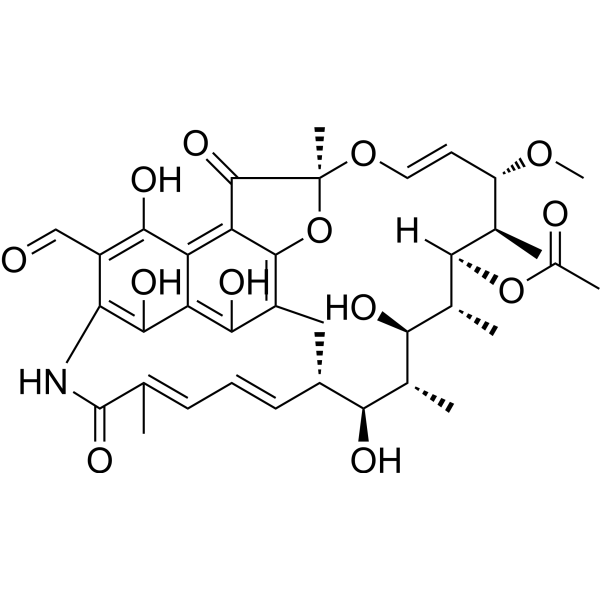
3-Formyl rifamycin is an acid degradation product of the broad-spectrum antibiotic Rifampicin (HY-B0272). 3-Formyl rifamycin forms via acid hydrolysis of Rifampicin in an acidic environment .
|
-
-
- HY-Y1422H
-
|
|
Environmental Pollutants
Biochemical Assay Reagents
Lipase
|
Others
|
Lipase, Candida cylindracea (Immobilized) is an immobilized hydrolase and biocatalyst with relaxed positional and substrate specificity. Lipase, Candida cylindracea (Immobilized) can target primary and secondary ester bonds to completely hydrolyze triglycerides into fatty acids and glycerol, producing only trace amounts of monoglycerides. Lipase, Candida cylindracea (Immobilized) exhibits chain specificity, with a relatively fast hydrolysis rate for oleic acid and lauric acid chains, and the slowest hydrolysis rate for stearic acid chains. Lipase, Candida cylindracea (Immobilized) shows high catalytic activity toward long-chain triglycerides under the conditions of pH 8.0 and 37°C .
|
-

-
- HY-135115
-
|
3,4-DHPEA-EA
|
α-synuclein
HDAC
Adrenergic Receptor
|
Inflammation/Immunology
|
|
Oleuropein Aglycone (3,4-DHPEA-EA) is a polyphenol and the aglycone form of oleuropein (HY-N0292), formed by enzymatic, acidic or acetylated hydrolysis of oleuropein. Dietary intake of oleuropein Aglycone (50 mg/kg diet) increases the number of neuronal autophagic vesicles, reverses cognitive deficits in the TgCRND8 transgenic mouse model of Alzheimer's disease, and reduces the levels of histone deacetylase 2 (HDAC2) in the cortex and hippocampus. Oleuropein Aglycone increases urinary norepinephrine, interscapular brown adipose tissue epinephrine, and UCP1 protein levels, and reduced plasma leptin levels and total abdominal adipose tissue weight in a rat model of high-fat diet-induced obesity. Oleuropein Aglycone also reduced lung neutrophil infiltration, lipid peroxidation, and IL-1β levels in a mouse model of carrageenan-induced pleurisy.
|
-

-
- HY-W392100A
-
|
PCL-diol (MW 530)
|
Biochemical Assay Reagents
Fungal
|
Infection
|
|
Polycaprolactone diol (MW 530) (PCL-diol (MW 530)) is a poly (ε-caprolactone) diol with an average molecular weight of 530 g·mol −1, which serves as a monomer for biodegradable network elastic polyesters. Network polyester films undergo enzymatic hydrolysis by Rhizopus delemar lipase .
|
-

-
- HY-113441
-
|
MHPG sulfate potassium
|
Biochemical Assay Reagents
|
Others
|
|
4-Hydroxy-3-methoxyphenylglycol sulfate potassium is a biosynthesis product that releases Na2SO4 and free ethylene glycol on acidic hydrolysis .
|
-

-
- HY-P2958
-
|
|
Biochemical Assay Reagents
|
Metabolic Disease
|
|
Choloylglycine hydrolase is a conjugated bile salt hydrolase that catalyses the hydrolysis of amide bond in conjugated bile acids. Choloylglycine hydrolase is expressed by intestinal microbiota. Choloylglycine hydrolase can be studied in research on type 2 diabetes .
|
-
-
- HY-Y1422B
-
|
|
Endogenous Metabolite
|
Metabolic Disease
|
|
Lipase (MS grade) catalyzes the hydrolysis of triacylglycerols to release long-chain fatty acids in a site-specific manner. Lipase (MS grade) is involved in a variety of biological processes, from fat metabolism to cell signaling and inflammation, and can be used to study diseases such as pancreatic insufficiency, celiac disease and cystic fibrosis .
|
-

-
- HY-P2988A
-
|
|
Influenza Virus
|
Metabolic Disease
|
|
α2-3,6 Neuraminidase, Bifidobacterium infantis is a highly specific exoglycosidase that catalyzes the hydrolysis of non-reducing terminal α2-3 and α2-6 unbranched sialic acid residues from complex carbohydrates and glycoproteins. α2-3,6 Neuraminidase does not exhibit activity on α2-8 or branched sialic acids .
|
-

-
- HY-P2736
-
|
|
Endogenous Metabolite
|
Metabolic Disease
|
|
Amidases, a member of nitrilase superfamily, catalyzes the hydrolysis of an amide, leading to the formation of carboxylic acid and ammonia. Amidases contain a conserved stretch of approximately 130 amino acids known as the AS sequence, and play a role in important metabolic processes .
|
-

-
- HY-W717548
-
|
|
Drug Metabolite
|
Others
|
|
Safinamide acid (Compound Imp-E) is the metabolite of Safinamide (HY-70057). Safinamide acid can be formed by hydrolysis of Safinamide intermediate under alkaline or acidic conditions. Safinamide acid is utilized to monitor process-related impurities and degradation products in safinamide samples .
|
-

-
- HY-135000
-
|
DcSTX; DecarbamoylSTX
|
Endogenous Metabolite
Drug Metabolite
|
Neurological Disease
|
|
Decarbamoylsaxitoxin is a sodium channel inhibitor that blocks the influx of sodium ions through the membranes of excitable nerves and skeletal muscle cells, thereby preventing the formation of action potentials. Decarbamoylsaxitoxin is an acidic hydrolysis product of saxitoxin, and its toxic effects on mice are identical to those of saxitoxin. Decarbamoylsaxitoxin inhibits veratridine- and ouabain-induced swelling and lysis of mouse neuroblastoma cells by blocking Na + channels. Decarbamoylsaxitoxin can be used in studies related to paralytic shellfish poisoning .
|
-

-
- HY-P10053
-
|
|
Phospholipase
|
Metabolic Disease
|
|
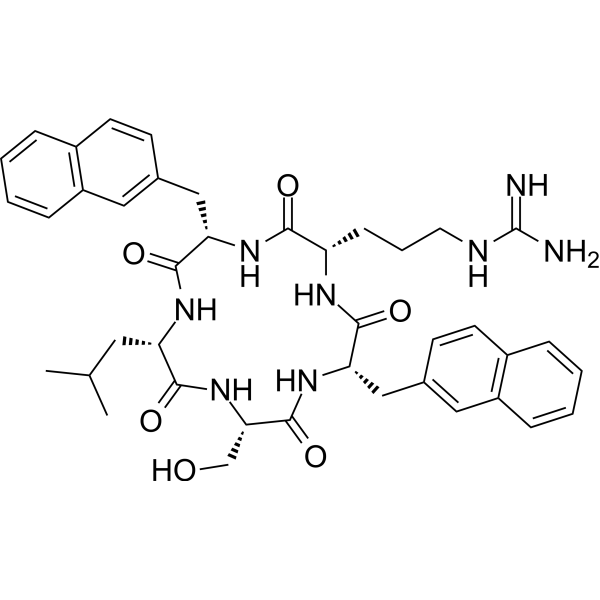
sPLA2-IIA Inhibitor is a cyclic pentapeptide analog of FLSYK (cyclic 2-Nal-Leu-Ser-2-Nal-Arg (c2)), that binds to hGIIA (human IIA phospholipase A2) and inhibits its hydrolytic ability. sPLA2 is a member of the esterase superfamily that catalyzes the hydrolysis of the ester bond at the sn-2 position of glycerophospholipids, releasing free fatty acids such as arachidonic acid and lysophospholipids .
|
-
-
- HY-W800839
-
|
|
Biochemical Assay Reagents
|
Others
|
|
TCO-PEG4-TFP Ester is an amine-reactive labeling reagent used to modify proteins, antibodies, and other amine-containing biopolymers. A 2,3,5,6-tetrafluorophenol (TFP) is a reactive ester that displays much better stability toward hydrolysis in aqueous media resulting in more efficiency and better reproducible labeling of biopolymers. TFP ester of carboxylic acids react with primary amines at the same rate as NHS ester forming covalent amide bond that is identical to one formed by the reaction between primary amines and NHS esters or sulfo-NHS esters.
|
-

-
- HY-133724
-
-

-
- HY-W923640
-
|
N-Methyltryptophan
|
Drug Derivative
|
Others
|
|
N-Methyl-DL-tryptophan (N-Methyltryptophan) is a DL-tryptophan (HY-W012480) derivative with activity to stabilize tryptophan against degradation during acid hydrolysis of protein fibres .
|
-

-
- HY-Y1662
-
|
E.C. 3.5.1.81; D-Amino acid acylase; N-Acyl-D-amino-acid deacylase
|
Biochemical Assay Reagents
|
Others
|
|
D-Aminoacylase (E.C. 3.5.1.81) catalyzes the enantioselective hydrolysis of Nacyl-D-amino acids to produce D -amino acids .
|
-
-
- HY-134019
-
|
|
Others
|
Others
|
|
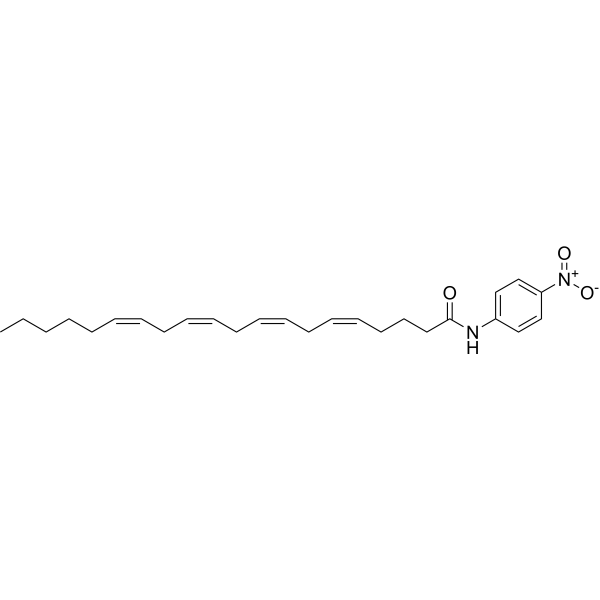
Arachidonoyl p-nitroaniline is a substrate for the hydrolysis of p-nitroaniline by FAAH in Dictyostelium discoideum with long-chain unsaturated fatty acids. Arachidonoyl p-nitroaniline can be used in enzyme kinetic studies. Examples include determining the hydrolysis rate of Arachidonoyl p-nitroaniline and analyzing the fatty acid amide hydrolase activity of recombinant His-FAAH purified from Dictyostelium to characterize the binding and catalytic specificity of mammalian FAAH enzymes .
|
-
-
- HY-134511
-
|
|
Prostaglandin Receptor
|
Inflammation/Immunology
Cancer
|
|
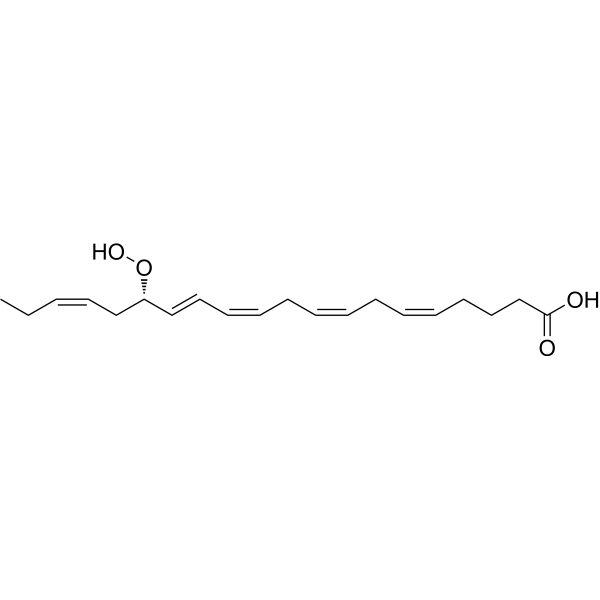
15(S)-HpEPE is a product of lipoxygenase hydrolysis of unsaturated fatty acids (PUFA) and is a potential inhibitor of prostaglandin H synthase 2 (PGHS-2). 15(S)-HpEPE can downregulate the expression of PGHS-2 .
|
-
-
- HY-158362A
-
|
|
Endogenous Metabolite
|
Neurological Disease
Metabolic Disease
Inflammation/Immunology
|
|
Monoglyceride lipase, Bacillus sp., is a key enzyme involved in lipid metabolism. It catalyzes the hydrolysis of monoglycerides (particularly 2-AG, or 2-arachidonoylglycerol) into glycerol and free fatty acids. By regulating the levels of 2-AG, Monoglyceride lipase, Bacillus sp., can influence neural signaling, pain perception, inflammatory responses, and metabolic processes .
|
-

-
- HY-129043R
-
|
|
Reference Standards
Drug Metabolite
|
Infection
|
|
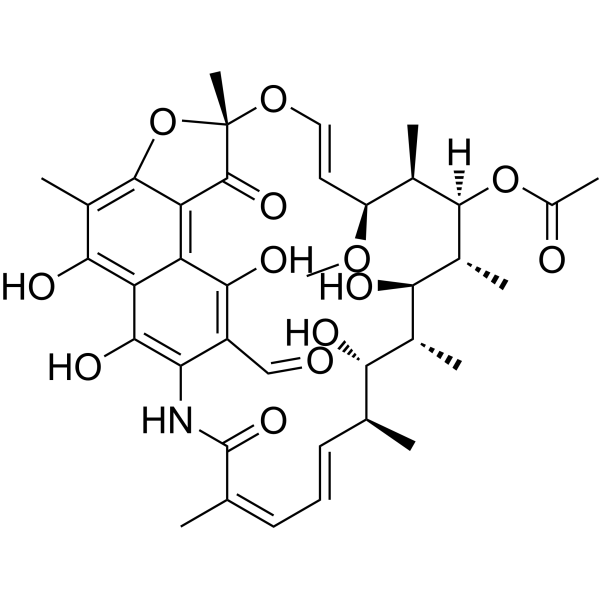
3-Formyl rifamycin (Standard) is the analytical standard of 3-Formyl rifamycin (HY-129043). This product is intended for research and analytical applications. 3-Formyl rifamycin is an acid degradation product of the broad-spectrum antibiotic Rifampicin (HY-B0272). 3-Formyl rifamycin forms via acid hydrolysis of Rifampicin in an acidic environment .
|
-
-
- HY-133724R
-
-

-
- HY-129934
-
|
Lat-NEt
|
Prostaglandin Receptor
|
Endocrinology
|
|
Latanoprost ethyl amide (Lat-NEt) is a latanoprost analog in which the C-1 carboxyl group has been modified to an N-ethyl amide. Prostaglandin esters have been shown to have ocular hypotensive activity.1 Prostaglandin N-ethyl amides were recently introduced as alternative prostaglandin ocular hypotensive prodrugs. Although it has been claimed that prostaglandin ethyl amides are not converted to the free acids in vivo, studies in our laboratories have shown that bovine and human corneal tissue converts the N-ethyl amides of various prostaglandins to the free acids with a conversion rate of about 2.5 μg/g corneal tissue/hr. Lat-NEt would be expected to show the typical intraocular effects of Latanoprost free acid, but with the much slower hydrolysis pharmacokinetics of the prostaglandin N-amides.
|
-

-
- HY-129934S
-
|
Lat-NEt-d4
|
Isotope-Labeled Compounds
Prostaglandin Receptor
|
Endocrinology
|
|
Latanoprost ethyl amide-d4 (Lat-NEt-d4) is deuterium labeled Latanoprost ethyl amide. Latanoprost ethyl amide (Lat-NEt) is a latanoprost analog in which the C-1 carboxyl group has been modified to an N-ethyl amide. Prostaglandin esters have been shown to have ocular hypotensive activity.1 Prostaglandin N-ethyl amides were recently introduced as alternative prostaglandin ocular hypotensive prodrugs. Although it has been claimed that prostaglandin ethyl amides are not converted to the free acids in vivo, studies in our laboratories have shown that bovine and human corneal tissue converts the N-ethyl amides of various prostaglandins to the free acids with a conversion rate of about 2.5 μg/g corneal tissue/hr. Lat-NEt would be expected to show the typical intraocular effects of Latanoprost free acid, but with the much slower hydrolysis pharmacokinetics of the prostaglandin N-amides .
|
-

-
- HY-121465
-
|
|
Endogenous Metabolite
|
Metabolic Disease
|
|
Stearoyl serotonin is a hybrid molecule patterned after arachidonoyl serotonin. Arachidonoyl serotonin is a dual antagonist of fatty acid amide hydrolase (FAAH) and the transient receptor potential vanilloid-type 1 (TRPV1) channel, reducing both acute and chronic peripheral pain. The effects of replacing the arachidonoyl portion with the saturated 18-carbon stearoyl moiety have not been studied. However, replacement of arachidonate with saturated 11- or 12-carbon fatty acids produces compounds that potently inhibit capsaicin-induced TRPV1 channel activation (IC50=0.76 μM) without blocking FAAH-mediated hydrolysis of arachidonoyl ethanolamine (IC50 > 50 μM).
|
-

-
- HY-E70017A
-
|
|
Endogenous Metabolite
|
Metabolic Disease
|
|
Peptidase, Porcine is any enzyme that performs proteolysis, that is, begins protein catabolism by hydrolysis of the peptide bonds that link amino acids together in a polypeptide chain.
|
-

-
- HY-E70933A
-
|
|
Endogenous Metabolite
|
Metabolic Disease
|
|
Protease, Rhizopus sp. is any enzyme that performs proteolysis, that is, begins protein catabolism by hydrolysis of the peptide bonds that link amino acids together in a polypeptide chain.
|
-

-
- HY-P2879H
-
|
|
Biochemical Assay Reagents
|
Others
|
|
Cholesterol esterase, PEG Modified, is a polyethylene glycol (PEG) modified cholesterol esterase. Cholesterol esterase is an enzyme that catalyzes the hydrolysis of cholesterol esters into sterols and fatty acids.
|
-

-
- HY-P2746A
-
|
|
Carboxypeptidase
|
Others
|
|
Carboxypeptidase-B rat (EC 3.4.17.2) catalyzes the hydrolysis of the basic amino acids, lysine, arginine, and ornithine from the C-terminal position of polypeptides. Carboxypeptidase-B rat (EC 3.4.17.2) may be used for sequence analysis by successive cleavage of C-terminal basic amino acids.
|
-

-
- HY-N18327
-
|
|
Drug Derivative
|
Others
|
|
Terrestrosin F is a furostanol saponin found in the fruits of Tribulus terrestris .
|
-

-
- HY-P2879C
-
|
|
Endogenous Metabolite
|
Metabolic Disease
|
|
Cholesterol esterase, Schizophyllum commune is an enzyme that catalyzes the hydrolysis of cholesterol esters into free cholesterol and fatty acids, facilitating the absorption of cholesterol in the intestine.
Cholesterol esterase, Schizophyllum commune can be used in combination with cholesterol oxidase to measure cholesterol content .
|
-

-
- HY-P1748A
-
|
|
Biochemical Assay Reagents
|
Metabolic Disease
|
|
Thermolysin (Geobacillus stearothermophilus (EC 3.4.24.27)) is a thermostable neutral metalloproteinase. It requires one zinc ion to maintain enzyme activity and four calcium ions to maintain structural stability. Thermolysin (Geobacillus stearothermophilus (EC 3.4.24.27) specifically catalyzes the hydrolysis of peptide bonds containing hydrophobic amino acids.
|
-

-
- HY-P11734
-
|
|
Ser/Thr Protease
|
Others
|
|
Suc-AAPY-pNA is an oligptide compound and protease substrate. Suc-AAPY-pNA undergoes hydrolysis by proteases at the peptide bond between tyrosine and p-nitroaniline, releasing p-nitroaniline with an absorption peak at OD410. Suc-AAPY-pNA functions as a substrate in preclinical assays for measuring activity of acidic, neutral, and alkaline proteases .
|
-

-
- HY-E70964A
-
|
|
Aminopeptidase
|
Metabolic Disease
|
|
Leucine Aminopeptidase, Porcine (EC 3.4.11.1) is a proteolytic enzyme which hydrolyzes the peptide bond adjacent to a free amino group. Leucine Aminopeptidase, Porcine (EC 3.4.11.1) rapidly catalyzes the hydrolysis of leucine containing peptides and also catalyzes the hydrolytic release of other amino acids located at the N-terminal end of various peptides and proteins.
|
-

-
- HY-167306
-
|
|
Biochemical Assay Reagents
|
Others
|
|
PLLA2000-PEG5000-Thiol is a polylactic acid derivative that forms micelles in water and initiates biodegradation by attacking ester bonds through hydrolysis. PLLA2000-PEG5000-Thiol can be used in drug delivery research .
|
-

-
- HY-167299
-
|
|
Biochemical Assay Reagents
|
Others
|
|
PLLA4000-PEG3000-Thiol is a polylactic acid derivative that forms micelles in water and initiates biodegradation by attacking ester bonds through hydrolysis. PLLA4000-PEG3000-Thiol can be used in drug delivery research .
|
-

-
- HY-167309
-
|
|
Biochemical Assay Reagents
|
Others
|
|
PLLA2000-PEG1000-Thiol is a polylactic acid derivative that forms micelles in water and initiates biodegradation by attacking ester bonds through hydrolysis. PLLA2000-PEG1000-Thiol can be used in drug delivery research .
|
-

-
- HY-167296
-
|
|
Biochemical Assay Reagents
|
Others
|
|
PLLA5000-PEG2000-Thiol is a polylactic acid derivative that forms micelles in water and initiates biodegradation by attacking ester bonds through hydrolysis. PLLA5000-PEG2000-Thiol can be used in drug delivery research .
|
-

-
- HY-167297
-
|
|
Biochemical Assay Reagents
|
Others
|
|
PLLA5000-PEG1000-Thiol is a polylactic acid derivative that forms micelles in water and initiates biodegradation by attacking ester bonds through hydrolysis. PLLA5000-PEG1000-Thiol can be used in drug delivery research .
|
-

-
- HY-167300
-
|
|
Biochemical Assay Reagents
|
Others
|
|
PLLA4000-PEG2000-Thiol is a polylactic acid derivative that forms micelles in water and initiates biodegradation by attacking ester bonds through hydrolysis. PLLA4000-PEG2000-Thiol can be used in drug delivery research .
|
-

-
- HY-167315
-
|
|
Biochemical Assay Reagents
|
Others
|
|
PLLA10000-PEG3000-Thiol is a polylactic acid derivative that forms micelles in water and initiates biodegradation by attacking ester bonds through hydrolysis. PLLA10000-PEG3000-Thiol can be used in drug delivery research .
|
-

-
- HY-167317
-
|
|
Biochemical Assay Reagents
|
Others
|
|
PLLA10000-PEG1000-Thiol is a polylactic acid derivative that forms micelles in water and initiates biodegradation by attacking ester bonds through hydrolysis. PLLA10000-PEG1000-Thiol can be used in drug delivery research .
|
-

-
- HY-167303
-
|
|
Biochemical Assay Reagents
|
Others
|
|
PLLA3000-PEG3000-Thiol is a polylactic acid derivative that forms micelles in water and initiates biodegradation by attacking ester bonds through hydrolysis. PLLA3000-PEG3000-Thiol can be used in drug delivery research .
|
-

-
- HY-167314
-
|
|
Biochemical Assay Reagents
|
Others
|
|
PLLA10000-PEG5000-Thiol is a polylactic acid derivative that forms micelles in water and initiates biodegradation by attacking ester bonds through hydrolysis. PLLA10000-PEG5000-Thiol can be used in drug delivery research .
|
-

-
- HY-167312
-
|
|
Biochemical Assay Reagents
|
Others
|
|
PLLA1000-PEG2000-Thiol is a polylactic acid derivative that forms micelles in water and initiates biodegradation by attacking ester bonds through hydrolysis. PLLA1000-PEG2000-Thiol can be used in drug delivery research .
|
-

- HY-128476R
-
|
|
Biochemical Assay Reagents
Reference Standards
|
Others
|
|
Sodium Tartrate (Standard) is the analytical standard of Sodium Tartrate. This product is intended for research and analytical applications. Sodium Tartrate is a pH-Regulating agent with antioxidant activity. Sodium Tartrate is particularly effective retarding hydrolysis while heating at high temperatures, resulting in increase of acid values (AVs) of vegetable oils[1].
|
-

- HY-167308
-
|
|
Biochemical Assay Reagents
|
Others
|
|
PLLA2000-PEG2000-Thiol is a polylactic acid derivative that forms micelles in water and initiates biodegradation by attacking ester bonds through hydrolysis. PLLA2000-PEG2000-Thiol can be used in drug delivery research .
|
-

- HY-167294
-
|
|
Biochemical Assay Reagents
|
Others
|
|
PLLA5000-PEG5000-Thiol is a polylactic acid derivative that forms micelles in water and initiates biodegradation by attacking ester bonds through hydrolysis. PLLA5000-PEG5000-Thiol can be used in drug delivery research .
|
-

- HY-167295
-
|
|
Biochemical Assay Reagents
|
Others
|
|
PLLA5000-PEG3000-Thiol is a polylactic acid derivative that forms micelles in water and initiates biodegradation by attacking ester bonds through hydrolysis. PLLA5000-PEG3000-Thiol can be used in drug delivery research .
|
-

- HY-167311
-
|
|
Biochemical Assay Reagents
|
Others
|
|
PLLA1000-PEG3000-Thiol is a polylactic acid derivative that forms micelles in water and initiates biodegradation by attacking ester bonds through hydrolysis. PLLA1000-PEG3000-Thiol can be used in drug delivery research .
|
-

- HY-167316
-
|
|
Biochemical Assay Reagents
|
Others
|
|
PLLA10000-PEG2000-Thiol is a polylactic acid derivative that forms micelles in water and initiates biodegradation by attacking ester bonds through hydrolysis. PLLA10000-PEG2000-Thiol can be used in drug delivery research .
|
-

- HY-167305
-
|
|
Biochemical Assay Reagents
|
Others
|
|
PLLA3000-PEG1000-Thiol is a polylactic acid derivative that forms micelles in water and initiates biodegradation by attacking ester bonds through hydrolysis. PLLA3000-PEG1000-Thiol can be used in drug delivery research .
|
-

- HY-167304
-
|
|
Biochemical Assay Reagents
|
Others
|
|
PLLA3000-PEG2000-Thiol is a polylactic acid derivative that forms micelles in water and initiates biodegradation by attacking ester bonds through hydrolysis. PLLA3000-PEG2000-Thiol can be used in drug delivery research .
|
-

- HY-167301
-
|
|
Biochemical Assay Reagents
|
Others
|
|
PLLA4000-PEG1000-Thiol is a polylactic acid derivative that forms micelles in water and initiates biodegradation by attacking ester bonds through hydrolysis. PLLA4000-PEG1000-Thiol can be used in drug delivery research .
|
-

- HY-167302
-
|
|
Biochemical Assay Reagents
|
Others
|
|
PLLA3000-PEG5000-Thiol is a polylactic acid derivative that forms micelles in water and initiates biodegradation by attacking ester bonds through hydrolysis. PLLA3000-PEG5000-Thiol can be used in drug delivery research .
|
-

- HY-167310
-
|
|
Biochemical Assay Reagents
|
Others
|
|
PLLA1000-PEG5000-Thiol is a polylactic acid derivative that forms micelles in water and initiates biodegradation by attacking ester bonds through hydrolysis. PLLA1000-PEG5000-Thiol can be used in drug delivery research .
|
-

- HY-167298
-
|
|
Biochemical Assay Reagents
|
Others
|
|
PLLA4000-PEG5000-Thiol is a polylactic acid derivative that forms micelles in water and initiates biodegradation by attacking ester bonds through hydrolysis. PLLA4000-PEG5000-Thiol can be used in drug delivery research .
|
-

- HY-167307
-
|
|
Biochemical Assay Reagents
|
Others
|
|
PLLA2000-PEG3000-Thiol is a polylactic acid derivative that forms micelles in water and initiates biodegradation by attacking ester bonds through hydrolysis. PLLA2000-PEG3000-Thiol can be used in drug delivery research .
|
-

- HY-167313
-
|
|
Biochemical Assay Reagents
|
Others
|
|
PLLA1000-PEG1000-Thiol is a polylactic acid derivative that forms micelles in water and initiates biodegradation by attacking ester bonds through hydrolysis. PLLA1000-PEG1000-Thiol can be used in drug delivery research .
|
-

- HY-180463
-
|
|
Drug Metabolite
|
Others
|
|
Rubradirin aglycone (Compound 7) is an aglycone of Rubradirin and can be obtained by mild acid hydrolysis of Rubradirin .
|
-

- HY-N18361
-
|
Wujiapioside B
|
Others
|
Others
|
|
Oplopanaxoside C (Wujiapioside B) is a lupane-triterpene glycoside found in the leaves of Acanthopanax gracilistylus .
|
-

- HY-N18337
-
|
|
Drug Derivative
|
Others
|
|
Salidroside 3-O-glucopyranoside is a phenylethanol glycoside found in the aerial parts of Teucrium polium .
|
-

- HY-N18372
-
|
|
Others
|
Others
|
|
Hispidulin 7-O-glucuronide methyl ester is a flavone glycoside. Hispidulin 7-O-glucuronide methyl ester can be found in the aerial part of Centaurea furfuracea .
|
-

- HY-P2973A
-
|
Aspergillus acid protease (Xeno-free)
|
Fungal
Endogenous Metabolite
|
Infection
|
|
Aspergillopepsin I (Xeno-free) is an acid protease and aspartic protease. Aspergillopepsin I (Xeno-free) is derived from the marine fungus Aspergillus tubingensis. Aspergillopepsin I from Aspergillus tubingensis hydrolyzes glycinin, especially the 7S globulin .
|
-

- HY-N19612
-
|
|
Ser/Thr Protease
|
Others
|
|
Proteasefrom aspergillus oryzae is a serine protease identified in the non-transgenic Aspergillus ochraceus strain AE-P. Proteasefrom aspergillus oryzae functions as a food enzyme and catalyzes protein hydrolysis with broad-spectrum specificity .
|
-

| Cat. No. |
Product Name |
Type |
-
- HY-148123
-
|
|
Biochemical Assay Reagents
|
|
Glycerophospholipids and cephalins are a class of phospholipid compounds and important components of neural membranes. Glycerophospholipids and cephalins are hydrolysis substrates of phospholipase (such as PLA2, PLC, and PLD). After complete hydrolysis, they produce 1 mol of glycerol, phosphate, ethanolamine, and 2 mol of fatty acids, respectively. Glycerophospholipids and cephalins can maintain membrane structure, fluidity, and ion permeability, and serve as precursors of second messengers such as arachidonic acid and diacylglycerol. Glycerophospholipids and cephalins can regulate signal transduction, cell apoptosis, and membrane transport, and are used in the study of neurodegenerative diseases (such as Alzheimer's disease) .
|
-
- HY-W392100A
-
|
PCL-diol (MW 530)
|
Biochemical Assay Reagents
|
|
Polycaprolactone diol (MW 530) (PCL-diol (MW 530)) is a poly (ε-caprolactone) diol with an average molecular weight of 530 g·mol −1, which serves as a monomer for biodegradable network elastic polyesters. Network polyester films undergo enzymatic hydrolysis by Rhizopus delemar lipase .
|
-
- HY-167306
-
|
|
Biochemical Assay Reagents
|
|
PLLA2000-PEG5000-Thiol is a polylactic acid derivative that forms micelles in water and initiates biodegradation by attacking ester bonds through hydrolysis. PLLA2000-PEG5000-Thiol can be used in drug delivery research .
|
-
- HY-167299
-
|
|
Biochemical Assay Reagents
|
|
PLLA4000-PEG3000-Thiol is a polylactic acid derivative that forms micelles in water and initiates biodegradation by attacking ester bonds through hydrolysis. PLLA4000-PEG3000-Thiol can be used in drug delivery research .
|
-
- HY-167309
-
|
|
Biochemical Assay Reagents
|
|
PLLA2000-PEG1000-Thiol is a polylactic acid derivative that forms micelles in water and initiates biodegradation by attacking ester bonds through hydrolysis. PLLA2000-PEG1000-Thiol can be used in drug delivery research .
|
-
- HY-167296
-
|
|
Biochemical Assay Reagents
|
|
PLLA5000-PEG2000-Thiol is a polylactic acid derivative that forms micelles in water and initiates biodegradation by attacking ester bonds through hydrolysis. PLLA5000-PEG2000-Thiol can be used in drug delivery research .
|
-
- HY-167297
-
|
|
Biochemical Assay Reagents
|
|
PLLA5000-PEG1000-Thiol is a polylactic acid derivative that forms micelles in water and initiates biodegradation by attacking ester bonds through hydrolysis. PLLA5000-PEG1000-Thiol can be used in drug delivery research .
|
-
- HY-167300
-
|
|
Biochemical Assay Reagents
|
|
PLLA4000-PEG2000-Thiol is a polylactic acid derivative that forms micelles in water and initiates biodegradation by attacking ester bonds through hydrolysis. PLLA4000-PEG2000-Thiol can be used in drug delivery research .
|
-
- HY-167315
-
|
|
Biochemical Assay Reagents
|
|
PLLA10000-PEG3000-Thiol is a polylactic acid derivative that forms micelles in water and initiates biodegradation by attacking ester bonds through hydrolysis. PLLA10000-PEG3000-Thiol can be used in drug delivery research .
|
-
- HY-167317
-
|
|
Biochemical Assay Reagents
|
|
PLLA10000-PEG1000-Thiol is a polylactic acid derivative that forms micelles in water and initiates biodegradation by attacking ester bonds through hydrolysis. PLLA10000-PEG1000-Thiol can be used in drug delivery research .
|
-
- HY-167303
-
|
|
Biochemical Assay Reagents
|
|
PLLA3000-PEG3000-Thiol is a polylactic acid derivative that forms micelles in water and initiates biodegradation by attacking ester bonds through hydrolysis. PLLA3000-PEG3000-Thiol can be used in drug delivery research .
|
-
- HY-167314
-
|
|
Biochemical Assay Reagents
|
|
PLLA10000-PEG5000-Thiol is a polylactic acid derivative that forms micelles in water and initiates biodegradation by attacking ester bonds through hydrolysis. PLLA10000-PEG5000-Thiol can be used in drug delivery research .
|
-
- HY-167312
-
|
|
Biochemical Assay Reagents
|
|
PLLA1000-PEG2000-Thiol is a polylactic acid derivative that forms micelles in water and initiates biodegradation by attacking ester bonds through hydrolysis. PLLA1000-PEG2000-Thiol can be used in drug delivery research .
|
-
- HY-167308
-
|
|
Biochemical Assay Reagents
|
|
PLLA2000-PEG2000-Thiol is a polylactic acid derivative that forms micelles in water and initiates biodegradation by attacking ester bonds through hydrolysis. PLLA2000-PEG2000-Thiol can be used in drug delivery research .
|
-
- HY-167294
-
|
|
Biochemical Assay Reagents
|
|
PLLA5000-PEG5000-Thiol is a polylactic acid derivative that forms micelles in water and initiates biodegradation by attacking ester bonds through hydrolysis. PLLA5000-PEG5000-Thiol can be used in drug delivery research .
|
-
- HY-167295
-
|
|
Biochemical Assay Reagents
|
|
PLLA5000-PEG3000-Thiol is a polylactic acid derivative that forms micelles in water and initiates biodegradation by attacking ester bonds through hydrolysis. PLLA5000-PEG3000-Thiol can be used in drug delivery research .
|
-
- HY-167311
-
|
|
Biochemical Assay Reagents
|
|
PLLA1000-PEG3000-Thiol is a polylactic acid derivative that forms micelles in water and initiates biodegradation by attacking ester bonds through hydrolysis. PLLA1000-PEG3000-Thiol can be used in drug delivery research .
|
-
- HY-167316
-
|
|
Biochemical Assay Reagents
|
|
PLLA10000-PEG2000-Thiol is a polylactic acid derivative that forms micelles in water and initiates biodegradation by attacking ester bonds through hydrolysis. PLLA10000-PEG2000-Thiol can be used in drug delivery research .
|
-
- HY-167305
-
|
|
Biochemical Assay Reagents
|
|
PLLA3000-PEG1000-Thiol is a polylactic acid derivative that forms micelles in water and initiates biodegradation by attacking ester bonds through hydrolysis. PLLA3000-PEG1000-Thiol can be used in drug delivery research .
|
-
- HY-167304
-
|
|
Biochemical Assay Reagents
|
|
PLLA3000-PEG2000-Thiol is a polylactic acid derivative that forms micelles in water and initiates biodegradation by attacking ester bonds through hydrolysis. PLLA3000-PEG2000-Thiol can be used in drug delivery research .
|
-
- HY-167301
-
|
|
Biochemical Assay Reagents
|
|
PLLA4000-PEG1000-Thiol is a polylactic acid derivative that forms micelles in water and initiates biodegradation by attacking ester bonds through hydrolysis. PLLA4000-PEG1000-Thiol can be used in drug delivery research .
|
-
- HY-167302
-
|
|
Biochemical Assay Reagents
|
|
PLLA3000-PEG5000-Thiol is a polylactic acid derivative that forms micelles in water and initiates biodegradation by attacking ester bonds through hydrolysis. PLLA3000-PEG5000-Thiol can be used in drug delivery research .
|
-
- HY-167310
-
|
|
Biochemical Assay Reagents
|
|
PLLA1000-PEG5000-Thiol is a polylactic acid derivative that forms micelles in water and initiates biodegradation by attacking ester bonds through hydrolysis. PLLA1000-PEG5000-Thiol can be used in drug delivery research .
|
-
- HY-167298
-
|
|
Biochemical Assay Reagents
|
|
PLLA4000-PEG5000-Thiol is a polylactic acid derivative that forms micelles in water and initiates biodegradation by attacking ester bonds through hydrolysis. PLLA4000-PEG5000-Thiol can be used in drug delivery research .
|
-
- HY-167307
-
|
|
Biochemical Assay Reagents
|
|
PLLA2000-PEG3000-Thiol is a polylactic acid derivative that forms micelles in water and initiates biodegradation by attacking ester bonds through hydrolysis. PLLA2000-PEG3000-Thiol can be used in drug delivery research .
|
-
- HY-167313
-
|
|
Biochemical Assay Reagents
|
|
PLLA1000-PEG1000-Thiol is a polylactic acid derivative that forms micelles in water and initiates biodegradation by attacking ester bonds through hydrolysis. PLLA1000-PEG1000-Thiol can be used in drug delivery research .
|
| Cat. No. |
Product Name |
Target |
Research Area |
-
- HY-P10053
-
|
|
Phospholipase
|
Metabolic Disease
|
|
sPLA2-IIA Inhibitor is a cyclic pentapeptide analog of FLSYK (cyclic 2-Nal-Leu-Ser-2-Nal-Arg (c2)), that binds to hGIIA (human IIA phospholipase A2) and inhibits its hydrolytic ability. sPLA2 is a member of the esterase superfamily that catalyzes the hydrolysis of the ester bond at the sn-2 position of glycerophospholipids, releasing free fatty acids such as arachidonic acid and lysophospholipids .
|
-
- HY-P11734
-
|
|
Ser/Thr Protease
|
Others
|
|
Suc-AAPY-pNA is an oligptide compound and protease substrate. Suc-AAPY-pNA undergoes hydrolysis by proteases at the peptide bond between tyrosine and p-nitroaniline, releasing p-nitroaniline with an absorption peak at OD410. Suc-AAPY-pNA functions as a substrate in preclinical assays for measuring activity of acidic, neutral, and alkaline proteases .
|
| Cat. No. |
Product Name |
Category |
Target |
Chemical Structure |
| Cat. No. |
Product Name |
Chemical Structure |
-
- HY-129934S
-
|
|
|
Latanoprost ethyl amide-d4 (Lat-NEt-d4) is deuterium labeled Latanoprost ethyl amide. Latanoprost ethyl amide (Lat-NEt) is a latanoprost analog in which the C-1 carboxyl group has been modified to an N-ethyl amide. Prostaglandin esters have been shown to have ocular hypotensive activity.1 Prostaglandin N-ethyl amides were recently introduced as alternative prostaglandin ocular hypotensive prodrugs. Although it has been claimed that prostaglandin ethyl amides are not converted to the free acids in vivo, studies in our laboratories have shown that bovine and human corneal tissue converts the N-ethyl amides of various prostaglandins to the free acids with a conversion rate of about 2.5 μg/g corneal tissue/hr. Lat-NEt would be expected to show the typical intraocular effects of Latanoprost free acid, but with the much slower hydrolysis pharmacokinetics of the prostaglandin N-amides .
|
-
Your information is safe with us. * Required Fields.
Inquiry Information
- Product Name:
- Cat. No.:
- Quantity:
- MCE Japan Authorized Agent:








