
1. Search Result
Search Result
Results for "

adult mice

" in MedChemExpress (MCE) Product Catalog:

24

Inhibitors & Agonists

1

Peptides

2

Inhibitory Antibodies

5

Natural
Products

1

Oligonucleotides

Cat. No. Product Name Target Research Areas Chemical Structure
  • HY-Y0966
    Glycine
    10+ Cited Publications

    Environmental Pollutants Endogenous Metabolite iGluR VEGFR Ninjurin Infection Neurological Disease Inflammation/Immunology Cancer
    Glycine is an inhibitory neurotransmitter in the CNS and also acts as a co-agonist along with glutamate, facilitating an excitatory potential at the glutaminergic N-methyl-D-aspartic acid (NMDA) receptors. Glycine is orally active. Glycine inhibits the membrane aggregation of NINJ1 and prevents plasma membrane rupture during cell death. Glycine can be used to study cell protection, cancer, neurological diseases, and angiogenesis .
    Glycine
  • HY-112680A

    G-quadruplex Neurological Disease
    Carboxy pyridostatin trifluoroacetate salt is a G-quadruplex ligand. Carboxy pyridostatin trifluoroacetate salt has a highly molecular specificity to RNA on DNA G4s and reduces ATF-5 protein. Carboxy pyridostatin trifluoroacetate salt reduces cell proliferation and hinders stress granule (SG) formation .
    Carboxy pyridostatin trifluoroacetate salt
  • HY-B1268
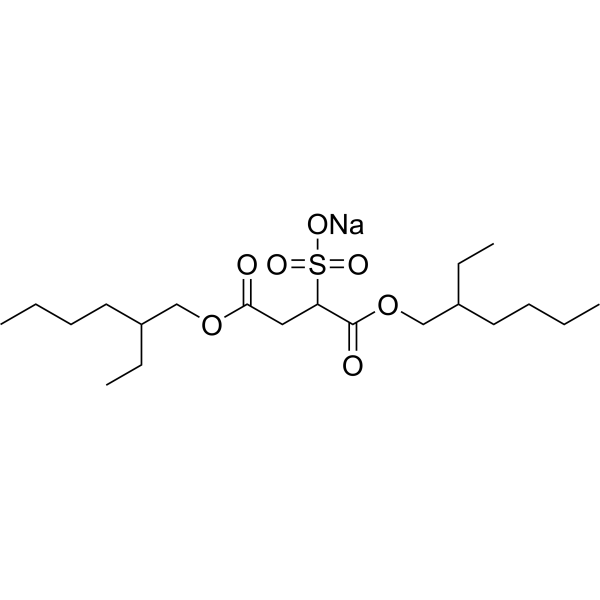
    Docusate Sodium
    2 Publications Verification

    Dioctyl sulfosuccinate sodium salt

    Environmental Pollutants HSV Others
    Docusate Sodium (Dioctyl sulfosuccinate sodium salt) is one of the main components in stool softeners. Docusate Sodium is a sulfated surfactant and may inactivate viral pathogens by disrupting viral envelopes and/or denaturing/disassociating proteins. Docusate Sodium is effective in vitro against wild type and drug-resistant strains of HSV type 1 and 2. Docusate Sodium is an obesogen. Docusate Sodium with developmental exposure leads to increased adult adiposity, inflammation, metabolic disorder and dyslipidemia in offspring fed a standard diet in mice .
    Docusate Sodium
  • HY-Y0966R
    Glycine (Standard)
    1 Publications Verification

    Reference Standards Endogenous Metabolite iGluR VEGFR Neurological Disease
    Glycine (Standard) is the analytical standard of Glycine. This product is intended for research and analytical applications. Glycine is an inhibitory neurotransmitter in the CNS and also acts as a co-agonist along with glutamate, facilitating an excitatory potential at the glutaminergic N-methyl-D-aspartic acid (NMDA) receptors. Glycine is orally active. Glycine can be used to study cell protection, cancer, neurological diseases, and angiogenesis .
    Glycine (Standard)
  • HY-B2167R

    DHA (Standard); Cervonic acid (Standard)

    Reference Standards Endogenous Metabolite Neurological Disease Cancer
    Docosahexaenoic acid (Standard) is the analytical standard of Docosahexaenoic acid. This product is intended for research and analytical applications. Docosahexaenoic Acid (DHA) is an omega-3 fatty acid abundantly present brain and retina. It can be obtained directly from fish oil and maternal milk. In Vitro: Docosahexaenoic acid (DHA) is essential for the growth and functional development of the brain in infants. DHA is also required for maintenance of normal brain function in adults. The inclusion of plentiful DHA in the diet improves learning ability and memory . DHA is an essential requirement in every step of brain development like neural cell proliferation, migration, differentiation, synaptogenesis. The multiple double bonds and unique structure allow DHA to impart special membrane characteristics for effective cell signaling. Many development disorders like dyslexia, autism spectrum disorder, attention deficit hyperactivity disorder, schizophrenia etc. are causally related to decreased level of DHA . DHA is a potent RXR ligand inducing robust RXR activation already at low micro molar concentrations. The EC50 for RXRα activation by DHA is about 5-10 μM fatty acid . In Vivo: Docosahexaenoic acid administration over 10 weeks significantly reduces the number of reference memory errors, without affecting the number of working memory errors, and significantly increases the docosahexaenoic acid content and the docosahexaenoic acid/arachidonic acid ratio in both the hippocampus and the cerebral cortex . DHA treatment exerts neuroprotective actions on an experimental mouse model of PD. There is a decrease tendency in brain lipid oxidation of MPTP mice but it does not significantly .
    Docosahexaenoic acid (Standard)
  • HY-402361

    MEK ERK AP-1 Neurological Disease Inflammation/Immunology
    TERT activator-1 is a small molecule activator of telomerase reverse transcriptase (TERT). TERT activator-1 promotes TERT transcription through the MEK/ERK/AP-1 signaling cascade. TERT activator-1 promotes adult neurogenesis and enhances neuromuscular function. TERT activator-1 reduces cellular senescence and systemic inflammation in aged mice, and can be used in the study of aging .
    TERT activator-1
  • HY-N2411
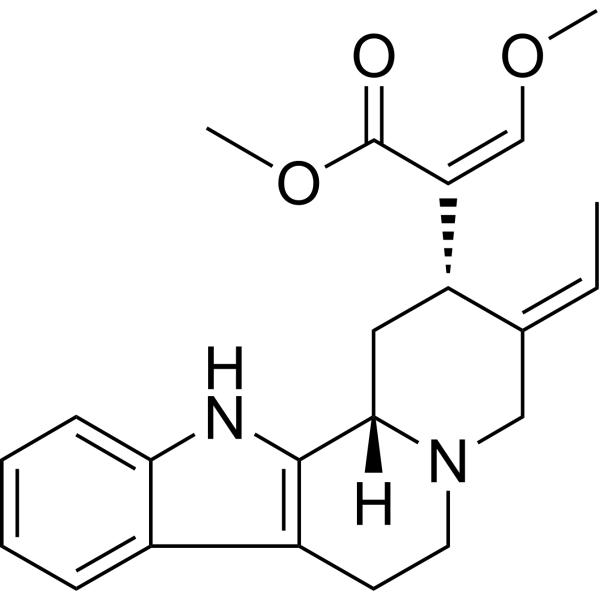
    Geissoschizine methyl ether
    1 Publications Verification

    5-HT Receptor Neurological Disease
    Geissoschizine methyl ether is an orally active, blood-brain barrier permeable alkaloid, and a partial agonist of the 5-HT1A receptor. It can be isolated from Uncaria hook. Geissoschizine methyl ether potently inhibits the binding of [ 3H]8-OH-DPAT to the 5-HT1A receptor in a concentration-dependent manner, with an IC50 of 0.904 μM. It ameliorates isolation-induced increased aggression and reduced sociability in mice. Geissoschizine methyl ether promotes oligodendrocyte differentiation and remyelination in the medial prefrontal cortex of adult mice .
    Geissoschizine methyl ether
  • HY-112680

    G-quadruplex Neurological Disease
    Carboxypyridostatin is a G-quadruplex ligand. Carboxypyridostatin has a highly molecular specificity to RNA on DNA G4s and reduces ATF-5 protein. Carboxypyridostatin reduces cell proliferation and hinders stress granule (SG) formation .
    Carboxypyridostatin
  • HY-P99976

    CD19 Inflammation/Immunology
    Anti-Mouse CD19 Antibody (1D3) is an IgG2a antibody inhibitor targeting mouse CD19. Anti-Mouse CD19 Antibody (1D3) reduces CD19 expression levels on the surface of B cells. Anti-Mouse CD19 Antibody (1D3) inhibits the replication of peritoneal B-1a cells .
    Anti-Mouse CD19 Antibody (1D3)
  • HY-112411

    EGFR ERK PDGFR FGFR Neurological Disease Inflammation/Immunology
    PD 174265 is a highly selective, reversible EGFR/ErbB2 tyrosine kinase inhibitor (IC50=0.45 nM) and cell differentiation inducer. By blocking receptor autophosphorylation and the downstream ERK signaling pathway (with an IC50 of 0.45 μM for full-length ERK), PD 174265 effectively inhibits tumor growth and exhibits antitumor activity without obvious toxicity in in vivo models. PD 174265 drives oligodendrocyte precursor cells to switch from a proliferative state to a differentiated state, significantly upregulates the expression of myelin proteins such as CNP, PLP and MBP, and induces neurite branching. PD 174265 shows no inhibitory effect on other kinases including insulin, PDGF and basic FGF receptors, and serves as a crucial tool molecule for investigating the treatment of human epidermoid carcinoma and the mechanism of myelin repair in multiple sclerosis .
    PD 174265
  • HY-B1017

    EN-1733A

    Dopamine Receptor Neurological Disease
    Molindone hydrochloride (EN-1733A) is an orally active and brain-penetrant dopamine D2/D5 receptor antagonist. Molindone hydrochloride shows antipsychotic and antidepressant-like activities. Molindone hydrochloride suppresses spontaneous locomotion, and antagonizes apomorphine-induced emesis. Molindone hydrochloride can be used for the research of neurological disease .
    Molindone (hydrochloride)
  • HY-B1268R

    Dioctyl sulfosuccinate sodium salt (Standard)

    Reference Standards HSV Others
    Docusate (Sodium) (Standard) is the analytical standard of Docusate (Sodium). This product is intended for research and analytical applications. Docusate Sodium (Dioctyl sulfosuccinate sodium salt) is one of the main components in stool softeners. Docusate Sodium is a sulfated surfactant and may inactivate viral pathogens by disrupting viral envelopes and/or denaturing/disassociating proteins. Docusate Sodium is effective in vitro against wild type and drug-resistant strains of HSV type 1 and 2. Docusate Sodium is an obesogen. Docusate Sodium with developmental exposure leads to increased adult adiposity, inflammation, metabolic disorder and dyslipidemia in offspring fed a standard diet in mice .
    Docusate Sodium (Standard)
  • HY-P10110

    Autophagy Neurological Disease
    retro-inverso TAT-Beclin 1 D-amino acid is has higher activity and resistance to proteolytic degradation in vivo compared to L-amino acids peptide. TAT-Beclin 1 can induce autophagy in peripheral tissues in adult mice as well as in the central nervous system of neonatal mice .
    retro-inverso TAT-Beclin 1 (D-amino acid)
  • HY-123664

    LY133314

    Estrogen Receptor/ERR Cancer
    Trioxifene mesylate (LY133314) is an orally active and selective estrogen receptor (ER) modulator with human ERα IC50 of 203.49 nM and Ki of 20.84 nM. Trioxifene mesylate binds estradiol receptors, inhibits ERα-mediated gene expression, reduces circulating gonadotrophin levels. Trioxifene mesylate can be used for the research of advanced breast cancer and androgen-independent, metastatic prostatic adenocarcinoma .
    Trioxifene mesylate
  • HY-182271

    Orphan GPCR GABA Receptor Phosphodiesterase (PDE) Metabolic Disease
    GPR61 Inverse agonist 3 is a selective and brain-penetrant GPR61 inverse agonist with human IC50 of 4.0 nM, mouse IC50 of 8.8 nM, human Ki of 0.34 nM, mouse Ki of 1.1 nM. GPR61 Inverse agonist 3 disrupts GPR61-Gαs protein interactions to abolish GPR61 constitutive activity. GPR61 Inverse agonist 3 moderately inhibits GABAA chloride channel and PDE3A1 with IC50 values of 4.6 and 8.9 μM. GPR61 Inverse agonist 3 shows no functional effect on food intake in adult mice co-administered with a pan-CYP inhibitor. GPR61 Inverse agonist 3 can be used for the research of cachexia/sarcopenia .
    GPR61 Inverse agonist 3
  • HY-179313

    Biochemical Assay Reagents Others
    PEG-DPCA conjugate 1 is a PEG-DPCA conjugate that can co-assemble with mPEG-Amide-tri(DPCA) (HY-179320) into a supramolecular polymer hydrogel with nanofiber structures. The supramolecular polymer hydrogel exhibits shear-thinning behavior for injectable delivery, high drug loading, and degrades in vivo to release only DPCA and PEG, induces in vivo earhole regeneration in adult non-healing mice. PEG-DPCA conjugate 1 can be used for tissue regeneration research .
    PEG-DPCA conjugate 1
  • HY-179320

    Biochemical Assay Reagents Others
    mPEG-Amide-tri(DPCA) is a PEG-DPCA conjugate that can self-assemble into a supramolecular polymer hydrogel with nanofiber structures. mPEG-Amide-tri(DPCA) supramolecular polymer hydrogel exhibits shear-thinning behavior for injectable delivery, high drug loading, and degrades in vivo to release only DPCA and PEG. mPEG-Amide-tri(DPCA) supramolecular polymer hydrogel induces in vivo earhole regeneration in adult non-healing mice. mPEG-Amide-tri(DPCA) can be used for tissue regeneration research .
    mPEG-Amide-tri(DPCA)
  • HY-N11732

    Drug Derivative Inflammation/Immunology
    O-Demethylrotenone is a rotenone (HY-B1756) derivative and a photodegradation product of rotenone that induces acute intraperitoneal toxicity. The acute intraperitoneal LD50 of O-Demethylrotenone in Mus musculus is 8.0 mg/kg .
    O-Demethylrotenone
  • HY-W182790

    LSL 60101

    Garsevil (LSL 60101) is a biphasic, selective imidazoline I2 receptor (I2-IR) ligand, with a pKi of 9.03 and a Ki of 0.9 nM at the high-affinity site, and a pKi of 5.25 and a Ki of 5.6 nM at the low-affinity site. Garsevil is applicable to research related to Alzheimer's disease .
    Garsevil
  • HY-180339

    Infection
    Antiparasitic agent-36 is a Schistosoma mansoni-targeting antischistosomal agent that exhibits antischistosomal activity in mice with oral effectiveness, and is a nuclear substituted monoaminophenoxyalkane. Antiparasitic agent-36 can be used for the research of schistosomiasis .
    Antiparasitic agent-36
  • HY-180388

    Fructose-1,6-bisphosphate aldolase Parasite Phosphatase Infection
    Stibophen is a potent antiparasitic agent is effective against Litomosoides carinii, Dipetalonema witei, and Brugia pahangi. Stibophen inhibits lactate accumulation and phosphofructokinases (PFK) activity in adult filariids. Stibophen also inhibits Ascaris and Hymenolepis diminuta PFK without inhibiting mammalian liver PFK. Stibophen can be used for the research of schistosomiasis and filariid infections .
    Stibophen
  • HY-180337

    Parasite Infection
    Antiparasitic agent-38 is an orally active antischistosomal agent that effectively clears Schistosoma mansoni infections in mice (single oral LD50=0.8 g/kg) and significantly inhibits S. mansoni infection. Antiparasitic agent-38 can be used for research on schistosomiasis, particularly S. mansoni infection .
    Antiparasitic agent-38
  • HY-P992063

    Transmembrane Glycoprotein Inflammation/Immunology
    Anti-Mouse CD8α Antibody (YTS 105.18) is a non-depleting rat IgG2a monoclonal antibody that binds to CD8α on mouse CD8 + T cells. When used in combination with a non-depleting anti-CD4 antibody, Anti-Mouse CD8α Antibody (YTS 105.18) does not deplete CD8 + T cells, but instead promotes the induction of peripheral tolerance in this cell subset. Anti-Mouse CD8α Antibody (YTS 105.18) can be used for research on graft rejection. The recommended isotype control is Mouse IgG2a kappa, Isotype Control (HY-P99978) .
    Anti-Mouse CD8α Antibody (YTS 105.18)
  • HY-135529

    LY133314 free base

    Estrogen Receptor/ERR Cancer
    Trioxifene (LY133314 free base) is an orally active and selective estrogen receptor (ER) modulator with human ERα IC50 of 203.49 nM and Ki of 20.84 nM. Trioxifene binds estradiol receptors, inhibits ERα-mediated gene expression, reduces circulating gonadotrophin levels. Trioxifene can be used for the research of advanced breast cancer and androgen-independent, metastatic prostatic adenocarcinoma .
    Trioxifene

Inquiry Online

Your information is safe with us. * Required Fields.

Salutation


Country or Region *

Applicant Name *


Organization Name *

Department *


Email Address *


Product Name *

Cat. No.


Requested quantity *

Phone Number *


Remarks

Inquiry Online

Inquiry Information

Product Name:
Cat. No.:
Quantity:
MCE Japan Authorized Agent:

