



Docosahexaenoic acid (Standard)

Based on 1 Customer Validation
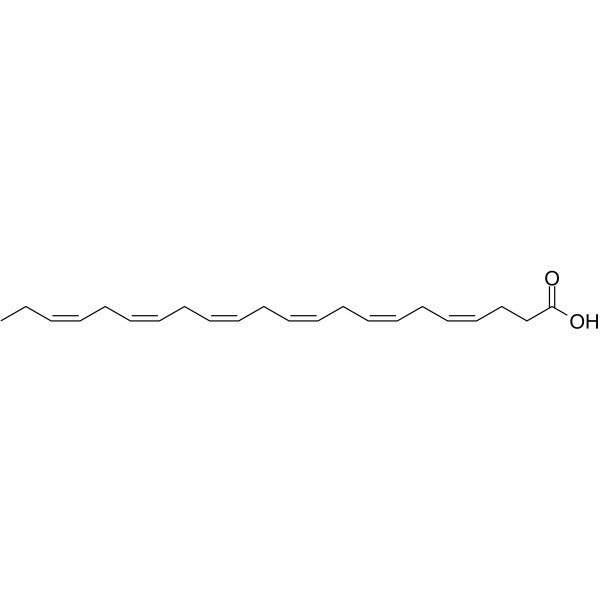
Docosahexaenoic acid (Standard) is the analytical standard of Docosahexaenoic acid. This product is intended for research and analytical applications. Docosahexaenoic Acid (DHA) is an omega-3 fatty acid abundantly present brain and retina. It can be obtained directly from fish oil and maternal milk. In Vitro: Docosahexaenoic acid (DHA) is essential for the growth and functional development of the brain in infants. DHA is also required for maintenance of normal brain function in adults. The inclusion of plentiful DHA in the diet improves learning ability and memory. DHA is an essential requirement in every step of brain development like neural cell proliferation, migration, differentiation, synaptogenesis. The multiple double bonds and unique structure allow DHA to impart special membrane characteristics for effective cell signaling. Many development disorders like dyslexia, autism spectrum disorder, attention deficit hyperactivity disorder, schizophrenia etc. are causally related to decreased level of DHA. DHA is a potent RXR ligand inducing robust RXR activation already at low micro molar concentrations. The EC50 for RXRα activation by DHA is about 5-10 μM fatty acid. In Vivo: Docosahexaenoic acid administration over 10 weeks significantly reduces the number of reference memory errors, without affecting the number of working memory errors, and significantly increases the docosahexaenoic acid content and the docosahexaenoic acid/arachidonic acid ratio in both the hippocampus and the cerebral cortex. DHA treatment exerts neuroprotective actions on an experimental mouse model of PD. There is a decrease tendency in brain lipid oxidation of MPTP mice but it does not significantly.
For research use only. We do not sell to patients.
- Purity : 96.47%
- CAS No.: 6217-54-5
- Formula: C22H32O2
- Molecular Weight:328.49
-
Storage:
Please store the product under the recommended conditions in the Certificate of Analysis.


To place orders, for customer services and technical support, please contact: MedChemExpress USA
Tel: 609-228-6898 E-mail: [email protected] [email protected]


-
 Product Information
-
Chemical Information
- Purity & Documentation
-
 Help & FAQs


-

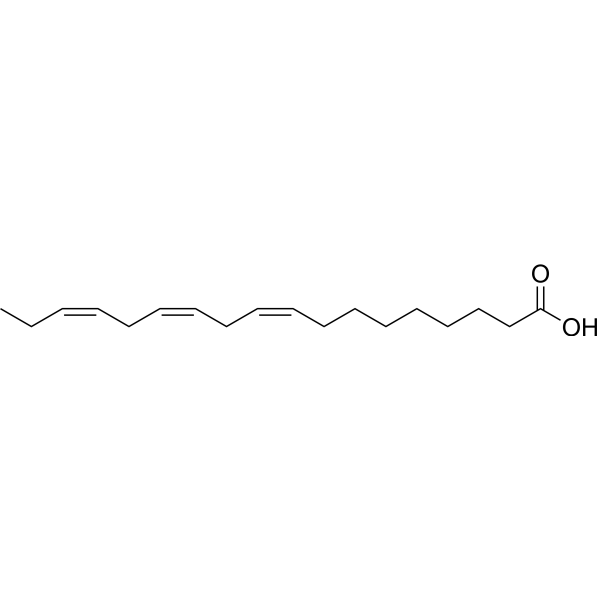
HY-B0660R
Eicosapentaenoic Acid (Standard) -
HY-N0728R
α-Linolenic acid (Standard) -
HY-B2167
Docosahexaenoic acid -
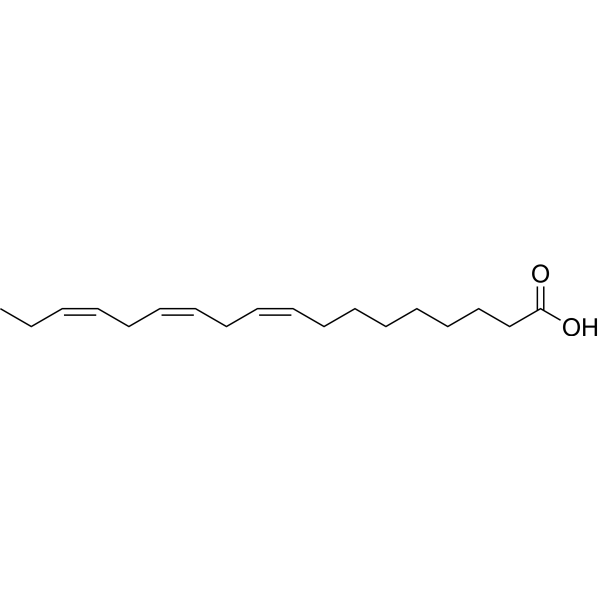
HY-N0728
α-Linolenic acid -
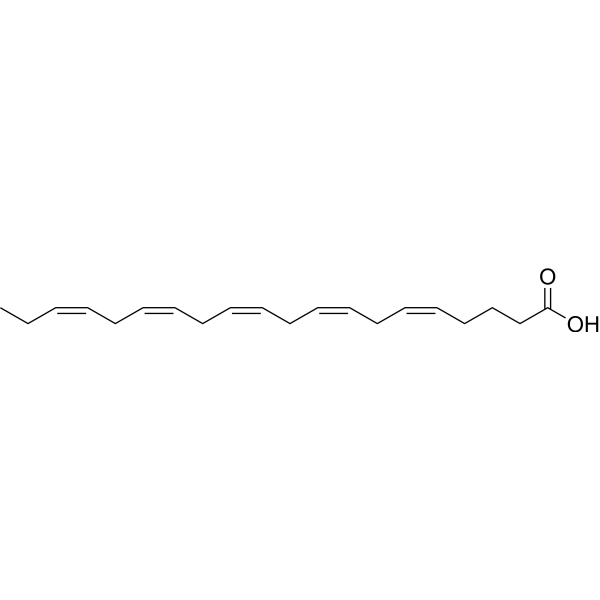
HY-B0660
Eicosapentaenoic Acid -
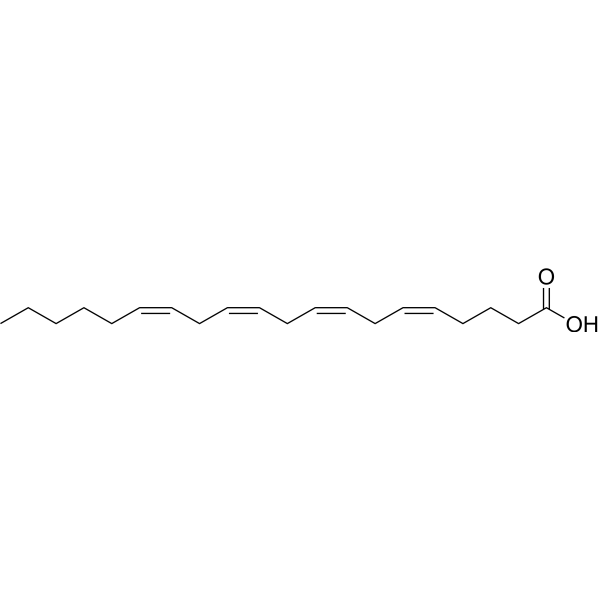
HY-109590R
Arachidonic acid (Standard) -
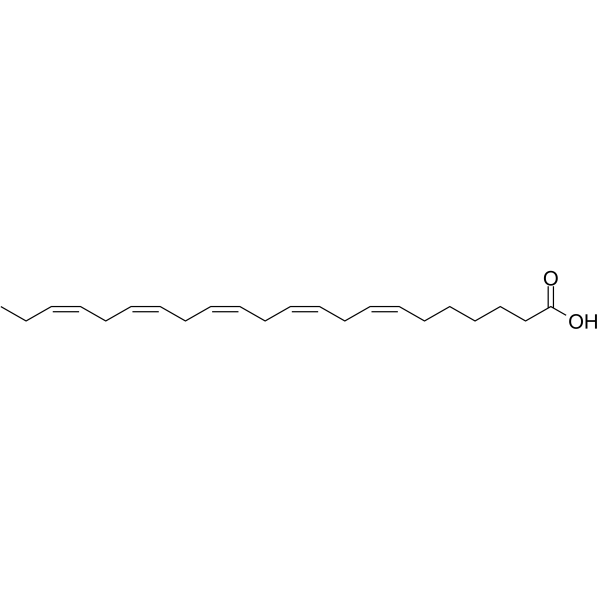
HY-113159
Docosapentaenoic acid (22n-3) -
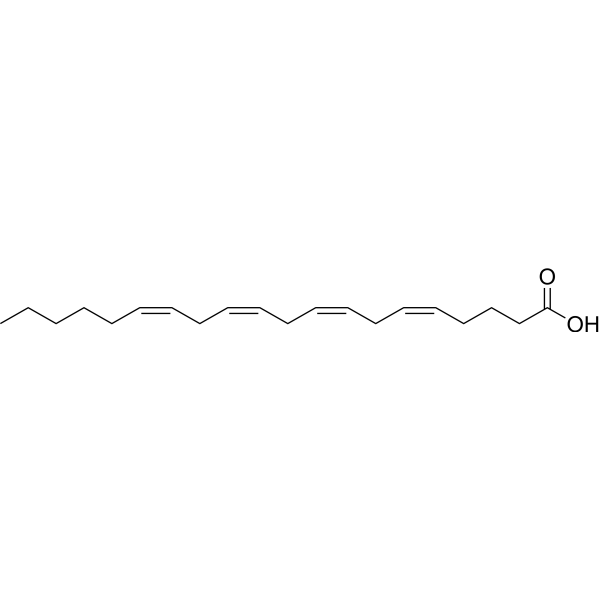
HY-109590
Arachidonic acid -

HY-W004284R
Heptadecanoic acid (Standard) -
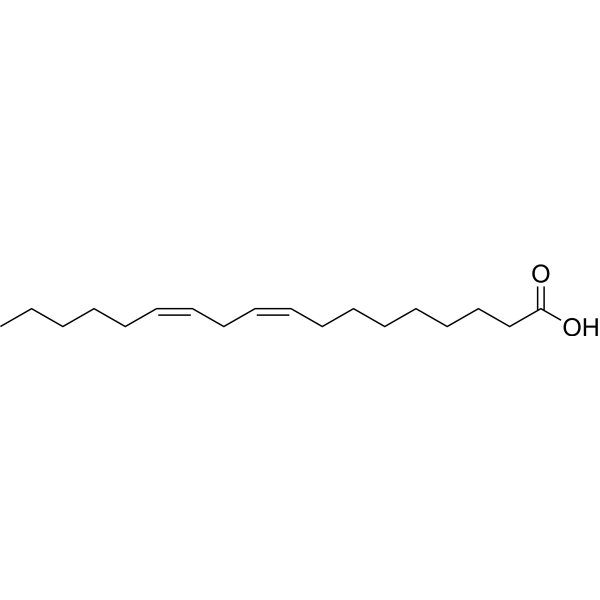
HY-N0729
Linoleic acid -
HY-A0143
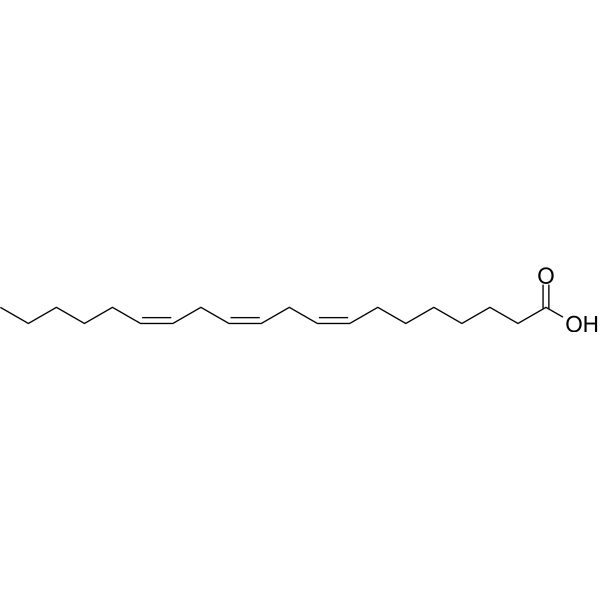
Dihomo-γ-linolenic acid -
HY-N1446
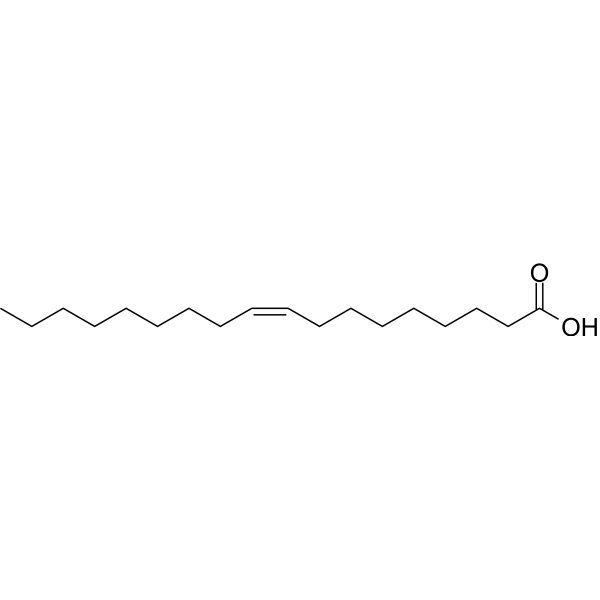
Oleic acid


Product Information
Information
Application
The compound is the grade of analytical standard, which is the reference standard supplied assay. It is commonly used in qualitative, quantitative and methodological research experiments in HPLC, GC and MS.


Chemical Information
-
CAS No. 6217-54-5
-
Appearance Liquid (Density: 0.944±0.06 g/cm3)
-
Molecular Weight 328.49
-
Formula C22H32O2
-
Color Colorless to light yellow
-
SMILES
CC/C=C\C/C=C\C/C=C\C/C=C\C/C=C\C/C=C\CCC(O)=O
-
Synonyms
DHA (Standard); Cervonic acid (Standard)
-
Structure Classification
-
Shipping
Room temperature in continental US; may vary elsewhere.
-
Storage
Please store the product under the recommended conditions in the Certificate of Analysis.


Purity & Documentation
-
SDS (252 KB)
- English - EN (252 KB)
- Français - FR (252 KB)
- Deutsch - DE (252 KB)
- Norwegian - NO (252 KB)
- Español - ES (252 KB)
- Swedish - SV (252 KB)
- Italian - IT (252 KB)
- Korean - KR (252 KB)
- Portuguese - PT (252 KB)
-
Handling Instructions (2659 KB)
References
[1]. Horrocks LA, et al. Health benefits of docosahexaenoic acid (DHA). Pharmacol Res. 1999 Sep;40(3):211-25. [Content Brief]
[2]. Gharami K, et al. Essential role of docosahexaenoic acid towards development of a smarter brain. Neurochem Int. 2015 Oct;89:51-62. [Content Brief]
[3]. Lengqvist J, et al. Polyunsaturated fatty acids including docosahexaenoic and arachidonic acid bind to the retinoid Xreceptor alpha ligand-binding domain. Mol Cell Proteomics. 2004 Jul;3(7):692-703. [Content Brief]
[4]. Gamoh S, et al. Chronic administration of docosahexaenoic acid improves reference memory-related learning ability in young rats. Neuroscience. 1999;93(1):237-41. [Content Brief]
[5]. Ozsoy O, et al. The influence and the mechanism of docosahexaenoic acid on a mouse model of Parkinson's disease. Neurochem Int. 2011 Oct;59(5):664-70. [Content Brief]

Calculators
Concentration (start) × Volume (start) = Concentration (final) × Volume (final)


Docosahexaenoic acid (Standard) Related Classifications
HY-B2167R Related Classifications
 Powered by Bioz