



Eicosapentaenoic Acid (Standard)

Based on 1 Customer Validation
Eicosapentaenoic Acid (Standard) is the analytical standard of Eicosapentaenoic Acid. This product is intended for research and analytical applications. Eicosapentaenoic Acid (EPA) is an orally active Omega-3 long-chain polyunsaturated fatty acid (ω-3 LC-PUFA). Eicosapentaenoic Acid exhibits a DNA demethylating action that promotes the re-expression of the tumor suppressor gene CCAAT/enhancer-binding protein δ (C/EBPδ). Eicosapentaenoic Acid activates RAS/ERK/C/EBPβ pathway through H-Ras intron 1 CpG island demethylation in U937 leukemia cells. Eicosapentaenoic Acid can promote relaxation of vascular smooth muscle cells and vasodilation.
Nur für Forschungszwecke. Wir verkaufen nicht an Patienten.
- Reinheit : 99.86%
- CAS. Nr.: 10417-94-4
- Formel: C₂₀H₃₀O₂
- Molecular Weight:302.45
-
Speicherung:
Please store the product under the recommended conditions in the Certificate of Analysis.


To place orders, for customer services and technical support, please contact: MedChemExpress USA
Tel: 609-228-6898 E-mail: [email protected] [email protected]


-
 Product Information
-
Chemical Information
- Reinheit & Dokumentation
-
 Help & FAQs


-

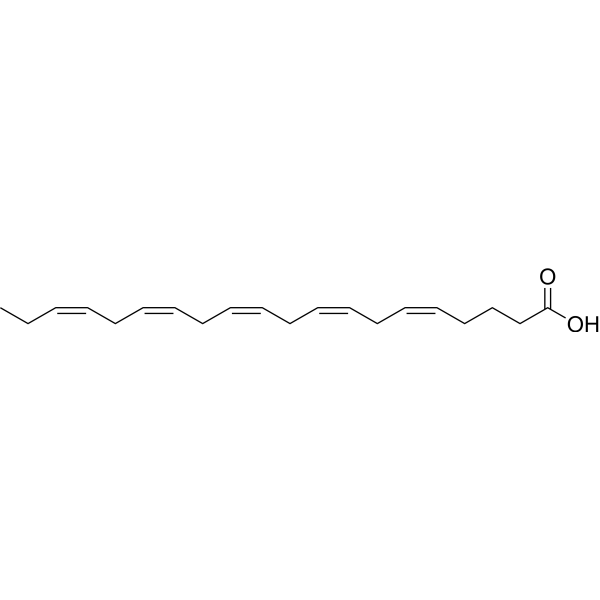
HY-B2167R
Docosahexaenoic acid (Standard)omega-3 Fatty Acid -
HY-B0660
Eicosapentaenoic AcidLC-PUFA -
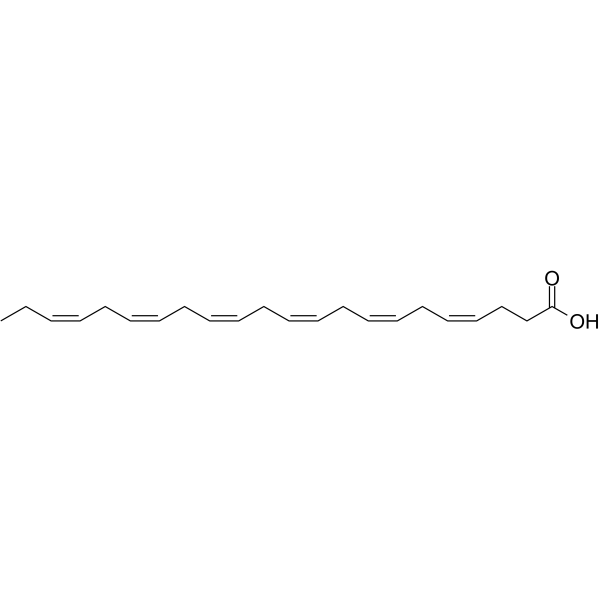
HY-B2167
Docosahexaenoic acidomega-3 Fatty Acid -
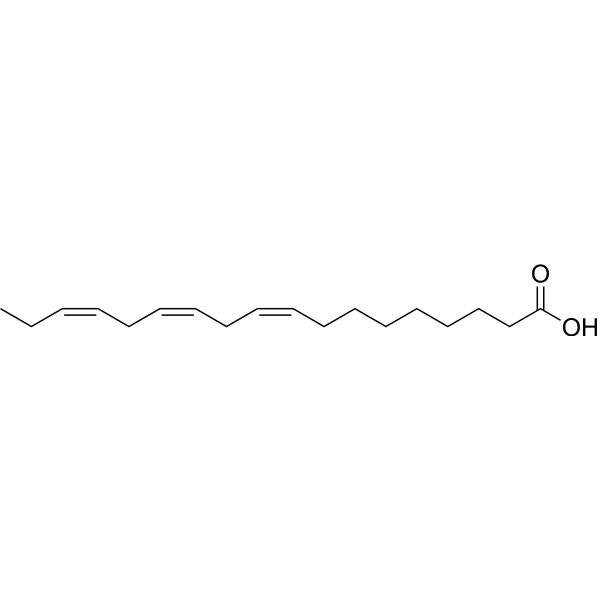
HY-N0728R
α-Linolenic acid (Standard)Essential Fatty Acid -
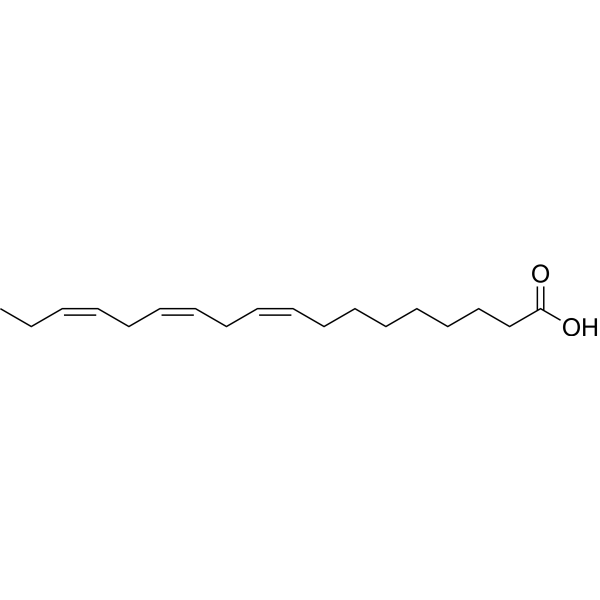
HY-N0728
α-Linolenic acidEssential Fatty Acid -

HY-W004284R
Heptadecanoic acid (Standard)Endogenous Metabolite -
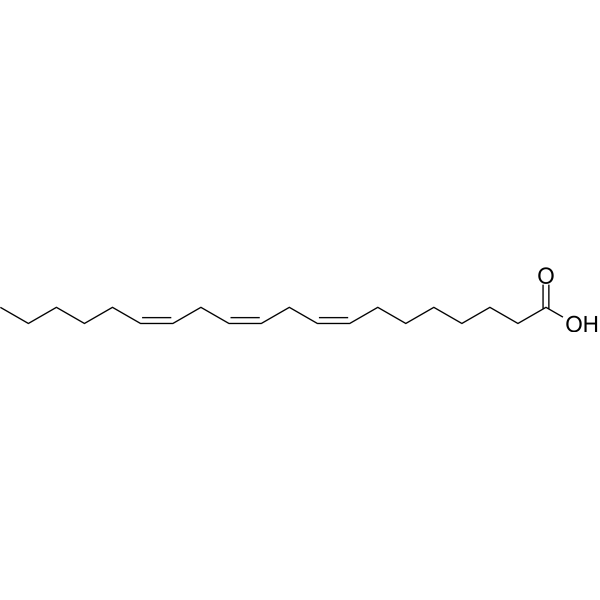
HY-A0143
Dihomo-γ-linolenic acidEndogenous Metabolite -
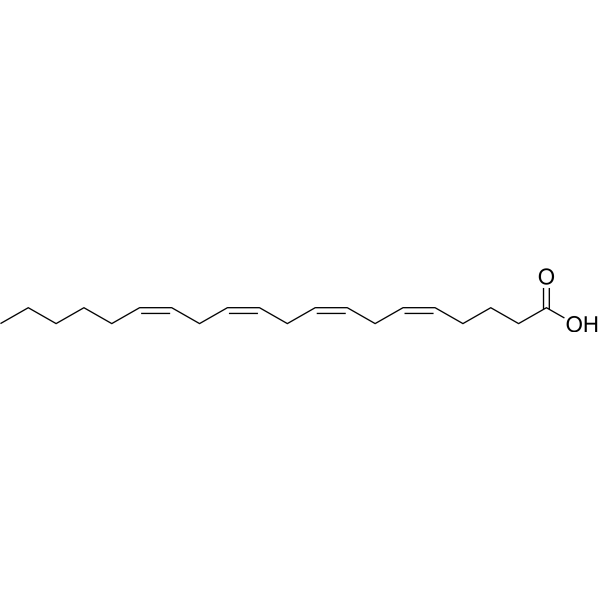
HY-109590R
Arachidonic acid (Standard)Analytical Standard of Arachidonic acid -
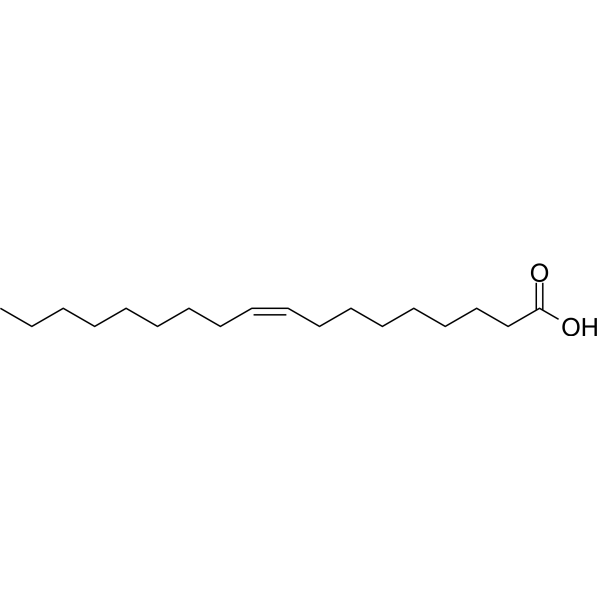
HY-N1446
Oleic acidMonounsaturated Fatty Acid -
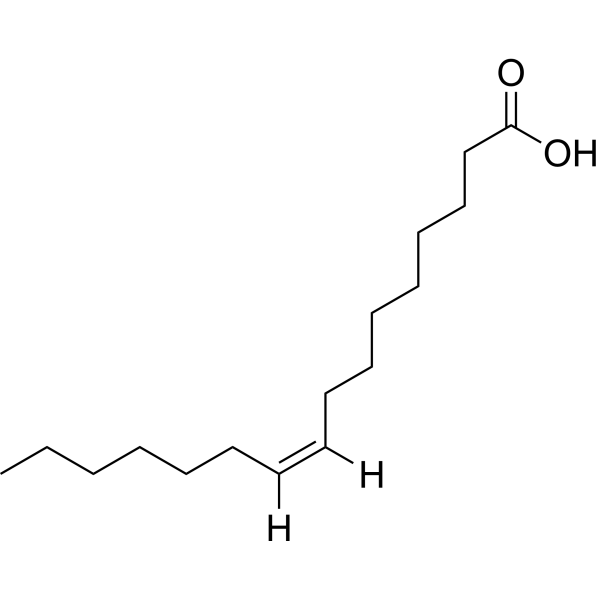
HY-W011873
Palmitoleic acid -
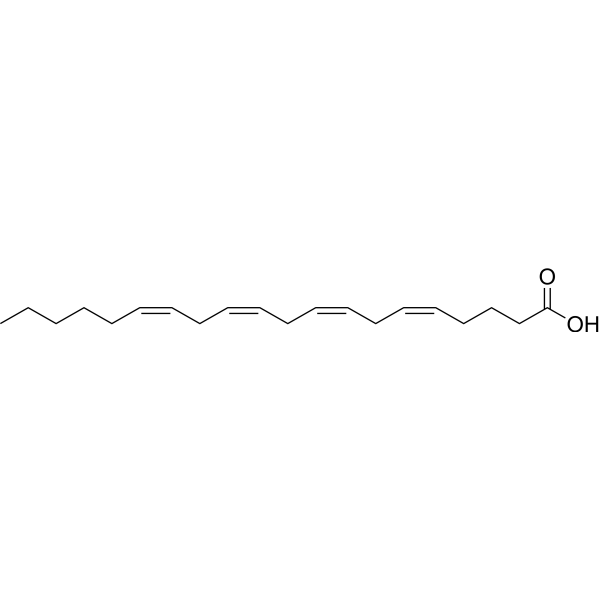
HY-109590
Arachidonic acidPolyunsaturated Fatty Acid -
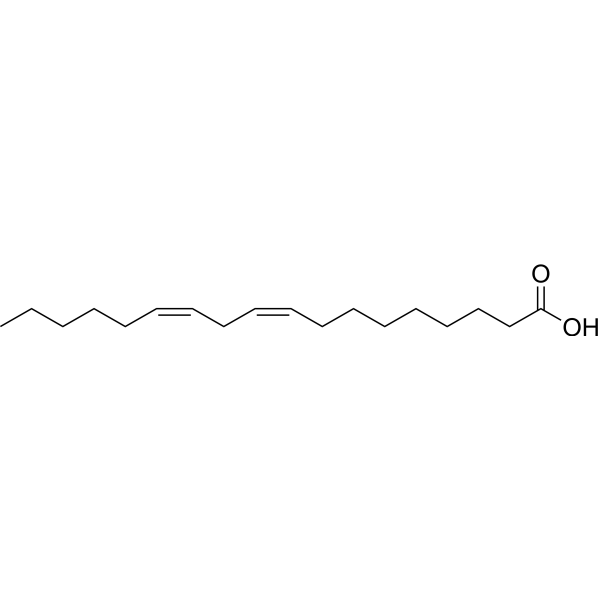
HY-N0729
Linoleic acidHuman Endogenous Metabolite


Product Information
Information
Anwendung
The compound is the grade of analytical standard, which is the reference standard supplied assay. It is commonly used in qualitative, quantitative and methodological research experiments in HPLC, GC and MS.


Chemical Information
-
CAS. Nr. 10417-94-4
-
Appearance Liquid
-
Molecular Weight 302.45
-
Formel C₂₀H₃₀O₂
-
Color Colorless to light yellow
-
SMILES
CC/C=C\C/C=C\C/C=C\C/C=C\C/C=C\CCCC(O)=O
-
Synonyms
EPA (Standard); Timnodonic acid (Standard)
-
Structure Classification
-
Initial Source
-
Versand
Room temperature in continental US; may vary elsewhere.
-
Speicherung
Please store the product under the recommended conditions in the Certificate of Analysis.


Reinheit & Dokumentation
-
SDS (252 KB)
- English - EN (252 KB)
- Français - FR (252 KB)
- Deutsch - DE (252 KB)
- Norwegian - NO (252 KB)
- Español - ES (252 KB)
- Swedish - SV (252 KB)
- Italian - IT (252 KB)
- Korean - KR (252 KB)
- Portuguese - PT (252 KB)
-
Handling Instructions (2659 KB)
Verweise
[1]. Martins, J.G., EPA but not DHA appears to be responsible for the efficacy of omega-3 long chain polyunsaturated fatty acid supplementation in depression: evidence from a meta-analysis of randomized controlled trials. J Am Coll Nutr, 2009. 28(5): p. 525-42. [Content Brief]
[2]. Miaozhen Pan, et al. Dietary ω-3 polyunsaturated fatty acids are protective for myopia. Proc Natl Acad Sci U S A. 2021 Oct 26;118(43):e2104689118. [Content Brief]

Calculators
Konzentration (Stammlösung) × Volumen (Stammlösung) = Konzentration (Ziellösung) × Volumen (Ziellösung)


Eicosapentaenoic Acid (Standard) Related Classifications
HY-B0660R Related Classifications
 Powered by Bioz