



Unsaturated Fatty Acid Standards
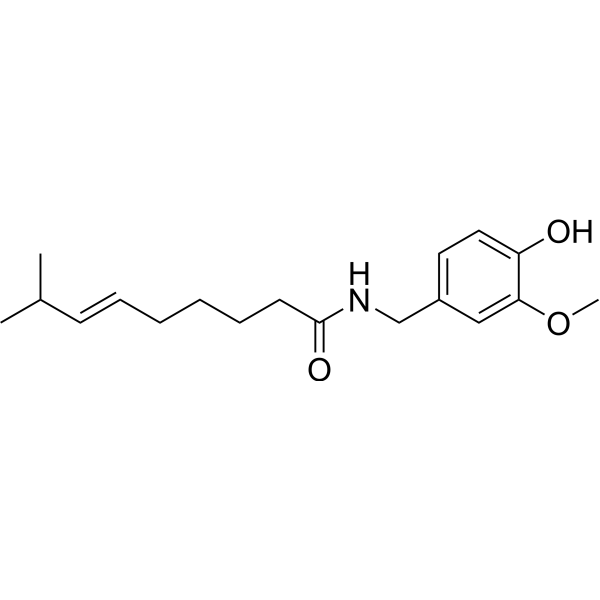
- Formula: C18H27NO3
- Molecular Weight: 305.41
Capsaicin (Standard) is the analytical standard of Capsaicin. This product is intended for research and analytical applications. Capsaicin ((E)-Capsaicin), an active component of chili peppers, is a TRPV1 agonist. Capsaicin induces a nociceptive response by binding to its receptors. Capsaicin has analgesic effects on neurological disorders. Capsaicin has antioxidant, anti-inflammatory, anti-cancer effects.
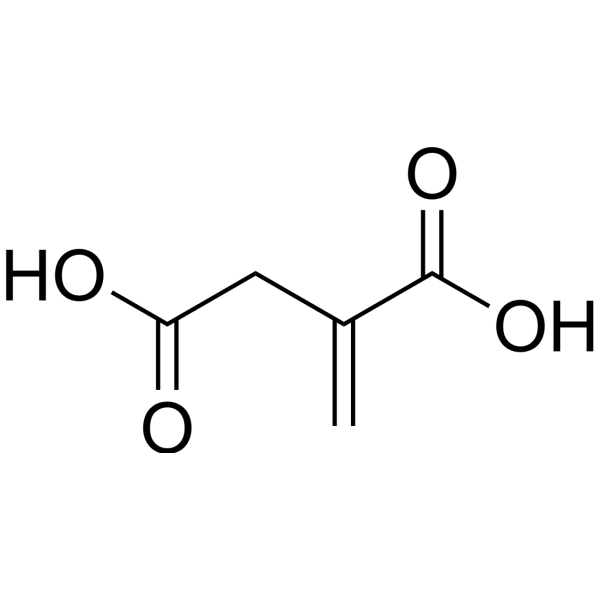
- Formula: C5H6O4
- Molecular Weight: 130.10
Itaconic acid (Standard) is the analytical standard of Itaconic acid. This product is intended for research and analytical applications. Itaconic acid, a precursor of polymers, chemicals, and fuels, can be synthesized by many fungi. Itaconic acid also is a macrophage-specific metabolite. Itaconic acid mediates crosstalk between macrophage metabolism and peritoneal tumors. Itaconic acid has anti-inflammatory, anti-microbial and immunomodulatory effect.

- Formula: C22H32O2
- Molecular Weight: 328.49
Docosahexaenoic acid (Standard) is the analytical standard of Docosahexaenoic acid. This product is intended for research and analytical applications. Docosahexaenoic Acid (DHA) is an omega-3 fatty acid abundantly present brain and retina. It can be obtained directly from fish oil and maternal milk. In Vitro: Docosahexaenoic acid (DHA) is essential for the growth and functional development of the brain in infants. DHA is also required for maintenance of normal brain function in adults. The inclusion of plentiful DHA in the diet improves learning ability and memory. DHA is an essential requirement in every step of brain development like neural cell proliferation, migration, differentiation, synaptogenesis. The multiple double bonds and unique structure allow DHA to impart special membrane characteristics for effective cell signaling. Many development disorders like dyslexia, autism spectrum disorder, attention deficit hyperactivity disorder, schizophrenia etc. are causally related to decreased level of DHA. DHA is a potent RXR ligand inducing robust RXR activation already at low micro molar concentrations. The EC50 for RXRα activation by DHA is about 5-10 μM fatty acid. In Vivo: Docosahexaenoic acid administration over 10 weeks significantly reduces the number of reference memory errors, without affecting the number of working memory errors, and significantly increases the docosahexaenoic acid content and the docosahexaenoic acid/arachidonic acid ratio in both the hippocampus and the cerebral cortex. DHA treatment exerts neuroprotective actions on an experimental mouse model of PD. There is a decrease tendency in brain lipid oxidation of MPTP mice but it does not significantly.
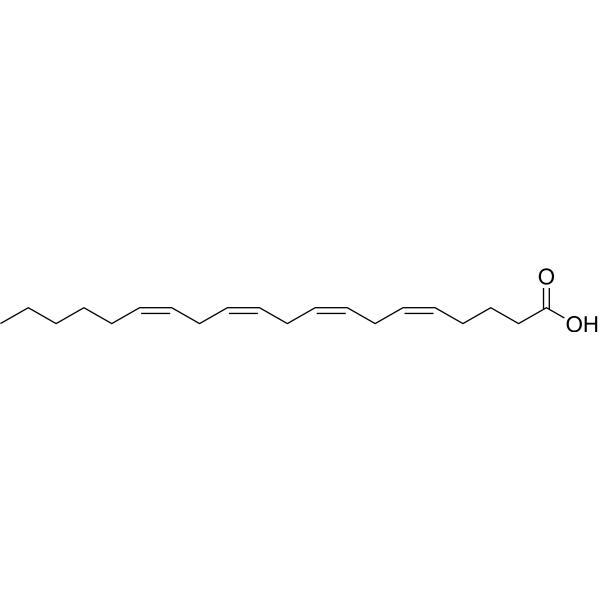
- Formula: C20H32O2
- Molecular Weight: 304.47
Arachidonic acid (Immunocytophyt) (Standard) is the analytical standard of Arachidonic acid (HY-109590). This product is intended for research and analytical applications. Arachidonic acid is an essential fatty acid and a major constituent of biomembranes.

- Formula: C₂₀H₃₀O₂
- Molecular Weight: 302.45
Eicosapentaenoic Acid (Standard) is the analytical standard of Eicosapentaenoic Acid. This product is intended for research and analytical applications. Eicosapentaenoic Acid (EPA) is an orally active Omega-3 long-chain polyunsaturated fatty acid (ω-3 LC-PUFA). Eicosapentaenoic Acid exhibits a DNA demethylating action that promotes the re-expression of the tumor suppressor gene CCAAT/enhancer-binding protein δ (C/EBPδ). Eicosapentaenoic Acid activates RAS/ERK/C/EBPβ pathway through H-Ras intron 1 CpG island demethylation in U937 leukemia cells. Eicosapentaenoic Acid can promote relaxation of vascular smooth muscle cells and vasodilation.

- Formula: C22H42O2
- Molecular Weight: 338.57
Erucic acid (Standard) is the analytical standard of Erucic acid. This product is intended for research and analytical applications. Erucic acid, a monounsaturated fatty acid (MUFA), is isolated from the seed of Raphanus sativus L. Erucic acid can readily cross the blood-brain barrier (BBB), it has been reported to normalize the accumulation of very long-chain fatty acids in the brain. Erucic acid can improve cognitive impairment and be effective against dementia.
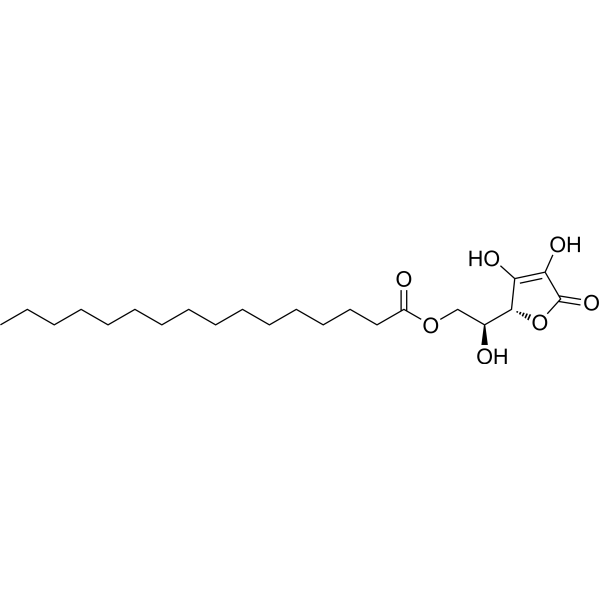
- Formula: C22H38O7
- Molecular Weight: 414.53
Ascorbyl palmitate (Standard) is the analytical standard of Ascorbyl palmitate. This product is intended for research and analytical applications. Ascorbyl palmitate is an ester formed from ascorbic acid and palmitic acid creating an vitamin C, it is also used as an antioxidant food additive.
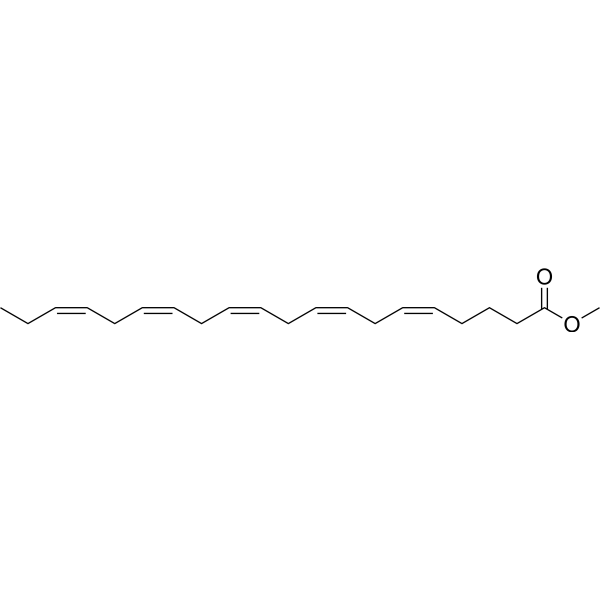
- Formula: C₂₁H₃₂O₂
- Molecular Weight: 316.48
Eicosapentaenoic acid methyl ester (Standard) is the analytical standard of Eicosapentaenoic acid methyl ester (HY-W011311). This product is intended for research and analytical applications. Eicosapentaenoic acid methyl ester is a degradation product of monogalactosyldiacylglycerol (Compound 1). Compound 1 can be isolated from the marine diatom Phaeodactylum tricornutum. Compound 1 induces Apoptosis.
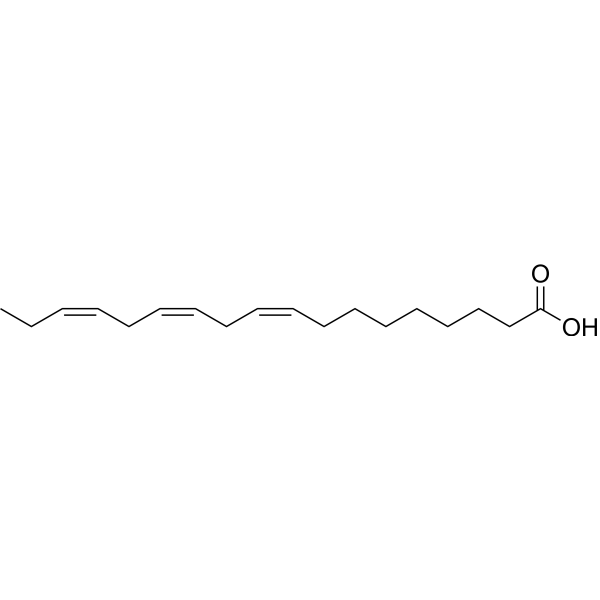
- Formula: C18H30O2
- Molecular Weight: 278.43
α-Linolenic acid (Standard) is the analytical standard of α-Linolenic acid. This product is intended for research and analytical applications. α-Linolenic acid, isolated from Perilla frutescens, is an essential fatty acid that cannot be synthesized by humans. α-Linolenic acid can affect the process of thrombotic through the modulation of PI3K/Akt signaling. α-Linolenic acid possess the anti-arrhythmic properties and is related to cardiovascular disease and cancer.
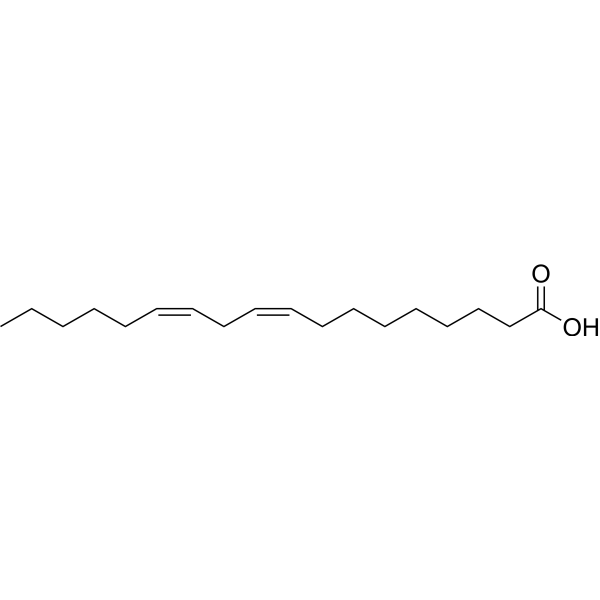
- Formula: C18H32O2
- Molecular Weight: 280.45
Linoleic acid (Standard) is the analytical standard of Linoleic acid (HY-N0729). This product is intended for research and analytical applications. Linoleic acid is a common polyunsaturated (PUFA) found in plant-based oils, nuts and seeds. Linoleic acid is a part of membrane phospholipids, and functions as a structural component to maintain a certain level of membrane fluidity of the transdermal water barrier of the epidermis. Linoleic acid induces red blood cells and hemoglobin damage via oxidative mechanism .

- Formula: C20H39NO2
- Molecular Weight: 325.53
Oleoylethanolamide (Standard) is the analytical standard of Oleoylethanolamide. This product is intended for research and analytical applications. Oleoylethanolamide is a high affinity endogenous PPAR-α agonist, which plays an important role in the treatment of obesity and arteriosclerosis.

- Formula: C12H20O4
- Molecular Weight: 228.28
Traumatic Acid (Standard) is the analytical standard of Traumatic Acid. This product is intended for research and analytical applications. Traumatic Acid is a wound healing agent and a cytokinin (phytohormone). Traumatic Acid enhances the biosynthesis of collagen in cultured human skin fibroblasts. Traumatic Acid inhibits MCF-7 breast cancer cells viability and enhances apoptosis and oxidative stress. Traumatic Acid can be used in studies of cancer, circulatory disorders (including arterial hypertension), and skin diseases associated with oxidative stress and impaired collagen biosynthesis[1][2].

- Formula: C4H6O2
- Molecular Weight: 86.09
(E)-Crotonic acid (Standard) is the analytical standard of (E)-Crotonic acid. This product is intended for research and analytical applications. (E)-Crotonic acid is an endogenous metabolite.
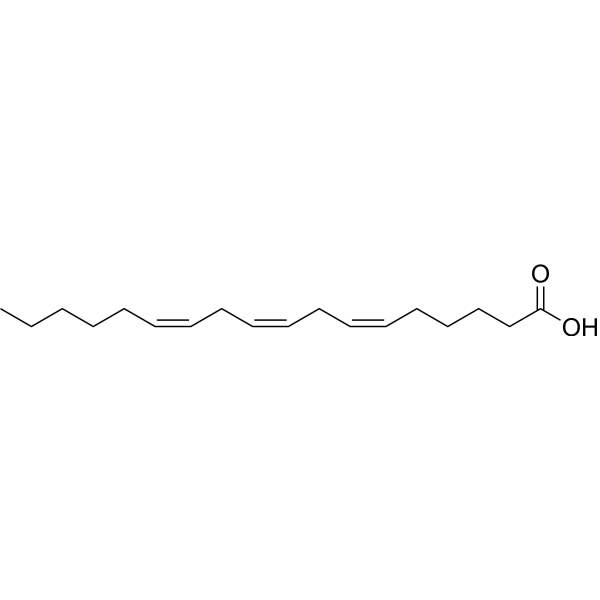
- Formula: C₁₈H₃₀O₂
- Molecular Weight: 278.43
Gamma-Linolenic acid (Standard) is the analytical standard of Gamma-Linolenic acid. This product is intended for research and analytical applications. Gamma-linolenic acid (γ-Linolenic acid) is an omega-6 (n-6), 18 carbon (18C-) polyunsaturated fatty acid (PUFA) extracted from Perilla frutescens. Gamma-linolenic acid supplements could restore needed PUFAs and mitigate the disease.

- Formula: C11H20O2
- Molecular Weight: 184.28
10-Undecenoic acid (Standard) is the analytical standard of 10-Undecenoic acid. This product is intended for research and analytical applications. 10-Undecenoic acid (Undecylenic acid) is an antifungal agent. 10-Undecenoic acid inhibits Aβ oligomerization, scavenges ROS and inhibits μ-calpain activity. 10-Undecenoic acid has neuroprotective effects. 10-Undecenoic acid has anticancer effects on a variety of tumors. 10-Undecenoic acid inhibits C. albicans biofilm formation and MRSA infection. 10-Undecenoic acid inhibits quorum sensing signals of Bacillus subtilis and Pseudomonas aeruginosa.

- Formula: C16H30O2
- Molecular Weight: 254.41
Pazopanib (Hydrochloride) (Standard) is the analytical standard of Pazopanib (Hydrochloride). This product is intended for research and analytical applications. Pazopanib Hydrochloride (GW786034 Hydrochloride) is a novel multi-target inhibitor of VEGFR1, VEGFR2, VEGFR3, PDGFRβ, c-Kit, FGFR1, and c-Fms with an IC50 of 10, 30, 47, 84, 74, 140 and 146 nM, respectively.
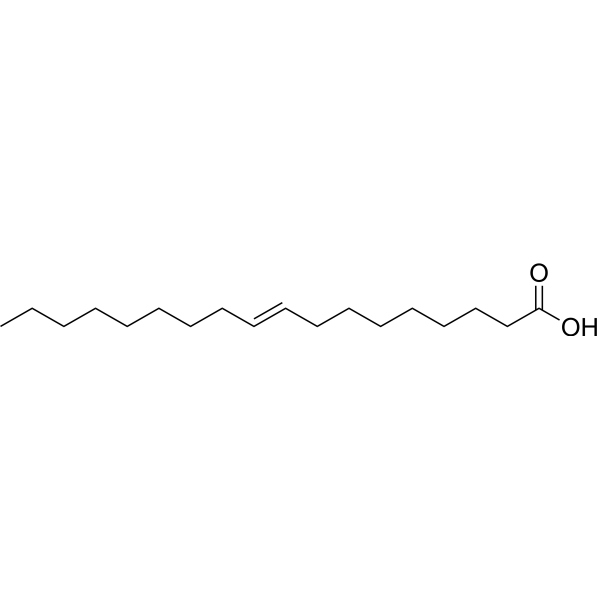
- Formula: C₁₈H₃₄O₂
- Molecular Weight: 282.46
Elaidic acid (Standard) is the analytical standard of Elaidic acid. This product is intended for research and analytical applications. Elaidic acid is the major trans fat found in hydrogenated vegetable oils and can be used as a pharmaceutical solvent.

- Formula: C₆H₈O₂
- Molecular Weight: 112.13
Sorbic acid (Standard) is the analytical standard of Sorbic acid (HY-N0626). This product is intended for research and analytical applications. Sorbic acid is an antibacterial preservative effective against most molds, yeasts, and some bacterial species. Sorbic acid inhibits microbial growth. Sorbic acid suppresses the activity of intestinal microorganisms in zebrafish, alters the composition of intestinal flora, and reduces the levels of intestinal immune biomarkers, including IgG, IL-1β, and TNF-α. Sorbic acid can be used in research on the prevention and treatment of mold, yeast, and bacterial infections.

- Formula: C10H18O3
- Molecular Weight: 186.25
10-Hydroxy-2-decenoic acid (Standard) is an analytical standard for 10-Hydroxy-2-decenoic acid (HY-W592871). This product is intended for research and analytical applications.10-Hydroxy-2-decenoic acid (10-HDA) is an orally active unsaturated medium-chain fatty acid with various physiological activities. 10-Hydroxy-2-decenoic acid induces ROS-mediated apoptosis in A549 cells. 10-Hydroxy-2-decenoic acid inhibits VEGF-induced angiogenesis in human venous endothelial cells. 10-Hydroxy-2-decenoic acid alleviates non-alcoholic fatty liver disease (NAFLD) by activating the AMPK-α signaling pathway. 10-Hydroxy-2-decenoic acid protects against bone loss by inhibiting NF-κB signaling downstream of FFAR4. 10-Hydroxy-2-decenoic acid is an antibiotic against many bacteria and fungi, such as Neurospora sitophila, molds and Staphylococcus aureus. 10-Hydroxy-2-decenoic acid has longevity-promoting effects in C. elegans. 10-Hydroxy-2-decenoic acid prevents osteoarthritis by targeting aspartyl β hydroxylase and inhibiting chondrocyte senescence.

- Formula: C11H16O
- Molecular Weight: 164.24
cis-Jasmone (Standard) is the analytical standard of cis-Jasmone. This product is intended for research and analytical applications. Cis-Jasmone is a plant-derived natural product. Cis-Jasmone is a plant-derived natural product. Cis-Jasmone is constitutively released by many flowers and sometimes by leaves as an attractant for pollinators or as a chemical cue for host location by insect flower herbivores. Cis-Jasmone treatment of crop plants not only induces direct defense against herbivores, but also induces indirect defense by releasing VOCs that attract natural enemies.



