



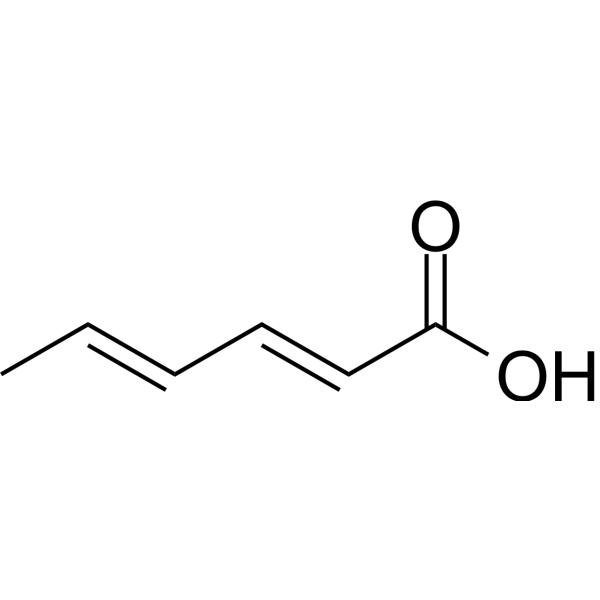
Sorbic acid

Based on 1 Customer Validation
Sorbic acid is an antibacterial preservative effective against most molds, yeasts, and some bacterial species. Sorbic acid inhibits microbial growth. Sorbic acid suppresses the activity of intestinal microorganisms in zebrafish, alters the composition of intestinal flora, and reduces the levels of intestinal immune biomarkers, including IgG, IL-1β, and TNF-α. Sorbic acid can be used in research on the prevention and treatment of mold, yeast, and bacterial infections.
For research use only. We do not sell to patients.
- Purity : 99.98%
- CAS No.: 110-44-1
- Formula: C6H8O2
- Molecular Weight:112.13
-
Storage:
4°C, protect from light
* In solvent : -80°C, 6 months; -20°C, 1 month (protect from light)

To place orders, for customer services and technical support, please contact: MedChemExpress USA
Tel: 609-228-6898 E-mail: [email protected] [email protected]


-
 Biological Activity
-
Chemical Information
-
Solvent & Solubility
- Protocols
- Purity & Documentation
- References
-
 Help & FAQs


-

HY-N0626R
Sorbic acid (Standard)Food Preservative -
HY-N0216
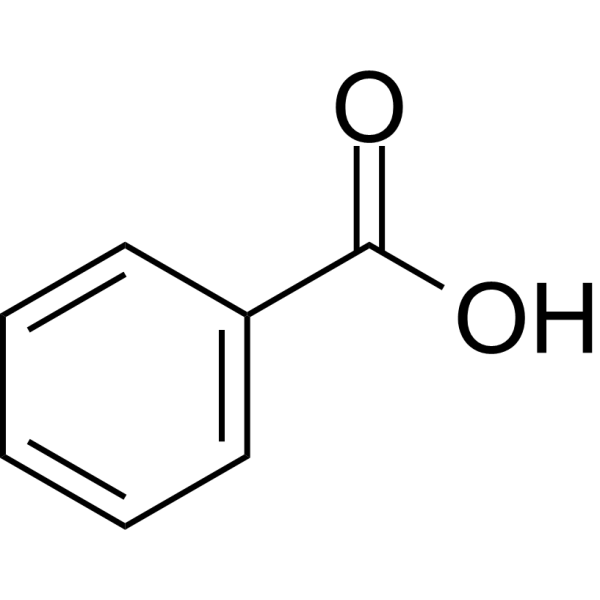
Benzoic acidBacterial Inhibitor -

HY-N0216R
Benzoic acid (Standard)Bacterial Inhibitor -
HY-N2026
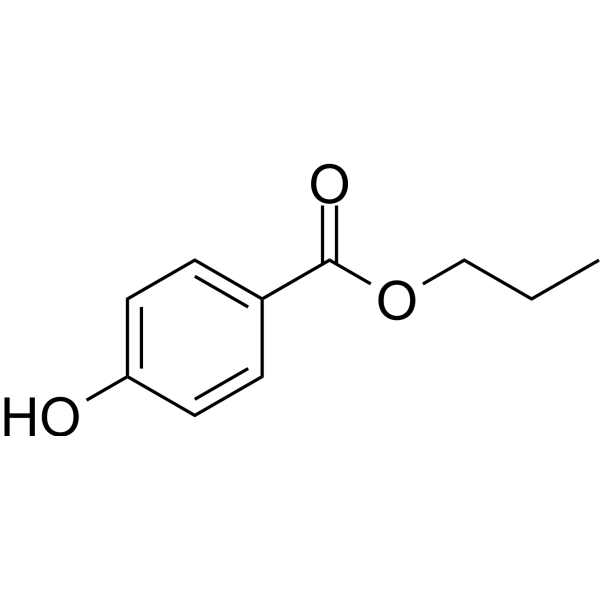
PropylparabenBacterial Inhibitor -
HY-N0349
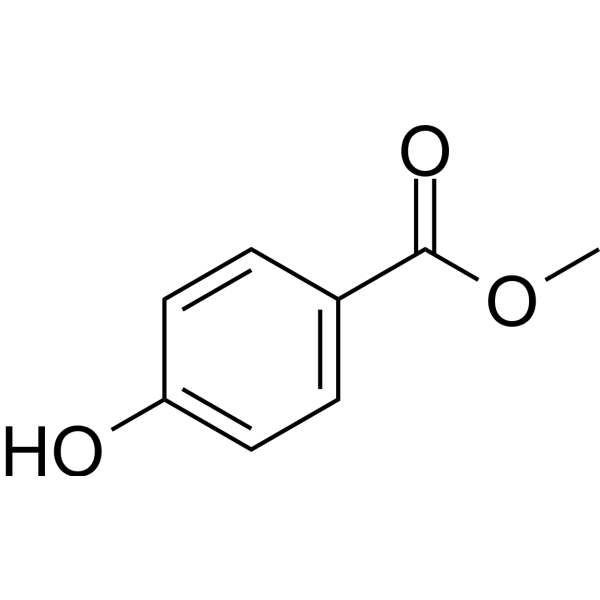
Methyl parabenBacterial Inhibitor -
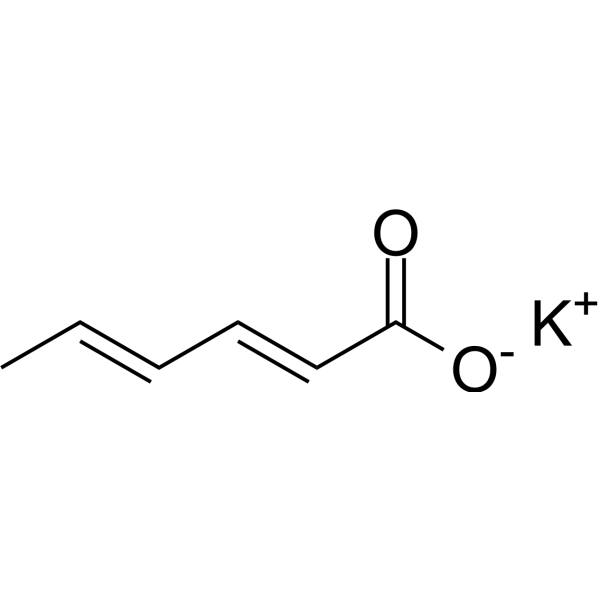
HY-N0626A
Potassium sorbateAntibacterial Preservative -
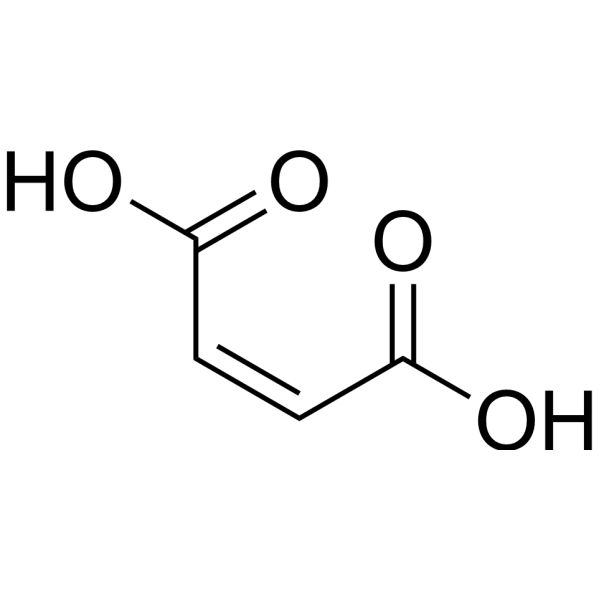
HY-Y0367
Maleic acid -
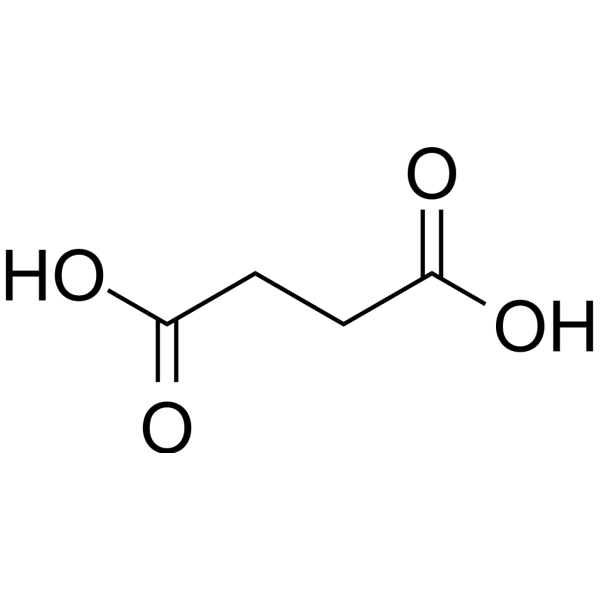
HY-N0420
Succinic acidFood Additive, Platform chemical -
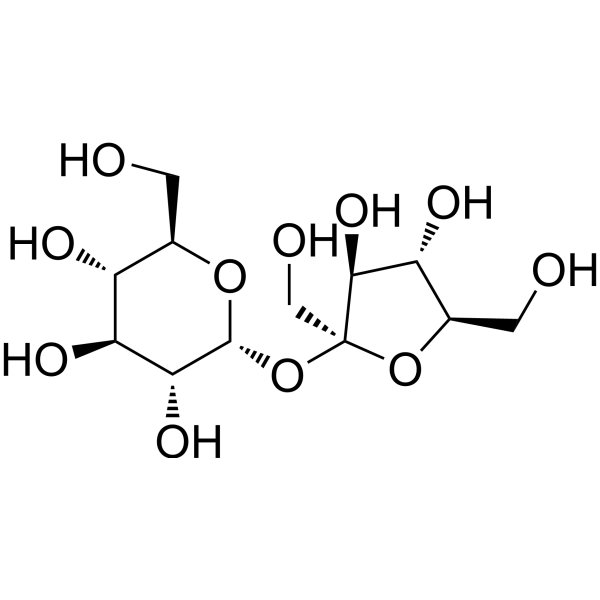
HY-B1779
SucroseDisaccharide -
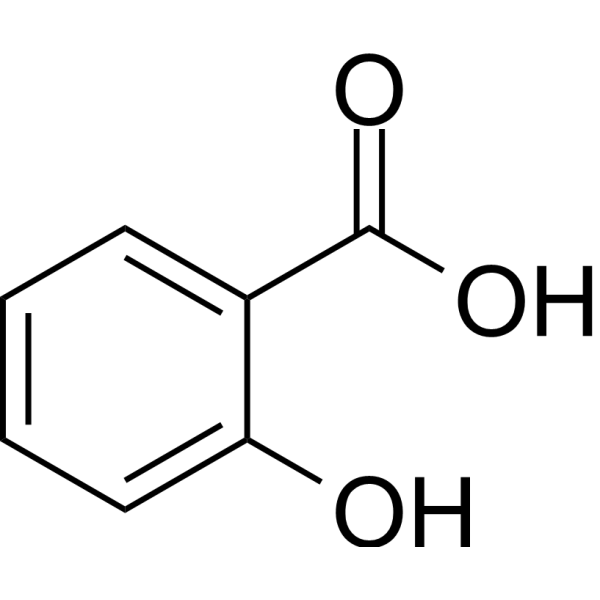
HY-B0167
Salicylic acidCOX-2 Inhibitor -
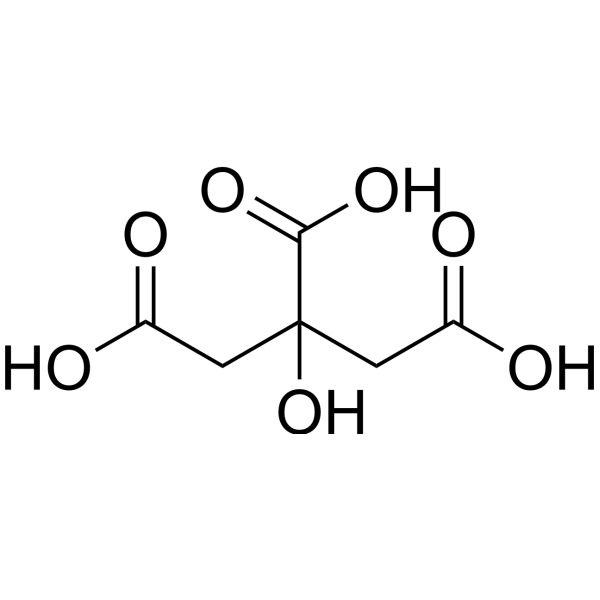
HY-N1428
Citric acidOrganic Acid


Biological Activity
Description
In Vitro
Sorbic acid (0.05%-0.1%) extends the shelf life of cottage cheese, inhibits the growth of Penicillium frequentans and other spoilage microorganisms, suppresses spoilage bacteria in cottage cheese as well as molds in unsalted butter and grains, and prolongs the safe storage period of grains[1].
Sorbic acid (0.02%-0.04%) inhibits the growth of molds in ham and sausage, as well as the growth of Aspergillus versicolor, inhibits the growth of Alternaria solani, Penicillium citrinum and Aspergillus niger, with minimum inhibitory concentrations of 0.02%, 0.08% and 0.08%, respectively[1].
Sorbic acid (0.05-0.15%) delays or prevents spore germination and growth initiation of Aspergillus parasiticus and Aspergillus flavus strains, slows their hyphal growth, inhibits the growth of Aspergillus sulphureus and Penicillium viridicatum as well as their ability to produce ochratoxin A, and reduces or even blocks the production of aflatoxin B1 by Aspergillus parasiticus and Aspergillus flavus[1].
Sorbic acid (0.05%) inhibits the growth of Zygosaccharomyces rouxii, Saccharomyces bisporus, Saccharomyces acidifaciens and Saccharomyces pastorianus, and is used in combination with acids[1].
Incorporation of Sorbic acid (≥15%) into sweet potato starch films significantly inhibits the growth of E. coli, but exerts no inhibitory effect on S. aureus[3].
MedChemExpress (MCE) has not independently confirmed the accuracy of these methods. They are for reference only. Further protocols information, click here.
In Vivo
MedChemExpress (MCE) has not independently confirmed the accuracy of these methods. They are for reference only.
-
Animal Model:Danio rerio (4-month-old adults)[2]
-
Dosage:0.1 g/L; 1 g/L
-
Administration:aqueous exposure; daily water replacement; 14 days
-
Result:Decreased levels of intestinal IgG, IL-1β, and TNF-α.
Altered core gut microbiota development, with Pelomonas becoming the most abundant genus (accounting for 32.77% of gut microbiota), while Reyranella and Sphingomonas decreased, and Rhizobacter increased.
Decreased relative abundance of transcription, energy metabolism, and cancer pathways.
Significantly reduced the gut microbiota activity index (AIM).


Chemical Information
-
CAS No. 110-44-1
-
Appearance Solid
-
Molecular Weight 112.13
-
Formula C6H8O2
-
Color White to off-white
-
SMILES
C/C=C/C=C/C(O)=O
-
Structure Classification
-
Initial Source
-
Shipping
Room temperature in continental US; may vary elsewhere.
-
Storage
4°C, protect from light
* In solvent : -80°C, 6 months; -20°C, 1 month (protect from light)


Solvent & Solubility
In Vitro:
DMSO : 50 mg/mL (445.91 mM; Need ultrasonic; Hygroscopic DMSO has a significant impact on the solubility of product, please use newly opened DMSO)
H2O : < 0.1 mg/mL (insoluble)
Please refer to the solubility information to select the appropriate solvent. Once prepared, please aliquot and store the solution to prevent product inactivation from repeated freeze-thaw cycles.
Storage method and period of stock solution: -80°C, 6 months; -20°C, 1 month (protect from light). When stored at -80°C, please use it within 6 months. When stored at -20°C, please use it within 1 month.
Please refer to the solubility information to select the appropriate solvent. Once prepared, please aliquot and store the solution to prevent product inactivation from repeated freeze-thaw cycles.
Storage method and period of stock solution: -80°C, 6 months; -20°C, 1 month (protect from light). When stored at -80°C, please use it within 6 months. When stored at -20°C, please use it within 1 month.
Concentration (start) × Volume (start) = Concentration (final) × Volume (final)
In Vivo:
Select the appropriate dissolution method based on your experimental animal and administration route.
- For the following dissolution methods, please ensure to first prepare a clear stock solution using an In Vitro approach and then sequentially add co-solvents:
- To ensure reliable experimental results, the clarified stock solution can be appropriately stored based on storage conditions. As for the working solution for In Vivo experiments, it is recommended to prepare freshly and use it on the same day.
- The percentages shown for the solvents indicate their volumetric ratio in the final prepared solution. If precipitation or phase separation occurs during preparation, heat and/or sonication can be used to aid dissolution.
Add each solvent one by one: 10% DMSO 40% PEG300 5% Tween-80 45% Saline
Solubility: ≥ 2.5 mg/mL (22.30 mM); Clear solution
This protocol yields a clear solution of ≥ 2.5 mg/mL (saturation unknown).
Taking 1 mL working solution as an example, add 100 μL DMSO stock solution (25.0 mg/mL) to 400 μL PEG300, and mix evenly; then add 50 μL Tween-80 and mix evenly; then add 450 μL Saline to adjust the volume to 1 mL.
Preparation of Saline: Dissolve 0.9 g sodium chloride in ddH₂O and dilute to 100 mL to obtain a clear Saline solution.
Add each solvent one by one: 10% DMSO 90% (20% SBE-β-CD in Saline)
Solubility: ≥ 2.5 mg/mL (22.30 mM); Clear solution
This protocol yields a clear solution of ≥ 2.5 mg/mL (saturation unknown).
Taking 1 mL working solution as an example, add 100 μL DMSO stock solution (25.0 mg/mL) to 900 μL 20% SBE-β-CD in Saline, and mix evenly.
Preparation of 20% SBE-β-CD in Saline (4°C, storage for one week): 2 g SBE-β-CD powder is dissolved in 10 mL Saline, completely dissolve until clear.
In Vivo Dissolution Calculator
Please enter the basic information of animal experiments:
-
-
-
-
Recommended: Prepare an additional quantity of animals to account for potential losses during experiments.
Please enter your animal formula composition:
-
%DMSO +
Recommended: Keep the proportion of DMSO in working solution below 2% if your animal is weak.
-
%+
-
+%Tween-80 + +
-
%Saline +
The co-solvents required include: DMSO, . All of co-solvents are available by MedChemExpress (MCE). , Tween 80. All of co-solvents are available by MedChemExpress (MCE).
Working solution concentration: 0.22 mg/mL
Method for preparing stock solution: mg drug dissolved in μL DMSO. Stock solution concentration: mg/mL. * In solvent : -80°C, 6 months; -20°C, 1 month (protect from light)
1. Take μL DMSO stock solution;
2. Add μL .
μL , mix evenly;
3. Then add μL Tween 80, mix evenly;
4. Then add μL
Please ensure that the stock solution in the first step is dissolved to a clear state, and add co-solvents in sequence. You can use ultrasonic heating (ultrasonic cleaner, recommended frequency 20-40 kHz), vortexing, etc. to assist dissolution.

Protocols
-
Research Protocol for Infectious Diseases
Infectious-disease experiments test how pathogens interact with host barriers, innate immune receptors, inflammatory signaling, pathogen replication, and tissue injury; pattern-recognition receptors such as TLRs, RIG-I-like receptors, NOD-like receptors, and inflammasomes detect microbial molecules and activate NF-κB, interferon, and cytokine responses. The central hypothesis is that infection severity reflects the balance between pathogen burden and host response: protective inflammation restricts pathogen growth, whereas excessive or mislocalized inflammation contributes to tissue damage and disease phenotype. Unresolved questions include which host pathways are protective versus pathogenic, why some infection models fail to translate to human disease, and which combined readouts best predict clinically relevant infection outcomes.
-
Pyroptosis Solutions
Pyroptosis is a lytic inflammatory cell-death pathway executed by gasdermin pores, most classically through inflammasome-mediated activation of caspase-1, cleavage of gasdermin D, membrane pore formation, LDH release, and secretion of IL-1β and IL-18. The canonical pathway is commonly modeled by priming cells with an inflammatory signal such as LPS to induce pro-IL-1β and inflammasome components, followed by an activation signal such as ATP or nigericin to activate NLRP3, ASC speck formation, caspase-1 cleavage, GSDMD cleavage, cytokine release, and pyroptotic membrane rupture. The non-canonical pathway is triggered when cytosolic LPS activates mouse caspase-11 or human caspase-4/5, leading to GSDMD cleavage and pyroptosis, and this can secondarily activate NLRP3-dependent IL-1β release. Pyroptosis is linked to inflammatory injury, infection, cancer, liver disease, ocular disease, placental inflammation, and other disease phenotypes, but unresolved questions include which gasdermin fam


Purity & Documentation
-
Data Sheet (272 KB)
-
SDS (393 KB)
- English - EN (393 KB)
- Français - FR (393 KB)
- Deutsch - DE (393 KB)
- Norwegian - NO (393 KB)
- Español - ES (393 KB)
- Swedish - SV (393 KB)
- Italian - IT (393 KB)
- Korean - KR (393 KB)
- Portuguese - PT (393 KB)
-
Handling Instructions (2659 KB)
References
[1]. Liewen MB, et al. Growth and Inhibition of Microorganisms in the Presence of Sorbic Acid: A Review. J Food Prot. 1985;48(4):364-375. [Content Brief]
[2]. Peng Q, et al. Potassium sorbate suppresses intestinal microbial activity and triggers immune regulation in zebrafish (Danio rerio). Food Funct. 2019;10(11):7164-7173. [Content Brief]


Complete Stock Solution Preparation Table
Please refer to the solubility information to select the appropriate solvent. Once prepared, please aliquot and store the solution to prevent product inactivation from repeated freeze-thaw cycles.
Storage method and period of stock solution: -80°C, 6 months; -20°C, 1 month (protect from light). When stored at -80°C, please use it within 6 months. When stored at -20°C, please use it within 1 month.
| Optional Solvent | Concentration Solvent Mass | 1 mg | 5 mg | 10 mg | 25 mg |
|---|---|---|---|---|---|
| DMSO | 1 mM | 8.9182 mL | 44.5911 mL | 89.1822 mL | 222.9555 mL |
| 5 mM | 1.7836 mL | 8.9182 mL | 17.8364 mL | 44.5911 mL | |
| 10 mM | 0.8918 mL | 4.4591 mL | 8.9182 mL | 22.2956 mL | |
| 15 mM | 0.5945 mL | 2.9727 mL | 5.9455 mL | 14.8637 mL | |
| 20 mM | 0.4459 mL | 2.2296 mL | 4.4591 mL | 11.1478 mL | |
| 25 mM | 0.3567 mL | 1.7836 mL | 3.5673 mL | 8.9182 mL | |
| 30 mM | 0.2973 mL | 1.4864 mL | 2.9727 mL | 7.4319 mL | |
| 40 mM | 0.2230 mL | 1.1148 mL | 2.2296 mL | 5.5739 mL | |
| 50 mM | 0.1784 mL | 0.8918 mL | 1.7836 mL | 4.4591 mL | |
| 60 mM | 0.1486 mL | 0.7432 mL | 1.4864 mL | 3.7159 mL | |
| 80 mM | 0.1115 mL | 0.5574 mL | 1.1148 mL | 2.7869 mL | |
| 100 mM | 0.0892 mL | 0.4459 mL | 0.8918 mL | 2.2296 mL |


Sorbic acid Related Classifications
HY-N0626 Related Classifications
 Powered by Bioz