



Traumatic Acid (Standard)

Based on 1 Customer Validation
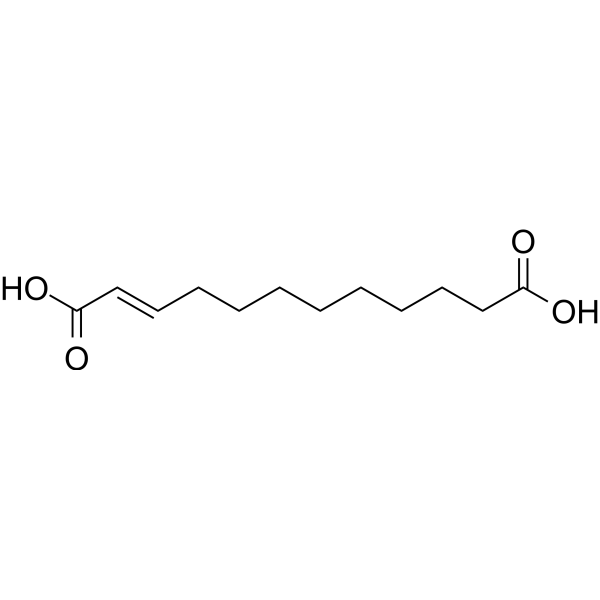
Traumatic Acid (Standard) is the analytical standard of Traumatic Acid. This product is intended for research and analytical applications. Traumatic Acid is a wound healing agent and a cytokinin (phytohormone). Traumatic Acid enhances the biosynthesis of collagen in cultured human skin fibroblasts. Traumatic Acid inhibits MCF-7 breast cancer cells viability and enhances apoptosis and oxidative stress. Traumatic Acid can be used in studies of cancer, circulatory disorders (including arterial hypertension), and skin diseases associated with oxidative stress and impaired collagen biosynthesis[1][2].
For research use only. We do not sell to patients.
- Purity : 99.67%
- CAS No.: 6402-36-4
- Formula: C12H20O4
- Molecular Weight:228.28
-
Storage:
Please store the product under the recommended conditions in the Certificate of Analysis.


To place orders, for customer services and technical support, please contact: MedChemExpress USA
Tel: 609-228-6898 E-mail: [email protected] [email protected]


-
 Product Information
-
Chemical Information
- Purity & Documentation
-
 Help & FAQs


-
HY-119358
Traumatic AcidCytokinin -
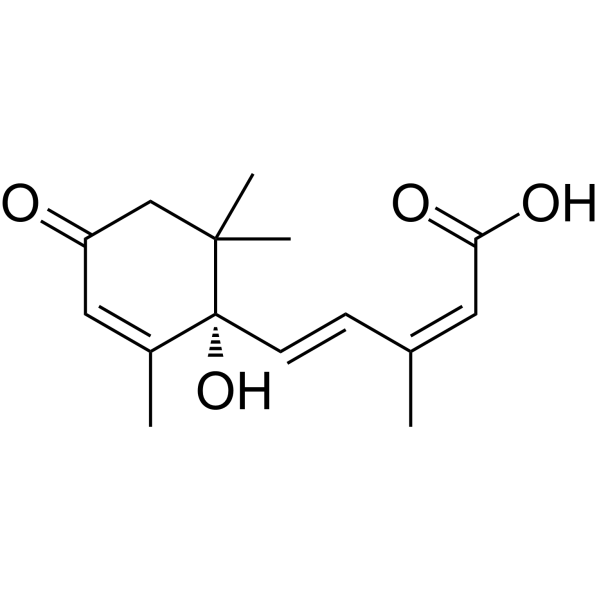
HY-100560
Abscisic acidPlant Hormone -
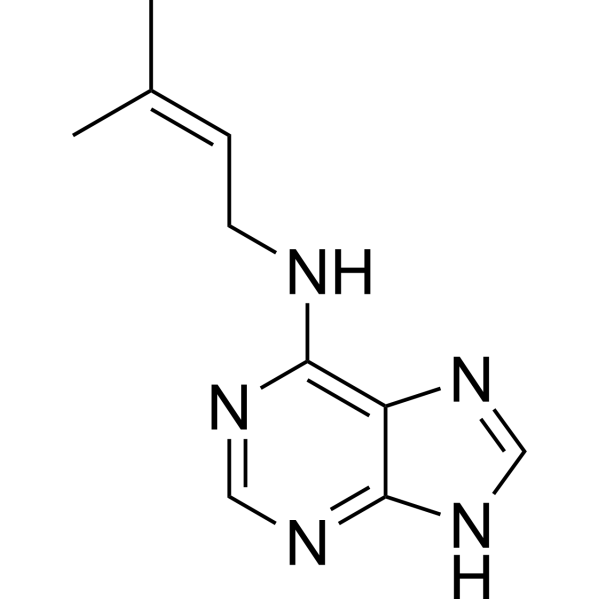
HY-112103
6-(γ,γ-Dimethylallylamino)purineNatural Product -
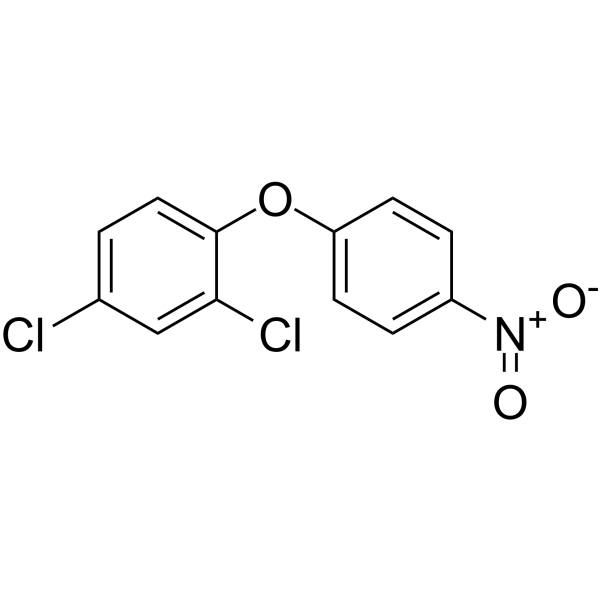
HY-B1877
NitrofenHerbicide Agent -
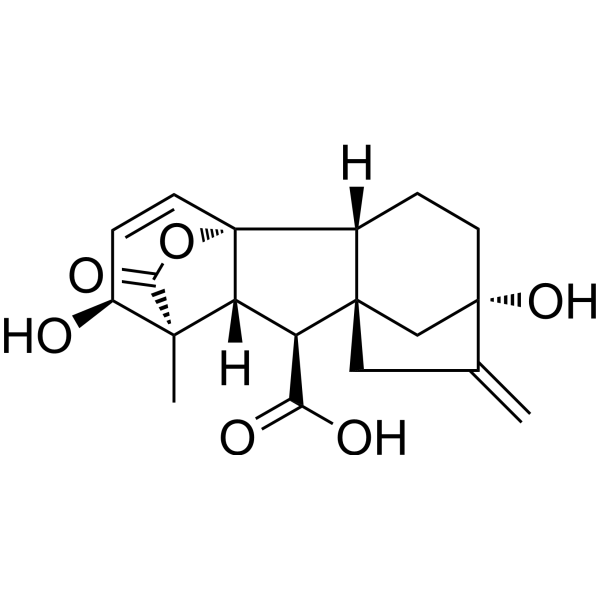
HY-N1964
Gibberellic acidGrowth Regulator -

HY-100560R
Abscisic acid (Standard)Plant Hormone -

HY-B1877R
Nitrofen (Standard)Herbicide Agent -

HY-112103R
6-(γ,γ-Dimethylallylamino)purine (Standard)Natural Product -

HY-N1964A
Gibberellic acid, suitable for plant cell cultureGrowth Regulator -
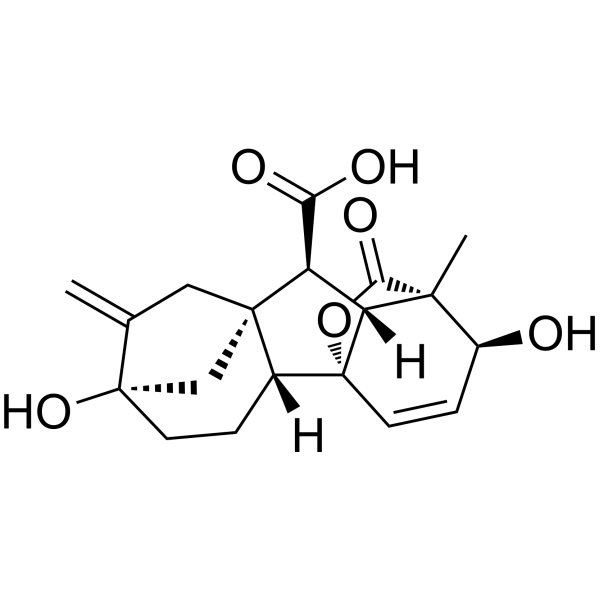
HY-N1964R
Gibberellic acid (Standard)Growth Regulator


Product Information
Information
Application
The compound is the grade of analytical standard, which is the reference standard supplied assay. It is commonly used in qualitative, quantitative and methodological research experiments in HPLC, GC and MS.


Chemical Information
-
CAS No. 6402-36-4
-
Appearance Solid
-
Molecular Weight 228.28
-
Formula C12H20O4
-
Color White to off-white
-
SMILES
O=C(O)/C=C/CCCCCCCCC(O)=O
-
Structure Classification
-
Shipping
Room temperature in continental US; may vary elsewhere.
-
Storage
Please store the product under the recommended conditions in the Certificate of Analysis.


Purity & Documentation
-
SDS (393 KB)
- English - EN (393 KB)
- Français - FR (393 KB)
- Deutsch - DE (393 KB)
- Norwegian - NO (393 KB)
- Español - ES (393 KB)
- Swedish - SV (393 KB)
- Italian - IT (393 KB)
- Korean - KR (393 KB)
- Portuguese - PT (393 KB)
-
Handling Instructions (2659 KB)
References
[1]. Jabłońska-Trypuć A, et al. Traumatic Acid Reduces Oxidative Stress and Enhances Collagen Biosynthesis in Cultured Human Skin Fibroblasts.Lipids. 2016 Sep;51(9):1021-35. [Content Brief]
[2]. Jabłońska-Trypuć A, et al. Traumatic acid toxicity mechanisms in human breast cancer MCF-7 cells. Regul Toxicol Pharmacol. 2019 Aug;106:137-146. [Content Brief]

Calculators
Concentration (start) × Volume (start) = Concentration (final) × Volume (final)


Traumatic Acid (Standard) Related Classifications
HY-119358R Related Classifications
 Powered by Bioz