Search Result
Results for "
analgesic metabolite
" in MedChemExpress (MCE) Product Catalog:
10
Isotope-Labeled Compounds
| Cat. No. |
Product Name |
Target |
Research Areas |
Chemical Structure |
-
- HY-15550
-
-
-
- HY-116637
-
-
-
- HY-15550S
-
|
|
Drug Metabolite
|
Neurological Disease
Inflammation/Immunology
|
|
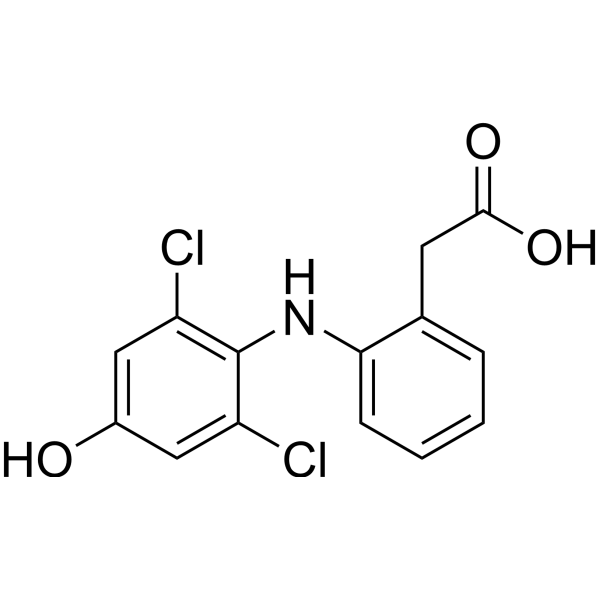
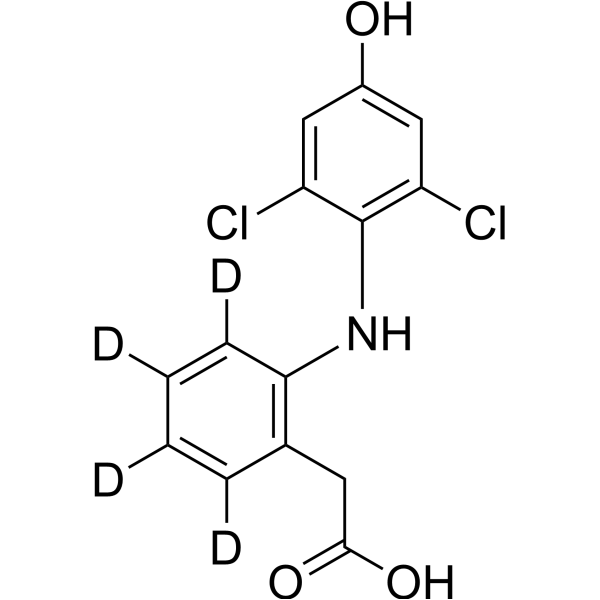
4'-Hydroxy diclofenac-d4 is the deuterium labeled 4'-Hydroxy diclofenac. 4'-Hydroxy diclofenac is an orally active metabolite of Diclofenac (HY-15036) by cytochrome P450 2C9 (CYP2C9). 4'-Hydroxy diclofenac has anti-inflammatory and analgesic properties .
|
-
-
- HY-W004049
-
-
-
- HY-135731
-
|
|
COX
Drug Metabolite
|
Inflammation/Immunology
|
|
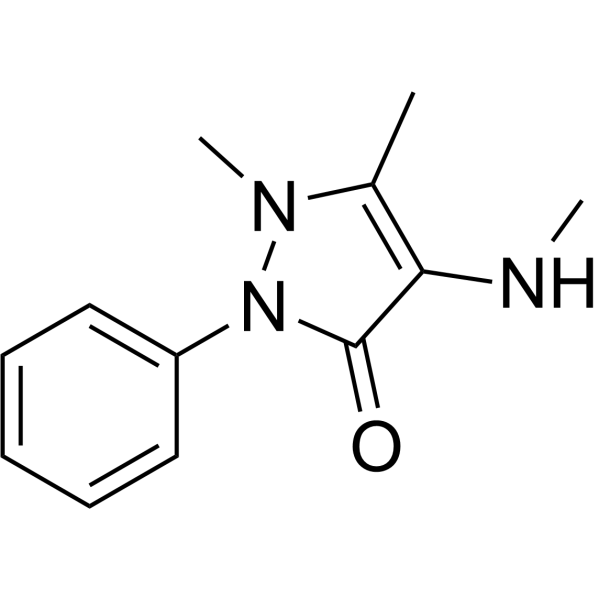
4-Methylamino antipyrine is an active metabolite of Metamizole. Metamizole is a pyrazolone non-steroidal anti-inflammatory drug (NSAID) and inhibits COX. Metamizole is an nonopioid analgesic agent and can be used for pain and fever . 4-Methylamino antipyrine has analgesic, antipyretic, and relatively weak antiinflammatory properties .
|
-
-
- HY-N2907
-
|
|
Wnt
Ras
Endogenous Metabolite
Bacterial
Fungal
PD-1/PD-L1
Tim3
Akt
AP-1
STAT
|
Infection
Neurological Disease
Inflammation/Immunology
Cancer
|
|
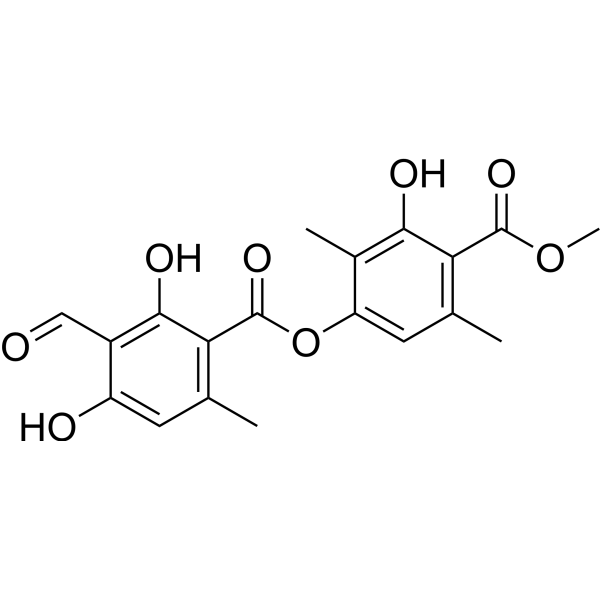
Atranorin is a secondary metabolite of lichens and AKT inhibitor. Atranorin possesses multiple activities such as antibacterial, anti-inflammatory, antioxidant, anti-glycation, analgesic, and anti-tumor effects. Atranorin has IC50 values for scavenging DPPH and ABTS free radicals of 117 μM and less than 10 μM, respectively. Additionally, Atranorin also exhibits effects in promoting wound healing. Atranorin can be used in the research of various diseases, including myelodysplastic syndromes, tumors, and inflammatory conditions .
|
-
-
- HY-109054A
-
|
|
Drug Metabolite
Opioid Receptor
|
Neurological Disease
|
|
O-Desmethyltramadol hydrochloride is the main active metabolite of tramadol (Tramadol) and can cross the blood-brain barrier. O-Desmethyltramadol hydrochloride mainly exerts its analgesic effect by activating the µ-opioid receptor (µ-OR) .
|
-
-
- HY-109054
-
|
|
Drug Metabolite
Opioid Receptor
|
Neurological Disease
|
|
O-Desmethyltramadol is the main active metabolite of tramadol (Tramadol) and can cross the blood-brain barrier. O-Desmethyltramadol mainly exerts its analgesic effect by activating the µ-opioid receptor (µ-OR) .
|
-
-
- HY-116070
-
|
4-Iodoantipyrine
|
Fluorescent Dye
|
Infection
|
|
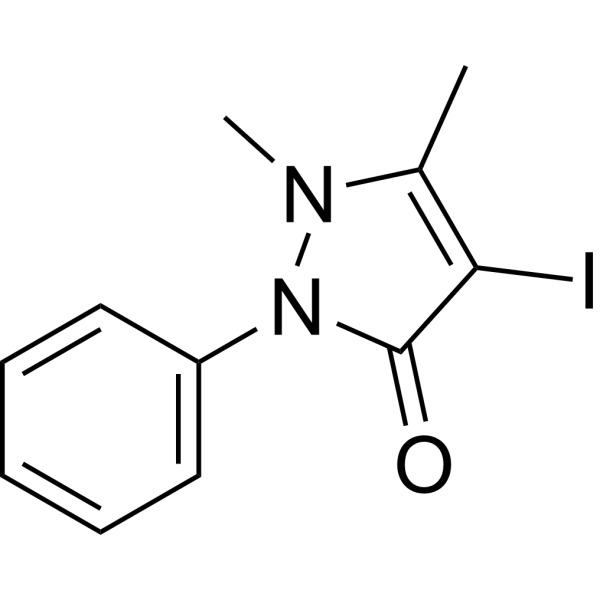
Iodoantipyrine (4-Iodoantipyrine) is an iodinated Antipyrine (HY-B0171) with potential antiviral activity. Antipyrine (Phenazone) is an antipyretic and analgesic that also serves as a molecular probe of hepatic oxidative metabolites .
|
-
-
- HY-W007539
-
|
|
Endogenous Metabolite
Drug Intermediate
NO Synthase
Reactive Oxygen Species (ROS)
COX
|
Metabolic Disease
Inflammation/Immunology
|
|
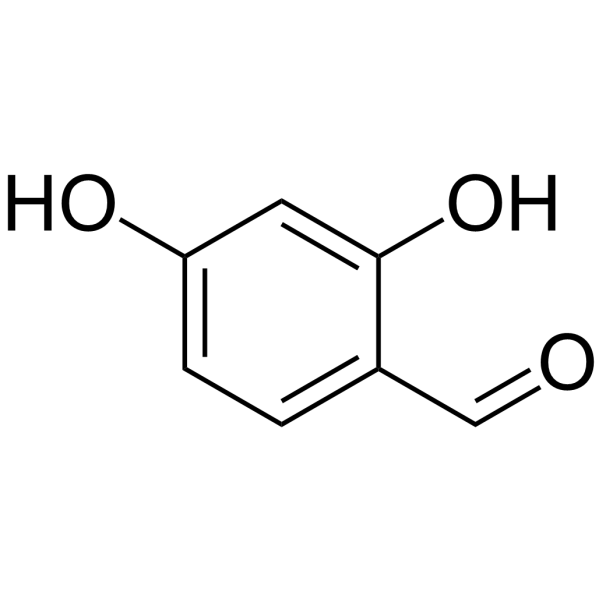
2,4-Dihydroxybenzaldehyde is an endogenous metabolite. 2,4-Dihydroxybenzaldehyde is a pharmaceutical intermediate that can be used to synthesize various Schiff base compounds. 2,4-Dihydroxybenzaldehyde exhibits significant anti angiogenic, anti-inflammatory, and analgesic activities. 2,4-Dihydroxybenzaldehyde reduces the production of NO and ROS by inhibiting the expression of iNOS and COX-2. 2,4-Dihydroxybenzaldehyde is commonly used in the study of inflammatory conditions .
|
-
-
- HY-W040705
-
|
N-Methylanthranilic acid
|
Drug Metabolite
|
Others
|
|
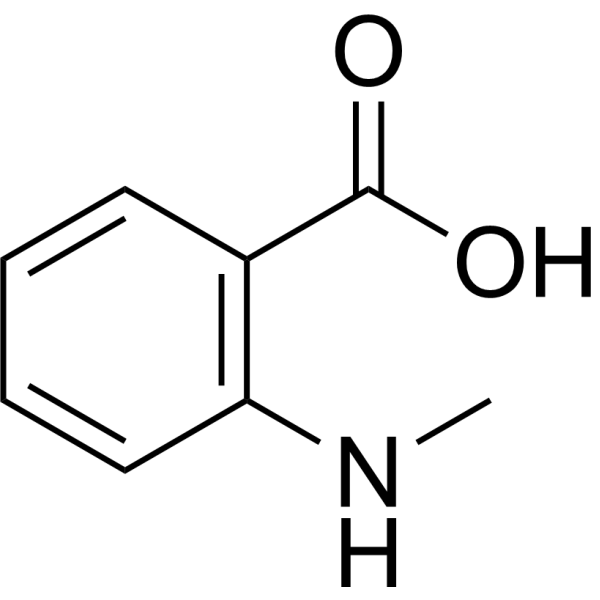
2-(Methylamino)benzoic acid is the main metabolite of methyl-N-methylanthranilates (MMA) (HY-76705) and is the compound in which the ester group is converted. MMA can be isolated from citrus fruits and has potential analgesic activity. 2-(Methylamino)benzoic acid was used to detect the metabolic levels of MMA in rat liver .
|
-
-
- HY-133588
-
|
|
Endogenous Metabolite
|
Metabolic Disease
|
|
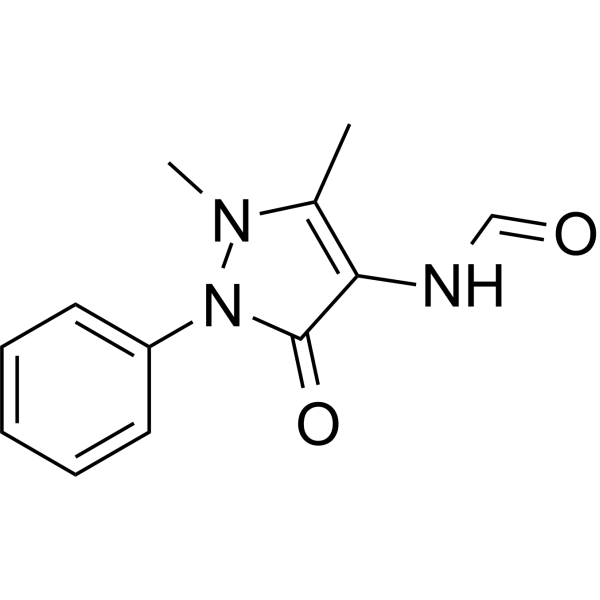
4-Formylaminoantipyrine is an excreted metabolite of aminophenazone. Aminophenazone is a pyrazolone with analgesic, anti-inflammatory, and antipyretic effects in vivo .
|
-
-
- HY-135731A
-
|
|
COX
Drug Metabolite
|
Inflammation/Immunology
|
|
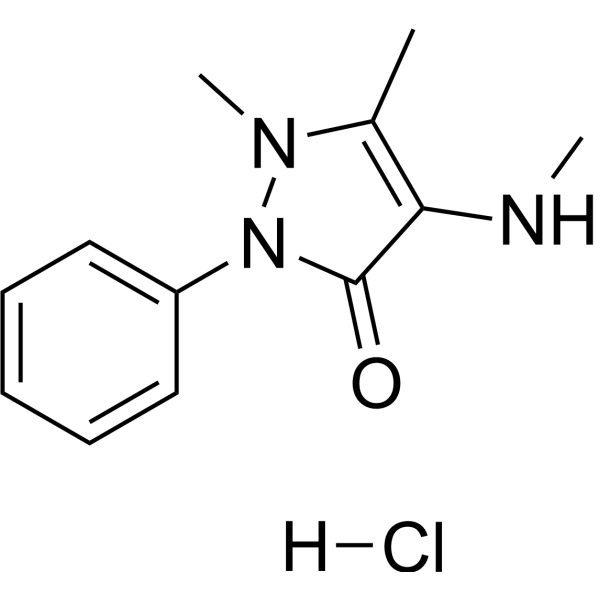
4-Methylamino antipyrine hydrochloride is an active metabolite of Metamizole. Metamizole is a pyrazolone non-steroidal anti-inflammatory drug (NSAID) and inhibits COX. Metamizole is an nonopioid analgesic agent and can be used for pain and fever . 4-Methylamino antipyrine hydrochloride has analgesic, antipyretic, and relatively weak antiinflammatory properties .
|
-
-
- HY-W004049R
-
-
-
- HY-15550R
-
|
|
Reference Standards
Drug Metabolite
|
Neurological Disease
Inflammation/Immunology
|
|
4'-Hydroxy diclofenac (Standard) is the analytical standard of 4'-Hydroxy diclofenac. This product is intended for research and analytical applications. 4'-Hydroxy diclofenac is an orally active metabolite of Diclofenac (HY-15036) by cytochrome P450 2C9 (CYP2C9). 4'-Hydroxy diclofenac has anti-inflammatory and analgesic properties .
|
-
-
- HY-121854A
-
|
|
Opioid Receptor
|
Inflammation/Immunology
|
|
Bromadoline maleate is an opioid analgesic selective for the μ-opioid receptor, exhibiting analgesic activity in various biological fluids. Bromadoline maleate has been successfully quantified alongside its N-demethylated metabolites in human and canine samples.
|
-
-
- HY-N7312
-
|
(-)-Ditryptophenaline
|
Neurokinin Receptor
Endogenous Metabolite
|
Inflammation/Immunology
|
|
Ditryptophenaline ((-)-Ditryptophenaline) is a secondary metabolite. Ditryptophenaline can be isolated from Aspergillus flavus. Ditryptophenaline inhibits the Substance P receptor. Ditryptophenaline exhibits potential analgesic and anti-inflammatory activities .
|
-
-
- HY-135731AS
-
|
|
Isotope-Labeled Compounds
COX
Drug Metabolite
|
Inflammation/Immunology
|
|
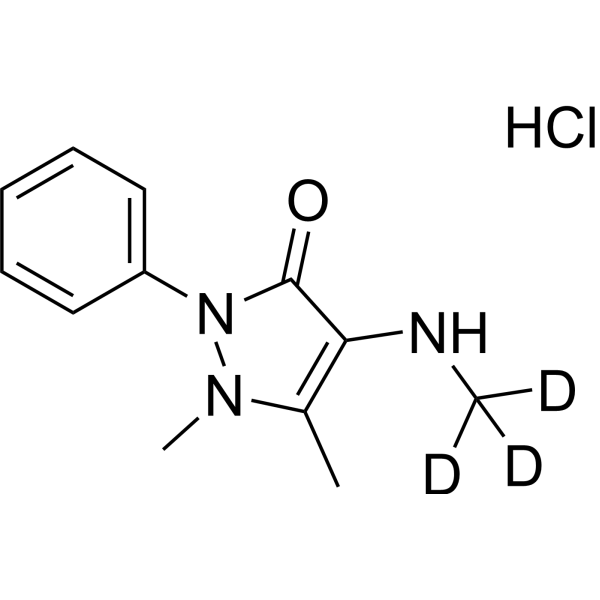
4-Methylamino antipyrine-d3 (hydrochloride) is deuterium labeled 4-Methylamino antipyrine (hydrochloride). 4-Methylamino antipyrine hydrochloride is an active metabolite of Metamizole. Metamizole is a pyrazolone non-steroidal anti-inflammatory drug (NSAID) and inhibits COX. Metamizole is an nonopioid analgesic agent and can be used for pain and fever . 4-Methylamino antipyrine hydrochloride has analgesic, antipyretic, and relatively weak antiinflammatory properties .
|
-
-
- HY-109054AS
-
|
|
Isotope-Labeled Compounds
Drug Metabolite
Opioid Receptor
|
Neurological Disease
|
|
O-Desmethyltramadol-d6 hydrochloride is a deuterated labeled O-Desmethyltramadol hydrochloride. O-Desmethyltramadol hydrochloride is the main active metabolite of tramadol (Tramadol) and can cross the blood-brain barrier. O-Desmethyltramadol hydrochloride mainly exerts its analgesic effect by activating the µ-opioid receptor (µ-OR) .
|
-
-
- HY-132428S
-
|
|
Isotope-Labeled Compounds
Opioid Receptor
|
Neurological Disease
|
|
O-Desmethyl Tramadol-d6 is the deuterium labeled O-Desmethyl Tramadol. O-Desmethyl Tramadol is a primary active metabolite of Tramadol. O-Desmethyl Tramadol is mainly responsible for its μ-opioid receptor-related analgesic effect. Tramadol is metabolized to O-Demethyltramadol mainly by the cytochrome P450 (CYP) 2D6 enzyme .
|
-
-
- HY-N2907R
-
|
|
Wnt
Reference Standards
Ras
Endogenous Metabolite
Bacterial
Fungal
PD-1/PD-L1
Tim3
Akt
AP-1
STAT
|
Infection
Neurological Disease
Inflammation/Immunology
Cancer
|
|
Atranorin (Standard) is the analytical standard of Atranorin (HY-N2907). This product is intended for research and analytical applications. Atranorin is a secondary metabolite of lichens and AKT inhibitor. Atranorin possesses multiple activities such as antibacterial, anti-inflammatory, antioxidant, anti-glycation, analgesic, and anti-tumor effects. Atranorin has IC50 values for scavenging DPPH and ABTS free radicals of 117 μM and less than 10 μM, respectively. Additionally, Atranorin also exhibits effects in promoting wound healing. Atranorin can be used in the research of various diseases, including myelodysplastic syndromes, tumors, and inflammatory conditions .
|
-
-
- HY-133115AS
-
|
|
Isotope-Labeled Compounds
β-catenin
|
Neurological Disease
|
|
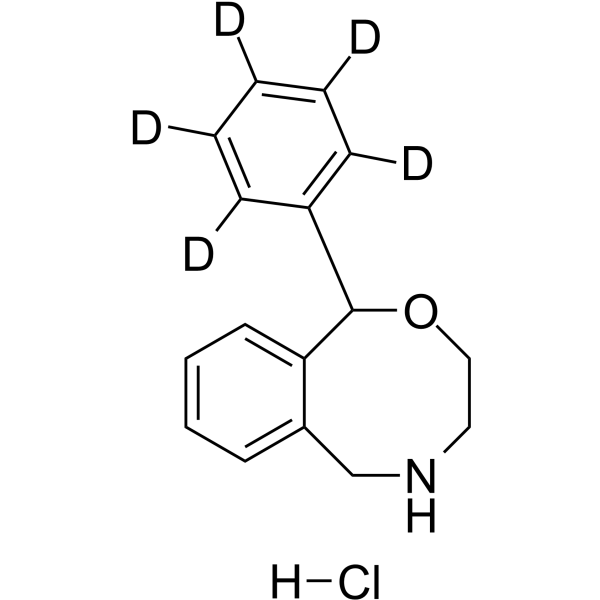
N-Desmethylnefopam-d5 (hydrochloride) is a deuterium labeled N-Desmethylnefopam hydrochloride. N-Desmethylnefopam hydrochloride is the main metabolite of Nefopam. N-Desmethylnefopam hydrochloride is a centrally-acting but non-opioid analgesic agent, for the relief of moderate to severe pain .
|
-
-
- HY-133115
-
|
|
β-catenin
|
Neurological Disease
|
|
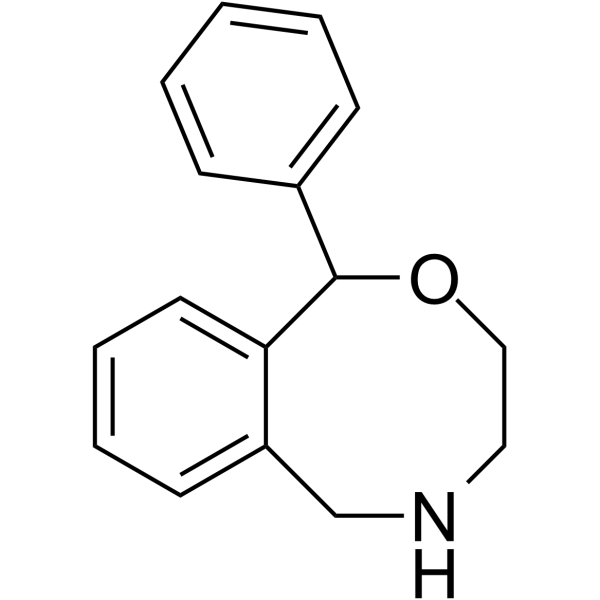
N-Desmethylnefopam is the main metabolite of Nefopam. N-Desmethylnefopam is a centrally-acting but non-opioid analgesic agent, for the relief of moderate to severe pain. Nefopam targets β-catenin protein level in mesenchymal cells in-vitro and in-vivo .
|
-
-
- HY-135731AR
-
|
|
Reference Standards
COX
Drug Metabolite
|
Inflammation/Immunology
|
|
4-Methylamino antipyrine (hydrochloride) (Standard) is the analytical standard of 4-Methylamino antipyrine (hydrochloride). This product is intended for research and analytical applications. 4-Methylamino antipyrine hydrochloride is an active metabolite of Metamizole. Metamizole is a pyrazolone non-steroidal anti-inflammatory drug (NSAID) and inhibits COX. Metamizole is an nonopioid analgesic agent and can be used for pain and fever . 4-Methylamino antipyrine hydrochloride has analgesic, antipyretic, and relatively weak antiinflammatory properties .
|
-
-
- HY-135731R
-
|
|
Reference Standards
COX
Drug Metabolite
|
Inflammation/Immunology
|
|
4-Methylamino antipyrine (Standard) is the analytical standard of 4-Methylamino antipyrine. This product is intended for research and analytical applications. 4-Methylamino antipyrine is an active metabolite of Metamizole. Metamizole is a pyrazolone non-steroidal anti-inflammatory drug (NSAID) and inhibits COX. Metamizole is an nonopioid analgesic agent and can be used for pain and fever . 4-Methylamino antipyrine has analgesic, antipyretic, and relatively weak antiinflammatory properties .
|
-
-
- HY-123001
-
-
-
- HY-144773
-
|
|
Drug Metabolite
|
Inflammation/Immunology
|
|
Loxoprofenol-SRS, an active metabolite of Loxoprofen, is a new intravenous NSAID. Loxoprofenol-SRS exhibits significantly stronger anti-inflammatory and analgesic activities .
|
-
-
- HY-144773A
-
|
HR1405–01
|
COX
|
Inflammation/Immunology
|
|
Loxoprofenol-SRS tromethamine (HR1405-01), an active metabolite of Loxoprofen, is a Safe intravenous non-steroidal anti-inflammatory drug (NSAID) with superior anti-inflammatory and analgesic activities .
|
-
-
- HY-133588S
-
|
|
Isotope-Labeled Compounds
Endogenous Metabolite
|
Metabolic Disease
|
|
4-Formylaminoantipyrine-d3 is the deuterium labeled 4-Formylaminoantipyrine (HY-133588). 4-Formylaminoantipyrine is an excreted metabolite of Aminophenazone. Aminophenazone is a pyrazolone with analgesic, anti-inflammatory, and antipyretic effects in vivo .
|
-
-
- HY-116070R
-
|
4-Iodoantipyrine (Standard)
|
Fluorescent Dye
Reference Standards
|
Infection
|
|
Iodoantipyrine (Standard) is the analytical standard of Iodoantipyrine. This product is intended for research and analytical applications. Iodoantipyrine (4-Iodoantipyrine) is an iodinated Antipyrine (HY-B0171) with potential antiviral activity. Antipyrine (Phenazone) is an antipyretic and analgesic that also serves as a molecular probe of hepatic oxidative metabolites .
|
-
-
- HY-120045A
-
|
|
Opioid Receptor
|
Neurological Disease
|
|
DuP 747 hydrochloride is an analgesic with selective kappa-opioid receptor agonist activity. DuP 747 showed less spiradoline-appropriate selection when administered SC, but showed a partial generalized response to spiradoline when administered IP or PO. The 5-hydroxy-desmethoxy metabolite of DuP 747 induced selection of the saline-appropriate lever only. The effects of DuP 747 suggest that its metabolites may play a major role in the similar responses to spiradoline after IP and PO administration .
|
-
-
- HY-133115S
-
|
|
Isotope-Labeled Compounds
β-catenin
|
Neurological Disease
|
|
N-Desmethylnefopam-d5 is the deuterium labeled N-Desmethylnefopam (HY-133115). N-Desmethylnefopam is the main metabolite of Nefopam. N-Desmethylnefopam is a centrally-acting but non-opioid analgesic agent, for the relief of moderate to severe pain. Nefopam targets β-catenin protein level in mesenchymal cells in-vitro and in-vivo .
|
-
-
- HY-15550S1
-
|
|
Drug Metabolite
|
Inflammation/Immunology
|
|
4'-Hydroxy diclofenac- 13C6 is the 13C labeled 4'-Hydroxy diclofenac . 4'-Hydroxy diclofenac is an orally active metabolite of Diclofenac (HY-15036) by cytochrome P450 2C9 (CYP2C9). 4'-Hydroxy diclofenac has anti-inflammatory and analgesic properties .
|
-
-
- HY-135895
-
-
-
- HY-121888
-
|
|
PPAR
|
Metabolic Disease
|
|
20-HEPE is a metabolite of eicosapentaenoic acid formed by ω-oxidation of EPA by cytochrome P450 (CYP) ω-oxidases, including human CYP4F3B. At 10 μM, it activates peroxisome proliferator-activated receptor α (PPARα) in COS-7 cells expressing a luciferase reporter gene. 20-HEPE also activates mouse transient receptor potential vanilloid receptor 1 (mTRPV1) in vitro but lacks analgesic activity in rats.
|
-
-
- HY-W007539R
-
|
|
Reference Standards
Endogenous Metabolite
Drug Intermediate
NO Synthase
Reactive Oxygen Species (ROS)
COX
|
Metabolic Disease
Inflammation/Immunology
|
|
2,4-Dihydroxybenzaldehyde (Standard) is the analytical standard of 2,4-Dihydroxybenzaldehyde. This product is intended for research and analytical applications. 2,4-Dihydroxybenzaldehyde is an endogenous metabolite. 2,4-Dihydroxybenzaldehyde is a pharmaceutical intermediate that can be used to synthesize various Schiff base compounds. 2,4-Dihydroxybenzaldehyde exhibits significant anti angiogenic, anti-inflammatory, and analgesic activities. 2,4-Dihydroxybenzaldehyde reduces the production of NO and ROS by inhibiting the expression of iNOS and COX-2. 2,4-Dihydroxybenzaldehyde is commonly used in the study of inflammatory conditions .
|
-
-
- HY-179462
-
|
|
Drug Metabolite
|
Neurological Disease
|
|
Despropionyl-bezitramide is an orally active analgesic and a metabolite of Bezitramide. Despropionyl-bezitramide possesses analgesic properties comparable to those of its parent compound, Bezitramide .
|
-
-
- HY-133588R
-
|
|
Reference Standards
Endogenous Metabolite
|
Metabolic Disease
|
|
4-Formylaminoantipyrine (Standard) is the analytical standard of 4-Formylaminoantipyrine. This product is intended for research and analytical applications. 4-Formylaminoantipyrine is an excreted metabolite of aminophenazone. Aminophenazone is a pyrazolone with analgesic, anti-inflammatory, and antipyretic effects in vivo .
|
-
-
- HY-W701503
-
|
|
Isotope-Labeled Compounds
COX
Drug Metabolite
|
Inflammation/Immunology
|
|
4-Methylamino antipyrine-d3-1 is the deuterium labeled 4-Methylamino antipyrine-1. 4-Methylamino antipyrine is an active metabolite of Metamizole. Metamizole is a pyrazolone non-steroidal anti-inflammatory drug (NSAID) and inhibits COX. Metamizole is an nonopioid analgesic agent and can be used for pain and fever . 4-Methylamino antipyrine has analgesic, antipyretic, and relatively weak antiinflammatory properties .
|
-
-
- HY-W004049S
-
-
-
- HY-W040705R
-
|
N-Methylanthranilic acid (Standard)
|
Drug Metabolite
Reference Standards
|
Others
|
|
2-(Methylamino)benzoic acid (Standard) is the analytical standard of 2-(Methylamino)benzoic acid. This product is intended for research and analytical applications. 2-(Methylamino)benzoic acid is the main metabolite of methyl-N-methylanthranilates (MMA) (HY-76705) and is the compound in which the ester group is converted. MMA can be isolated from citrus fruits and has potential analgesic activity. 2-(Methylamino)benzoic acid was used to detect the metabolic levels of MMA in rat liver[1].
|
-
-
- HY-N9554
-
|
|
Neurokinin Receptor
Endogenous Metabolite
Calcium Channel
|
Neurological Disease
Inflammation/Immunology
|
|
WIN-64821 is a secondary metabolite produced by Aspergillus species, and acts as a Neurokinin Receptor antagonist. The Ki values of WIN-64821 for NK1, NK2 and NK3 receptors are 0.24 (human astrocytoma cells), 0.26 (rat duodenum) and 15.2 (guinea pig forebrain) μM, respectively. WIN-64821 inhibits apamin-induced contraction of rat vas deferens, blocks substance P-induced contraction of guinea pig ileum and Ca 2+ efflux in human astrocytoma cells. WIN-64821 is applicable to analgesic and anti-inflammatory research .
|
-
| Cat. No. |
Product Name |
Target |
Research Area |
-
- HY-W040705
-
|
N-Methylanthranilic acid
|
Drug Metabolite
|
Others
|
|
2-(Methylamino)benzoic acid is the main metabolite of methyl-N-methylanthranilates (MMA) (HY-76705) and is the compound in which the ester group is converted. MMA can be isolated from citrus fruits and has potential analgesic activity. 2-(Methylamino)benzoic acid was used to detect the metabolic levels of MMA in rat liver .
|
-
- HY-W040705R
-
|
N-Methylanthranilic acid (Standard)
|
Drug Metabolite
Reference Standards
|
Others
|
|
2-(Methylamino)benzoic acid (Standard) is the analytical standard of 2-(Methylamino)benzoic acid. This product is intended for research and analytical applications. 2-(Methylamino)benzoic acid is the main metabolite of methyl-N-methylanthranilates (MMA) (HY-76705) and is the compound in which the ester group is converted. MMA can be isolated from citrus fruits and has potential analgesic activity. 2-(Methylamino)benzoic acid was used to detect the metabolic levels of MMA in rat liver[1].
|
| Cat. No. |
Product Name |
Category |
Target |
Chemical Structure |
-
- HY-116637
-
-
-
- HY-W004049
-
-
-
- HY-N2907
-
|
|
other families
Classification of Application Fields
Phenols
Polyphenols
Plants
Endogenous metabolite
Disease Research Fields
Source Classification
Cancer
|
Wnt
Ras
Endogenous Metabolite
Bacterial
Fungal
PD-1/PD-L1
Tim3
Akt
AP-1
STAT
|
|
Atranorin is a secondary metabolite of lichens and AKT inhibitor. Atranorin possesses multiple activities such as antibacterial, anti-inflammatory, antioxidant, anti-glycation, analgesic, and anti-tumor effects. Atranorin has IC50 values for scavenging DPPH and ABTS free radicals of 117 μM and less than 10 μM, respectively. Additionally, Atranorin also exhibits effects in promoting wound healing. Atranorin can be used in the research of various diseases, including myelodysplastic syndromes, tumors, and inflammatory conditions .
|
-
-
- HY-W007539
-
-
-
- HY-W040705
-
|
N-Methylanthranilic acid
|
Ketones, Aldehydes, Acids
Endogenous metabolite
Source Classification
|
Drug Metabolite
|
|
2-(Methylamino)benzoic acid is the main metabolite of methyl-N-methylanthranilates (MMA) (HY-76705) and is the compound in which the ester group is converted. MMA can be isolated from citrus fruits and has potential analgesic activity. 2-(Methylamino)benzoic acid was used to detect the metabolic levels of MMA in rat liver .
|
-
-
- HY-133588
-
-
-
- HY-W004049R
-
-
-
- HY-N7312
-
-
-
- HY-N2907R
-
|
|
Structural Classification
other families
Phenols
Polyphenols
Plants
Endogenous metabolite
Source Classification
|
Wnt
Reference Standards
Ras
Endogenous Metabolite
Bacterial
Fungal
PD-1/PD-L1
Tim3
Akt
AP-1
STAT
|
|
Atranorin (Standard) is the analytical standard of Atranorin (HY-N2907). This product is intended for research and analytical applications. Atranorin is a secondary metabolite of lichens and AKT inhibitor. Atranorin possesses multiple activities such as antibacterial, anti-inflammatory, antioxidant, anti-glycation, analgesic, and anti-tumor effects. Atranorin has IC50 values for scavenging DPPH and ABTS free radicals of 117 μM and less than 10 μM, respectively. Additionally, Atranorin also exhibits effects in promoting wound healing. Atranorin can be used in the research of various diseases, including myelodysplastic syndromes, tumors, and inflammatory conditions .
|
-
-
- HY-W007539R
-
|
|
Monophenols
Ketones, Aldehydes, Acids
Phenols
Polyphenols
Endogenous metabolite
Source Classification
|
Reference Standards
Endogenous Metabolite
Drug Intermediate
NO Synthase
Reactive Oxygen Species (ROS)
COX
|
|
2,4-Dihydroxybenzaldehyde (Standard) is the analytical standard of 2,4-Dihydroxybenzaldehyde. This product is intended for research and analytical applications. 2,4-Dihydroxybenzaldehyde is an endogenous metabolite. 2,4-Dihydroxybenzaldehyde is a pharmaceutical intermediate that can be used to synthesize various Schiff base compounds. 2,4-Dihydroxybenzaldehyde exhibits significant anti angiogenic, anti-inflammatory, and analgesic activities. 2,4-Dihydroxybenzaldehyde reduces the production of NO and ROS by inhibiting the expression of iNOS and COX-2. 2,4-Dihydroxybenzaldehyde is commonly used in the study of inflammatory conditions .
|
-
-
- HY-133588R
-
-
-
- HY-W040705R
-
|
N-Methylanthranilic acid (Standard)
|
Structural Classification
Ketones, Aldehydes, Acids
Endogenous metabolite
Source Classification
|
Drug Metabolite
Reference Standards
|
|
2-(Methylamino)benzoic acid (Standard) is the analytical standard of 2-(Methylamino)benzoic acid. This product is intended for research and analytical applications. 2-(Methylamino)benzoic acid is the main metabolite of methyl-N-methylanthranilates (MMA) (HY-76705) and is the compound in which the ester group is converted. MMA can be isolated from citrus fruits and has potential analgesic activity. 2-(Methylamino)benzoic acid was used to detect the metabolic levels of MMA in rat liver[1].
|
-
-
- HY-N9554
-
-
| Cat. No. |
Product Name |
Chemical Structure |
-
- HY-15550S
-
|
|
|
4'-Hydroxy diclofenac-d4 is the deuterium labeled 4'-Hydroxy diclofenac. 4'-Hydroxy diclofenac is an orally active metabolite of Diclofenac (HY-15036) by cytochrome P450 2C9 (CYP2C9). 4'-Hydroxy diclofenac has anti-inflammatory and analgesic properties .
|
-
-
- HY-135731AS
-
|
|
|
4-Methylamino antipyrine-d3 (hydrochloride) is deuterium labeled 4-Methylamino antipyrine (hydrochloride). 4-Methylamino antipyrine hydrochloride is an active metabolite of Metamizole. Metamizole is a pyrazolone non-steroidal anti-inflammatory drug (NSAID) and inhibits COX. Metamizole is an nonopioid analgesic agent and can be used for pain and fever . 4-Methylamino antipyrine hydrochloride has analgesic, antipyretic, and relatively weak antiinflammatory properties .
|
-
-
- HY-109054AS
-
|
|
|
O-Desmethyltramadol-d6 hydrochloride is a deuterated labeled O-Desmethyltramadol hydrochloride. O-Desmethyltramadol hydrochloride is the main active metabolite of tramadol (Tramadol) and can cross the blood-brain barrier. O-Desmethyltramadol hydrochloride mainly exerts its analgesic effect by activating the µ-opioid receptor (µ-OR) .
|
-
-
- HY-132428S
-
|
|
|
O-Desmethyl Tramadol-d6 is the deuterium labeled O-Desmethyl Tramadol. O-Desmethyl Tramadol is a primary active metabolite of Tramadol. O-Desmethyl Tramadol is mainly responsible for its μ-opioid receptor-related analgesic effect. Tramadol is metabolized to O-Demethyltramadol mainly by the cytochrome P450 (CYP) 2D6 enzyme .
|
-
-
- HY-133115AS
-
|
|
|
N-Desmethylnefopam-d5 (hydrochloride) is a deuterium labeled N-Desmethylnefopam hydrochloride. N-Desmethylnefopam hydrochloride is the main metabolite of Nefopam. N-Desmethylnefopam hydrochloride is a centrally-acting but non-opioid analgesic agent, for the relief of moderate to severe pain .
|
-
-
- HY-133588S
-
|
|
|
4-Formylaminoantipyrine-d3 is the deuterium labeled 4-Formylaminoantipyrine (HY-133588). 4-Formylaminoantipyrine is an excreted metabolite of Aminophenazone. Aminophenazone is a pyrazolone with analgesic, anti-inflammatory, and antipyretic effects in vivo .
|
-
-
- HY-133115S
-
|
|
|
N-Desmethylnefopam-d5 is the deuterium labeled N-Desmethylnefopam (HY-133115). N-Desmethylnefopam is the main metabolite of Nefopam. N-Desmethylnefopam is a centrally-acting but non-opioid analgesic agent, for the relief of moderate to severe pain. Nefopam targets β-catenin protein level in mesenchymal cells in-vitro and in-vivo .
|
-
-
- HY-15550S1
-
|
|
|
4'-Hydroxy diclofenac- 13C6 is the 13C labeled 4'-Hydroxy diclofenac . 4'-Hydroxy diclofenac is an orally active metabolite of Diclofenac (HY-15036) by cytochrome P450 2C9 (CYP2C9). 4'-Hydroxy diclofenac has anti-inflammatory and analgesic properties .
|
-
-
- HY-W701503
-
|
|
|
4-Methylamino antipyrine-d3-1 is the deuterium labeled 4-Methylamino antipyrine-1. 4-Methylamino antipyrine is an active metabolite of Metamizole. Metamizole is a pyrazolone non-steroidal anti-inflammatory drug (NSAID) and inhibits COX. Metamizole is an nonopioid analgesic agent and can be used for pain and fever . 4-Methylamino antipyrine has analgesic, antipyretic, and relatively weak antiinflammatory properties .
|
-
-
- HY-W004049S
-
|
|
|
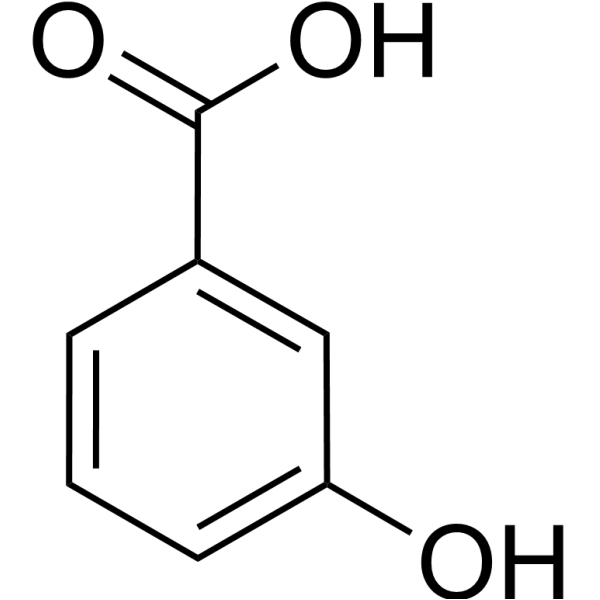
3-Hydroxybenzoic acid-d4 is the deuterium labeled 3-Hydroxybenzoic acid (HY-W004049). 3-Hydroxybenzoic acid is an orally active endogenous metabolite. 3-Hydroxybenzoic acid is an agonist for GPR81 and GPR109A. 3-Hydroxybenzoic acid acts as stress response desensitizers. 3-Hydroxybenzoic acid can be used for anti-inflammatory and analgesic study .
|
-
Your information is safe with us. * Required Fields.
Inquiry Information
- Product Name:
- Cat. No.:
- Quantity:
- MCE Japan Authorized Agent:

