



Tetrahydromagnolol

Based on 1 Customer Validation
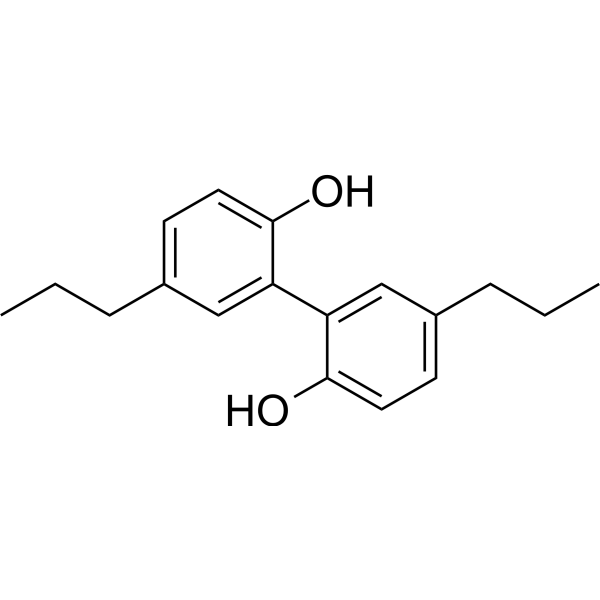
Tetrahydromagnolol (Magnolignan), the main metabolite of Magnolol, is a potent and selective cannabinoidCB2 receptor agonist (EC50 =170 nM) and GPR55 antagonist. The Ki of Tetrahydromagnolol for CB2 is 416 nM, 20-fold higher than for the CB1 receptor. Magnolol shows antifungal, anti-inflammatory and analgesic effects.
商品は「研究用試薬」です。人や動物の医療用・臨床診断用・食品用の製品ではありません。
研究用途以外に使用した場合、当社は一切の責任を負いかねます。
- 純度 : 99.89%
- CAS 番号: 20601-85-8
- 分子式: C18H22O2
- 分子量:270.37
-
保管条件:
4°C, protect from light
* In solvent : -80°C, 6 months; -20°C, 1 month (protect from light)

To place orders, for customer services and technical support, please contact: MedChemExpress USA
Tel: 609-228-6898 E-mail: [email protected] [email protected]


-
 生物活性
生物活性
-
化学情報
-
溶剤 & 溶解度
- プロトコル
- 純度とドキュメンテーション
- 参考文献
-
 Help & FAQs


-
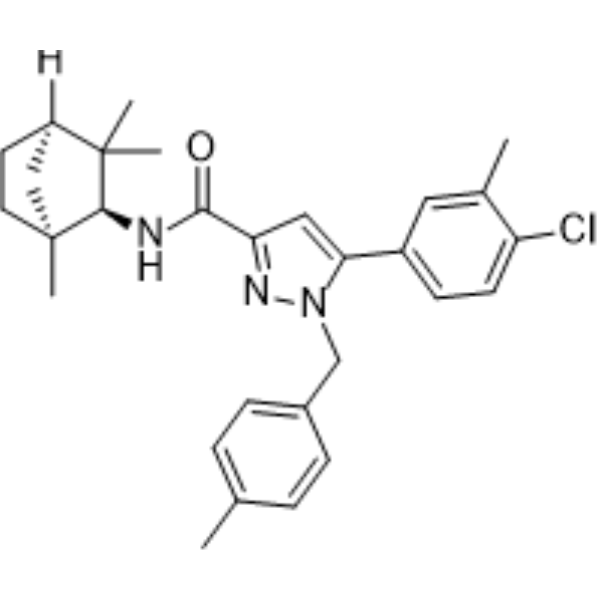
HY-13439
SR144528CB2 Receptor Antagonist -
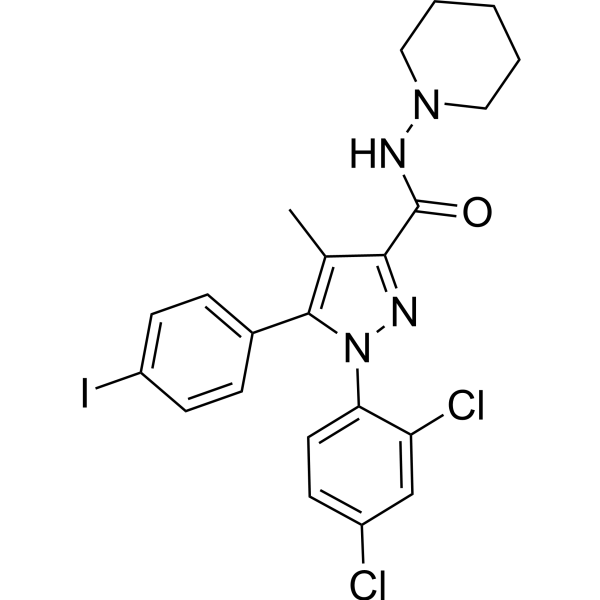
HY-15443
AM251CB1 Receptor Antagonist -
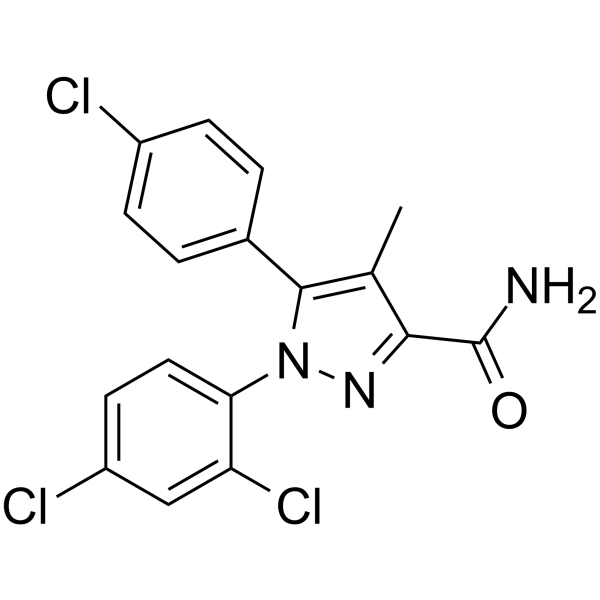
HY-116649
CB1 antagonist 2CB1R Antagonist -
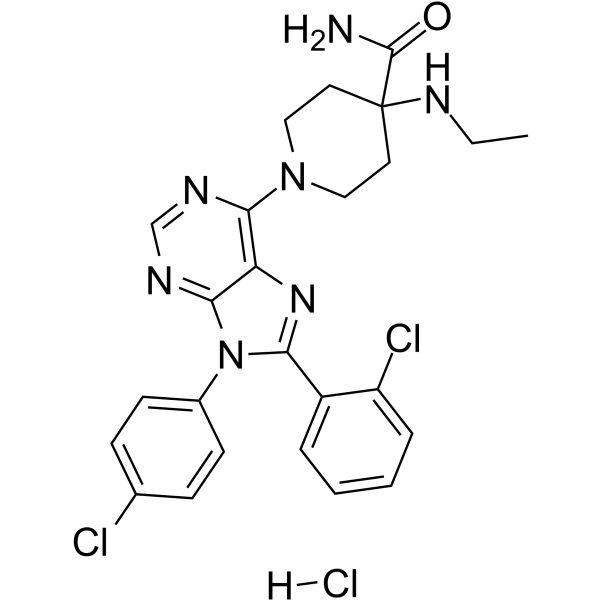
HY-10871A
Otenabant HydrochlorideCannabinoid Receptor Antagonist -

HY-103335
O1918 -
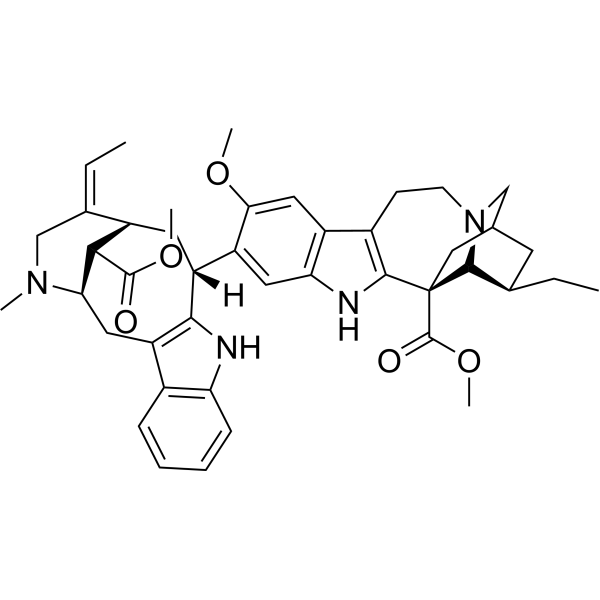
HY-N6932
VoacamineCB1/P-gp Inhibitor -
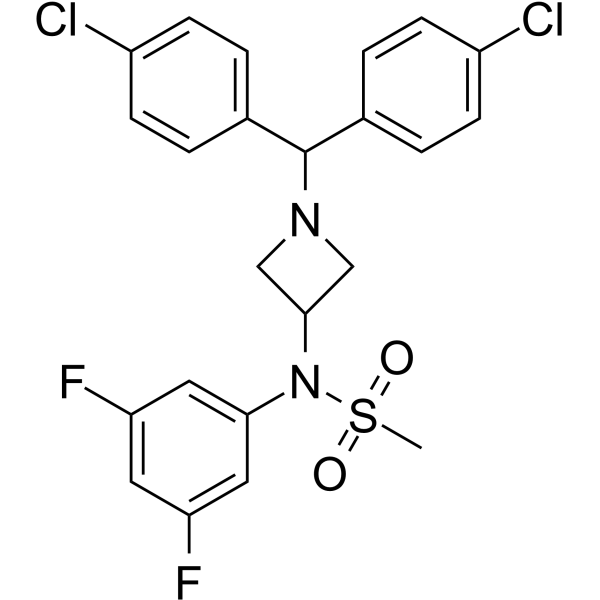
HY-14788
DrinabantCB1 Antagonist -
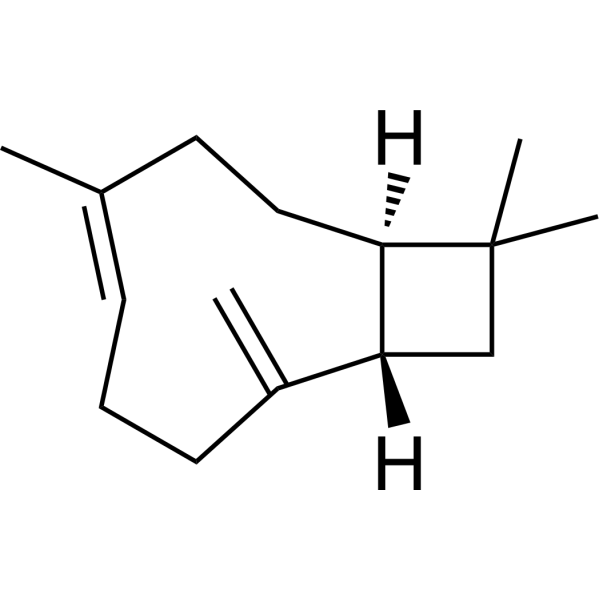
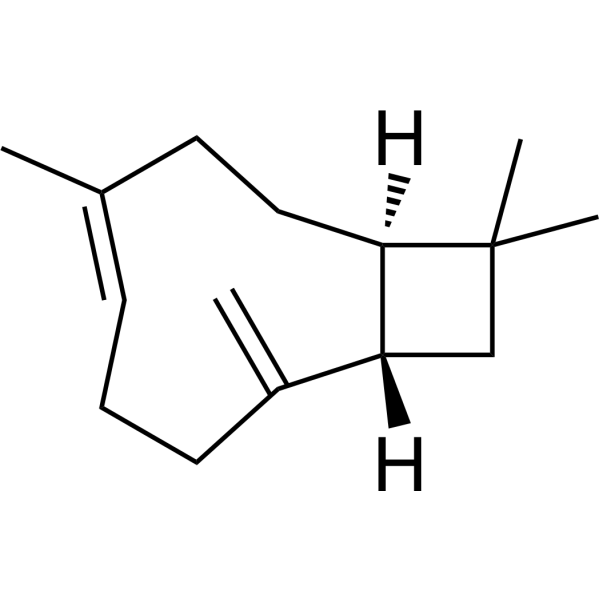
HY-N1415
β-CaryophylleneCannabinoid Receptor Agonist -
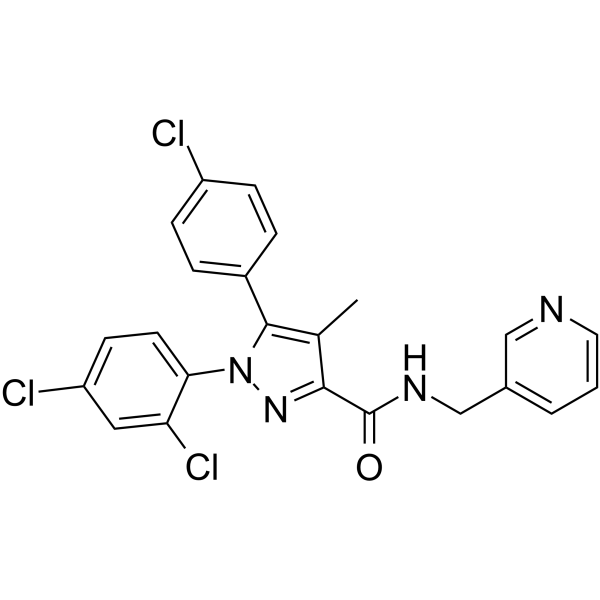
HY-103327
MJ15CB1 antagonist -
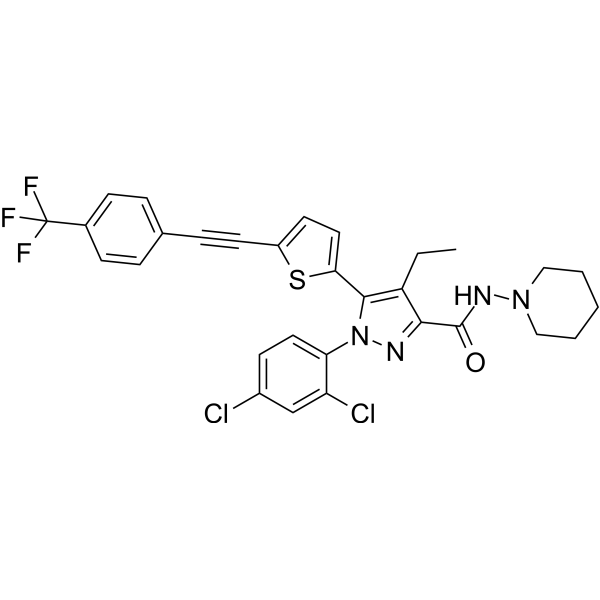
HY-112340
CB1 antagonist 4CB1 Receptor Antagonist -
HY-N1415R
β-Caryophyllene (Standard) -
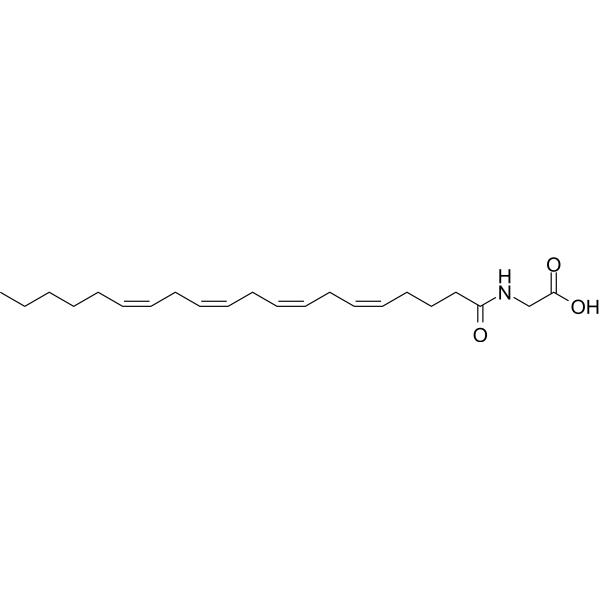
HY-103332
N-ArachidonylglycineGPR18 Agonist


生物活性
製品説明
IC50 & Target
[1]|
CB2 170 nM (EC50) |
CB2 416 nM (Ki) |
CB1 9010 nM (EC50) |
CB1 2260 nM (Ki) |
GPR55 receptor |
Cellular Effect
|
Cell Line

|
Type | Value | Description | References |
|---|---|---|---|---|
| CHO | EC50 |
0.17 μM
Compound: 7, tetrahydro-magnolol
|
Partial agonist activity at recombinant human CB2 receptor expressed in CHO cells assessed as inhibition of forskolin-induced cAMP accumulation at 100 uM after 5 mins by cAMP-competition binding assay relative to CP55,940
Partial agonist activity at recombinant human CB2 receptor expressed in CHO cells assessed as inhibition of forskolin-induced cAMP accumulation at 100 uM after 5 mins by cAMP-competition binding assay relative to CP55,940
|
[PMID: 24900561] |
| CHO | EC50 |
9.01 μM
Compound: 7, tetrahydro-magnolol
|
Agonist activity at recombinant human CB1 receptor expressed in CHO cells assessed as inhibition of forskolin-induced cAMP accumulation after 5 mins by cAMP-competition binding assay
Agonist activity at recombinant human CB1 receptor expressed in CHO cells assessed as inhibition of forskolin-induced cAMP accumulation after 5 mins by cAMP-competition binding assay
|
[PMID: 24900561] |
| HepG2 | IC50 |
23.4 μM
Compound: 11
|
Cytotoxicity of compound against human liver tumor cell line (Hep-G2) was determined
Cytotoxicity of compound against human liver tumor cell line (Hep-G2) was determined
|
[PMID: 15582432] |
体外実験


化学情報
-
CAS 番号 20601-85-8
-
性状 Solid
-
分子量 270.37
-
分子式 C18H22O2
-
Color White to off-white
-
SMILES
OC1=CC=C(CCC)C=C1C2=CC(CCC)=CC=C2O
-
別名
Magnolignan
-
Structure Classification
-
Initial Source
-
輸送条件
Room temperature in continental US; may vary elsewhere.
-
保管条件
4°C, protect from light
* In solvent : -80°C, 6 months; -20°C, 1 month (protect from light)


溶剤 & 溶解度
体外:
DMSO : 100 mg/mL (369.86 mM; Need ultrasonic; Hygroscopic DMSO has a significant impact on the solubility of product, please use newly opened DMSO)
Please refer to the solubility information to select the appropriate solvent. Once prepared, please aliquot and store the solution to prevent product inactivation from repeated freeze-thaw cycles.
Storage method and period of stock solution: -80°C, 6 months; -20°C, 1 month (protect from light). When stored at -80°C, please use it within 6 months. When stored at -20°C, please use it within 1 month.
Please refer to the solubility information to select the appropriate solvent. Once prepared, please aliquot and store the solution to prevent product inactivation from repeated freeze-thaw cycles.
Storage method and period of stock solution: -80°C, 6 months; -20°C, 1 month (protect from light). When stored at -80°C, please use it within 6 months. When stored at -20°C, please use it within 1 month.
濃度 (開始) × 体積 (開始) = 濃度 (終了) × 体積 (終了)
体内:
Select the appropriate dissolution method based on your experimental animal and administration route.
- For the following dissolution methods, please ensure to first prepare a clear stock solution using an In Vitro approach and then sequentially add co-solvents:
- To ensure reliable experimental results, the clarified stock solution can be appropriately stored based on storage conditions. As for the working solution for In Vivo experiments, it is recommended to prepare freshly and use it on the same day.
- The percentages shown for the solvents indicate their volumetric ratio in the final prepared solution. If precipitation or phase separation occurs during preparation, heat and/or sonication can be used to aid dissolution.
Add each solvent one by one: 10% DMSO 40% PEG300 5% Tween-80 45% Saline
Solubility: ≥ 2.5 mg/mL (9.25 mM); Clear solution
This protocol yields a clear solution of ≥ 2.5 mg/mL (saturation unknown).
Taking 1 mL working solution as an example, add 100 μL DMSO stock solution (25.0 mg/mL) to 400 μL PEG300, and mix evenly; then add 50 μL Tween-80 and mix evenly; then add 450 μL Saline to adjust the volume to 1 mL.
Preparation of Saline: Dissolve 0.9 g sodium chloride in ddH₂O and dilute to 100 mL to obtain a clear Saline solution.
Add each solvent one by one: 10% DMSO 90% (20% SBE-β-CD in Saline)
Solubility: ≥ 2.5 mg/mL (9.25 mM); Clear solution
This protocol yields a clear solution of ≥ 2.5 mg/mL (saturation unknown).
Taking 1 mL working solution as an example, add 100 μL DMSO stock solution (25.0 mg/mL) to 900 μL 20% SBE-β-CD in Saline, and mix evenly.
Preparation of 20% SBE-β-CD in Saline (4°C, storage for one week): 2 g SBE-β-CD powder is dissolved in 10 mL Saline, completely dissolve until clear.
In Vivo Dissolution Calculator
Please enter the basic information of animal experiments:
-
-
-
-
Recommended: Prepare an additional quantity of animals to account for potential losses during experiments.
Please enter your animal formula composition:
-
%DMSO +
Recommended: Keep the proportion of DMSO in working solution below 2% if your animal is weak.
-
%+
-
+%Tween-80 + +
-
%Saline +
The co-solvents required include: DMSO, . All of co-solvents are available by MedChemExpress (MCE). , Tween 80. All of co-solvents are available by MedChemExpress (MCE).
Working solution concentration: 0.22 mg/mL
Method for preparing stock solution: mg drug dissolved in μL DMSO. Stock solution concentration: mg/mL. * In solvent : -80°C, 6 months; -20°C, 1 month (protect from light)
1. Take μL DMSO stock solution;
2. Add μL .
μL , mix evenly;
3. Then add μL Tween 80, mix evenly;
4. Then add μL
Please ensure that the stock solution in the first step is dissolved to a clear state, and add co-solvents in sequence. You can use ultrasonic heating (ultrasonic cleaner, recommended frequency 20-40 kHz), vortexing, etc. to assist dissolution.

プロトコル
-
Research Protocol for Inflammation-related Diseases
The NLRP3 inflammasome is a cytosolic innate immune signaling platform that integrates priming signals and danger-signal activation to promote caspase-1 activation, maturation of IL-1β and IL-18, and gasdermin D-mediated pyroptotic cell death. The core experimental logic is to determine whether inflammatory disease phenotypes are driven by increased NLRP3 expression, ASC-containing inflammasome assembly, caspase-1 cleavage, GSDMD cleavage, and extracellular release of IL-1β/IL-18 rather than by nonspecific cell injury alone. The pathway is strongly linked to inflammation-related disease phenotypes because monosodium urate crystals activate NALP3/NLRP3 inflammasome signaling in gout-like crystal inflammation, cholesterol crystals activate NLRP3 inflammasomes in atherogenesis models, and DSS-induced intestinal inflammation has been reported to involve NLRP3 inflammasome activity. However, experimental colitis studies also show context-dependent protective effects of NLRP3 inflammasome co


純度とドキュメンテーション
-
データシート (272 KB)
-
SDS (252 KB)
- English - EN (252 KB)
- Français - FR (252 KB)
- Deutsch - DE (252 KB)
- Norwegian - NO (252 KB)
- Español - ES (252 KB)
- Swedish - SV (252 KB)
- Italian - IT (252 KB)
- Korean - KR (252 KB)
- Portuguese - PT (252 KB)
-
取扱説明書 (2659 KB)
参考文献
[1]. Alexander Fuchs, et al. The natural product magnolol as a lead structure for the development of potent cannabinoid receptor agonists. PLoS One. 2013 Oct 30;8(10):e77739. [Content Brief]
[2]. Rempel V, et al. Magnolia Extract, Magnolol, and Metabolites: Activation of Cannabinoid CB2 Receptors and Blockade of the Related GPR55. ACS Med Chem Lett. 2012 Nov 14;4(1):41-5. [Content Brief]
[3]. Wang JP, et al. Anti-inflammatory and analgesic effects of magnolol. Naunyn Schmiedebergs Arch Pharmacol. 1992 Dec;346(6):707-12. [Content Brief]
[4]. Bang KH, et al. Antifungal activity of magnolol and honokiol. Arch Pharm Res. 2000 Feb;23(1):46-9. [Content Brief]


Complete Stock Solution Preparation Table
Please refer to the solubility information to select the appropriate solvent. Once prepared, please aliquot and store the solution to prevent product inactivation from repeated freeze-thaw cycles.
Storage method and period of stock solution: -80°C, 6 months; -20°C, 1 month (protect from light). When stored at -80°C, please use it within 6 months. When stored at -20°C, please use it within 1 month.
| Optional Solvent | Concentration Solvent Mass | 1 mg | 5 mg | 10 mg | 25 mg |
|---|---|---|---|---|---|
| DMSO | 1 mM | 3.6986 mL | 18.4932 mL | 36.9864 mL | 92.4659 mL |
| 5 mM | 0.7397 mL | 3.6986 mL | 7.3973 mL | 18.4932 mL | |
| 10 mM | 0.3699 mL | 1.8493 mL | 3.6986 mL | 9.2466 mL | |
| 15 mM | 0.2466 mL | 1.2329 mL | 2.4658 mL | 6.1644 mL | |
| 20 mM | 0.1849 mL | 0.9247 mL | 1.8493 mL | 4.6233 mL | |
| 25 mM | 0.1479 mL | 0.7397 mL | 1.4795 mL | 3.6986 mL | |
| 30 mM | 0.1233 mL | 0.6164 mL | 1.2329 mL | 3.0822 mL | |
| 40 mM | 0.0925 mL | 0.4623 mL | 0.9247 mL | 2.3116 mL | |
| 50 mM | 0.0740 mL | 0.3699 mL | 0.7397 mL | 1.8493 mL | |
| 60 mM | 0.0616 mL | 0.3082 mL | 0.6164 mL | 1.5411 mL | |
| 80 mM | 0.0462 mL | 0.2312 mL | 0.4623 mL | 1.1558 mL | |
| 100 mM | 0.0370 mL | 0.1849 mL | 0.3699 mL | 0.9247 mL |


Tetrahydromagnolol 関連分類
HY-116637 関連分類
 Powered by Bioz