1. Search Result
Search Result
Results for "

embryonic+development

" in MedChemExpress (MCE) Product Catalog:

43

Inhibitors & Agonists

3

Screening Libraries

2

Peptides

7

Natural
Products

17

Oligonucleotides

Cat. No. Product Name Target Research Areas Chemical Structure
  • HY-N6612
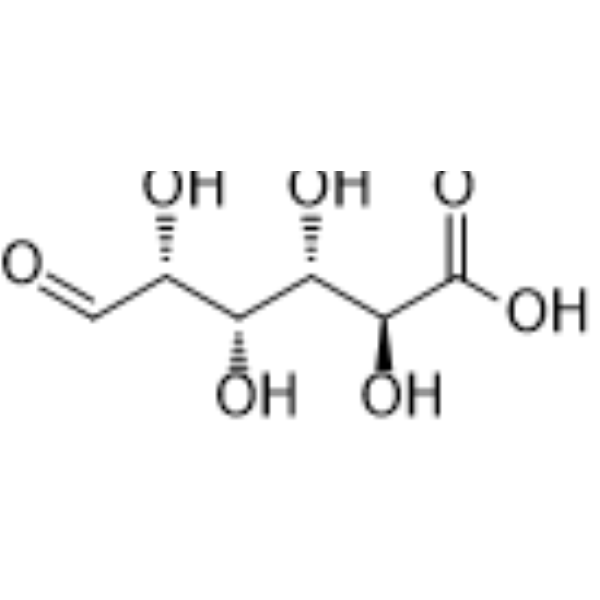
    D-Glucuronic acid
    1 Publications Verification

    Endogenous Metabolite Toll-like Receptor (TLR) Neurological Disease Metabolic Disease Inflammation/Immunology Cancer
    D-Glucuronic acid is a major component of many anti-inflammatory proteoglycans, which can promote embryonic development and inhibit cell aggregation. After being metabolized into ethyl glucuronide (HY-113093), D-Glucuronic acid activates Toll-like receptor 4 (TLR4), causing pain. D-Glucuronic acid and its derivative glucurono-lactone can serve as liver detoxifiers, and its derivatives also possess anti-tumor activity .
    D-Glucuronic acid
  • HY-B0631
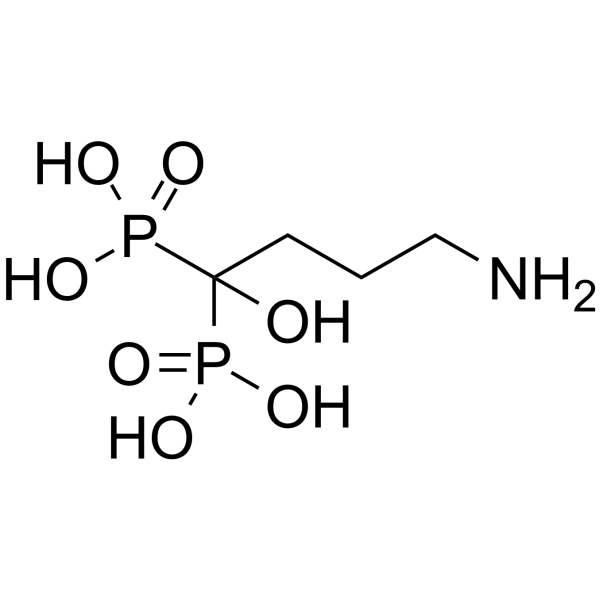
    Alendronic acid
    Maximum Cited Publications
    10 Publications Verification

    NF-κB Interleukin Related Metabolic Disease
    Alendronate acid is an orally active bisphosphonate which binds to bone surfaces and inhibits bone resorption by osteoclasts. Alendronate acid induces skeletal alterations in the chicken embryonic development model. Alendronate acid can be used for osteoporosis research .
    Alendronic acid
  • HY-108685
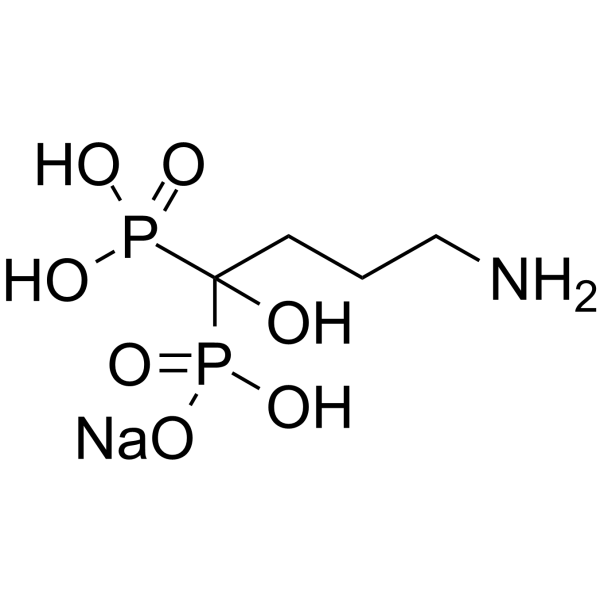
    Alendronate sodium
    Maximum Cited Publications
    10 Publications Verification

    Alendronic acid monosodium salt

    NF-κB Interleukin Related Metabolic Disease
    Alendronate sodium is an orally active bisphosphonate which binds to bone surfaces and inhibits bone resorption by osteoclasts. Alendronate sodium induces skeletal alterations in the chicken embryonic development model. Alendronate sodium can be used for osteoporosis research .
    Alendronate sodium
  • HY-W013272

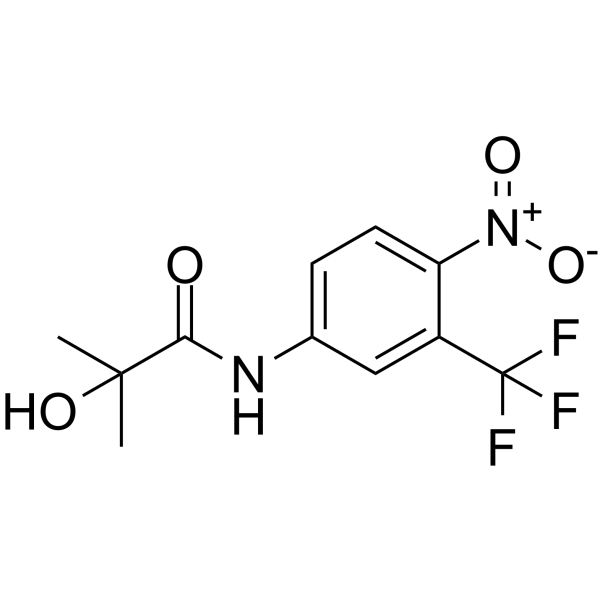
    HFT

    Androgen Receptor Drug Metabolite Akt PI3K Gap Junction Protein Integrin Cancer
    Hydroxyflutamide (HFT) is the active metabolite of Flutamide (HY-B0022) and exhibits oral activity. Hydroxyflutamide is a potent androgen receptor antagonist with an IC50 of 700 nM. Hydroxyflutamide can affect embryonic development and reproductive tract development in mice. Additionally, Hydroxyflutamide can enhance the efficacy of Bacillus Calmette-Guérin (BCG) to better inhibit the progression of bladder cancer. Hydroxyflutamide can be used in research related to tumors and reproductive diseases .
    Hydroxyflutamide
  • HY-N6612R

    Reference Standards Endogenous Metabolite Toll-like Receptor (TLR) Metabolic Disease Inflammation/Immunology Cancer
    D-Glucuronic acid (Standard) is the analytical standard of D-Glucuronic acid. This product is intended for research and analytical applications. D-Glucuronic acid is a major component of many anti-inflammatory proteoglycans, which can promote embryonic development and inhibit cell aggregation. After being metabolized into ethyl glucuronide (HY-113093), D-Glucuronic acid activates Toll-like receptor 4 (TLR4), causing pain. D-Glucuronic acid and its derivative glucurono-lactone can serve as liver detoxifiers for human health prevention, and its derivatives also possess anti-tumor activity .
    D-Glucuronic acid (Standard)
  • HY-14608R

    Reference Standards Endogenous Metabolite iGluR Ferroptosis Apoptosis Neurological Disease
    L-Glutamic acid (Standard) is the analytical standard of L-Glutamic acid. This product is intended for research and analytical applications. L-Glutamic acid is an excitatory amino acid neurotransmitter that acts as an agonist for all subtypes of glutamate receptors (metabolic rhodophylline, NMDA, and AMPA). L-Glutamic acid has an agonist effect on the release of DA from dopaminergic nerve endings. L-Glutamic acid can be used in the study of neurological diseases . IC50 & Target:DA . In Vitro: L-Glutamic acid (120, 500, 750, 1000 mg/dL) can reduce the harmful effect of lithium on the embryonic development of Xenopus Xenopus .
    L-Glutamic acid (2, 5, 10, 20 mM, 24-48 h) can induce neuroexcitotoxicity in neuroblastoma .
    In Vivo: L-Glutamic acid (3 g/kg, subcutaneous injection) can promote excitotoxic degeneration of retinal ganglion cells in mice .
    L-Glutamic acid (750 mg/kg, intraperitoneal injection) can reduce and inhibit oxidative stress induced by chlorpyrifos (CPF) in rats .
    L-Glutamic acid (Standard)
  • HY-17597

    Parasite Infection
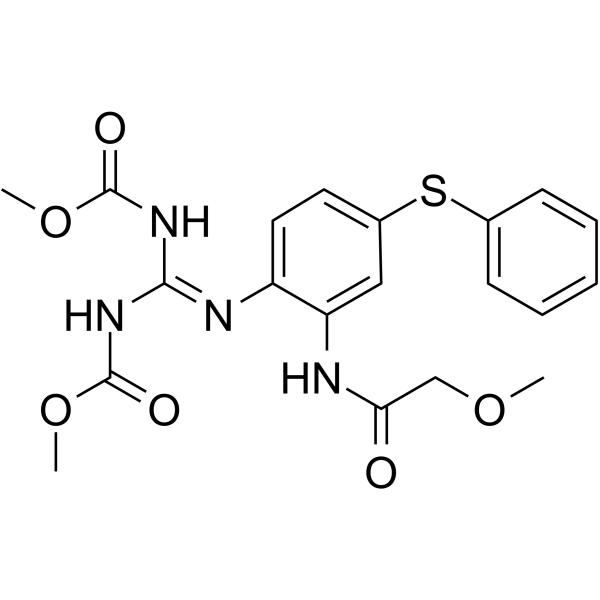
    Febantel is an oral dewormer used to treat gastrointestinal nematodes in sheep, as well as roundworm and tapeworm infections in poultry and livestock, and it also inhibits the embryonic development of mouse hairworms and whipworm eggs .
    Febantel
  • HY-102067

    Wnt Cancer
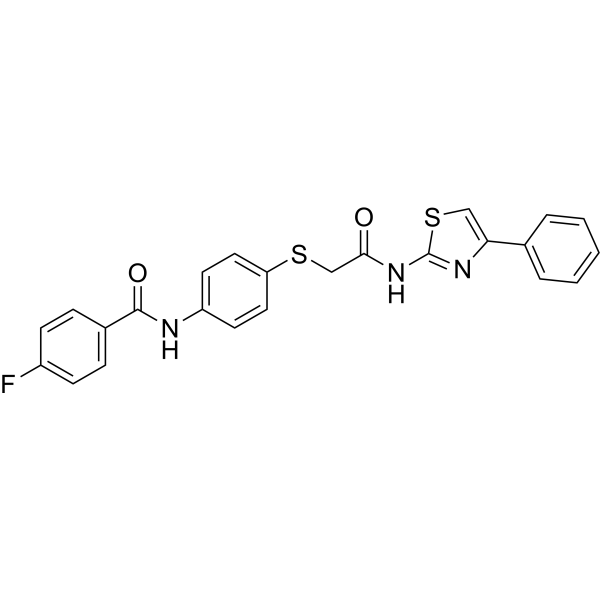
    3289-8625 is an inhibitor of the PDZ domain of Dishevelled (Dvl) protein (Kd=10.6 μM) and has an inhibitory effect on Wnt signaling. In addition, 3289-8625 can slow the growth of prostate cancer PC-3 cells (IC50=12.5 μM). 3289-8625 can be used in the study of embryonic development and cancer .
    3289-8625
  • HY-156095
    F7H
    2 Publications Verification

    Wnt Cancer
    F7H is a Frizzled receptor FZD7 antagonist (IC50: 1.25 μM). Frizzled receptors (FZDs) influence Wnt signaling, mediating embryonic development and tissue homeostasis. F7H is a potent ligand for the FZD7 transmembrane domain (TMD) .
    F7H
  • HY-E70098

    Others Cancer
    RNase H2 is the predominant source of RNase H activity in mammalian and human cells. RNase H2 protects genome integrity. RNase H2 has been associated with ribonucleotide removal from genomic DNA in yeast and mouse, where it is required for embryonic development .
    RNase H2
  • HY-W004154

    Environmental Pollutants Biochemical Assay Reagents Others
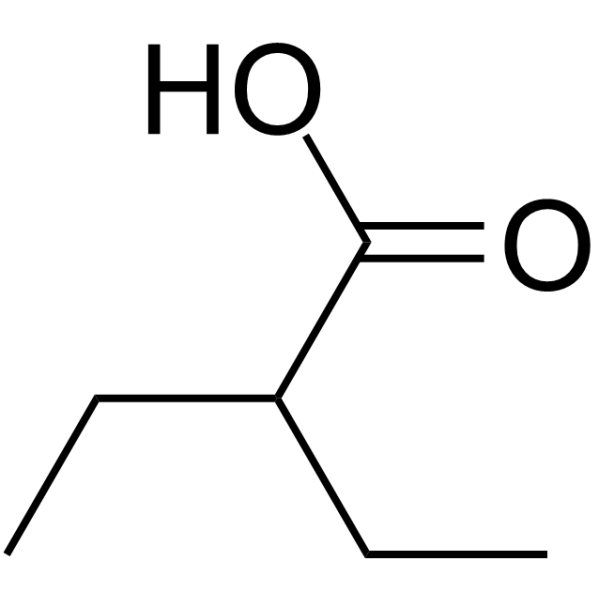
    2-Ethylbutyric acid is a volatile fatty acid. 2-Ethylbutyric acid exhibits phytotoxicity. 2-Ethylbutyric acid is used as an internal standard in milk and dairy products and as an internal standard (IS) in the calibration of fecal VFA standards. 2-Ethylbutyric acid can be used in the research of embryonic development .
    2-Ethylbutyric acid
  • HY-P5351A

    Transmembrane Glycoprotein Inflammation/Immunology Cancer
    Hyaluronan-binding peptide, biotin labeled TFA is a biological active peptide. (This peptide is a hyaluronan-binding peptide biotinylated through a C-terminal GGGSK linker. Hyaluronan (HA) is a nonsulfated glycosaminoglycan expressed in the extracellular matrix and on cell surfaces. HA plays a role in fertilization, embryonic development, wound healing, angiogenesis, leukocyte trafficking to inflamed tissues, and cancer metastasis. This peptide has been shown to block HA binding to CD44 receptors and inhibit T cell proliferation.) .
    Hyaluronan-binding peptide, biotin labeled TFA
  • HY-N6612A

    Endogenous Metabolite Toll-like Receptor (TLR) Neurological Disease Metabolic Disease Inflammation/Immunology Cancer
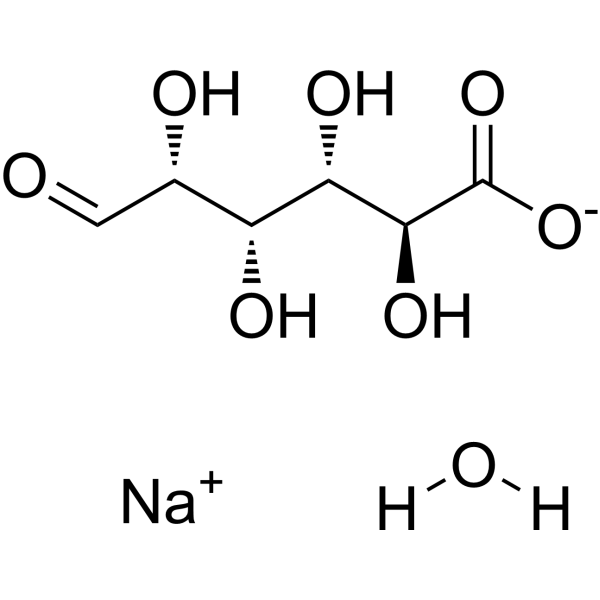
    D-Glucuronic acid sodium salt monohydrate is a major component of many anti-inflammatory proteoglycans, which can promote embryonic development and inhibit cell aggregation. After being metabolized into ethyl glucuronide (HY-113093), D-Glucuronic acid sodium salt monohydrate activates Toll-like receptor 4 (TLR4), causing pain. D-Glucuronic acid sodium salt monohydrate and its derivative glucurono-lactone can serve as liver detoxifiers, and its derivatives also possess anti-tumor activity .
    D-Glucuronic acid sodium salt monohydrate
  • HY-116603

    5-HT Receptor Others
    SB-236057 is an inverse agonist of the 5-HT1B receptor that exhibits strong skeletal teratogenicity in rodents and rabbits. SB-236057 affects gene expression during embryonic development through interference with the Notch signaling pathway and interaction with r-esp1. SB-236057 induces somatic patterning and tail extension defects in rat embryos during early organogenesis .
    SB-236057
  • HY-W025074

    Sirtuin Histone Methyltransferase Cancer
    BML-278 is a SIRT1 activator (EC150: 1 μM). BML-278 increases H3K9 methylation and inhibits H3K9 acetylation in both the paternal and maternal pronucleus. BML-278 improves early embryonic development. BML-278 arrests the cell cycle at the G1/S phase, and reduces senescence in primary human mesenchymal cells. BML-278 reduces tubulin acetylation in U937 cells. BML-278 also increases mitochondrial density in murine C2C12 myoblasts .
    BML-278
  • HY-174553

    mRNA Cancer
    Human PDGFA mRNA encodes the human platelet derived growth factor A (PDGFA) protein, a member of the platelet-derived growth factor family. PDGFA plays an essential role in the regulation of embryonic development, cell proliferation, cell migration, survival and chemotaxis.
    Human PDGFA mRNA
  • HY-174552

    mRNA Cancer
    Human PDGFB mRNA encodes the human platelet derived growth factor B (PDGFB) protein, a member of the platelet-derived growth factor family. PDGFB plays an essential role in the regulation of embryonic development, cell proliferation, cell migration, survival and chemotaxis.
    Human PDGFB mRNA
  • HY-174551

    mRNA Cancer
    Human PDGFC mRNA encodes the human platelet derived growth factor C (PDGFC) protein, a member of the platelet-derived growth factor family. PDGFC plays an essential role in the regulation of embryonic development, cell proliferation, cell migration, survival and chemotaxis.
    Human PDGFC mRNA
  • HY-174550

    mRNA Cancer
    Human PDGFD mRNA encodes the human platelet derived growth factor D (PDGFD) protein, a member of the platelet-derived growth factor family. PDGFD plays an essential role in the regulation of embryonic development, cell proliferation, cell migration, survival and chemotaxis.
    Human PDGFD mRNA
  • HY-174696

    mRNA Cancer
    Human FGF4 mRNA encodes the human fibroblast growth factor 4 (FGF4) protein, a member of the fibroblast growth factor (FGF) family. FGF4 may play an important role in the regulation of embryonic development, cell proliferation, and cell differentiation.
    Human FGF4 mRNA
  • HY-174697

    mRNA Cancer
    Human FGF3 mRNA encodes the human fibroblast growth factor 3 (FGF3) protein, a member of the fibroblast growth factor (FGF) family. FGF3 may play an important role in the regulation of embryonic development, cell proliferation, and cell differentiation.
    Human FGF3 mRNA
  • HY-174544

    mRNA Cancer
    Human POU class 5 homeobox 1 (POU5F1) mRNA encodes a transcription factor containing a POU homeodomain that plays a key role in embryonic development and stem cell pluripotency. Aberrant expression of this gene in adult tissues is associated with tumorigenesis.
    Human POU5F1 mRNA
  • HY-174679

    mRNA Cancer
    Human FOXA2 mRNA encodes the human forkhead box A2 (FOXA2) protein, a member of the forkhead class of DNA-binding proteins. FOXA2 is involved in embryonic development, establishment of tissue-specific gene expression and regulation of gene expression in differentiated tissues.
    Human FOXA2 mRNA
  • HY-174705

    mRNA Cancer
    Human FGF17 mRNA encodes the human fibroblast growth factor 17 (FGF17) protein, a member of the fibroblast growth factor (FGF) family. FGF17 probably plays an important role in the regulation of embryonic development and as signaling molecule in the induction and patterning of the embryonic brain. It is also required for normal brain development.
    Human FGF17 mRNA
  • HY-174706

    mRNA Cardiovascular Disease
    Human FGF16 mRNA encodes the human fibroblast growth factor 16 (FGF16) protein, a member of the fibroblast growth factor (FGF) family. FGF16 probably plays an important role in the regulation of embryonic development, cell proliferation and cell differentiation. It is also required for normal cardiomyocyte proliferation and heart development.
    Human FGF16 mRNA
  • HY-174693

    mRNA Cancer
    Human FGF7 mRNA encodes the human fibroblast growth factor 7 (FGF7) protein, a member of the fibroblast growth factor (FGF) family. FGF family members possess broad mitogenic and cell survival activities, and are involved in a variety of biological processes, including embryonic development, cell growth, morphogenesis, tissue repair, tumor growth and invasion.
    Human FGF7 mRNA
  • HY-174692

    mRNA Cancer
    Human FGF8 mRNA encodes the human fibroblast growth factor 8 (FGF8) protein, a member of the fibroblast growth factor (FGF) family. FGF family members possess broad mitogenic and cell survival activities, and are involved in a variety of biological processes, including embryonic development, cell growth, morphogenesis, tissue repair, tumor growth and invasion.
    Human FGF8 mRNA
  • HY-174691

    mRNA Cancer
    Human FGF9 mRNA encodes the human fibroblast growth factor 9 (FGF9) protein, a member of the fibroblast growth factor (FGF) family. FGF family members possess broad mitogenic and cell survival activities, and are involved in a variety of biological processes, including embryonic development, cell growth, morphogenesis, tissue repair, tumor growth and invasion.
    Human FGF9 mRNA
  • HY-172212

    Insecticide Reactive Oxygen Species (ROS) Infection
    SDH-IN-23 (Compound B21) is an SDH inhibitor. SDH-IN-23 exhibits excellent nematicidal activity. SDH-IN-23 can inhibit the feeding, reproduction, and embryonic development of nematodes. Meanwhile, SDH-IN-23 exerts a lethal effect on nematodes by triggering oxidative stress, causing intestinal damage, and inhibiting SDH, among other mechanisms .
    SDH-IN-23
  • HY-174539

    mRNA Neurological Disease
    Human SOX2 mRNA encodes the human SRY-box transcription factor 2 (SOX2) protein, a member of the SRY-related HMG-box (SOX) family of transcription factors. SOX2 involves in the regulation of embryonic development and in the determination of cell fate. In addition, SOX2 is also required for stem-cell maintenance in the central nervous system and could regulate gene expression in the stomach.
    Human SOX2 mRNA
  • HY-174592

    mRNA Cancer
    Human kruppel like factor 4 (KLF4) mRNA encodes a protein that belongs to the Kruppel family of transcription factors. KLF4 protein is thought to regulate the expression of key transcription factors during embryonic development and play an important role in maintaining embryonic stem cells, and in preventing their differentiation. In addition it is also required for establishing the barrier function of the skin and for postnatal maturation and maintenance of the ocular surface.
    Human KLF4 mRNA
  • HY-W004154R

    Biochemical Assay Reagents Reference Standards Others
    2-Ethylbutyric acid (Standard) is an analytical standard of 2-Ethylbutyric acid (HY-W004154). This product is intended for research and analytical applications. 2-Ethylbutyric acid is a volatile fatty acid. 2-Ethylbutyric acid exhibits phytotoxicity. 2-Ethylbutyric acid is used as an internal standard in milk and dairy products and as an internal standard (IS) in the calibration of fecal VFA standards. 2-Ethylbutyric acid can be used in the research of embryonic development .
    2-Ethylbutyric acid (Standard)
  • HY-B2041

    Insecticide Infection
    Benfuracarb is a broad-spectrum carbamate insecticide with crop protection activity. Benfuracarb is used to control springtails, aphids, and other pests, typically on sugar beet crops. Benfuracarb exhibits toxicity to humans and aquatic organisms. Benfuracarb exposure to zebrafish embryos resulted in a reduction in the body length of zebrafish larvae. Superoxide dismutase (SOD) activity was significantly increased after Benfuracarb treatment. Benfuracarb also interfered with the transcriptional levels of marker genes associated with early embryonic development .
    Benfuracarb
  • HY-B2041R

    Parasite Reference Standards Infection
    Benfuracarb (Standard) is the analytical standard of Benfuracarb. This product is intended for research and analytical applications. Benfuracarb is a broad-spectrum carbamate insecticide with crop protection activity. Benfuracarb is used to control springtails, aphids, and other pests, typically on sugar beet crops. Benfuracarb exhibits toxicity to humans and aquatic organisms. Benfuracarb exposure to zebrafish embryos resulted in a reduction in the body length of zebrafish larvae. Superoxide dismutase (SOD) activity was significantly increased after Benfuracarb treatment. Benfuracarb also interfered with the transcriptional levels of marker genes associated with early embryonic development .
    Benfuracarb (Standard)
  • HY-W099331R

    MEGX hydrochloride (Standard); Norlidocaine hydrochloride (Standard)

    Reference Standards Drug Metabolite Metabolic Disease Inflammation/Immunology
    Benfuracarb (Standard) is the analytical standard of Benfuracarb. This product is intended for research and analytical applications. Benfuracarb is a broad-spectrum carbamate insecticide with crop protection activity. Benfuracarb is used to control springtails, aphids, and other pests, typically on sugar beet crops. Benfuracarb exhibits toxicity to humans and aquatic organisms. Benfuracarb exposure to zebrafish embryos resulted in a reduction in the body length of zebrafish larvae. Superoxide dismutase (SOD) activity was significantly increased after Benfuracarb treatment. Benfuracarb also interfered with the transcriptional levels of marker genes associated with early embryonic development .
    Monoethylglycinexylidide hydrochloride (Standard)
  • HY-W013272R

    HFT (Standard)

    Reference Standards Androgen Receptor Drug Metabolite Akt PI3K Gap Junction Protein Integrin Cancer
    Hydroxyflutamide (Standard) (HFT (Standard)) is the analytical standard of Hydroxyflutamide (HY-W013272). This product is intended for research and analytical applications. Hydroxyflutamide (HFT) is the active metabolite of Flutamide (HY-B0022) and exhibits oral activity. Hydroxyflutamide is a potent androgen receptor antagonist with an IC50 of 700 nM. Hydroxyflutamide can affect embryonic development and reproductive tract development in mice. Additionally, Hydroxyflutamide can enhance the efficacy of Bacillus Calmette-Guérin (BCG) to better inhibit the progression of bladder cancer. Hydroxyflutamide can be used in research related to tumors and reproductive diseases .
    Hydroxyflutamide (Standard)
  • HY-N8321R

    Reference Standards Others Cancer
    Insect repellent M 3535 (Standard) is the analytical standard of Insect repellent M 3535. This product is intended for research and analytical applications. Insect repellent M 3535 (Ethyl butylacetylaminopropionate; IR-3535) is a novel potent anthelmintic that is toxic to zebrafish with a lethal concentration 50 (LC50) of 140 mg/L at 72 hours post fertilization (hpf). Insect repellent M 3535 causes morphological abnormalities and cardiac defects in early embryonic development of zebrafish by potentially inducing the production and accumulation of reactive oxygen species (Reactive Oxygen Species) and activating oxidative stress responses, thereby activating the endogenous apoptosis pathway .
    5-O-Caffeoylshikimic acid (Standard)
  • HY-104044A

    BGB-290 maleate

    Apoptosis Neurological Disease
    Pamiparib maleate (BGB-290 maleate) is a highly potent and selective PARP inhibitor with neurotoxicity-inducing activity. Pamiparib maleate can effectively penetrate the blood-brain barrier and cause cerebral hemorrhage, brain atrophy, and movement disorders in zebrafish embryos exposed. Pamiparib maleate exposure downregulates the activities of acetylcholinesterase (AChE) and adenosine triphosphatase (ATPase) and leads to upregulation of oxidative stress, which triggers apoptosis and interferes with the expression of neurodevelopment-related genes. The use of pamiparib maleate is also accompanied by downregulation of the Notch signaling pathway, while activation of the Notch signaling pathway can partially rescue neurodevelopmental toxicity. Therefore, pamiparib maleate provides a reference for evaluating its potential neurotoxicity during embryonic development .
    Pamiparib maleate
  • HY-120130

    RAR/RXR Cancer
    BMS-948 is a RARβ-selective transcriptional agonist with an EC50 of 0.1 μM. BMS-948 is used in the research of tumor diseases, embryonic development and tissue remodeling .
    BMS-948
  • HY-174681

    mRNA Cancer
    Human FOXA1 mRNA encodes the human forkhead box A1 (FOXA1) protein, a member of the forkhead class of DNA-binding proteins. FOXA1 is involved in embryonic development, establishment of tissue-specific gene expression and regulation of gene expression in differentiated tissues.
    Human FOXA1 mRNA
  • HY-108685R

    Alendronic acid monosodium salt (Standard)

    Reference Standards NF-κB Interleukin Related Metabolic Disease
    Alendronate sodium (Standard) is the analytical standard of Alendronate sodium (HY-108685). This product is intended for research and analytical applications. Alendronate sodium is an orally active bisphosphonate which binds to bone surfaces and inhibits bone resorption by osteoclasts. Alendronate sodium induces skeletal alterations in the chicken embryonic development model. Alendronate sodium can be used for osteoporosis research .
    Alendronate sodium (Standard)
  • HY-174590

    mRNA Cancer
    Human Lin-28 homolog A (LIN28A) mRNA encodes a LIN-28 family RNA-binding protein that acts as a posttranscriptional regulator of genes involved in developmental timing and self-renewal in embryonic stem cells. LIN28A functions through direct interaction with target mRNAs and by disrupting the maturation of certain miRNAs involved in embryonic development.
    Human LIN28A mRNA
  • HY-182447

    DL111-IT

    CDK Apoptosis Endocrinology Cancer
    Contragestazol (DL111-IT) is a non-hormonal antifertility agent. Contragestazol reduces the expression of Cyclin D1 and CDK4, increases the expression of total retinoblastoma protein (pRb), and decreases the level of hyperphosphorylated pRb. Contragestazol induces G0/G1 phase cell cycle arrest. Contragestazol inhibits embryonic development by inducing luteal cell apoptosis and reducing intrauterine polyamine levels. Contragestazol exhibits antitumor activity against prostate cancer, S180 tumor and H22 tumor. Contragestazol shows extremely potent activity in terminating early pregnancy in animals .
    Contragestazol

Inquiry Online

Your information is safe with us. * Required Fields.

Salutation


Country or Region *

Applicant Name *


Organization Name *

Department *


Email Address *


Product Name *

Cat. No.


Requested quantity *

Phone Number *


Remarks

Inquiry Online

Inquiry Information

Product Name:
Cat. No.:
Quantity:
MCE Japan Authorized Agent: